
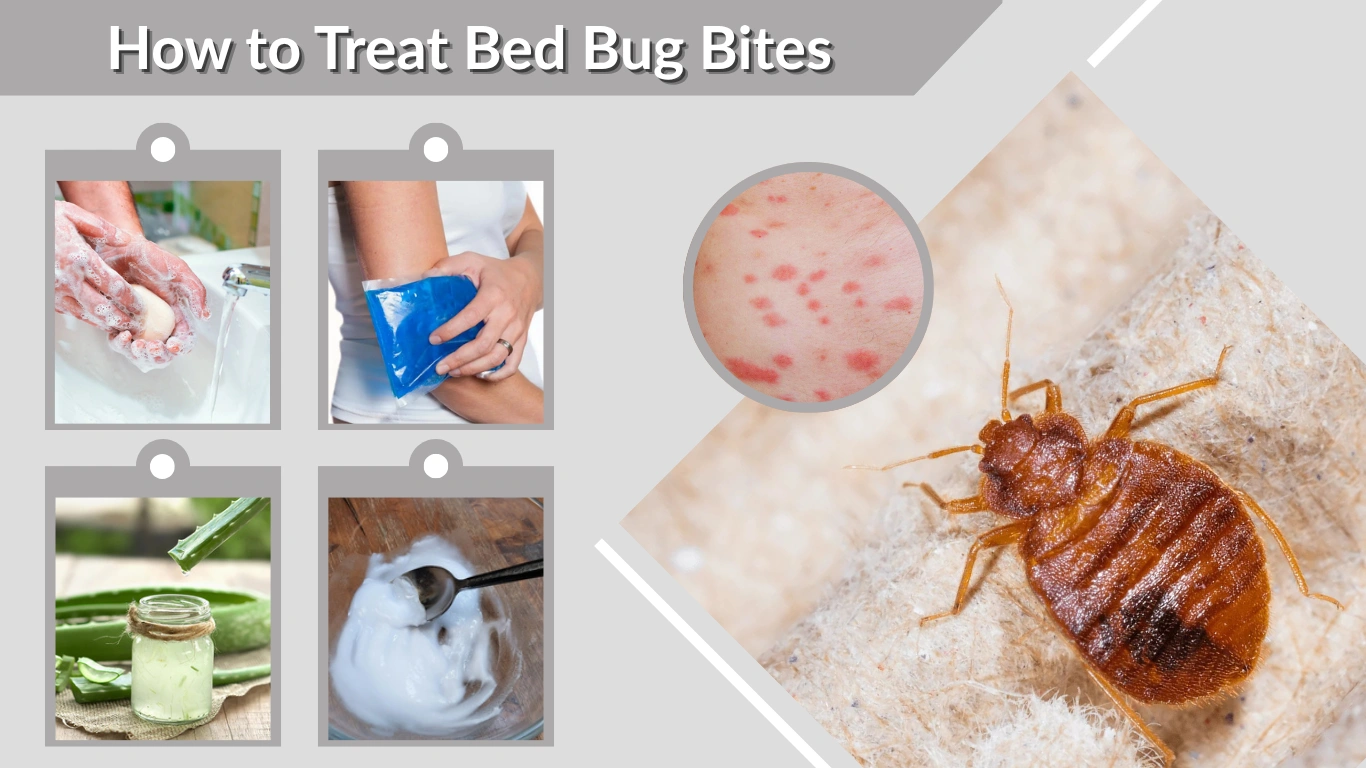
Bed bug bites are not only uncomfortable but can also cause distress, swelling, itching, and rashes that last for days. Because bed bugs feed at night and hide during the day, most people do not notice the insects themselves—only the aftermath on their skin. While bed bug bites are rarely dangerous, the itching can become intense, and scratching may lead to infection or dark scars.
This guide explains how to treat bed bug bites effectively, soothe symptoms, protect your skin, and handle special cases such as bites on the face, babies, pregnancy, and pets. Whether you prefer home remedies, natural treatments, or practical first-aid steps, the information below helps you manage bites safely and comfortably.
How to Treat Bed Bug Bites – Quick Overview
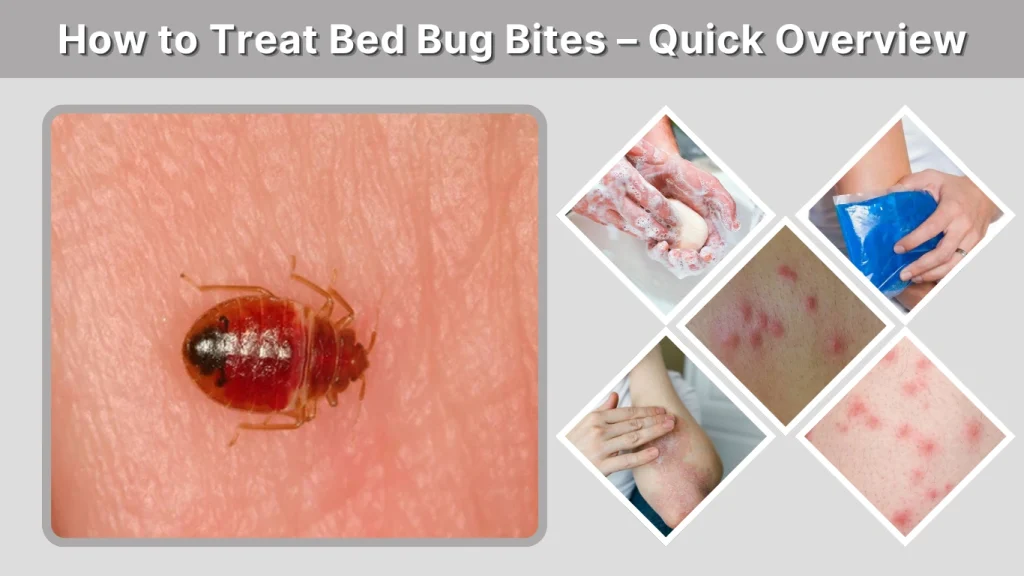
First Steps to Take
If you wake up with itchy red bumps, the first step is to gently clean the area with mild soap and warm water. This reduces bacteria and helps prevent infection. After cleaning, apply a cold compress or ice wrapped in a cloth to reduce swelling and soothe itching.
Avoid scratching, even if the area feels intensely itchy—scratching is the main cause of infection and long-lasting dark spots. Instead, keep the bites clean, cool, and dry during the first few hours.
Symptoms That Need Immediate Attention
Bed bug bites usually resolve on their own, but certain symptoms require more careful observation. If you experience extreme itching, noticeable swelling, or a rash spread, you may need additional care.
Seek medical advice if you notice:
- swelling around the eyes or lips
- difficulty breathing
- red streaks or pus (possible infection)
- widespread hives
These reactions are rare, but being aware helps ensure safe treatment.
Step-by-Step Treatment for Bed Bug Bites
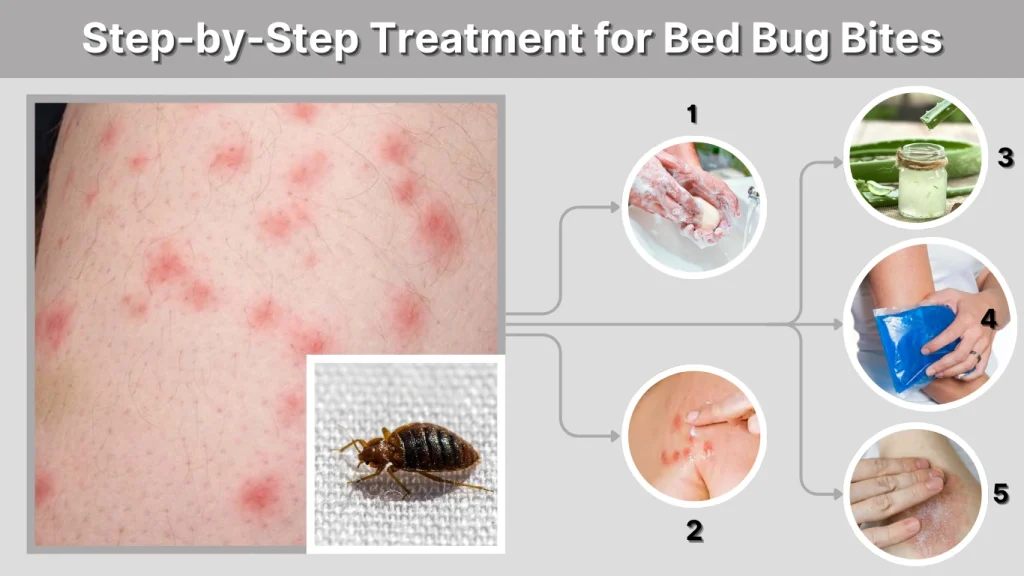
Step 1 — Clean the Skin
Start treatment by washing the bites with mild soap and water. This removes irritants and reduces the chance of infection. For sensitive or irritated skin, unscented soap is best. Pat the area dry—avoid scrubbing, which can irritate the skin more.
Step 2 — Reduce Itching
Itching is the most common and frustrating symptom of bed bug bites. For quick relief, you can apply calamine lotion, anti-itch creams, or an oatmeal-based product. Over-the-counter antihistamines may help reduce itchiness, but use them only according to labeled directions.
If you prefer non-medicated options, a cold compress or cool shower can calm the skin and reduce the urge to scratch.
Step 3 — Reduce Swelling & Redness
Swelling around bed bug bites is common, especially on sensitive areas like the face, neck, or arms. Applying a cold pack several times per day helps keep inflammation down. Natural soothing agents such as aloe vera, witch hazel, or chilled green tea bags can also reduce redness and calm irritated skin.
If swelling worsens, becomes warm to the touch, or lasts longer than a few days, monitor it closely for signs of infection.
Step 4 — Treat Pain or Burning
Although less common, some people experience burning or stinging sensations. Cooling treatments—ice packs, cool cloths, or aloe vera gel—help relieve discomfort. Avoid hot showers, friction from clothing, and harsh skincare products, as these can worsen irritation.
Step 5 — Watch for Infection
Infection happens when bacteria enter broken skin, usually from scratching. Signs of infection include increased redness, swelling, warmth, or pus. If the bite looks progressively worse instead of better, keep the area clean and dry and avoid any irritants.
Severe infections require medical care, so monitoring symptoms during the healing process is important.
How to Treat Bed Bug Bites at Home
Common Home Remedies
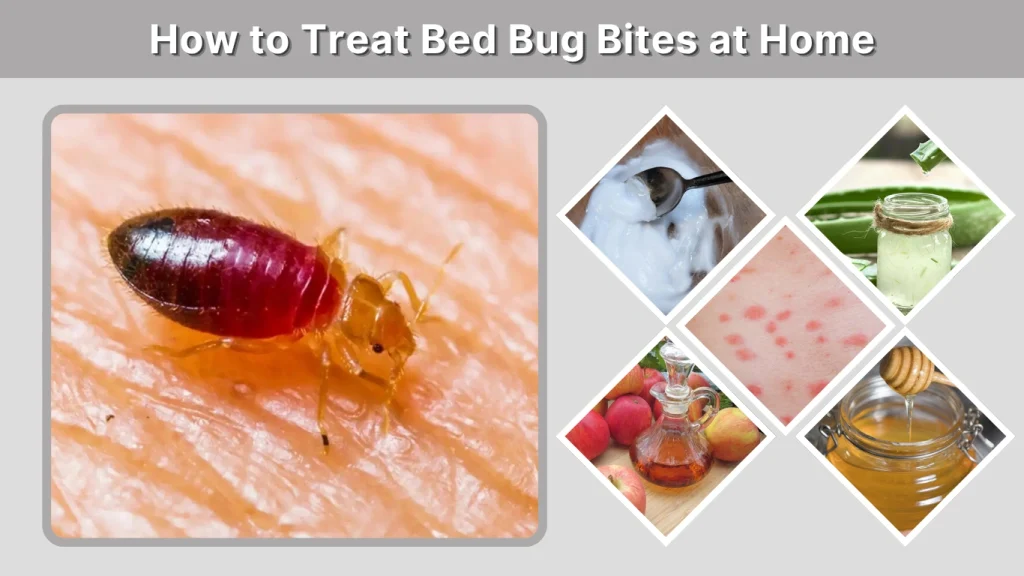
Many people prefer natural remedies to soothe bed bug bites, especially if the itching is mild. Some popular home treatments include:
- Baking soda paste (mixed with a little water to form a thick paste)
- Cold aloe vera gel
- Diluted apple cider vinegar
- Honey, which has natural soothing properties
These remedies help moisturize the skin, reduce swelling, and calm irritation without harsh chemicals.
Natural Ways to Reduce Symptoms
Herbal treatments such as turmeric paste, basil, or mint can help reduce itching because of their cooling and anti-inflammatory properties. An oatmeal bath, especially for multiple bites, can soothe the entire skin surface.
Natural treatments may take longer to show results, but they are gentle for sensitive skin and safe for repeated use.
Treatment for Specific Body Areas
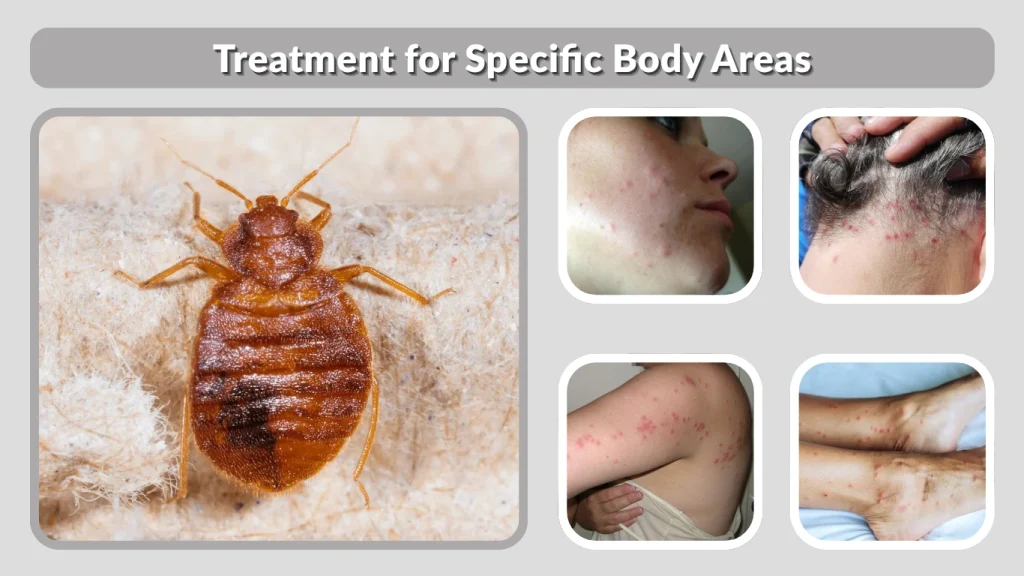
Face & Neck
Bites on the face and neck tend to swell more because the skin here is thinner and more sensitive. Use only gentle treatments such as cold compresses, aloe vera gel, or diluted witch hazel. Avoid harsh creams or strong steroid ointments unless recommended by a healthcare professional.
Do not pick, scratch, or scrub the affected area—this increases the risk of dark marks or scarring, especially on delicate facial skin.
Arms & Legs
Bed bug bites on arms and legs often appear in a line or cluster. After cleaning the area, apply an anti-itch lotion or a cooling gel. Because clothing can rub against these areas during the day, consider covering the bites with a light bandage to prevent irritation.
If you’ve scratched the skin, keep it moisturized and avoid further friction to prevent scabbing and marks.
Hands, Feet & Sensitive Skin
The hands and feet tend to swell more aggressively when bitten. Use ice packs regularly, and avoid tight shoes, gloves, or any fabrics that cause rubbing. Applying a soothing ointment can help minimize discomfort.
For sensitive skin types, stick to mild, fragrance-free products.
Back & Other Hard-to-Reach Areas
Bites on the back can be difficult to treat because they may go unnoticed. These areas may show rows or clusters of bites, known as the “breakfast-lunch-dinner pattern.”
Use lotions or soothing creams applied with assistance or a long-handled applicator. A cool shower can also help calm irritation across a larger surface.
Treating Bed Bug Bites for Babies & Children
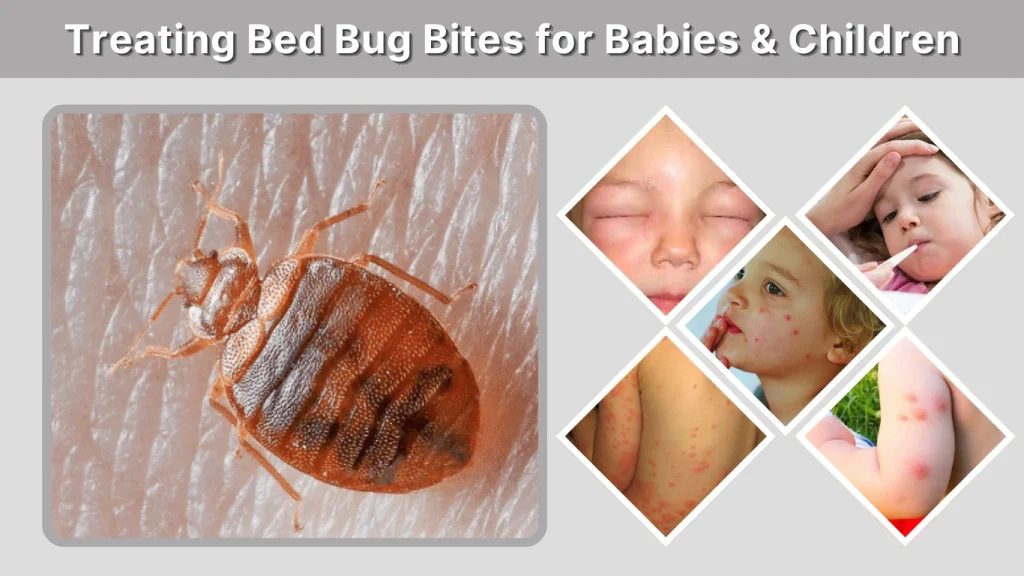
Safe Treatments for Young Skin
Babies and toddlers have extremely delicate skin, so mild care is essential. Use a gentle soap and a cool compress to soothe the area. A thin layer of baby-safe moisturizing cream can also reduce itching and dryness.
Always avoid harsh steroid creams unless a pediatrician recommends them.
What NOT to Use
Do not apply strong essential oils, undiluted herbal treatments, or adult-strength medicated creams. These can irritate a child’s skin and worsen the reaction.
When to Seek Immediate Medical Help
Contact a doctor if your child shows:
- swelling of the face or eyelids
- fever
- widespread rash
- signs of infection
Early treatment prevents complications and helps ease discomfort faster.
Treating Bed Bug Bites During Pregnancy
Safe Treatment Options
Pregnant individuals should use gentle, cooling treatments—like cold compresses or aloe vera—and mild creams approved by their healthcare provider. Keeping the skin cool and clean is the safest approach.
What to Avoid
Avoid strong steroid creams, harsh chemicals, and certain herbal oils unless approved by a doctor. Pregnancy can make the skin more sensitive, so mild treatment is safest.
How to Treat Bed Bug Bites on Dogs & Pets
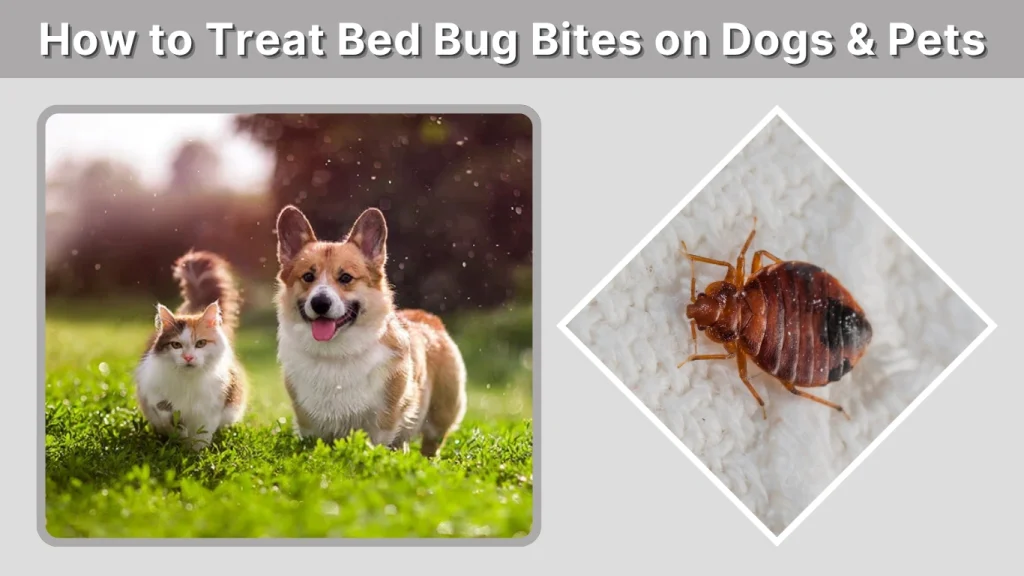
Safe Pet Treatments
Pets can also suffer from bed bug bites. Wash their fur with mild pet shampoo and apply a cold compress to swollen areas. Pet-safe anti-itch sprays may help reduce scratching.
When a Vet Is Needed
Seek veterinary help if:
- your dog is excessively scratching
- the skin becomes red or infected
- swelling worsens
Pets can easily aggravate bites by chewing or licking.
Treating Complications From Bed Bug Bites
Rash Management
Some people develop a rash around the bites. Use mild, fragrance-free lotions and cool compresses to relieve irritation. Avoid hot showers or tight clothing that could worsen the rash.
Blisters & Severe Reactions
Although uncommon, severe bites can form blisters. Keep these clean, avoid popping them, and cover with light bandages. If a blister bursts, clean it gently and apply a sterile dressing.
Scars & Dark Spots
Some people develop post-inflammatory hyperpigmentation (dark marks). Keeping the area moisturized, using aloe vera, and avoiding sun exposure helps minimize discoloration.
For persistent marks, a dermatologist can recommend safe treatments.
How Long Bed Bug Bites Take to Heal
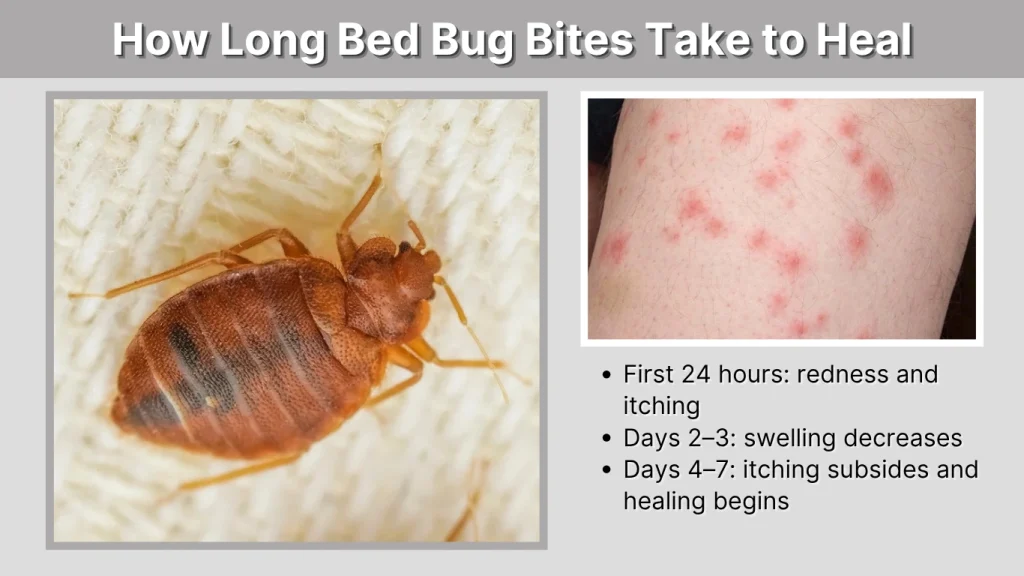
Normal Healing Timeline
Most bed bug bites improve within several days:
- First 24 hours: redness and itching
- Days 2–3: swelling decreases
- Days 4–7: itching subsides and healing begins
What Slows Down Healing
Scratching, sensitive skin, allergic reactions, or secondary infection can slow recovery. Wearing loose clothing and keeping the skin moisturized helps speed healing.
How to Speed Up Recovery
Use cool compresses regularly, apply soothing gels, and avoid scratching. Drinking enough water and keeping the area clean also supports faster healing.
Preventing Bed Bug Bites While Healing
Protecting Your Skin
Use long sleeves, loose pants, or lightweight socks while you sleep. Avoid fabrics that irritate the skin or trap heat, which can worsen itching.
Preventing New Bites
While treating your skin, inspect bedding, wash linens in hot water, and vacuum mattresses and furniture. Keeping your sleeping area clean helps prevent more bites while you heal.
When to See a Doctor
Seek medical care if:
- symptoms worsen instead of improving
- infection develops
- swelling becomes severe
- bites appear on your face or near your eyes
- you experience difficulty breathing or dizziness
Prompt care helps prevent complications.
FAQs
Do bed bug bites need medical treatment?
Most bites heal on their own, but severe reactions, infection, or swelling around the eyes or lips require medical advice.
How long do bed bug bites last?
Most heal within a week, although people with sensitive skin may experience itching longer.
Can scratching make the bites worse?
Yes—scratching can lead to infection, scarring, and increased irritation. Keeping nails short and using anti-itch treatments helps.
How do I know if my bites are from bed bugs?
Bed bug bites often appear in lines or clusters. They are small, red, itchy, and usually show up overnight.
What’s the best way to stop the itching fast?
Cold compresses, calamine lotion, oatmeal baths, and creams designed for itching offer quick relief.
