
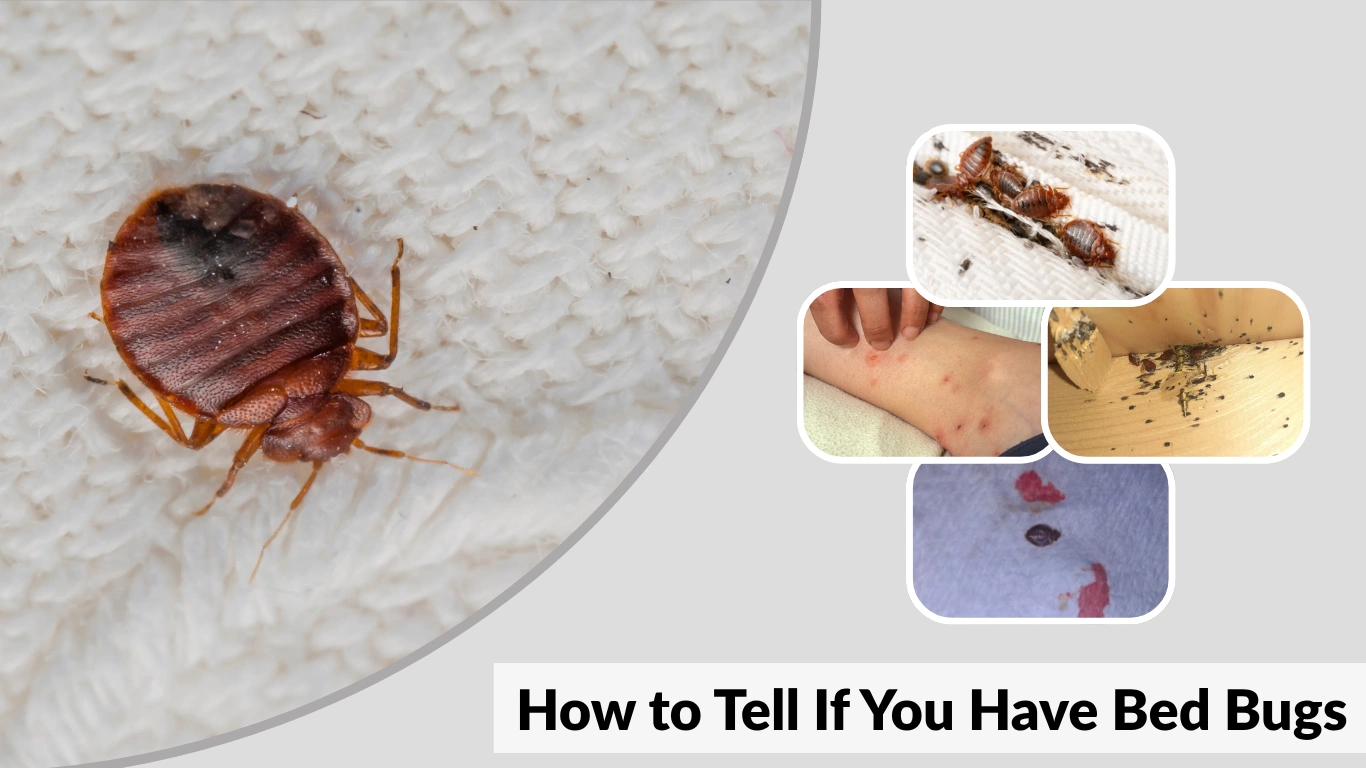
Bed bugs are among the most dreaded household pests because they are small, sneaky, and excellent at hiding. Most people don’t realize they have an infestation until the bugs have already spread from their bed to other furniture. Because bed bugs reproduce quickly and feed at night, early detection is essential. This detailed guide explains all the signs—bites, stains, eggs, and hiding spots—so you can confidently determine whether bed bugs are present in your home.
Understanding Bed Bugs Before You Inspect
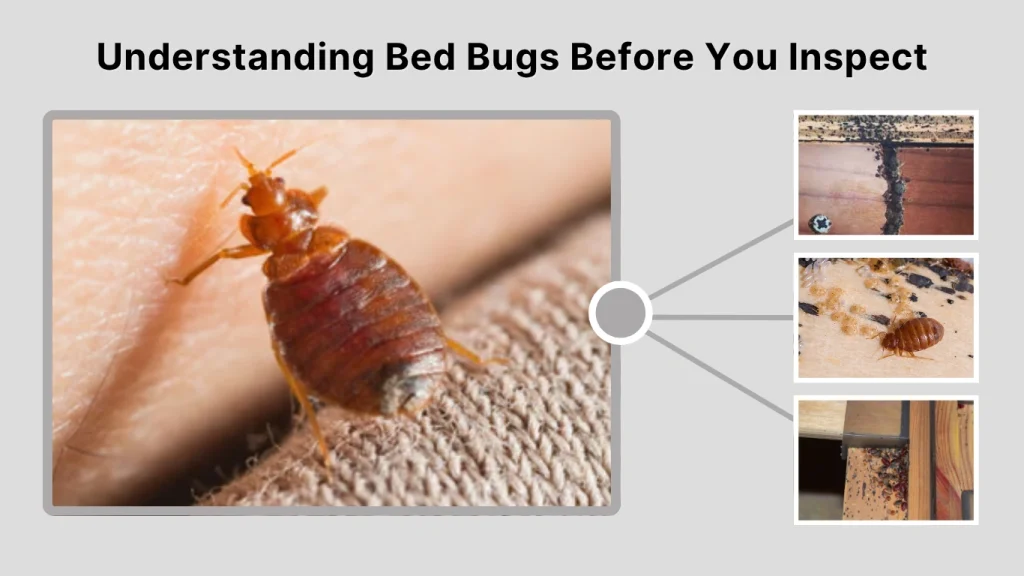
Before checking your home, it helps to understand what bed bugs look like and how they behave. Their size, habits, and hiding patterns are what make them notoriously hard to detect.
What Bed Bugs Look Like (Adults, Nymphs & Eggs)
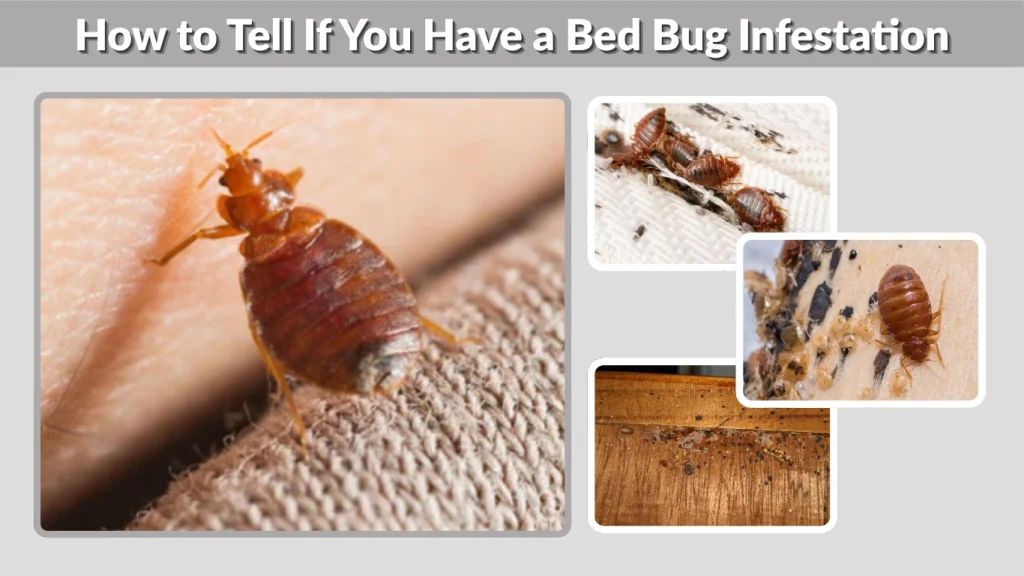
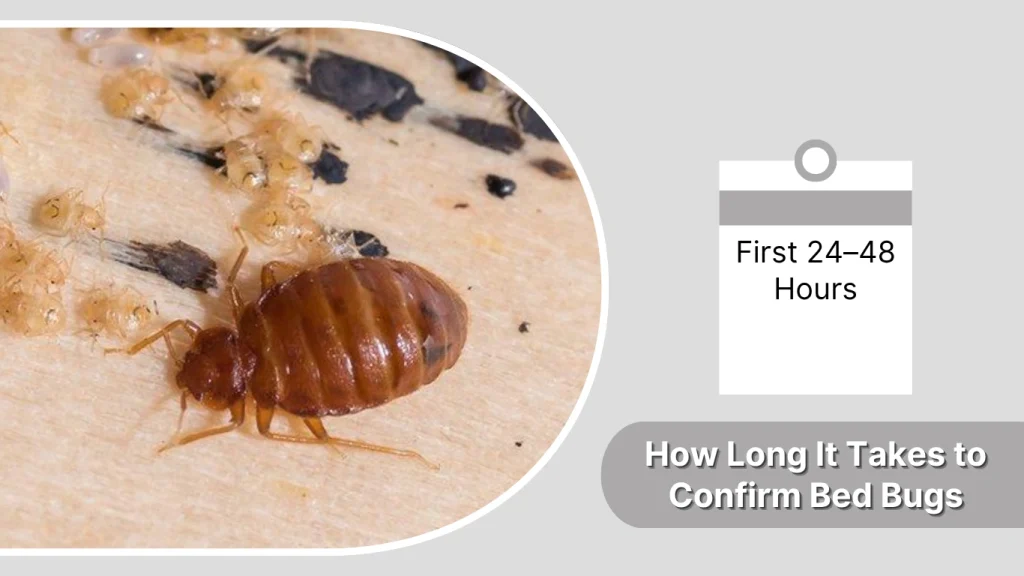
Bed bugs are flat, oval-shaped insects about the size of an apple seed. Adults are reddish-brown, while nymphs (young bed bugs) are smaller, paler, and almost translucent. After feeding, their bodies swell and turn a darker red. Bed bug eggs are tiny—pearly white, about 1 mm long, and sticky when first laid.
How Bed Bugs Behave & Why They Hide
Bed bugs avoid light and hide during the day. They come out at night to feed on sleeping humans, attracted by body heat and carbon dioxide. Their preference for tight, dark spaces allows them to squeeze into:
- Mattress seams
- Cracks in bed frames
- Behind headboards
- Under baseboards
- Inside furniture joints
This behavior is why many people overlook early signs.
Where Bed Bugs Usually Start in a Home
Infestations typically begin in areas where people rest or sleep:
- Beds
- Couches
- Recliners
- Hotel mattresses
- Shared apartments
From there, they spread outward into carpets, walls, and furniture.
Early Warning Signs That You May Have Bed Bugs
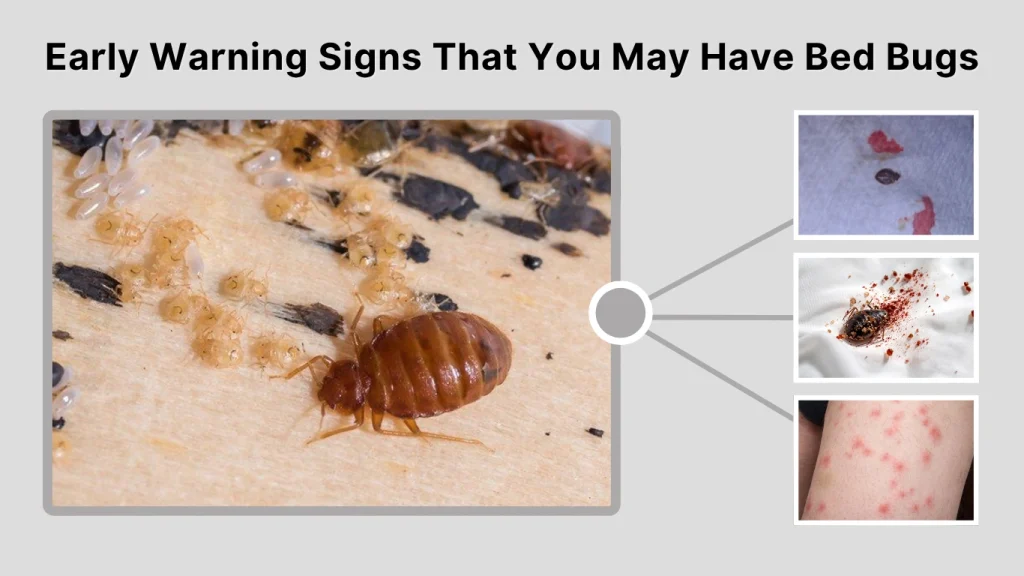
Early detection is the key to preventing major infestations. Bed bugs leave several clues that become more noticeable over time.
Blood Stains on Sheets or Pillowcases
Tiny rust-colored spots often appear where your body rests. These stains can be caused by:
- Accidentally crushing a bed bug
- A full bug leaking after feeding
- A bite mark that bleeds slightly
These marks are one of the earliest visible signs.
Small Black Fecal Dots Along Mattress Seams
Bed bug droppings look like black ink dots from a marker. They may appear in clusters on:
- Mattress seams
- Sheet edges
- Bed frames
- Walls near the bed
When smeared, the spots turn dark brown or reddish—another confirmation of bed bug activity.
Pale Yellow Shed Skins in Crevices
As bed bugs grow, they molt multiple times. Their shed skins:
- Are light yellow or brown
- Have a paper-like texture
- Collect in hiding areas
Finding several shed skins usually means an active, developing colony.
A Sweet, Musty Odor in Larger Infestations
Bed bugs release pheromones that create a distinct smell. People describe it as:
- Musty
- Sweet
- Slightly mold-like
This odor is usually noticeable only when the infestation becomes moderate or severe.
Seeing a Live Bed Bug (Most Reliable Sign)
If you see even one adult bed bug, there are almost always more nearby. They usually appear:
- After midnight
- When lifting mattresses
- When moving pillows or blankets
- When cleaning behind headboards
A live sighting confirms an infestation, even if you haven’t seen other signs yet.
How to Tell If You Have Bed Bug Bites
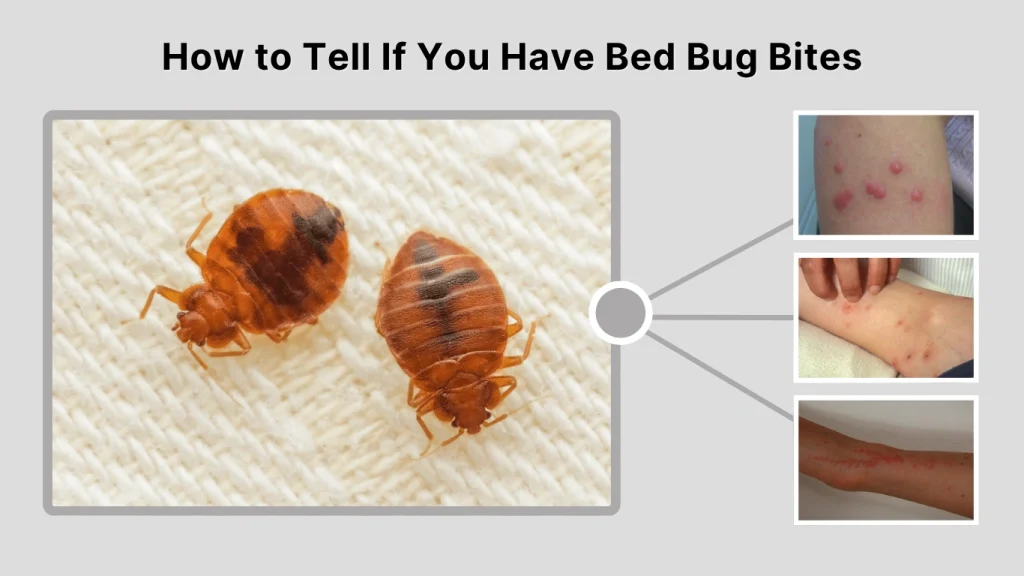
For many people, bites are the first clue. Bed bug bites vary from person to person, but they follow certain patterns.
What Bed Bug Bites Look Like
Bed bug bites are known for their:
- Small red bumps
- Itchy welts
- Clusters or straight lines
- Groups of 2–5 bites close together
The “breakfast, lunch, dinner” pattern (three bites in a row) is a classic indicator.
Where Bed Bug Bites Commonly Appear on the Body
Bites usually appear on exposed skin:
- Arms
- Legs
- Shoulders
- Neck
- Face
Bites rarely appear under tight clothing or on the soles of feet.
How Bed Bug Bites Feel (Burning, Itching, Swelling)
Symptoms often include:
- Mild to intense itching
- Raised bumps
- Redness
- Irritation or burning sensation
Some people have no reaction at all, making infestations harder to detect.
Bed Bug Bites vs Mosquito, Flea & Allergy Bites
Bed bug bites can be confused with other skin issues. Key differences:
- Mosquito bites: larger, single bumps
- Flea bites: often on ankles, with a red dot in the center
- Allergy rashes: irregular, not in clusters
- Scabies: intense itching with burrow-like lines
Bed bug bites are generally patterned and appear overnight.
How Long It Takes for Bite Symptoms to Show
Reactions may appear:
- Immediately
- Within 4–12 hours
- Up to 2 days later
Delayed reactions make it difficult to determine when or where you were bitten.
Visual Signs of Bed Bugs on Beds & Furniture
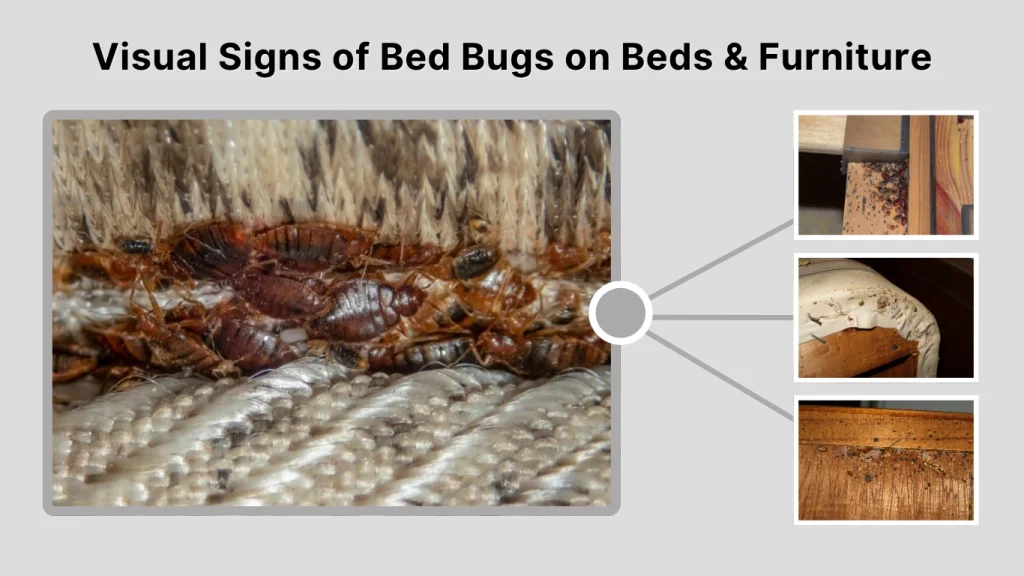
Even if you haven’t seen any bites, physical evidence on your mattress or furniture can confirm whether bed bugs are present. These signs often appear before infestations spread widely.
Finding Live Bugs in Seams & Crevices
Live bed bugs may be found:
- Under mattress corners
- Inside box spring frames
- Behind the headboard
- In furniture joints
- Under couch cushions
Bed bugs move quickly, so look carefully with a flashlight.
Fecal Stains, Smears & Ink-Like Marks
Fecal droppings look like tiny black dots, similar to pepper or pen-ink marks. They appear in:
- Lines along mattress seams
- Bed frames and wall joints
- The edges of sheets or pillows
These stains smear easily when wiped with a damp cloth.
Blood Smears from Crushed Bed Bugs
Bed bugs become engorged after feeding. If crushed during sleep, they leave behind small red smears. These typically appear near the areas where you rest your arms, shoulders, or legs.
Egg Clusters & Eggshells near Mattress Tags
Eggs are:
- White
- Sticky when first laid
- Found in clusters of 5–20
Eggshells (after hatching) often gather in mattress tags, corners, and cracks—clear signs bed bugs are reproducing.
Nymphs Crawling on Bed Frames or Walls
Nymphs are tiny, pale, and fast-moving. Seeing even one indicates nearby eggs and adults.
How to Check Specific Areas of Your Home
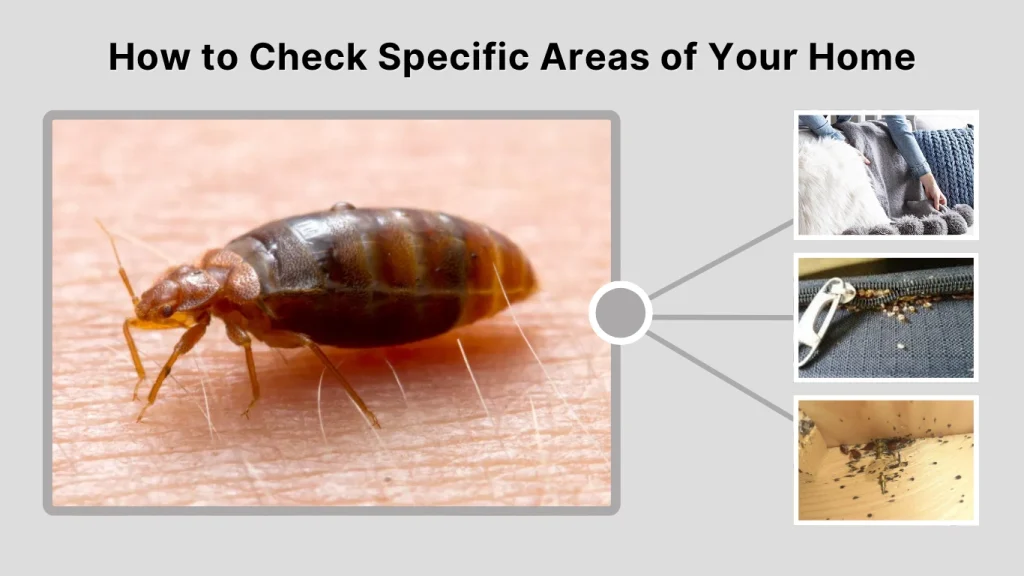
Knowing where to inspect is just as important as knowing what to look for.
How to Tell If You Have Bed Bugs on a Mattress
Inspect:
- All seams and stitching
- Under the mattress tag
- The full perimeter strip
- Beneath the mattress corners
Lift slowly—bed bugs hide tight beneath folds.
How to Tell If You Have Bed Bugs in a Couch
Bed bugs often invade couches when infestations worsen. Check:
- Under cushions
- Inside zipper linings
- Under the frame
- Between fabric folds
- Behind the couch against the wall
Use a flashlight to spot movement in dark gaps.
How to Tell If You Have Bed Bugs in Furniture
Wooden furniture provides perfect hiding cracks. Look:
- In drawer corners
- Under furniture
- In screw holes
- Behind joints and slats
Infestations in furniture usually mean bed bugs have spread beyond the bed.
How to Tell If You Have Bed Bugs in a Hotel Room
Check:
- Mattress seams
- Behind headboards
- Nightstand corners
- Luggage stands
Place luggage on a hard surface—not the bed.
How to Tell If You Have Bed Bugs in an Apartment
Inspect shared walls, baseboards, and vent connections. Bed bugs easily spread between units.
How to Tell the Difference Between Bed Bugs and Other Pests
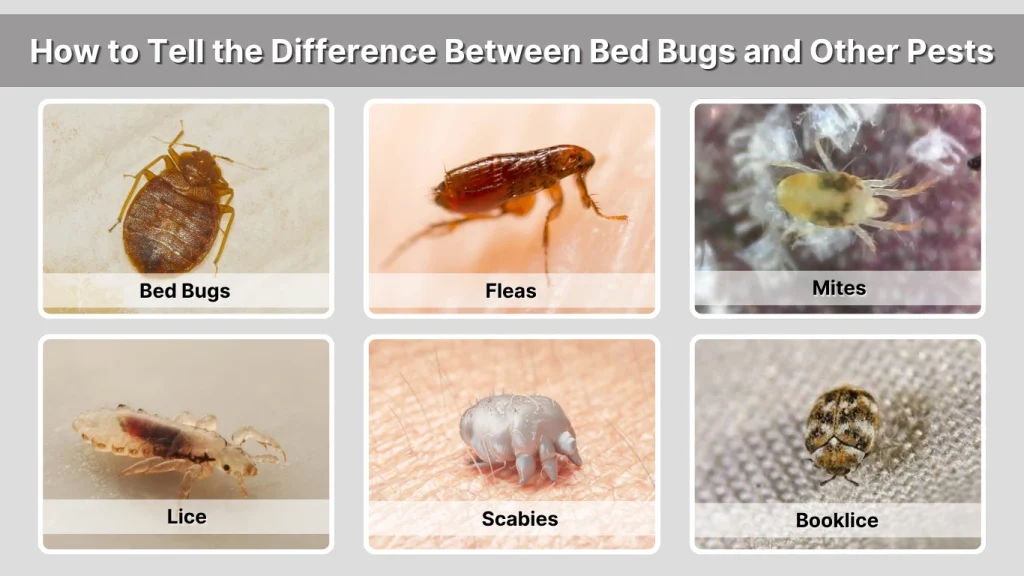
Many pests cause similar symptoms. Here’s how to distinguish them:
Bed Bugs vs Fleas
- Fleas jump; bed bugs crawl
- Flea bites appear mostly on ankles
- Bed bug bites cluster in lines
Bed Bugs vs Mites
- Dust mites cannot be seen with the naked eye
- Bed bugs leave physical stains and shells
Bed Bugs vs Lice
- Lice live on the scalp or body
- Bed bugs hide in furniture and beds
Bed Bugs vs Scabies
- Scabies cause burrows under the skin
- Bed bugs bite on top of the skin
Bed Bugs vs Carpet Beetles
Carpet beetles cause allergic reactions, not bites. Adults resemble beetles, not flat bugs.
How to Tell If You Have Bed Bug Eggs
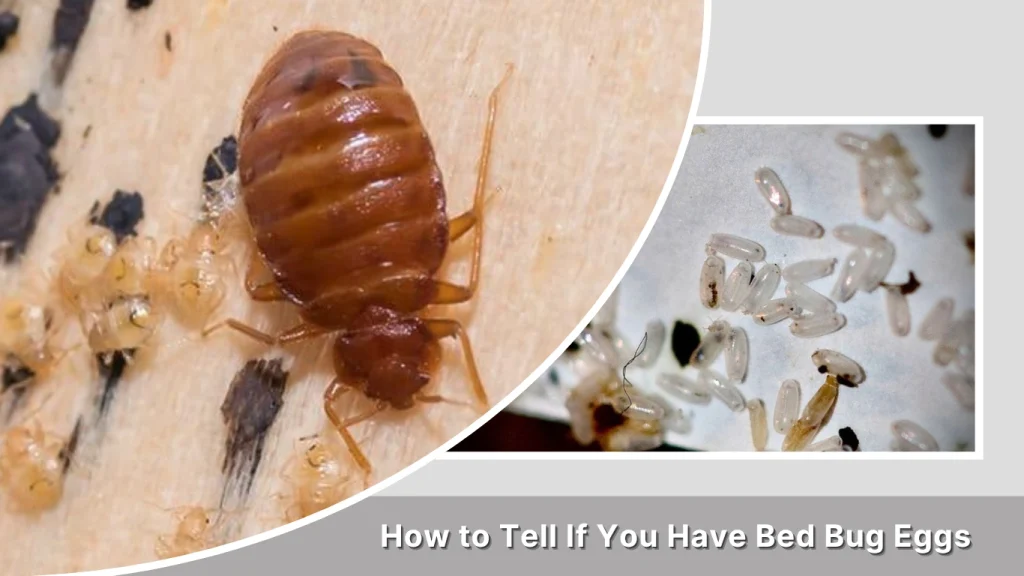
What Bed Bug Eggs Look Like
Eggs are:
- White to transparent
- Oval-shaped
- 1 mm long
- Sticky when fresh
They’re easy to miss without close inspection.
Where Bed Bugs Lay Their Eggs
Common egg sites:
- Mattress edges
- Box springs
- Behind headboards
- Cracks in furniture
- Upholstery folds
Eggs near your bed confirm active reproduction.
Eggshells as a Sign of Growing Infestation
If you find empty egg casings, the infestation is already advancing, as new nymphs have hatched.
How Quickly New Eggs Hatch
Eggs hatch in 6–10 days, which means the population can grow rapidly if not treated.
How to Tell If You Have a Bed Bug Infestation
Multiple Bites Appearing Night After Night
Fresh clusters every morning are a clear red flag.
Bugs Found in More Than One Room
Bed bugs don’t stay in one place. Finding signs in the living room or office indicates spread.
Frequent Shed Skins & Fecal Spots
Large clusters of shells or ink-like dots mean several life stages are present.
Nymphs Crawling on Walls or Sheets
Nymphs = recent hatching = active infestation.
Stronger Odor as the Colony Grows
Large colonies produce a noticeable sweet, musty smell.
How to Tell If Bed Bugs Have Spread
Bed Bugs in Sofas or Recliners
Infestations that move into living room furniture are usually moderate to severe.
Laundry or Clothing Showing Signs
Bed bugs can cling to clothes and fabric piles.
Bugs Found in Carpets, Curtains or Baseboards
These signs indicate the colony has expanded significantly.
Bites Occurring Outside the Bedroom
If you get bites from sitting on furniture, bed bugs have spread.
How Long It Takes to Confirm Bed Bugs
First 24–48 Hours
You might notice bites or tiny stains.
First Week
More evidence usually appears—fecal dots, shed skins, or nymphs.
One Month of Monitoring
If signs continue after cleaning, the infestation is established.
Using Interceptor Traps for Proof
These traps catch bugs as they climb furniture legs.
When You Should Call a Professional
Evidence of Eggs or Nymphs
Indicates active reproduction.
Bed Bugs Found in Multiple Rooms
DIY methods won’t work here.
Bites Increasing Despite Cleaning
Professional heat treatment may be required.
When DIY Methods Are No Longer Effective
Large infestations need expert intervention.
Final Tips for Accurate Bed Bug Detection
Best Tools for Inspection
- Flashlight
- Credit card or thin tool for cracks
- Interceptor traps
- Sticky pads
What NOT to Confuse with Bed Bugs
- Carpet beetles
- Fleas
- Ants
- Beetle larvae
Why Early Detection Saves Money & Stress
Smaller infestations are easier—and cheaper—to eliminate.
Key Takeaways
- Look for stains, sheds, and clusters of bites
- Inspect mattress seams and furniture
- Use traps
- Call a professional if signs appear in several rooms
FAQs
What are the earliest signs that you have bed bugs?
The earliest signs include tiny blood spots on sheets, black ink-like fecal dots along mattress seams, pale shed skins, and occasional itchy bite clusters. You may also notice movement in mattress folds when lifting corners. Early sightings are usually small but should never be ignored.
How can I tell if the bites are from bed bugs or another insect?
Bed bug bites typically appear in clusters or straight lines on exposed areas of skin such as arms, shoulders, and legs. Flea bites focus on ankles, mosquito bites are isolated, and allergy rashes are irregular. Bed bug bites appear overnight and often follow the “breakfast, lunch, dinner” pattern.
How do I check my mattress for bed bugs?
Start by lifting the corners of the mattress and inspecting seams, piping, and tags. Look for live bugs, black fecal dots, blood smears, egg clusters, or yellow shed skins. Use a flashlight to check deep creases and the edges of the box spring, as bed bugs often hide there.
Can bed bugs live in couches or other furniture?
Yes. Bed bugs commonly hide in couches, recliners, and upholstered chairs—especially in seams, cushion zippers, frame cracks, and under cushions. Finding bites after sitting on furniture or spotting shed skins and fecal spots in hidden areas are strong signs they have spread beyond the bed.
When should I call a professional exterminator?
Call a professional if you find live bugs, eggs, or nymphs, or if multiple rooms show signs of infestation. You should also seek expert help when bites continue despite cleaning or when DIY treatments fail. Large or spreading infestations require specialized heat or chemical treatments to eliminate completely.
