
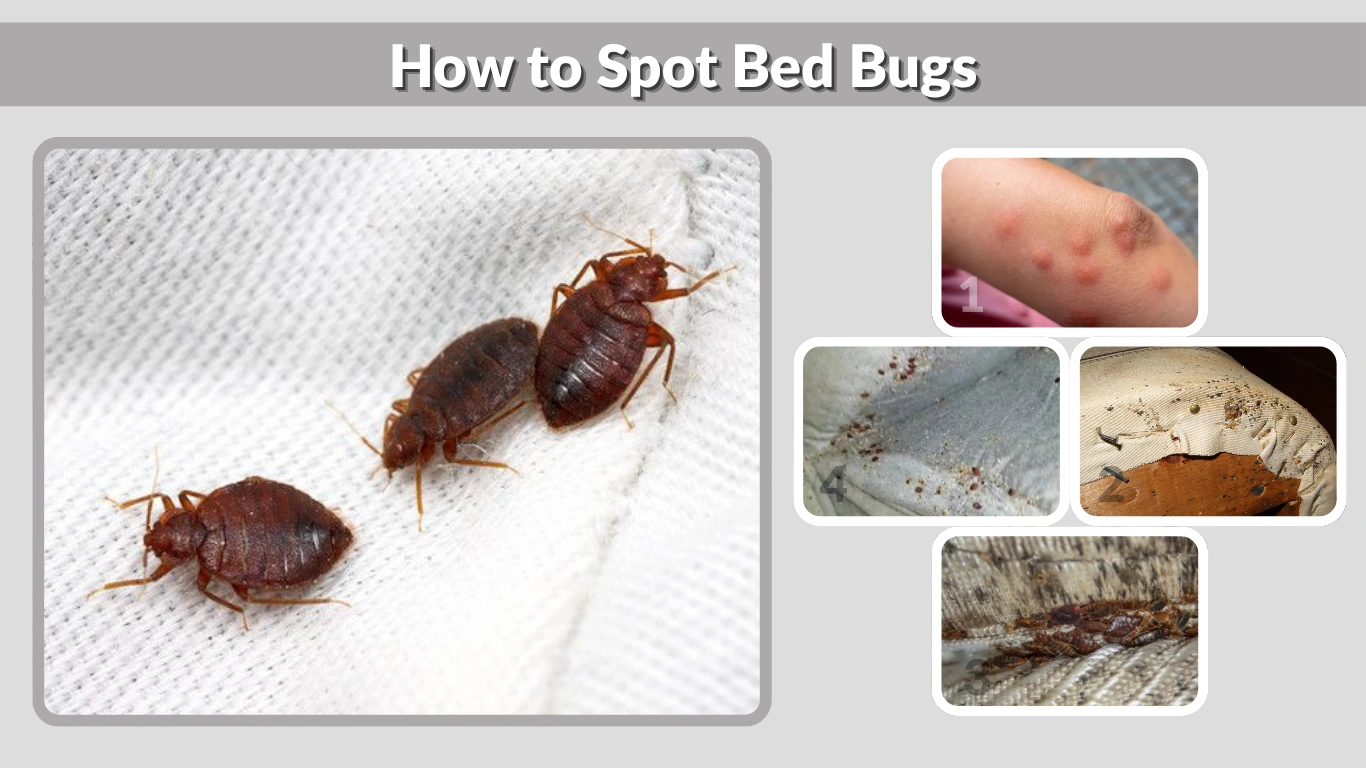
Spotting bed bugs early is the single most important factor in stopping an infestation before it becomes severe. These tiny, blood-feeding insects are experts at hiding, and by the time they are visible, they may already have spread throughout your mattress, furniture, and nearby rooms. Because they are small, fast-moving, and active mostly at night, many people don’t notice them until bites or stains appear on bedding. This guide walks you through every method to spot bed bugs—on mattresses, in hotels, on clothes, furniture, carpets, and even in unusual hiding places—so you can detect them early and eliminate them quickly.
What Bed Bugs Look Like (Adults, Nymphs, Eggs & Feces)
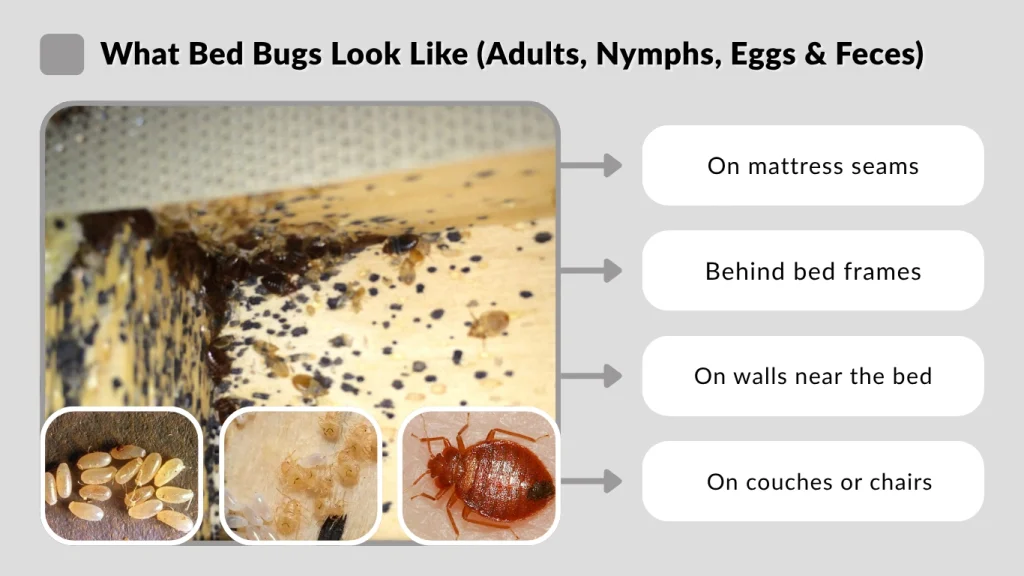
To identify bed bugs accurately, you must be able to recognize every stage of their life cycle. Each stage has different characteristics, and missing even the eggs can cause reinfestation.
Adult Bed Bugs
Adult bed bugs are reddish-brown, flat, and about the size of an apple seed. Before feeding, they appear oval and flat; after feeding, they become swollen and more elongated. Adults move quickly, especially when exposed to light, and often hide along mattress seams, bed frames, and crevices near sleeping areas.
Baby (Nymph) Bed Bugs
Nymphs are smaller, lighter in color, and more translucent than adults. Newly hatched nymphs may appear almost invisible unless they have recently fed, at which point their stomach turns bright red. Because of their tiny size, early infestations often go unnoticed when only nymphs are present.
How to Spot Bed Bug Eggs
Bed bug eggs are extremely small, white, and shaped like tiny grains of rice. They are usually found in clusters and glued to fabric, wood, or seams. Eggs are one of the hardest signs to spot due to their size and color. If you see pearly-white dots in mattress folds or furniture cracks, there may already be a growing infestation.
Bed Bug Feces & Black Spots
Bed bug fecal matter appears as tiny black or dark brown dots. These spots smear when rubbed with a wet wipe and are often found:
- On mattress seams
- Behind bed frames
- On walls near the bed
- On couches or chairs
Fecal spots are one of the most reliable signs of an active infestation.
Early Signs of Bed Bugs
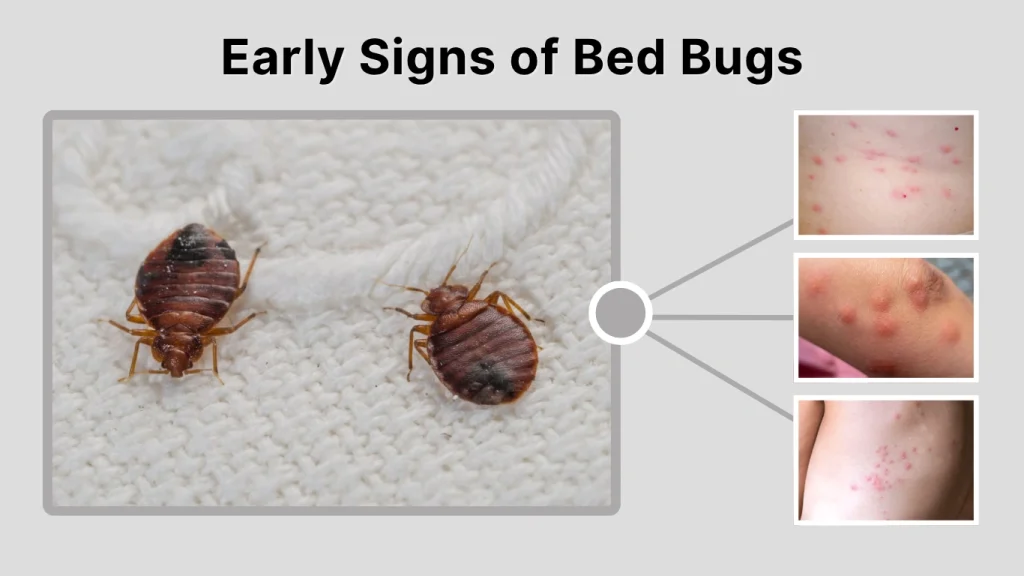
Spotting bed bugs early means you must recognize subtle signs before you see actual insects.
Bites & Skin Reactions
Bed bug bites typically appear in rows or clusters, often on exposed areas such as arms, neck, and legs. Symptoms include:
- Small red bumps
- Itching or swelling
- Lines or zigzag patterns
While not everyone reacts to bites, consistent new bites appearing overnight are a strong indication of bed bugs. In some cases, scratching can lead to infections or dark marks on the skin.
Blood Stains, Shed Skins & Musty Odor
Small rust-colored stains on your sheets often come from crushed bed bugs or oozing bites. Shed exoskeletons appear as translucent, shell-like flakes near mattresses, floors, and furniture. Another common indicator is a musty, sweet odor caused by bed bug pheromones—stronger in large infestations.
How to Spot Bed Bugs in Your Bed & Mattress
Your bed is the number one location bed bugs hide, making careful inspection essential.
Mattress Seams, Tags & Stitching
Start by pulling back sheets and slowly examining the mattress seams. Bed bugs hide in stitching, piping, and any fabric fold where they stay protected and close to their food source. Lift the mattress tag and check underneath—this is a favorite hiding spot.
Spotting Bed Bugs on Sheets & Pillows
Look for:
- Live crawling insects
- Tiny black fecal dots
- Blood smears
- Eggs or shells
Pay close attention to pillow edges and under pillowcases.
Checking Bed Frames & Headboards
Wooden bed frames are especially vulnerable, as bed bugs hide in cracks, screw holes, and joints. Pull the bed frame slightly away from the wall to check behind the headboard. Upholstered headboards can hide dozens of bugs inside fabric folds or button indentations.
How to Spot Bed Bugs in Hotels & Travel Locations
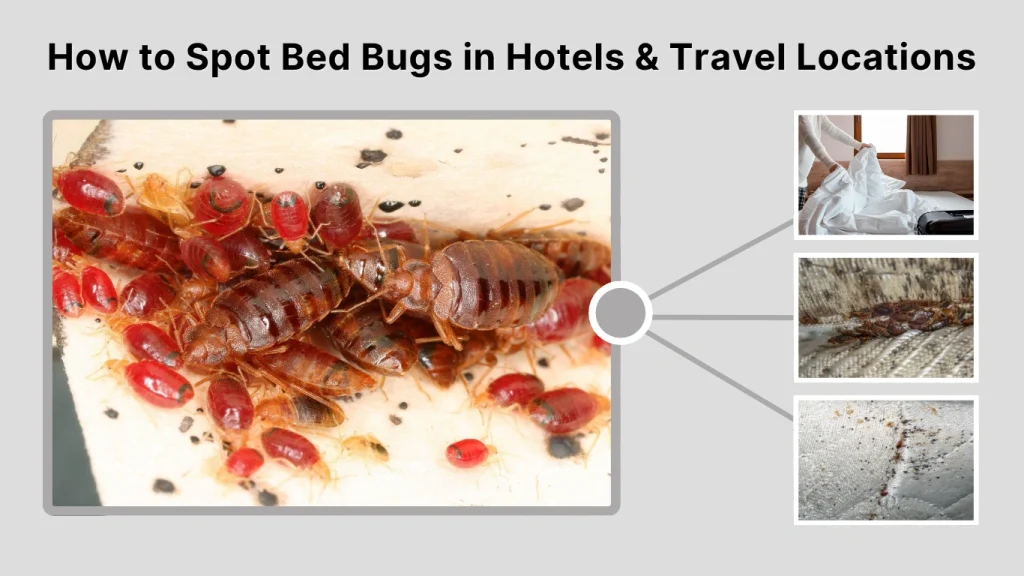
Bed bugs commonly spread through travel. Knowing how to inspect a hotel room can prevent bringing them home.
Inspecting a Hotel Bed Correctly
Before sitting or placing luggage on the bed:
- Pull back linens
- Inspect the corners of the mattress
- Check the bed skirt and box spring
Hotel mattresses often show early signs because many different guests cycle through each room.
Spotting Bed Bugs in a Hotel Room
After checking the bed, inspect:
- Sofa cushions
- Curtains
- Behind picture frames
- Carpets near the bed
Bed bugs may hide in any soft or dark area where people rest or store belongings.
How to Spot Bed Bugs in Luggage or Clothing
Bed bugs love to hitchhike. Check luggage seams, zippers, and pockets using a flashlight. Shake out all clothing before unpacking, and avoid placing bags on carpets or beds in hotels.
How to Spot Bed Bugs in Furniture & Couches
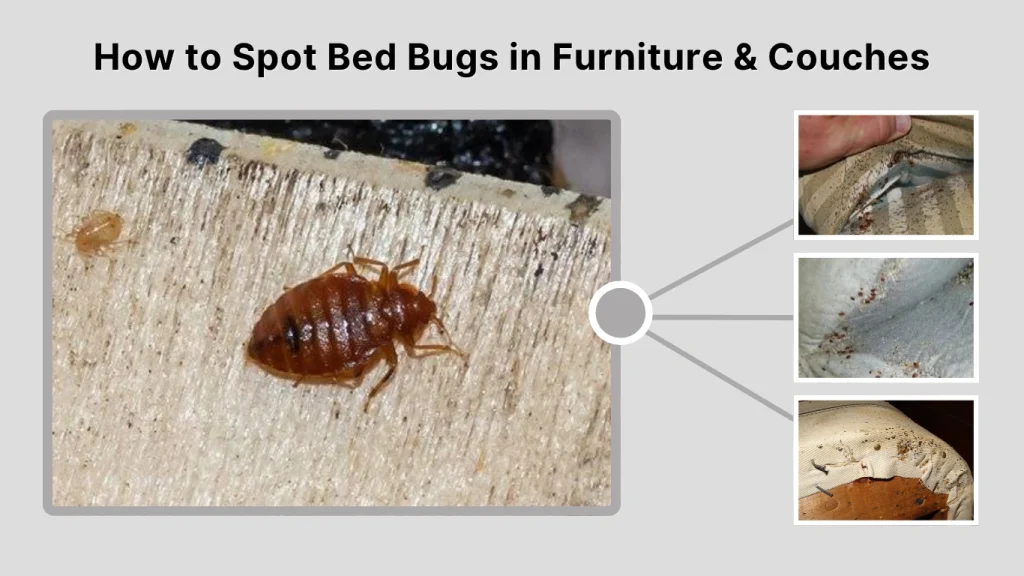
Bed bugs do not only hide in beds—they spread quickly to nearby furniture once the infestation grows. Couches, chairs, and recliners often become secondary hiding spots, especially in living rooms or hotel suites.
Sofas & Cushions
Lift each cushion and inspect the seams carefully. Bed bugs hide:
- Under seat cushions
- Inside zipper linings
- In folds where fabric meets wood
- Along the inner crack between seat and backrest
Shining a flashlight into deeper gaps often reveals crawling bugs or shed skins.
Used Furniture Warning Signs
Second-hand beds, couches, and chairs are among the biggest sources of bed bug introductions. Before bringing used furniture home, check for:
- Black dots or smears
- Sticky white eggs
- Shed skins
- Musty odor
Avoid any used furniture with suspicious marks, especially mattresses.
Wood Shelving, Desks & Bookcases
Bed bugs can crawl into the cracks of bookcases, desks, and drawers. Look for fecal spots or tiny bugs hiding behind wooden joints, screw holes, and book bindings. Bed bugs may hide inside books stored near the bed.
How to Spot Bed Bugs in Clothes, Carpets & Hidden Areas
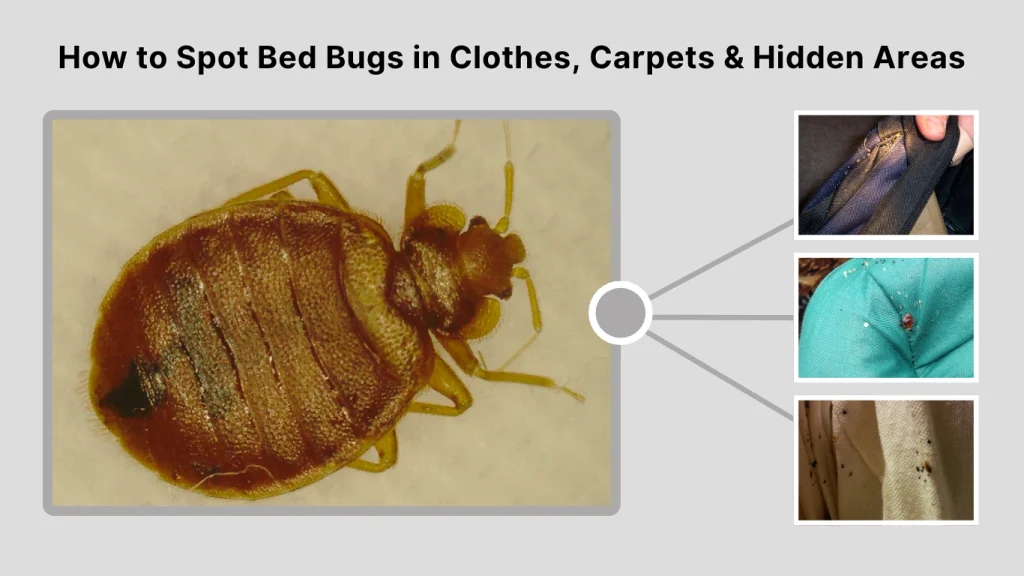
Clothing & Closets
Bed bugs can hide in clothing piles, especially items left on the floor or in laundry baskets. Check:
- Inside pockets
- Under folded fabric
- Along seams of thick clothing
- Dark-colored garments
If you spot white eggs or black spots on fabric, wash everything on high heat immediately.
Carpets & Baseboards
Bed bugs may hide in carpet edges, especially near beds or couches. Use a flashlight to inspect:
- Where carpet meets wall
- Under area rugs
- In cracks of wooden floors
Baseboards often show clear signs such as black dots (feces) or shed skins.
Airplane Seats, Hostels & Public Places
Bed bugs travel easily through public seating. Before sitting on an airplane seat or hostel bunk:
- Check seams and headrest stitching
- Look for black spots
- Inspect the creases where fabric meets plastic
These places do not always have infestations, but caution helps avoid bringing bugs home.
How to Spot Bed Bugs During the Day vs. Night
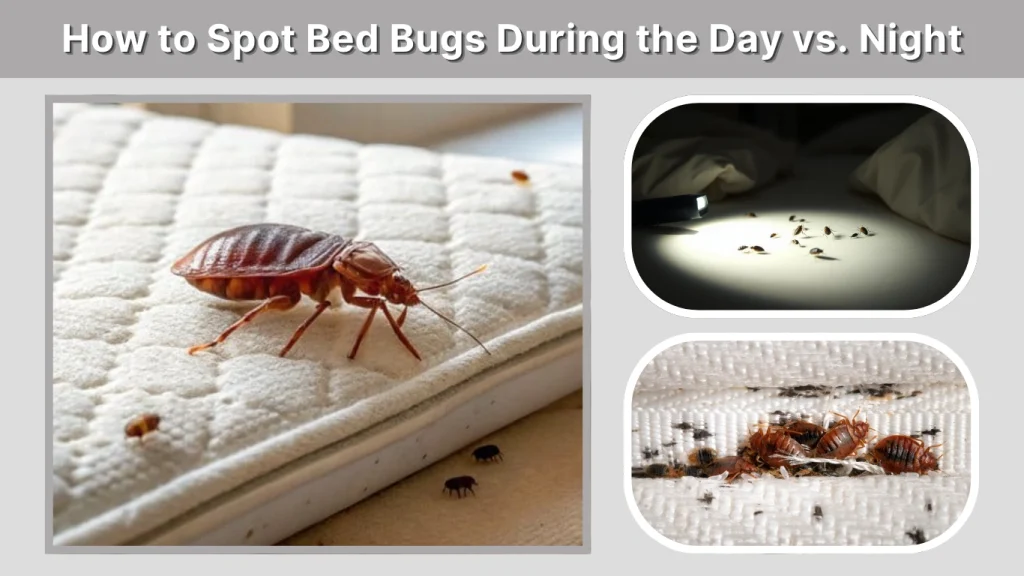
Night Inspection (Most Active Time)
Bed bugs are nocturnal, making nighttime the best time to spot them. To inspect:
- Turn off the lights for 10–15 minutes.
- Use a flashlight to check sheets and mattress edges.
- Look for movement around pillows and bed corners.
Bed bugs move quickly when disturbed, so watch closely.
Daytime Inspection Techniques
During the day, bed bugs hide deep in cracks and dark areas. To find them:
- Use a credit card to scrape seams and dislodge bugs
- Lift mattresses, couch cushions, and rugs
- Open drawers and inspect corners
- Look behind wall hangings
Bed bugs often hide in tight spots where they feel protected from light and movement.
Using UV Light or Bed Bug Traps
Some signs of bed bugs—especially fecal stains—are easier to detect under a UV or blacklight. Bed bug traps, such as interceptor cups, are excellent for confirming infestations. Place cups under bed legs; bugs climb in and cannot escape, making detection easy.
Bed bug attractant traps using CO₂ or heat can also draw them out of hiding, especially in empty apartments.
How to Spot a Full Bed Bug Infestation
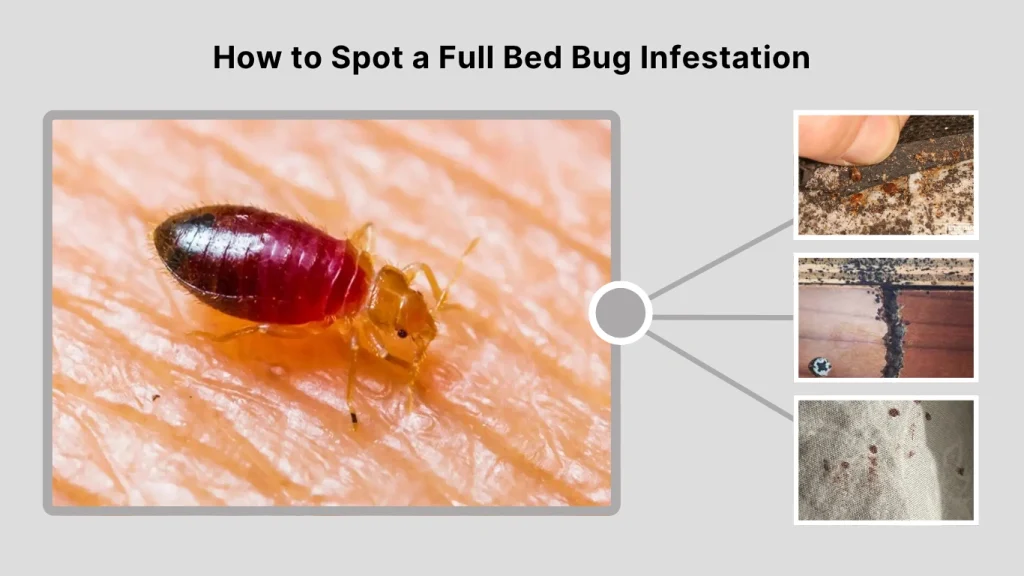
Multiple Hiding Spots
If you find bed bugs in more than one location—such as the bed, couch, and baseboards—the infestation is widespread. Multiple clusters of fecal spots are a strong indicator.
Seeing Bugs in Daylight
Bed bugs appearing during the day means a large population is running out of hiding space. This is considered a severe infestation and requires immediate action.
Bed Bug Nests & Clusters
Though bed bugs do not build traditional nests, they tend to gather in clusters where you may find:
- Live bugs
- Eggs
- Shells
- Fecal stains
These clusters often appear behind headboards, inside box springs, and in couch frames.
How to Spot Bed Bugs in an Apartment or Empty House
Empty apartments can still harbor bed bugs because they hide in walls, outlets, and carpeting. To inspect an empty property:
- Check behind outlet covers
- Look inside wall cracks
- Inspect under baseboards
- Flashlight-test carpets
- Examine windowsills and curtain rods
Bed bugs can live for months without feeding, so an empty home may still contain a hidden infestation.
How to Spot Bed Bugs on Your Body or Skin
Bed Bug Bites vs Other Insects
Bed bug bites typically appear:
- In rows or clusters
- On arms, shoulders, neck, and legs
- Red, itchy, swollen
Flea bites usually appear on ankles, while mosquito bites are random, not patterned.
Dark Spots or Scarring After Bites
Scratching bed bug bites can cause scarring or dark marks. These pigmented spots may last weeks. Treat with mild creams, aloe vera, or consult a dermatologist if infected.
Immediate Steps After Spotting Bed Bugs
What to Do Right Away
Once you confirm bed bugs, take immediate action:
- Remove all bedding
- Wash sheets and clothes on high heat
- Vacuum mattress and bed frame
- Use a steamer on mattress seams
Avoid moving items to other rooms, as this spreads bugs.
Preventing Further Spread
- Seal clothing in plastic bags
- Use mattress encasements
- Keep beds away from walls
- Install interceptor traps
- Reduce clutter around sleeping areas
These steps help control bugs until you begin full treatment or hire professionals.
FAQs
How do I know if I have bed bugs or something else?
Bed bug signs include small red bites in clusters, tiny black fecal spots on sheets, shed skins, and blood smears. Flea bites usually appear on ankles, while mosquito bites are random. If you see multiple early signs—especially black dots on mattress seams—you likely have bed bugs.
What do bed bug eggs and baby bed bugs look like?
Bed bug eggs are tiny, white, and shaped like grains of rice, often glued in clusters in seams or cracks. Baby bed bugs (nymphs) are pale, translucent, and almost invisible until they feed. Their stomach turns bright red after feeding, making them easier to identify.
Where are bed bugs most commonly found in a home?
Bed bugs hide in mattress seams, box springs, headboards, couch cushions, carpets, baseboards, and cracks in wood furniture. They prefer dark, tight spaces near where people sleep or sit. In severe infestations, they may spread to closets, books, electrical outlets, and behind wall hangings.
Can bed bugs be spotted during the day?
Yes, but it’s harder. Bed bugs prefer darkness, so they hide deep inside cracks during the day. You can still find them by lifting mattresses, using a flashlight, checking furniture seams, or scraping cracks with a card. Seeing bugs in daylight usually signals a heavy infestation.
What should I do immediately after spotting bed bugs?
Act quickly: remove bedding, wash items on high heat, vacuum seams, steam mattresses, and isolate the bed using encasements and interceptor traps. Avoid moving items between rooms. Taking action within the first 24 hours helps prevent spread and makes elimination faster and more effective.
