
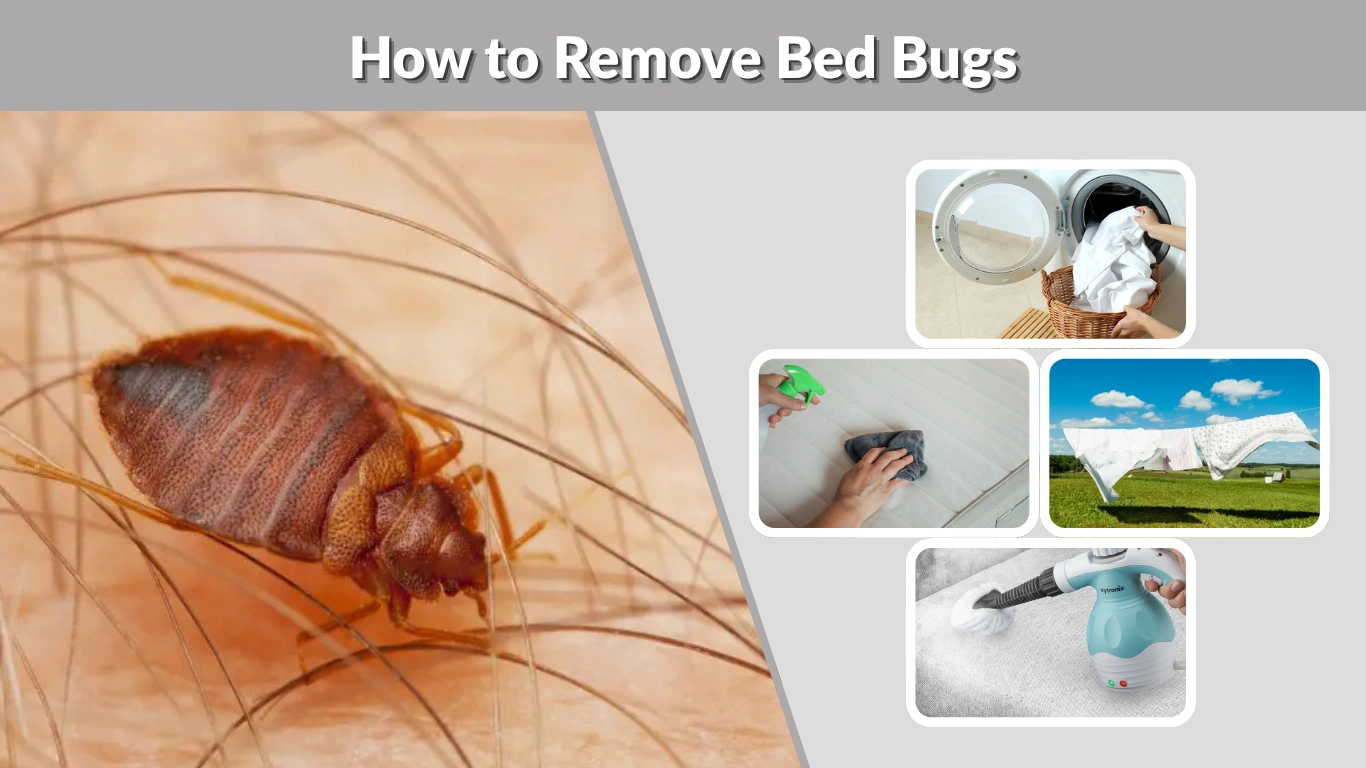
Bed bugs are one of the most persistent pests you can encounter. They hide in tiny cracks, breed quickly, and often go unnoticed until the problem becomes severe. Removing them completely requires patience, preparation, and a combination of treatments. In this guide, you’ll learn how to identify signs of an infestation, prepare your home, use effective DIY methods, and treat different areas where bed bugs commonly hide.
What Are Bed Bugs and Why They’re Hard to Remove
Bed bugs are small, reddish-brown insects that feed on human blood, usually at night. While they don’t transmit diseases, their bites can cause itching, welts, and sleep disruptions. What makes them especially difficult to eliminate is their ability to hide almost anywhere — inside mattresses, behind baseboards, under carpets, inside furniture joints, and even inside electronics.
They can survive weeks without feeding and reproduce rapidly, making early detection essential. Understanding how they behave helps determine the best removal methods.
Early Warning Signs of Bed Bugs
Physical Signs of an Infestation
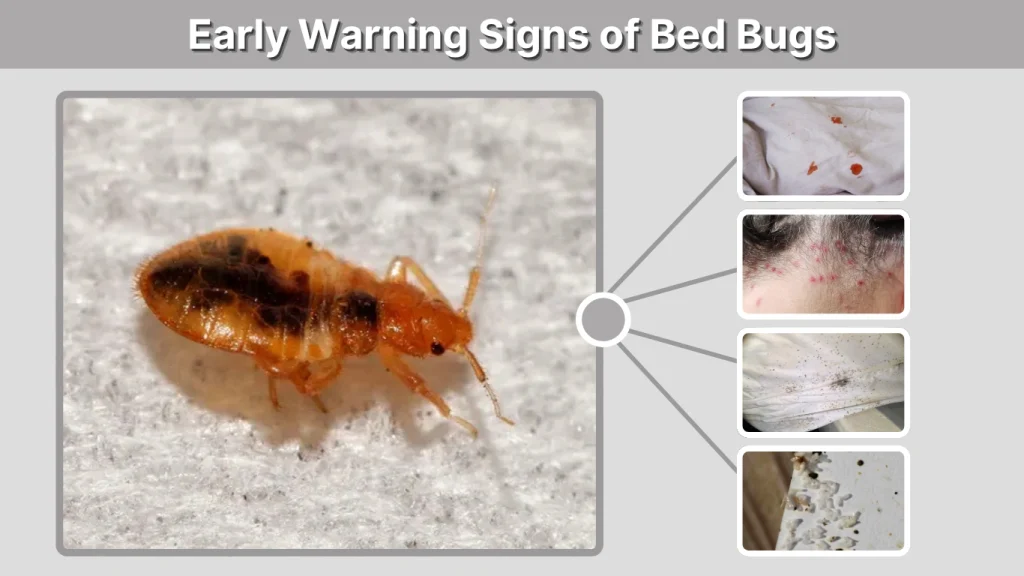
Bed bugs leave behind several clues, and recognizing them early helps stop the infestation before it spreads. Common signs include:
- Small red or dark brown blood stains on sheets or pillowcases
- Clusters of bites, often arranged in a line or zigzag pattern
- Black dots (fecal spots) on mattresses, sheets, or wall edges
- Eggs and shed skins, which are tiny, white, and sticky
The more signs you spot, the more likely the infestation has grown.
Where Bed Bugs Hide
Bed bugs prefer to stay close to where people sleep or rest. They hide in:
- Mattress seams and tags
- Bed frame joints and headboards
- Upholstered furniture such as couches and sofas
- Crevices in walls, carpets, and baseboards
- Electrical outlets, switches, and picture frames
Because they can flatten their bodies, they can squeeze into spaces as thin as a credit card.
Preparing Your Home for Bed Bug Removal
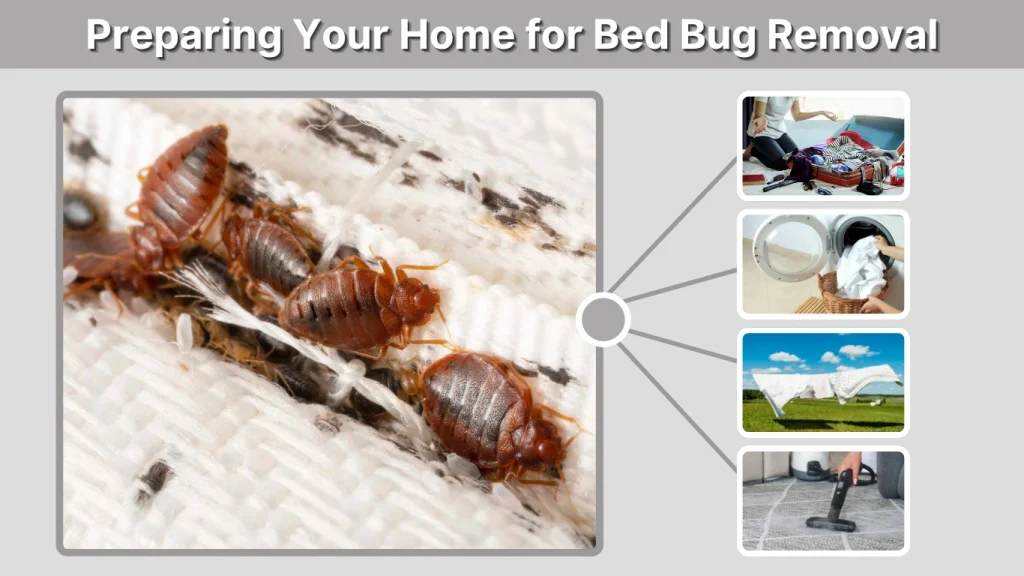
Before using any treatment, proper preparation is crucial. Bed bug removal is far more effective when the home is decluttered, cleaned, and organized.
Decluttering Rooms
Clutter gives bed bugs places to hide, making treatments less effective. Remove items such as piles of clothes, newspapers, boxes, and unnecessary bedding. Seal infested items in plastic bags to prevent spreading bugs to other areas.
Avoid moving things from room to room since this can make the infestation worse.
Laundering & Heat Treatment
Heat is one of the most effective ways to kill bed bugs and their eggs. For clothes, bedding, and small fabrics:
- Bag the items before transporting them.
- Wash them on the hottest setting safe for the fabric.
- Dry them on high heat for at least 30 minutes.
For delicate items that cannot be washed, place them in a dryer-only cycle on high heat.
Vacuuming and Steam Cleaning
Vacuuming removes bed bugs from surfaces but does not kill them. Focus on:
- Mattress seams
- Bed frames
- Carpeting edges
- Sofa cushions
- Baseboards and cracks
After vacuuming, immediately seal and discard the vacuum bag in an outdoor bin.
Steam cleaning is extremely effective. Bed bugs die at temperatures above 120°F (49°C). A quality steamer can penetrate deep into furniture, making it useful for treating couches, mattresses, and other soft surfaces.
DIY Methods to Remove Bed Bugs

Heat Treatment (Most Effective DIY Method)
Raising the temperature in infested areas is one of the best DIY approaches. You can:
- Use a handheld steamer
- Place items in black bags outdoors during hot summer days
- Use portable bed bug heaters
The key is ensuring temperatures reach 120–140°F and stay there long enough to kill all stages of bed bugs, including eggs.
Cold Treatment
Bed bugs can be killed by freezing items at 0°F (-18°C) for at least four days. This method works best for small objects, clothing, and shoes.
Natural Remedies
Several natural products can help reduce infestation levels:
- Diatomaceous earth (DE): A powder that kills bed bugs by dehydrating them
- Baking soda: Less effective but often used as a supplementary method
- Tea tree oil or lavender oil: Helps repel bugs but won’t eliminate an infestation
Natural remedies work best as supportive treatments, not standalone solutions.
Chemical Treatments (OTC Products)
Commercial sprays and powders can help kill visible bugs. Look for insecticides labeled for bed bug control. Apply them to cracks, bed frames, carpet edges, and furniture seams. Always follow safety guidelines and avoid overuse, especially if pets or children are present.
How to Remove Bed Bugs from Specific Places
Mattress and Bed Frame
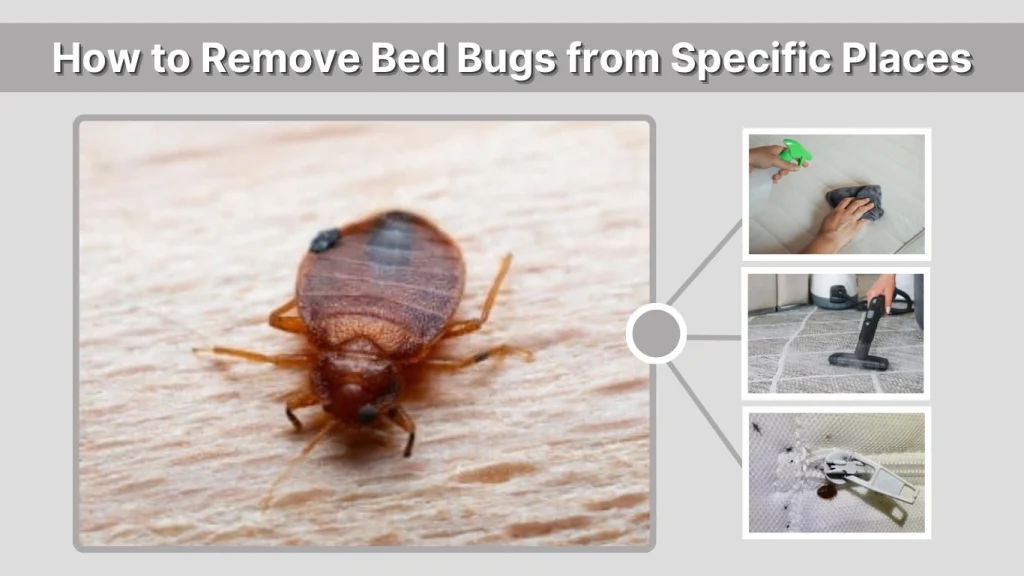
Start by inspecting the entire bed:
- Remove all bedding and wash it
- Vacuum every seam
- Use steam around stitching and corners
- Apply bed bug encasements to trap any remaining insects inside the mattress
- Treat bed frame joints and headboard cracks with steam or insecticides
Bed frames with hollow tubing are common hiding spots, so inspect them closely.
Couch, Sofa, and Upholstered Furniture
Couches often hide large numbers of bed bugs. Treat the following:
- Cushion seams
- Underneath removable cushions
- Frame joints
- Fabric folds
Steam treatment is usually the best option. If the infestation is severe, replacing the furniture may be necessary.
Clothes, Blankets, and Luggage
Treating fabrics correctly is essential since bed bugs easily hide in folds and seams. Wash clothes, blankets, pillows, and stuffed toys on high heat. For luggage, vacuum thoroughly and steam the seams, zippers, and pockets. After traveling, place your suitcase in a sealed bag and use heat or steam to kill any hitchhiking bugs.
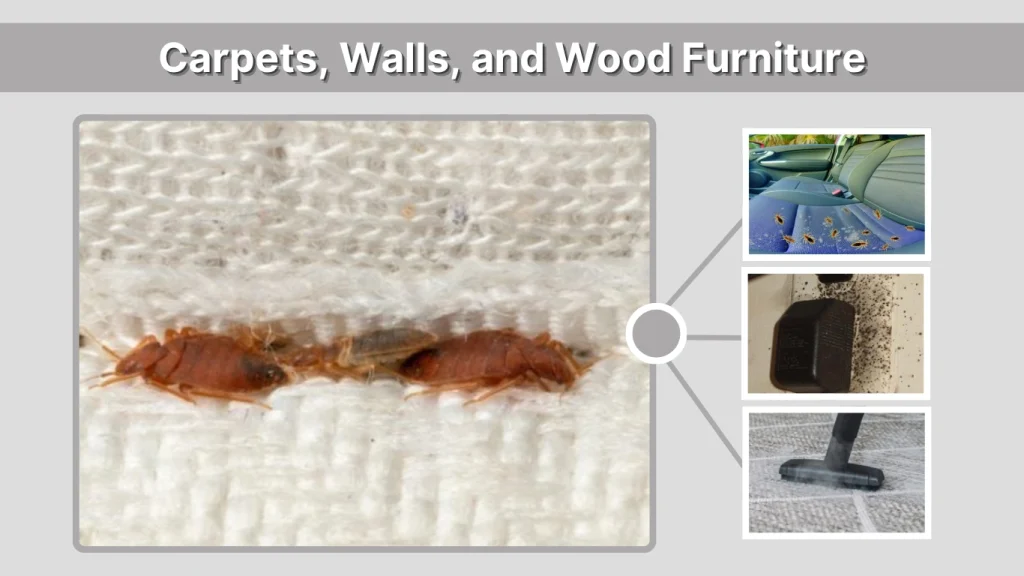
Carpets, Walls, and Wood Furniture
Carpets can trap eggs and nymphs deep within fibers. Thorough vacuuming along edges, corners, and under furniture is critical. Use steam on carpets whenever possible. For walls and baseboards, apply insecticide dust to cracks where bugs can hide. Wood furniture should be inspected closely, as bed bugs often hide inside joints, screw holes, and drawer tracks.
Cars, Electronics, and Other Sensitive Items
Electronics cannot be treated with liquid sprays or steam. Instead:
- Place them in sealed bags with bed bug heater devices
- Use portable heating systems designed for electronics
- Avoid DIY heat sources that can cause damage
For cars, vacuum all seats, cracks, and carpeted areas, then use steam where safe. Bed bugs often hide in seat seams and under floor mats.
Treating Bed Bug Bites and Skin Marks
Immediate Bite Relief
Most bed bug bites heal naturally, but itching can be intense. Clean the area with soap and water, apply an anti-itch cream or antihistamine ointment, and avoid scratching to prevent infection. Cold compresses also help reduce swelling. If you experience severe allergic reactions, seek medical care promptly.
Removing Dark Spots and Scars
Some bites leave behind dark spots or hyperpigmentation. To reduce marks:
- Apply aloe vera or mild retinol cream
- Use vitamin E oil or moisturizing lotions
- Avoid sun exposure on healing skin
- Consult a dermatologist for persistent scars
Proper wound care helps prevent long-term discoloration.
When to Call a Professional Exterminator
Signs You Need Professional Help
While DIY treatments can reduce or eliminate small infestations, larger ones often require professional support. You may need an exterminator if:
- Bed bugs keep returning after treatment
- You see bugs in multiple rooms
- Mattresses or furniture are heavily infested
- You find eggs and nymphs even after cleaning
Professionals use advanced methods like heat chambers, industrial steamers, and stronger insecticides.
Cost of Professional Bed Bug Removal
Professional treatment typically costs $300 to $1,500 depending on:
- Home size
- Infestation severity
- Number of treatments
- Treatment type (heat vs. chemical)
Heat treatments can cost more but often work faster and require fewer visits. Severe infestations may require two or more professional sessions.
Preventing Bed Bugs from Returning
Home Prevention Tips
Once your home is bed bug-free, prevention is key. Use mattress protectors, regularly vacuum carpets and beds, and reduce clutter. Inspect secondhand furniture before bringing it home. Bed bug interceptors placed under bed legs can help detect new activity early.
Travel Precautions
Hotels and rental homes are common sources of bed bug pickup. When traveling:
- Inspect the mattress and headboard
- Keep your luggage off the bed
- Store clothes in sealed bags
- Heat-treat your luggage when returning home
These habits significantly reduce your risk of bringing bed bugs home.
Long-Term Control
A monthly inspection routine helps ensure bed bugs never get established again. Check mattress seams, baseboards, and couches for early signs. Use interceptors or traps around bed legs to catch bugs before they spread.
Final Thoughts
Removing bed bugs completely takes persistence, consistency, and a combination of treatments. Early detection saves time, money, and frustration. If you follow the steps in this guide and use both heat and cleaning methods, you can eliminate most infestations on your own. For severe or recurring cases, professional exterminators offer more powerful solutions to ensure your home stays bed bug-free.
FAQs
How long does it take to fully remove bed bugs?
It typically takes between 2 to 6 weeks to eliminate bed bugs, depending on the infestation level and treatment method. Heat and steam work faster, while chemical treatments may require multiple applications. Consistent monitoring and follow-up are essential to ensure bugs and eggs are fully eradicated.
Can bed bugs be removed permanently?
Yes, bed bugs can be permanently removed by combining heat, deep cleaning, vacuuming, and sealing cracks where they hide. Long-term prevention, such as using mattress protectors and regular inspections, also plays a key role. Professional heat treatment often provides the most permanent solution.
Will washing clothes remove bed bugs?
Washing alone won’t kill bed bugs, but high heat drying will. Place clothes in a dryer on high heat for at least 30 minutes. This kills bugs at all life stages. Bag items before and after treatment to avoid re-infestation during transport.
How can I remove bed bugs from a mattress?
Vacuum the mattress thoroughly, steam it along seams and edges, and use a bed bug–proof mattress encasement. Treat the bed frame, headboard, and nearby cracks as well. If the infestation is severe, professional heat treatment is often the most reliable option.
Do natural remedies work for bed bug removal?
Natural remedies like diatomaceous earth, essential oils, and baking soda can help reduce bed bug activity but rarely eliminate infestations on their own. They work best as part of a broader plan that includes heat, vacuuming, steaming, and proper cleaning.
