
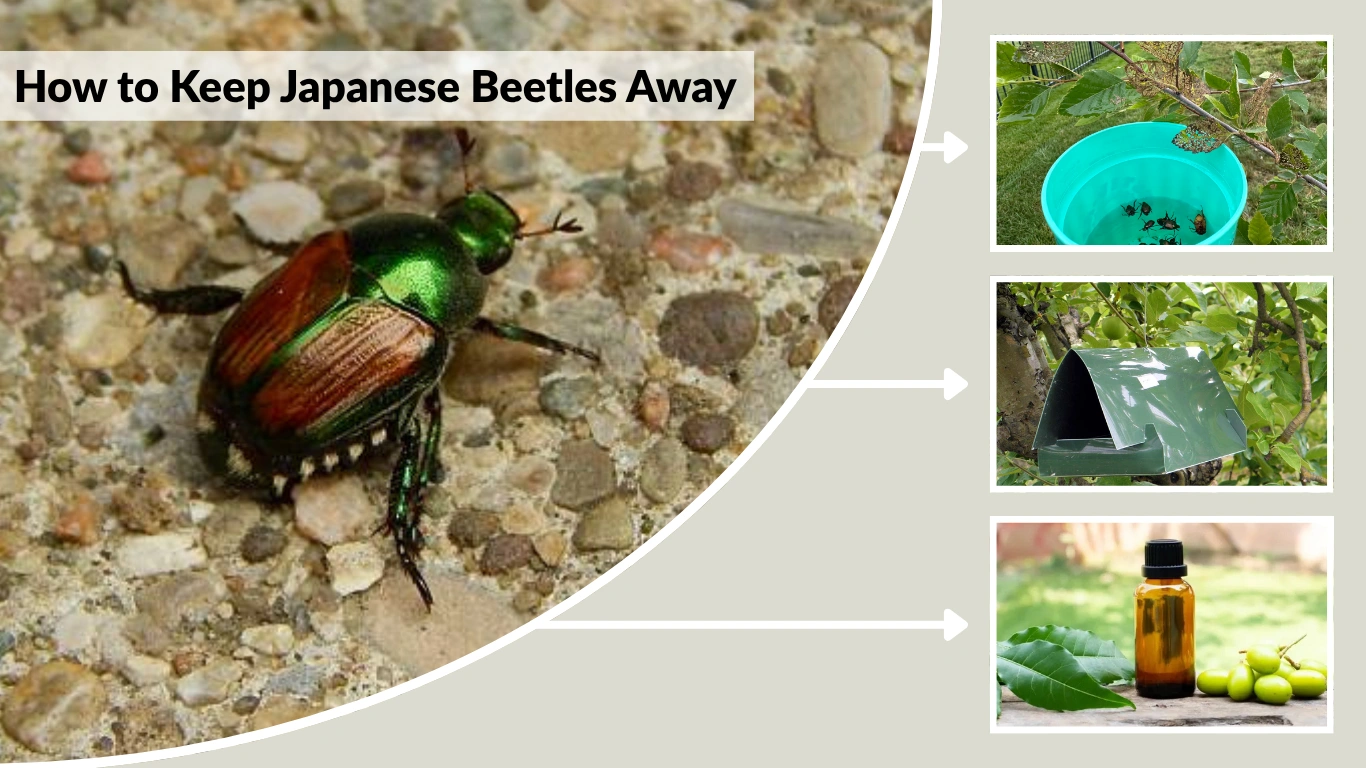
Japanese beetles are one of the most destructive garden pests for roses, fruit trees, and vegetable plants. Their shiny green and copper bodies may look harmless, but they can strip plants bare in days. Learning how to keep Japanese beetles away naturally and prevent them from invading your garden or home is essential. Using neem oil, repellent plants, and preventive barriers can make a significant difference in protecting your plants and keeping your garden healthy all season long.
Understanding Japanese Beetles
Japanese beetles (Popillia japonica) are invasive insects that originated in Japan and spread throughout North America. They typically appear in early summer and remain active for about six to eight weeks. Adults feed on plant foliage, flowers, and fruits, while the larvae (grubs) live underground and feed on grassroots, causing damage to lawns.
They are most active during warm, sunny days and can gather in large numbers, quickly overwhelming plants. Understanding their behavior and life cycle is the first step in controlling them effectively.
Signs of Japanese Beetle Infestation
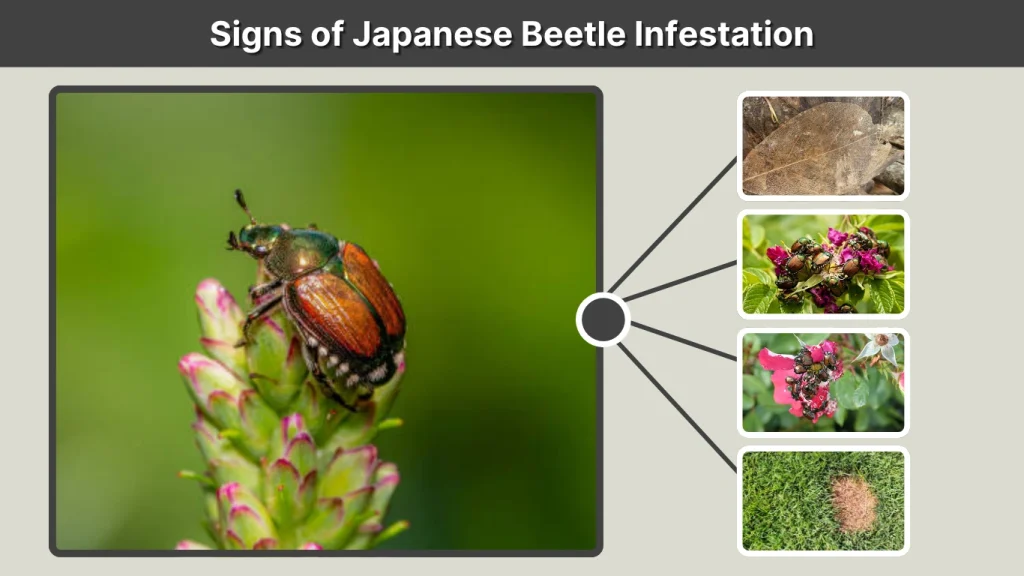
Identifying an infestation early can save your plants from serious damage. Japanese beetles are easy to spot due to their metallic green and copper-colored shells. Here are common signs to watch for:
- Skeletonized leaves where only the veins remain
- Clusters of beetles feeding on flowers and fruit
- Damaged petals, especially on roses and hibiscus
- Brown patches on lawns due to grub feeding underground
Once these beetles find a food source, they release pheromones that attract even more beetles, creating a chain reaction of damage.
Plants That Attract and Repel Japanese Beetles
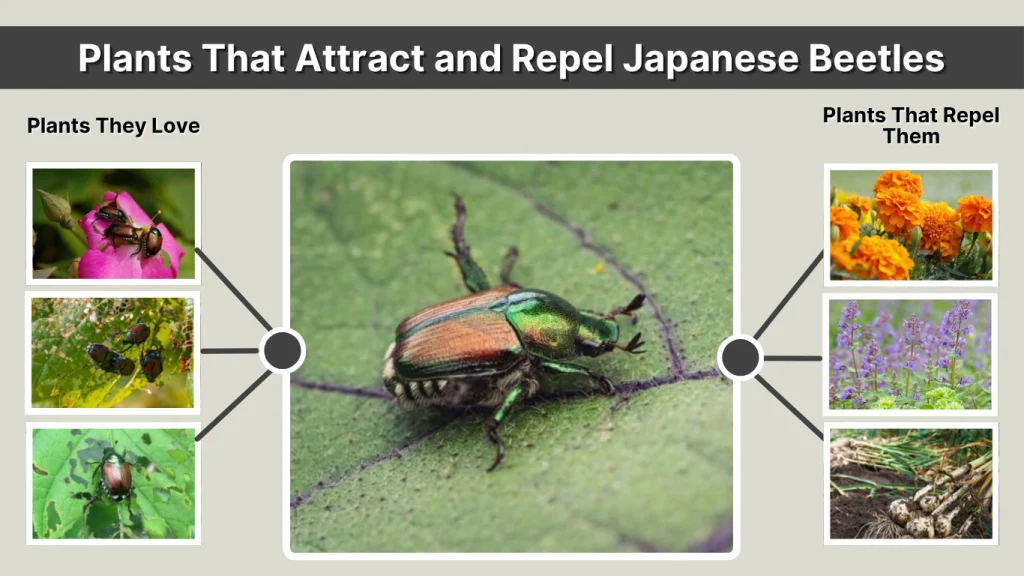
Japanese beetles have strong preferences for certain plants. Understanding what they love and what repels them helps in planning your garden strategically.
Plants They Love
These plants are most vulnerable:
- Roses
- Grapes
- Basil
- Apple trees
- Hibiscus
- Crape myrtle
Plants That Repel Them
Certain plants naturally deter Japanese beetles due to their scent or compounds:
- Marigolds
- Catnip
- Garlic
- Tansy
- Lavender
- Chives
Planting these repellents around susceptible plants can help reduce beetle attacks while adding variety and fragrance to your garden.
Natural Ways to Keep Japanese Beetles Away
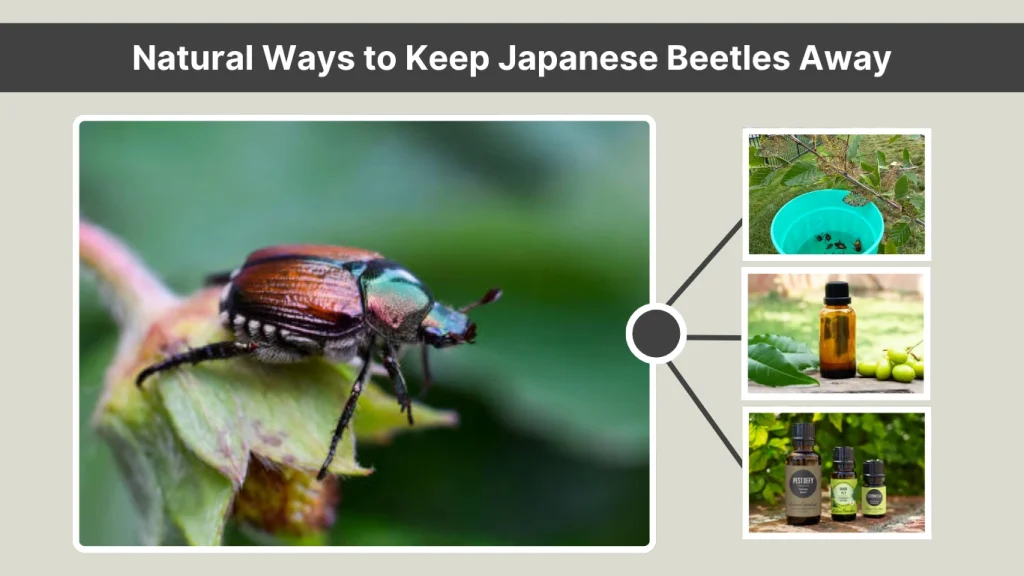
There are many safe, non-toxic methods to keep Japanese beetles off your plants without harming the environment. These natural options protect beneficial insects and maintain garden balance.
Handpicking is one of the simplest ways to manage beetles. Early in the morning, when they’re sluggish, shake them off leaves into a bucket of soapy water. This method may sound tedious, but it’s surprisingly effective for small gardens.
Neem oil is another excellent organic solution. It disrupts the beetle’s feeding and reproduction cycle. Spray neem oil directly onto affected plants every few days during peak season. It’s safe for most plants and even helps deter other pests.
Essential oils like peppermint, cedarwood, and clove are known for their repelling properties. Mix a few drops with water and spray onto leaves. The strong scent discourages beetles from settling and feeding.
Additionally, you can create a DIY deterrent spray using dish soap and water. Mix one teaspoon of mild liquid soap in a quart of water and spray on affected plants. The soap breaks the beetle’s outer shell, killing them naturally without chemicals.
Best Sprays and Oils for Japanese Beetles
Selecting the right spray makes a noticeable difference in how effectively you can protect your garden. Neem oil remains the most popular choice due to its dual power—it kills existing beetles and prevents eggs from hatching. For best results, apply neem oil early in the morning or late evening when bees aren’t active.
Soapy water spray is ideal for immediate relief. Mix one tablespoon of liquid soap with a quart of water and spray directly on beetles. It suffocates them and removes their protective coating.
Peppermint and mint oil sprays provide a refreshing, natural deterrent. Mix ten drops of peppermint essential oil in a liter of water and add a small amount of dish soap to help it stick to leaves. Reapply after rain or heavy dew for consistent protection.
These sprays not only drive beetles away but also leave your garden smelling pleasant. Regular use ensures your plants stay beetle-free throughout the growing season.
Using Barriers and Traps
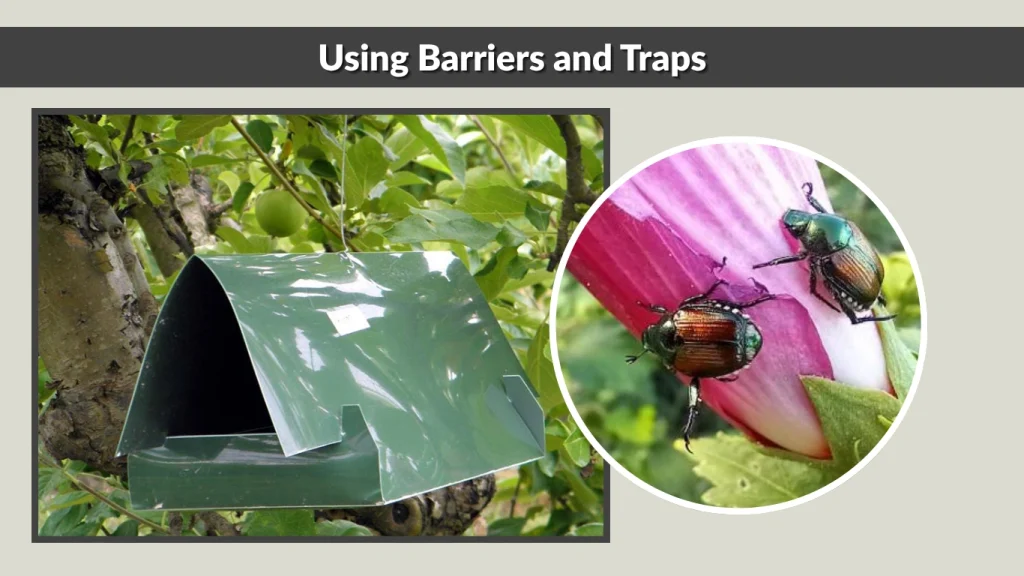
Physical barriers are a proactive way to stop beetles from reaching your plants. Fine netting or mesh covers can shield vulnerable plants like roses, basil, and grapes while still allowing sunlight and airflow.
Pheromone traps are also effective but must be placed strategically. Never position them near plants you want to protect, as the scent attracts beetles from nearby areas. Instead, place traps at least 30 feet away from your main garden area to draw beetles away from your plants.
For fruit trees, use floating row covers during peak beetle season. These lightweight fabrics prevent beetles from landing on fruits while maintaining good ventilation.
By combining traps and barriers, you can control the population and minimize damage without resorting to harsh chemicals.
Keeping Japanese Beetles Off Specific Plants
Different plants require slightly different protection methods. Roses, basil, fruit trees, and grapes are among the most frequently targeted.
Roses
Roses are a favorite feast for Japanese beetles. Regular inspection is key—remove beetles by hand early in the morning. Spray neem oil or garlic water solution twice a week for lasting defense. Deadhead spent blooms to reduce attraction.
Basil, Grapes, and Fruit Trees
Basil and grapes can be shielded with fine netting during the peak summer months. Companion planting with garlic, chives, or catnip helps repel beetles naturally. Fruit trees benefit from light mesh or cloth barriers and the application of organic sprays like neem or peppermint oil.
How to Keep Japanese Beetles Out of the Garden
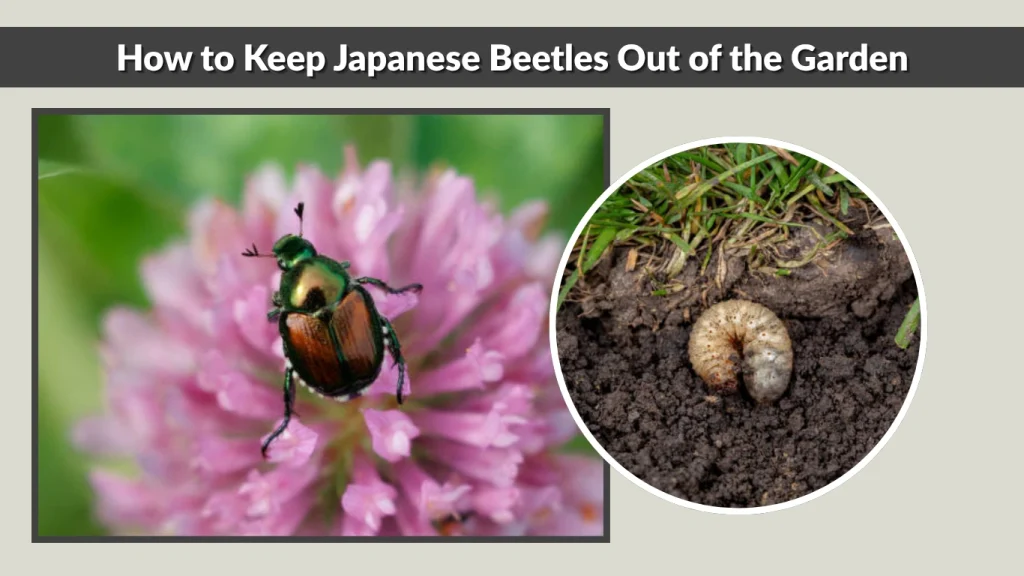
Keeping Japanese beetles away from your garden requires a mix of prevention and control. Start by inspecting plants regularly during early summer. Beetles tend to appear suddenly, so spotting them early helps limit damage.
Applying beneficial nematodes to the soil is one of the most effective long-term solutions. These microscopic worms naturally kill beetle larvae before they mature into adults. This prevents the next generation from infesting your plants.
You can also introduce natural predators like birds, frogs, and parasitic wasps. Setting up birdbaths or feeders encourages these helpful creatures to visit your garden. Beetles dislike certain bird species, making this a great eco-friendly option.
Mulching your garden also helps. Using cedar mulch adds an extra layer of protection since its scent repels insects. Keep your garden clean by removing fallen fruit, dead leaves, and decaying plant matter—these attract beetles and give them shelter.
How to Keep Japanese Beetles Out of the House and Pool
While Japanese beetles are outdoor pests, they occasionally find their way indoors through windows, vents, or cracks. Keeping them out of your home is simple with preventive steps.
Seal any gaps around doors, windows, and vents using caulk or weather stripping. Installing fine mesh screens on windows and doors provides extra protection during beetle season. Avoid keeping bright lights on near open windows at night since light attracts insects.
If beetles do get inside, use a vacuum to remove them gently instead of crushing them, as they release an unpleasant odor. Natural deterrents such as peppermint oil diffusers or cotton balls soaked in clove oil can also keep them away from indoor areas.
For pools, cover them with a mesh pool net when not in use. Beetles are attracted to the water’s reflection and often drown in pools, creating cleanup problems. Keeping the pool covered or installing nearby repellant plants like lavender or catnip helps deter them.
Long-Term Prevention Tips
The key to lasting beetle control is consistent maintenance. Here are practical long-term tips for prevention:
- Inspect weekly: Check plants regularly, especially during early summer when beetles emerge.
- Treat soil annually: Apply beneficial nematodes or milky spore powder each spring to reduce larvae populations.
- Encourage diversity: Avoid monocultures; mixed planting makes it harder for beetles to spread.
- Rotate crops: Moving plants each season prevents larvae from establishing in the same soil.
- Avoid overwatering: Japanese beetle grubs thrive in moist soil, so water plants only when needed.
These habits keep your garden balanced and reduce beetle infestations naturally without relying on harsh chemicals.
FAQs
What keeps Japanese beetles away naturally?
Several natural methods keep Japanese beetles away. Handpicking them in the morning, spraying neem oil, and using essential oils like peppermint or clove are effective. You can also plant deterrent species such as marigolds, catnip, and garlic. Regular garden maintenance ensures fewer hiding places and less attraction.
Does neem oil really keep Japanese beetles away?
Yes, neem oil is one of the most effective natural deterrents against Japanese beetles. It works by disrupting their feeding and reproduction cycle. When beetles consume neem-treated leaves, they stop eating and eventually die. Apply neem oil every few days during infestation periods for continuous protection.
Which plants repel Japanese beetles the best?
Certain plants release scents that repel Japanese beetles naturally. The best options include marigolds, tansy, lavender, chives, catnip, and garlic. These can be planted around roses, fruit trees, or vegetable beds to create a protective barrier. Their strong aroma confuses beetles and keeps them from landing or feeding.
How do I protect roses and fruit trees from Japanese beetles?
Protect roses by spraying neem oil or a mild soapy water solution twice a week. For fruit trees, use fine netting or floating row covers during beetle season. Companion planting with garlic and chives enhances protection, while regular pruning and early morning inspection help prevent infestations before they spread.
Can essential oils help deter Japanese beetles from my home and garden?
Yes, essential oils like peppermint, eucalyptus, and cedarwood are natural repellents. Mix a few drops with water and spray on plant leaves, door frames, or window edges. The strong scent masks the pheromones that attract beetles. Reapply every few days or after rain for lasting results both indoors and outdoors.
