
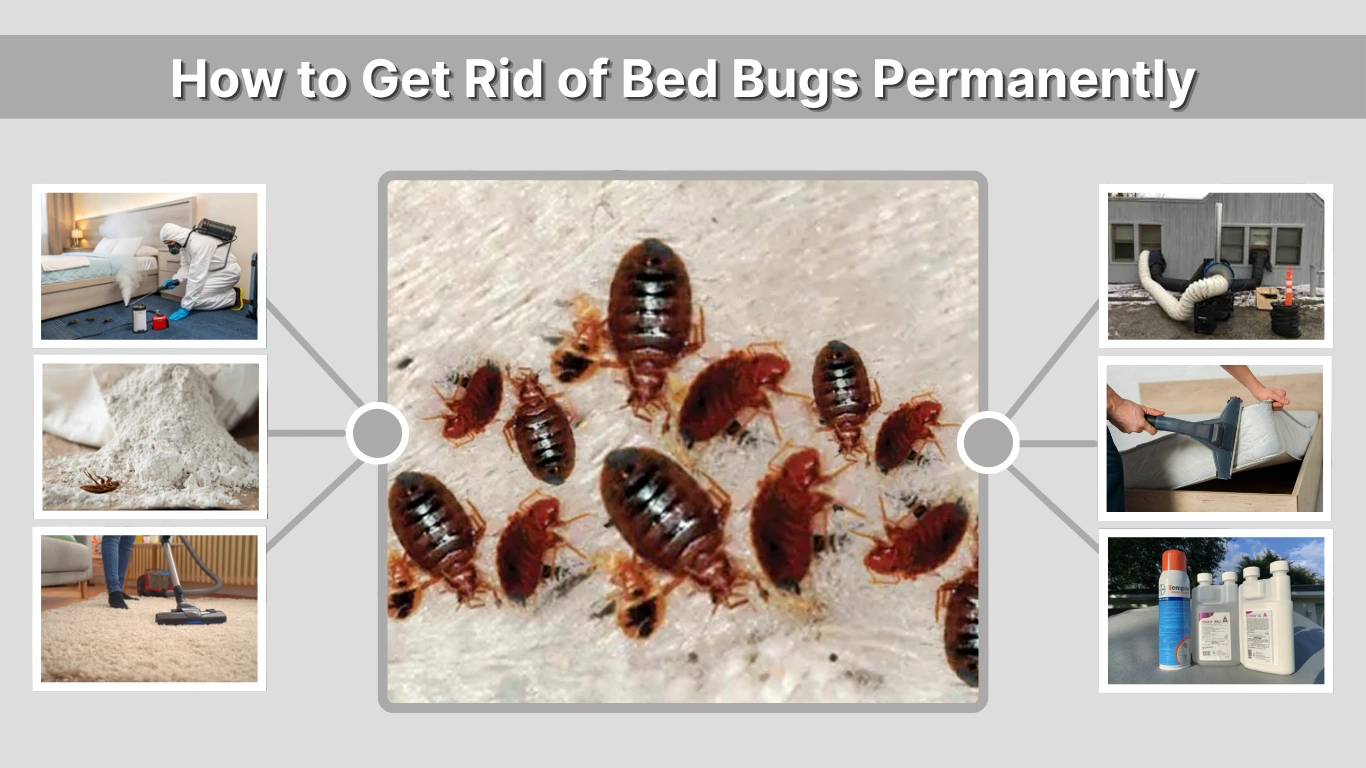
Bed bugs are among the most persistent and frustrating household pests. Once they settle into mattresses, furniture, and tiny cracks around your home, they multiply quickly and can become extremely difficult to eliminate. Many people waste time and money trying random sprays, home remedies, or short-term fixes that only push the bugs deeper into hiding. But with the right strategy—and a combination of heat, cleaning, and proven treatments—you can get rid of bed bugs permanently. This guide explains the most effective methods for fast, natural, and long-term removal.
Understanding Bed Bugs Before Removal
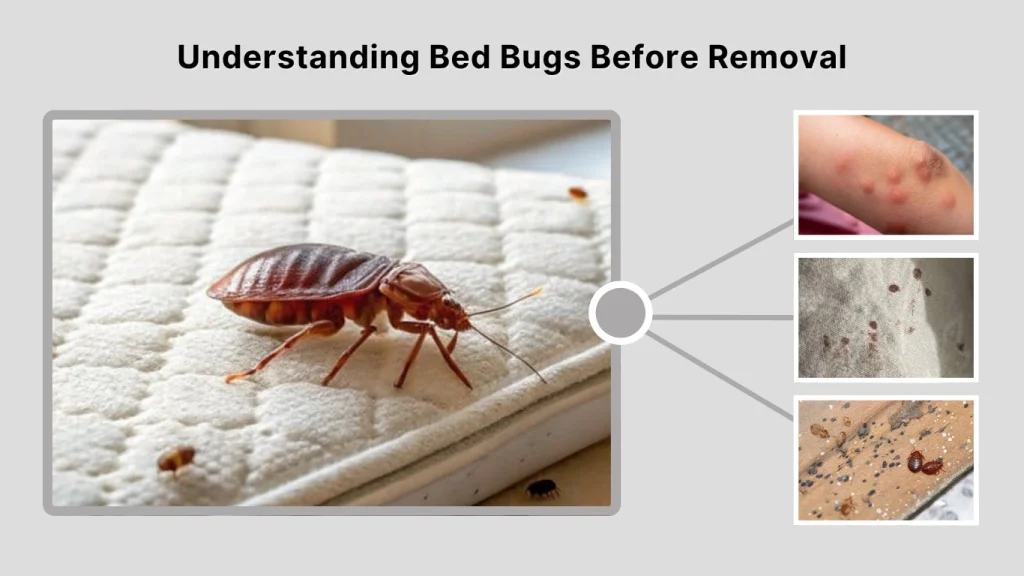
Bed bugs are small, flat, reddish-brown insects that feed on human blood, often during the night. They are expert hiders and can survive for months without feeding. Because of their resilience and ability to spread quickly, a proper understanding of their behavior is essential before attempting removal.
Why Bed Bugs Are Hard to Kill
Bed bugs have adapted to survive in almost any environment. They’re resistant to many store-bought insecticides, which is why single-treatment solutions rarely work. Their bodies are flat, allowing them to fit into cracks as small as 1 mm wide. They also reproduce rapidly—one female can lay hundreds of eggs in her lifetime, and eggs are often the reason infestations return after treatments.
Early Signs of Infestation
Early detection is your best chance at preventing a major outbreak. Look for:
- Small, itchy bites in rows or clusters
- Dark bloodstains on sheets
- Shed skins or tiny eggs near mattress seams
- A musty odor caused by pheromones
If you notice even one of these signs, it’s time to take action immediately.
How to Get Rid of Bed Bugs Permanently (Step-by-Step)
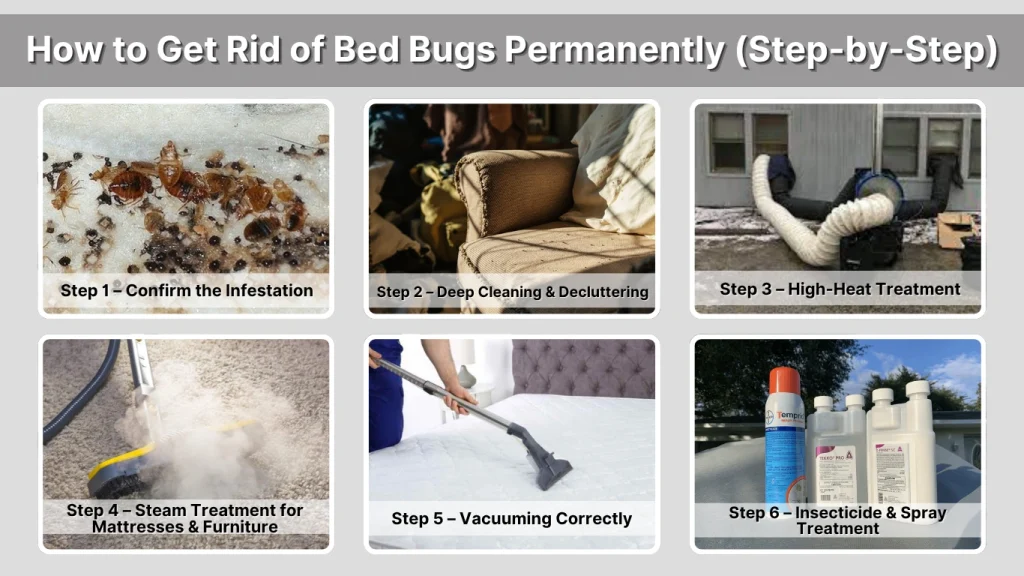
Eliminating bed bugs for good requires a combination of heat, cleaning, chemical treatment or natural alternatives, and long-term prevention. A single approach rarely works; instead, a layered process ensures eggs, nymphs, and adults are all destroyed.
Step 1 – Confirm the Infestation
Inspect your mattress seams, bed frame, headboard, baseboards, and any nearby furniture. Use a flashlight to spot small brown bugs, eggs, or black fecal spots. For severe infestations, bed bug detection strips or monitors can help confirm activity.
Step 2 – Deep Cleaning & Decluttering
Bed bugs love clutter because it gives them endless hiding places. Remove unnecessary items around your bed, seal clothing in plastic bags, and reduce anything touching the floor. The more open your space is, the easier it becomes to target hiding spots.
Step 3 – High-Heat Treatment (Most Effective DIY Method)
Heat is the number-one enemy of bed bugs. They die permanently when exposed to temperatures above 120°F (49°C). You can use:
- Hot dryers for clothing
- Portable bed bug heaters
- High-heat steamers
- Hot sunlight for sealed items
Heat penetrates deep into fabrics and small gaps, killing bugs and eggs at all life stages.
Step 4 – Steam Treatment for Mattresses & Furniture
A high-powered steamer is one of the best tools for killing bed bugs instantly. Apply steam slowly along:
- Mattress seams
- Pillow edges
- Bed frames
- Drawer corners
- Sofa creases
Steam must reach at least 160°F / 71°C to be effective. A single steam treatment won’t solve everything, but repeated sessions make a huge difference.
Step 5 – Vacuuming Correctly
Vacuuming helps remove live bugs, eggs, skins, and droppings. Focus on:
- Baseboards
- Cracks in the wall
- Under the bed
- Carpet edges
- Mattress folds
Always empty the vacuum outside immediately and seal the contents in a plastic bag.
Step 6 – Insecticide & Spray Treatment
Chemical treatment is often necessary for severe infestations. Effective types include:
- Pyrethroid sprays
- Silica gel (desiccant dust)
- Professional-grade insecticides
- Crack-and-crevice sprays for baseboards
You must treat areas multiple times—usually 2–3 sessions spaced 7–10 days apart—to kill newly hatched eggs.
Step 7 – Laundering Soft Items
Wash and dry all bedding, curtains, stuffed animals, clothing, and blankets on the highest heat setting. Bed bugs cannot survive the hot dryer cycle. Store freshly cleaned items in sealed bags until your home is fully treated.
Step 8 – Encasements for Mattresses & Box Springs
Bed bug-proof encasements trap surviving bugs inside and prevent new ones from entering. They must stay sealed for 6–12 months because bed bugs can survive long periods without feeding. Encasements also make future inspections easier.
Fast & Permanent Bed Bug Removal Methods
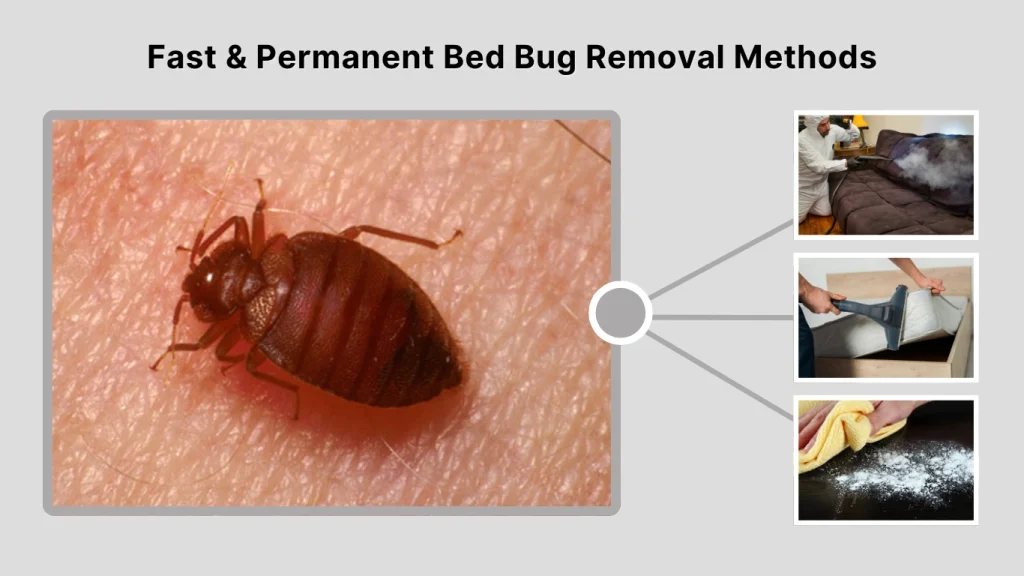
People dealing with an active infestation often want immediate results. While total eradication takes time, certain steps reduce bed bug numbers dramatically within 24 hours.
Same-Day Checklist
To get fast relief:
- Steam the entire bed and sofa
- Vacuum thoroughly
- Apply desiccant dust (like diatomaceous earth)
- Spray cracks and crevices
- Wash bedding on high heat
These actions deliver fast reduction but must be repeated to ensure permanent removal.
What to Expect in the First 24 Hours
After treating your home, bed bugs may become more active as they flee heat or chemicals. This is normal. Over the next few days, you’ll see fewer live bugs and more dead ones. Consistency is key—most infestations take several rounds of treatment to eliminate completely.
Natural Ways to Permanently Get Rid of Bed Bugs
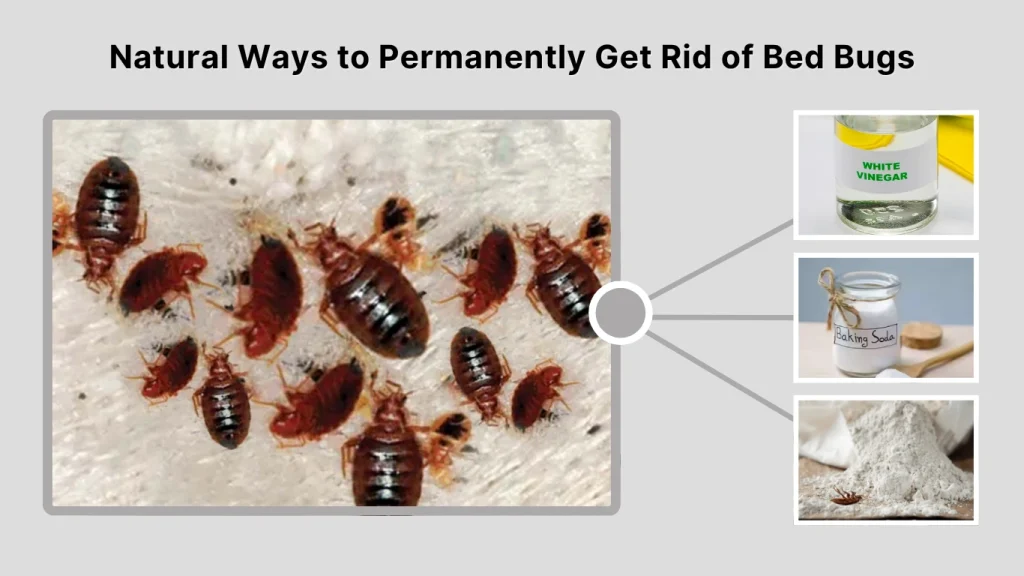
Natural remedies help when used correctly, although they are usually slower than heat or insecticides. They work best as part of a larger treatment plan rather than as a standalone solution.
Vinegar Method
Vinegar kills bed bugs on contact by damaging their nervous system. It works for visible bugs but cannot penetrate eggs or deep hiding places. Use it for surface spraying, not as your only treatment.
Baking Soda
Baking soda is thought to dehydrate bed bugs, but results vary. While it may help reduce moisture in hiding spots, it is not strong enough to eliminate an infestation alone.
Diatomaceous Earth (Most Effective Natural Option)
Diatomaceous earth (DE) is one of the most powerful natural bed bug killers. It works by scratching and dehydrating bed bugs to death. Spread a thin layer:
- Around bed legs
- Under furniture
- Along walls
- Under carpets
It can take 1–3 weeks to see full results, but it is one of the few natural solutions proven to work reliably.
Essential Oils
Some oils have mild insecticidal effects, including:
- Tea tree oil
- Lavender oil
- Peppermint oil
These can help repel bed bugs, but they will not eliminate a full infestation.
Why Natural Methods Require Repetition
Bed bugs lay eggs in hidden areas. Natural treatments usually cannot kill them all at once, so multiple rounds are required to ensure complete eradication.
Home Remedies to Get Rid of Bed Bugs Permanently
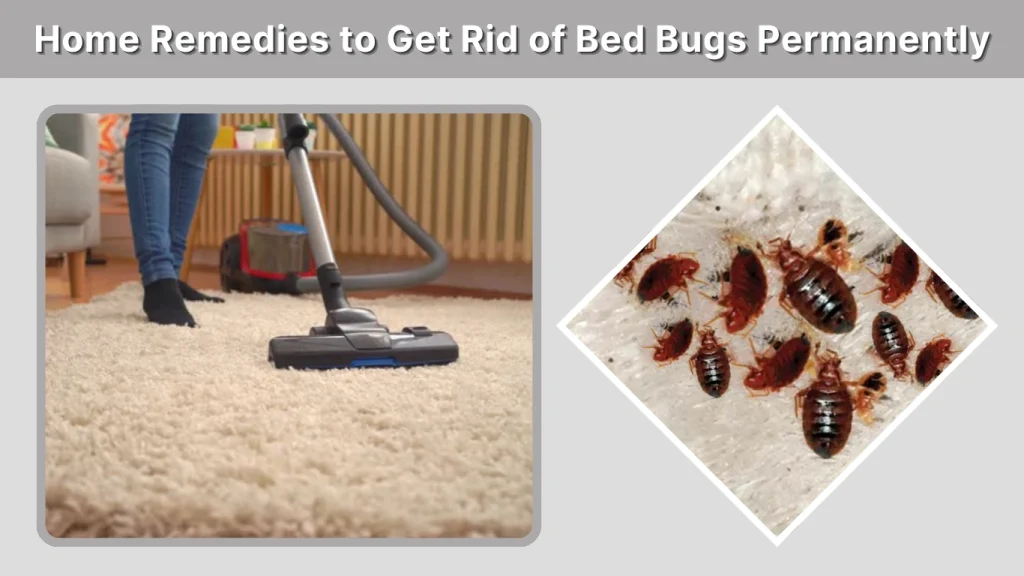
Home remedies can support your main treatment strategy, but they must be used consistently and paired with heat and cleaning. Their biggest benefit is affordability and accessibility.
Vacuuming + Steam Combo
One of the most effective DIY combinations is vacuuming followed by steam. Vacuuming removes visible bugs, eggs, and debris, while steam penetrates deeper areas and kills remaining bugs instantly. Repeat this method daily or every other day for best results.
Freezing Items
Bed bugs die when exposed to temperatures below 0°F (-18°C) for several hours. This method works well for:
- Shoes
- Books
- Toys
- Electronics
Place items in sealed bags and leave them in a deep freezer for at least 4–5 days.
Alcohol Sprays
Rubbing alcohol kills bed bugs on contact, but it evaporates quickly and is highly flammable. It helps reduce populations but will not eliminate a full infestation. Use caution around bedding, outlets, and heat sources.
Homemade Traps
Interceptor cups placed under bed legs trap bugs as they climb up or down. CO₂ traps (dry ice + soap water mixture) can attract bed bugs but should only be used with proper instructions. Traps help monitor infestations and catch stray bugs.
What Doesn’t Work (Common Myths)
Many “miracle hacks” online simply don’t kill bed bugs permanently. These include:
- Salt alone
- Bleaching mattresses
- Kerosene or gasoline (dangerous)
- Essential oils as the only treatment
- Leaving furniture in the sun all day
Sunlight rarely reaches the temperatures needed to kill bed bugs deep inside furniture. Stick to proven methods for real results.
Location-Based Bed Bug Solutions (Country-Specific)
Climate, pest control availability, and legal restrictions vary by region, so bed bug treatment methods also change depending on location.
India (Bangalore, Mumbai, Delhi, etc.)
India’s warm climate and dense housing increase infestation risks. Professional fumigation is widely available and affordable. Many households use:
- High-heat sunlight exposure (sealed items only)
- Professional sprays
- Pest-control heat treatments in major cities
Steamers are becoming more common and are effective for apartments.
Kenya & Nigeria
Budget-friendly treatments are popular, including:
- Diatomaceous earth
- DIY steamers
- Local pest control sprays
- Deep cleaning and repeated heat exposure
Many homes also rely on sunlight to heat sealed furniture, though direct heat tools work better.
United Kingdom
The UK has strict pesticide regulations, so many strong insecticides are not available to consumers. Professional heat treatments are the most effective option and are widely used. DIY methods such as steam and vacuuming can help between professional sessions.
United States
The U.S. offers a wide variety of pest-control options, but costs vary by state. DIY heat treatment equipment and professional services (heat chamber, steam, fumigation) are common. Some states have higher bed bug activity, especially in major cities and warm climates.
When to Call a Professional Exterminator
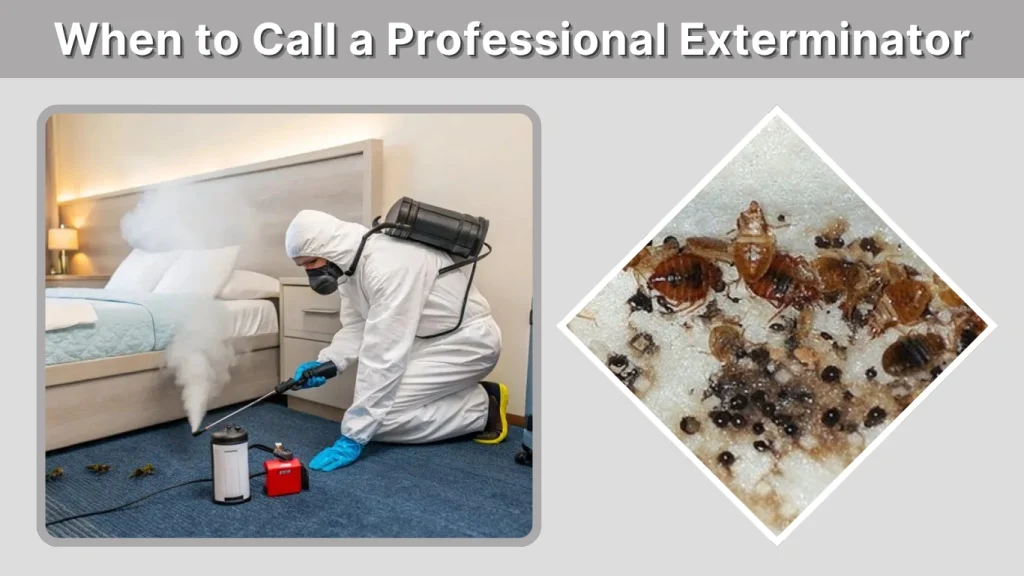
While many DIY treatments work, severe or long-term infestations may require expert help. Professionals have access to industrial-grade tools and chemicals that eliminate all life stages, including hidden eggs.
Signs DIY Isn’t Enough
- Bed bugs in multiple rooms
- Continuous bites after treatment
- Bugs found in walls or electrical outlets
- Strong musty odor
- Live bugs appearing during the day
These signs indicate a deep infestation that requires professional intervention.
What Pest Control Companies Do
Professional exterminators use methods that homeowners cannot easily replicate, such as:
- Heat Chamber Treatment: Raises room temperature to 140°F–160°F (60°C–71°C)
- Whole-Home Steam Treatment: High-pressure steam for deep penetration
- Fumigation: Gas treatment for severe cases
- Professional-grade insecticides: Designed to destroy resistant bed bug strains
These services can be expensive but are often the fastest route to a completely bed bug–free home.
Long-Term Prevention (Keeping Bed Bugs Gone Forever)
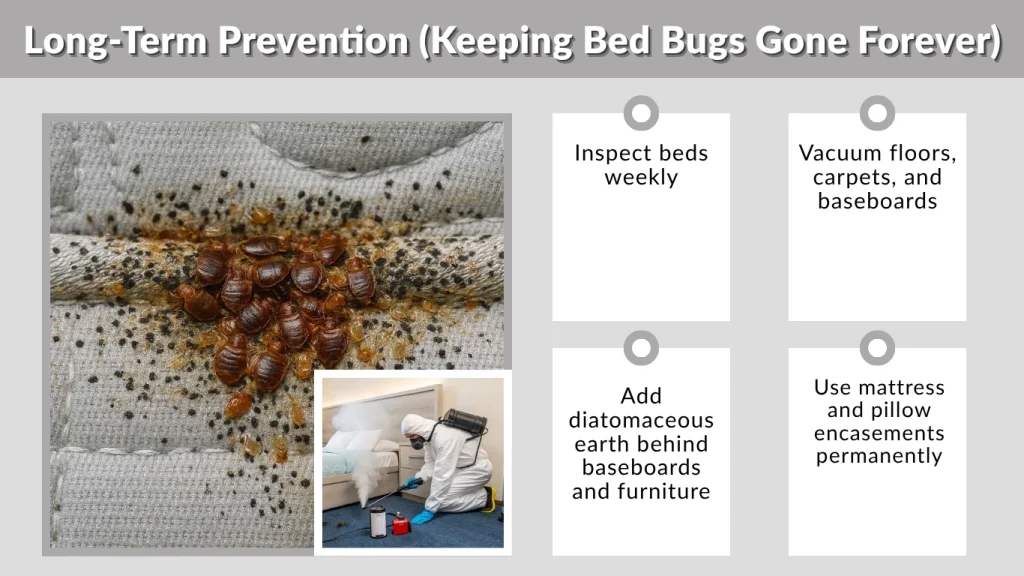
Eradicating bed bugs is only half the battle—keeping them away permanently requires consistent prevention.
After-Treatment Maintenance
- Inspect beds weekly
- Vacuum floors, carpets, and baseboards
- Keep bed away from walls
- Add diatomaceous earth behind baseboards and furniture
- Use mattress and pillow encasements permanently
Small habits make a big difference in preventing reinfestation.
Travel Prevention Tips
Travel is one of the most common ways bed bugs spread. To avoid bringing them home:
- Inspect hotel mattresses and headboards
- Keep luggage off the floor
- Use protective luggage covers
- Wash clothes immediately after returning home
- Dry items on high heat before unpacking
Household Habits That Prevent Bed Bugs
- Avoid buying used mattresses or furniture
- Seal wall cracks and gaps
- Keep bedrooms clutter-free
- Regularly check pets and pet bedding
The cleaner and more organized your home is, the harder it is for bed bugs to hide and spread.
FAQs
Can you get rid of bed bugs permanently with DIY?
Yes, but only with consistent and repeated treatments. Heat, steam, vacuuming, and desiccant dust are the most effective DIY methods. Severe infestations may still require professional help.
What kills bed bugs instantly?
Steam above 160°F (71°C), heat treatments above 120°F (49°C), and some professional-grade chemicals kill bed bugs instantly. DIY sprays and natural oils work slower.
Can natural remedies eliminate bed bugs forever?
Natural methods like diatomaceous earth and steam can eliminate bed bugs, but they must be used consistently. Most natural remedies alone are not enough for large infestations.
How long does it take to remove bed bugs permanently?
Mild cases may take 2–4 weeks with repeated treatments. Severe infestations can take 6–8 weeks or longer, especially if eggs keep hatching.
Do bed bugs come back after treatment?
Yes, if eggs survive or new bugs are brought in from travel or used furniture. Long-term prevention is essential for keeping them away permanently.
What are the safest methods for homes with children?
Steam, vacuuming, laundry, and diatomaceous earth are safer alternatives to harsh chemicals. If using sprays, choose low-toxicity options recommended by professionals.
Is vinegar actually effective?
Vinegar kills bugs on contact but does not kill eggs or hidden insects. It should be used only as a supplemental method.
