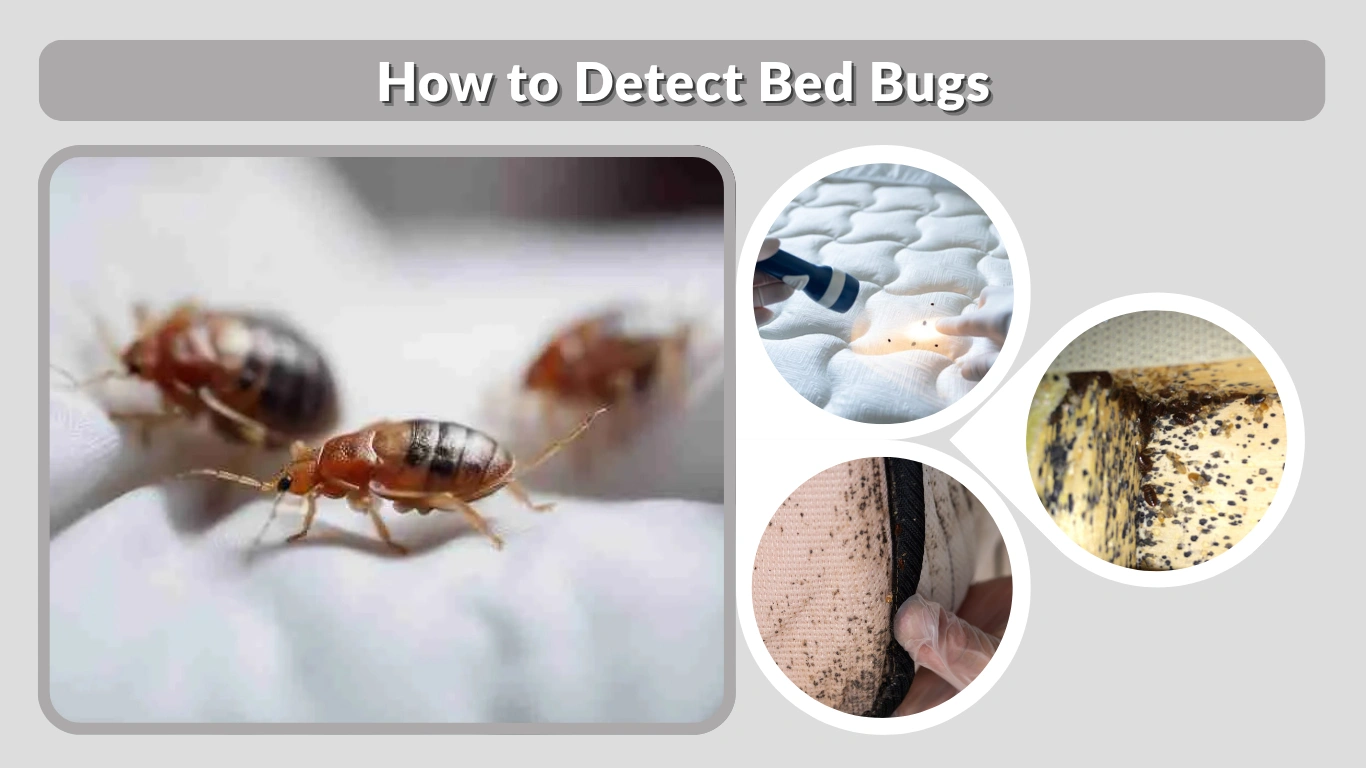
Detecting bed bugs early can save you days of stress, hundreds of dollars in treatments, and the nightmare of a large infestation. Bed bugs are small, fast, and excellent at hiding, which is why most people don’t notice them until the problem becomes severe. Whether you’re checking your home, a hotel room, your luggage, or used furniture, learning how to detect bed bugs properly is the most important step in stopping an infestation before it spreads.
This guide explains the most reliable methods to spot bed bugs early, the tools you’ll need, and the specific places bed bugs hide that most people overlook.
Why Detecting Bed Bugs Early Is Important
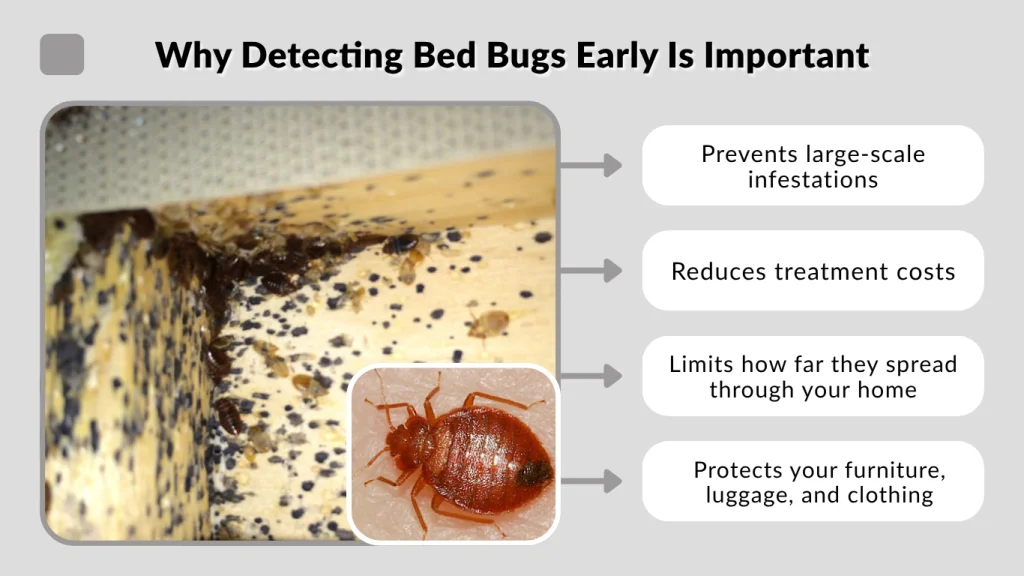
Bed bugs reproduce quickly, with each female laying hundreds of eggs in her lifetime. A small, unnoticed infestation can turn into a major problem within weeks. Early detection:
- Prevents large-scale infestations
- Reduces treatment costs
- Limits how far they spread through your home
- Protects your furniture, luggage, and clothing
- Helps avoid repeated bites
Because bed bugs hide during the day and feed at night, most people don’t immediately realize they’re present. Proper inspection gives you the chance to act before the infestation grows.
Early Signs of Bed Bugs in Your Home
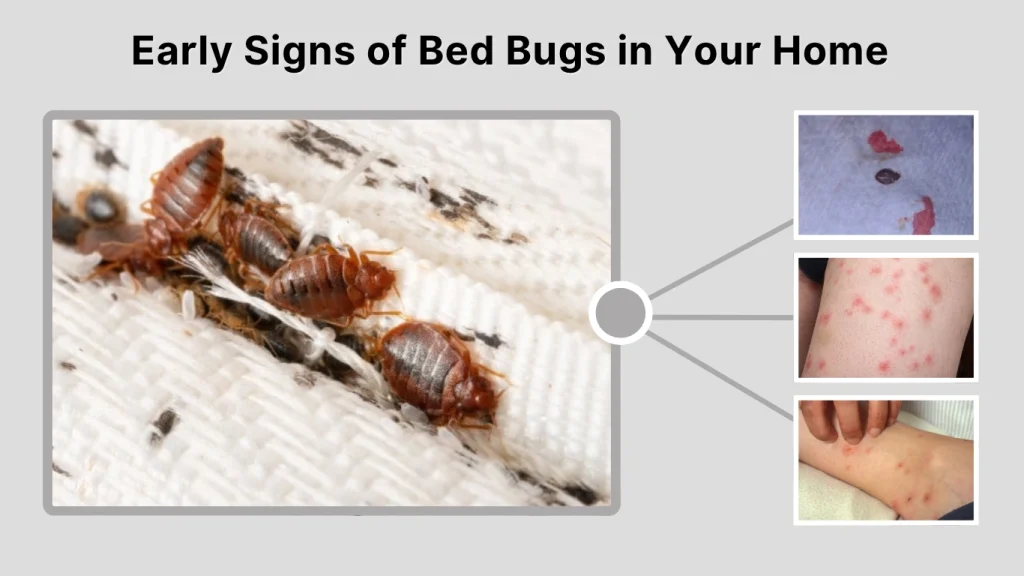
Bed bugs leave behind several small but clear signs. Identifying them early is the best way to confirm an infestation before it becomes severe.
Bite Marks and Skin Symptoms
Many people notice bites before they ever see a live bug. Bed bug bites can appear as:
- Small, red bumps
- Groups or clusters of 2–4 bites
- A line pattern (“breakfast, lunch, dinner”)
- Itchy, inflamed bumps that worsen overnight
However, bites alone are not a reliable diagnostic sign because they look similar to mosquito or flea bites. Some people don’t react at all, which means bites may be present but invisible.
Physical Evidence Around the Bed
Reliable detection comes from inspecting the bed and surrounding area. Look for:
- Rust-colored blood spots on sheets (squashed bugs)
- Black dots (bed bug feces) that smear when wiped
- Shed skins from growing nymphs
- Tiny white eggs (1 mm) stuck to fabric
- Live bugs (reddish-brown, apple-seed sized)
If any of these signs are visible, bed bugs are likely present.
What Bed Bug Eggs Look Like
Bed bug eggs are small, sticky, and pearl-white. They appear:
- About the size of a grain of salt
- Oval-shaped
- In hidden cracks, seams, and folds
- Attached firmly to surfaces
Eggs often indicate an active infestation and confirm that bed bugs are reproducing within your home.
How to Detect Bed Bugs in Your Bed & Mattress
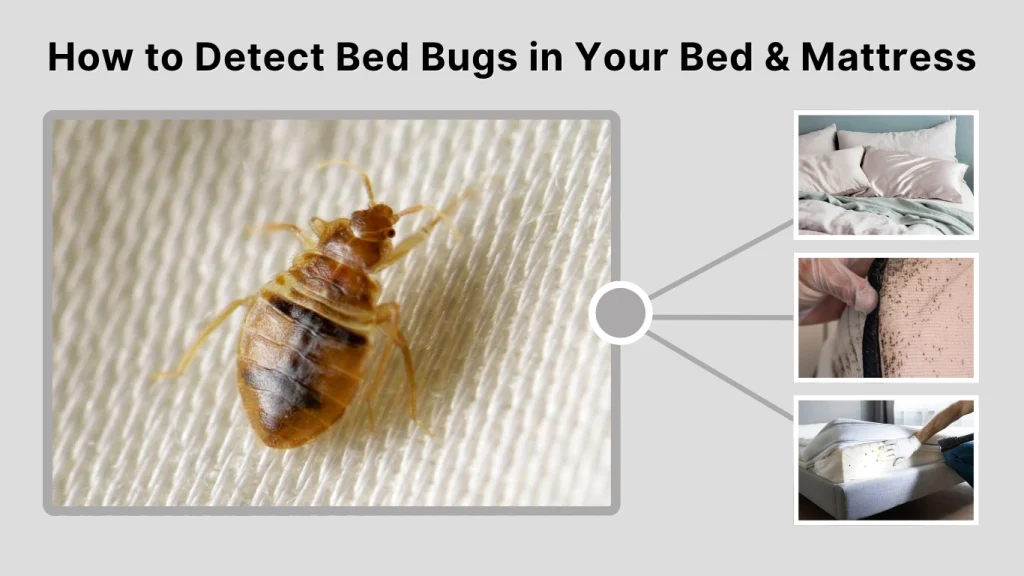
Most infestations begin in the bed because bed bugs prefer to stay close to their food source—sleeping humans.
Step-by-Step Inspection of Mattress
Follow this method for an accurate check:
- Pull back all sheets, covers, and pillows
- Inspect the mattress seams, especially around corners
- Lift and examine the mattress labels and tags
- Check the piping, edges, and stitching
- Examine the top and underside of the mattress
- Inspect the box spring, especially the wooden frame
- Check headboard cracks, joints, and mounting areas
Use a flashlight and credit card to run along seams where bugs may hide.
How to Detect Low-Level Infestations
Small infestations are harder to spot, but you can detect them by checking for:
- Single black fecal dots
- A tiny shed skin
- One or two eggs attached to fabric
- A faint sweet odor near the bed (in larger infestations)
- One or two crawling nymphs (baby bed bugs)
Even a single piece of evidence should prompt further inspection.
Tools That Help Detect Bed Bugs
Basic tools make the process more accurate:
- Flashlight – essential for dark crevices
- Credit card or scraper – to check tight spaces
- Bed bug interceptor traps – placed under bed legs
- Lint roller – to catch eggs or small bugs
- Magnifying glass – useful for eggs and nymphs
Interceptor traps are especially effective, capturing bugs as they climb up or down your bed.
How to Detect Bed Bugs in Furniture & Around the Home
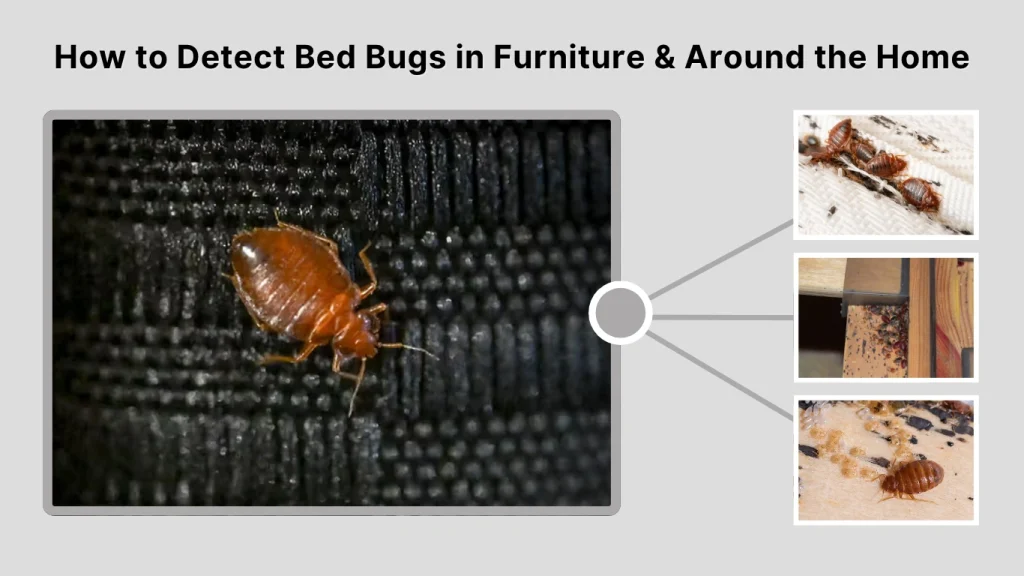
Bed bugs don’t just hide in mattresses. They can spread to nearby furniture and entire rooms if left untreated.
Sofas, Couches & Recliners
These are the second-most common hiding spots after beds. Inspect:
- Cushion seams
- Under cushions
- Inside gaps between the frame and fabric
- Behind the backing material
- Recliner mechanisms and joints
Bed bugs love soft furniture because it stays warm and is frequently used.
Used or Secondhand Furniture
Secondhand furniture is a major source of infestations. Before bringing any item home:
- Flip it upside down
- Inspect seams and stapled areas
- Check the underside for eggs or fecal spots
- Look inside drawers or joints
Never bring furniture inside until it passes a full inspection.
Carpets, Baseboards & Outlets
Bed bugs also hide where people rarely check:
- Along carpet edges near the bed
- Behind baseboards
- Inside electrical outlets
- Between floorboards
- Behind loose wallpaper
These areas usually indicate the infestation has spread beyond the bed.
How to Detect Bed Bugs in Hotels & When Traveling
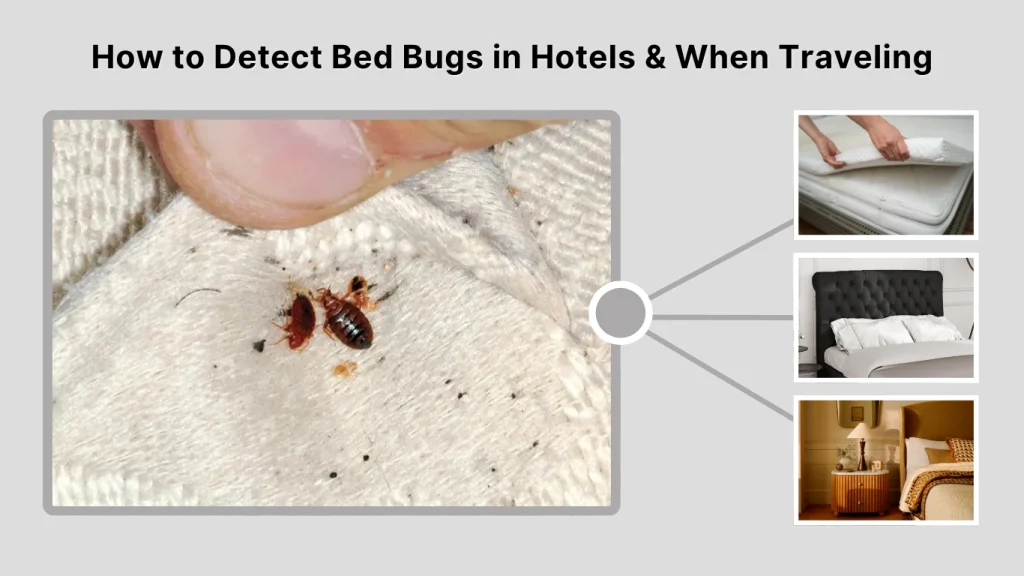
Bed bugs spread easily through travel, making hotels one of the most common places people accidentally pick them up. Detecting them before you settle into a room can prevent bringing them home.
Hotel Room Inspection Checklist
When you first enter a hotel room, place your luggage on a hard surface, like a desk or bathroom countertop. Never place it on the bed or carpet until you complete this quick inspection:
- Pull back the sheets and inspect the mattress seams, corners, and labels.
- Check the headboard, especially behind the wall-mounted ones.
- Inspect the nightstands, including drawers and underneath.
- Examine upholstered chairs and luggage racks.
- Look for black fecal stains or shed skins.
Bed bugs are most often found behind headboards in hotels because those areas are rarely cleaned.
What to Do Before Sleeping in Any Hotel
Before getting comfortable:
- Keep luggage zipped and elevated.
- Store clothes in sealed plastic bags.
- Do not place shoes or clothing on the floor.
- Avoid leaving items on soft furniture.
Even clean hotels can have bed bugs, so taking precautions is essential.
How to Avoid Bringing Bed Bugs Home After Travel
After returning home:
- Inspect luggage outside or in a garage.
- Immediately place clothes in the dryer on high heat for 30–40 minutes.
- Vacuum the suitcase, especially the seams and zipper areas.
- Use a hand steamer to treat luggage if you suspect exposure.
Heat is the most reliable way to kill any unseen bugs or eggs.
How to Detect Bed Bugs in Luggage, Clothing & Cars
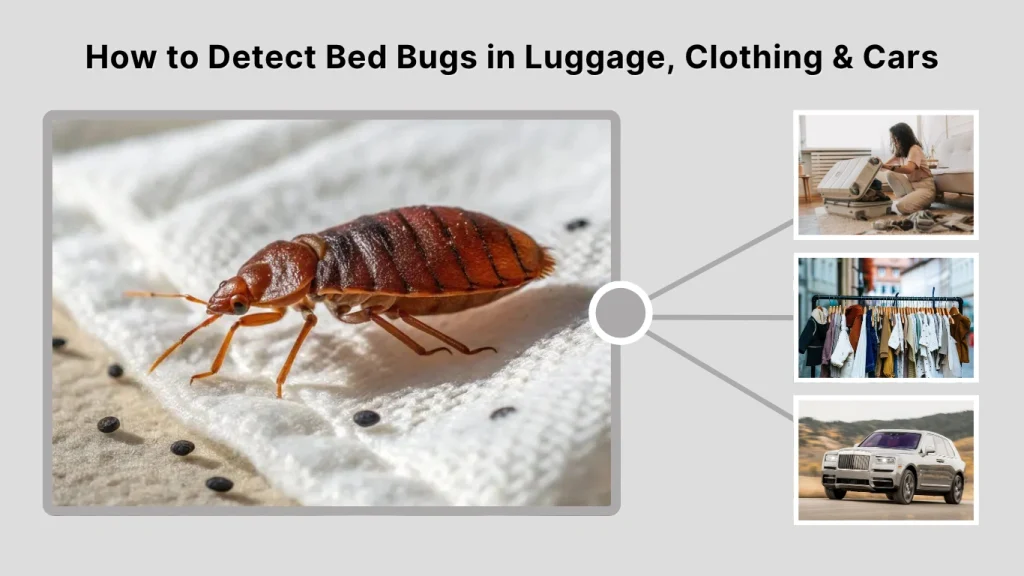
Bed bugs can travel with you long after you leave an infested location.
Luggage Inspections
Bed bugs hide in:
- Zippers
- Seams
- Interior folds
- Pockets
- Wheel housings
Use a flashlight to scan each area. If you see black dots, tiny eggs, or a live bug, treat the luggage with steam or heat.
Clothing Inspections
When sorting clothing:
- Shake items outdoors before washing.
- Put everything straight into the dryer on high heat.
- Inspect collars, cuffs, pockets, and seams.
Washing alone may not kill bed bugs, but heat always does.
Detecting Bed Bugs in Cars
Cars offer warmth and dark spaces, making them a small but possible hiding spot. Check:
- Car seats and stitching
- Seatbelt bases
- Floor mats and carpets
- Trunk area
A steam cleaner is the best tool for treating car interiors.
Can UV or Black Light Help Detect Bed Bugs?
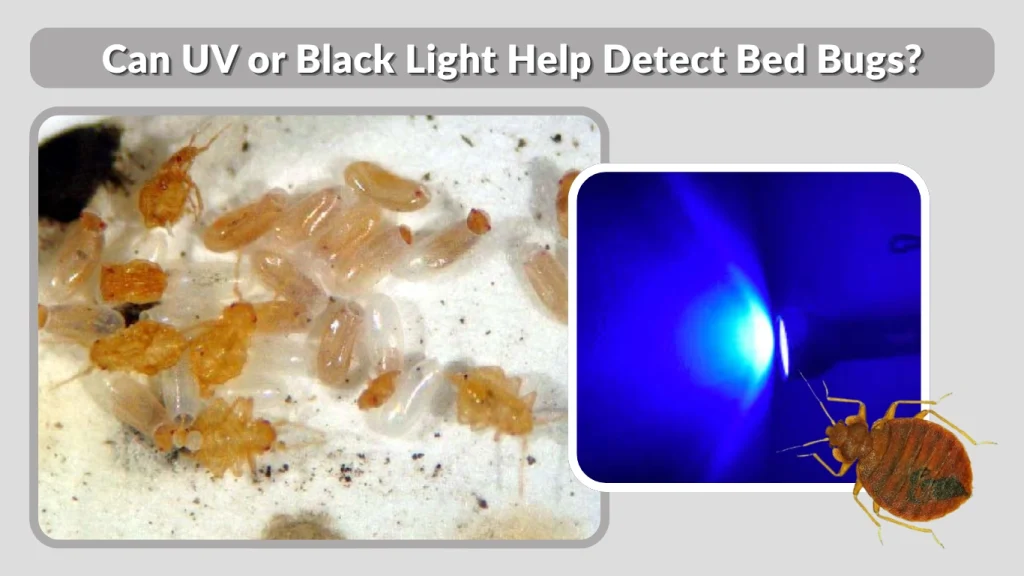
Many people try using UV or black lights for detection, but results vary.
What Black Lights Reveal
Under a black light, the following may become more visible:
- Fecal stains, which can appear dark purple
- Bed bug shells, which may glow slightly
- Egg casings, depending on surface texture
Black lights do not make live bed bugs glow, but they can highlight surrounding evidence.
Limitations of UV Detection
- Live bed bugs do not fluoresce clearly.
- Eggs are often hard to see under UV.
- UV light works best on smooth surfaces, not fabrics.
Black lights can help, but they are not a standalone detection method.
Bed Bug Detection Dogs
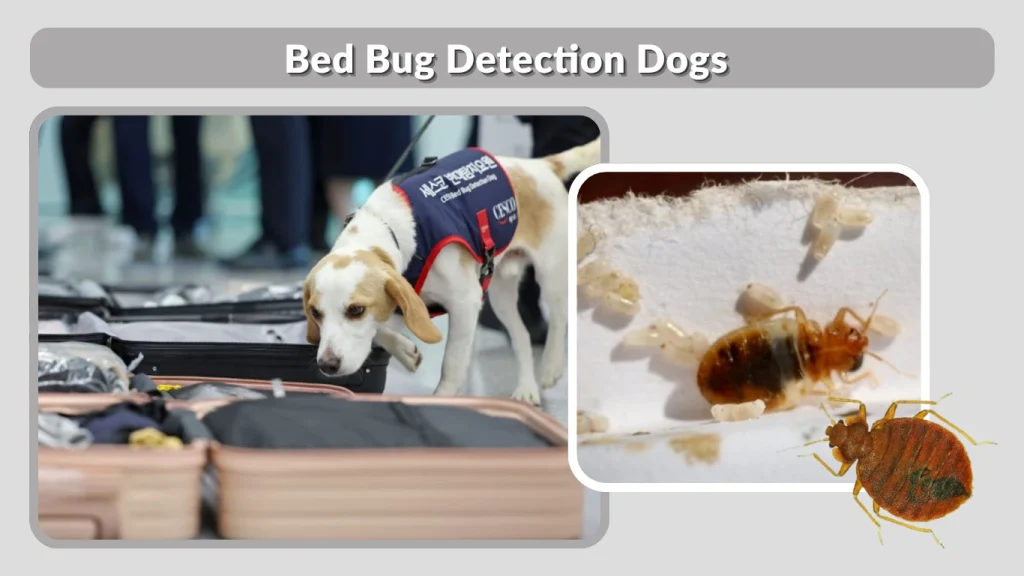
Detection dogs are one of the most accurate tools for finding bed bugs, especially in complex environments like hotels or large homes.
How Detection Dogs Work
Bed bug dogs are trained to sniff out the specific scent of:
- Live bed bugs
- Bed bug eggs
- Fecal traces
They can detect infestations hidden behind walls or deep inside furniture, where humans cannot easily inspect.
Can You Train Your Own Dog?
In theory, yes—but it requires:
- Professional scent training
- Repetition and consistency
- Controlled environments
Training a personal dog is difficult, but not impossible. Most homeowners rely on professional canine inspections for accuracy.
When to Use a Detection Dog
A detection dog is most useful when:
- You suspect bed bugs but can’t find them
- The infestation is very small
- You live in an apartment complex or hotel
- Professional confirmation is required
Dogs are especially valuable for early-stage infestations where visual signs are minimal.
How to Detect Bed Bugs at Night vs During the Day
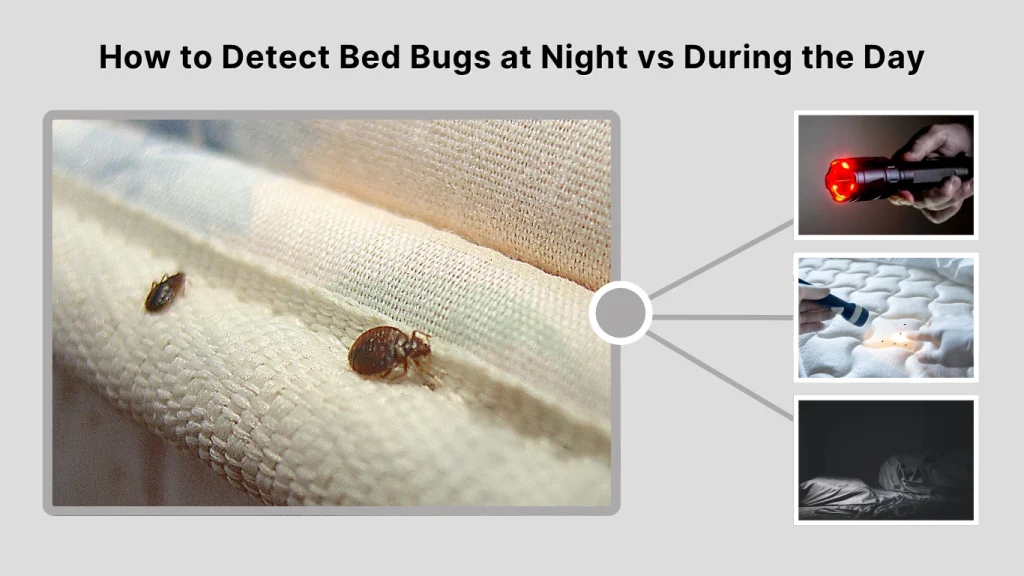
Bed bugs are nocturnal, and their activity patterns can influence how and when you inspect.
Bed Bug Activity Patterns
They typically:
- Feed between 1 AM and 5 AM
- Hide during daylight hours
- Become less visible when room lights are on
This makes seeing live bugs difficult during the day.
Best Time for Inspection
Evening or late-night inspections can be more effective. Try:
- Using a red-light flashlight
- Checking sheets while bugs are active
- Slowly lifting bedding in the dark
Nighttime inspections reveal movement that daytime checks miss.
How to Use DIY Traps for Bed Bug Detection
Traps can confirm whether bed bugs are present, even if you cannot see them.
Interceptor Traps
Place these under bed legs to catch bugs moving to and from the bed. They are:
- Inexpensive
- Easy to use
- Highly reliable
Within a few days, you may catch one or more bed bugs, confirming an infestation.
Dry Ice Traps
Dry ice produces CO₂ that attracts bed bugs and pulls them into a container. These traps are highly effective but require careful handling.
Homemade Traps That Work (and Don’t Work)
Effective:
- Soap dish traps
- Glue boards
- Interceptors
Not effective:
- Yeast CO₂ traps
- Sugar-water mixtures
Detecting Bed Bugs in Special Locations
Infestations vary by region and travel patterns.
Offices & Workplaces
Check:
- Desk chairs
- Lockers
- Break room furniture
Bed bugs hitchhike on personal belongings.
Motels & Budget Rooms
These locations have high turnover and often poor inspection routines.
High-Infestation Areas Like Florida, Kendall, Doral
Warm climates and heavy tourism increase bed bug movement. Regular checks are essential if you live in these regions.
Professional Inspection Methods
When DIY methods aren’t enough, professionals offer more thorough detection.
Exterminator Tools & Techniques
Pros use:
- High-lumen flashlights
- Fiber-optic scopes
- Bed bug probes
- Steam tools
- Canine inspections
These help detect bugs hidden deep inside walls or furniture.
When You Should Call a Professional
Call for help if:
- You find multiple signs of infestation
- Interceptor traps catch bugs
- You see eggs or shed skins
- A hotel stay exposed you to bed bugs
- DIY inspections can’t locate the source
Final Checklist: How to Know for Sure If You Have Bed Bugs
Here’s a quick summary of reliable signs:
Signs That Confirm an Infestation
- Live bugs
- Eggs
- Shed skins
- Fecal spots
- Bugs trapped in interceptors
Signs That Might Be Something Else
- Skin welts without physical evidence
- Random carpet beetles or lint mistaken for bugs
- Flea bites in groups on ankles
When in doubt, always inspect further or seek professional confirmation.
FAQs
How can I tell if I have bed bugs or something else?
You likely have bed bugs if you find physical signs such as shed skins, tiny black fecal dots, eggs, live bugs, or bites that appear in clusters overnight. If you only notice itchy bumps with no other evidence, it may be mosquitoes, fleas, or skin irritation instead.
Where do bed bugs hide during the day?
During the day, bed bugs hide in dark, tight spaces such as mattress seams, box springs, headboards, cracks in furniture, behind baseboards, under carpets, and inside outlets. They avoid light and stay close to where people sleep, making beds and sofas the most common hiding areas.
Do bed bug bites always show up immediately?
No. Bed bug bites can take hours or even days to appear, depending on your skin’s reaction. Some people show strong welts, while others show no visible bite marks at all. Because reactions vary widely, bites alone cannot confirm or rule out an infestation.
Can you detect bed bugs without seeing a live bug?
Yes. Many infestations are detected through signs like fecal spots, blood smears, shed skins, eggs, or captured bugs in interceptor traps. Live bed bugs are often hidden deeply, so visual confirmation isn’t always necessary to diagnose an infestation.
What is the fastest way to confirm a bed bug infestation?
Using interceptor traps under bed legs is one of the fastest and most reliable methods, often confirming bed bugs within a few days. Professional inspections, especially with trained detection dogs, also provide quick confirmation if you can’t locate visible signs yourself.