
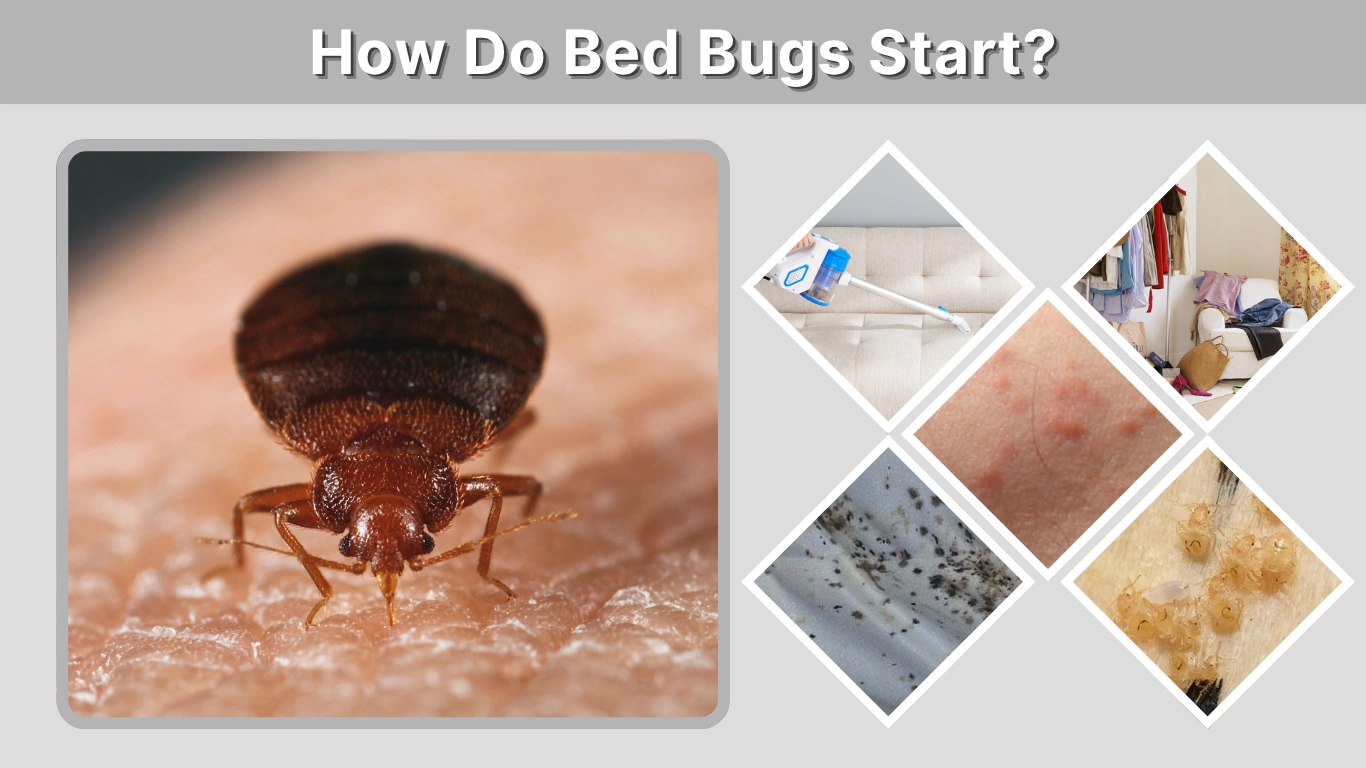
Bed bugs often seem to appear out of nowhere, but infestations always begin with a source. Whether they hitchhike on luggage, hide inside used furniture, or spread through apartment walls, bed bugs start when just a few insects—or even a single pregnant female—enter your living space. Understanding how they get into your home, how they reproduce, and how their bites start helps you detect problems early and prevent a larger infestation.
Overview
Bed bugs are small, blood-feeding insects that prefer to live near sleeping humans. Their ability to hide in tiny spaces and survive without feeding for months makes them difficult to control once established. Many people first notice them through unexplained bites or small stains on bedding, leading to the question: How did bed bugs start in my home?
The answer involves travel, secondhand items, early reproduction stages, and subtle signs that often go unnoticed at first.
How Do Bed Bugs Start in the First Place?
What Causes Bed Bugs to Appear?
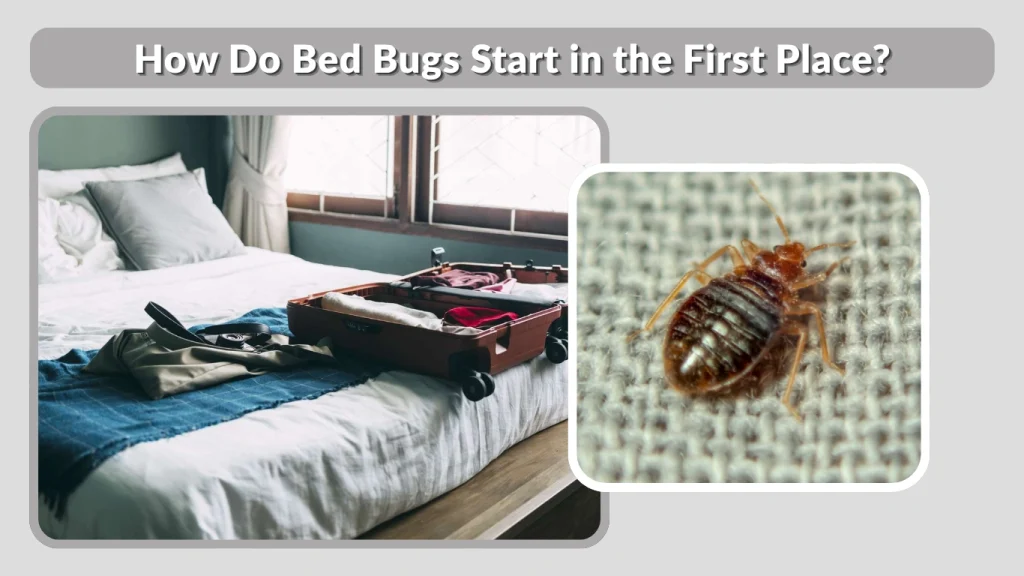
Bed bugs do not magically appear—they always arrive from an outside source. The most common way they start is travel, where the bugs hide in luggage, backpacks, or clothing. Hotels, hostels, buses, dorms, and rental units are hotspots for accidental pickup.
Secondhand furniture is another major cause. A single infested mattress, sofa, or chair can introduce dozens of hidden bugs and eggs.
Bed bugs also spread through shared housing: apartments, condos, and townhomes can experience movement through small cracks, electrical outlets, and baseboards. Even guests carrying bed bugs unknowingly can start an infestation.
Misconceptions About How Bed Bugs Start
Many people believe bed bugs come from dirt or poor hygiene, but this is false. Bed bugs do not start because a home is dirty, cluttered, or unwashed. They are attracted to warmth, carbon dioxide, and human presence—not crumbs or trash.
They also do not come from outdoors, like fleas or ticks. Bed bugs only survive indoors and rely on human environments to thrive.
How Bed Bugs Start in Your Home
Entry Points
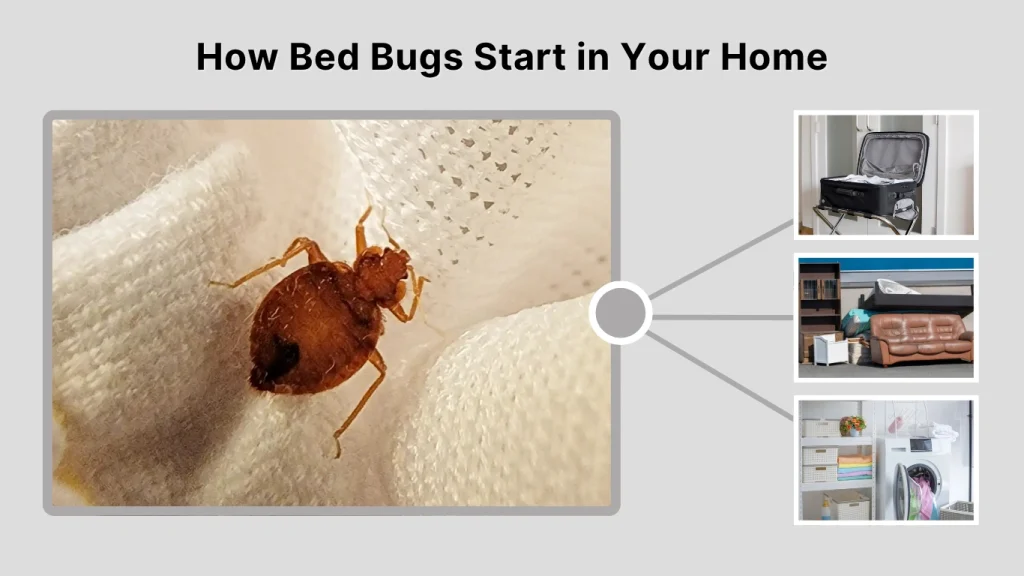
Bed bugs can enter your home through several pathways:
- Luggage after staying in hotels
- Used or donated furniture
- Backpacks from school or work
- Laundry baskets and shared laundry rooms
- Visitors who unknowingly carry them
These pests are expert hitchhikers. A single trip or a seemingly harmless used mattress can be enough to start a hidden infestation.
How Bed Bugs Start in Your Bedroom
Once inside a home, bed bugs naturally gravitate toward the bedroom because it offers consistent access to their food source—humans sleeping at night.
They hide in:
- Mattress seams
- Box springs
- Behind the headboard
- Around bed frames
- In cracks of nightstands
All these locations provide darkness, warmth, and protection, perfect for starting a new colony.
How Bed Bugs Start Appearing Suddenly
Infestations often feel sudden because bed bugs hide extremely well. They may be present for weeks before any signs become noticeable.
Early stages often involve:
- Hidden eggs hatching
- Small nymphs taking their first blood meals
- Light spotting on sheets
As the insects feed more frequently and begin breeding, the infestation becomes more visible.
How Bed Bug Infestations Start
The Bed Bug Life Cycle
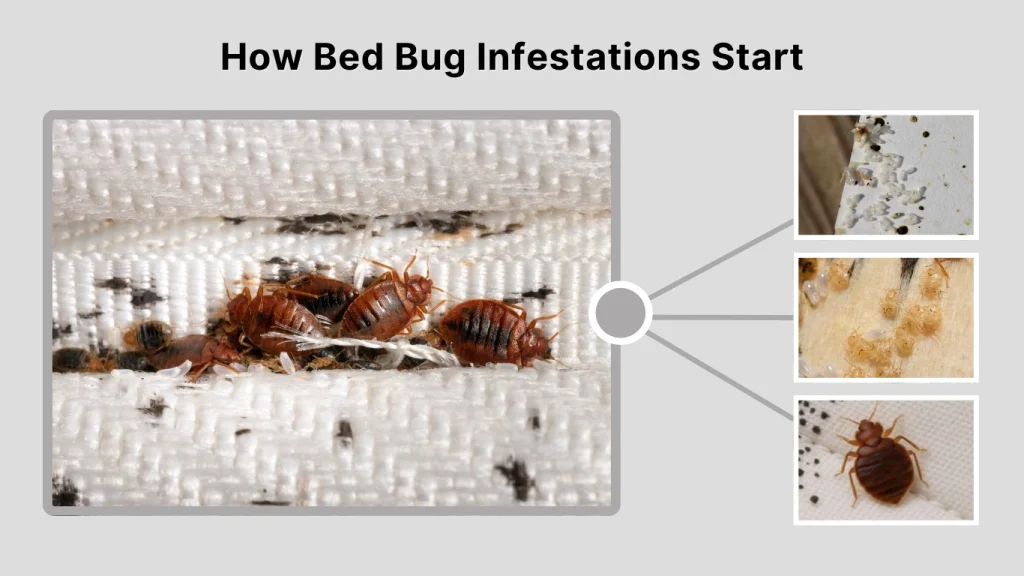
A single female bed bug can lay 200–500 eggs in her lifetime, making early infestations grow quickly. The life cycle includes:
- Eggs: tiny, white, and hard to see
- Nymphs: five growing stages
- Adults: long-living and reproduce rapidly
Because eggs are nearly invisible and nymphs are extremely small, early infestations often go unnoticed.
How Small Bed Bugs Start Out
Newly hatched nymphs are about the size of a grain of sugar and nearly transparent until they feed. Their small size allows them to hide in cracks as thin as a credit card. Since they feed immediately after hatching, bite marks may begin appearing even when the infestation is barely starting.
How Bed Bugs Spread Inside a Home
Once feeding begins, bed bugs quickly expand into nearby furniture, baseboards, and even electrical outlets. They follow carbon dioxide and body heat, moving toward areas where people rest.
Early spreading is subtle, which is why many people don’t realize the infestation has begun until it becomes moderate.
How Bed Bug Bites Start
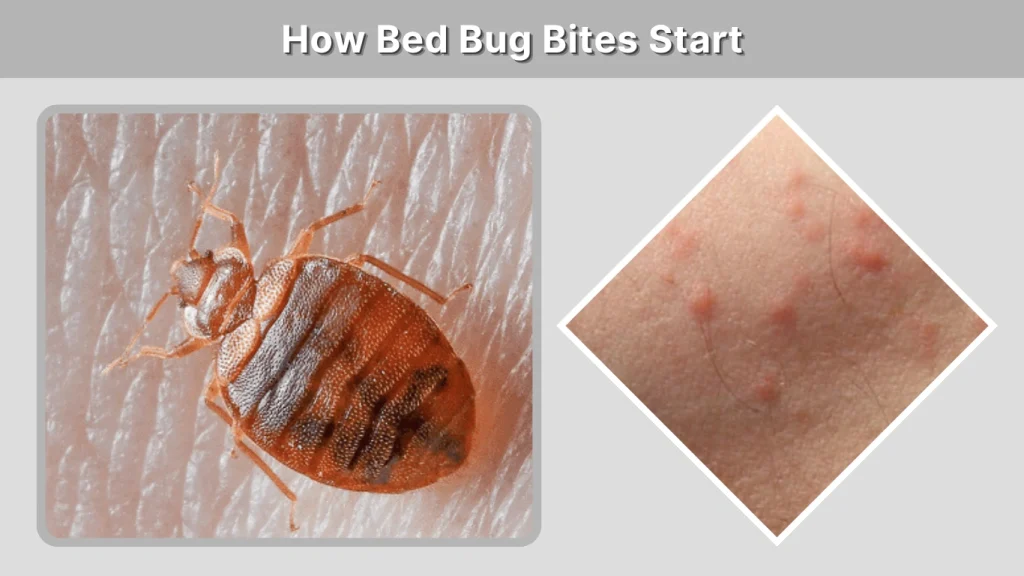
When Bed Bugs Start Biting
Bed bugs usually start biting the first night they arrive if a host is available. They are nocturnal and feed between 2 a.m. and 5 a.m., often without being felt.
Early Signs of Bed Bug Bites
Early bites look like small red bumps and often form clusters or straight lines on exposed skin. Because the reaction can be delayed, bed bug bites may not appear until hours or even days later.
How Long Before Bed Bug Bites Start to Itch
Some people itch immediately, while others feel symptoms after 24–72 hours. Sensitivity depends on individual skin reactions and previous exposure.
Early Signs You’re Starting to Get Bed Bugs

Physical Signs in the Home
When bed bugs are just starting, you may see very subtle clues long before the infestation becomes obvious. Some of the earliest signs include:
- Tiny black dots on sheets or mattresses (fecal spots)
- Small smears or blood spots from crushed bugs after feeding
- Shed skins from growing nymphs
- Tiny white eggs or eggshells, often hidden along seams
These early signs are easy to overlook because the bugs are small, quiet, and nocturnal. Many people don’t connect the evidence until bites appear consistently.
Bite Signs on the Body
Bed bug bites usually appear on exposed areas like the arms, neck, shoulders, and face. In the early stages of an infestation, the bites may be:
- Scattered or occasional
- Slightly red or raised
- Itchy, sometimes hours or days later
- Seen more frequently in the morning
Because different people react differently, early bites can look like mosquito bites, heat rash, or allergy bumps. A pattern of clusters or straight lines is one of the most reliable indicators of bed bugs starting in your home.
How to Confirm Bed Bugs Are Just Starting
If you suspect early bed bug activity, check:
- Mattress seams with a flashlight
- The edge of the box spring
- Cracks behind the headboard
- The underside of nightstands
- Electrical outlets and wall gaps
Early infestations typically involve only a few bugs or eggs, so careful inspection is necessary. Sticky traps or bed bug interceptors placed under bed legs can help capture early movers.
How Bed Bugs Start on Your Bed and Mattress
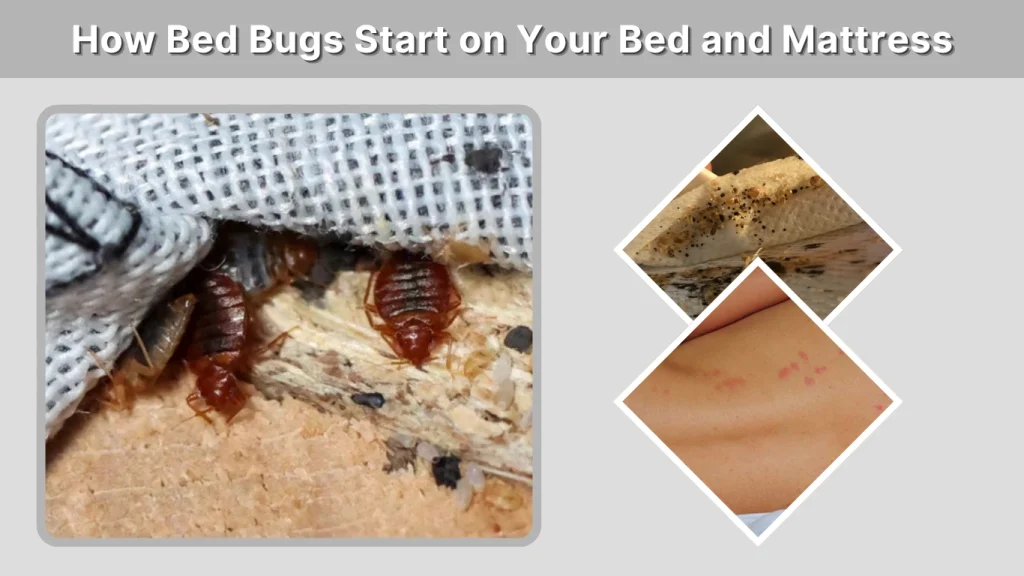
Why Mattresses Are Their First Location
Bed bugs choose mattresses because it gives them:
- Immediate access to sleeping hosts
- Minimal light exposure
- Consistent warmth
- Plenty of hiding spots
Even a small number of bugs can start reproducing quickly once they establish themselves in mattress folds and seams.
Where Bed Bugs Hide in a Bed
In early stages, bugs may hide in:
- The piping and stitching along mattress edges
- Corners of the box spring
- Under mattress tags
- Between the bed frame joints
- Behind the headboard
They hide as close as possible to where they feed. A single pregnant female hiding in a seam can lead to a noticeable infestation within weeks.
How to Prevent Bed Bugs From Starting
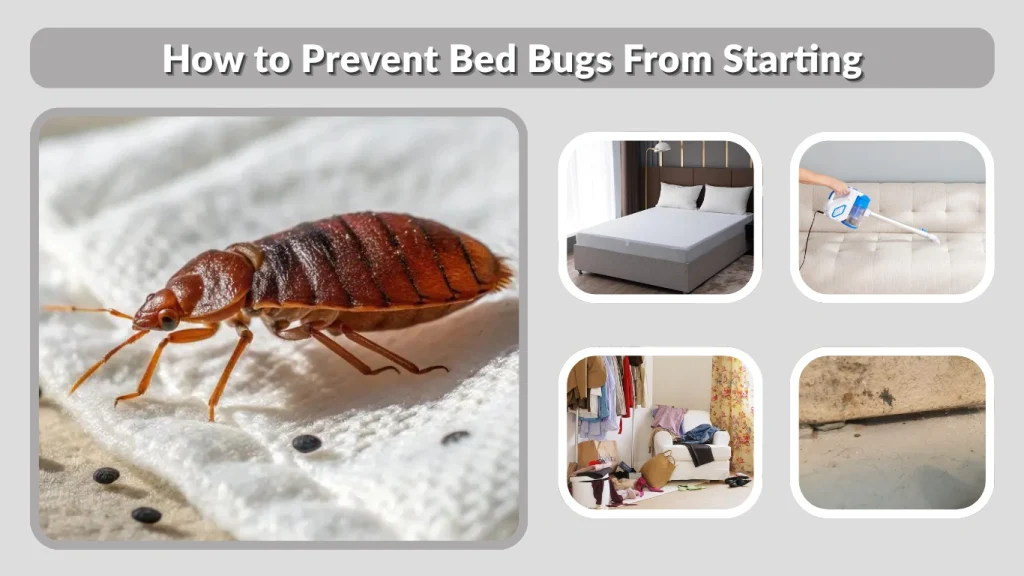
Home Prevention
Bed bugs thrive in hidden locations, so preventing them requires reducing their hiding spots and limiting opportunities for them to be introduced. Effective prevention includes:
- Using mattress and box spring encasements
- Regularly vacuuming bedrooms and furniture
- Keeping belongings off the bedroom floor
- Sealing cracks and baseboards where bugs can hide
- Reducing clutter around sleeping areas
Encasements make it harder for bed bugs to hide and easier for you to see early signs if they start.
Travel Prevention
Travel is the number one cause of new bed bug infestations. To prevent them from starting:
- Inspect hotel mattresses, box springs, and headboards
- Keep luggage on metal racks, never on the floor or bed
- Store clothes inside sealed bags
- Immediately wash and heat-dry clothing after returning home
Even a short stay in an infested hotel room can transport bed bugs back to your house.
Avoiding Infestations From Items
Many infestations begin when people bring used items indoors. To protect your home:
- Avoid used mattresses entirely
- Carefully inspect secondhand furniture
- Steam or heat-treat soft items before bringing them inside
- Be cautious with items from garage sales or thrift stores
A single chair or couch can contain dozens of hidden insects.
What to Do When You Notice Bed Bugs Starting
Initial Cleaning Steps
If you spot early signs, immediate action helps contain the problem.
- Wash all bedding, sheets, and blankets in hot water
- Heat-dry items for at least 30 minutes
- Vacuum the mattress, bed frame, and surrounding floor
- Seal vacuum bags immediately and discard outdoors
- Use a handheld steam cleaner on seams and cracks
Heat is one of the quickest ways to kill early bed bug stages.
When to Use DIY Treatments
DIY methods work best in the early stages, such as:
- Mattress encasements
- Diatomaceous earth applied lightly around the bed
- Bed bug traps or interceptors
- High-heat steam cleaning
These methods help slow the spread and make detection easier, but they may not eliminate a growing infestation.
When to Call a Professional
Professional treatment becomes necessary when:
- Bugs are seen in multiple rooms
- Bites occur nightly
- You see many fecal spots or shed skins
- You find numerous nymphs or eggs
Pest control companies use heat treatment or targeted insecticides that reach deep hiding places. Early intervention by professionals can prevent months of spreading.
FAQs
Where do bed bugs originally come from?
Bed bugs have existed for thousands of years and originally lived with bats before humans adopted indoor living. Today, they spread globally through travel, trade, and used furniture.
How long does it take for an infestation to grow?
A small infestation can turn into a major one within 6 to 10 weeks, depending on temperature, feeding frequency, and reproduction rate.
Can bed bugs start from pets?
No. Bed bugs do not live on pets or start from animals. They may hide in pet bedding, but they feed primarily on human hosts.
Can you stop bed bugs from starting early?
Yes—by using mattress encasements, inspecting hotel rooms, avoiding used mattresses, and heat-treating items after travel.
How do you know if bed bugs are starting again?
Look for new fecal spots, tiny shed skins, renewed morning bites, or bugs caught in interceptors placed under bed legs.
