
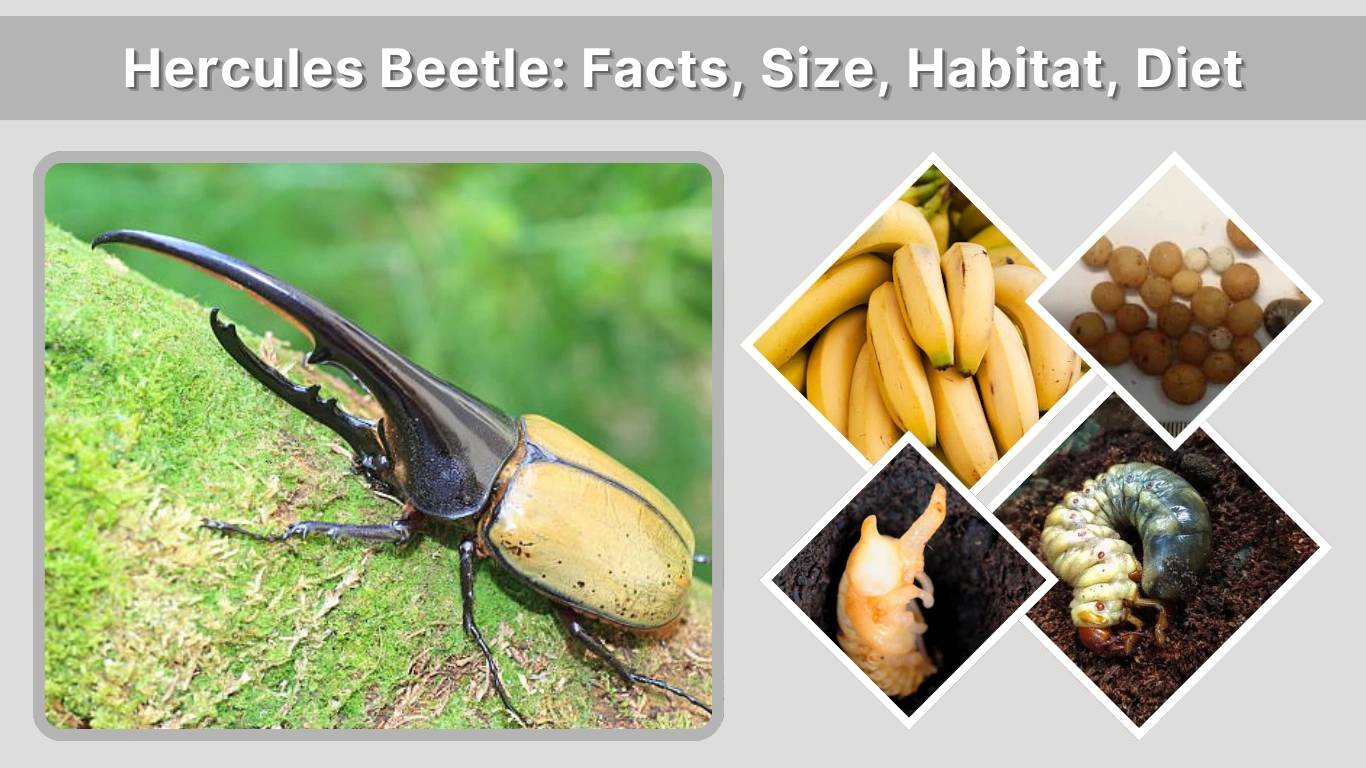
The Hercules beetle is one of the most impressive insects in the world. Known for its enormous size and distinctive horn, this beetle belongs to the rhinoceros beetle family and lives in the tropical rainforests of Central and South America. Its name comes from the legendary Greek hero Hercules because of its incredible strength. In fact, the Hercules beetle is considered one of the strongest animals relative to its body weight. This fascinating insect attracts the attention of scientists, insect collectors, and nature enthusiasts alike. In this article, we will explore important Hercules beetle facts, including its size, diet, habitat, and life cycle.
What Is a Hercules Beetle?
The Hercules beetle (Dynastes hercules) is a species of rhinoceros beetle in the Scarabaeidae family. It is famous for its massive body and long horn, which makes it one of the largest beetles in the world. This beetle is commonly found in tropical rainforests where warm temperatures and high humidity provide ideal living conditions.
One of the most striking features of the Hercules beetle is the large horn found on males. This horn extends from the head and thorax and can be almost as long as the beetle’s body. Males use these horns to compete with other males for access to females during mating season.
Female Hercules beetles look quite different from males. They are smaller and do not have long horns. Instead, their bodies are more compact and rounded. Despite these differences, both males and females share strong bodies and thick exoskeletons that help protect them in their natural habitat.
Hercules Beetle Facts
The Hercules beetle is known for several fascinating characteristics that make it stand out among insects.
One of the most impressive facts about the Hercules beetle is its strength. It can carry objects many times heavier than its own body weight. This incredible power is why the beetle was named after the mythological hero Hercules.
Another interesting feature is the beetle’s ability to change the color of its wing covers. The outer wings, called elytra, are usually yellow or olive green with black spots. However, their color can darken when humidity levels increase. This unique ability helps scientists study environmental changes in the beetle’s habitat.
Hercules beetles are also mostly nocturnal. They are active at night and spend much of their time searching for food such as fruit or tree sap. During the day, they often hide under leaves, bark, or logs to avoid predators.
Despite their intimidating appearance, Hercules beetles are not aggressive toward humans. They mainly use their horns to fight other male beetles rather than defend themselves against people.
Hercules Beetle Size and Physical Characteristics
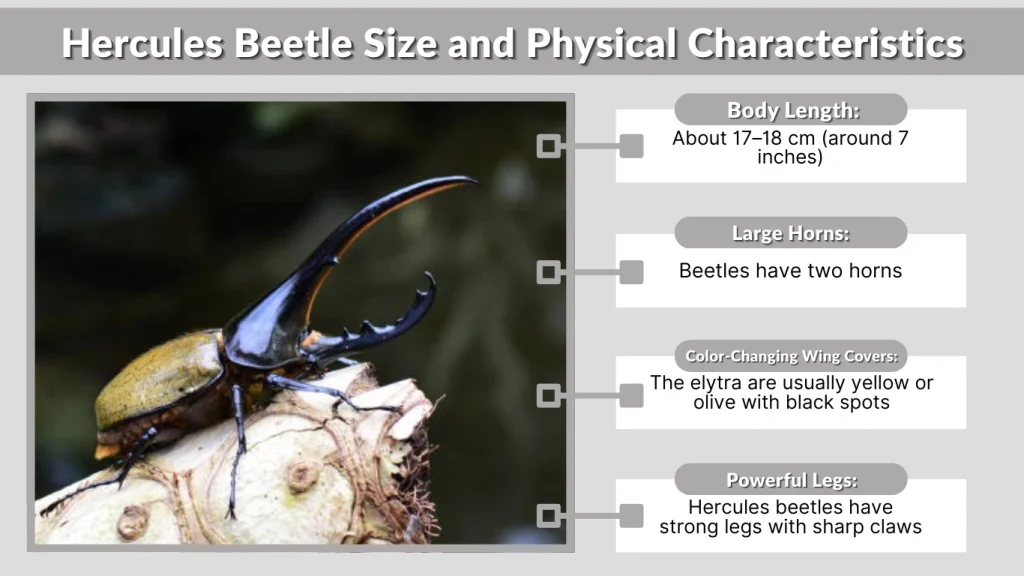
The Hercules beetle is famous for its enormous size and distinctive appearance. These physical features help it survive in dense rainforest environments and compete with other beetles.
Some of the key physical characteristics of the Hercules beetle include:
- Body Length: Male Hercules beetles can reach lengths of about 17–18 cm (around 7 inches) when their horns are included. Females are smaller because they do not have large horns.
- Large Horns: Male beetles have two horns—one on the head and another on the thorax. These horns are used during battles with other males.
- Strong Body: The beetle has a thick and durable exoskeleton that protects it from predators and environmental damage.
- Color-Changing Wing Covers: The elytra are usually yellow or olive with black spots, but their color may darken in humid conditions.
- Powerful Legs: Hercules beetles have strong legs with sharp claws that help them climb tree bark and branches.
These unique physical features make the Hercules beetle one of the most recognizable beetles in the world.
Hercules Beetle Habitat and Distribution
Hercules beetles live in the tropical rainforests of Central and South America. These regions provide the warm temperatures, moisture, and plant material necessary for their survival.
They are commonly found in countries such as Brazil, Colombia, Venezuela, Ecuador, Peru, and Panama. In these areas, dense forests create ideal habitats with plenty of fallen logs, rotting wood, and fruit sources.
Hercules beetles usually spend their time near the forest floor or on tree trunks. They may also climb trees in search of food such as sap or overripe fruit. Because they are mostly active at night, they are not often seen during the day.
Rainforests provide everything these beetles need for survival, including shelter, food, and places to reproduce. The abundance of decaying wood also supports the growth of larvae, which develop within rotting logs.
Hercules Beetle Diet
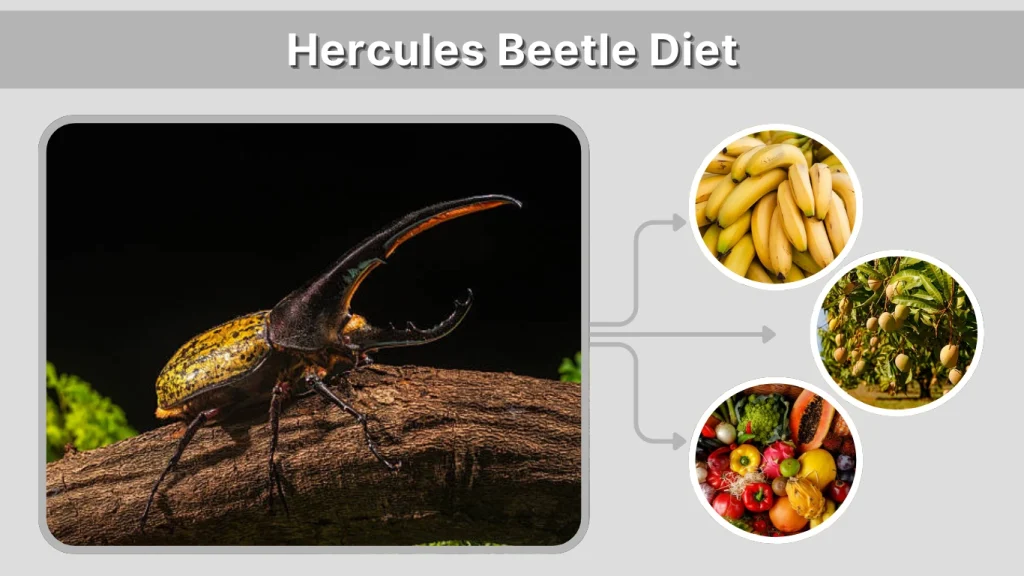
Adult Diet
Adult Hercules beetles primarily feed on fruit and tree sap. In the wild, they are often attracted to overripe or fallen fruit on the forest floor. Fruits such as bananas, mangoes, and other tropical fruits provide the sugars and nutrients they need for energy.
Tree sap is another common food source. The beetles may climb tree trunks to access sap that leaks from damaged bark. These sugary liquids provide additional nutrition for adult beetles.
Larval Diet
The diet of Hercules beetle larvae is quite different from that of adults. Larvae feed mainly on decaying wood and organic matter found in rotting logs. By consuming decomposing plant material, they obtain the nutrients needed for growth.
This feeding stage is extremely important because it allows the larvae to grow large and store energy before transforming into adult beetles.
Hercules Beetle Larvae
Appearance of the Larvae
Hercules beetle larvae look very different from the adult beetles. They appear as large, white grubs with thick, segmented bodies and small legs near the head. These larvae can grow surprisingly large, sometimes reaching several inches in length before they transform into adult beetles. Their soft bodies are adapted for living inside decaying wood where they can move and feed easily.
Habitat of the Larval Stage
The larval stage usually takes place inside rotting logs, decomposing tree trunks, or rich forest soil. These environments provide both protection and a steady food supply. Decaying wood is especially important because it contains the organic material that the larvae consume as they grow.
Because they live hidden inside wood or underground, Hercules beetle larvae are rarely seen in the wild. Most observations come from scientific studies or controlled environments.
Development Period
The larval stage of the Hercules beetle can last from one to two years. During this time, the larvae feed constantly on decomposing plant material and gradually increase in size. Once the larvae reach full growth, they create a protective chamber where they enter the pupal stage.
Inside this chamber, the larva transforms into a pupa and begins developing the features of the adult beetle, including its wings, legs, and exoskeleton.
Hercules Beetle Life Cycle
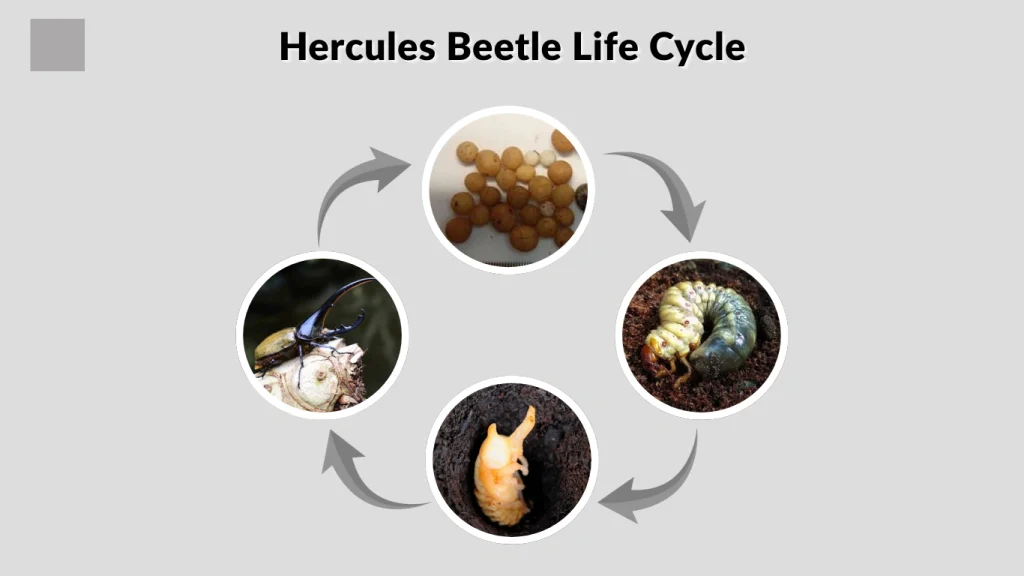
The Hercules beetle goes through a complete metamorphosis consisting of four stages: egg, larva, pupa, and adult.
The life cycle begins when a female Hercules beetle lays eggs in decaying wood or soft soil rich in organic material. After several weeks, the eggs hatch into larvae.
The larval stage is the longest phase of the beetle’s life. During this period, the larvae feed and grow inside rotting wood. Once fully developed, the larva forms a pupal chamber and transforms into a pupa.
During the pupal stage, the insect undergoes dramatic changes as its adult body forms. Eventually, the adult beetle emerges from the chamber and begins its short adult life.
Adult Hercules beetles typically live for several months. During this time, they search for food and mates to continue the species’ life cycle.
Male vs Female Hercules Beetle
Male Hercules Beetle
Male Hercules beetles are larger and more visually striking than females. Their most distinctive feature is the pair of long horns that extend from the head and thorax. These horns are used during battles with other males when competing for mating opportunities.
Male beetles use their horns to lift, push, or throw rivals away from a potential mate. The size of the horn often determines which male wins these contests.
Female Hercules Beetle
Female Hercules beetles do not have the large horns seen in males. Instead, they have shorter, more rounded bodies. Although they may appear less dramatic, females play the crucial role of laying eggs and ensuring the continuation of the species.
Their smaller size and lack of horns make them easier to distinguish from males.
Hercules Beetle vs Titan Beetle
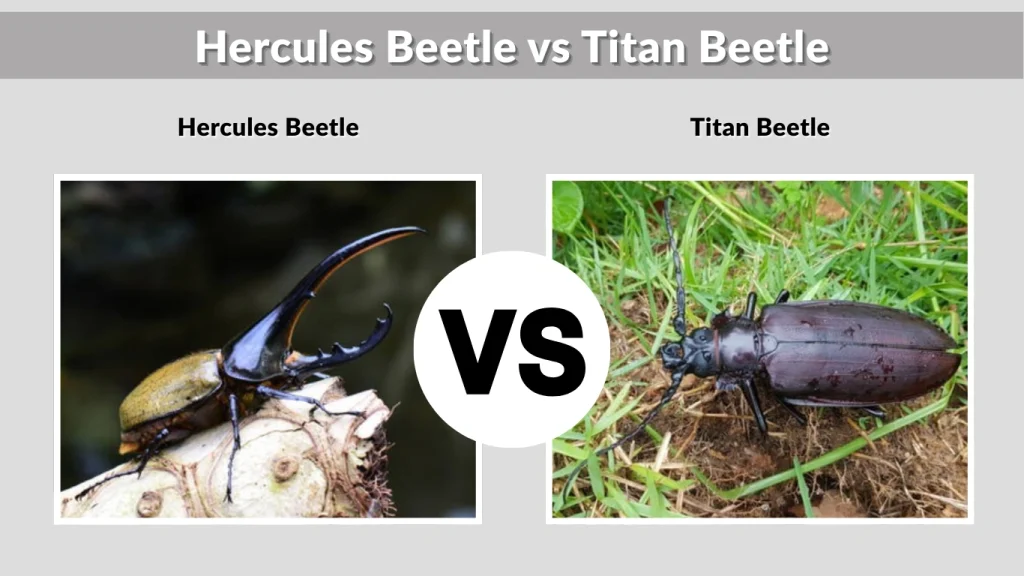
Both the Hercules beetle and the titan beetle are among the largest beetles in the world, but they differ in several important ways.
The Hercules beetle is known for its long horn and strong body. When the horn is included, males can reach lengths of up to 17 or 18 centimeters. The titan beetle, however, is generally longer in body length without any horns.
Another difference is their appearance. Hercules beetles have yellow or olive wing covers with black spots, while titan beetles are typically dark brown or black with a more elongated body shape.
Their diets also differ. Hercules beetles actively feed on fruit and tree sap as adults. Titan beetles are believed not to eat during adulthood and rely on energy stored during their larval stage.
Are Hercules Beetles Dangerous?
Despite their large size and intimidating horns, Hercules beetles are not dangerous to humans. They are generally calm insects and rarely show aggressive behavior.
The horns of male Hercules beetles are used only to fight other beetles during mating competitions. They are not used to attack humans. If handled roughly, the beetle may attempt to defend itself, but this is uncommon.
Most people who encounter Hercules beetles in nature simply observe them without any problems.
Importance of Hercules Beetles in the Ecosystem
Hercules beetles play an important role in rainforest ecosystems. Their larvae help break down decaying wood and organic material. This process contributes to nutrient recycling in forest soils.
By feeding on decomposing plant matter, the larvae help speed up the natural decomposition process. This improves soil quality and supports the growth of plants and trees.
Hercules beetles are also part of the rainforest food chain. Birds, reptiles, and other animals may prey on them, making them an important component of biodiversity in tropical forests.
FAQs
How big can a Hercules beetle get?
Male Hercules beetles can reach about 17–18 centimeters long when the horn is included. This makes them one of the longest beetles in the world.
What do Hercules beetles eat?
Adult Hercules beetles mainly eat fruit and tree sap. Larvae feed on decaying wood and organic matter inside rotting logs.
Where are Hercules beetles found?
Hercules beetles live in tropical rainforests across Central and South America, including Brazil, Colombia, Venezuela, Ecuador, and Panama.
Why do male Hercules beetles have horns?
Male Hercules beetles use their horns to fight other males for mating opportunities. The horns help them lift and push rivals away from females.
Are Hercules beetles rare?
Hercules beetles are not extremely rare, but they live in dense rainforests and are mostly active at night, so they are not often seen.
