
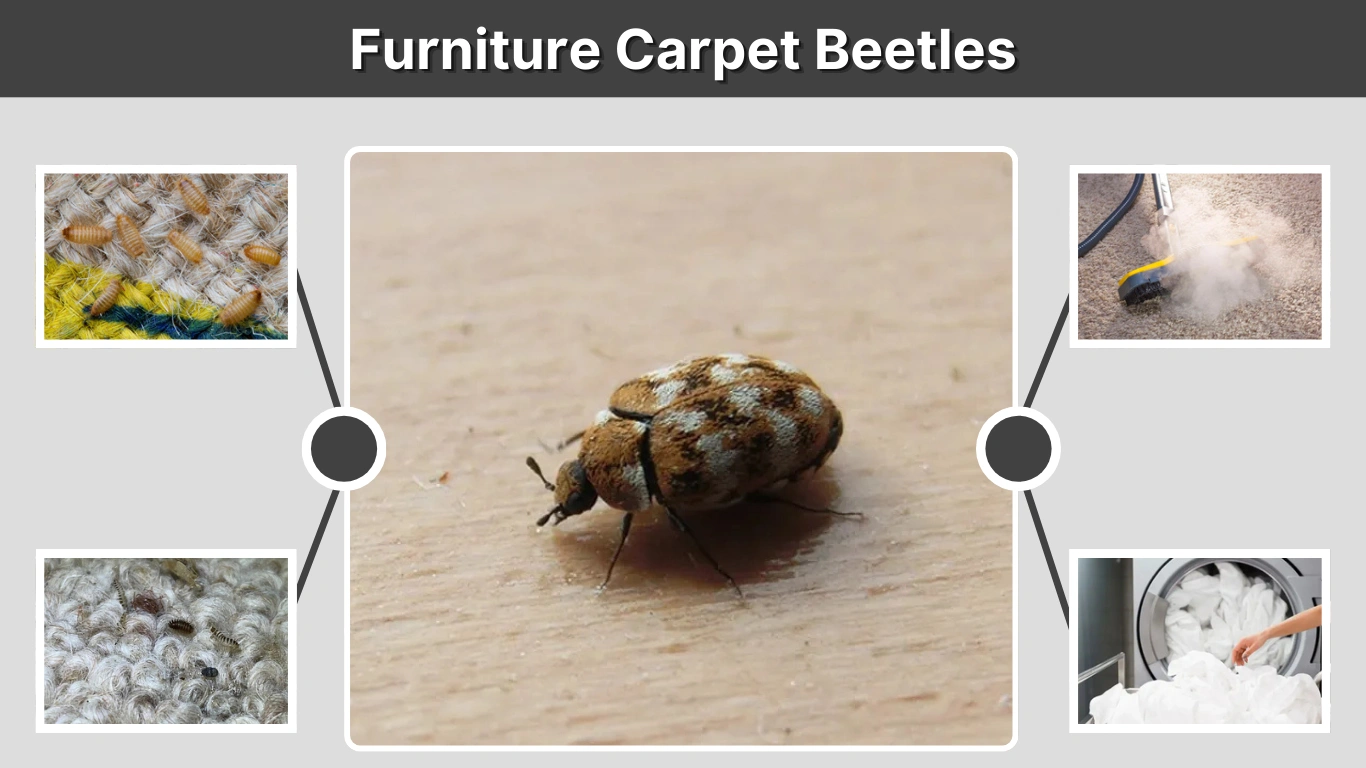
Furniture carpet beetles may be tiny, but their damage can be extensive. These pests feed on natural fibers such as wool, silk, leather, and cotton, making them a serious threat to upholstered furniture, carpets, and clothing. Many homeowners don’t notice their presence until the damage is visible. Understanding how to identify, prevent, and remove them is the first step in protecting your home.
Understanding Furniture Carpet Beetles
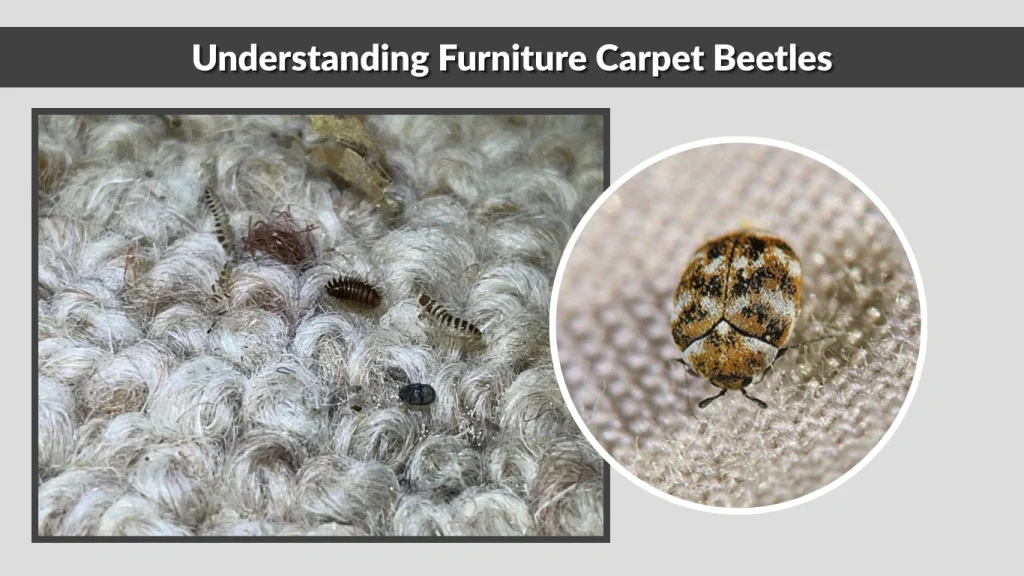
Furniture carpet beetles belong to the Dermestidae family, a group of insects known for feeding on natural fibers. These beetles are widespread in homes and can thrive in hidden places like furniture, rugs, and stored fabrics.
There are several species, but the most common one is the black furniture carpet beetle, which can cause significant damage. Unlike other common pests, carpet beetles do not eat food scraps or wood. Instead, their larvae feed on animal-based materials such as feathers, fur, and wool. This feeding habit makes upholstered furniture and carpets their prime targets.
Identification and Characteristics
Identifying these pests early is key to controlling them. Adult furniture carpet beetles are small, oval-shaped insects measuring 2–4 mm. Their colors range from black to mottled brown with white or yellowish patterns, depending on the species.
The life cycle includes four stages: egg, larva, pupa, and adult. Eggs are usually laid in dark crevices of furniture or carpets. Once hatched, the larvae are the most destructive stage, feeding aggressively on natural fibers. They are elongated, brownish, and covered with bristle-like hairs.
Understanding the size and life cycle of carpet beetles helps homeowners spot infestations before major damage occurs.
Signs of Infestation
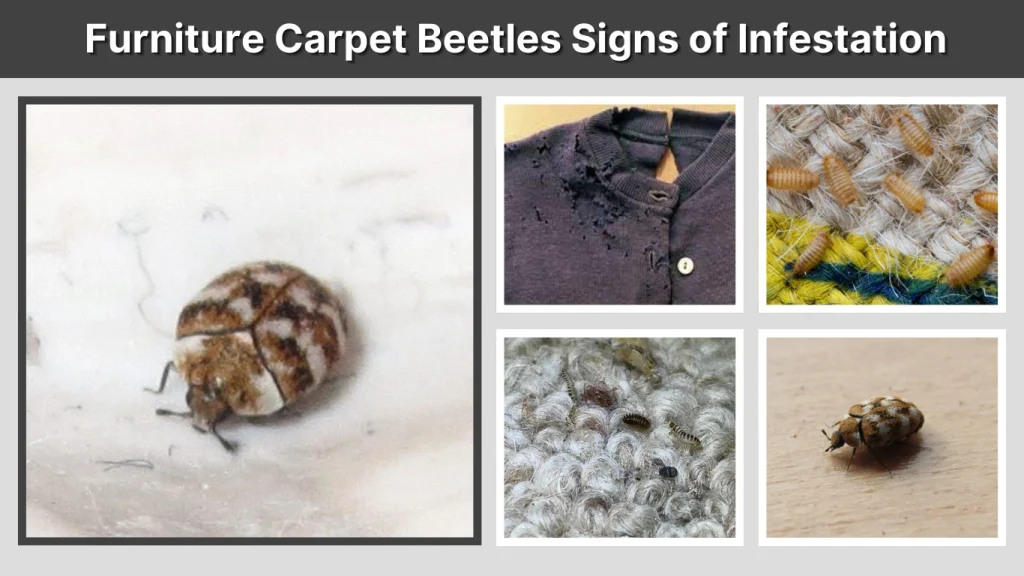
Carpet beetles are sneaky pests, often going unnoticed until damage is visible. Some clear signs include:
- Fabric damage – Small irregular holes in carpets, upholstery, or clothing.
- Larvae and shed skins – Their bristly larvae and leftover casings are often found in corners, beneath furniture, or inside wardrobes.
- Droppings – Powdery waste material may be found near infested fabrics.
- Adult beetles indoors – Small beetles are often spotted near windows as they are attracted to light.
Since they prefer dark and hidden spaces, infestations often go undetected for months, making early inspection crucial.
Health Risks and Concerns
Many homeowners wonder, are furniture carpet beetles dangerous? While these beetles don’t bite or transmit diseases, their larvae can cause skin irritation and rashes. The tiny hairs on larvae may trigger allergic reactions, often mistaken for insect bites. Some people develop red, itchy patches resembling bedbug bites, but these are allergic responses rather than actual bites.
The real danger lies in the damage to furniture and fabrics, which can be costly to repair. Carpets, leather chairs, wool coats, and even stored blankets can become infested if not properly protected. For sensitive individuals, regular exposure to larvae can also worsen allergic symptoms.
Causes and Risk Factors
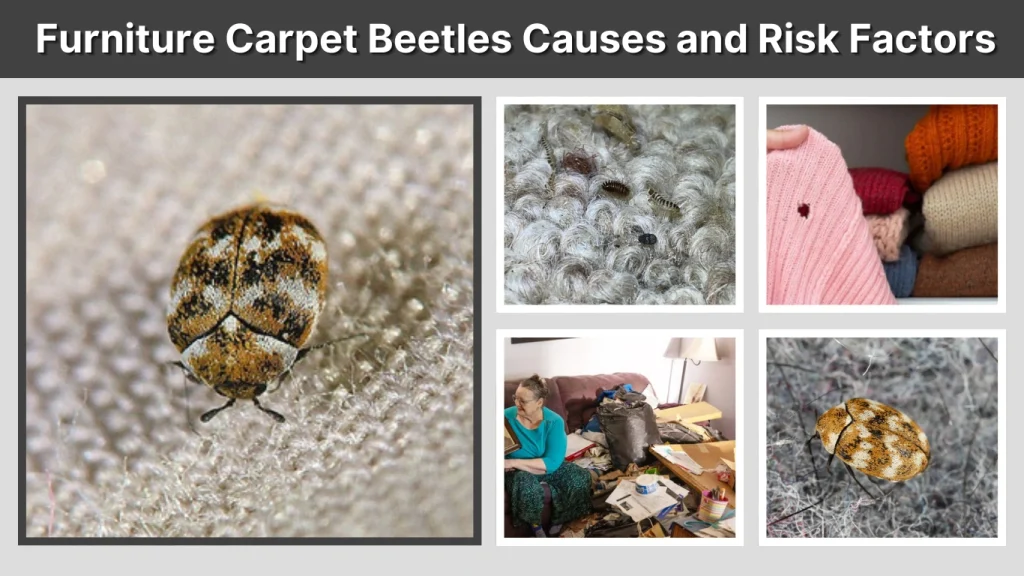
Furniture carpet beetles usually invade homes through open windows, doors, or carried items like flowers or second-hand furniture. Once inside, they thrive in places with abundant natural fibers. Some common risk factors include:
- Dirty or dusty carpets and upholstery – Dirt and lint provide larvae with a food source.
- Stored fabrics – Wool blankets, furs, and clothing stored without protection attract infestations.
- Lack of cleaning – Infrequent vacuuming and poor furniture maintenance create ideal breeding grounds.
- Seasonal increase – Carpet beetles are more active in spring and early summer when adults enter homes to lay eggs.
Understanding what attracts these pests is essential in reducing the chances of an infestation. Regular cleaning and inspection of high-risk areas are simple yet effective ways to lower the risk.
6. Prevention Strategies
Prevention is always better than dealing with a full-blown infestation. Since furniture carpet beetles thrive on natural fibers, the key is regular cleaning and proper fabric care. Vacuuming carpets, rugs, and upholstered furniture at least once a week helps remove eggs and larvae before they spread.
Furniture covers, especially those made from synthetic materials, offer extra protection. Storing clothing and blankets in airtight containers or vacuum-sealed bags keeps them safe from larvae. Another important step is sealing cracks and gaps in walls or floors, preventing beetles from entering through hidden spaces.
How to Get Rid of Furniture Carpet Beetles
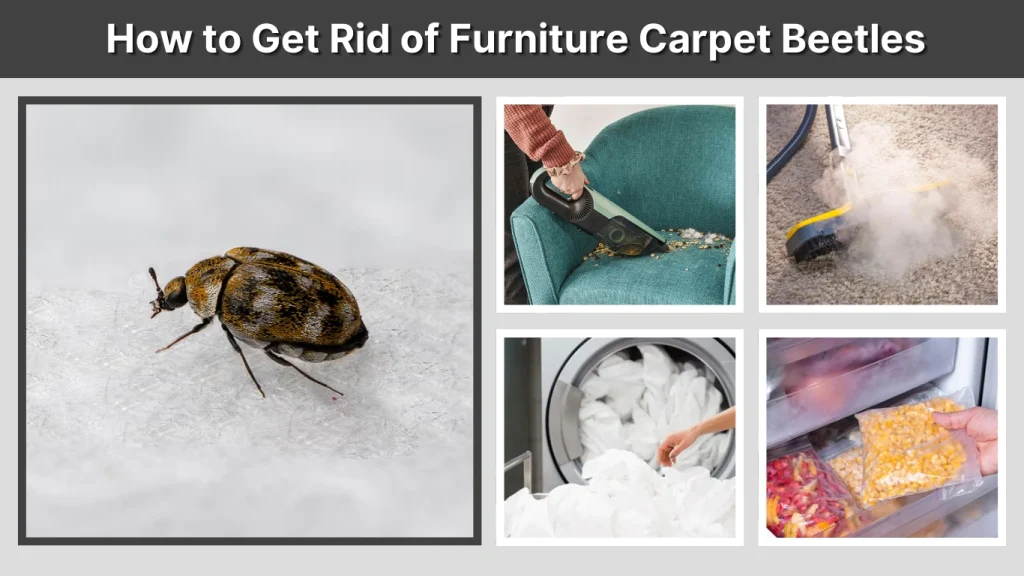
If an infestation occurs, acting quickly is essential. Here are the most effective removal methods:
- Thorough vacuuming – Focus on corners, under furniture, and fabric folds.
- Steam cleaning – Heat kills larvae and eggs embedded in carpets or upholstery.
- Washing fabrics – Launder clothes and linens in hot water to eliminate pests.
- Freezing infested items – Storing small items in a freezer for 48 hours can kill beetles and larvae.
For larger infestations, professional pest control services may be necessary. They use specialized insecticides to eliminate hidden colonies safely and effectively.
Treatment Tools and Products
Several products are available to combat furniture carpet beetles. Insecticide sprays and powders containing pyrethrin or deltamethrin are highly effective when applied to infested areas. Furniture carpet beetle traps, usually sticky pads with attractants, help monitor and reduce beetle populations indoors.
Natural solutions like cedarwood, diatomaceous earth, or essential oils (lavender, eucalyptus) can repel beetles, though they are less potent than chemical treatments. Choosing between natural remedies and insecticides depends on the severity of the infestation and homeowner preference for safety.
Regional Perspective: Furniture Carpet Beetles in the UK
In the UK, furniture carpet beetles are one of the most common household pests. Their larvae thrive in traditional wool carpets, upholstery, and vintage furniture, making older homes particularly vulnerable. The black furniture carpet beetle is especially problematic in urban areas.
UK pest control agencies often recommend a combination of deep cleaning, professional insecticide treatment, and follow-up inspections. Homeowners in the UK should also be aware that infestations are more likely in spring and summer when adult beetles are most active.
Long-Term Protection and Maintenance
Once beetles are removed, maintaining a regular cleaning routine is the best long-term solution. This includes vacuuming, washing fabrics, and checking stored clothing regularly. Using protective covers on upholstered furniture reduces the risk of reinfestation.
Scheduling seasonal inspections, especially before summer, helps spot early signs of carpet beetles. Keeping storage areas dry and well-ventilated also discourages beetles from settling in. With consistent care, homes can remain free of these destructive pests.
FAQs
What are furniture carpet beetles?
Furniture carpet beetles are small pests that feed on natural fibers, often damaging furniture, carpets, and clothing. They are common in homes worldwide and thrive in dark, hidden spaces.
Are furniture carpet beetles harmful to humans?
They do not bite or spread disease, but their larvae can cause skin irritation or rashes due to tiny hairs that trigger allergic reactions.
How do I know if I have a carpet beetle infestation?
Look for small holes in fabrics, larvae or shed skins, beetle droppings, and adult beetles near windows or on furniture.
What kills furniture carpet beetles instantly?
Insecticide sprays, steam cleaning, and freezing infested items are effective methods for quickly killing beetles, eggs, and larvae.
How can I prevent carpet beetles from coming back?
Regular cleaning, vacuum-sealed storage for fabrics, sealing entry points, and seasonal inspections will greatly reduce the risk of re-infestation.
