
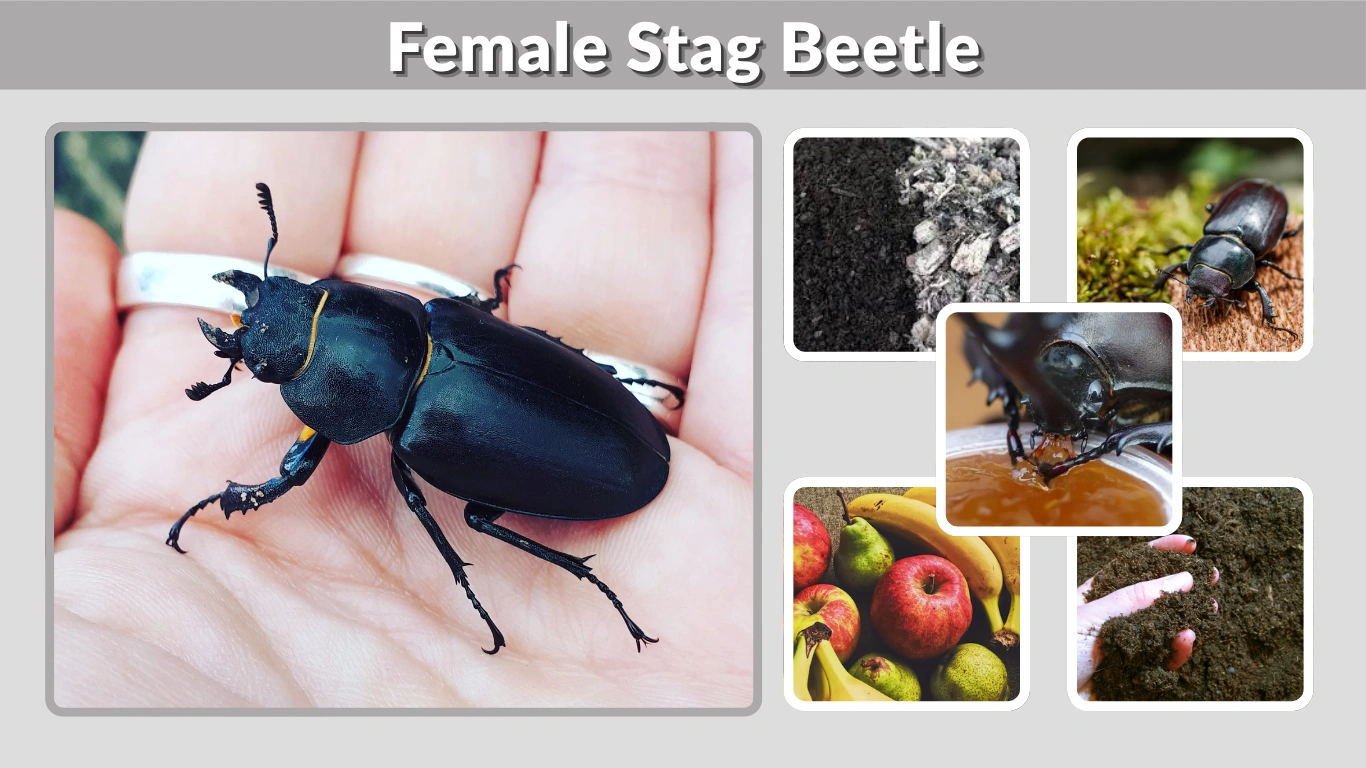
Female stag beetles are fascinating, powerful insects known for their compact bodies, strong jaws, and essential role in the species’ survival. Unlike males, females lack oversized mandibles, making them less dramatic yet far more important in reproduction. This guide covers identification, behavior, diet, care, and rare variations while comparing females across species such as the giant, golden, lesser, and European stag beetle.
What Is a Female Stag Beetle?
A female stag beetle is the smaller, sturdier counterpart to the male and is responsible for egg-laying and burrowing. Females tend to be darker, more compact, and less ornamented but are generally more active and longer-lived. Their bodies are adapted for digging into soil and rotting wood, where they create chambers for egg deposition and larval protection.
Female stag beetles are widely found across Europe, Asia, Australia, and North America. Their appearance varies by species, with some showing reddish-brown coloration, deep black tones, or even golden and green hues in rare morphs. Despite their unassuming appearance, females are crucial to maintaining wild and captive stag beetle populations.
How to Identify a Female Stag Beetle
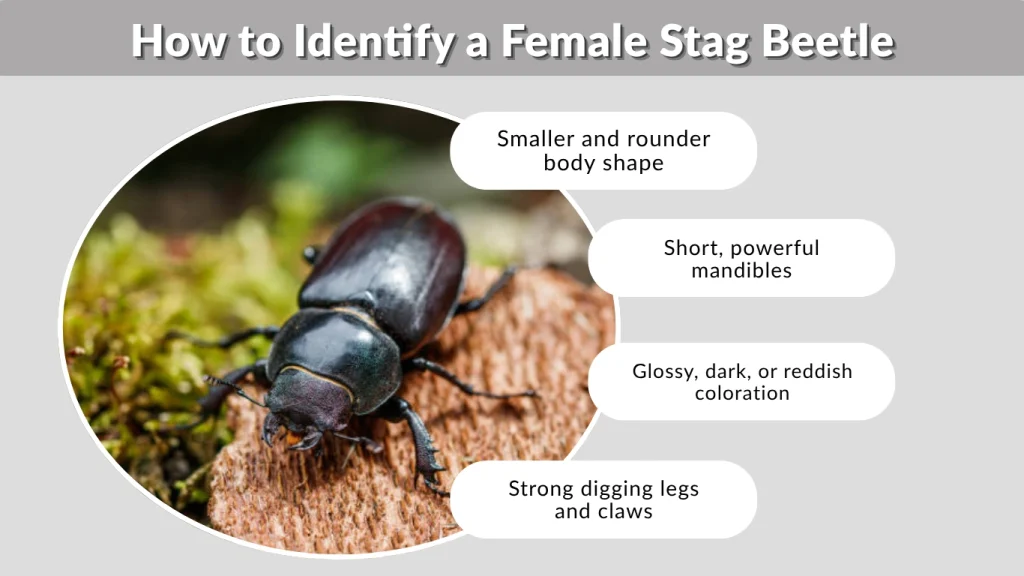
Female stag beetles are easy to distinguish from males once you know the key traits.
Common Characteristics
- Smaller and rounder body shape
- Short, powerful mandibles
- Glossy, dark, or reddish coloration
- Strong digging legs and claws
- Better fliers than many male stag beetles
Species Variations
- Giant Stag Beetle (Lucanus elaphus): large, dark, muscular appearance
- Golden Stag Beetle: metallic gold-green females with compact mandibles
- Lesser Stag Beetle: smaller, matte-black females often confused with beetle larvae predators
- Japanese Stag Beetle: robust brown females with thick thoraxes
- Red Stag Beetle: females with warmer reddish tone
Regional forms also exist, such as the female stag beetle in the UK, Minnesota, Ohio, and Southeast Asia.
Male vs Female Stag Beetles
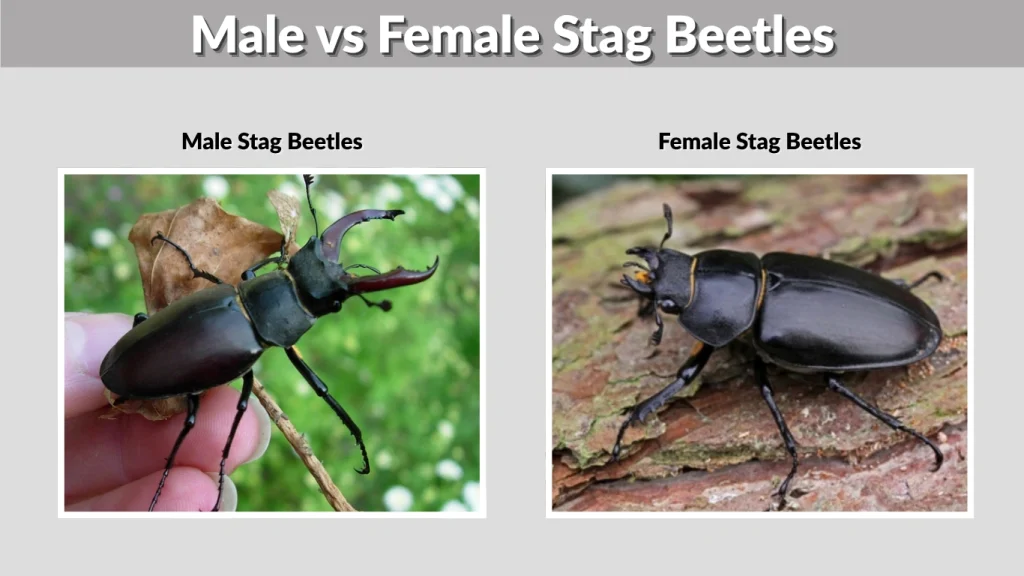
The most obvious difference between male and female stag beetles is mandible size. Males have dramatic, antler-like jaws used for competition, while females have short, sturdy mandibles used for chewing wood and protecting themselves.
Main Differences
- Mandibles: huge in males, short in females
- Body Shape: wider and stockier in females
- Color: females often darker or more reddish
- Behavior: males display and fight; females dig and lay eggs
Across Species
- Lesser stag beetle: male/female differences are subtle but still visible in jaw shape
- Red stag beetle: females show warmer brown tones
- Giant stag beetle: males are significantly larger with long antlers
These distinctions help breeders and enthusiasts easily identify sexes.
Behavior and Flight Ability
Female stag beetles display unique behaviors that set them apart from males. They are strong diggers, spending much of their time tunneling into substrate to search for moisture and rotting wood. Females are also surprisingly active at dusk and can fly well due to their lighter frame.
Some individuals flip onto their backs due to uneven terrain or stress, but they usually right themselves quickly. Their behavior is gentle, though they can use their jaws defensively if threatened.
Diet and Feeding Habits
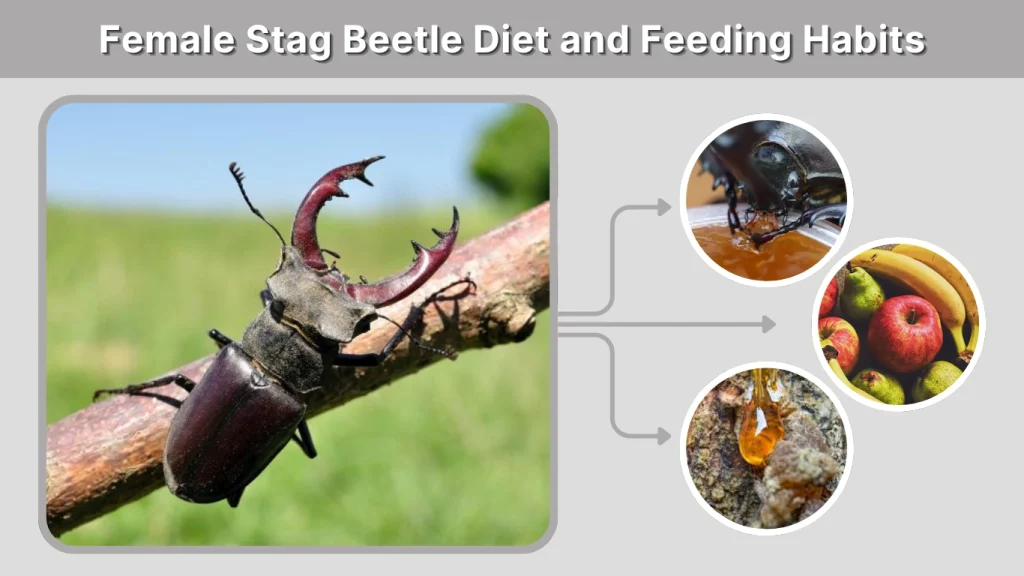
Female stag beetles have simple but specific dietary needs that mirror those of their larvae and male counterparts.
Typical Diet
- Beetle jelly (best option)
- Overripe fruit: banana, apple, mango
- Tree sap and sugar water
Females eat more consistently than males, especially before laying eggs, making nutrition essential to long-term health. A consistent food source also supports egg production.
Female Stag Beetle Care Guide
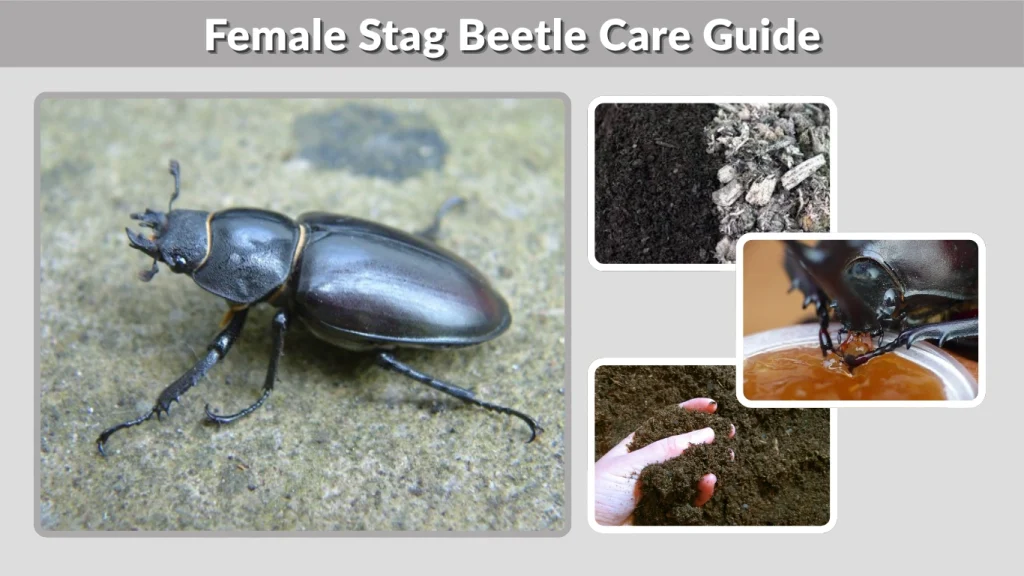
Female stag beetles are generally easier to care for than males due to their calmer temperaments and smaller size. They thrive in enclosures that mimic woodland conditions.
Provide a container with at least 10–15 cm of substrate made from flake soil, decomposed wood, and leaf litter. This allows burrowing and egg laying. Maintain humidity between 65–80% and temperatures between 20–26°C (68–78°F). Females are strong but gentle, and they rarely bite unless mishandled.
Cypress moss, rotting hardwood, and ventilation help maintain stability. Clean feeding stations regularly to prevent mold.
Care Essentials
- Deep, moisture-rich substrate
- Steady humidity and warmth
- Access to beetle jelly or fruit
- Avoid bright lights and loud vibrations
- Allow her to burrow undisturbed
Healthy females can live up to two years depending on species and conditions.
Reproduction, Eggs & Pupa Development
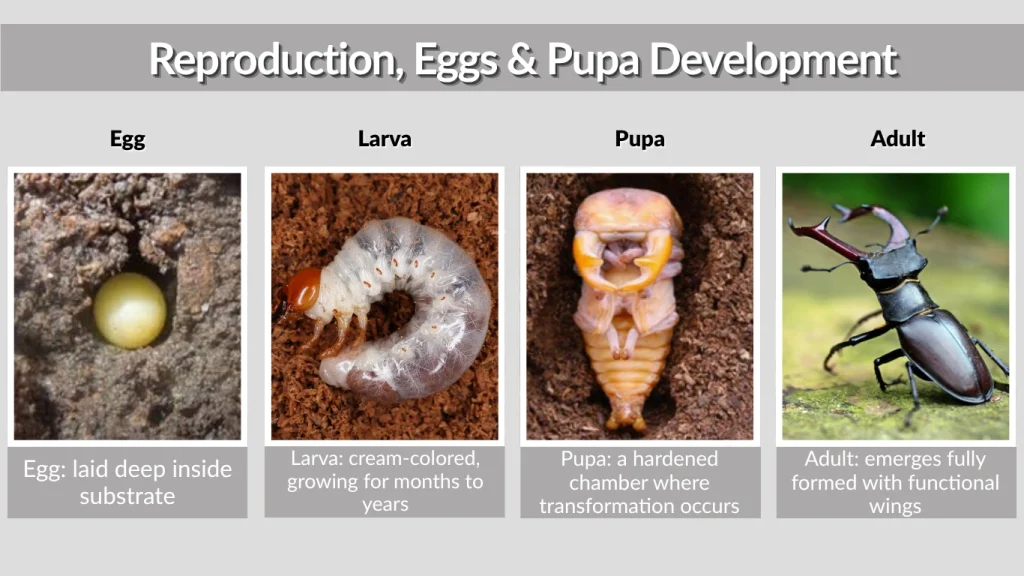
Female stag beetles lay eggs within soft, decomposing wood or rich soil. They create chambers specifically to protect the eggs, and larvae hatch after several weeks.
Lifecycle Stages
- Egg: laid deep inside substrate
- Larva: cream-colored, growing for months to years
- Pupa: a hardened chamber where transformation occurs
- Adult: emerges fully formed with functional wings
Baby female stag beetles look nearly identical to male larvae; sexing them is difficult until pupation or adulthood.
Female Stag Beetles in Games & Media
Female stag beetles appear in several video games, most notably The Legend of Zelda: Twilight Princess. Players collect a male and female golden stag beetle pair to complete an insect quest. Their in-game depiction loosely mirrors real-world beetle forms but greatly exaggerates color.
They also appear in educational materials, insect collections, and nature documentaries highlighting ecosystem roles.
FAQs
What does a female stag beetle look like?
Female stag beetles are smaller, darker, and more compact than males. They lack the large mandibles associated with stag beetles and instead have short, powerful jaws suited for digging. Their coloration ranges from black to reddish brown, depending on species and region.
Do female stag beetles bite?
Female stag beetles can bite if threatened, but their jaws are short and not designed to injure larger animals. Their bite feels like a firm pinch and is typically harmless. They bite far less often than males, who use their mandibles for display and combat.
Can female stag beetles fly?
Yes, female stag beetles can fly and often do so more efficiently than males. Their lighter bodies and smaller mandibles give them better balance during flight. They typically fly at dusk in search of food or mating opportunities, making twilight their most active period.
Are female stag beetles dangerous?
No, female stag beetles are not dangerous. They are gentle insects that prefer hiding and burrowing rather than defending themselves. They may pinch if mishandled, but they pose no hazard to people, pets, or property. Most individuals tolerate light handling well.
What do female stag beetles eat?
Female stag beetles eat beetle jelly, rotting fruit, tree sap, and sugar water. They prefer soft, sweet foods that are easy to digest. In captivity, beetle jelly provides the most balanced nutrition and helps maintain hydration during egg production and nightly activity.
