
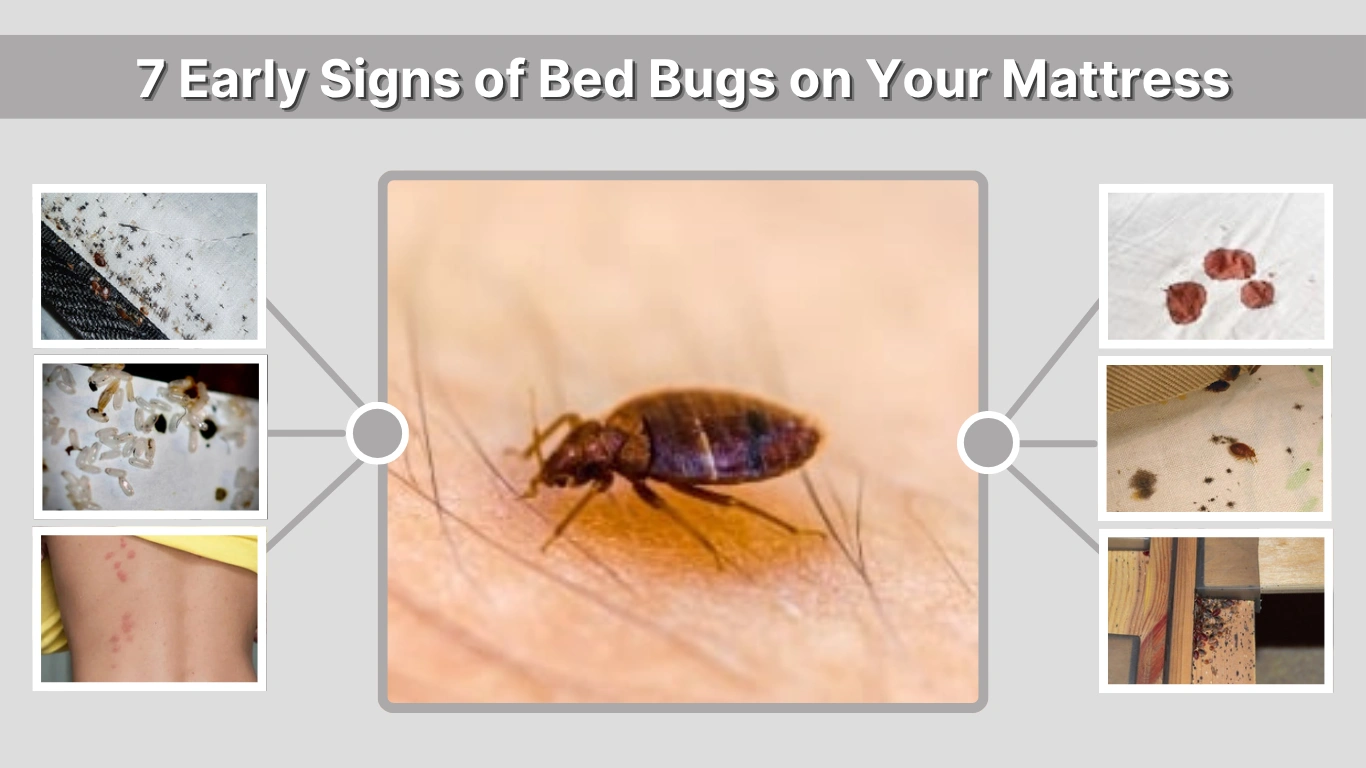
Bed bugs are small, reddish-brown insects that feed on human blood, and mattresses are one of their favorite hiding spots. These pests are nocturnal, making them difficult to detect until an infestation becomes severe. Early detection is essential because bed bugs can multiply rapidly, causing itchy bites, sleep disturbances, and even anxiety. Knowing the early signs of bed bugs on a mattress can save you time, money, and stress, and prevent them from spreading to other areas of your home.
Understanding Bed Bugs
What Are Bed Bugs?
Bed bugs are tiny insects, usually 4–5 mm long, with flat, oval-shaped bodies. They are parasitic, feeding exclusively on the blood of humans and animals. Bed bugs are most active at night, which allows them to hide during the day in small cracks and crevices. Their life cycle includes eggs, nymphs (young bugs), and adults. Each stage can contribute to the infestation, making early detection critical.
Why Mattresses Are Common Hiding Spots
Mattresses provide warmth and easy access to humans while sleeping, making them ideal locations for bed bugs. They hide in seams, folds, and tags, often going unnoticed for weeks. Because of their small size and nocturnal habits, people frequently discover bed bugs only after the infestation has grown. Early inspection of your mattress is key to preventing a full-blown infestation.
Early Signs of Bed Bugs on Mattresses
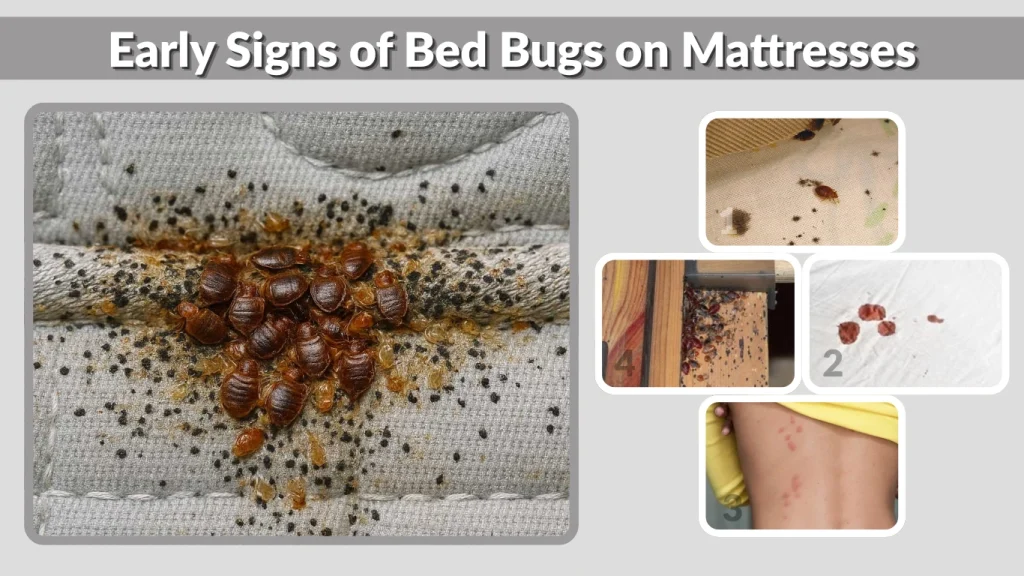
Spotting bed bugs early requires attention to detail. Here are the first three signs that can indicate their presence on your mattress.
Sign 1: Small Red or Rust-Colored Stains
One of the earliest signs of bed bugs is small red or rust-colored stains on your sheets or mattress. These spots are often caused by bed bug feces or accidentally crushed bugs. They are usually concentrated along mattress seams, edges, and folds. Early identification of these stains can prevent the infestation from spreading further into your bedroom.
Sign 2: Tiny Blood Spots on Bedding
Bed bugs feed on blood, and sometimes a freshly fed bed bug can be accidentally crushed against the mattress or sheets, leaving behind tiny blood spots. These spots are typically small and isolated but are a strong indicator of bed bug activity. Noticing even a few of these spots should prompt a closer inspection of the mattress and surrounding areas.
Sign 3: Itchy Bites on Skin
Another early warning sign is itchy bites on the skin, often appearing in clusters or lines. These bites commonly occur on exposed areas like the arms, legs, neck, or face. Redness, swelling, and irritation usually accompany the bites. It is important to note that bites alone do not confirm the presence of bed bugs, as they can resemble bites from mosquitoes or other insects. However, when combined with other signs like stains or blood spots, they are a reliable indicator of bed bug activity.
Sign 4: Bed Bug Exoskeletons (Shed Skins)
As bed bugs grow, they shed their exoskeletons. These light brown or translucent shells are often found in mattress seams, folds, or near bed frames. Spotting exoskeletons is an early indicator of an active infestation and can be easier to detect than live bed bugs, which are nocturnal and hide during the day.
Sign 5: Musty or Sweet Odor
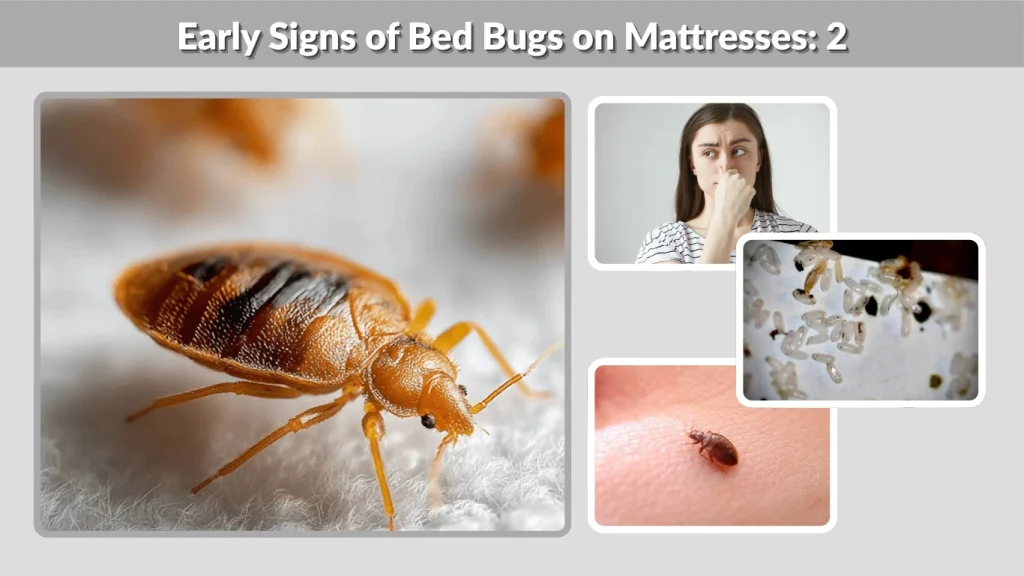
Bed bugs release pheromones that produce a distinct, musty, or slightly sweet odor. This smell is subtle in the early stages but can be noticed if the mattress is inspected closely. A persistent musty smell, especially combined with stains or bites, is a warning sign of bed bug activity.
Sign 6: Small White Eggs or Eggshells
Bed bug eggs are tiny, about 1 mm long, and white or translucent. They are often hidden in seams, folds, and cracks of the mattress. Egg detection requires careful inspection with a flashlight or magnifying glass. Eggs are sticky and difficult to remove, so early discovery is crucial to prevent a growing infestation.
Sign 7: Live Bed Bugs
Finding a live bed bug is a clear and urgent sign. Adults are reddish-brown, flat, and about the size of an apple seed. Even spotting a single live bug means action should be taken immediately to prevent further spread. Bed bugs can reproduce rapidly, so early detection and eradication are essential.
How to Inspect Your Mattress for Bed Bugs
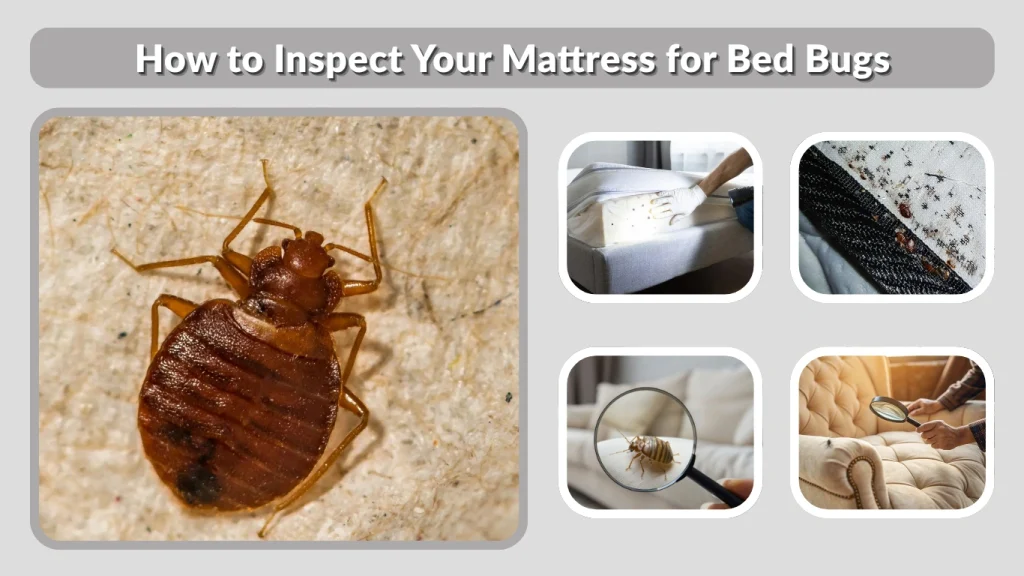
- Remove bedding and thoroughly inspect seams, edges, and folds.
- Check mattress tags and corners where bugs like to hide.
- Use a flashlight or magnifying glass to spot eggs, exoskeletons, or live bugs.
- Inspect nearby furniture, headboards, and rugs, as bed bugs can migrate.
- Repeat inspections periodically, especially after travel or introducing second-hand furniture.
Preventive Measures
- Use mattress encasements to trap and prevent bed bugs.
- Wash and heat-dry sheets, pillowcases, and blankets regularly.
- Reduce clutter around your bed to minimize hiding spots.
- Be cautious with second-hand furniture; inspect thoroughly before bringing it home.
- Educate family members about early bed bug detection and prevention.
What to Do If You Find Bed Bugs Early
- Vacuum seams, edges, and surrounding areas to remove visible bugs.
- Wash bedding, pillowcases, and clothing in hot water and dry on high heat.
- Consider professional pest control for effective eradication.
- Act quickly—early treatment is easier, cheaper, and more effective than dealing with a full infestation.
FAQs
1. Can bed bugs be seen easily?
Bed bugs are small and nocturnal, making them difficult to spot. Early signs like stains, exoskeletons, or eggs are often easier to detect than live bugs.
2. Do bed bugs only infest dirty mattresses?
No, bed bugs can infest any mattress regardless of cleanliness. They are attracted to warmth and human blood, not dirt.
3. How quickly can bed bugs multiply?
Bed bugs reproduce rapidly. A single female can lay hundreds of eggs in her lifetime, so an infestation can grow within weeks if not addressed early.
4. Are bed bug bites dangerous?
Bed bug bites are generally not dangerous, but they can cause itching, allergic reactions, and secondary infections from scratching. Severe infestations can disrupt sleep and cause stress.
5. Can mattress encasements prevent bed bugs?
Yes, encasements can trap existing bed bugs and prevent new ones from infesting the mattress. They are an effective preventive measure when combined with regular inspection and cleaning.
Conclusion
Early detection of bed bugs on mattresses is essential to prevent full-blown infestations. By recognizing signs such as red stains, itchy bites, exoskeletons, eggs, or live bugs, you can take immediate action. Regular inspection, preventive measures, and quick response to detected signs will protect your home and ensure a safe, comfortable sleeping environment.
