
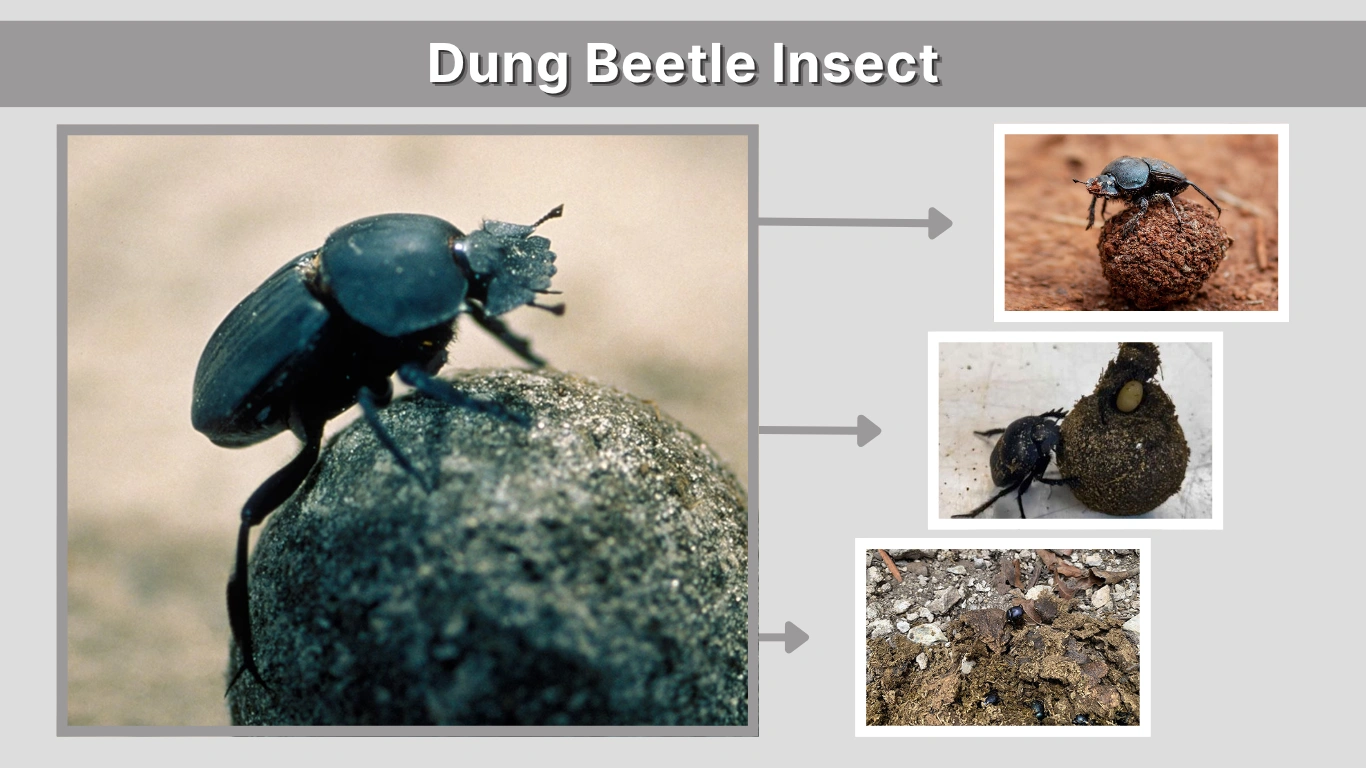
Dung beetles are fascinating insects known for their remarkable habit of collecting and rolling animal waste into balls. These tiny yet powerful creatures play a vital role in cleaning ecosystems and enriching the soil. Belonging to the Scarabaeidae family, dung beetles are found on every continent except Antarctica. Their strength, behavior, and ecological importance make them one of nature’s most efficient recyclers and one of the strongest insects in the world.
Overview of the Dung Beetle
What Is a Dung Beetle Insect?
A dung beetle is a small, hard-shelled insect that feeds primarily on the waste of herbivorous animals. As a true insect, it has three body segments—head, thorax, and abdomen—along with six legs and two antennae. These features make it easy to classify dung beetles as part of the vast order Coleoptera, which includes all beetles.
Dung Beetle Family and Classification
Dung beetles belong to the Scarabaeidae family, the same group that includes scarab beetles. Within this family, there are hundreds of species spread across several genera, such as Onthophagus and Scarabaeus. These beetles differ in size, color, and behavior, but all share the common trait of feeding on or nesting in dung.
Habitat and Distribution
Global Presence
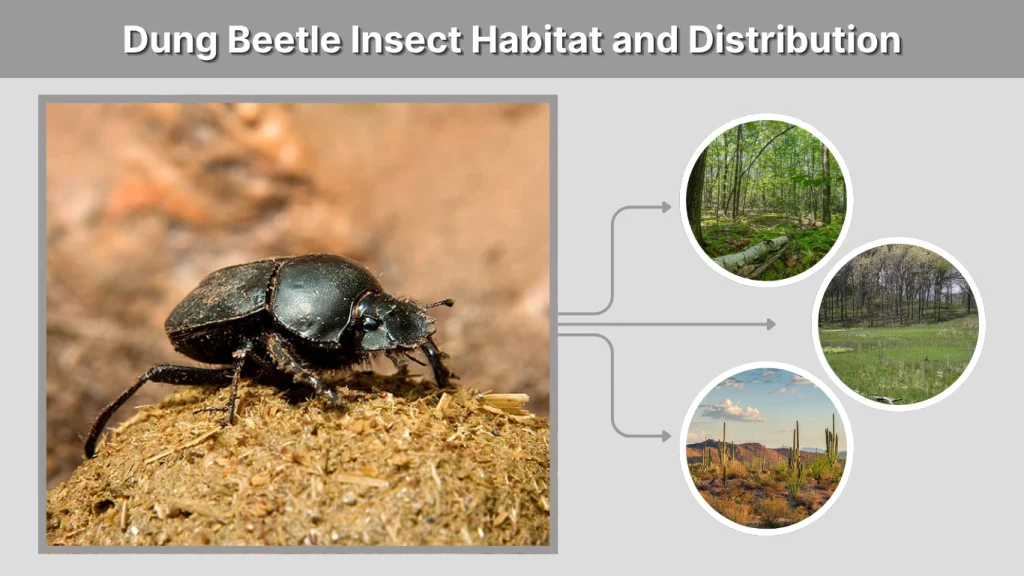
Dung beetles can be found in diverse habitats, including forests, grasslands, deserts, and farmland. They thrive wherever large mammals live because their primary food source—animal feces—is readily available. In Africa, some species follow herds of elephants or cattle, while in Australia and the Americas, they help control waste in agricultural lands.
Dung Beetles in Texas and North America
In the United States, especially Texas, dung beetles are valuable for their contribution to soil health and livestock management. The region hosts several native species that help recycle nutrients and reduce pests. Farmers and researchers often use insect identification tools to distinguish between local species for conservation and study.
Behavior and Diet
Feeding Habits
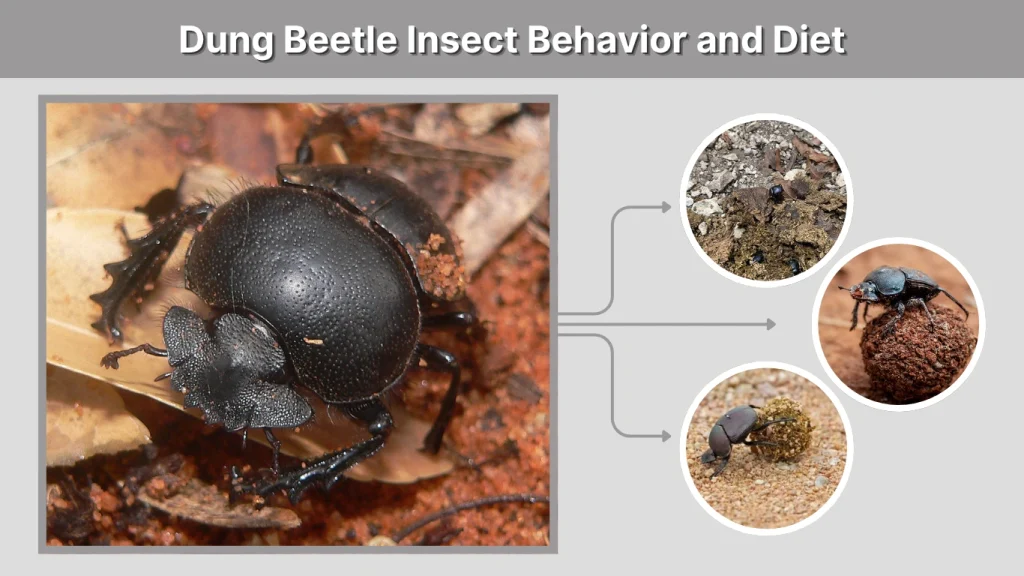
Dung beetles feed on the nutrient-rich waste of animals. They extract essential nutrients, such as nitrogen, from dung, which is vital for their survival. This behavior benefits ecosystems by breaking down waste, reducing odor, and preventing the spread of parasites. Some species bury dung underground to store food or provide nourishment for their larvae.
Dung Rolling and Nesting
One of the most recognizable behaviors of dung beetles is rolling dung into balls. Males and females work together to form these spheres, which they roll away to bury safely. The female often lays her eggs inside the buried ball, ensuring that the larvae have an immediate food source once hatched. This instinctive process not only sustains their species but also improves soil quality and aeration.
Identification Features

Physical Appearance
Dung beetles vary widely in appearance depending on their species. Most are small to medium-sized, typically between 0.2 and 1.5 inches long. Their bodies are compact and rounded, with tough exoskeletons that protect them from predators and harsh environments. Colors range from dull brown to metallic green or black. The strong forelegs are specially adapted for digging, allowing them to roll and bury dung efficiently.
Insects Similar to Dung Beetles
Several insects resemble dung beetles, such as rhinoceros beetles, June beetles, and other scarabs. However, dung beetles can be identified by their habit of rolling dung and their smooth, domed bodies. They also have specialized clubbed antennae used to detect the scent of dung from long distances.
| Feature | Dung Beetle | Rhinoceros Beetle | June Beetle |
| Diet | Animal dung | Sap and fruit | Plant leaves |
| Behavior | Rolls and buries dung | Burrows underground | Flies at night |
| Size | Small to medium | Large | Medium |
Strength and Abilities
Strongest Insect on Earth
Dung beetles are renowned for their incredible strength. Some species can move objects over 1,000 times their body weight—comparable to a human dragging six double-decker buses. This strength allows them to roll large dung balls long distances, often uphill, without rest. Scientists consider them the strongest insects on Earth, a title earned through countless experiments and field observations.
Dung Beetle Races and Research
In some regions, people organize dung beetle races to highlight their remarkable power and agility. Researchers are also fascinated by how dung beetles navigate. Studies have shown that they use the Milky Way’s light as a guide when rolling their dung balls at night. This celestial navigation is unique among insects, showing their surprising intelligence and spatial awareness.
Ecological Importance
Role in the Ecosystem
Dung beetles are essential for maintaining ecosystem balance. By burying and consuming waste, they recycle nutrients into the soil, promoting plant growth. Their activity aerates the ground and helps control pests by removing breeding grounds for flies and parasites. Without dung beetles, many habitats would quickly become overrun with waste.
Human and Environmental Benefits
These beetles benefit humans indirectly through their environmental services. Farmers appreciate dung beetles for keeping pastures clean and improving soil fertility. Their natural waste management reduces the need for chemical fertilizers and pest control. In short, dung beetles act as nature’s cleanup crew, maintaining healthy ecosystems worldwide.
FAQs
Are dung beetles insects?
Yes, dung beetles are classified as insects within the order Coleoptera. They have three distinct body parts, six legs, and hard outer shells. Their unique adaptation of feeding on dung makes them both fascinating and vital to environmental balance.
What insect family do dung beetles belong to?
Dung beetles are members of the Scarabaeidae family, which includes scarab beetles. This group is known for its strength, burrowing behavior, and role in decomposition. They have club-shaped antennae that help them detect dung from long distances.
Why are dung beetles called the strongest insects?
They are called the strongest insects because some species can move dung balls over 1,000 times their body weight. This extraordinary strength helps them roll and bury food supplies or nesting material underground for their young.
Are dung beetles considered small insects?
Yes, dung beetles are relatively small, usually under 1.5 inches long. Despite their size, their strength and endurance make them one of nature’s most powerful small creatures. They can easily outlift and outperform many larger insects.
What insects are similar to dung beetles?
Insects such as June beetles and rhinoceros beetles resemble dung beetles due to their hard shells and body shape. However, only dung beetles specialize in collecting a
