

Stink bugs are common household invaders, especially during fall and winter when they seek warmth. Their sudden appearance inside bedrooms, living rooms, and windows often leads people to wonder if these insects can bite. Because many individuals wake up with mysterious bumps, it’s easy to blame the nearest insect in sight. This article explains whether stink bugs bite humans or pets, what skin marks are commonly misidentified as stink bug bites, and what to do if you experience irritation.
Do Stink Bugs Bite?

Stink bugs have earned an undeserved reputation as insects capable of biting or stinging. In reality, they do not bite humans, nor do they sting, pinch with force, or pierce the skin. Their mouthparts are built for feeding on plants, not animals. Despite this, the misconception persists because people often notice stink bugs indoors at the same time they develop unrelated skin irritations.
Why People Believe Stink Bugs Bite
Many bite assumptions come from visual association—someone discovers a stink bug on a pillow or wall and assumes it was the culprit behind a new skin bump. Others confuse stink bugs with look-alike species that do bite, especially leaf-footed bugs or certain predatory species. Social media and poorly sourced articles also contribute to widespread myths, leading people to believe stink bugs are harmful when they are mostly harmless.
Scientific Answer: They Do Not Bite Humans
Stink bugs possess a straw-like mouthpart called a proboscis, designed to pierce fruit, stems, and vegetation. It lacks the strength or shape needed to penetrate human skin. Even when handled roughly, stink bugs do not bite defensively. Instead, they rely on their trademark defense mechanism—the foul odor they release when threatened. This odor may cause mild skin irritation in sensitive individuals, but it is not a bite.
Species Breakdown: Do Any Types Bite?
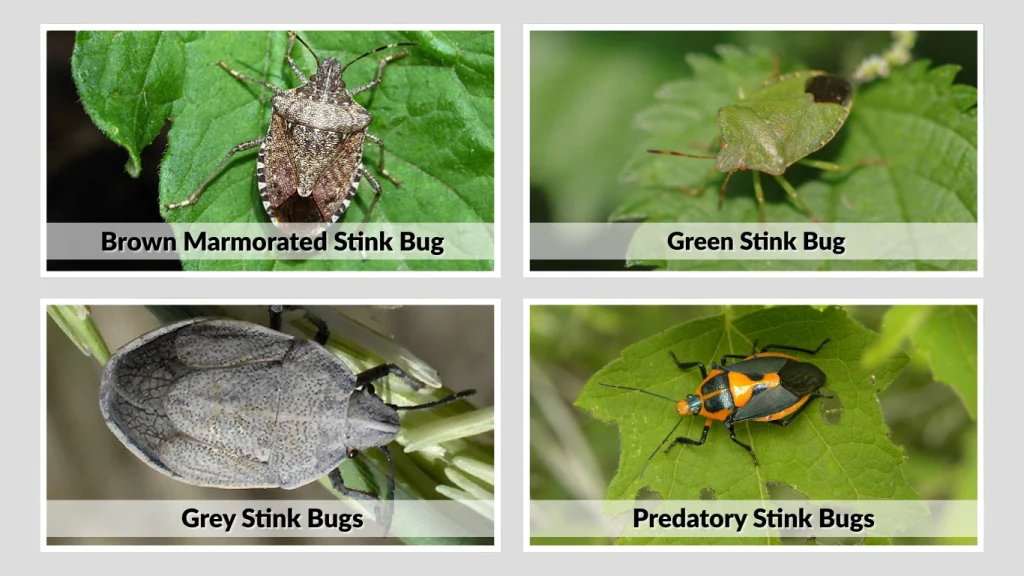
Different stink bug species appear throughout North America, Europe, and Asia. Although they vary in color and size, their behavior toward humans remains essentially the same.
Brown Marmorated Stink Bug
This species is responsible for most indoor invasions and is the one people most frequently encounter. Despite its intimidating appearance, it does not bite or sting, even when disturbed. Brown marmorated stink bugs may fly toward lights or crawl on bedding, but they have no interest in feeding on humans.
Green Stink Bug
Common in gardens and agricultural fields, green stink bugs feed exclusively on plants. They are known for leaving stains if crushed, but not for biting. Farmers may consider them pests due to crop damage, yet they pose no risk to human skin.
Black, Asian, Chinese & Grey Stink Bugs
These color variations and regional species follow the same behavioral pattern: they avoid humans, do not bite, and use odor—not aggression—for defense. Their presence indoors can be unsettling, but they are not capable of biting animals or people.
Predatory Stink Bugs: The Only Possible Exception?
Predatory stink bugs are a rare subgroup that feed on other insects. While they technically can prick soft tissue with their stronger mouthparts, such interactions with humans are extremely uncommon. They do not seek out people, and bites occur only if handled aggressively. Even then, discomfort is mild and fleeting.
Identification Guide
Stink bugs can be recognized by several consistent features:
- Shield-shaped body measuring ½ to 1 inch
- Brown, green, black, or mottled coloration
- Banding on the antennae
- Slow, deliberate movement
- Ability to release a pungent odor when threatened
- Preference for windows, walls, ceilings, and gardens
Knowing how to identify them helps prevent confusion with insects that actually do bite.
Do Stink Bugs Bite at Night?
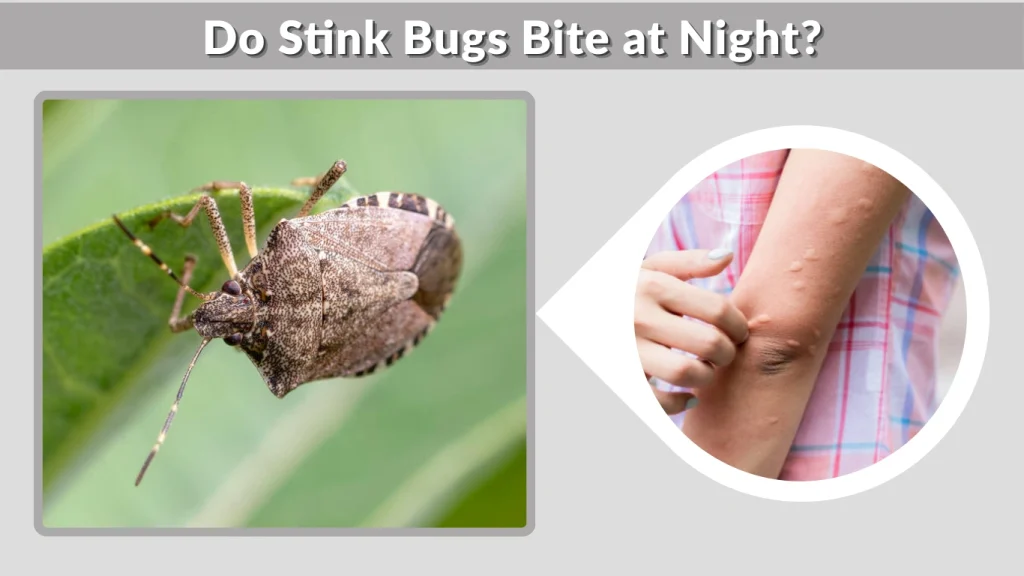
Many people associate nighttime with insect bites, especially when waking up with new bumps. However, stink bugs are not responsible for these marks.
Why People Notice Skin Irritations Overnight
Most nighttime bites come from mosquitoes, bed bugs, or fleas—not stink bugs. Dry skin, allergic reactions, and fabric irritation can also produce bumps that resemble insect bites. Because stink bugs often rest near beds or crawl onto walls at night, people easily assume a causal connection that doesn’t exist.
Stink Bug Behavior at Night
Stink bugs are attracted to light and warmth, which is why they tend to appear in bedrooms. They may fly clumsily around lamps, crawl on curtains, or wander near pillows. But even with close contact, they do not bite. Their nighttime presence is a nuisance, not a danger.
Do Stink Bugs Bite Pets? (Dogs & Cats)
Although pet owners often worry when they find stink bugs near their animals, these insects do not bite pets. Their plant-feeding mouthparts are not designed to penetrate skin—whether human or animal. Cats and dogs may sniff, paw, or chase stink bugs out of curiosity, but they are rarely harmed by them.
Pets and Non-Biting Behavior
Stink bugs cannot latch onto or feed from any animal. Even when startled or handled, they do not attempt to defend themselves by biting. Instead, their only true defense is releasing a foul-smelling chemical. This odor may cause brief discomfort or sneezing in some pets but is not considered harmful.
What Happens if a Pet Eats a Stink Bug
Many pets—especially cats—cannot resist batting or eating insects. If a dog or cat accidentally ingests a stink bug:
- Mild drooling may occur
- Occasional vomiting may happen
- Pets may paw at their mouth due to the taste
These symptoms are caused by the stink bug’s defensive secretions, not from biting or toxicity.
What Do “Stink Bug Bites” Look Like?
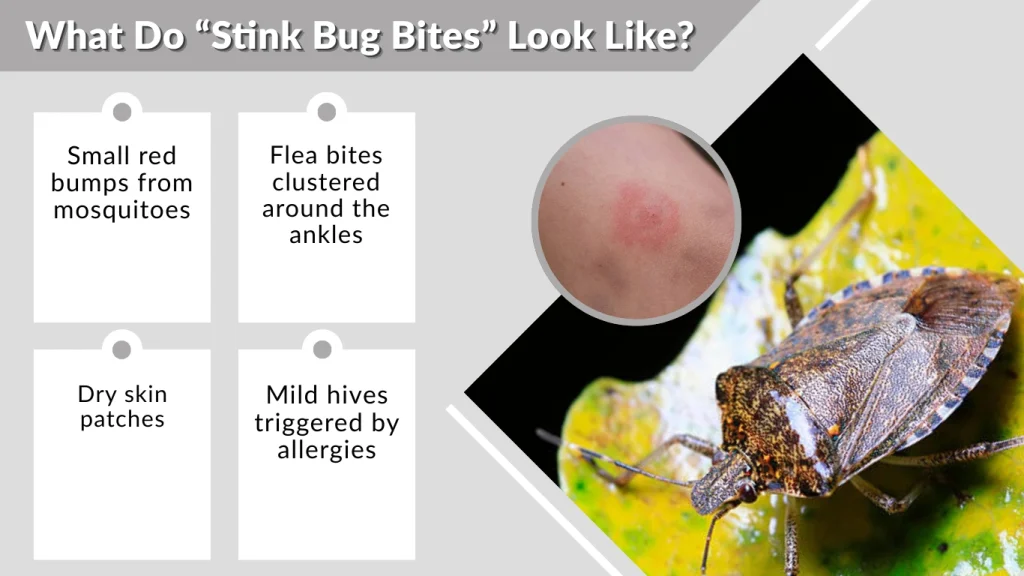
Because stink bugs don’t bite, any marks blamed on them are usually misidentified skin irritations or bites from unrelated insects. People often associate bumps with the last insect they saw, even if that insect wasn’t responsible.
Common Misidentified Skin Marks
Many of the marks mistaken for stink bug bites resemble:
- Small red bumps from mosquitoes
- Flea bites clustered around the ankles
- Dry skin patches
- Mild hives triggered by allergies
Stink bugs do not leave bite patterns, rows, clusters, welts, or puncture marks.
Chemical Irritation From Stink Bugs
In rare cases, touching or crushing a stink bug can release chemicals that irritate the skin. This irritation is usually mild and short-lived, presenting as:
- Light redness
- Temporary swelling
- A slight burning sensation
This is not a bite—it is simply a reaction to their defensive odor.
Do Stink Bug “Bites” Hurt or Itch?
Because stink bugs do not bite, they cannot cause true bite pain. However, people may still experience skin irritation after handling them, making it easy to confuse odor-related irritation with a bite.
Possible Reactions From Handling Stink Bugs
When someone picks up or crushes a stink bug, the chemical released can irritate the skin, causing:
- Redness
- Slight itching
- Minor swelling
These symptoms fade quickly and are not comparable to insect bites from mosquitoes, spiders, or bed bugs.
Symptoms That Are NOT From Stink Bugs
If someone experiences intense itching, painful welts, blistering, or repeated marks, the cause is another insect entirely—most commonly:
- Bed bugs
- Mosquitoes
- Fleas
- Ants
- Spiders
Stink bugs simply do not have the physical ability to create these injuries.
Why Stink Bugs Are Mistaken for Biters
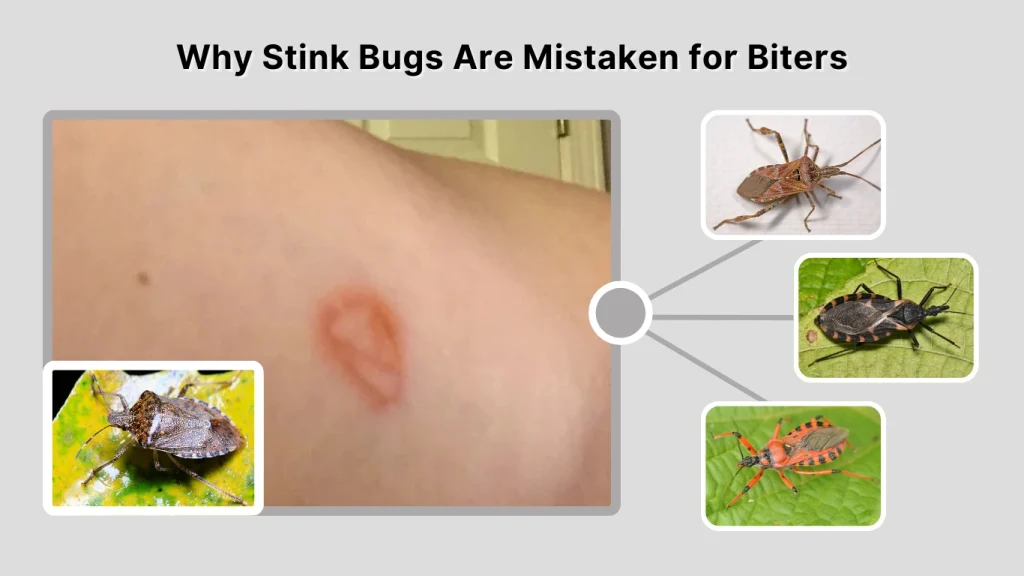
Stink bugs are slow, harmless, and non-aggressive, yet they are often blamed for skin irritations. This confusion comes from environmental factors and the presence of similar insects.
Look-Alike Insects That Do Bite
Several insects resemble stink bugs in shape or size, leading to mistaken identity:
- Leaf-footed bugs – can poke with their mouthparts
- Kissing bugs – known for biting humans at night
- Assassin bugs – predatory and capable of painful bites
These insects differ significantly in behavior but are often confused with stink bugs due to similar body shapes.
Environmental Factors Causing Confusion
Other bite-like marks may result from:
- Allergic reactions to detergents or soaps
- Heat rashes
- Reaction to bedding materials
- Contact dermatitis
When stink bugs are present indoors, people tend to blame them out of convenience rather than evidence.
Comparison: Stink Bugs vs Other Biting Insects
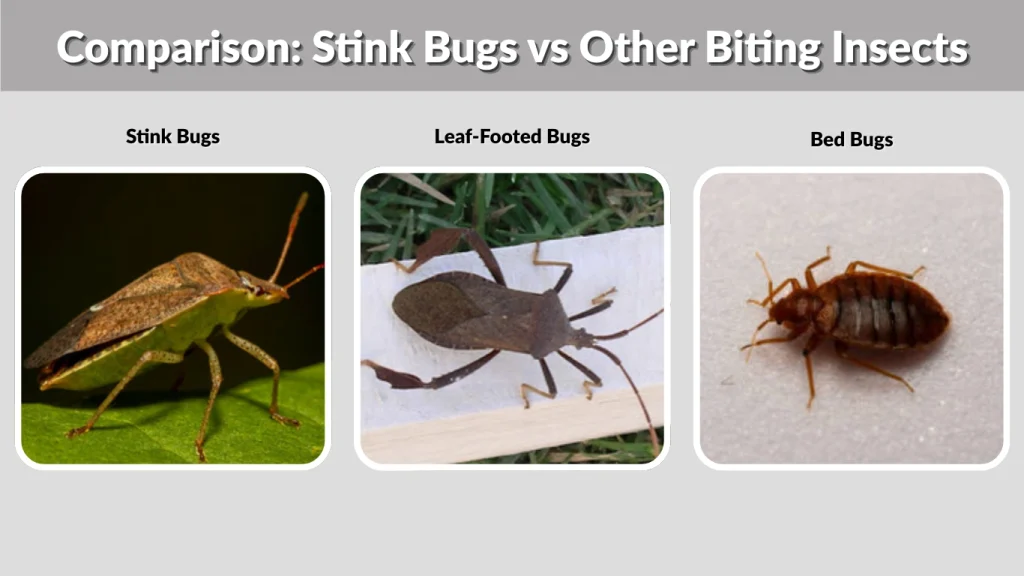
| Feature | Stink Bugs | Leaf-Footed Bugs | Bed Bugs |
| Do they bite humans? | No | Rarely | Yes |
| Cause itchy welts? | No | Sometimes | Yes |
| Active at night? | Sometimes | No | Yes |
| Odor release | Strong | Mild | None |
| Attracted to light | Yes | No | No |
This comparison makes it clear that stink bugs are not responsible for bite symptoms—they simply lack the anatomy and behavior.
What To Do If You Think a Stink Bug Bit You
Even though stink bugs cannot bite, some people experience skin irritation from handling them or from other insects present in the environment.
Immediate Care Steps
If you notice unexplained skin redness:
- Wash the area thoroughly with mild soap
- Apply a cold compress for several minutes
- Use hydrocortisone cream or an antihistamine if itchy
- Avoid scratching to prevent secondary irritation
These steps help soothe the skin even if the cause was another insect.
When to Seek Medical Attention
You should consider medical care if you experience:
- Significant swelling
- Spreading rash
- Signs of infection
- Unknown cause for repeated skin marks
A professional can identify the real cause, ruling out insects that do pose health risks.
Behavior, Habitat & Range
Stink bugs are widespread across the United States and many other regions. They are most active in warm seasons and take refuge indoors during colder months.
Where Stink Bugs Live
Outdoors, stink bugs thrive in:
- Gardens
- Orchards
- Trees
- Fields and crops
Indoors, they are commonly found in:
- Bedrooms
- Attics
- Window frames
- Warm indoor spaces
What Stink Bugs Eat
Stink bugs are plant feeders. Their diet consists of:
- Fruits
- Vegetables
- Leaves
- Stems
They do not feed on human or animal blood, eliminating the possibility of biting.
Prevention: How to Keep Stink Bugs Out
To reduce their presence indoors:
- Seal cracks and gaps in walls and siding
- Install quality window screens
- Reduce nighttime lighting that attracts them
- Vacuum instead of crushing to avoid odor release
These steps help keep your home stink bug–free without harsh chemicals.
FAQs
Do stink bugs bite humans?
Stink bugs do not bite humans because their mouthparts are designed only for feeding on plants. They lack the ability to pierce skin and have no interest in blood or human tissue. Any skin irritation blamed on stink bugs is usually caused by another insect or mild contact irritation.
What do stink bug bites look like?
Since stink bugs cannot bite, there is no true bite pattern. Marks often mistaken for stink bug bites are usually mosquito bumps, small hives, flea bites, or mild redness from touching or crushing a stink bug. These irritations are typically temporary and unrelated to the insect itself.
Do stink bugs bite pets like cats or dogs?
No. Stink bugs cannot bite cats or dogs because their mouthparts are too weak to penetrate animal skin. Pets may show brief discomfort if they eat a stink bug, but symptoms come from the foul-tasting defensive chemicals—not from biting or toxicity.
Can stink bugs bite at night while you sleep?
Stink bugs do not bite at any time, including at night. They may be more noticeable after dark because they are attracted to warmth and indoor lighting, but they do not feed on humans. Nighttime skin bumps come from other insects such as mosquitoes or bed bugs.
What should I do if I think a stink bug bit me?
Even though stink bugs don’t bite, you can treat unexplained skin irritation by washing the area, applying a cold compress, and using hydrocortisone or an antihistamine. If swelling worsens or the cause remains unclear, a medical professional can help identify the actual source of the irritation.
