
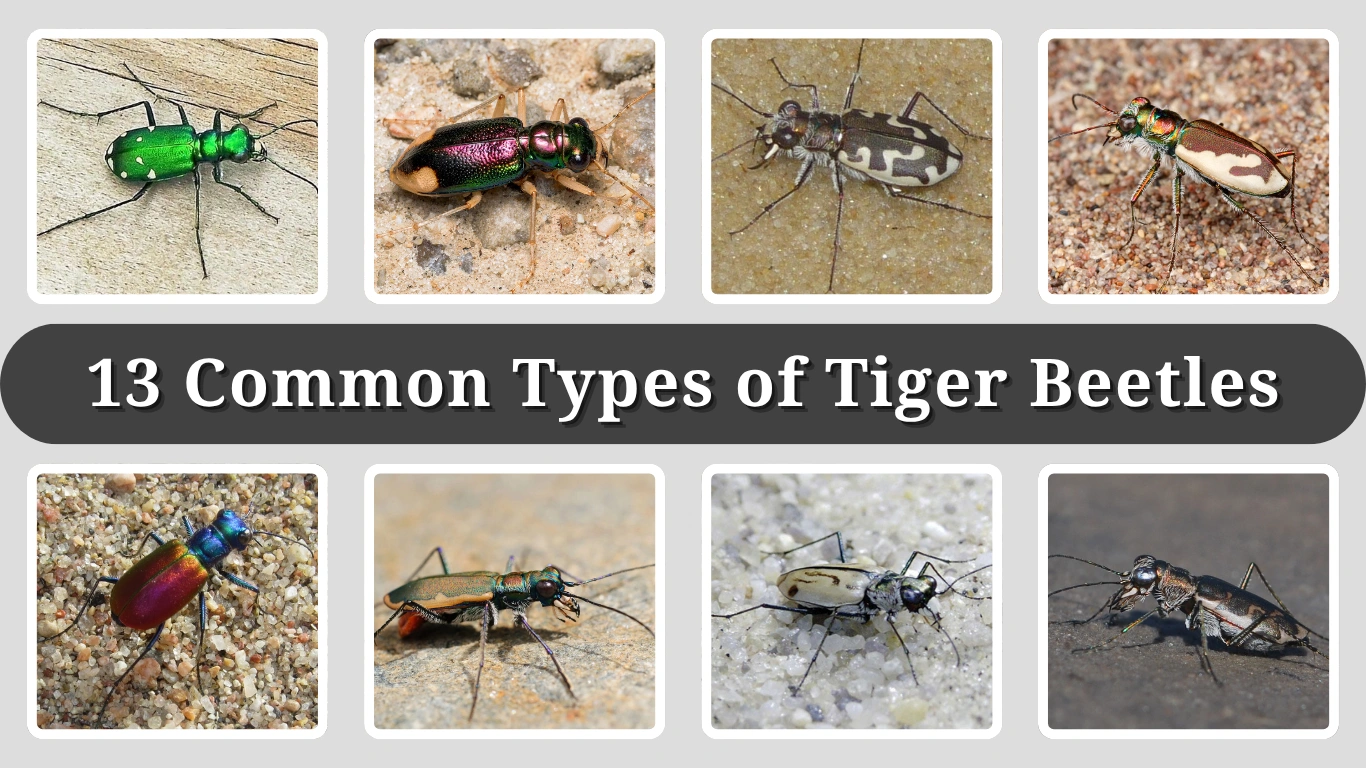
Tiger beetles are fast-moving, predatory insects known for their brilliant metallic colors and remarkable hunting abilities. Found across the world, these beetles thrive in diverse habitats such as sandy shores, forests, grasslands, and riverbanks. They are recognized not only for their beauty but also for their ecological role in controlling insect populations. This list introduces thirteen common types of tiger beetles, each with unique adaptations, habitats, and life cycles.
1. Six-spotted Tiger Beetle
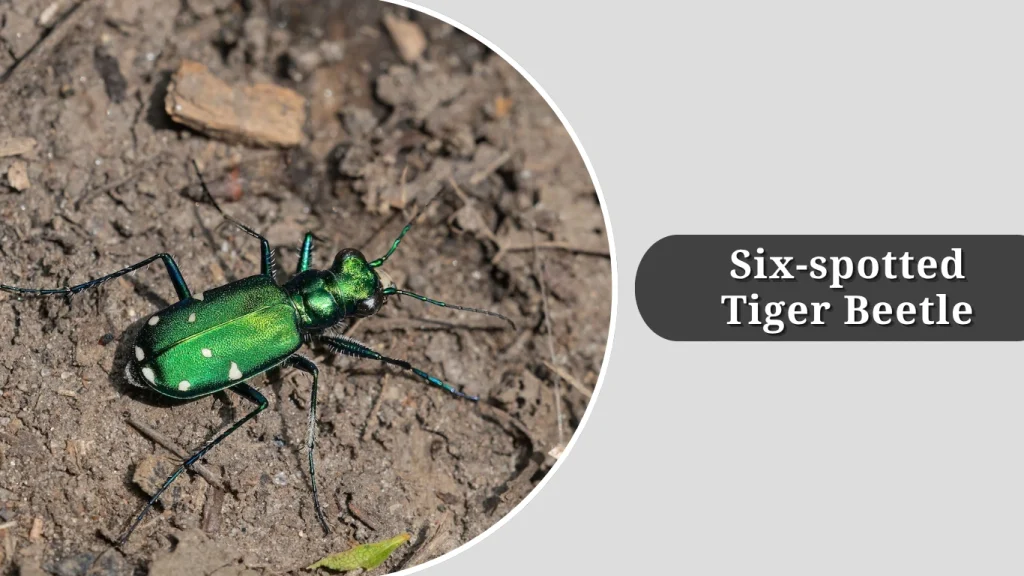
The Six-spotted Tiger Beetle (Cicindela sexguttata) is one of the most recognizable and widespread tiger beetles in North America. Known for its bright metallic green color and speed, this beetle plays an important role as a predator of small insects.
Identification
- Bright metallic green body with a shiny appearance
- Six distinct white spots on the wing covers (elytra)
- Long, slender legs adapted for fast running
- Large curved mandibles used for catching prey
- Measures about 12–14 mm in length
Habitat
Six-spotted Tiger Beetles are commonly found in open, sunny areas such as forest edges, sandy paths, dirt trails, and grassy clearings. They prefer dry, well-drained soils where they can easily hunt.
Behaviors
These beetles are fast runners and strong fliers, often seen darting ahead on paths before flying off when approached. They are territorial and use speed both to chase prey and to escape predators.
Diet
Adults are carnivorous, feeding mainly on ants, spiders, caterpillars, and other small insects. They ambush prey with their powerful jaws. Larvae are also predatory, waiting in burrows to snatch passing insects.
Lifecycle
The lifecycle includes egg, larva, pupa, and adult stages. Females lay eggs in sandy soil, and larvae develop in vertical burrows. The larval stage may last up to two years, after which pupation occurs before emerging as adults in late spring.
2. Green Tiger Beetle
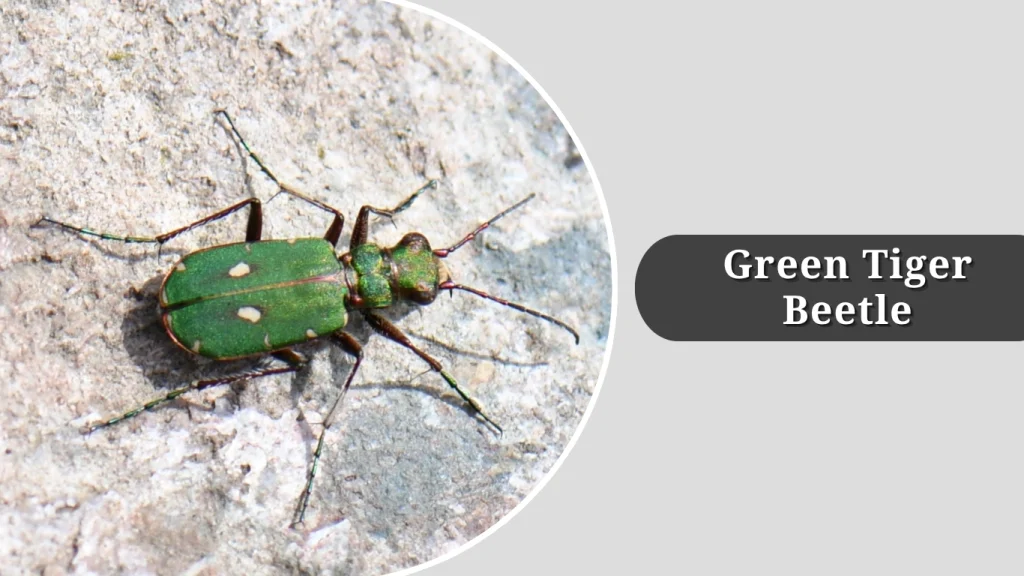
The Green Tiger Beetle (Cicindela campestris) is a striking beetle found across Europe and parts of Asia. It is admired for its metallic green body and active hunting behavior, making it one of the most familiar tiger beetles in its range.
Identification
- Bright metallic green coloration with iridescent reflections
- Cream or yellow spots along the wing covers (elytra)
- Long legs built for rapid running
- Strong mandibles for capturing prey
- Size ranges between 10–15 mm in length
Habitat
Green Tiger Beetles thrive in open, sandy, or grassy areas such as heathlands, dunes, forest clearings, and paths. They prefer warm, sunny environments with loose soil for burrow construction.
Behaviors
These beetles are highly active hunters, often chasing prey on the ground with remarkable speed. They are also strong fliers and may quickly relocate if disturbed.
Diet
Both adults and larvae are predatory. Adults hunt ants, small flies, caterpillars, and other insects, while larvae wait in burrows to ambush unsuspecting prey.
Lifecycle
Eggs are laid in soil during spring or early summer. Larvae remain in their burrows for one to two years, undergoing pupation before adults emerge. Adults are most visible in spring and summer.
3. Puritan Tiger Beetle
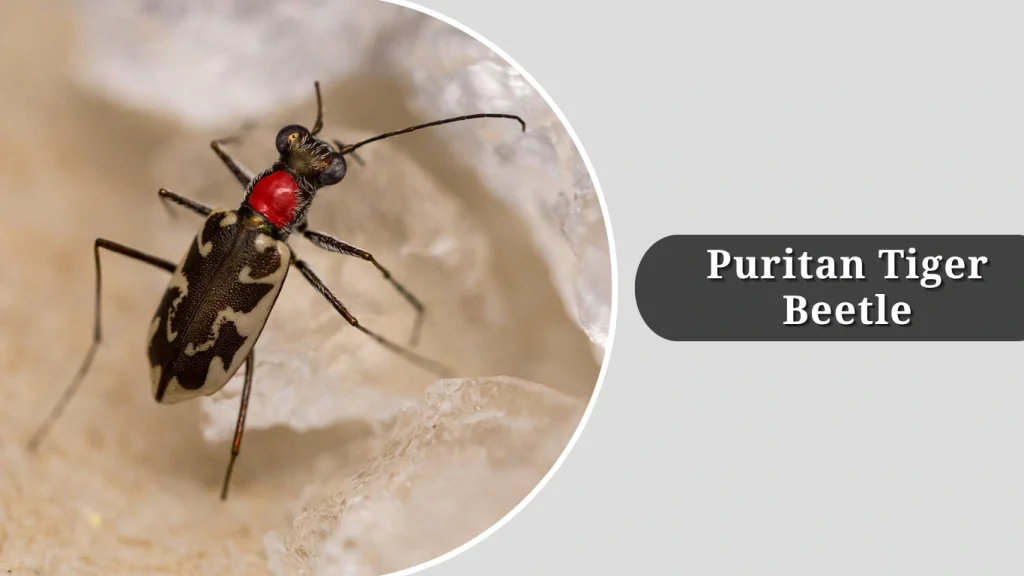
The Puritan Tiger Beetle (Cicindela puritana) is a rare and federally threatened species native to parts of the eastern United States. It is well known for its limited distribution and ecological importance as a predator in sandy riverbank habitats.
Identification
- Metallic bronze to green coloration with a coppery sheen
- Pale ivory to white spots along the wing covers (elytra)
- Long, slender legs suited for rapid movement on sandy surfaces
- Prominent mandibles for seizing prey
- Adult body length ranges between 12–15 mm
Habitat
This beetle inhabits sandy riverbanks, coastal bluffs, and dunes, especially along rivers such as the Connecticut River. It requires open, sparsely vegetated areas with fine sand where it can hunt and reproduce.
Behaviors
The Puritan Tiger Beetle is highly alert and active. Adults run swiftly on sandy substrates and often take short flights when disturbed. They are also territorial, often found patrolling stretches of sand along rivers.
Diet
Both adults and larvae are insectivores. Adults actively hunt ants, flies, and small arthropods, while larvae wait in vertical burrows to ambush unsuspecting prey.
Lifecycle
Adults emerge in midsummer, generally in July, and are active for only a few weeks. Eggs are laid in sandy soils, and larvae remain in burrows for up to two years before pupating and emerging as adults.
4. Salt Creek Tiger Beetle
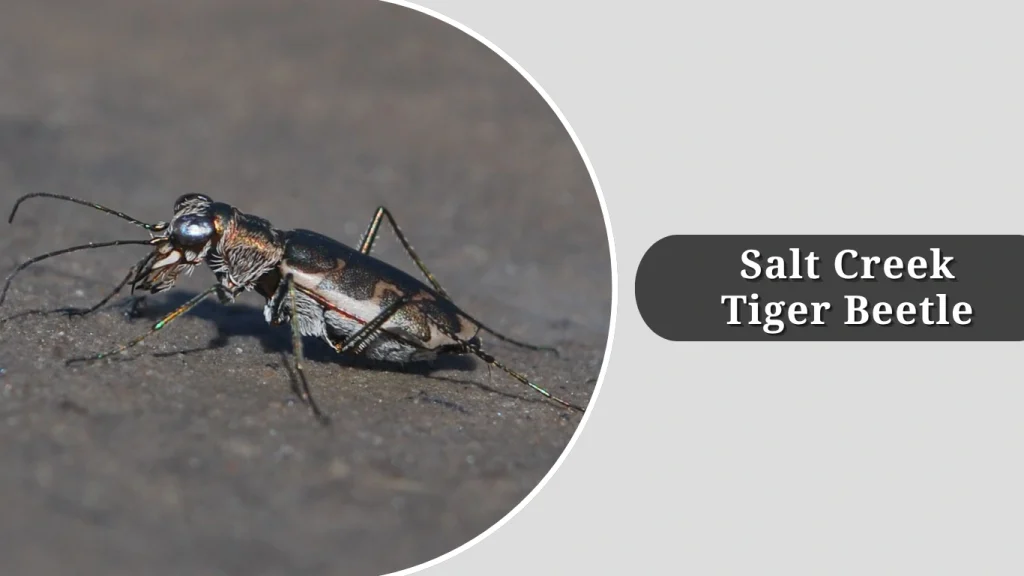
The Salt Creek Tiger Beetle (Cicindela nevadica lincolniana) is one of the rarest tiger beetles in North America. Endemic to Nebraska, USA, it is listed as endangered due to its extremely limited range and specialized habitat.
Identification
- Metallic dark green to bronze body coloration
- White to ivory markings along the wing covers (elytra)
- Slender legs adapted for sprinting across muddy or sandy flats
- Strong, curved mandibles for grasping prey
- Adults measure around 11–13 mm in length
Habitat
This beetle is restricted to saline wetlands and salt flats in Lancaster County, Nebraska. It relies on moist, sparsely vegetated soils created by natural saline groundwater seeps—an extremely rare ecosystem type.
Behaviors
Salt Creek Tiger Beetles are agile runners and quick fliers. They are most active during sunny days, often seen patrolling open patches of saline soil. Their alertness makes them difficult to approach closely.
Diet
Adults are voracious insect predators, feeding on flies, mosquitoes, small beetles, and other arthropods. Larvae construct burrows in saline soils and ambush prey that passes nearby.
Lifecycle
The lifecycle spans over two years. Eggs are laid in saline soil, and larvae remain in burrows through multiple stages before pupating. Adults emerge in midsummer, typically active from June to July, with populations peaking for only a few weeks each year.
5. Miami Tiger Beetle
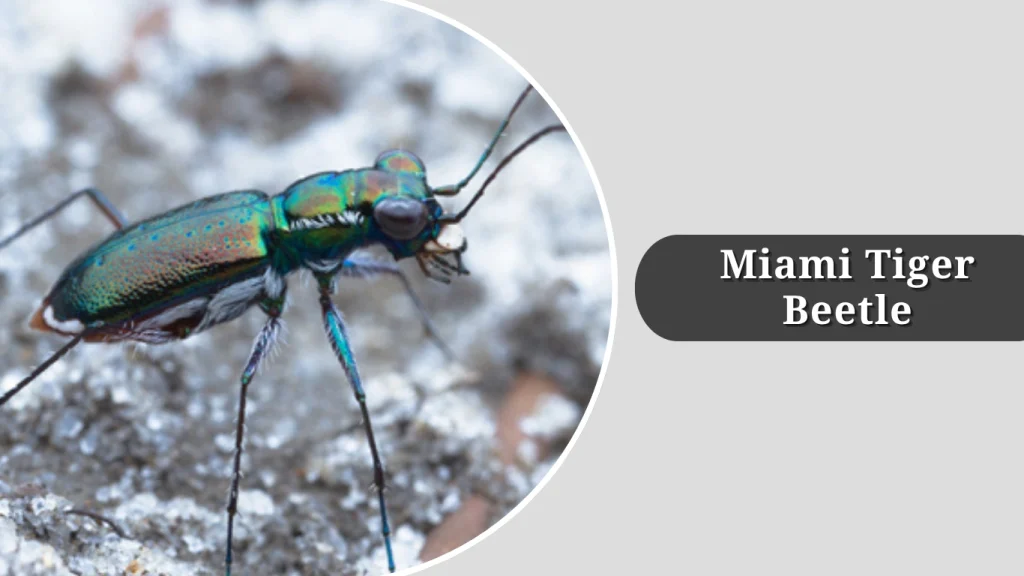
The Miami Tiger Beetle (Cicindelidia floridana) is one of the rarest tiger beetles in the United States, with a highly restricted range in southern Florida. It is federally listed as endangered due to habitat loss and urban development.
Identification
- Shiny metallic green body with bronze or coppery reflections
- Distinctive white spots on the wing covers (elytra)
- Long, thin legs enabling fast pursuit of prey
- Large mandibles designed for seizing and consuming insects
- Adults typically measure around 10–13 mm in length
Habitat
The Miami Tiger Beetle inhabits pine rockland habitats of Miami-Dade County, one of the most endangered ecosystems in North America. These habitats provide open, sunny areas with sandy soils necessary for hunting and reproduction.
Behaviors
This species is highly vigilant and quick to react, often fleeing at the slightest disturbance. Adults are active during sunny conditions, darting across the ground to chase prey or taking short flights when threatened.
Diet
Both adults and larvae are predators. Adults consume ants, beetle larvae, flies, and other small insects, while larvae lie in wait inside burrows to ambush prey.
Lifecycle
The lifecycle spans multiple stages: egg, larva, pupa, and adult. Eggs are deposited in sandy soil, and larvae spend up to two years in their burrows before pupating. Adults appear seasonally, usually in summer, with activity lasting a few weeks.
6. Ohlone Tiger Beetle
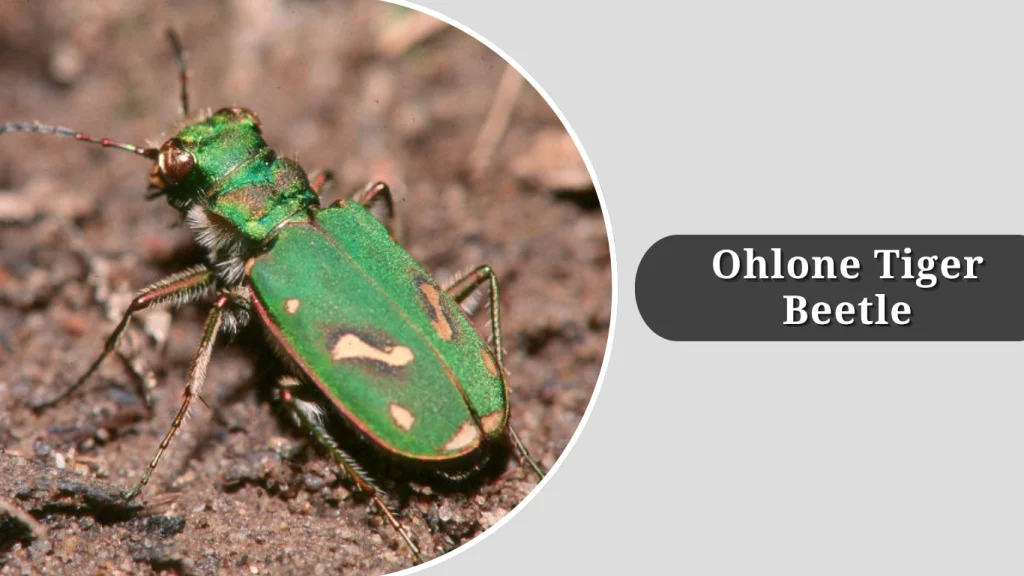
The Ohlone Tiger Beetle (Cicindela ohlone) is an endangered species found only in a very limited range in Santa Cruz County, California. Its restricted distribution and dependence on rare coastal prairie habitat make it one of the most threatened tiger beetles in the United States.
Identification
- Metallic green to bronze coloration with faint ivory markings
- Slender body with long legs adapted for sprinting
- Prominent curved mandibles for catching and consuming prey
- Adults measure approximately 11–13 mm in length
Habitat
The Ohlone Tiger Beetle inhabits coastal prairies with open, bare patches of compacted clay soils. These environments are rare and highly fragmented due to urbanization, invasive plant growth, and habitat alteration.
Behaviors
This beetle is diurnal and highly active on warm, sunny days. It is a swift runner and short-distance flyer, quickly fleeing when disturbed. Adults are territorial, often patrolling specific open ground areas to hunt and defend space.
Diet
Adults prey on ants, beetle larvae, flies, and small invertebrates. Larvae are ambush predators, living in vertical burrows and pulling prey down into their tunnels.
Lifecycle
The lifecycle lasts two years. Females deposit eggs in bare soil, and larvae remain in burrows for extended development. Pupation occurs in the soil, and adults emerge seasonally in late winter to early spring, with activity peaking between January and April.
7. Northeastern Beach Tiger Beetle
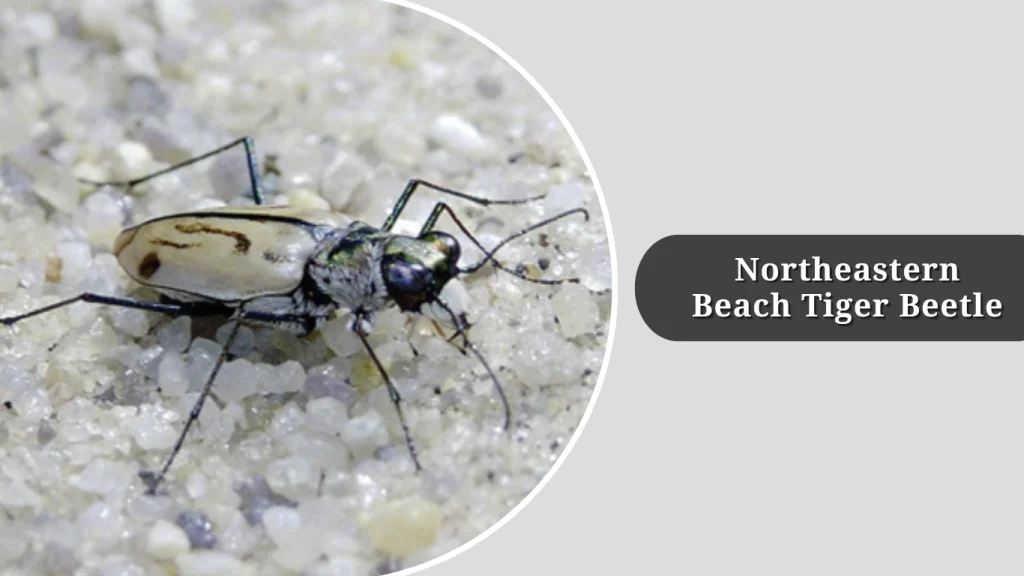
The Northeastern Beach Tiger Beetle (Cicindela dorsalis dorsalis) is a federally threatened species native to the Atlantic coast of the United States. It is one of the most well-known tiger beetles due to its striking appearance and conservation status.
Identification
- Pale tan to cream-colored body with bronze-green iridescence
- Distinctive white to ivory spots and patterns across the wing covers (elytra)
- Long, slender legs adapted for running on sandy beaches
- Large mandibles for catching prey
- Adults typically measure 12–15 mm in length
Habitat
This species is found along sandy beaches of the Atlantic coast, from New England down to Virginia. It requires wide, undisturbed stretches of sandy shoreline, which are increasingly threatened by human development and erosion.
Behaviors
Northeastern Beach Tiger Beetles are active hunters, running quickly across sand to capture prey. They are highly alert, often flying short distances when disturbed. Adults are visible during summer months, especially in open, sunlit patches of sand.
Diet
Adults prey on small insects such as flies, ants, and sand-dwelling arthropods. Larvae live in burrows dug into the sand, ambushing passing insects and pulling them below ground.
Lifecycle
Eggs are laid in sandy areas above the high tide line. Larvae develop in burrows for one to two years before pupating. Adults emerge during summer, typically from June to August, when they are most abundant on beaches.
8. Cobblestone Tiger Beetle
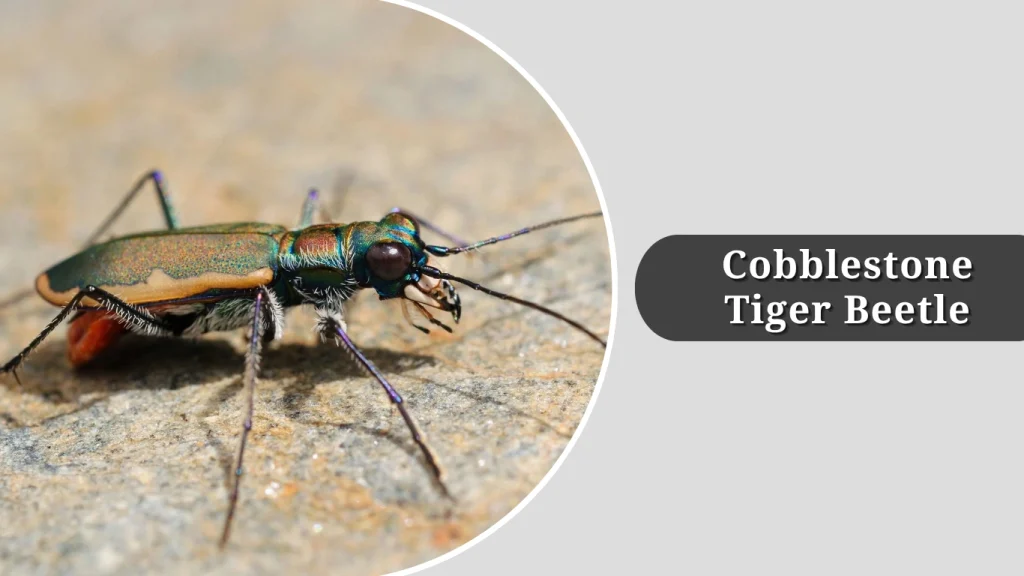
The Cobblestone Tiger Beetle (Cicindela marginipennis) is a rare species found in limited regions of the northeastern United States and parts of Canada. It is closely associated with riverine habitats and is considered vulnerable due to habitat disturbances.
Identification
- Metallic bronze to dark green body with subtle iridescence
- Cream-colored markings on the wing covers (elytra)
- Narrow body form with long, slender legs for sprinting
- Strong mandibles designed for grasping prey
- Adults range between 11–13 mm in length
Habitat
This species inhabits cobblestone and gravel bars along rivers, typically in areas with sparse vegetation and periodic flooding. It depends on the stability of river systems and natural hydrological cycles for survival.
Behaviors
Cobblestone Tiger Beetles are diurnal predators, most active on sunny days. They are swift runners and agile fliers, retreating quickly when approached. Adults are often seen hunting in open sandy or gravelly patches between river stones.
Diet
Like other tiger beetles, they are insectivores. Adults hunt ants, flies, and small arthropods across cobblestones and sandy substrates. Larvae construct burrows in patches of loose soil and ambush prey from below.
Lifecycle
Eggs are laid in sandy or gravelly areas of riverbanks. Larvae live in burrows for one to two years before pupating. Adults generally emerge in late spring to summer, with peak activity observed between June and August.
9. Festive Tiger Beetle
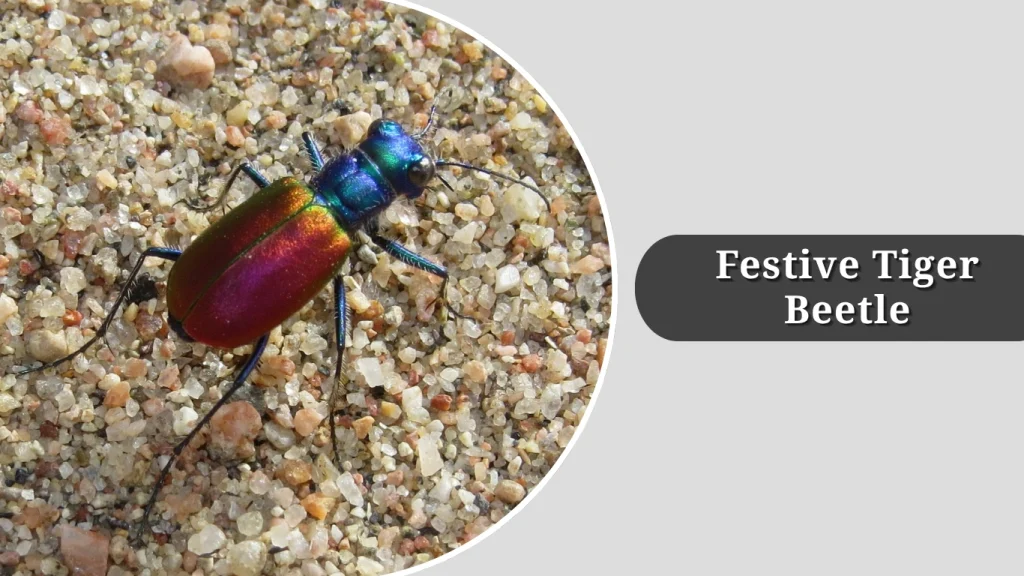
The Festive Tiger Beetle (Cicindela scutellaris) is a brightly colored species native to North America. Its shimmering body and active hunting behavior make it one of the most striking and recognizable tiger beetles.
Identification
- Iridescent body with colors ranging from red, green, blue, to purple depending on the subspecies
- Distinct pale or ivory markings on the wing covers (elytra)
- Long legs adapted for sprinting across sandy ground
- Strong, curved mandibles for seizing prey
- Adult size typically 10–13 mm in length
Habitat
This beetle is found in open, sandy habitats such as dunes, sandy prairies, riverbanks, and woodland clearings. It favors areas with sparse vegetation and direct sunlight.
Behaviors
The Festive Tiger Beetle is highly active on sunny days, darting rapidly across sandy ground in search of prey. It often flies short distances when disturbed and is quick to return to its hunting grounds.
Diet
Adults are predatory, feeding primarily on ants, flies, and other small insects. Larvae live in burrows dug into sandy soils, waiting to ambush insects that wander too close.
Lifecycle
Females lay eggs in sandy soils during spring or summer. The larval stage lasts one to two years, during which the beetle remains in a burrow. Pupation occurs within the burrow before adults emerge, usually appearing in spring and summer.
10. Great Sand Dunes Tiger Beetle
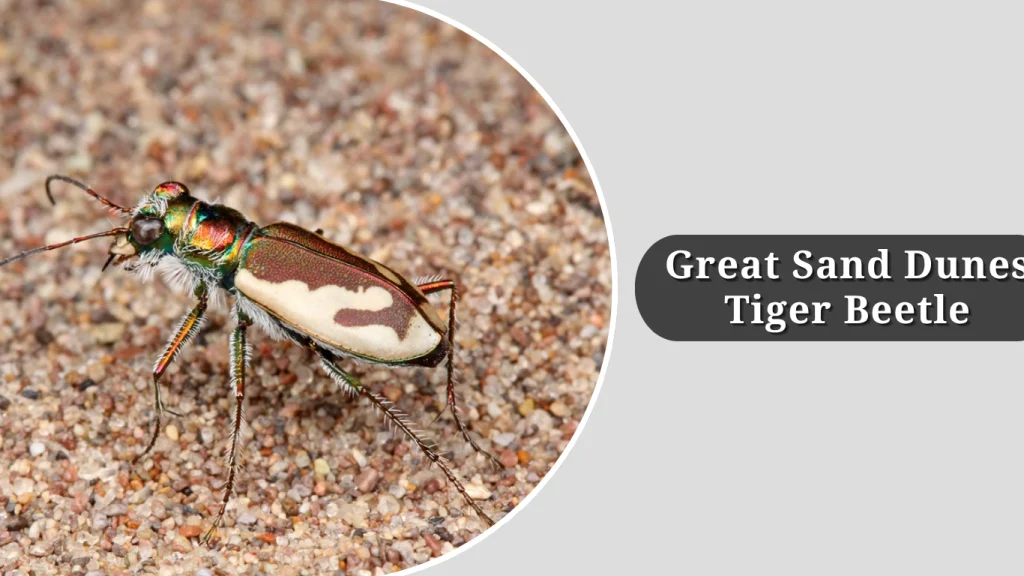
The Great Sand Dunes Tiger Beetle (Cicindela theatina) is a rare and striking species found only in the Great Sand Dunes of Colorado, USA. Its limited range and dependence on dune ecosystems make it a species of conservation concern.
Identification
- Metallic green to bronze body with a shimmering sheen
- Distinct pale or ivory markings on the wing covers (elytra)
- Long legs specialized for running on sandy surfaces
- Large mandibles adapted for predation
- Adults typically measure 11–14 mm in length
Habitat
This beetle is strictly endemic to the Great Sand Dunes National Park in Colorado. It thrives in open sandy dune habitats with little vegetation, relying on loose sand for hunting and reproduction.
Behaviors
Great Sand Dunes Tiger Beetles are diurnal and highly active in sunny conditions. They run swiftly across sand to pursue prey and will often fly short distances when disturbed. Their activity is strongly tied to warm, dry weather.
Diet
Adults prey on ants, flies, beetle larvae, and other small arthropods found in dune environments. Larvae live in burrows dug into the sand and ambush passing insects, pulling them underground.
Lifecycle
Eggs are deposited in the sandy soils of dunes. Larvae remain in burrows for one to two years before pupating. Adults emerge seasonally, generally visible during late spring and summer, with populations peaking in sunny, warm months.
11. Hairy-necked Tiger Beetle
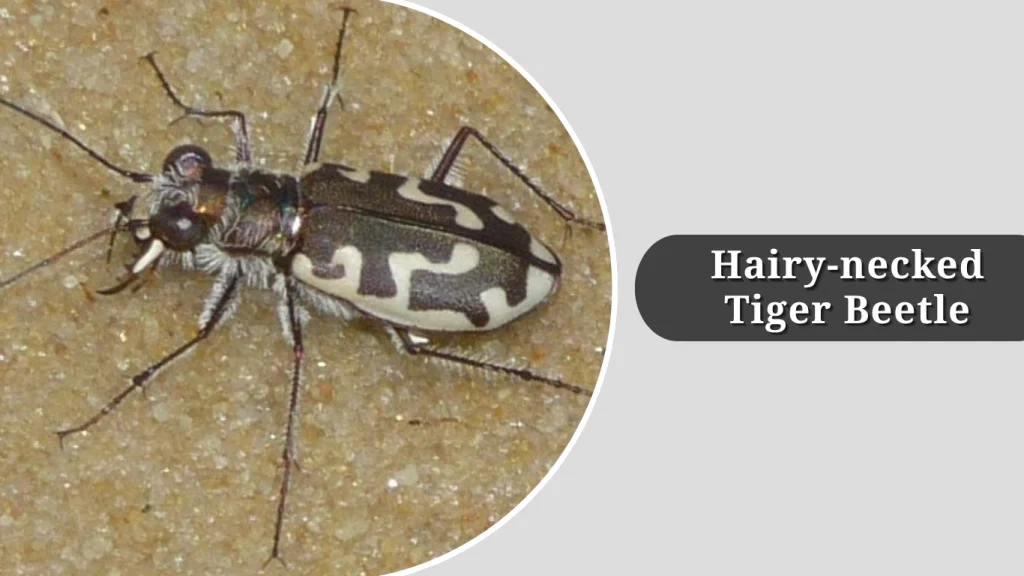
The Hairy-necked Tiger Beetle (Cicindela hirticollis) is a widespread species in North America, particularly recognized for its adaptability to sandy and coastal environments. Its hairy thorax distinguishes it from many other tiger beetles.
Identification
- Metallic bronze, green, or copper-colored body with pale markings on the wing covers (elytra)
- Dense fine hairs on the pronotum (the “neck” area behind the head), giving it its name
- Long legs suited for running across sand and shorelines
- Strong mandibles used for seizing prey
- Adults usually measure 12–15 mm in length
Habitat
This beetle inhabits sandy beaches, dunes, riverbanks, and lakeshores. It is particularly common along the Great Lakes and coastal areas where loose sand and open spaces are available.
Behaviors
Hairy-necked Tiger Beetles are fast-moving hunters, often running across open sandy ground in search of prey. They are alert and difficult to capture, frequently flying short distances when disturbed.
Diet
Adults feed on ants, flies, small beetles, and other arthropods they catch on sandy surfaces. Larvae live in burrows dug into sand or loose soil, ambushing insects that pass by.
Lifecycle
Eggs are laid in sandy substrates near shorelines. Larvae can remain in burrows for one to two years, depending on environmental conditions, before pupating. Adults emerge during summer and are most active from June through August.
12. Carolina Tiger Beetle
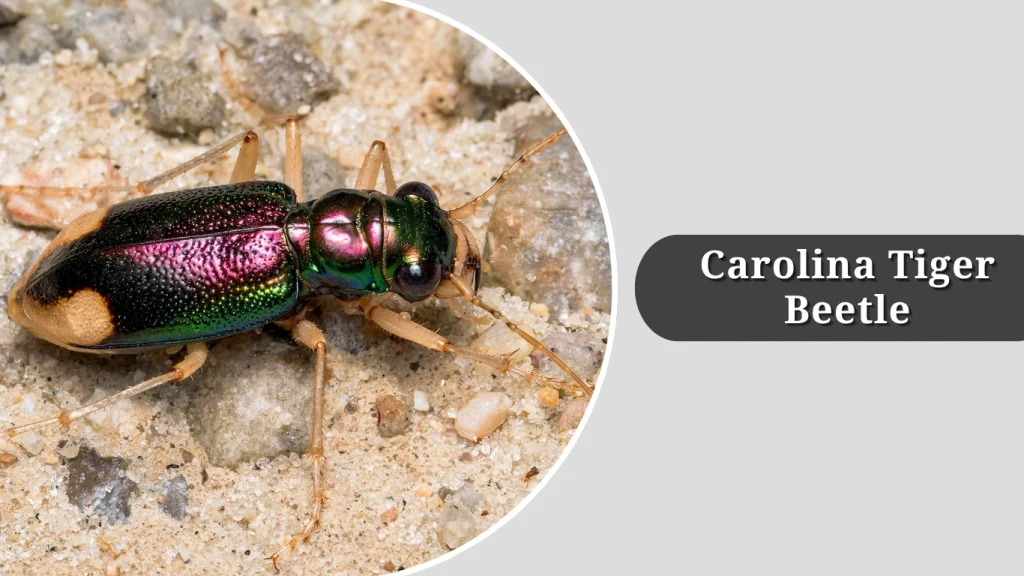
The Carolina Tiger Beetle (Cicindelidia carolina) is a colorful and active species native to the eastern United States. Its metallic sheen and fast hunting style make it a recognizable insect across sandy and open habitats.
Identification
- Shiny metallic green to bronze body with iridescent reflections
- Pale ivory to yellow markings on the wing covers (elytra)
- Long legs designed for sprinting and agile movement
- Prominent mandibles for seizing prey
- Adult length typically 12–15 mm
Habitat
This beetle thrives in sandy soils, open fields, paths, and forest edges. It is often found in sunlit clearings with loose soil that supports hunting and burrowing.
Behaviors
Carolina Tiger Beetles are fast runners and alert predators. They actively chase prey across open ground and will quickly fly short distances when disturbed. Their activity peaks in warm, sunny conditions.
Diet
Adults feed primarily on ants, caterpillars, flies, and other small insects. Larvae are ambush predators, lying in wait inside burrows and pulling prey underground when it comes too close.
Lifecycle
Eggs are deposited in sandy soils during spring or summer. Larvae remain in burrows for up to two years before pupating. Adults emerge seasonally, often visible in late spring and summer, when they are most active.
13. Emerald Tiger Beetle
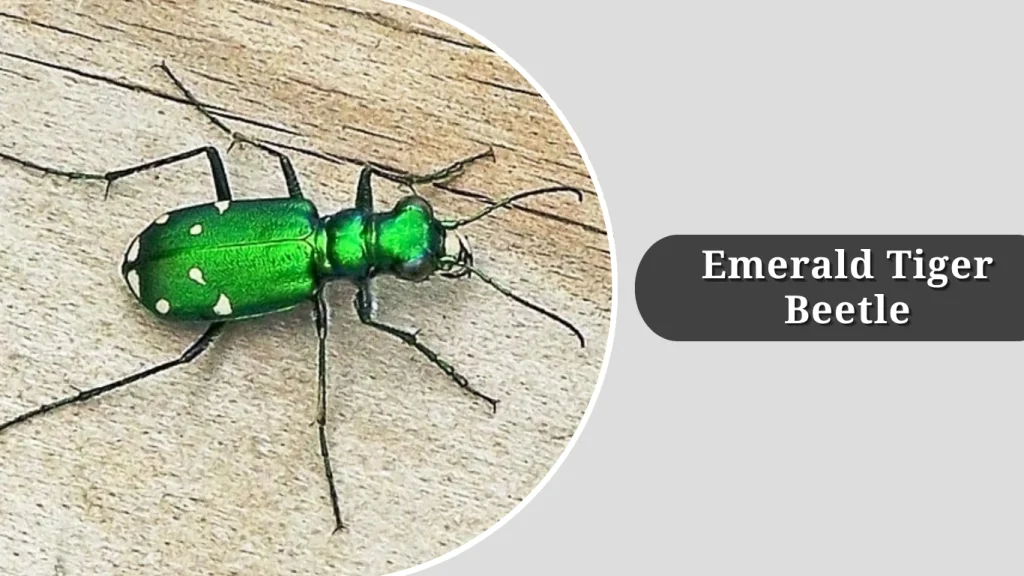
The Emerald Tiger Beetle (Cicindela splendida) is a brilliantly colored species known for its metallic green shine and active predatory lifestyle. It is one of the more striking tiger beetles in North America and is often admired for its beauty.
Identification
- Bright, metallic emerald-green body with vivid iridescence
- Small pale spots or faint markings on the wing covers (elytra)
- Long legs built for speed and agility on open ground
- Strong mandibles for capturing and consuming prey
- Adults measure around 12–14 mm in length
Habitat
Emerald Tiger Beetles are commonly found in open areas with sandy soils, such as prairies, woodland clearings, fields, and trails. They prefer habitats with minimal vegetation that allow easy hunting.
Behaviors
They are quick runners and alert hunters, darting rapidly across open ground to catch prey. When threatened, they fly short distances and land nearby, making them challenging to capture.
Diet
Adults feed on ants, flies, beetle larvae, and other small insects they catch on the ground. Larvae live in burrows dug into sandy soils, ambushing insects that wander too close.
Lifecycle
Eggs are laid in sandy soil during spring or summer. Larvae remain in burrows for one to two years, progressing through several instars before pupating. Adults emerge seasonally, most often in spring and early summer.
