
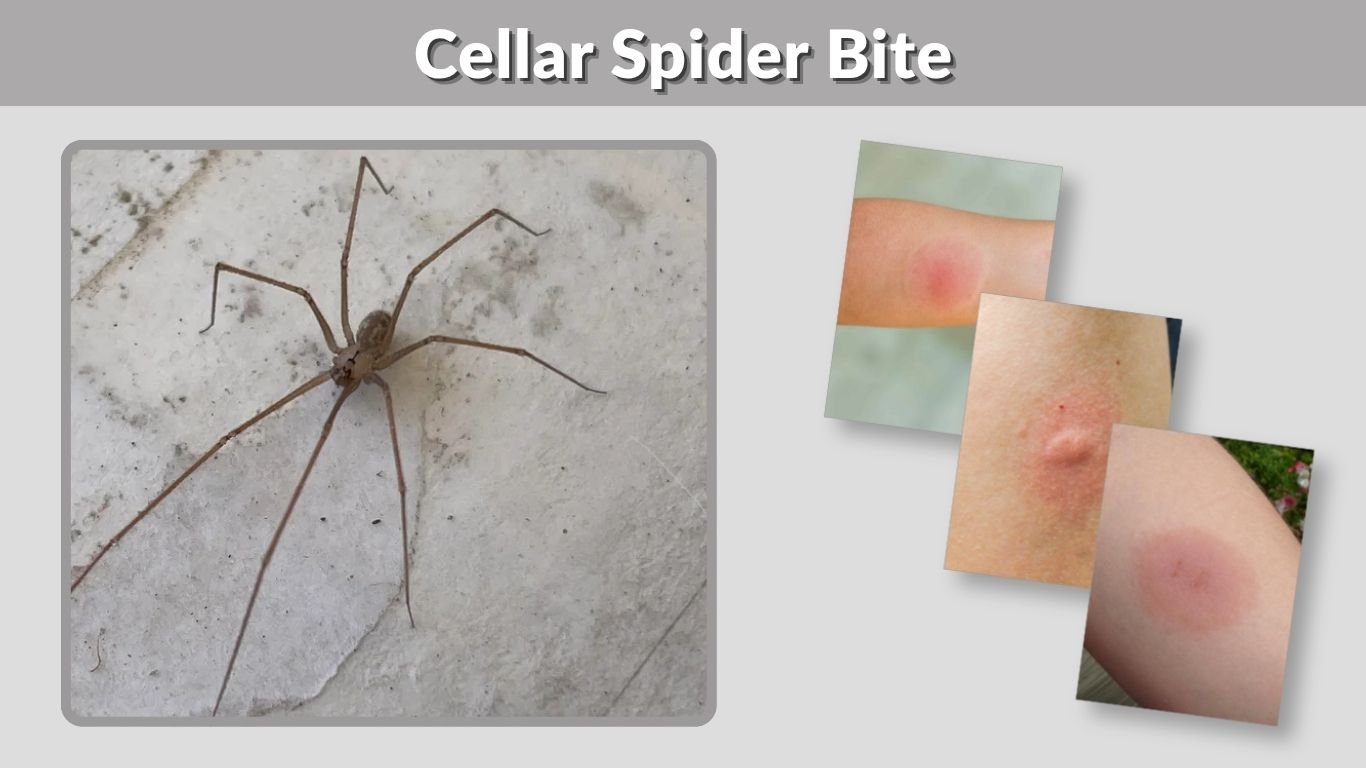
A cellar spider bite sounds scary, especially because cellar spiders are often confused with “daddy long legs” and surrounded by myths about dangerous venom. In reality, cellar spiders are common household spiders that usually avoid people. Their bites are very rare, and they are not considered dangerous to humans. Still, many people want to know what a cellar spider bite looks like, whether it hurts, and what to do if they think they were bitten.
What Is a Cellar Spider?
A cellar spider is a long-legged spider commonly found inside homes, basements, garages, bathrooms, closets, crawl spaces, and quiet ceiling corners. It has a small body, very thin legs, and a delicate appearance. Many people call it a daddy long legs spider, but that name can also refer to other creatures, including harvestmen.
Cellar spiders usually build loose, messy, tangled webs. Unlike orb-weaver spiders, they do not make neat circular webs. You may see them hanging upside down in corners, especially in dark or damp areas. When disturbed, they may shake or vibrate quickly in their web. This movement is a defense behavior, not a sign that the spider is about to attack.
These spiders mostly feed on small insects and other tiny arthropods. In many homes, they help control flies, mosquitoes, ants, moths, and other small pests. The main problem with cellar spiders is usually their messy webs, not their bite.
Can a Cellar Spider Bite You?
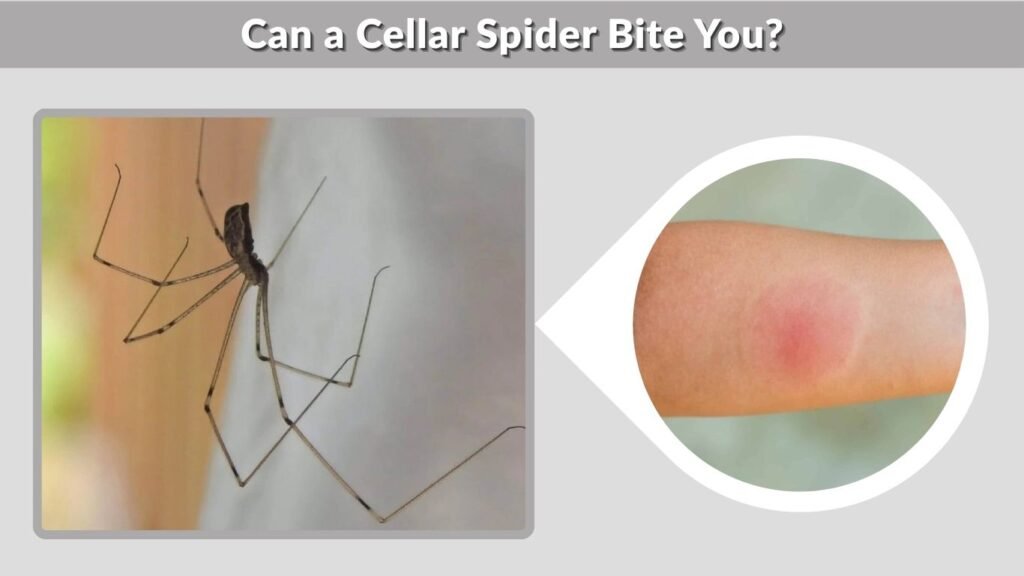
Yes, a cellar spider can technically bite, but it is very unlikely. Cellar spiders are not aggressive toward humans. They usually stay in their webs and try to avoid contact. A bite would most likely happen only if the spider were pressed against the skin, handled roughly, or trapped inside clothing or bedding.
Even then, confirmed cellar spider bites are rare. Many marks blamed on spider bites are actually caused by mosquitoes, fleas, bed bugs, mites, skin irritation, allergies, or bacterial infections. Unless you clearly saw the spider bite you, it is hard to prove that a cellar spider caused the mark.
The important point is this: cellar spiders are not known for dangerous bites. They have venom for catching tiny prey, but they are not considered medically significant to people.
Are Cellar Spider Bites Dangerous?
Cellar spider bites are not considered dangerous for most people. The common myth says cellar spiders are extremely venomous but cannot bite humans. That claim is misleading. Cellar spiders do have venom, but it is designed for small prey, not people. They are not known to cause serious human reactions.
If a cellar spider bite does happen, the reaction would usually be mild. Some people may notice a small red spot, light itching, or minor irritation. Others may have no noticeable reaction at all.
However, you should not ignore serious skin symptoms just because you think a cellar spider caused them. If the area becomes very painful, swollen, hot, infected, or starts spreading, the cause may be something else. In that case, it is better to get medical advice.
What Does a Cellar Spider Bite Look Like?
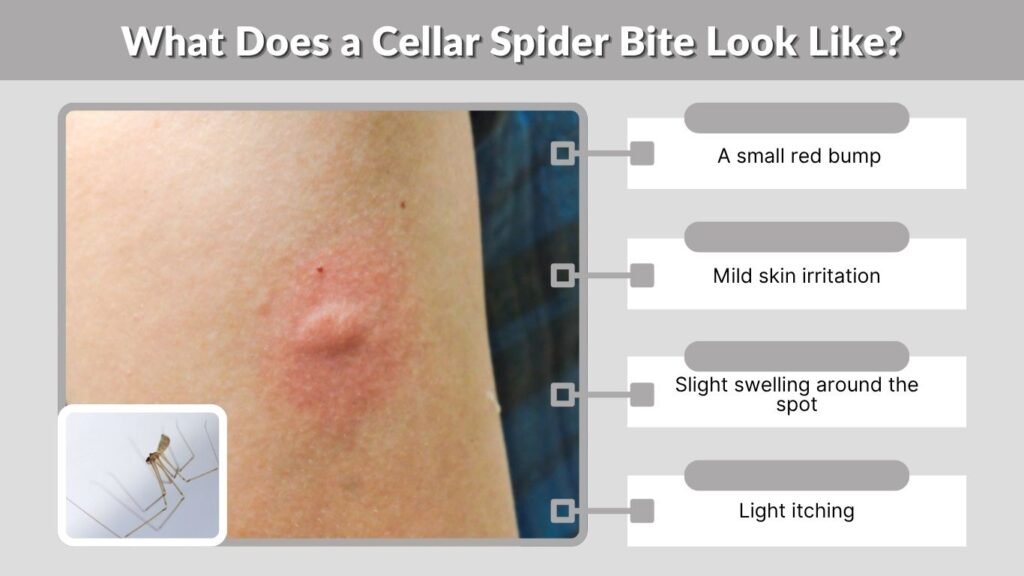
A cellar spider bite mark, if visible, would likely look like a small irritated bump or red spot. It may resemble a mild mosquito bite or a tiny pinprick. Most people will not see clear fang marks. The bite may be slightly itchy or tender, but it should not cause major swelling, deep wounds, or spreading tissue damage.
A possible cellar spider bite may look like:
- A small red bump
- Mild skin irritation
- Slight swelling around the spot
- Light itching
- Minor tenderness
- A tiny mark that fades quickly
It is important to be careful with “cellar spider bite pictures” online. Many images labeled as spider bites are not confirmed spider bites. Some may show infections, allergic reactions, or bites from other insects. A true cellar spider bite is usually mild and not dramatic.
Day 1 Cellar Spider Bite: What to Expect
On day 1, a suspected cellar spider bite would usually be mild. You may notice a tiny red mark, slight itching, or a small bump. There should not be severe pain, blackened skin, pus, fever, or a spreading rash from a normal cellar spider bite.
If the mark is minor, you can clean the area and monitor it. Most mild bite-like marks improve within a short time. Avoid scratching because scratching can irritate the skin and increase the chance of infection.
If symptoms become worse over the next several hours or days, do not assume it is a cellar spider bite. Worsening symptoms may point to infection, an allergic reaction, or another type of bite.
Cellar Spider Bite Symptoms
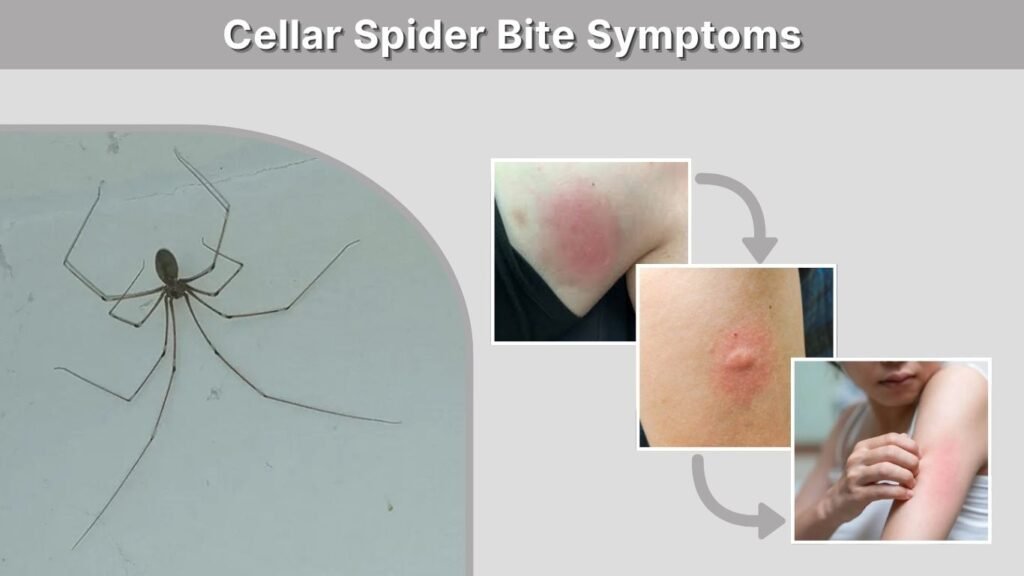
Most cellar spider bite symptoms, when they occur, are mild. Many people may not feel a bite at all. If there is a reaction, it is usually limited to the skin around the bite area.
Possible symptoms include:
- Mild redness
- Slight swelling
- Minor itching
- Light burning or stinging
- Small raised bump
- Temporary tenderness
These symptoms should remain mild. A cellar spider bite should not usually cause severe pain, nausea, muscle cramps, spreading wounds, or serious illness. Those symptoms may suggest another problem and should be taken seriously.
Do Cellar Spider Bites Hurt?
A cellar spider bite may cause little to no pain. Some people may feel a tiny pinch or light sting, but many will not notice the bite when it happens. If the area hurts badly, keeps getting worse, or feels unusually hot, the cause may not be a cellar spider.
Pain level also depends on the person’s skin sensitivity. Some people react more strongly to minor bites or irritations than others. Even so, a severe reaction should not be treated as normal.
Cellar Spider Bite Treatment
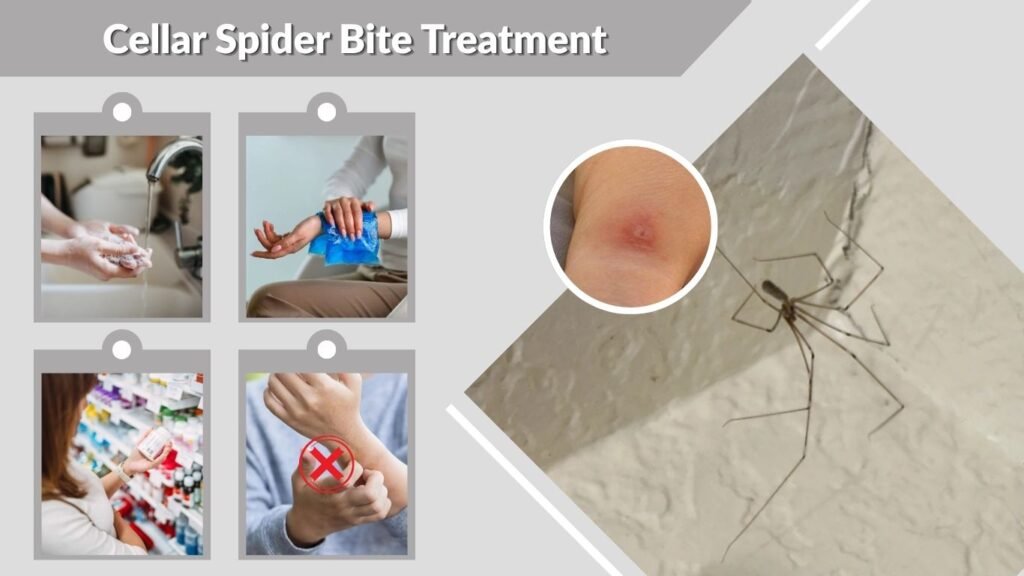
Most suspected cellar spider bites can be treated with basic first aid. The goal is to keep the area clean, reduce irritation, and watch for unusual symptoms.
Wash the Area
Clean the bite area with mild soap and water. This helps remove dirt and lowers the chance of infection. Pat the skin dry with a clean towel.
Use a Cold Compress
Apply a cold compress or wrapped ice pack for 10 to 15 minutes at a time. This can help reduce mild swelling, itching, or discomfort. Do not place ice directly on the skin.
Avoid Scratching
Scratching can make the area more irritated and may break the skin. If the spot itches, try a cold compress or an over-the-counter anti-itch cream if suitable for you.
Monitor the Bite
Watch the area for changes. A mild red bump should improve, not get worse. If redness spreads, swelling increases, or the area becomes painful, seek medical advice.
Use Over-the-Counter Relief Carefully
For mild discomfort, some people use over-the-counter pain relief or antihistamines. Follow the product label and avoid using medicine that is not safe for you. If you have health conditions, allergies, or take other medications, ask a healthcare professional first.
When Should You See a Doctor?
Most suspected cellar spider bites do not need medical care. However, you should get medical help if symptoms are severe, unusual, or worsening.
Seek medical advice if you notice:
- Spreading redness
- Increasing pain
- Significant swelling
- Pus or signs of infection
- Fever or chills
- Nausea or dizziness
- Skin turning dark or forming an open sore
- Trouble breathing or facial swelling
Emergency symptoms such as difficulty breathing, swelling of the lips or throat, or a severe allergic reaction require urgent care.
Also, see a doctor if the bite is on a young child, elderly person, immune-compromised person, or pet and symptoms appear unusual.
Cellar Spider Bite vs Brown Recluse Bite
Cellar spiders and brown recluse spiders are very different. This matters because brown recluse bites can be medically significant, while cellar spiders are not considered harmful.
A cellar spider has very long, thin legs and usually hangs in a messy web. It is often found in corners, ceilings, basements, and bathrooms. A brown recluse has a more compact body, less threadlike legs, and tends to hide in dry, undisturbed places such as boxes, shoes, closets, or storage areas.
A suspected cellar spider bite should be mild. A brown recluse bite may sometimes become painful, blistered, or ulcerated, although not every brown recluse bite becomes severe. If you live in an area where brown recluse spiders are common and develop worsening skin symptoms, contact a medical professional.
Cellar Spider Bite vs Mosquito Bite
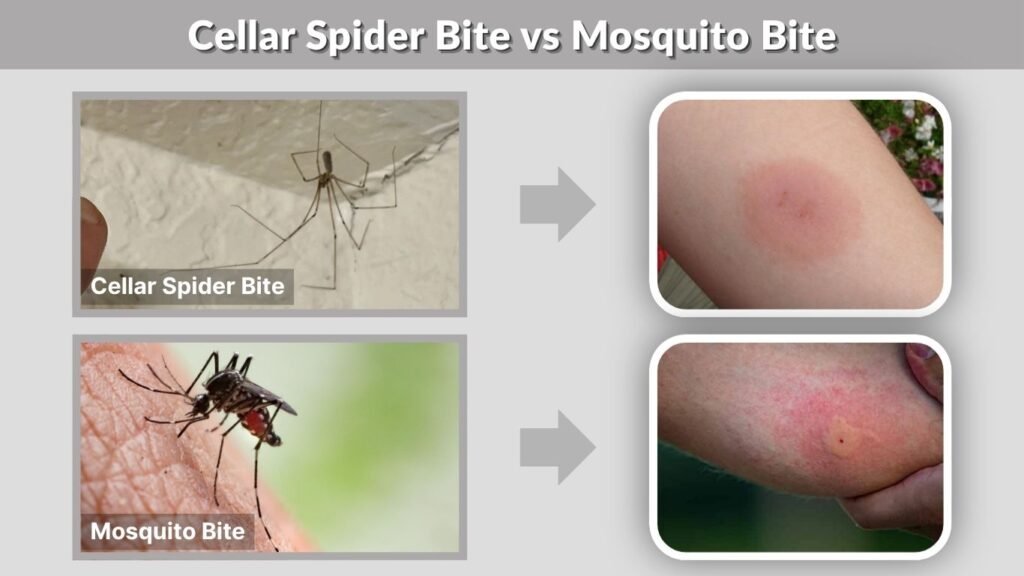
A cellar spider bite and mosquito bite can look similar because both may cause a small red bump. However, mosquito bites are much more common. Mosquito bites often itch noticeably and may appear after being outdoors or near standing water.
A cellar spider bite is less likely because cellar spiders rarely bite humans. If you did not see a spider bite you, a mosquito or another insect may be a more likely cause.
Can Cellar Spiders Bite Pets?
Cellar spiders are not considered dangerous to cats or dogs. A bite would be rare, and most pets are unlikely to have a serious reaction. However, pets can have allergic reactions, skin irritation, or infections from many causes.
If your cat or dog has swelling, repeated scratching, limping, drooling, vomiting, or unusual behavior after a suspected bite, contact a veterinarian. Do not apply human creams or medications to pets unless a vet recommends them.
Are Long-Bodied Cellar Spider Bites Different?
Long-bodied cellar spiders are one of the most common cellar spiders found in homes. Their bite risk is not considered different in any meaningful way. Like other cellar spiders, they are not aggressive and are not known to be dangerous to humans.
The same advice applies: avoid handling them, remove webs if needed, and treat any mild bite-like irritation with basic first aid.
How to Prevent Cellar Spider Bites
The best way to prevent a cellar spider bite is to avoid direct contact. Since these spiders usually stay in webs, prevention is mostly about cleaning and reducing hiding places.
Helpful steps include:
- Vacuum webs from ceiling corners and basement walls
- Wear gloves when moving old boxes or stored items
- Shake out clothing, towels, or shoes stored in basements
- Reduce clutter in garages and storage rooms
- Seal gaps around windows, doors, and utility lines
- Use screens on windows and vents
- Reduce indoor insects that attract spiders
These steps also help reduce other household pests.
How to Get Rid of Cellar Spiders Safely
You usually do not need strong pesticides for cellar spiders. Physical removal and prevention are often enough.
Vacuuming is one of the easiest methods. Use a hose attachment to remove webs, spiders, and egg sacs from corners. Empty the vacuum afterward, especially if you collected many spiders or egg sacs.
You can also reduce moisture by fixing leaks, improving ventilation, and using a dehumidifier in damp basements. Since cellar spiders feed on small insects, controlling flies, mosquitoes, ants, and gnats can also make your home less attractive to them.
If spiders keep returning in large numbers, you may have a larger insect problem. In that case, a pest control professional can identify the source.
Myths About Cellar Spider Bites
The biggest myth is that cellar spiders are extremely poisonous but cannot bite humans. This story is widely repeated, but it is not accurate. Cellar spiders are not considered one of the most dangerous spiders, and they are not known to cause serious harm to people.
Another myth is that every red bump indoors is a spider bite. In reality, many skin marks come from other insects, irritation, allergies, or infections. Without seeing the spider bite you, it is difficult to confirm the cause.
A third myth is that cellar spiders should always be killed. In many cases, they are harmless household spiders that help catch small pests. If you dislike them, removing webs and reducing clutter is usually enough.
FAQs
Can a cellar spider bite you?
Yes, a cellar spider can technically bite, but bites are very rare. These spiders are not aggressive and usually stay in their webs. A bite would most likely happen only if the spider was trapped against the skin or handled roughly. Most people never experience a confirmed cellar spider bite.
What happens if a cellar spider bites you?
If a cellar spider bites you, the reaction is usually mild. You may notice a small red bump, slight itching, or minor irritation. Serious symptoms are not expected from a normal cellar spider bite. If pain, swelling, infection, or spreading redness occurs, seek medical advice because another cause may be involved.
What does a cellar spider bite look like?
A cellar spider bite may look like a tiny red spot, small bump, or mild skin irritation. It can resemble a mosquito bite or minor rash. Dramatic wounds shown online are often not confirmed cellar spider bites. If the mark becomes severe or spreads, it should be checked by a medical professional.
Are cellar spider bites poisonous?
Cellar spiders have venom for catching small insects, but their bites are not considered poisonous or dangerous to humans. The myth that they are highly venomous is misleading. In most cases, cellar spiders are harmless household spiders and are more useful for pest control than harmful to people.
How do you treat a cellar spider bite?
Wash the area with soap and water, use a cold compress, and avoid scratching. Mild itching or redness should improve on its own. Watch for signs of infection or worsening symptoms. If the bite area becomes very painful, swollen, hot, or starts spreading, contact a healthcare professional.
