
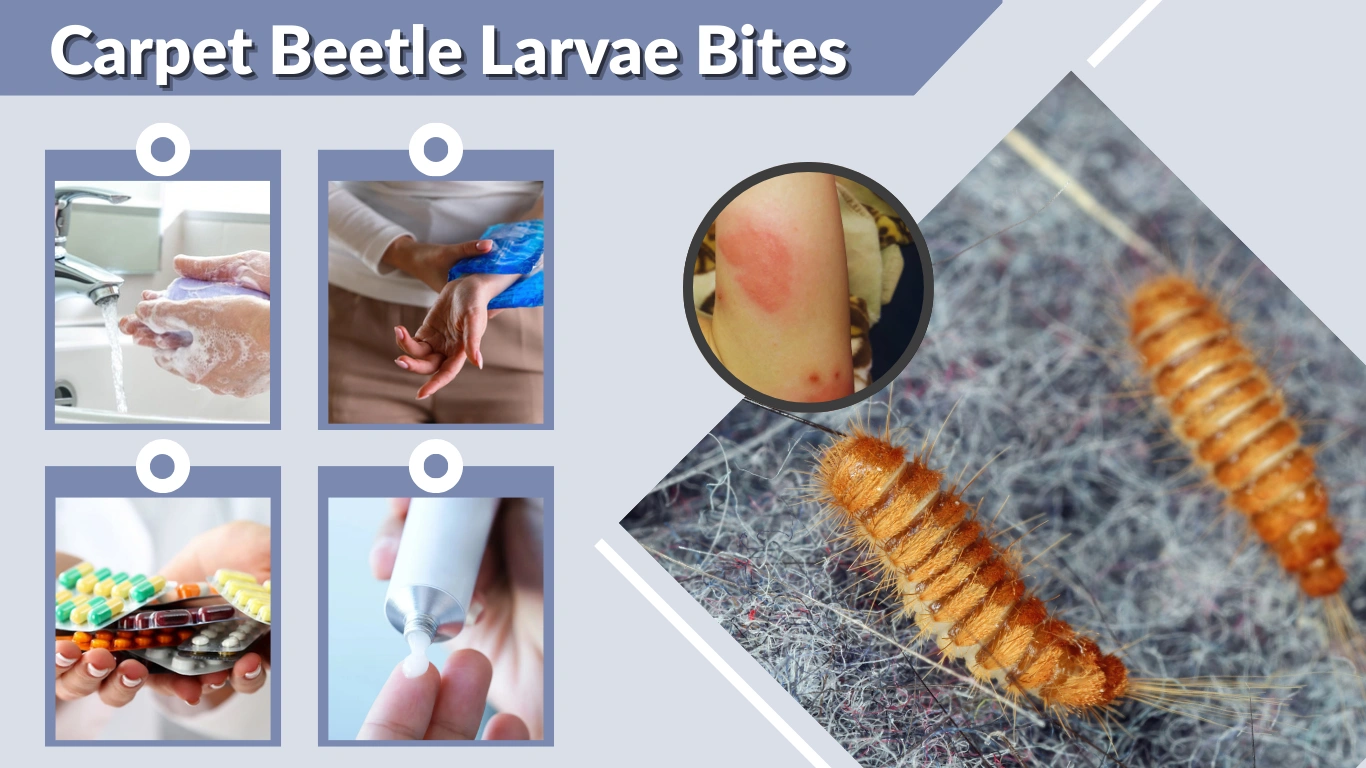
Carpet beetles are common household pests, but it’s their larvae—not the adults—that cause most problems indoors. The bristly larvae feed on natural fibers such as wool, silk, and leather, often damaging clothes, carpets, and furniture. Many people report developing red, itchy marks and assume they’ve been bitten by these pests. The truth is that carpet beetle larvae do not bite humans, but they can cause skin irritation that closely resembles insect bites. Understanding the difference helps avoid confusion with bed bugs, mosquitoes, or fleas.
Do Carpet Beetle Larvae Bite?
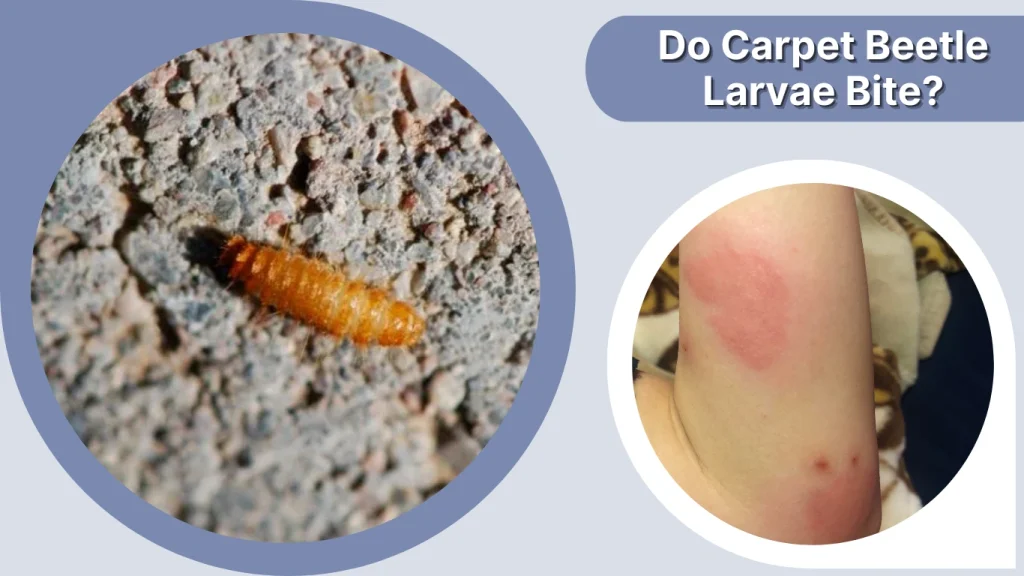
The simple answer is no. Carpet beetle larvae lack the mouthparts required to pierce skin, so they cannot bite or sting humans. Reports of “carpet beetle bites” are actually allergic reactions caused by:
Larval bristles (hairs): These sharp, microscopic hairs can break off and embed in the skin, leading to irritation.
Shed skins: As larvae molt, they leave behind bristly casings that trigger rashes in sensitive individuals.
Contact with infested fabrics: Prolonged exposure to clothing, bedding, or upholstered furniture with larvae may cause red bumps that resemble bites.
So, while the larvae don’t directly feed on humans, their presence can still lead to itchy, uncomfortable reactions often mistaken for insect bites.
Symptoms of Carpet Beetle Larvae Reactions
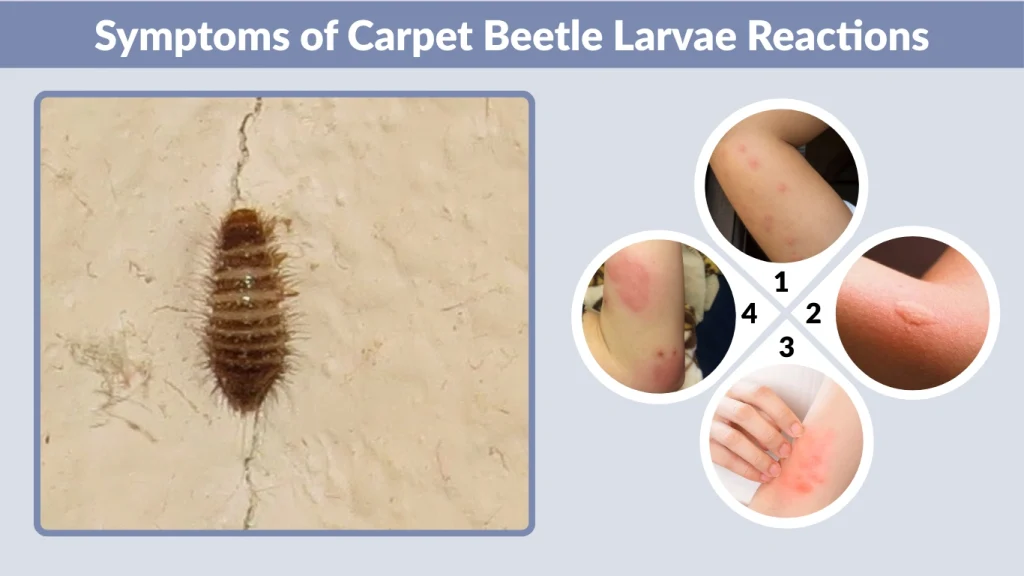
Reactions vary depending on sensitivity, but common symptoms include:
- Red, itchy bumps: Often scattered rather than clustered.
- Mosquito-like welts: Raised, inflamed spots that resemble mosquito bites.
- Localized rash: Patches of irritated skin, usually on arms, legs, or areas in contact with infested fabrics.
- Mild swelling: In rare cases, skin may swell slightly around the irritated area.
Unlike insect bites, these reactions don’t follow a consistent pattern. Bed bug bites, for example, often appear in rows or clusters, while carpet beetle reactions appear more randomly.
Carpet Beetle Larvae Bites vs Other Insect Bites
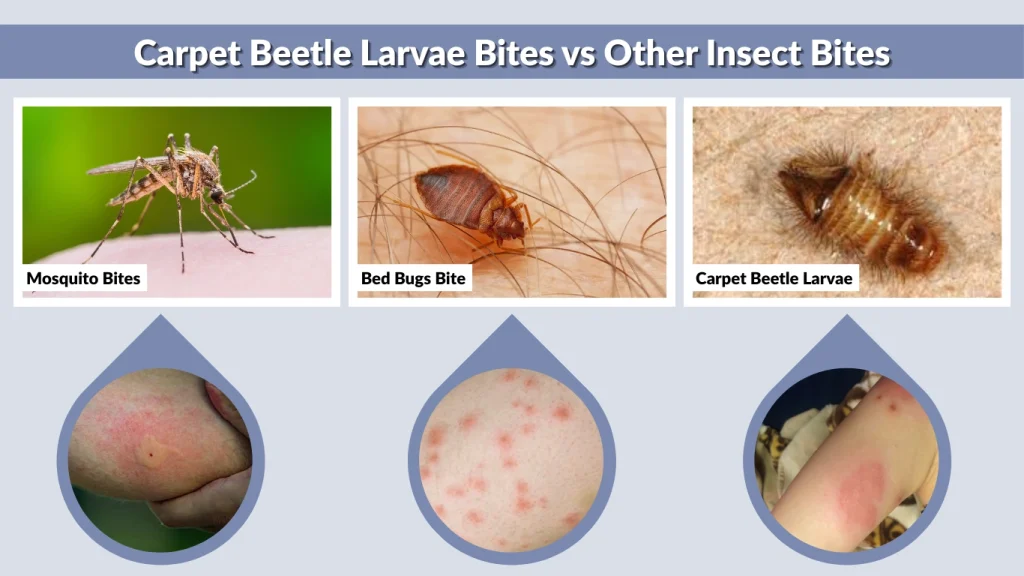
Because symptoms mimic insect bites, it’s easy to misidentify the cause. Here’s how to tell them apart:
Mosquito-like Bites
Carpet beetle larvae reactions often look like mosquito bites—small, itchy red bumps. However, mosquito bites usually appear after being outdoors, especially in the evening, while carpet beetle-related reactions occur indoors and may persist even in cooler seasons when mosquitoes are absent.
Carpet Beetle Larvae vs Bed Bug Bites
Bed bug bites and carpet beetle reactions are commonly confused. Key differences:
- Bed Bugs: Bites typically appear in lines or clusters, usually on exposed skin like arms, legs, and neck. They happen at night, often while sleeping.
- Carpet Beetle Larvae: Reactions are random and linked to direct contact with infested fabrics, not timed feeding at night. They may occur on covered skin if clothing is infested.
Other Misidentifications
- Fleas: Flea bites are small, red, and often located around ankles and legs. They’re more clustered than carpet beetle reactions.
- Mites: Some mites bite humans, but their bites tend to be more aggressive, with noticeable itching and inflammation.
- Carpet Beetle Rash: Unlike true bites, it results from skin irritation rather than feeding, making it less severe and typically short-lived once exposure is removed.
Types of Carpet Beetles and Bite Myths
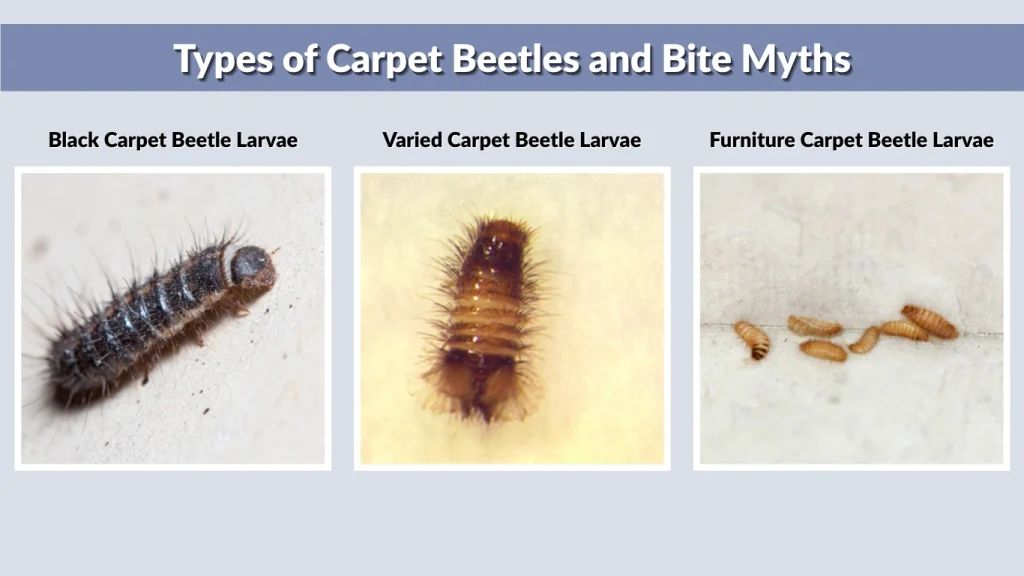
Although all carpet beetle larvae can trigger irritation, certain species are more commonly associated with reported “bites.”
- Black Carpet Beetle Larvae: Dark brown to black, these larvae are longer and often blamed for stronger skin irritation.
- Varied Carpet Beetle Larvae: Known for their striped patterns, they shed bristly skins that easily irritate sensitive skin.
- Furniture Carpet Beetle Larvae: Found in upholstered chairs and couches, they often cause reactions because of direct contact with people sitting or sleeping on infested furniture.
Despite differences, none of these species actually bite. The irritation is caused by allergic responses rather than feeding behavior.
Where Reactions Commonly Occur
Carpet beetle larvae reactions usually develop when the skin comes into contact with infested fabrics or furniture. The most frequent scenarios include:
- Beds and Mattresses: Larvae can crawl into bedding, especially if natural fibers like wool blankets or feather pillows are present. Sleeping on such surfaces increases skin exposure.
- Couches and Upholstered Furniture: Sitting or lying on infested upholstery brings direct contact with larvae or shed skins.
- Closets and Clothing: Wearing clothes stored for long periods without cleaning may expose skin to hidden larvae.
- Arms and Legs: Because these areas often touch fabrics first, reactions commonly appear there.
Recognizing these patterns helps determine whether the rash is linked to carpet beetles rather than insects like bed bugs.
Treatment for Carpet Beetle Larvae Bites

Even though these are not true bites, the irritation can still be uncomfortable. Treatments focus on soothing the skin and reducing allergic reactions.
Immediate Relief
- Wash the affected area with mild soap and warm water.
- Apply a cold compress to reduce redness and itching.
Topical Treatments
- Hydrocortisone Cream: Reduces inflammation and itching.
- Antihistamine Lotions or Tablets: Helps control allergic responses.
- Moisturizers: Keeps skin hydrated and speeds recovery.
Home Remedies
- Aloe Vera Gel: Naturally soothes irritated skin.
- Oatmeal Baths: Reduce itching and calm rashes.
- Coconut Oil: Provides anti-inflammatory benefits and prevents further irritation.
When to Seek Medical Help
If rashes persist, worsen, or are accompanied by severe allergic reactions such as swelling or difficulty breathing, medical advice should be sought immediately.
How to Prevent Carpet Beetle Larvae Reactions
The best defense against “carpet beetle bites” is preventing larvae from infesting your living spaces.
- Deep Cleaning:
- Vacuum carpets, rugs, and upholstered furniture regularly.
- Dispose of vacuum bags immediately to avoid re-infestation.
- Vacuum carpets, rugs, and upholstered furniture regularly.
- Laundry & Fabric Care:
- Wash bedding, curtains, and clothing in hot water or dry-clean.
- Store seasonal clothes in airtight or vacuum-sealed containers.
- Wash bedding, curtains, and clothing in hot water or dry-clean.
- Protective Covers:
- Use mattress and pillow encasements to block larvae access.
- Cover upholstered furniture when not in use for long periods.
- Use mattress and pillow encasements to block larvae access.
- Natural Repellents:
- Cedar blocks, lavender sachets, or essential oils deter beetles naturally.
- Vinegar solutions can be used to wipe surfaces in closets or shelves.
- Cedar blocks, lavender sachets, or essential oils deter beetles naturally.
- Seal Entry Points:
- Close gaps in doors, windows, and vents to prevent adult beetles from laying eggs indoors.
- Close gaps in doors, windows, and vents to prevent adult beetles from laying eggs indoors.
By combining cleaning, prevention, and monitoring, you can minimize the risk of skin irritation caused by carpet beetle larvae.
When to Call Pest Control
Minor infestations can usually be controlled with cleaning and natural remedies, but professional pest control is recommended if:
- You notice larvae in multiple rooms.
- Clothing and furniture show extensive damage.
- Reactions persist despite thorough cleaning.
- You suspect larvae are hiding in hard-to-reach areas such as attics, air ducts, or behind walls.
Professionals use stronger insecticides, fumigation, and sealing methods to ensure long-term elimination.
Conclusion
Carpet beetle larvae do not bite humans, but their bristly hairs and shed skins can cause rashes that mimic insect bites. These reactions often appear as mosquito-like bumps or welts, leading to confusion with bed bugs or fleas. Identifying the difference, applying the right treatment, and preventing infestations are essential steps in managing the problem. With proper care and consistent cleaning, you can eliminate both the pests and the discomfort they cause.
