
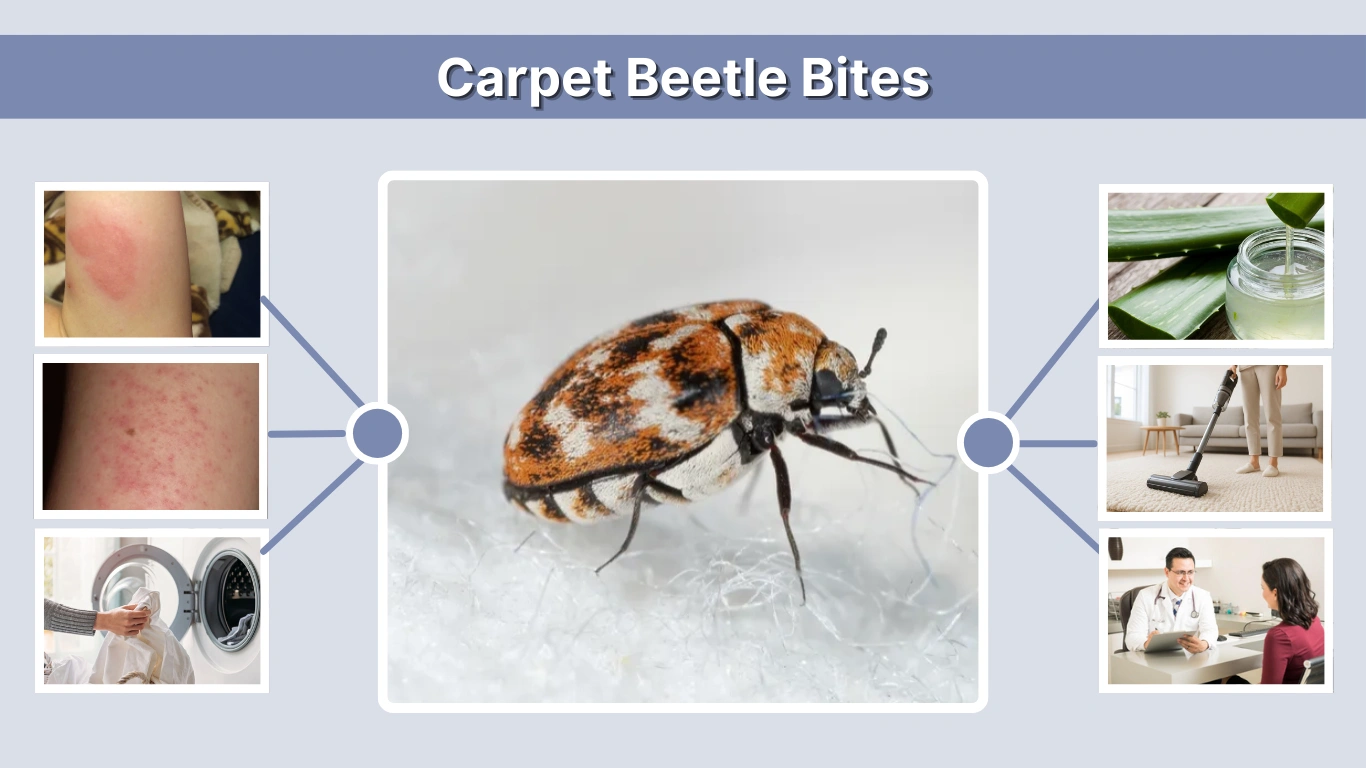
Carpet beetles are tiny insects that often find their way into homes, where they can damage fabrics, furniture, and carpets. Many people believe these pests bite humans, leaving itchy marks similar to bed bugs. However, the truth is more complex. Carpet beetles do not actually bite, but their larvae can cause allergic reactions that look and feel like bites. Understanding this difference is essential for proper identification, treatment, and prevention.
What Are Carpet Beetles?
Carpet beetles are small household pests that belong to the Dermestidae family. Adult beetles are oval-shaped and usually measure between 2–4 mm in length. They are often black, brown, or patterned with a mix of colors. While the adults typically feed on pollen and nectar, the real trouble comes from their larvae.
Carpet Beetle Larvae
The larvae, sometimes called “woolly bears,” feed on natural fibers like wool, silk, leather, and fur. They are covered in tiny bristly hairs that can irritate human skin. When people come into contact with these larvae or their shed hairs, they may develop rashes mistaken for insect bites.
Do Carpet Beetles Bite Humans?

One of the biggest misconceptions about these pests is that they bite. Carpet beetles do not bite humans. Instead, the irritation people experience is caused by:
- Allergic reactions to tiny larval hairs.
- Contact with shed skins left behind during molting.
- Hypersensitivity in certain individuals with sensitive skin.
This irritation can mimic the appearance of insect bites, which explains why people often confuse them with bed bug marks.
Carpet Beetle “Bites” vs. Bed Bug Bites

Because both pests can be found indoors, it’s easy to mistake one for the other. However, there are some key differences:
Bed Bug Bites
- Appear in clusters or lines on exposed skin.
- Usually red, swollen, and very itchy.
- Commonly found on arms, neck, face, and legs.
Carpet Beetle Reactions
- Appear as scattered red marks or rash-like patches.
- Caused by allergic reactions, not actual bites.
- May worsen with continued exposure to larvae or shed hairs.
Recognizing these differences is important because the treatment and removal strategies for bed bugs and carpet beetles are very different.
Symptoms of Carpet Beetle “Bites”

When exposed to carpet beetle larvae, some people develop noticeable skin reactions. The symptoms may include:
- Small, red, itchy bumps.
- Rash-like irritation in areas that touched infested fabrics.
- Dry or inflamed skin after prolonged exposure.
Commonly Affected Areas
Since larvae live in carpets, upholstery, and bedding, the most affected body parts include the arms, legs, back, and neck. People who spend more time in contact with infested furniture or mattresses are more likely to develop symptoms.
Carpet Beetle Bite Allergic Reactions
Not everyone reacts to carpet beetles. For those who are sensitive, allergic responses can range from mild itching to more severe irritation.
Signs of an Allergic Reaction
- Intense itching and redness.
- Raised bumps that resemble mosquito bites.
- Swelling or welts in rare cases.
Who Is Most Vulnerable?
- Children with sensitive skin.
- Individuals with existing skin allergies.
- People with prolonged exposure to infested fabrics.
In severe cases, scratching the irritated skin may lead to secondary infections, making medical care necessary.
How Long Do Carpet Beetle Reactions Last?
Carpet beetle–related skin irritation usually lasts anywhere from a few hours to several days, depending on the person’s sensitivity. Mild cases clear up quickly with home treatment, while stronger allergic reactions can take longer to heal.
Treatment for Carpet Beetle “Bites”

Although carpet beetles don’t bite, the allergic reactions they cause can still be uncomfortable. Fortunately, there are several effective ways to soothe the irritation.
At-Home Remedies
- Cold compress: Applying a cold cloth or ice pack can reduce swelling and itching.
- Aloe vera gel: Naturally soothes inflamed skin and promotes healing.
- Antihistamines: Over-the-counter allergy medications can help reduce allergic symptoms.
- Calamine lotion or hydrocortisone cream: Relieves itching and redness.
Medical Treatments
For severe allergic reactions, a doctor may prescribe stronger antihistamines or corticosteroid creams. If scratching has caused a secondary skin infection, antibiotics may also be necessary.
How to Get Rid of Carpet Beetle Infestations
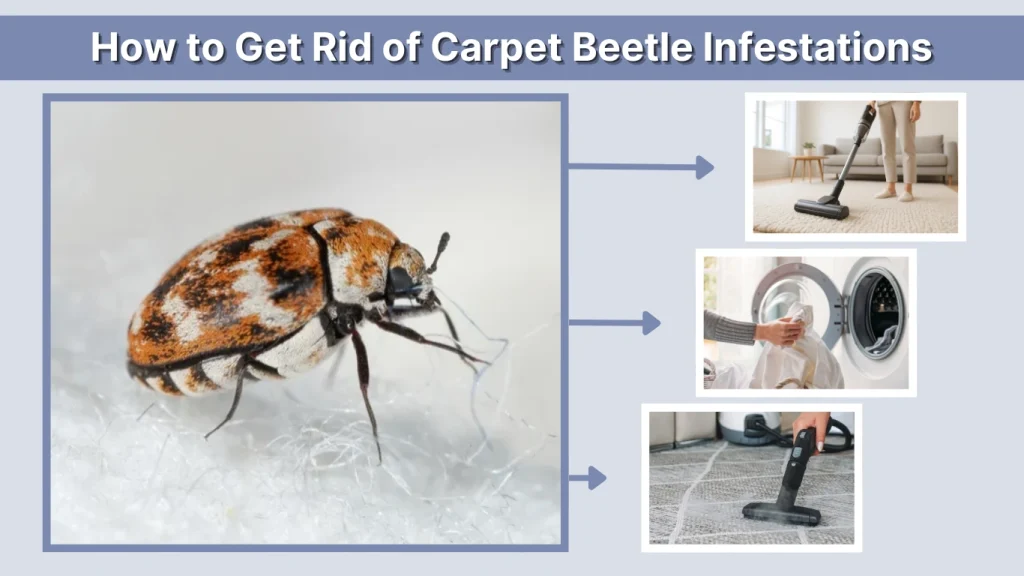
Treating the skin is only part of the solution. To stop recurring irritation, you must eliminate the source of the problem: the carpet beetle infestation.
Cleaning and Maintenance
- Vacuum regularly: Focus on carpets, rugs, furniture, and corners where larvae hide.
- Wash fabrics: Launder bedding, curtains, and clothes in hot water.
- Steam cleaning: Helps kill larvae deep in carpets and upholstery.
Pest Control Measures
If the infestation is widespread, professional pest control may be required. Insecticides designed for carpet beetles can be applied to cracks, crevices, and carpets, but they should be used with caution.
Prevention Tips
- Store clothing in airtight containers.
- Keep food and pet hair cleaned up, as they attract beetles.
- Inspect secondhand furniture and textiles before bringing them inside.
What Happens If a Carpet Beetle “Bites” You?
Since carpet beetles don’t actually bite, what really happens is an allergic skin reaction. If untreated, the irritation may persist, causing prolonged discomfort. Scratching can worsen the problem, leading to open sores or infections. While not dangerous in most cases, infestations should be taken seriously to protect both your skin and your belongings.
FAQs
What do carpet beetle bites look like?
They appear as small, red, itchy bumps or rash-like patches. Unlike bed bug bites, they are not clustered in lines but scattered due to allergic reactions from larval hairs.
Can carpet beetles live in mattresses?
Yes, larvae can hide in mattresses, bedding, and upholstery where natural fibers are present. This can increase skin contact and reactions.
How can you tell carpet beetle bites from bed bug bites?
Bed bug bites appear in rows or clusters and are true bites, while carpet beetle marks are scattered, rash-like, and caused by allergic reactions rather than biting.
How do you treat carpet beetle bite reactions?
Use cold compresses, aloe vera, antihistamines, or hydrocortisone cream. Severe reactions may require medical treatment.
Will carpet beetle skin reactions go away on their own?
Yes, mild reactions usually clear up within a few days, but continued exposure to larvae may prolong symptoms. Removing the infestation is essential for complete relief.
