
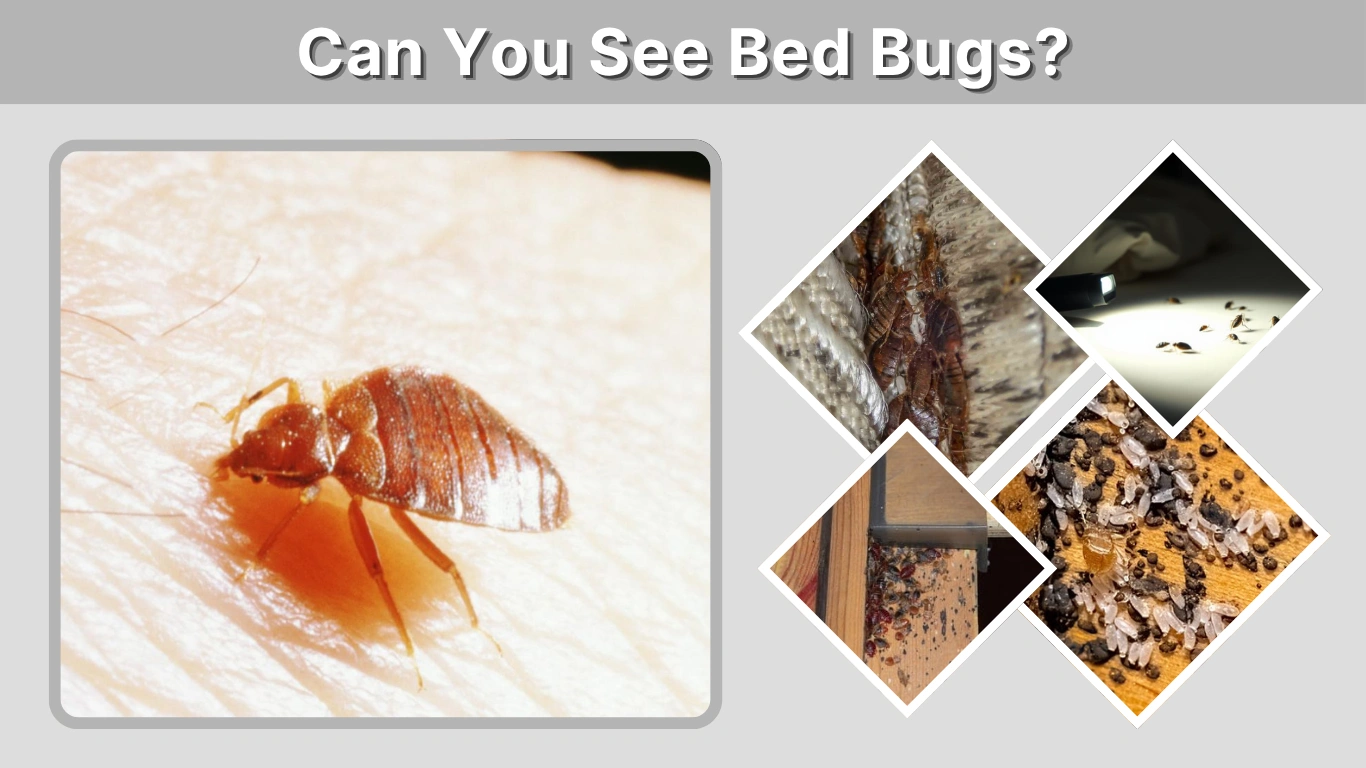
Bed bugs are tiny, elusive insects that often remain unnoticed until their bites cause itching, irritation, and frustration. Many people assume bed bugs are invisible to the human eye, but this is a misconception. Adult bed bugs, their eggs, and even some of their waste can be seen—if you know where and how to look. Because these pests hide in tight cracks, feed mostly at night, and move quickly, spotting them can be challenging. Understanding their appearance, habits, and hiding spots makes detection far easier and helps prevent a small infestation from turning into a large-scale problem.
Can You See Bed Bugs With the Naked Eye?
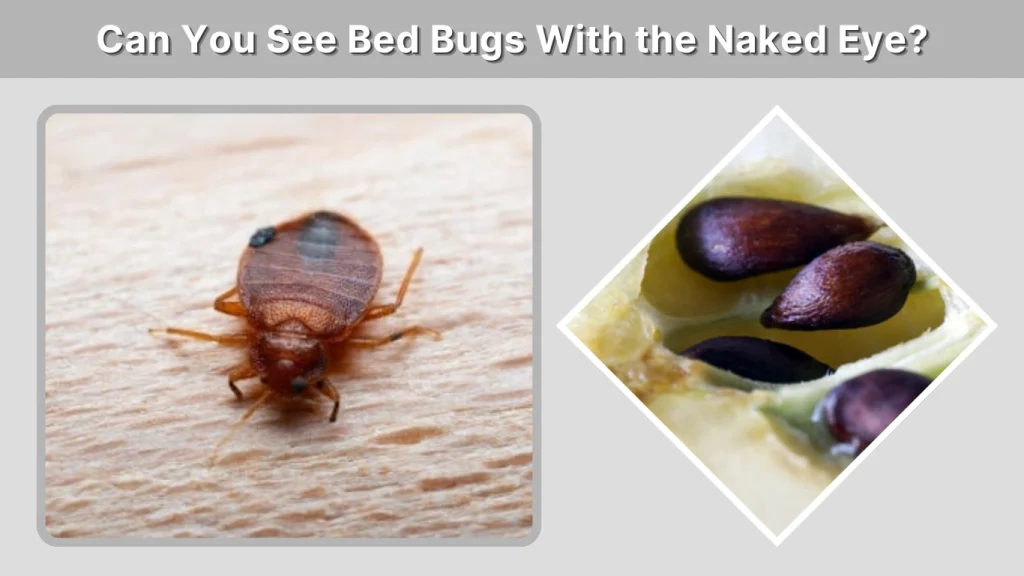
Are Adult Bed Bugs Visible?
Adult bed bugs are definitely visible without a microscope. They are approximately the size of an apple seed—flat, oval, and reddish-brown in color. A fully grown bed bug measures about 4–7 millimeters long. After feeding, they become swollen and appear more elongated and darker in color. Despite being visible, their ability to hide makes them difficult to spot. They slip into mattress seams, furniture cracks, electrical outlets, and other narrow spaces that most people never think to check.
Because bed bugs are nocturnal, they rarely wander around when lights are on. This leads many to believe their home is bug-free simply because they don’t see anything during the day. However, the insects are fully visible when exposed and easy to recognize once you know their shape and size.
Can You See Baby Bed Bugs, Nymphs, and Larvae?
Baby bed bugs, often called nymphs, are much harder to see than adults. They measure as little as 1 millimeter—roughly the size of a grain of dust or a pinhead. Their bodies are nearly translucent when unfed, making them blend perfectly with light fabric or skin. Once they feed, their tiny bodies turn a bright reddish color from the blood inside, which makes them easier to detect.
Larvae and early nymph stages are especially easy to miss, which explains why infestations grow unnoticed. You can still see them with the naked eye, but you need good lighting and close attention.
Can You See Bed Bugs in Different Places?
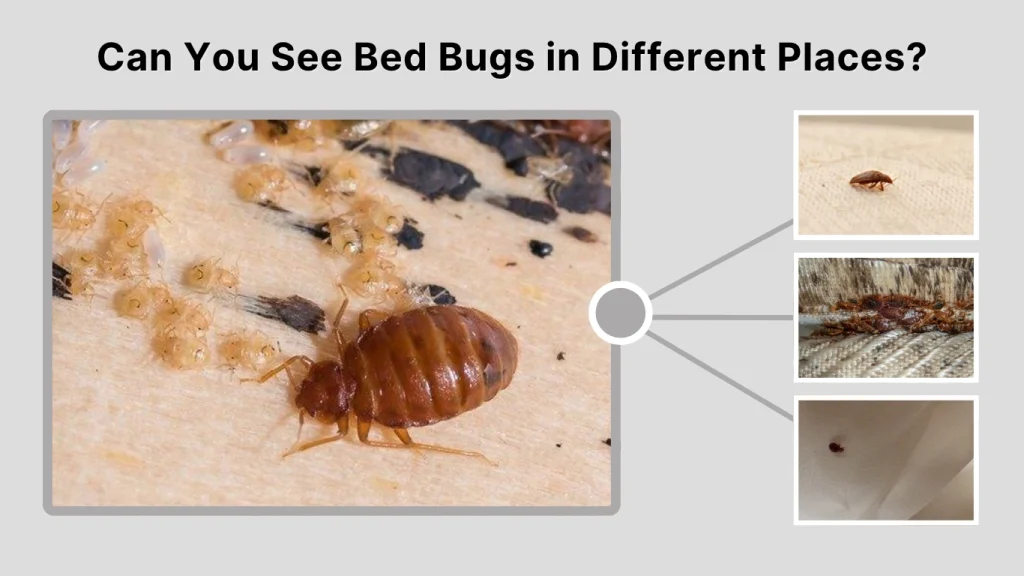
On Your Bed or Mattress
Bed bugs are commonly found on mattresses, particularly along seams, tags, and piping. You can see them on the bed if you know where to look. They might also hide on the sides or underside of the mattress, so a careful inspection is necessary. Sometimes, instead of the bugs themselves, you may see signs like black fecal dots, shed skins, or tiny blood smears on sheets.
Visibility also depends on sheet color. Bed bugs are easier to spot on white or light-colored bedding, while darker fabric helps them blend in.
On Furniture, Blankets, or Clothing
Bed bugs can cling to furniture seams, blanket folds, or clothing fibers. They tend to hide deep within cushions, under couch frames, and in cracks of wooden furniture. While they don’t usually stay on clothing long-term, they may hitchhike on fabric temporarily. Spotting them on dark clothing or patterned upholstery can be more difficult, but they are still visible if you inspect closely.
On Your Skin or Body
Although bed bugs feed on humans, it’s rare to catch them in the act. They move quickly and prefer darkness, so the chances of seeing them crawling on skin are slim. Still, if you suddenly turn on a light while they are feeding, you might see one scurrying away. They may also crawl on arms, legs, or exposed skin while searching for a feeding spot. Because of their small size, baby bed bugs on the skin may be mistaken for freckles or specks of dust.
Can You See Bed Bugs Moving?
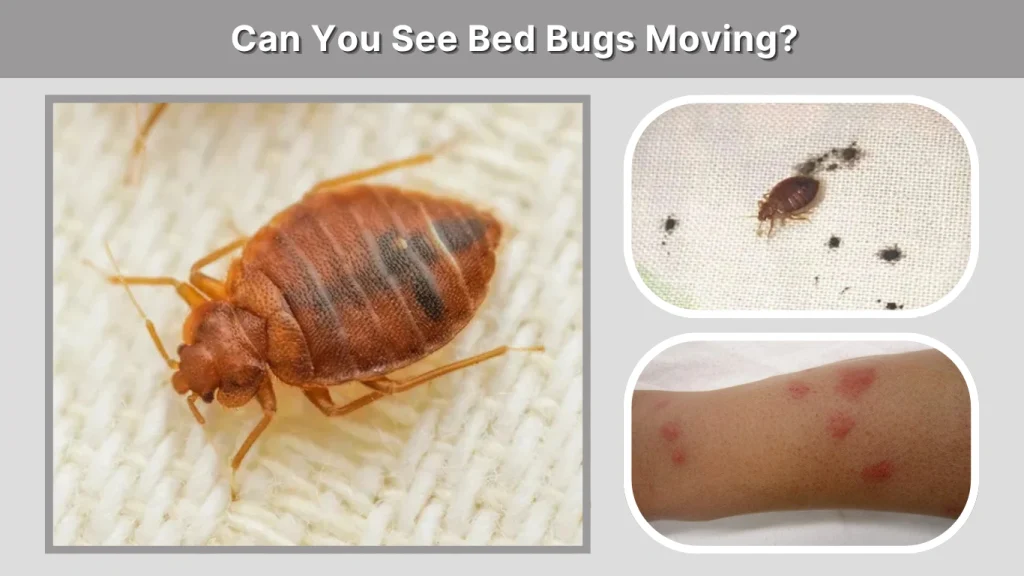
Crawling Behavior
Bed bugs do not jump or fly—they crawl. Their movement is slow and deliberate, but when disturbed, they can move surprisingly quickly to hide. You can see them crawling across a mattress, wall, or furniture surface if they are active. Seeing a bed bug crawling is usually a strong indication that an infestation is growing because larger populations force bugs to travel farther from their hiding spots.
Can You See a Bed Bug Biting You?
Bed bug bites are almost always unseen in real time. Their saliva contains a numbing agent that prevents you from feeling the bite. Unless a bright light exposes them mid-feeding, they feed unnoticed. Bed bugs avoid movement and light, hiding instantly if disturbed. For this reason, most people only discover bites hours later when itching begins—never witnessing the bite itself.
Can You See Bed Bugs During the Day or Only at Night?
Daytime Visibility
Bed bugs can be seen during the day, but they rarely move around unless the infestation is severe or their hiding spots are disturbed. They generally stay tucked away in cracks, seams, and crevices. If you see bed bugs in broad daylight without searching, it usually suggests a well-established infestation.
Nighttime Visibility
Bed bugs are far more active at night. They tend to emerge after midnight, when the environment is quiet and dark. Because of this, nighttime inspections are often more effective. If you gently disturb the bedding with a flashlight in the middle of the night, you may see them crawling across sheets or mattress seams, looking for a blood meal. Some people use red-light flashlights because bed bugs are less sensitive to red wavelengths, making it easier to observe them without triggering their instinct to hide.
Bed bugs are drawn to body heat and carbon dioxide, so they often emerge only when a person is sleeping, allowing them to feed undisturbed. This feeding pattern is one of the main reasons people rarely see them moving around voluntarily.
Can You Use Tools to See Bed Bugs Better?
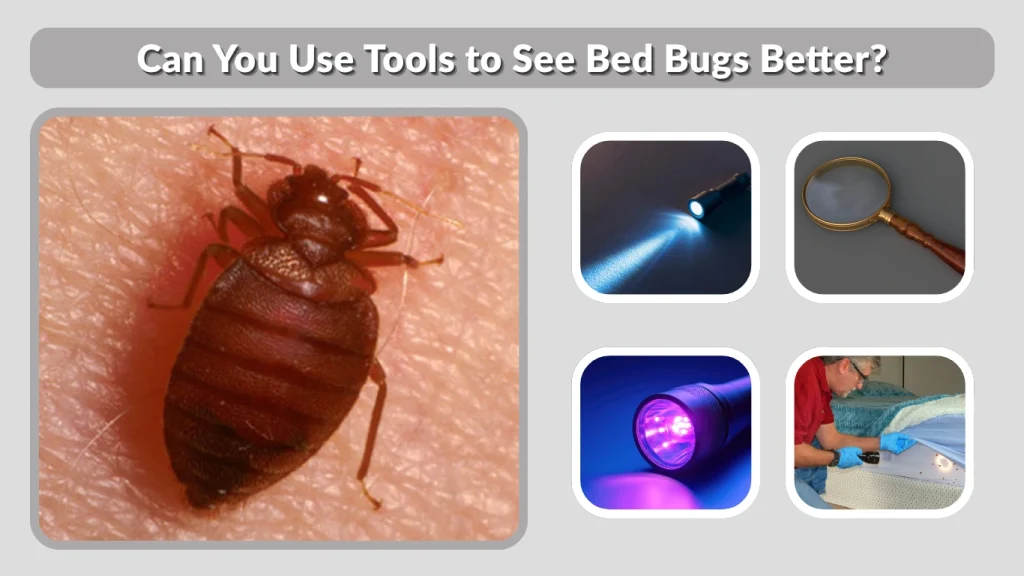
Flashlights & Magnifying Glasses
A bright flashlight is one of the simplest and most effective tools for spotting bed bugs. Shining the light at an angle helps highlight shadows, allowing you to see bugs hiding in seams or cracks. A magnifying glass can also help identify very small bugs, eggs, or fecal spots. For those with poor eyesight or when searching for early-stage nymphs, magnification can make a significant difference.
Black Light / UV Light Detection
Many people wonder if black lights or UV lights can help detect bed bugs. The insects themselves do not glow under UV light, but some of their traces—such as eggshells, shed skins, or fecal stains—may appear more visible. UV light enhances contrast on many fabrics, making dark spots and small objects easier to see. While not a perfect detection method, UV lights can assist in identifying subtle clues that regular lighting might miss.
Other Helpful Tools
Tools such as credit cards, flat scrapers, and even lint rollers can help inspect cracks or collect samples. Bed bug interceptor traps placed under bed legs are also effective at catching bugs during their nightly movement, providing definitive proof of activity.
Can You See Bed Bug Eggs, Bites, and Infestations?

Bed Bug Eggs
Bed bug eggs are visible to the naked eye but are extremely small—about 1 millimeter long. They are pearl white and often resemble a grain of salt or a tiny grain of rice. You may find them in clusters stuck to surfaces like mattress seams, fabric folds, or wood cracks. Because they camouflage easily, good lighting is important during inspection. Eggs can also appear on clothing, especially in folds or seams.
Bed Bug Bites
People often ask whether bed bug bites can be seen immediately. Bites typically do not appear right away—most take several hours to develop redness or swelling. Some individuals show reactions within minutes, while others may not react for 24–48 hours. Bed bug bites appear as red, itchy bumps, often grouped in clusters or straight lines. You cannot see the bug biting you, but the bite marks themselves are visible once they develop into welts.
Signs of an Infestation
Even if you don’t see the bugs directly, several physical signs confirm their presence:
- Tiny black fecal stains
- Small blood smears on sheets
- Shed skins from growing nymphs
- Clusters of small white eggs
- A slightly sweet or musty odor
Seeing one or more of these indicators should prompt a deeper inspection, as they often reveal an infestation long before live bugs are spotted.
Can You Have Bed Bugs and Not See Them?
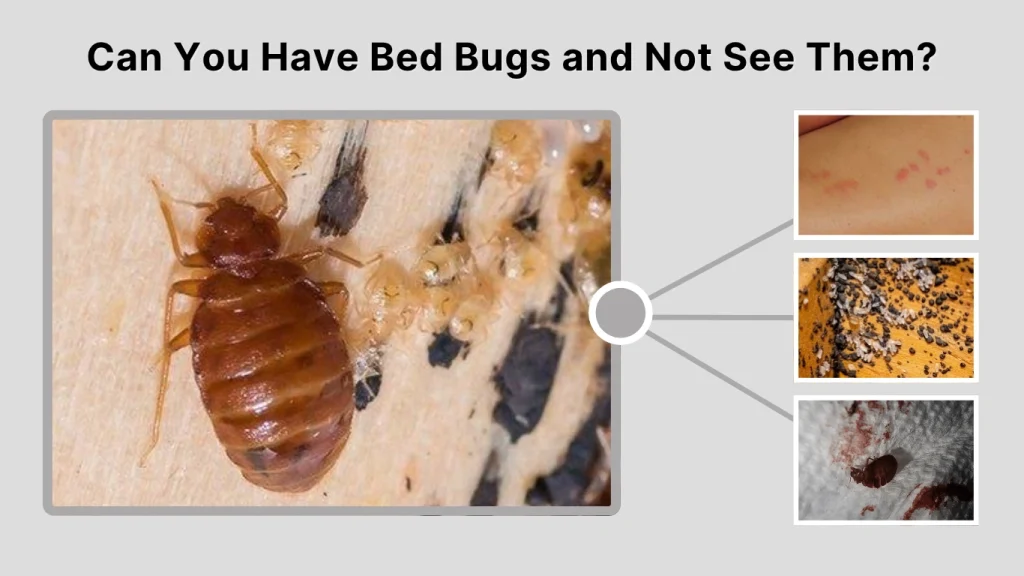
Reasons People Miss Bed Bugs
It’s very common to have bed bugs without ever seeing them. Their ability to hide in extremely thin cracks makes them almost undetectable without careful searching. Bed bugs can hide behind wall plates, under carpet edges, inside electronics, between wood joints, or deep within furniture. Their nocturnal behavior makes them even harder to spot.
Additionally, small infestations may consist of only a few insects that stay close to the host’s sleeping area, feeding quickly and then disappearing back into hiding.
Why Not Seeing Bed Bugs Doesn’t Mean You Don’t Have Them
Many people assume that if they don’t see bugs, their bites must be caused by allergies or mosquitoes. But bed bugs’ stealthy behavior means sightings often occur only after the infestation becomes established.
You can still have bed bugs if:
- You see unexplained bite patterns
- You find small fecal dots
- You notice tiny blood smears
- You smell a faint musty odor
- You find bug shells or eggs
Seeing physical bugs is not required to confirm an infestation—many early detections rely on indirect signs.
Why Bed Bugs Are Hard to Spot
Their Hiding Habits
Bed bugs hide in the smallest crevices and only emerge briefly to feed. They prefer tight spaces like screw holes, furniture seams, wall cracks, or behind baseboards. Their flat bodies allow them to squeeze into gaps as narrow as a credit card’s width.
Color & Size Camouflage
Their reddish-brown coloring helps them blend into wooden furniture, brown fabrics, and even carpet fibers. Bed bug eggs, which are white and tiny, may resemble dust particles, making them hard to see unless viewed up close. Nymphs are nearly transparent before feeding, adding another layer of invisibility.
How to Improve Your Chances of Seeing Bed Bugs
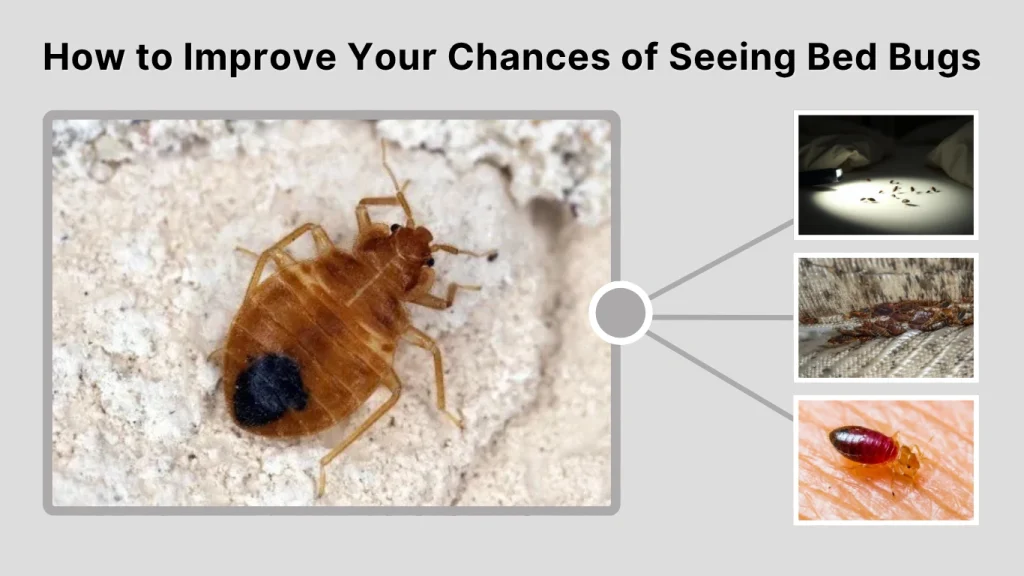
Best Times to Look
- Early morning before disturbing the bedding
- Late at night using a soft flashlight
- After moving furniture or bedding abruptly
- After a recent meal when bugs appear darker and larger
Where to Inspect
- Mattress seams and piping
- Box spring corners
- Headboards and bed frames
- Sofa cushions and folds
- Inside dresser drawers
- Behind loose wallpaper
- Along baseboards
Tools That Help
- Flashlight
- Magnifying glass
- Credit card edge
- Interceptor traps
- Sticky lint rollers for fabric surfaces
These tools make detection far easier, especially during early infestation.
What to Do If You Think You See Bed Bugs
If you believe you’ve spotted a bed bug, take a clear close-up photo for identification. Compare the image to reliable pest control sources. Avoid crushing the bug unless you need a sample. Do not rely solely on bites, as they are not definitive. If multiple signs appear—bites, stains, shells, or live bugs—consider contacting a pest control professional for confirmation.
FAQs
Can you see bed bugs with the naked eye?
Yes. Adult bed bugs are visible without magnification and are about the size of an apple seed. However, they hide extremely well in cracks, seams, and folds, making them easy to miss unless you inspect closely. Baby bed bugs and eggs are harder to see because they are tiny and lighter in color.
Can you have bed bugs without ever seeing them?
Absolutely. Bed bugs are nocturnal, fast-moving, and excellent at squeezing into tiny hiding spots. Many people experience bites and find signs—like stains or shells—long before seeing a live bug. Lack of sightings does not mean your home is bug-free.
Can you see bed bug eggs?
Yes, but they’re very small. Bed bug eggs are about 1 millimeter long, pearl-white, and often appear in clusters. You can see them with the naked eye, but they blend into fabric fibers and cracks, so a flashlight or magnifying glass helps tremendously.
Can you see bed bugs during the day?
You can, but it’s uncommon. Bed bugs prefer to hide during the day and feed at night. Daytime sightings often mean the infestation is more severe or that their hiding spots have been disturbed. A thorough inspection is needed if you see one in daylight.
Can you see bed bugs crawling on your bed or skin?
Yes, but it’s rare. Bed bugs avoid movement, light, and disruption, so catching them crawling on skin or bedding is uncommon. You might see them if you turn on the light suddenly at night or during a major infestation when hiding spots become crowded.
