
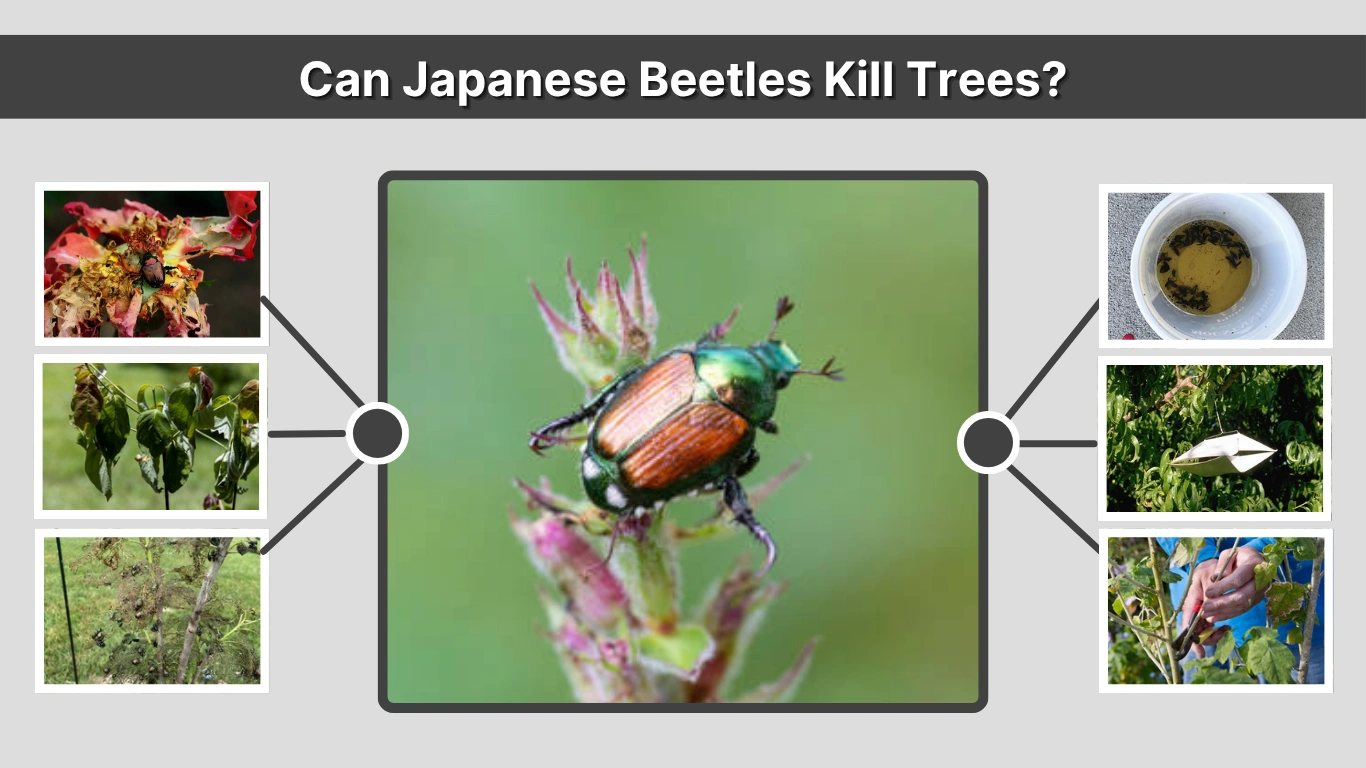
Japanese beetles are one of the most notorious pests for homeowners and gardeners. Known for their shiny green and bronze bodies, these beetles feed on a wide range of trees and plants, leaving behind severe damage. While they rarely kill mature trees outright, persistent infestations can weaken them over time and even destroy young or stressed trees. Understanding their feeding habits and control methods is essential for protecting your landscape.
What Are Japanese Beetles?
Japanese beetles (Popillia japonica) are invasive insects originally from Japan that now infest much of North America. Adult beetles emerge in summer, usually from June through August, and feed for several weeks on tree foliage, flowers, and fruit. Their larvae, known as grubs, live underground during fall and spring, feeding on grass roots.
The adults are easy to spot — metallic green heads with bronze wings — and they often feed in groups. They prefer sunny areas and can quickly defoliate trees, shrubs, and ornamentals, creating severe visual and health damage to landscapes.
Do Japanese Beetles Kill Trees?
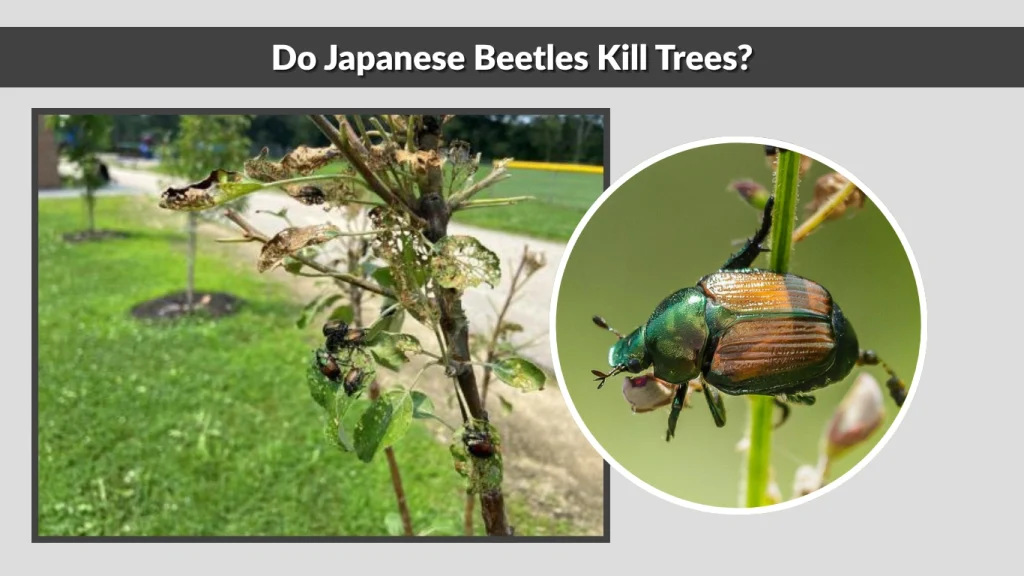
While Japanese beetles rarely kill mature trees immediately, they can severely weaken them through repeated infestations. Each feeding season removes a tree’s ability to photosynthesize effectively. This stress can lead to slower growth, vulnerability to drought, and higher susceptibility to disease or secondary pests.
Young or newly planted trees are at greater risk. Since their energy reserves are limited, losing too much foliage can cause decline or even death within a few seasons. Trees that endure multiple years of heavy beetle feeding without recovery time may die from cumulative stress.
How Japanese Beetles Damage Trees
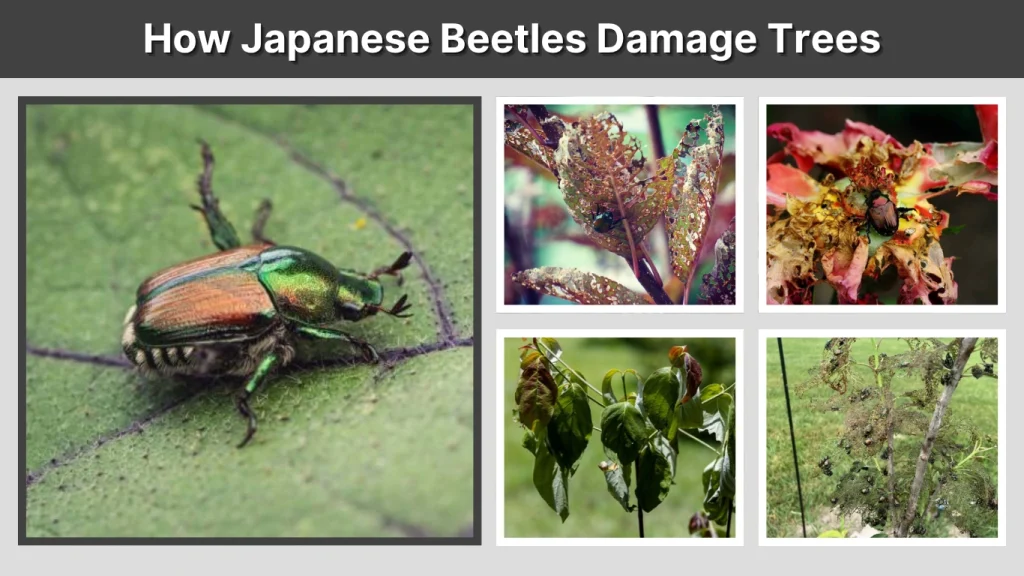
Japanese beetles target the soft parts of leaves, eating between the veins and leaving a distinct “skeletonized” pattern. When many beetles feed at once, entire sections of the canopy can appear scorched or lace-like.
Their feeding habits cause several types of damage:
- Leaf Skeletonization: Only the veins of leaves remain, limiting photosynthesis.
- Flower and Fruit Damage: Beetles chew through petals and fruit skins, reducing harvest quality.
- Premature Leaf Drop: Trees shed leaves early to recover from stress, reducing growth.
- Weakened Branches: Continuous defoliation weakens the tree structure over time.
The visible damage often starts at the top of the tree canopy, as beetles prefer higher, sunlit leaves. From there, they move downward, infesting the entire tree.
What Trees Do Japanese Beetles Attack Most?
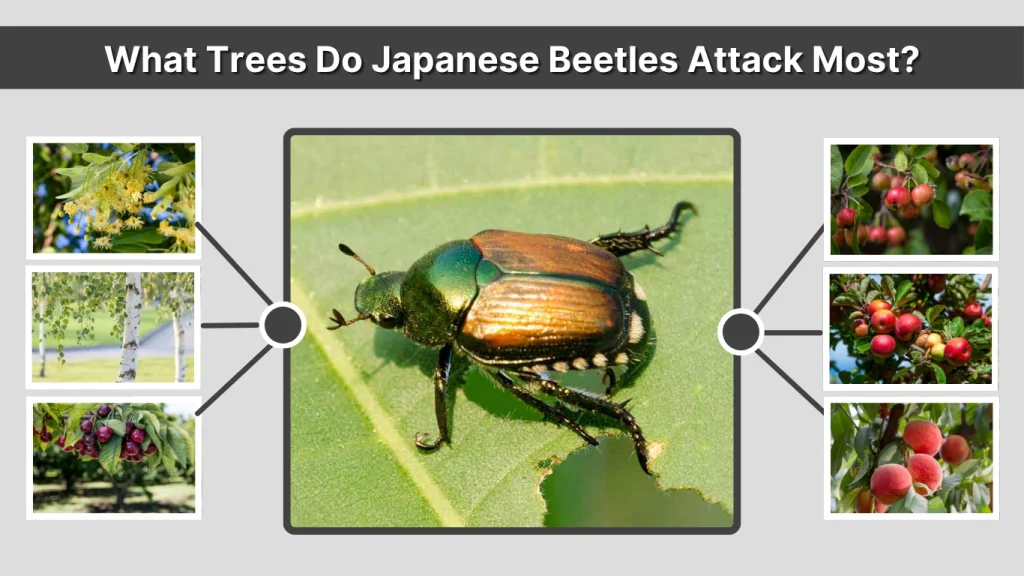
Japanese beetles have broad appetites but are especially drawn to certain tree species. Some produce fragrances and leaf compounds that attract these pests in large numbers.
Highly Attractive Trees
- Linden Trees: Among the beetles’ favorite targets. Their soft leaves and sweet scent make them irresistible.
- Birch Trees: Light-colored foliage attracts adult beetles throughout summer.
- Cherry Trees: Both ornamental and fruit-bearing varieties suffer heavy damage.
- Crabapple Trees: Known to attract large swarms each year.
- Apple Trees: Beetles feed on both leaves and developing fruit.
- Peach Trees: A frequent target for leaf and fruit damage.
- Elm Trees: Soft, broad leaves make them easy targets.
- Japanese Maple Trees: Their delicate leaves are often skeletonized in midsummer.
Moderately Susceptible Trees
- Magnolia Trees: Occasionally affected, especially younger ones.
- Maple Trees: Red and sugar maples are more prone than silver varieties.
- Weeping Cherry Trees: Their graceful branches can be heavily infested near the top.
These trees can tolerate some feeding but will show signs of stress if attacked repeatedly over several years.
Trees They Rarely Attack
Not all trees attract Japanese beetles. Planting resistant varieties can help protect your garden naturally.
- Pine Trees
- Spruce
- Oak
- Ash
- Dogwood
- Red Maple
These species are less likely to experience infestations because their thick or aromatic leaves deter beetles.
Japanese Beetles and Fruit Trees
Fruit trees are among the most vulnerable to Japanese beetle damage because of their tender foliage and sweet aroma. Commonly affected species include apple, cherry, peach, and plum trees.
Beetles feed on leaves, flowers, and even fruit skins, reducing both fruit size and quality. The damage isn’t just aesthetic — extensive feeding weakens the tree’s energy reserves and increases the risk of fungal infections and secondary pests.
For orchard owners, this can mean reduced harvests year after year. The damage tends to peak in July when adult beetle populations are highest.
Signs of Japanese Beetle Infestation in Trees
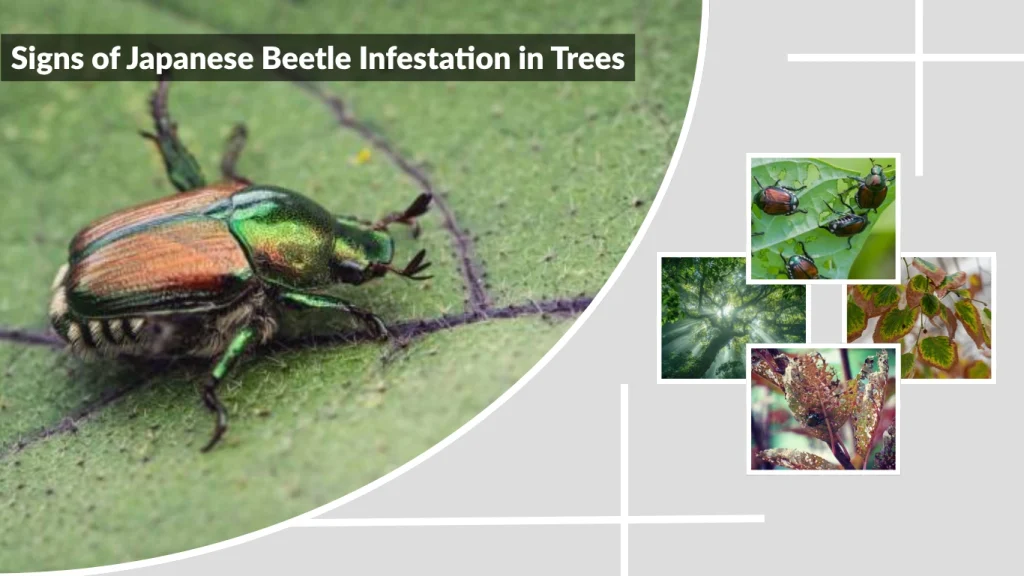
Recognizing beetle activity early is the best way to prevent serious harm. Here are the main warning signs:
- Visible Clusters: Groups of shiny green and bronze beetles on leaves or branches.
- Skeletonized Leaves: Only veins remain after feeding.
- Brown or Dead Foliage: Indicating prolonged damage.
- Reduced Canopy Density: Fewer leaves and more sunlight passing through the branches.
- Presence of Grubs: White, C-shaped larvae in the soil beneath infested trees.
Severe infestations can cause an entire tree canopy to appear thin and dull within just a few weeks.
How to Get Rid of Japanese Beetles on Trees
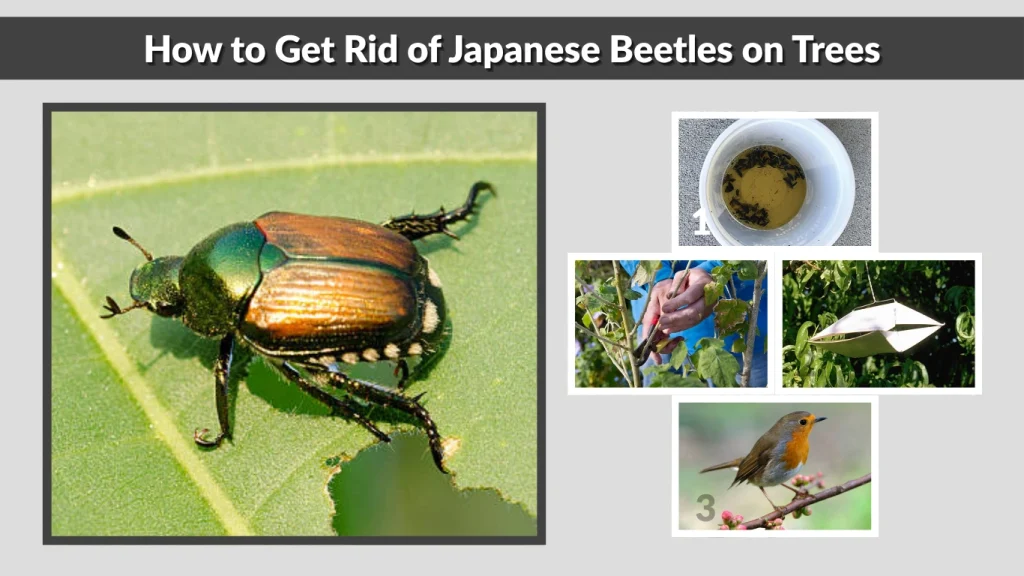
Dealing with Japanese beetles requires a combination of manual removal, natural predators, and targeted treatments. Whether you have ornamental or fruit trees, consistent management is key to long-term control.
Manual and Natural Methods
- Handpicking: In the early morning, beetles move slowly and can be shaken off branches into soapy water.
- Trapping: Place pheromone traps at least 30 feet away from valuable trees to lure beetles away.
- Encourage Predators: Birds, frogs, and beneficial insects like praying mantises help reduce populations naturally.
- Pruning: Remove damaged branches and leaves to discourage further feeding.
These organic methods are most effective for small or moderate infestations and are safe for pollinators.
Organic Sprays and Treatments
Several natural sprays can help stop beetle damage while protecting tree health:
- Neem Oil Spray: Interrupts beetle feeding and reproduction. Safe for fruit trees when applied in early morning or evening.
- Insecticidal Soap: Effective on young beetles and safe for most tree types.
- Milky Spore: A soil treatment that targets beetle grubs, preventing future outbreaks.
These options are suitable for both homeowners and organic orchard growers looking for non-toxic solutions.
Chemical Treatments for Severe Infestations
In cases where organic solutions aren’t enough, chemical sprays may be necessary to stop beetles from spreading. Always follow label instructions and avoid spraying during bloom periods to protect pollinators.
- Carbaryl (Sevin): A fast-acting insecticide that kills beetles on contact. Works well on ornamental and fruit trees.
- Pyrethrin-based Sprays: Derived from chrysanthemums, these sprays provide effective control with lower toxicity than synthetic chemicals.
- Imidacloprid: A systemic insecticide that is absorbed by the tree, offering longer-lasting protection. It should only be used on non-fruit-bearing trees.
When using chemical sprays, timing is critical. Apply them early in the morning or late in the evening when beetles are less active. Avoid overuse, as it can harm beneficial insects that naturally control pest populations.
How to Protect Trees from Japanese Beetles
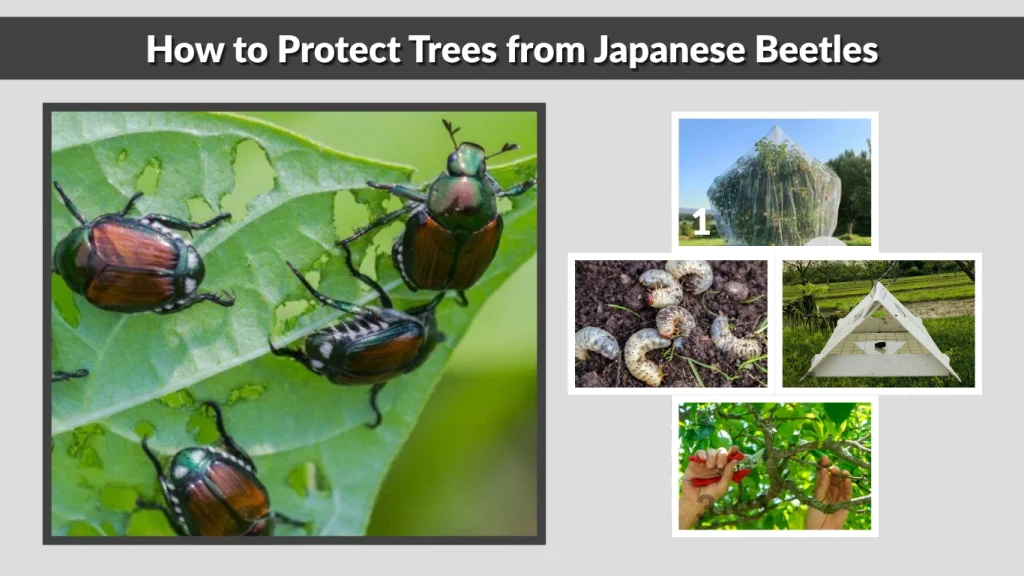
Preventing Japanese beetle infestations is far easier than dealing with them once they’ve established. These preventive steps keep your trees healthier and less attractive to pests.
- Cover Young Trees: Use fine mesh netting to keep beetles from reaching tender foliage.
- Use Traps Strategically: Place pheromone traps at the perimeter of your garden, not near trees you want to protect.
- Maintain Tree Health: Regular watering, mulching, and pruning help trees recover faster from beetle damage.
- Grub Control: Treat lawns with beneficial nematodes or milky spore to kill beetle larvae before they emerge as adults.
- Plant Resistant Varieties: Choose species less appealing to beetles, such as pine, spruce, and dogwood.
Healthy, well-cared-for trees are far less likely to suffer lasting damage from beetles. Preventive care also improves their resilience to drought and disease.
Linden Trees and Japanese Beetles
Linden trees are among the most commonly attacked by Japanese beetles. Their soft leaves and high sugar content make them irresistible to these pests. During midsummer, lindens can become completely covered in beetles, leading to heavy defoliation.
Repeated infestations can cause:
- Leaf loss across the entire canopy
- Reduced photosynthesis and energy storage
- Slowed growth and susceptibility to other pests
To protect linden trees:
- Apply neem oil or pyrethrin spray in early July before beetles reach their peak.
- Use soil-applied systemic insecticides on ornamental lindens (not near pollinator habitats).
- Keep trees well-watered to aid recovery from defoliation.
Although lindens are highly attractive to beetles, proper treatment can keep them healthy and vibrant year after year.
Japanese Beetle-Resistant Trees
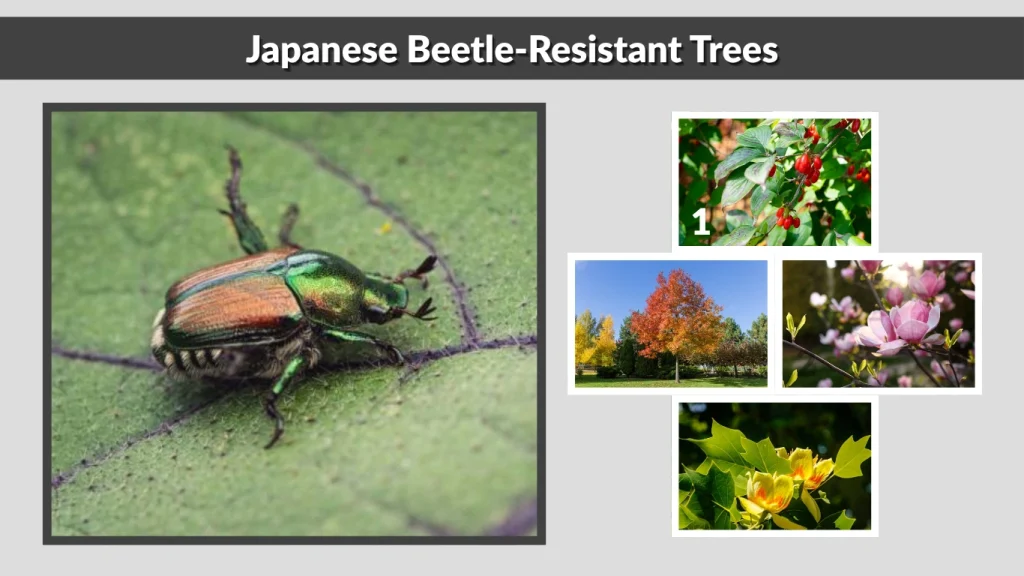
If you’re planning a new landscape or replacing vulnerable species, consider trees that Japanese beetles tend to avoid. These resistant species help minimize pest pressure naturally.
- Dogwood (Cornus spp.) – Tough leaves and aromatic compounds deter beetles.
- Magnolia – Smooth, waxy leaves are unappealing to chewing insects.
- Tulip Tree – Rarely attacked and provides excellent shade.
- Red Oak – Thick leaves make it difficult for beetles to feed.
- Hemlock and Spruce – Coniferous trees are largely ignored.
- Hickory – Produces strong foliage unattractive to adult beetles.
Integrating these trees into your garden design can significantly reduce the likelihood of recurring infestations.
Controlling Japanese Beetles in Apple and Cherry Orchards
For orchard owners and fruit growers, Japanese beetles can pose a major threat. Regular monitoring and consistent management are essential for protecting yield and tree health.
Best Practices for Orchard Control
- Early Monitoring: Start inspecting trees in late June when beetles begin emerging.
- Targeted Spraying: Use neem oil or spinosad-based fruit-safe insecticides to manage active beetles.
- Milky Spore Application: Treat the soil beneath orchard trees in late summer to eliminate developing grubs.
- Tree Rotation: Replace heavily infested species with more resistant fruit trees if infestations persist.
- Beneficial Birds: Encourage robins, starlings, and grackles, which feed on both adult beetles and larvae.
Applying these integrated pest management techniques helps protect orchard trees without over-reliance on chemical pesticides.
How to Prevent Japanese Beetles on Trees Next Season
Japanese beetle prevention begins in late summer and continues through early spring. Breaking their life cycle is key to reducing future infestations.
- Treat Lawns for Grubs: Japanese beetle larvae spend most of their lives underground. Applying milky spore or nematodes in late summer prevents them from maturing.
- Remove Attractants: Clean up overripe fruit and prune diseased branches that draw beetles.
- Diverse Planting: Avoid monoculture landscapes. Mixed tree species make it harder for beetles to spread.
- Soil Care: Keep soil healthy and aerated to promote strong root systems and resistance to stress.
By planning ahead, you can prevent heavy infestations before the next beetle season begins.
FAQs
Will Japanese beetles kill trees?
Japanese beetles usually don’t kill mature trees outright, but repeated defoliation can severely weaken them. Young or stressed trees are more vulnerable and may die if attacked several years in a row without recovery time.
What trees do Japanese beetles like most?
Beetles prefer linden, birch, cherry, crabapple, and apple trees. They also enjoy peach and elm varieties. These trees have tender, nutrient-rich leaves that attract beetles in large groups.
How can I get rid of Japanese beetles on fruit trees?
For fruit trees, apply neem oil or insecticidal soap weekly during peak season. Pick beetles off by hand early in the morning and use traps away from the orchard to divert them. Treat soil with milky spore for long-term prevention.
What is the best tree spray for Japanese beetles?
Neem oil is ideal for organic gardens and fruit-bearing trees. For ornamental trees or heavy infestations, pyrethrin or carbaryl sprays provide quick results when applied safely during low bee activity times.
How can I prevent Japanese beetles from damaging trees next year?
Use soil treatments in late summer, plant resistant species, and maintain healthy soil conditions. Encouraging birds and beneficial insects can also help reduce future beetle outbreaks naturally.
