
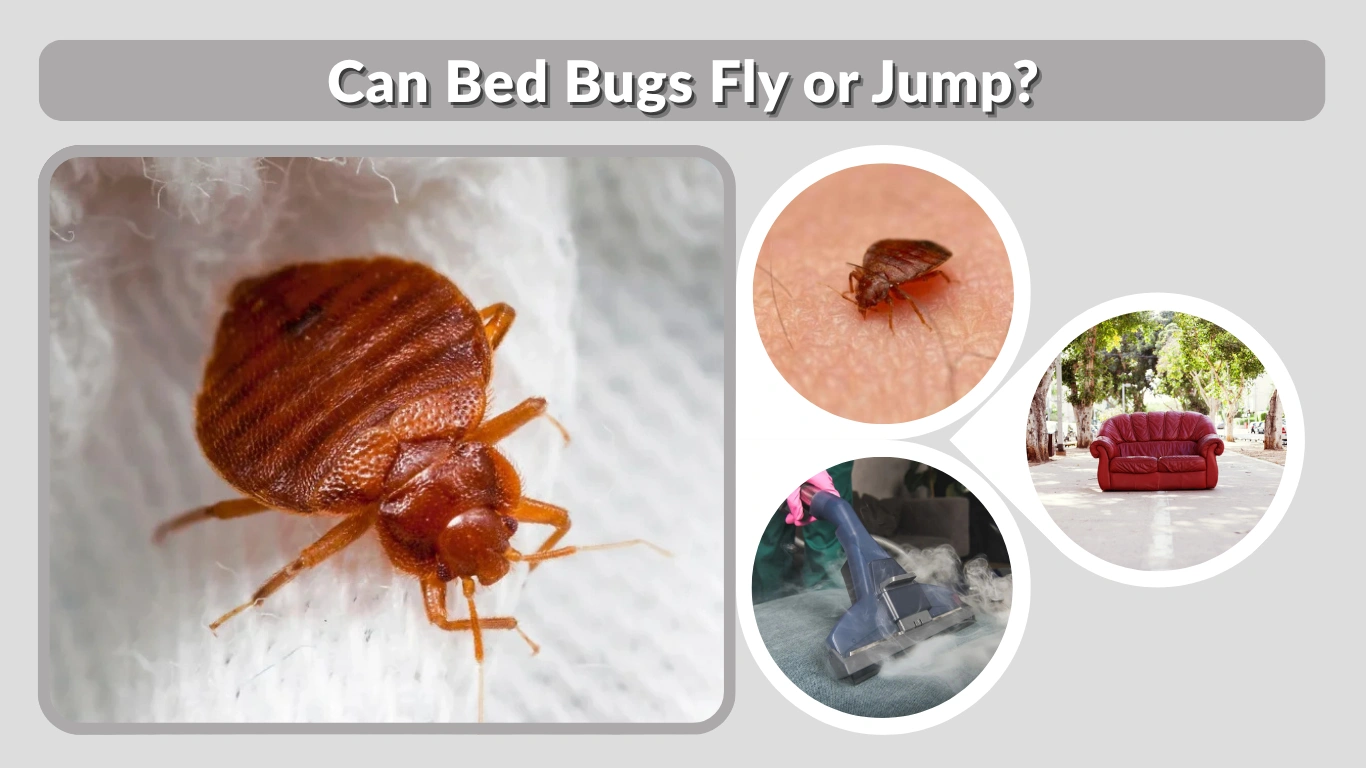
Many people panic when they spot a tiny brown bug near their bed and wonder, “Can bed bugs fly?” The idea of a pest that both bites and flies can sound terrifying, but in reality, bed bugs cannot fly or jump. Their movement is entirely limited to crawling. Understanding how bed bugs move, and why they evolved this way, helps you identify infestations and avoid confusing them with other insects that do fly.
Understanding Bed Bug Anatomy
Do Bed Bugs Have Wings?
Adult bed bugs do have tiny wing pads, but they are not fully developed wings. These are evolutionary leftovers from ancient relatives that could once fly. Over time, as bed bugs adapted to living in human environments — especially beds, couches, and furniture — flying became unnecessary.
Their flattened, oval bodies are designed to slip easily into mattress seams, cracks, and crevices. Because of this flat shape, their bodies aren’t built to support wings or flight muscles. Bed bugs rely on stealth, not speed, to survive and feed.
Why Bed Bugs Cannot Fly
Flying insects like flies or mosquitoes have strong thoracic muscles that move their wings rapidly. Bed bugs, however, lack these muscles and cannot generate the lift needed for flight. Instead, they crawl using six sturdy legs designed for clinging to textured surfaces like fabric, wood, or wallpaper.
Their inability to fly doesn’t limit them much — their crawling ability allows them to move between hiding spots, reach sleeping humans at night, and travel from room to room when infestations grow.
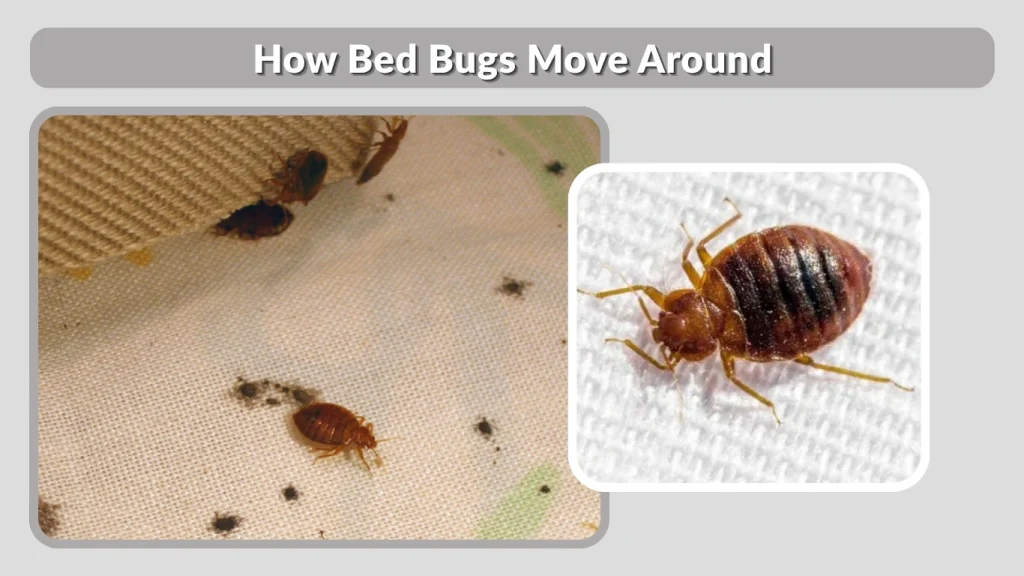
How Bed Bugs Move Around
Do Bed Bugs Jump or Hop?
Bed bugs cannot jump or hop like fleas. Their legs are shorter and thicker, adapted for slow crawling rather than leaping. Fleas, by contrast, have long, spring-like hind legs that allow them to jump several inches at a time. Bed bugs can only crawl up surfaces or climb walls, relying on patience and persistence rather than speed.
Because they can’t jump or fly, bed bugs spread primarily through hitchhiking — latching onto clothing, luggage, or furniture. This is how they travel from one location to another without wings or jumping power.
How Fast Can Bed Bugs Crawl?
Although bed bugs move slowly compared to flying insects, they can cover a surprising distance. An adult bed bug crawls about 3 to 4 feet per minute on flat surfaces. They move faster on fabrics or walls, using their hooked claws for grip.
At night, guided by body heat and carbon dioxide, they crawl toward sleeping hosts to feed. Their speed allows them to reach a bed from nearby furniture or baseboards in just a few minutes. After feeding, they retreat to hidden cracks until the next night.
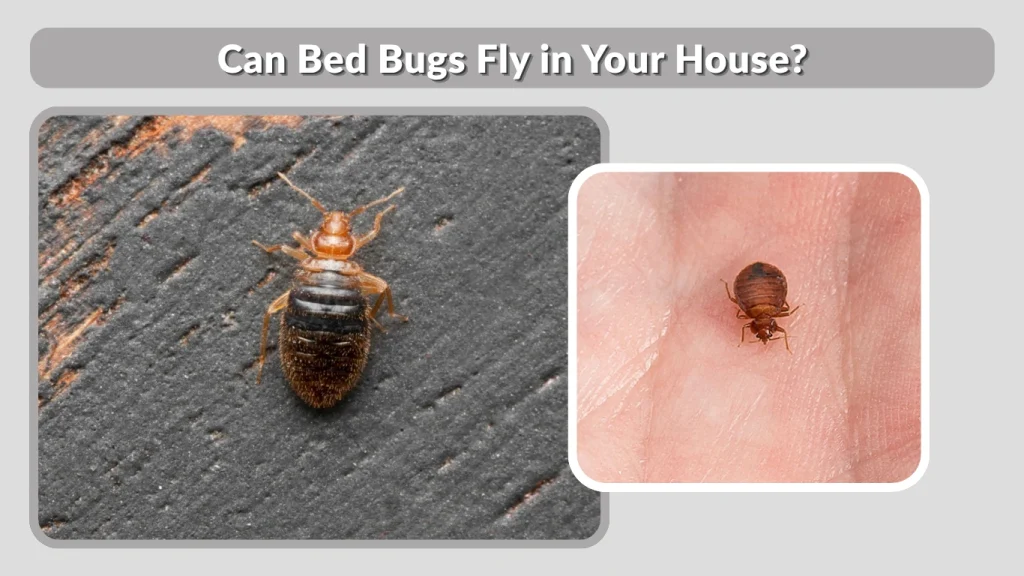
Can Bed Bugs Fly in Your House?
Why People Think Bed Bugs Can Fly
People often mistake other small insects for bed bugs — especially when these bugs seem to move quickly or appear to “fly” across a room. In reality, these are usually carpet beetles, cockroach nymphs, or bat bugs, which can fly or fall from walls and ceilings. Bed bugs themselves are incapable of flight.
Occasionally, a bed bug might be carried by airflow from a fan or during vacuuming, which may give the illusion of flying. However, this is purely accidental — they cannot control their movement through the air.
How Bed Bugs Spread Without Flying
Instead of flying, bed bugs spread by hitchhiking on human belongings. They easily attach to:
- Luggage and travel bags after hotel stays.
- Used furniture such as sofas, chairs, or mattresses.
- Clothing or linens that come into contact with infested areas.
Bed bugs can also travel through cracks in walls or electrical outlets, allowing them to move between apartments or rooms in shared housing. Their small size and persistence make them excellent survivors despite their inability to fly.
Insects Commonly Mistaken for Flying Bed Bugs
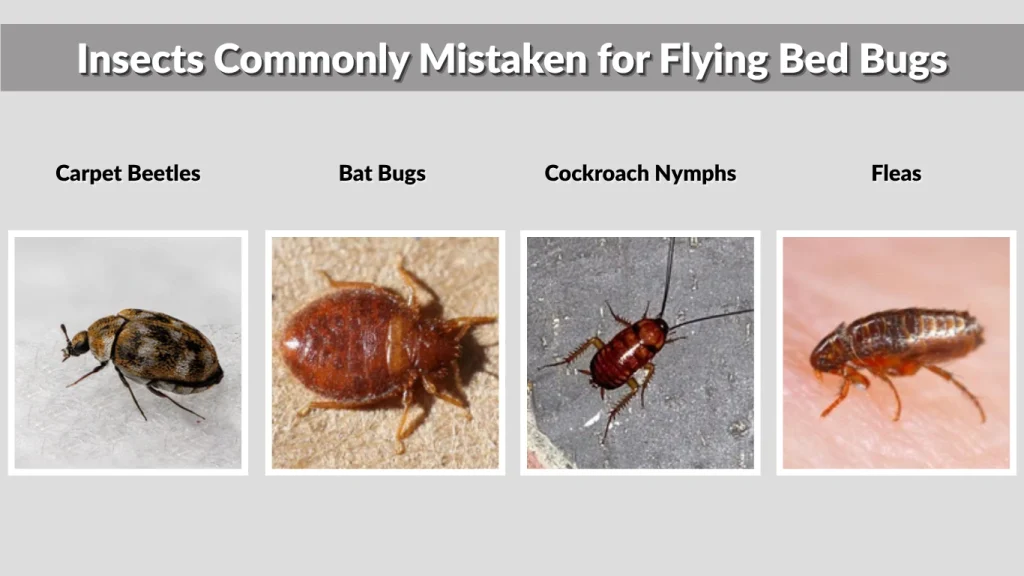
What Bugs Look Like Bed Bugs but Can Fly
Bed bugs are often confused with other insects that share a similar size and color but can actually fly. The most common ones include:
- Carpet Beetles – Rounder than bed bugs, they can fly and are often found near windows or lights. They feed on fabric fibers rather than blood.
- Bat Bugs – Close relatives of bed bugs, they prefer feeding on bats. They rarely fly but may appear in bedrooms near attics.
- Cockroach Nymphs – Young cockroaches resemble bed bugs before developing wings. They move quickly and are often mistaken for flying pests.
- Fleas – Although fleas don’t fly, they can jump great distances, often confusing people who see them spring off surfaces.
These insects behave differently, so recognizing their traits is crucial to proper pest control.
Can Fly Spray Kill Bed Bugs?
Bed bugs are crawling insects, not airborne ones, so fly spray is rarely effective. Typical fly sprays are designed to kill flying insects like mosquitoes, gnats, and houseflies that stay exposed in open air. Bed bugs, however, hide deep inside cracks, seams, and folds where these aerosols cannot reach. Even if you hit a bug directly, the spray might kill that one — but not the colony or the eggs.
Better Treatment Options
Instead of fly spray, use solutions specifically made for bed bugs:
- Residual insecticides containing pyrethrins or pyrethroids kill bugs hiding in furniture and wall gaps.
- Diatomaceous earth (DE) is a natural powder that dries out their outer shells. Sprinkle it lightly along baseboards and mattress edges.
- Heat treatment is the most reliable approach — exposure to 122°F (50°C) for several hours eliminates all stages, including eggs.
- Always combine treatments with thorough vacuuming and hot washing to ensure complete eradication.
Evolutionary Background: Why Bed Bugs Lost the Ability to Fly
Bed bugs didn’t always lack wings. Millions of years ago, their ancient ancestors lived in caves alongside bats and likely possessed the ability to fly short distances. Over generations, these parasites evolved to feed on hosts that stayed close to sleeping areas. Once humans became their main food source, flying no longer offered an advantage.
Today’s bed bugs have small, vestigial wing pads — evolutionary remnants of that past. Their flat, wingless bodies make them harder to detect and allow them to slip easily into cracks, luggage, and furniture. Losing flight actually improved their survival and stealth.
How to Identify Bed Bugs by Sight
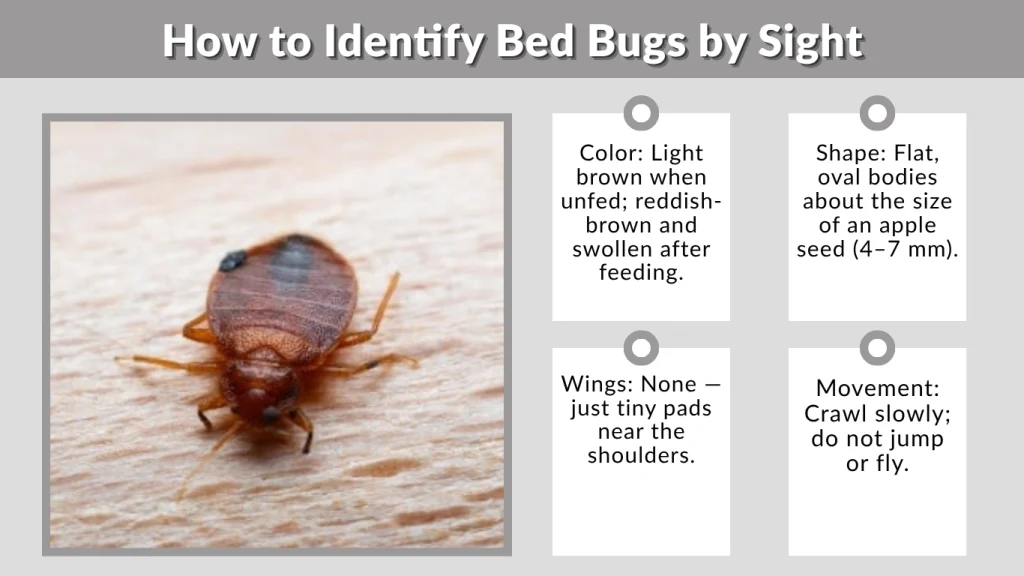
Physical Characteristics
- Color: Light brown when unfed; reddish-brown and swollen after feeding.
- Shape: Flat, oval bodies about the size of an apple seed (4–7 mm).
- Wings: None — just tiny pads near the shoulders.
- Movement: Crawl slowly; do not jump or fly.
Common Hiding Spots
- Mattress seams, box springs, and bed frames.
- Behind headboards, outlets, or wallpaper edges.
- Inside furniture joints or under carpet edges.
Regularly inspecting these areas can catch early infestations before they spread.
Preventing Bed Bug Infestations
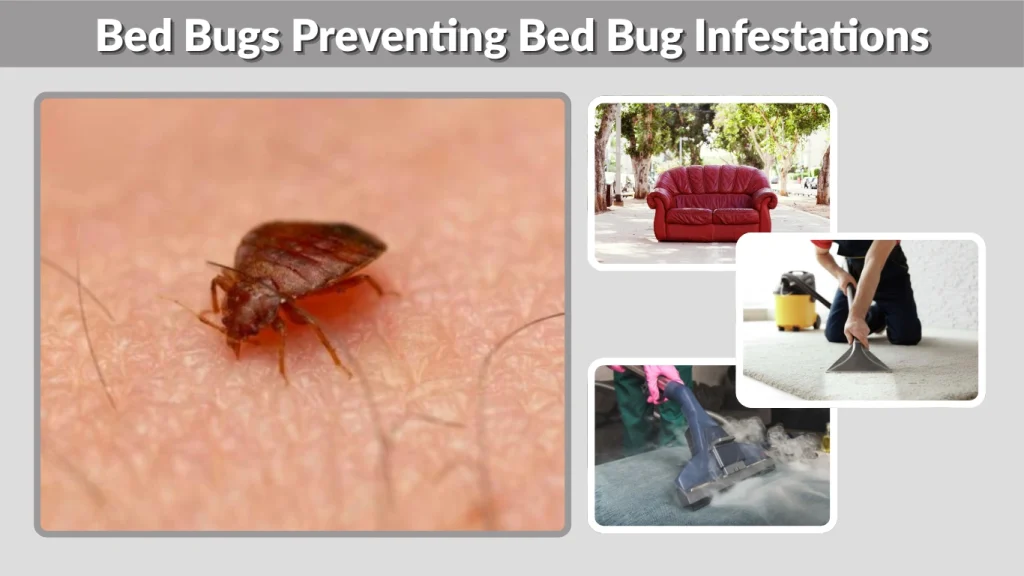
Inspection and Cleaning Tips
Prevention is key since bed bugs rely on human movement to spread.
- Inspect secondhand furniture thoroughly before bringing it home.
- Vacuum floors, rugs, and furniture regularly to remove stray bugs or eggs.
- Steam clean mattresses and sofas periodically.
- Wash bedding in hot water weekly, and dry on high heat for at least 30 minutes.
Travel Precautions
Hotels and public transport are common sources of bed bug transfer.
- Examine bed corners, mattress seams, and headboards before unpacking.
- Keep luggage elevated off the floor or bed.
- After returning home, wash and heat-dry clothes immediately.
- Store travel bags in sealed plastic containers when not in use.
Following these steps makes it far less likely that bed bugs will spread into your home.
FAQs
Can bed bugs fly or jump?
No, bed bugs cannot fly or jump. They crawl slowly and spread by hitchhiking on people’s belongings, such as clothing or furniture.
Do bed bugs have wings?
They have small wing pads but no functional wings. These are evolutionary leftovers that no longer serve a purpose.
What bugs are often mistaken for flying bed bugs?
Carpet beetles, bat bugs, and cockroach nymphs are common lookalikes. Carpet beetles can fly and are frequently found near windows or lights.
Can fly spray kill bed bugs?
Standard fly sprays do not work well against bed bugs. They may kill one on contact, but they cannot reach hidden clusters or eggs. Use bed bug–specific treatments instead.
How do bed bugs travel if they can’t fly?
They move by crawling and hitching rides on human items such as clothing, luggage, or furniture. Bed bugs rely entirely on human travel to spread between rooms or buildings.
