
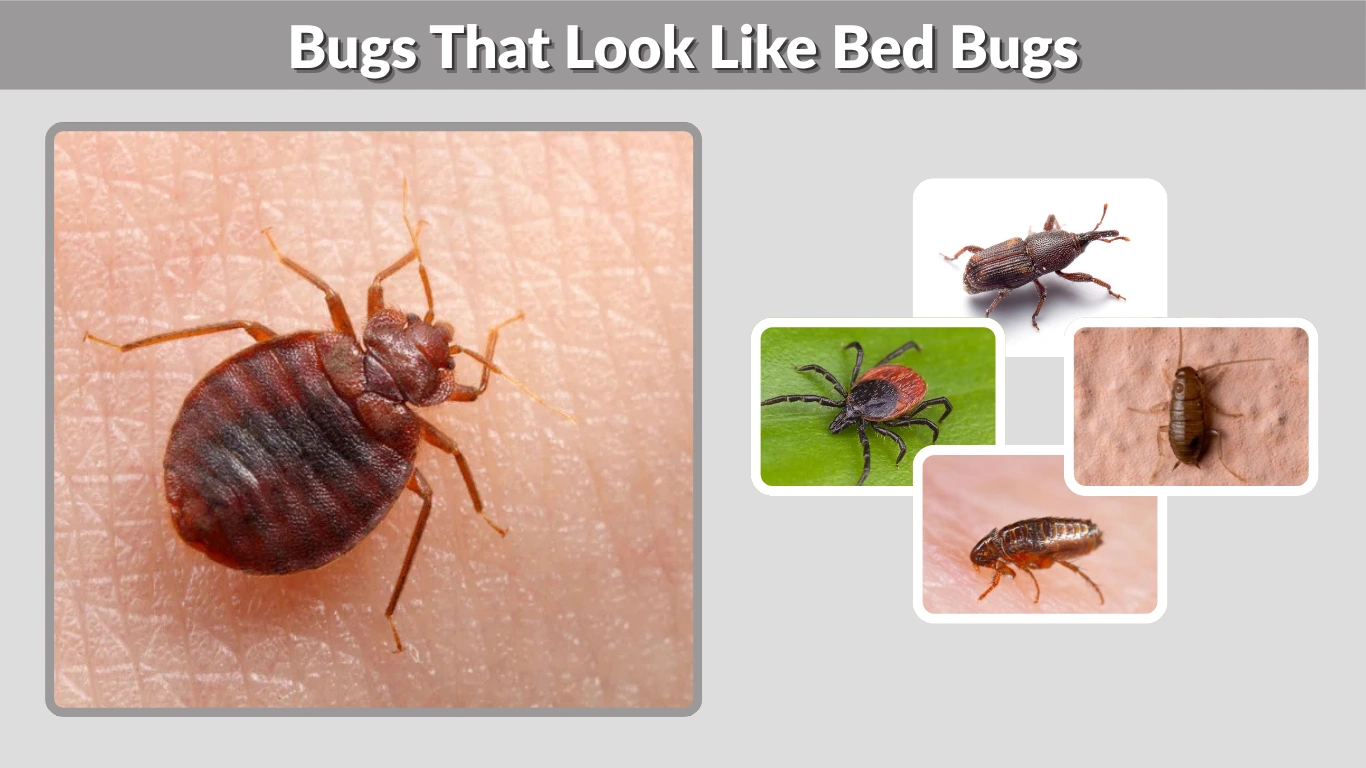
Discovering tiny reddish-brown bugs crawling near your bed can instantly trigger alarm. Most people assume they’re bed bugs, but surprisingly, many other insects look very similar. These bed bug look-alikes can cause confusion and lead to unnecessary panic or pest treatments.
Not every small, flat, brown insect hiding in your sheets is a bed bug. Some are harmless beetles, fleas, or even carpet beetles that don’t bite at all. The key is to identify them correctly so you can decide whether you need professional pest control or simple cleaning.
In this article, you’ll learn how to recognize true bed bugs, the common bugs that look like them, and the differences in shape, color, and behavior that will help you tell them apart.
What Real Bed Bugs Look Like
Physical Appearance
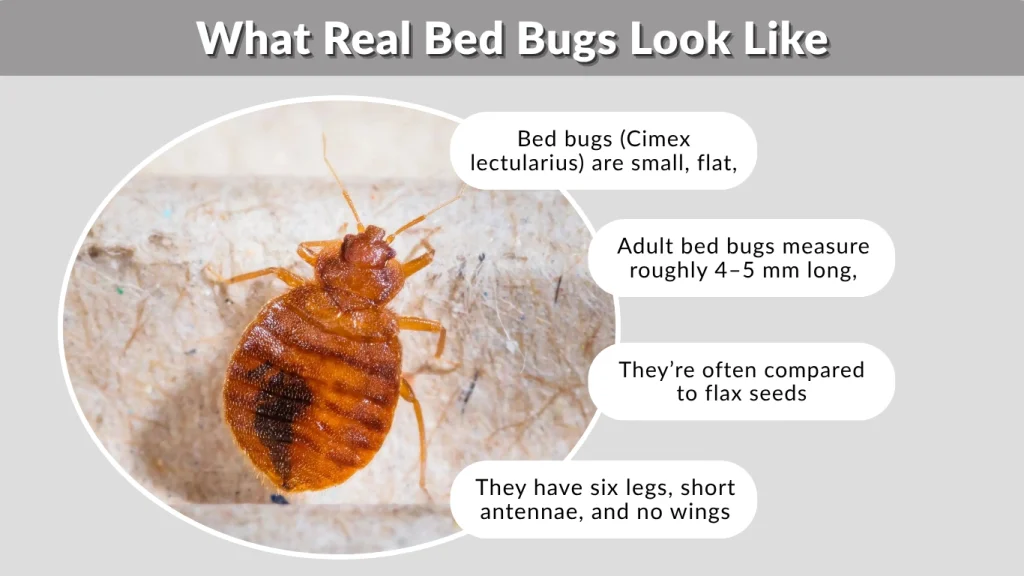
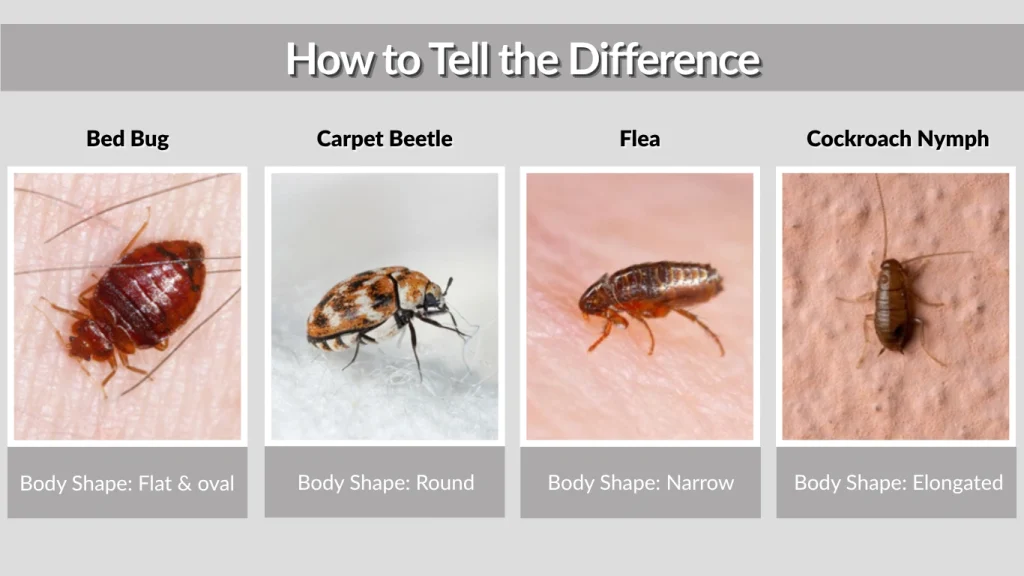
Bed bugs (Cimex lectularius) are small, flat, and oval insects about the size of an apple seed. Adult bed bugs measure roughly 4–5 mm long, with a reddish-brown color that darkens after feeding. They have six legs, short antennae, and no wings, so they can’t fly or jump.
Their shape is one of the easiest ways to identify them — flat and oval before feeding, but rounded and swollen afterward. Unlike beetles, they have soft, flexible bodies that flatten easily against surfaces.
Because of their color and size, they’re often compared to flax seeds or tiny cockroach nymphs, which makes them easy to misidentify at first glance.
Behavior and Habits
Bed bugs are nocturnal parasites that feed exclusively on blood. They usually bite humans while sleeping, leaving itchy red bumps or clusters of three to five marks in a row — often referred to as the “breakfast, lunch, and dinner” pattern.
They hide in small cracks near beds, furniture seams, baseboards, and electrical outlets. During the day, they stay hidden, and at night, they crawl out to feed. You may also notice:
- Tiny black dots (fecal spots) on bedding.
- Shed skins or translucent exoskeletons.
- A slightly musty odor from large infestations.
Knowing these details will help you distinguish true bed bugs from other harmless look-alikes.
Common Bugs That Look Like Bed Bugs
Carpet Beetles
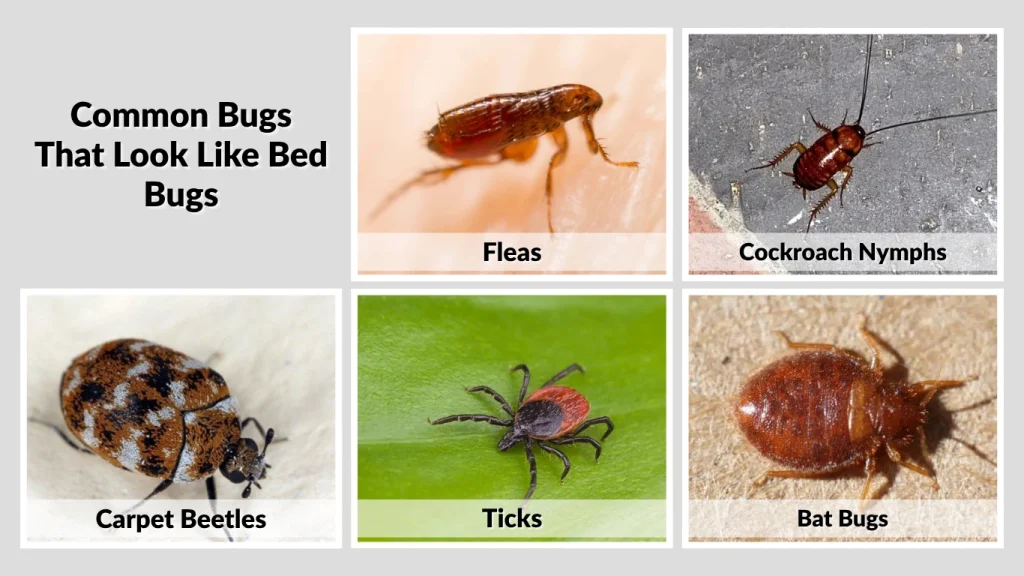
Carpet beetles are one of the most common insects mistaken for bed bugs. Adult carpet beetles are round or oval, covered in patterned scales that may appear brown, black, or white.
The real confusion happens with their larvae, which are small, hairy, and brownish — resembling bed bug nymphs at first glance. However, carpet beetles do not bite humans. The irritation or rash people experience from them comes from the hairs on their larvae, which can cause mild allergic reactions.
You’ll often find carpet beetles near windowsills, curtains, or inside closets — not in mattresses.
Key Difference: Carpet beetles feed on fabric, wool, and natural fibers, not blood.
Fleas
Fleas are another frequent culprit when people think they have bed bugs. These tiny, dark brown insects are about 1–3 mm long and have narrow, flattened bodies built for jumping.
While fleas and bed bugs both bite humans and pets, flea bites typically appear on the ankles or legs rather than the upper body. Fleas prefer to live on animals like cats or dogs and hide in carpets or pet bedding — rarely in human beds.
Key Difference: Fleas jump rather than crawl. Bed bugs crawl slowly and never jump or fly.
Cockroach Nymphs
Young cockroaches (called nymphs) are often mistaken for bed bugs because they are small, flat, and reddish-brown. However, there are clear differences once you look closely.
Cockroach nymphs have longer antennae and a more elongated shape, while bed bugs are rounder and flatter. They also move much faster and are usually found in kitchens, bathrooms, or under appliances, not near beds.
Key Difference: Cockroach nymphs prefer warm, moist areas and feed on crumbs or waste — they don’t bite humans or live in mattresses.
Ticks
Ticks can also look like bed bugs, especially before they’ve fed. They are small, round, and brownish, but after feeding, they become bloated and grayish. Unlike bed bugs, ticks attach themselves to skin and feed for hours or even days.
Ticks are typically found on pets, in tall grass, or wooded areas — not indoors. However, they can hitch a ride inside on animals or clothing.
Key Difference: Bed bugs bite and leave quickly, while ticks attach and stay. Ticks also have eight legs, whereas bed bugs have six.
Bat Bugs
Bat bugs are almost identical to bed bugs and can only be distinguished under a microscope. The key difference lies in the length of the fine hairs on their thorax — bat bugs have slightly longer ones.
They usually live near bats in attics or walls. If bats leave or are removed, these bugs may move into human living spaces.
Although bat bugs can bite humans, they cannot reproduce without their bat hosts, so infestations are typically temporary.
Key Difference: Bat bugs live near bat nests, not beds, and rarely establish permanent infestations in homes.
Other Insects Commonly Mistaken for Bed Bugs
Spider Beetles
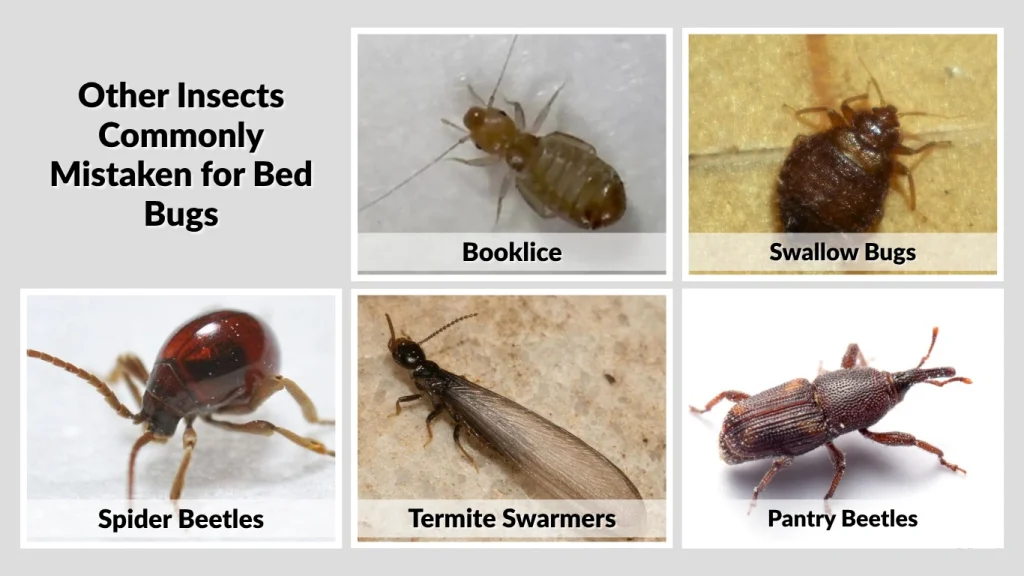
Spider beetles are tiny reddish-brown insects with rounded, shiny bodies that can look like bed bugs at first glance. However, they are actually a type of beetle that feeds on pantry goods like grains, cereals, and dried fruit.
Their round shape and size often cause confusion, but unlike bed bugs, spider beetles have a hard shell and longer legs, resembling a small spider. They do not bite humans and are mostly found in kitchens or storage areas rather than bedrooms.
Key Difference: Spider beetles feed on stored food, not blood, and are harmless to people.
Booklice (Psocids)
Booklice are tiny, translucent or gray insects that thrive in humid environments. They are often mistaken for bed bug nymphs because of their small size and pale bodies.
Unlike bed bugs, booklice do not bite or feed on blood. Instead, they consume mold, fungi, and damp organic material. You might spot them around windows, bookshelves, or bathrooms — anywhere with excess moisture.
Key Difference: Booklice prefer moist, moldy areas, while bed bugs hide in dry, dark spaces near beds.
Swallow Bugs
Swallow bugs are close relatives of bed bugs and appear nearly identical in shape and color. However, they typically feed on birds, especially swallows and pigeons. When birds abandon their nests, swallow bugs sometimes wander indoors in search of a new host.
While they can bite humans, these infestations are rare and short-lived since they rely on birds to reproduce.
Key Difference: Swallow bugs infest bird nests, not human sleeping areas.
Ants and Termite Swarmers
Winged ants and termite swarmers are sometimes mistaken for bed bugs, especially when their wings fall off. Both have segmented bodies and visible wings, whereas bed bugs are wingless.
Ants and termites are often found near wood, windows, or basements — not in mattresses or upholstery.
Key Difference: Bed bugs are flat and wingless; ants and termites have wings and segmented bodies.
Wood or Pantry Beetles
Flat brown beetles living in furniture or pantry products can resemble bed bugs. These insects are known as wood borers or flour beetles, and while they share a similar color, they are more elongated and shiny.
Key Difference: Pantry beetles infest stored food or wooden materials, never bedding or upholstery.
How to Tell the Difference
Key Identification Traits
Knowing where and how you find the bug is crucial. Each type of insect has its own behavior, movement, and habitat.
| Feature | Bed Bug | Carpet Beetle | Flea | Cockroach Nymph | Tick |
| Body Shape | Flat & oval | Round | Narrow | Elongated | Round |
| Movement | Crawls slowly | Crawls | Jumps | Runs fast | Crawls slowly |
| Wings | None | None | None | None | None |
| Bites Humans | Yes | No | Yes | No | Yes |
| Typical Location | Beds, furniture | Carpets, fabrics | Pets, rugs | Kitchens, bathrooms | Outdoors, on pets |
This simple comparison can quickly help you rule out look-alikes and identify true infestations.
Color and Size Differences
- Bed bugs: reddish-brown, flat, and soft-bodied.
- Beetles: shiny, hard shells, often patterned.
- Fleas: smaller, darker, and jump rather than crawl.
- Cockroach nymphs: longer, faster, and often found near food.
- Ticks: rounder, slower, and attached to skin or animals.
If you’re unsure, use a magnifying glass or take a clear photo under good lighting. Entomologists or pest professionals can confirm the identity quickly.
Bites and Skin Reactions That Look Like Bed Bug Bites
Flea and Mosquito Bites
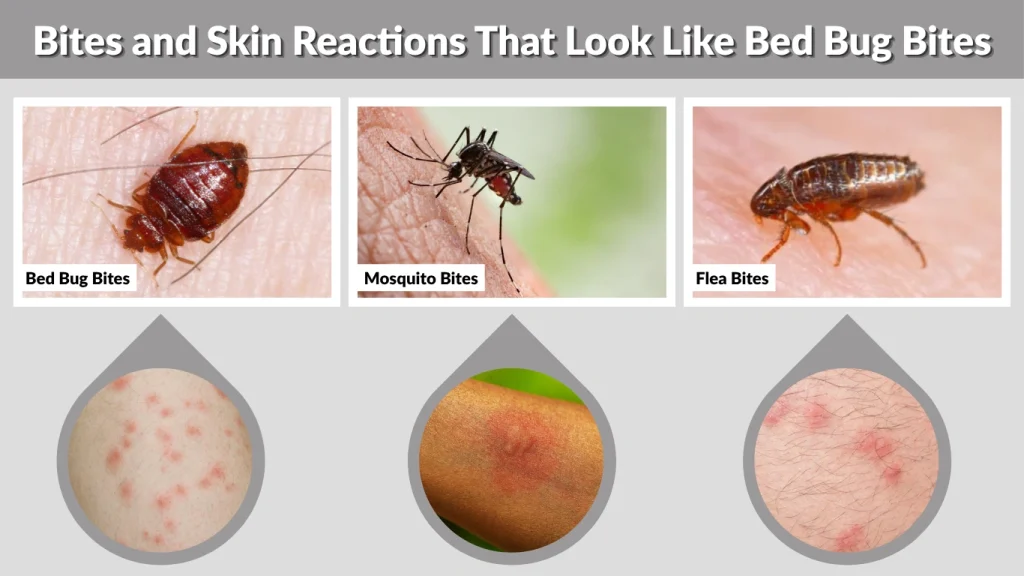
Flea bites and mosquito bites are often confused with bed bug bites. Flea bites appear as small red bumps with a dark center, often clustered around ankles or legs. Mosquito bites are larger and puffier, usually appearing randomly across the body.
Bed bug bites, on the other hand, usually show up in straight lines or small groups on exposed skin like arms, back, or neck.
Allergic Reactions and Skin Rashes
Sometimes, skin reactions or allergies can mimic bed bug bites. Hives, eczema, and allergic rashes may appear as red, itchy spots but lack the distinct “line pattern” bed bug bites have.
An allergic reaction to detergent or fabric can also cause small red bumps that look similar. If no other signs of bed bugs (like blood stains or fecal spots) are visible, bites are likely from another source.
Tip: Always look for multiple signs — not just bites — before assuming you have bed bugs.
Where to Find Bed Bug Look-Alikes in the Home
Common Hiding Spots
- Carpet beetles: window sills, closets, or rugs.
- Cockroach nymphs: under sinks, behind appliances, or near drains.
- Booklice: around damp windows, basements, or bookshelves.
- Bat bugs: attics, chimneys, or near ceiling corners.
Bed bugs, by contrast, hide in mattresses, bed frames, headboards, and behind electrical outlets.
Using Pictures for Identification
Visual comparison helps a lot. Photos of insects under magnification can reveal key differences like antennae, body shape, or color. Online pest control resources or local extension offices can provide accurate image references.
Prevention and Control Tips
Inspection and Cleaning
- Regularly inspect bedding, headboards, and furniture seams.
- Vacuum carpets and upholstery thoroughly.
- Wash and dry linens on high heat to kill potential pests.
- Seal cracks, baseboards, and wall gaps where insects may hide.
When to Call Professionals
If you can’t confirm what you’re seeing, or the infestation seems to spread, call a licensed pest control expert. They can identify whether it’s truly bed bugs or another species and apply the right treatment safely.
FAQs
What bug looks almost identical to a bed bug?
The bat bug looks nearly identical and requires microscopic examination to distinguish.
Can fleas or carpet beetles be mistaken for bed bugs?
Yes. Fleas jump and prefer pets, while carpet beetles live near fabrics — neither feeds on blood.
Do any bugs that look like bed bugs bite humans?
Only fleas, ticks, and bat bugs bite humans; the rest are harmless.
Are there flying bugs that look like bed bugs?
Some beetles or termite swarmers may look similar but have wings. Bed bugs are always wingless.
How can I confirm it’s bed bugs and not something else?
Look for multiple signs — blood stains, black fecal spots, shed skins, or live bugs — and get a professional inspection if unsure.
