
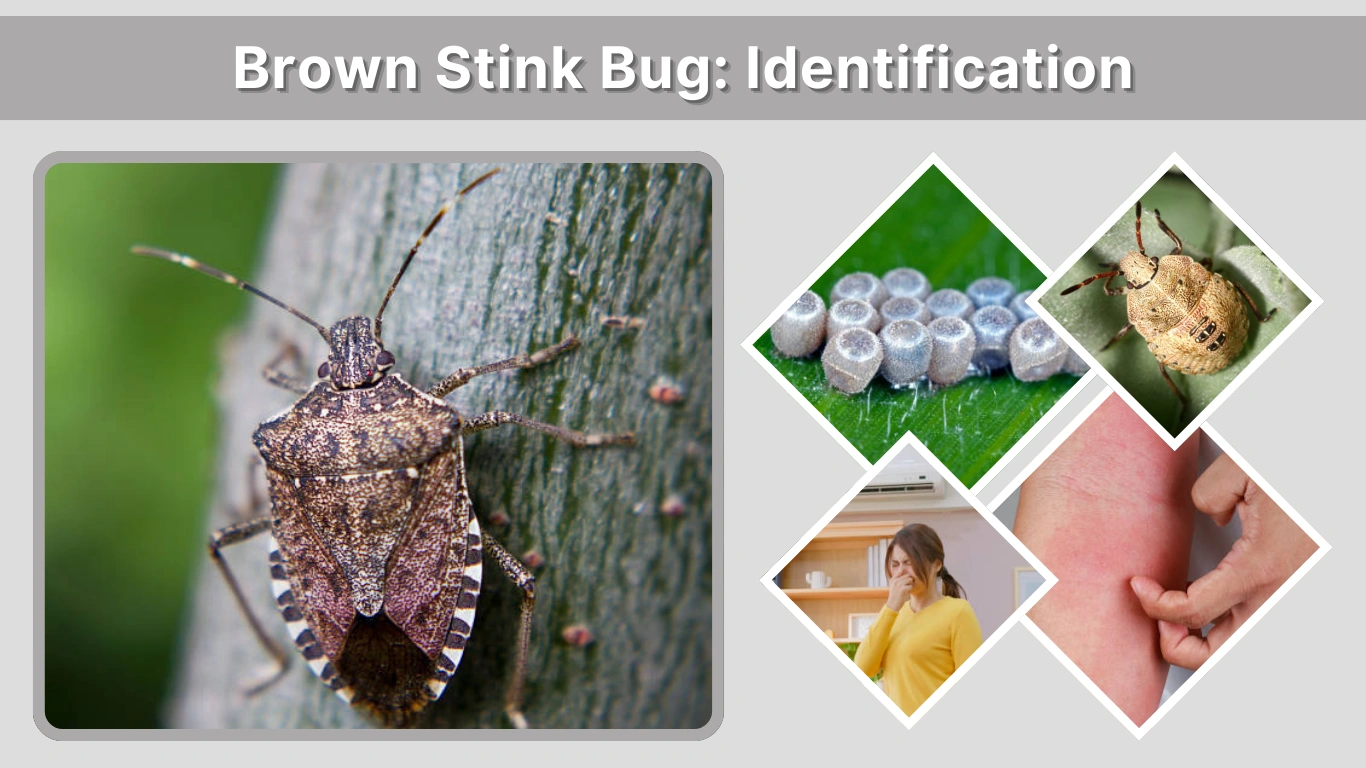
The brown stink bug is a common insect that has become a serious nuisance for homeowners and farmers alike. Known for its unpleasant odor and habit of invading houses during colder months, this pest is often encountered crawling on walls, clustering near windows, or flying indoors unexpectedly. While brown stink bugs are not dangerous in the traditional sense, their presence can be frustrating, especially when they appear in large numbers.
Originally native to East Asia, the brown stink bug has spread rapidly to many parts of the world, where it causes damage to crops and discomfort in homes. Understanding how to identify this insect, why it behaves the way it does, and what problems it can cause is the first step toward managing it effectively. This article explores what brown stink bugs are, how to recognize them, and how they live and behave throughout the year.
What Is a Brown Stink Bug?
The brown stink bug, scientifically known as Halyomorpha halys, is an invasive insect species belonging to the stink bug family (Pentatomidae). It is commonly referred to as the brown marmorated stink bug due to its marbled brown and gray coloring. Since its accidental introduction to new regions, the insect has spread rapidly, largely because it has few natural predators outside its native habitat.
Brown stink bugs feed on a wide variety of plants, fruits, and crops, using their piercing mouthparts to extract juices. This feeding behavior makes them particularly destructive in agricultural areas. In residential settings, they are mainly considered a nuisance pest, especially when they seek shelter indoors to survive colder temperatures.
Why Are They Called Stink Bugs?
Brown stink bugs get their name from the strong, unpleasant odor they release when threatened, crushed, or disturbed. This smell comes from chemicals produced in special glands located on their abdomen. The odor acts as a defense mechanism, helping deter predators such as birds and small mammals. Unfortunately for humans, this defensive smell can linger indoors and is one of the main reasons people want these insects removed quickly.
Brown Stink Bug Identification
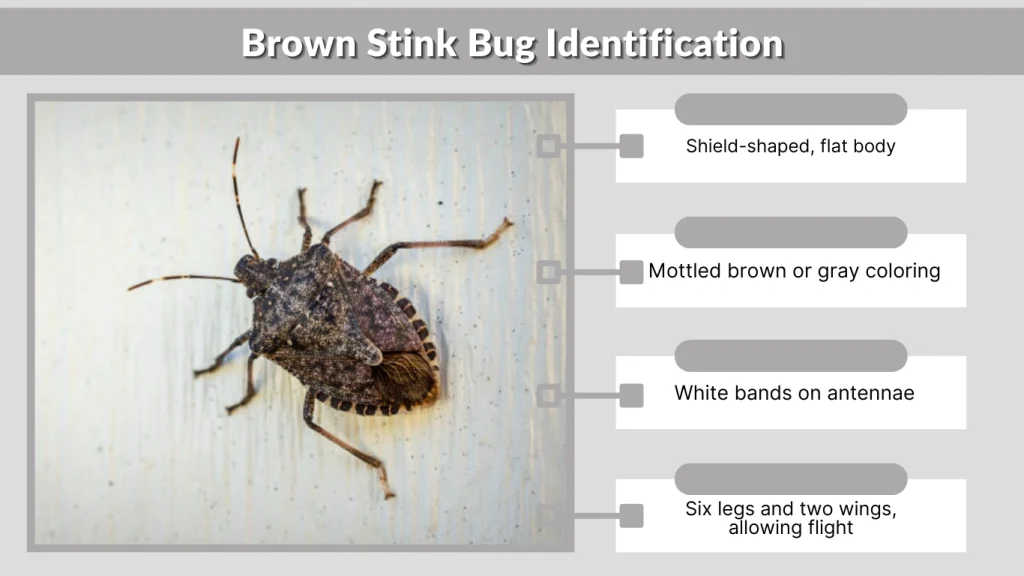
Correct identification is essential, as brown stink bugs are often confused with other similar insects. Adult brown stink bugs are relatively large compared to many household pests, typically measuring about half an inch long. Their bodies are shield-shaped, a defining feature of stink bugs in general.
Their coloration ranges from mottled brown to grayish brown, with subtle patterns that help them blend into tree bark and leaves. One of the most reliable identification features is the presence of white bands on the antennae and alternating light and dark bands along the edges of the abdomen.
Key Physical Characteristics
- Shield-shaped, flat body
- Mottled brown or gray coloring
- White bands on antennae
- Six legs and two wings, allowing flight
These features help distinguish brown stink bugs from beetles and other household insects that may look similar at first glance.
Brown Stink Bug vs Similar Species
Brown stink bugs are often mistaken for green stink bugs or other native stink bug species. Green stink bugs are usually brighter in color and lack the distinctive white banding found on brown stink bugs. Some harmless beetles may also resemble stink bugs but do not emit a strong odor when disturbed.
Brown Stink Bug Life Cycle
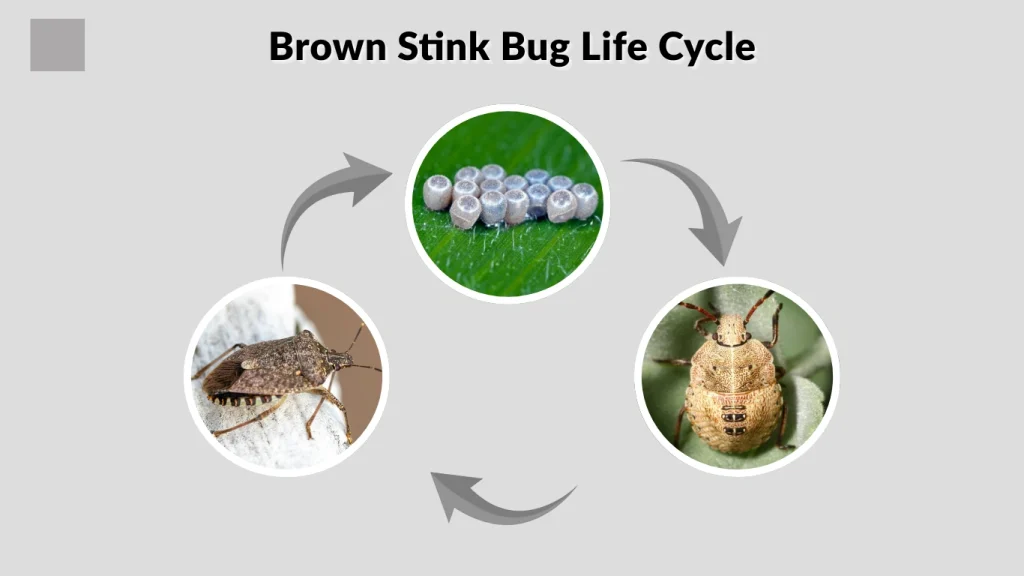
The life cycle of a brown stink bug consists of three main stages: egg, nymph, and adult. Understanding this cycle helps explain why infestations can seem sudden and severe.
Eggs and Nymph Stages
Female brown stink bugs lay clusters of small, light-colored eggs on the undersides of leaves during warmer months. Once hatched, the young insects, called nymphs, go through several growth stages. Nymphs look similar to adults but are smaller and often display brighter colors such as red, orange, or black during early stages.
Adult Stage
As nymphs mature, they develop wings and become fully grown adults. Adult brown stink bugs can live several months and may produce multiple generations per year in favorable climates. As temperatures drop, adults seek shelter indoors, which is when most homeowners begin noticing them.
Habitat and Seasonal Behavior
During spring and summer, brown stink bugs live outdoors, commonly found on trees, crops, gardens, and ornamental plants. They are especially attracted to fruit-bearing plants and vegetables. As autumn approaches and temperatures decline, these insects actively search for warm, protected spaces to overwinter.
Homes provide ideal shelter, which is why brown stink bugs often enter through cracks, gaps around windows, and poorly sealed doors. Once inside, they may hide in walls, attics, or behind furniture until warmer weather returns.
Are Brown Stink Bugs Harmful to Humans?
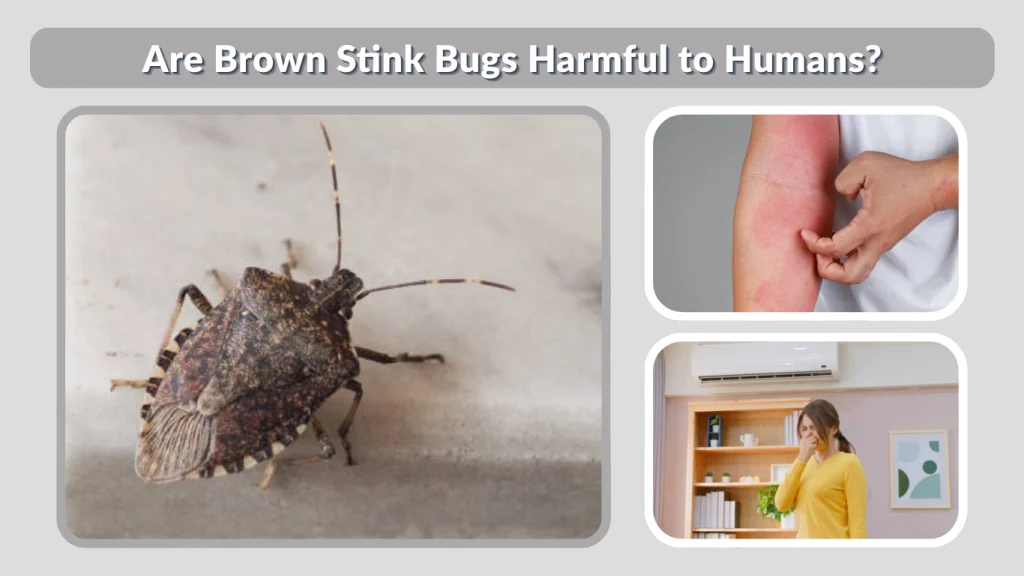
Brown stink bugs are not considered dangerous to humans, but they can still cause discomfort. They do not transmit diseases, and they are not aggressive insects. However, their presence indoors can be unsettling, especially when large numbers appear suddenly.
Do Brown Stink Bugs Bite?
Brown stink bugs do not normally bite humans. In rare cases, a stink bug may pierce the skin if it feels trapped or handled roughly, but this is uncommon. If a bite does occur, it may cause minor irritation similar to a small insect sting, which usually resolves without medical treatment. Some individuals may experience mild allergic reactions to the chemicals released by the bug, especially when it emits its odor.
Damage Caused by Brown Stink Bugs
Although brown stink bugs pose little risk to people, they can cause significant damage to plants and crops. Their feeding habits make them a serious agricultural pest in many regions.
Brown stink bugs use needle-like mouthparts to pierce fruits, vegetables, and stems, extracting plant juices. This feeding damages plant tissue and often leaves behind scars, deformities, or rot. Commonly affected crops include apples, peaches, corn, soybeans, tomatoes, and peppers. The damage not only reduces crop quality but can also lead to major economic losses for farmers.
Problems in Homes
Inside homes, brown stink bugs do not cause structural damage. However, they can become a major nuisance. When crushed or disturbed, they release a strong odor that can linger on furniture, curtains, and carpets. Their tendency to gather near windows and light sources also makes them highly visible, increasing frustration for homeowners.
Signs of a Brown Stink Bug Infestation
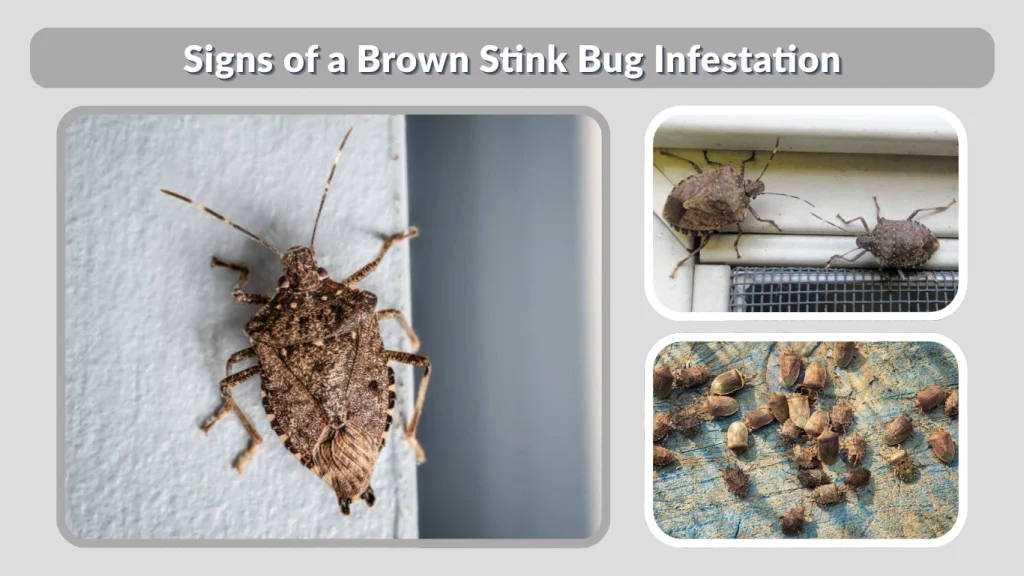
One of the clearest signs of a brown stink bug infestation is the frequent appearance of bugs indoors, particularly in the fall. Homeowners may notice them crawling along walls, ceilings, or window frames. Another common sign is the unpleasant odor released when the insects are disturbed or accidentally crushed.
In agricultural or garden settings, damaged fruit, discolored leaves, and reduced crop quality may indicate the presence of brown stink bugs.
How to Get Rid of Brown Stink Bugs
Eliminating brown stink bugs requires a combination of immediate removal and long-term management. Because they are resilient insects, no single method works perfectly in every situation.
Natural and Home Remedies
One of the most effective home methods is using a mixture of water and dish soap. Spraying or dropping stink bugs into soapy water kills them without releasing as much odor. Vacuuming is another common solution, especially for indoor infestations. When using a vacuum, it is best to empty the contents immediately to prevent lingering smells.
Some homeowners also use essential oils, such as peppermint or clove oil, as natural repellents. While these may help deter stink bugs temporarily, they are generally not a permanent solution.
Chemical Control Options
Commercial insecticides labeled for stink bug control can be effective, particularly when applied around entry points such as doors, windows, and exterior walls. In severe infestations, professional pest control services may be necessary to manage the problem safely and effectively.
What You Should Avoid
Crushing brown stink bugs indoors should be avoided whenever possible, as this releases their odor and may attract more bugs. Using unproven DIY remedies or excessive chemicals can also be ineffective and potentially harmful.
How to Prevent Brown Stink Bugs from Entering Your Home
Prevention is the most effective way to manage brown stink bugs. Sealing cracks and gaps around windows, doors, siding, and utility openings can significantly reduce their ability to enter your home. Installing weather stripping and repairing damaged screens also helps block common entry points.
Reducing outdoor attractants is another important step. Turning off exterior lights at night or using yellow bulbs can make your home less appealing to these insects. Keeping vegetation trimmed away from the house further reduces the chances of infestation.
Conclusion
Brown stink bugs are a widespread and persistent pest that can cause frustration for homeowners and serious damage to crops. While they are not dangerous to humans, their odor, seasonal invasions, and agricultural impact make them a problem worth addressing. By understanding how to identify brown stink bugs, recognizing signs of infestation, and applying effective removal and prevention strategies, it is possible to reduce their presence and limit the problems they cause. Early action and proper home maintenance remain the best defenses against recurring infestations.
FAQs
Do Brown Stink Bugs Fly?
Yes, brown stink bugs can fly, and they often do so when searching for food, shelter, or mates. Their ability to fly is one reason they can suddenly appear indoors, especially near windows and light sources.
Why Do Brown Stink Bugs Enter Homes in Winter?
Brown stink bugs enter homes to escape cold outdoor temperatures. As fall approaches, they look for warm, sheltered places to overwinter, and houses provide ideal hiding spots such as wall voids, attics, and basements.
How Long Do Brown Stink Bugs Live?
Brown stink bugs typically live between six and eight months, depending on environmental conditions. In warmer climates, they may produce multiple generations per year, increasing their population quickly.
What Attracts Brown Stink Bugs to Houses?
Brown stink bugs are attracted to warmth, light, and sheltered areas. Cracks around windows, doors, and siding provide easy entry points, while exterior lights can draw them closer to the home at night.
Will Brown Stink Bugs Go Away on Their Own?
Brown stink bugs may disappear temporarily once warmer weather arrives, but they often return year after year if entry points are not sealed. Without proper prevention, infestations are likely to repeat each fall.
