
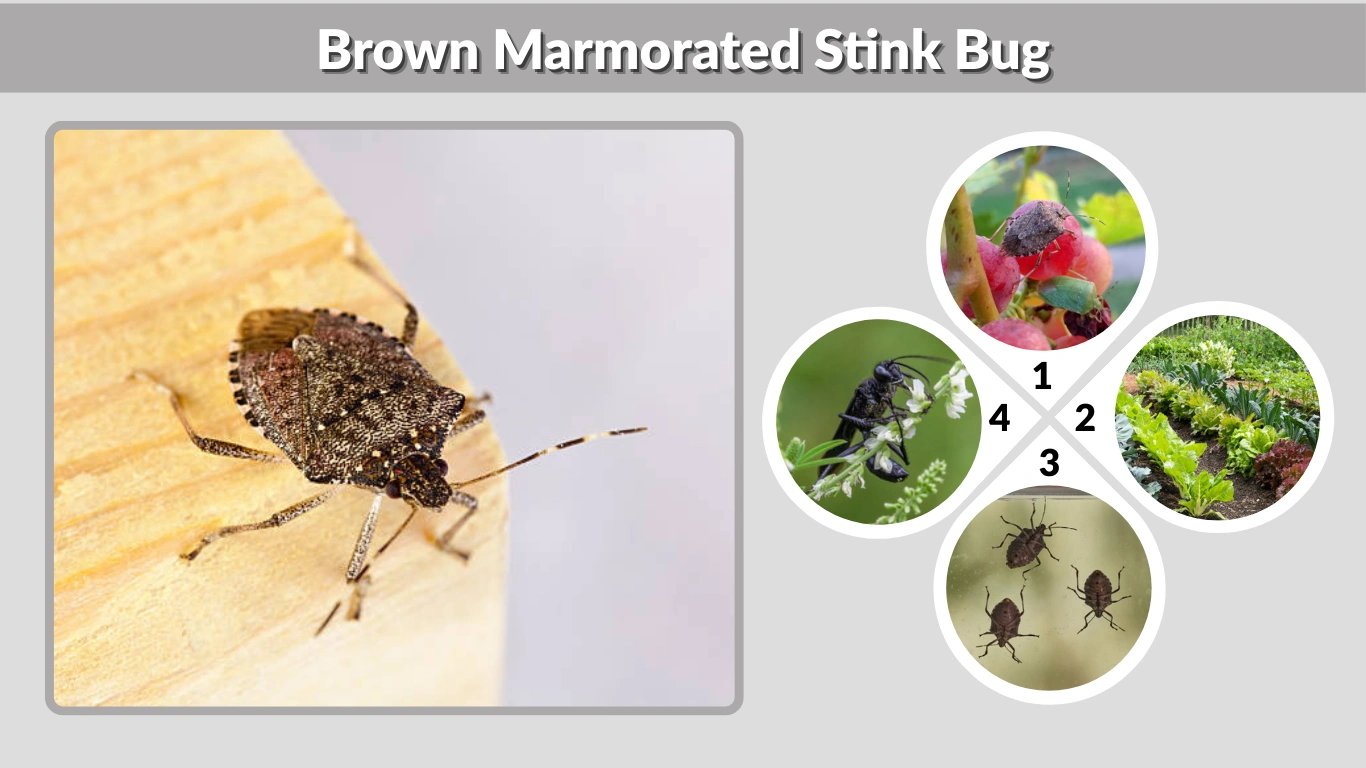
The brown marmorated stink bug (Halyomorpha halys) is an invasive agricultural pest known for damaging crops, invading homes, and releasing a strong odor when threatened. Native to Asia but now widespread across North America, Europe, and Australia, this species has become one of the most destructive plant-feeding insects. Understanding its identification, behavior, life cycle, risks, and control methods is essential for homeowners, gardeners, and growers facing increasing infestations.
Identification
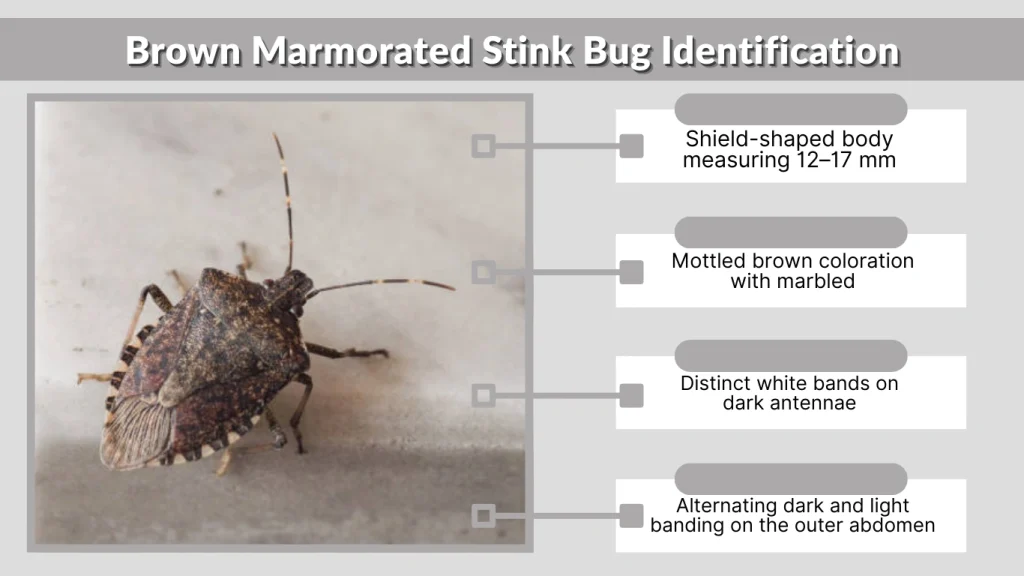
- Shield-shaped body measuring 12–17 mm
- Mottled brown coloration with marbled “marmorated” patterns
- Distinct white bands on dark antennae
- Alternating dark and light banding on the outer abdomen
- Smooth, rounded shoulders unlike some native stink bugs
- Adults emit a pungent odor when disturbed
- Egg masses: pale green, barrel-shaped clusters on leaf undersides
- Nymphs: rounded, bright patterned early instars turning brown as they mature
- Males vs females: females slightly larger with broader abdomen
Description & Classification
The brown marmorated stink bug is a true bug belonging to the order Hemiptera, family Pentatomidae. Its scientific name is Halyomorpha halys. The species is recognized for its mottled brown appearance, shield-shaped body, and foul-smelling chemical defense. Unlike beetles, it has piercing-sucking mouthparts used to feed on plant juices rather than chewing tissue.
Taxonomically, the stink bug falls under:
- Order: Hemiptera
- Class: Insecta
- Family: Pentatomidae
- Genus: Halyomorpha
- Common name: Brown marmorated stink bug
- Type: Invasive agricultural and household pest
Native to China, Japan, and Korea, the bug has established thriving populations globally due to its adaptability, rapid reproduction, and strong overwintering survival.
Species Range & Distribution
Since its accidental arrival in the late 1990s, Halyomorpha halys has spread across the United States, Canada, Europe, South America, and Australia. In the U.S., it is now found in more than 45 states including Illinois, California, Oregon, Washington, Georgia, Michigan, Minnesota, Massachusetts, Indiana, Iowa, and Colorado.
In Canada, it is established in British Columbia and spreading eastward. Australia treats the species as a high-level biosecurity threat, requiring strict fumigation of incoming cargo during peak seasons. The insect travels easily by hiding in vehicles, shipping containers, packing materials, produce, and outdoor equipment.
Because adults overwinter inside sheltered places, they unintentionally disperse long distances when transported in homes, goods, or luggage.
Habitat
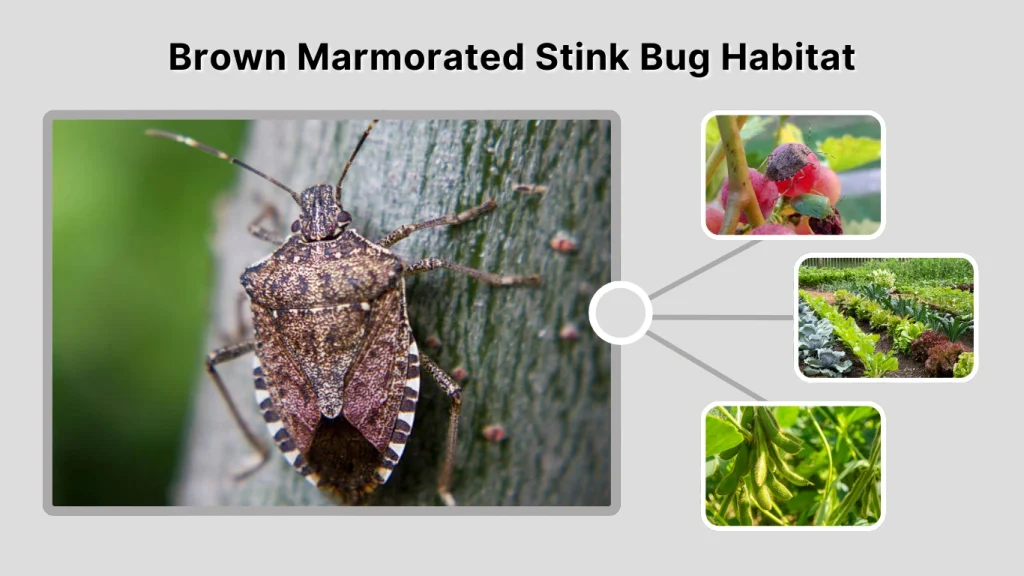
Brown marmorated stink bugs thrive in a variety of habitats including:
- Orchards and fruit farms
- Vegetable gardens
- Soybean, corn, and other field crops
- Wooded edges and hedgerows
- Residential landscapes
- Human structures used for overwintering
They prefer warm, humid summers for reproduction and rely on sheltered indoor spaces—attics, wall voids, sheds, and barns—to survive winter. Their ability to occupy both natural and artificial environments contributes to their rapid global invasion.
Diet (What They Eat)
This species is a highly polyphagous feeder, meaning it consumes a wide variety of plants. Using a needle-like mouthpart, it pierces fruit, leaves, and stems to suck out plant juices. Its diet includes:
- Apples, peaches, pears, cherries, and other fruit
- Tomatoes, peppers, sweet corn, green beans, and many vegetables
- Grapes and berries
- Soybeans and other row crops
- Ornamental plants such as maples, butterfly bush, and viburnum
Feeding causes dimpling, corking, discoloration, and deformities in fruits and vegetables. Large populations can devastate harvests, making the insect a major threat to commercial agriculture.
Behavior
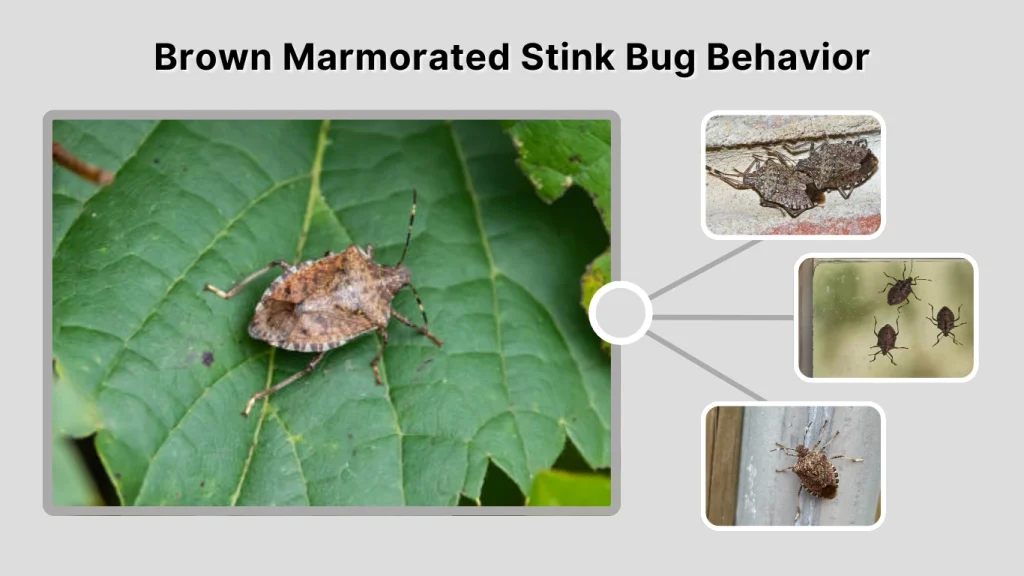
Brown marmorated stink bugs exhibit several behaviors that make them especially difficult to manage:
Overwintering in Homes
In autumn, adults search for dry, warm, protected spaces. They gather on sunlit walls and slip through cracks into attics, crawlspaces, and wall cavities. Indoors, they remain dormant but become active during warm spells.
Aggregation Behavior
BMSB use pheromones to attract other stink bugs, leading to large clusters on buildings or plant hosts.
Defensive Odor Release
When threatened or crushed, they emit a pungent scent from specialized glands. The odor deters predators and makes indoor infestations particularly unpleasant.
Flight & Light Attraction
Adults are strong fliers and frequently drawn to lights at night, contributing to household invasions and long-distance travel via vehicles.
Life Cycle & Instars
The brown marmorated stink bug completes its life cycle through the stages of egg, nymph, and adult. Females lay clusters of 20–30 pale green eggs on the underside of leaves. Eggs hatch in 4–7 days depending on temperature.
Nymphs progress through five instars, each stage increasing in size and changing in coloration. Early instars display bright red, black, and white patterns, while later instars become more mottled and brown. Nymphs cannot fly but move rapidly between plant hosts.
Adults emerge in late summer and may live for several months. In warm regions, the species can produce two generations per year. Adults seek overwintering sites in fall and emerge again in spring to reproduce.
Bite, Safety & Human Health
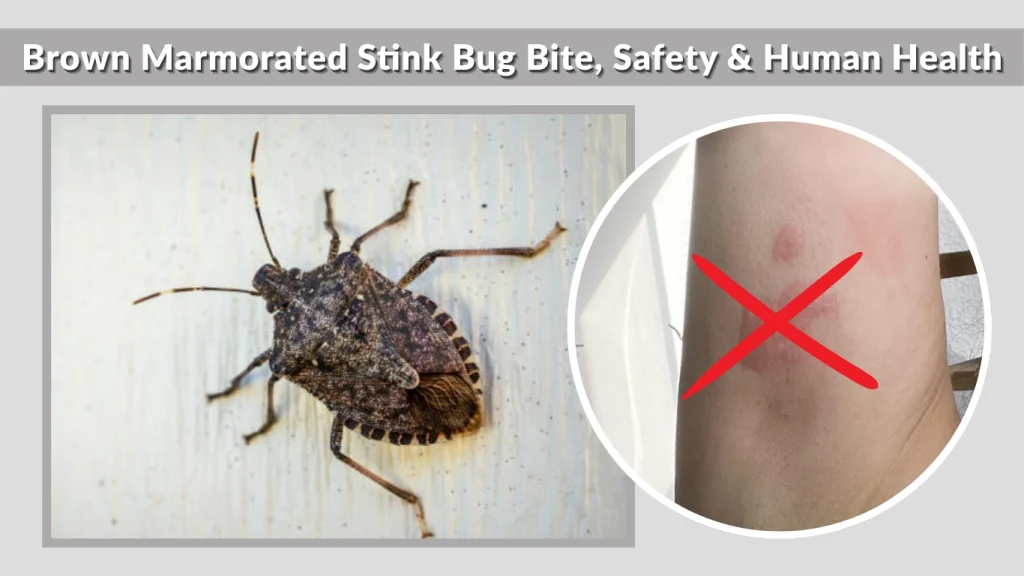
Brown marmorated stink bugs do not bite humans. They lack chewing mouthparts and cannot pierce skin in the way that assassin bugs or mosquitoes can. Some people report a mild “pinch” sensation when handling them, but this is due to their legs—not a true bite.
They are not poisonous, not venomous, and not dangerous to humans or pets. The primary risk is the strong odor they release, which can cause mild irritation in sensitive individuals but is not harmful.
Plant Damage & Economic Impact
Brown marmorated stink bugs cause significant agricultural damage due to their piercing-sucking feeding method. When they feed on fruits such as apples, peaches, pears, and cherries, the tissue beneath the skin collapses, creating cork-like spots, pits, and internal browning. Vegetables such as tomatoes and peppers develop sunken, deformed areas after feeding. In grapes, feeding can alter sugar levels, affecting wine quality.
On a large scale, infestations result in reduced marketability, crop rejection, and expensive pest management requirements. The U.S. agricultural industry has reported millions of dollars in losses each year, particularly in orchards and vineyards. Soybean producers also experience damage from pod feeding, which can lower yields. Because the insect feeds on more than 300 plant species, growers experience widespread risk year after year.
Ecosystem Impact
As an invasive species, Halyomorpha halys disrupts native ecosystems. They compete with native stink bugs for food and habitat, reducing biodiversity. Their rapid reproduction and lack of natural predators allow populations to grow unchecked in many areas. When large numbers overwinter inside human structures, they may alter indoor micro-ecosystems by attracting predators such as spiders or rodents.
Their constant movement between wild and cultivated plants allows them to spread rapidly across landscapes. This mobility means they can introduce plant stress to multiple habitats, contributing to broader ecological imbalance. The lack of natural control agents in many regions further intensifies their impact.
Predators of the Brown Marmorated Stink Bug
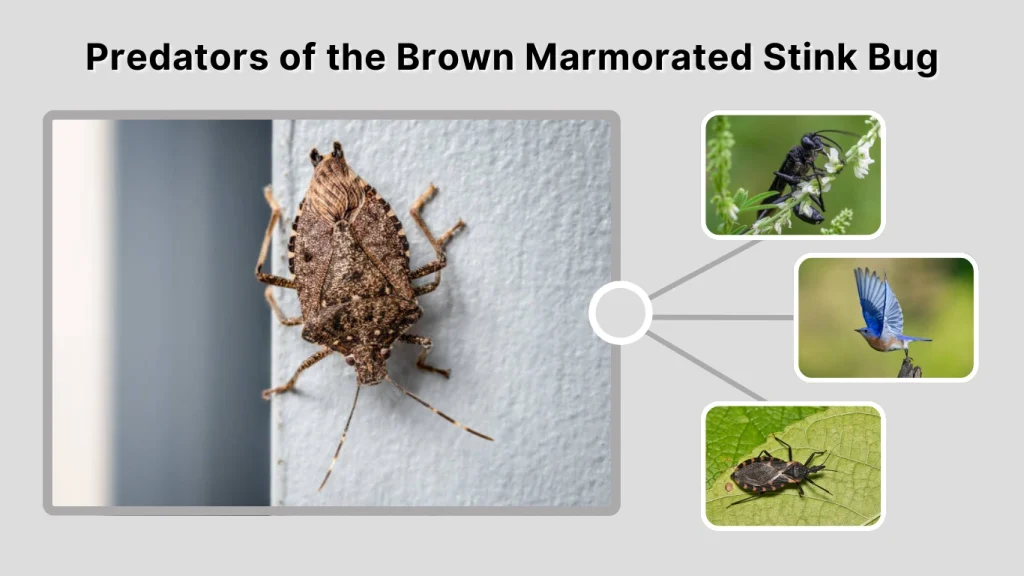
Although the species has few effective predators outside its native range, several animals feed on it:
- Samurai wasp (Trissolcus japonicus) – parasitizes BMSB eggs
- Birds – though limited due to the insect’s odor
- Parasitic flies
- Assassin bugs
- Spiders
- Predatory beetles
The samurai wasp has shown the most potential in biological control programs. It locates and parasitizes stink bug eggs, preventing nymphs from hatching. Several regions now encourage conservation of this beneficial insect.
Stink Bug Look-Alikes (Dangerous & Harmless)
Table: Brown Marmorated Stink Bug vs Look-Alike Species
| Species | Key Differences | Danger Level |
| Western Conifer Seed Bug | Longer hind legs, leaf-like expansions | Harmless |
| Native Brown Stink Bug | No white antenna banding | Harmless |
| Assassin Bug | Elongated head, strong bite | Potentially dangerous |
| Boxelder Bug | Red lines on black body | Harmless |
| Squash Bug | Thinner body, orange edging | Plant pest but harmless to humans |
This section helps prevent misidentification, especially when confusing BMSB with the biting assassin bug.
Home Infestations & Indoor Behavior
During autumn, adults gather on the sunlit sides of houses before squeezing through cracks, window gaps, soffits, vents, and chimneys. Once inside, they seek dark and protected areas such as attics, closets, basements, and wall voids. In warm spells, they may become active again and fly around interiors searching for light sources.
Although not harmful, indoor infestations create annoyance due to large numbers and their strong odor when disturbed. They do not breed indoors; reproduction only occurs outdoors during the growing season. Eliminating cracks and sealing entry points is essential for long-term prevention.
Control & Management Methods
Chemical Control
- Pyrethroid-based insecticides for perimeter treatments
- Agricultural sprays targeting fruit and vegetable crops
- Residual treatments applied to exterior walls
- Should be used cautiously to protect beneficial insects
Biological Control
- Samurai wasp release and conservation
- Encouraging predators like spiders and predatory beetles
- Habitat adjustments to support natural enemies
Mechanical / Physical Control
- Vacuuming indoor bugs (use a bagged vacuum to avoid odor)
- Removing stink bugs with tissue without crushing
- Installing window screens, door sweeps, and weather stripping
- Sticky traps around entry points
Cultural Control
- Adjusting crop timing
- Planting trap crops such as sunflowers or sorghum
- Removing overwintering structures near homes
How to Get Rid of Brown Marmorated Stink Bugs
Removing BMSB requires a combination of methods. Indoors, collect bugs by gently guiding them into containers of soapy water. Vacuuming works well but may cause residual odor inside the machine. Avoid crushing them on surfaces to prevent staining and smell.
Natural repellents such as garlic sprays, mint oil, neem oil, and dish soap solutions can help discourage entry. Outdoors, reducing weeds, trimming vegetation, and limiting exterior night lighting can significantly reduce attraction. For heavy infestations, commercially available pheromone traps help gather and capture large numbers.
Prevention Strategies
- Seal gaps around windows, doors, vents, and utility openings
- Install tight-fitting screens and weather stripping
- Use silicone or expanding foam to close cracks
- Turn off outdoor lights at night or switch to yellow bulbs
- Store firewood away from home exteriors
- Maintain clean gardens and remove plant debris
Preventative actions significantly reduce the likelihood of fall invasions.
Eggs, Nymphs & Development
Females lay clusters of 20–30 green eggs on the underside of leaves. These eggs hatch into nymphs with striking red, black, and white coloration. As they pass through five instars, they become increasingly brown and larger, eventually resembling small adults.
The species does not have a larvae stage—true bugs undergo incomplete metamorphosis. Identifying egg masses early is a crucial step in reducing future populations, especially in gardens and orchards.
Stink Bug Odor & Smell
The odor comes from specialized glands that release a foul-smelling chemical mixture when the insect is threatened. This scent deters predators and helps the bug survive. Indoors, odor can linger on fabrics or walls if bugs are crushed.
Neutralizing smell involves cleaning surfaces with a mix of vinegar and mild detergent. Preventing the insects from being crushed is the most effective way to avoid odor entirely.
FAQ
Do brown marmorated stink bugs bite?
No. They do not bite humans and cannot pierce skin. Any sensation of being “pinched” usually comes from their legs when handled. They are not harmful, venomous, or medically significant. Their main defense is odor, not biting.
Are they dangerous or harmful to humans?
They are not dangerous. They do not transmit diseases, do not bite, and are not toxic to pets. The primary nuisance is odor and indoor invasions. Some people may experience mild irritation from the smell, but this is uncommon.
How do I get rid of brown marmorated stink bugs in my house?
Use a combination of vacuuming, soapy water traps, and gentle manual removal. Seal cracks and gaps to prevent new entry, reduce outdoor lighting, and install proper screens. Avoid crushing bugs to prevent odor release.
What do brown marmorated stink bugs eat?
They feed on fruits, vegetables, field crops, and ornamental plants by piercing plant tissue and extracting juices. Common targets include apples, tomatoes, peppers, grapes, and soybeans. Feeding causes deformities and significant crop loss.
Why do brown marmorated stink bugs smell bad?
The smell comes from a defensive chemical spray released when the insect is stressed or crushed. This odor helps repel predators. The scent can linger on surfaces, making gentle removal essential when dealing with indoor bugs.
