
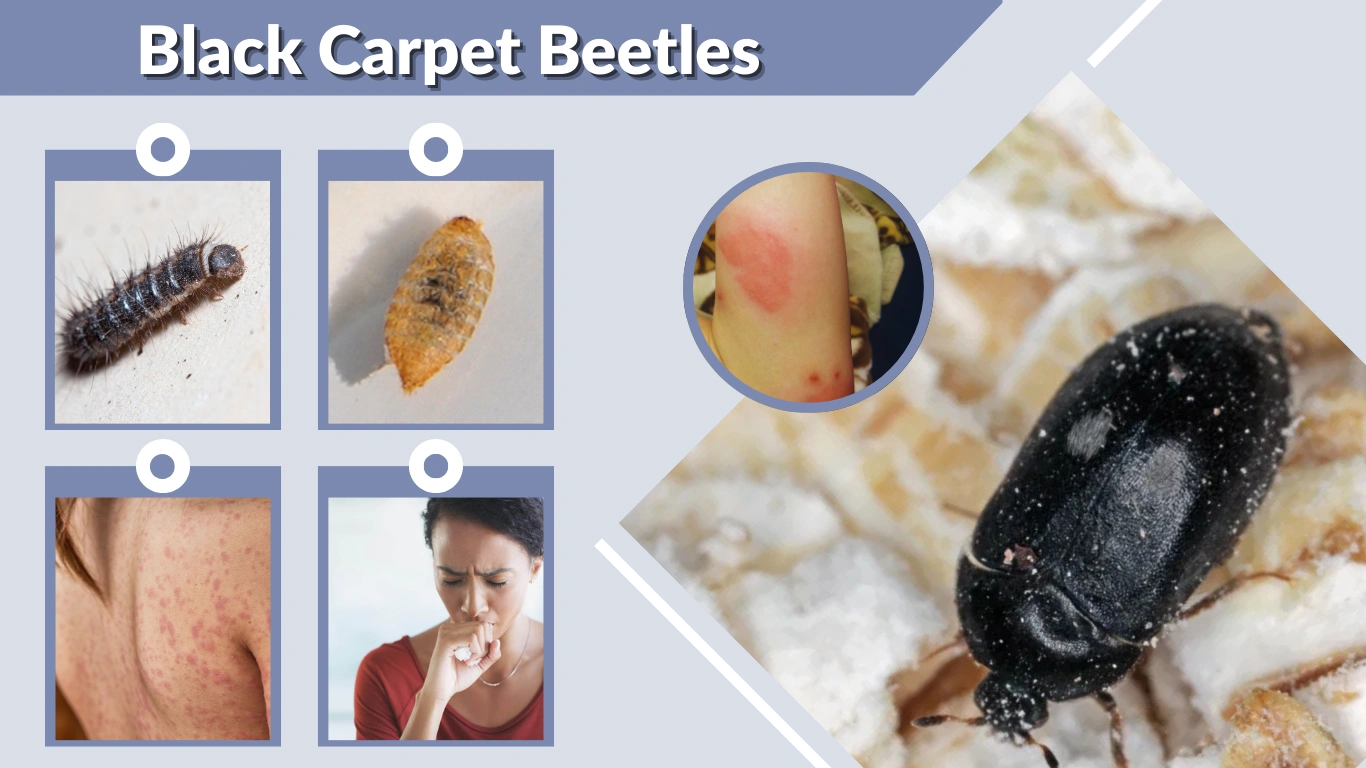
Black carpet beetles are one of the most common household pests, often overlooked until they cause noticeable damage. Unlike bed bugs or termites, these beetles feed on fabrics, animal-based products, and stored goods, making them a nuisance in homes, cars, and even storage areas. Their destructive larvae can ruin clothing, upholstery, and carpeting, leaving behind telltale signs of infestation. Understanding their identification, life cycle, and health impact is crucial for effective control.
General Identification of Black Carpet Beetles
What Are Black Carpet Beetles?
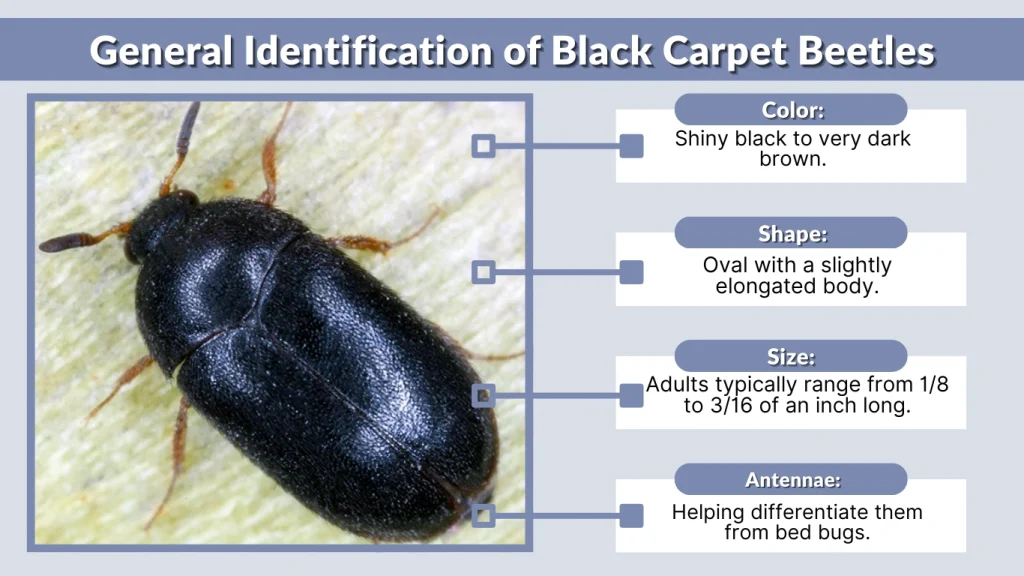
Black carpet beetles (Attagenus unicolor) belong to the family Dermestidae, which includes several fabric-damaging species. They are small, oval-shaped insects that can appear black or very dark brown, leading to frequent misidentification with other household pests.
Key Features for Identification
- Color: Shiny black to very dark brown.
- Shape: Oval with a slightly elongated body.
- Size: Adults typically range from 1/8 to 3/16 of an inch long.
- Antennae: Clubbed at the ends, helping differentiate them from bed bugs.
Black carpet beetles differ from “carpet beetles black and white” species such as the varied carpet beetle, which has patterned scales. When someone asks, “what is a black carpet beetle?”, the answer lies in these distinct traits. Recognizing them early helps prevent widespread damage.
Appearance & Size of Black Carpet Beetles
How Big Are Black Carpet Beetles?
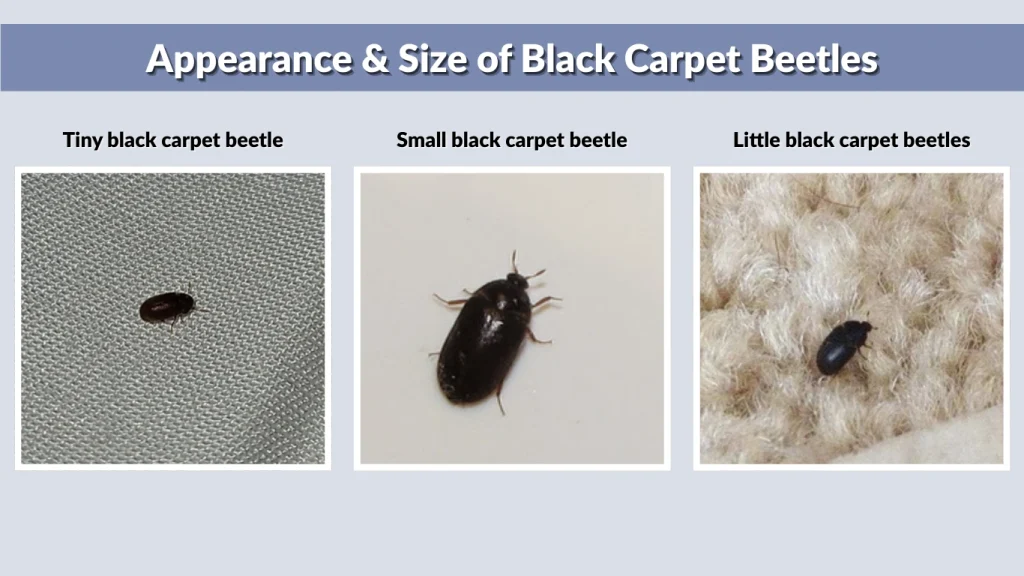
The size of black carpet beetles depends on their life stage. Adult beetles are small but visible to the naked eye, typically measuring around 3–5 millimeters. Larvae, on the other hand, can grow longer—sometimes exceeding the adults in length.
Size Variations Explained
- Tiny black carpet beetle: Refers to newly emerged adults or smaller specimens.
- Small black carpet beetle: A general description used by homeowners when spotting adults.
- Little black carpet beetles: Often refers to infestations where multiple small adults are seen together.
For comparison, bed bugs are broader and reddish-brown, whereas black carpet beetles are slimmer and shiny. Understanding black carpet beetle size comparison helps homeowners identify the culprit correctly.
Black Carpet Beetle Larvae
Most Destructive Stage
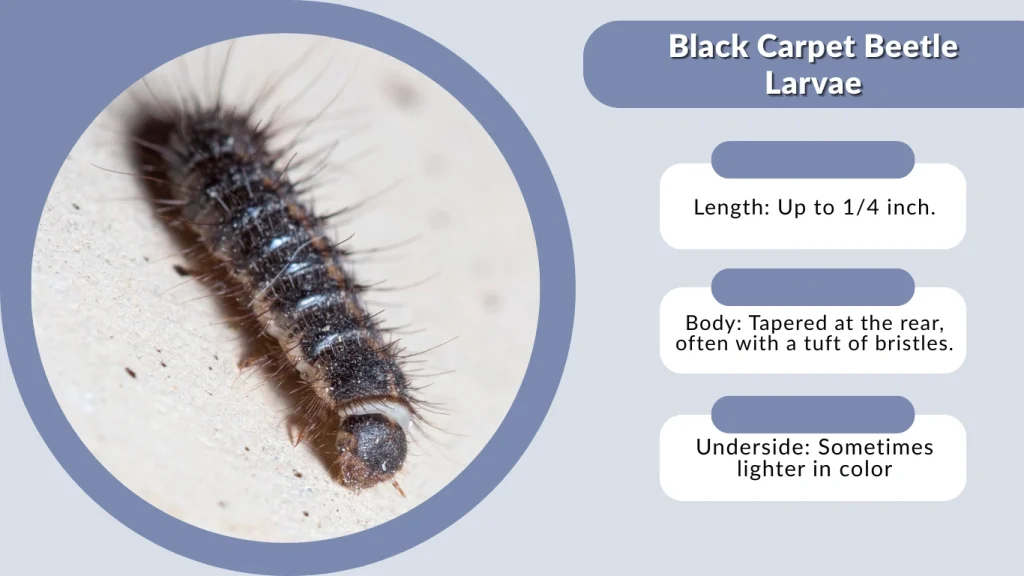
The larvae are the true culprits behind household damage. Known as black carpet beetle larvae or carpet beetle larvae black, they are elongated, carrot-shaped, and covered with stiff hairs. Their coloration ranges from brownish to almost black.
Appearance of Larvae
- Length: Up to 1/4 inch.
- Body: Tapered at the rear, often with a tuft of bristles.
- Underside: Sometimes lighter in color, which helps in close identification.
A common variation, the banded black carpet beetle larvae, shows faint striped patterns. Regardless of the type, larvae shed skins as they grow, leaving behind signs of infestation.
Why Larvae Are Problematic
These immature beetles feed aggressively on organic fibers, stored food, and natural materials. Unlike adults, which may live outdoors or feed minimally indoors, larvae thrive in dark, undisturbed areas like under carpets, inside closets, or beneath baseboards.
Life Cycle & Lifespan of Black Carpet Beetles
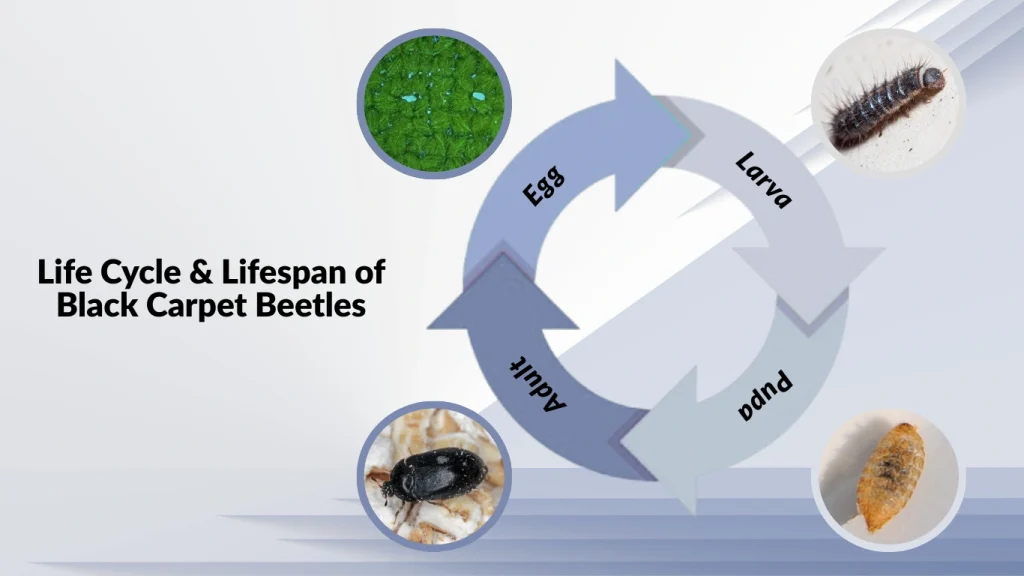
Stages of Development
Black carpet beetles undergo complete metamorphosis with four stages:
- Egg – Tiny, white, and laid in hidden spots such as cracks, carpets, or fabric folds.
- Larva – The longest stage, lasting months to over a year, depending on conditions.
- Pupa – Transition stage where larvae develop into adults.
- Adult – Lives for a few weeks to several months, primarily focused on reproduction.
How Long Do They Live?
- Larvae: Up to 12 months, making them persistent household invaders.
- Adults: Typically 2–6 weeks indoors.
- Overall life cycle: Around one year, though variations occur based on climate and food availability.
The term baby black carpet beetle often refers to newly emerged larvae. In reality, larvae remain in this stage much longer than adults, explaining why infestations seem ongoing.
Behavior & Habits of Black Carpet Beetles
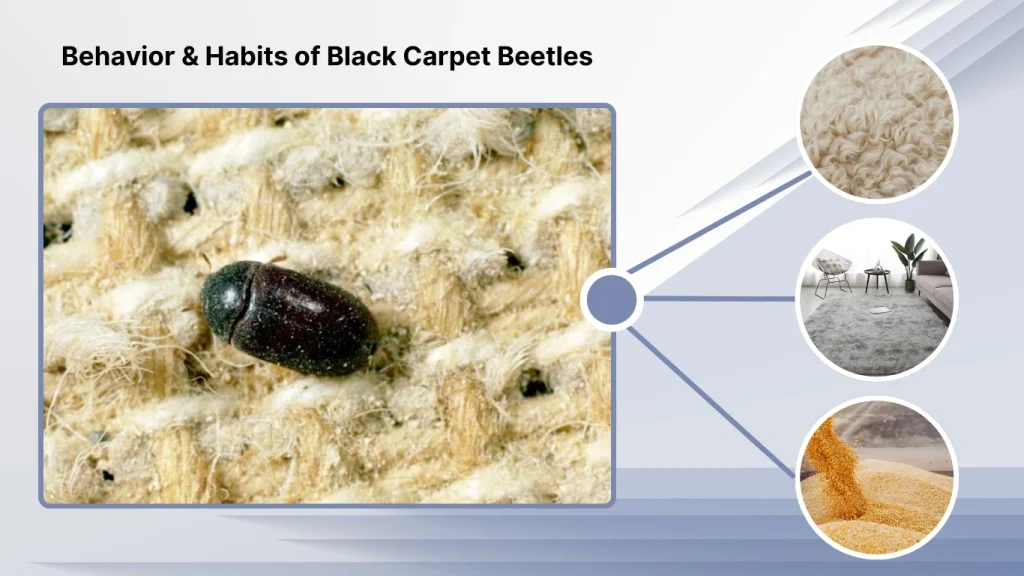
What Do Black Carpet Beetles Eat?
A defining feature of black carpet beetles is their diverse diet. While adults may feed on pollen outdoors, larvae consume a wide range of organic material indoors, including:
- Wool, silk, leather, and fur.
- Carpets, rugs, and upholstered furniture.
- Stored grains, cereals, and dried foods.
- Animal remains like feathers, dead insects, or pet hair.
This diet explains why infestations occur in pantries, attics, and clothing storage areas.
Causes of Infestation
- Entry points: Beetles often enter through open windows, flowers, or second-hand items.
- Indoor triggers: Dust, lint, and organic debris create breeding grounds.
- Stored items: Old clothing or food storage attracts larvae.
When people ask “where do black carpet beetles come from?” the answer usually lies in both outdoor access and indoor clutter.
Signs of Infestation
- Presence of black carpet beetle droppings: Tiny, sand-like particles near feeding areas.
- Shed larval skins in corners or under carpets.
- Fabric damage, including holes in wool sweaters or blankets.
- Clusters of tiny, moving bugs often described as carpet beetles tiny flat round black bug.
Why Black Carpet Beetles Appear
Factors such as improper cleaning, humidity, and neglected storage areas explain what causes carpet beetles. They thrive in environments with natural fibers and low disturbance.
Health Impact of Black Carpet Beetles
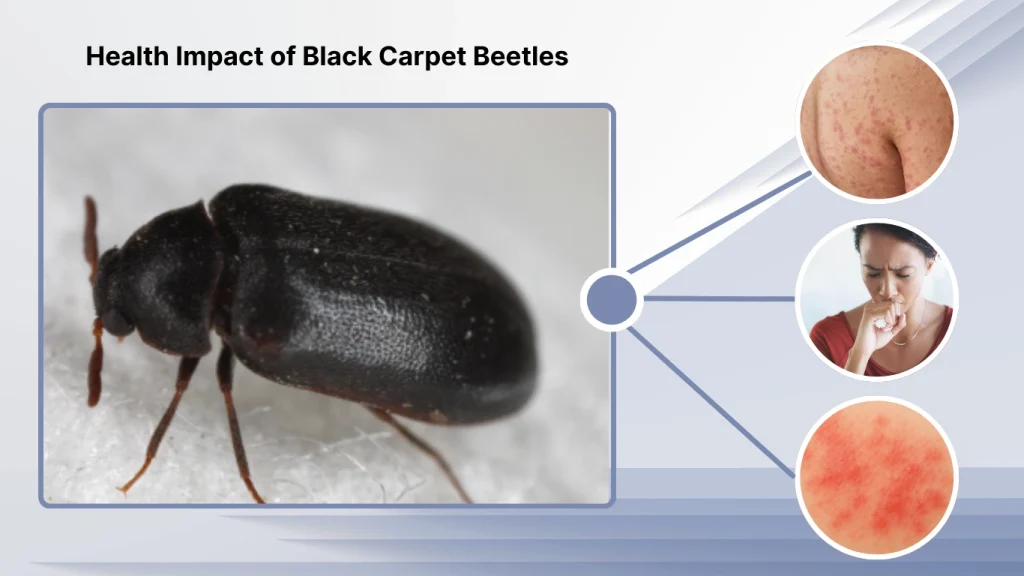
Are They Dangerous to Humans?
A common question is whether black carpet beetles are dangerous. The short answer: they do not transmit diseases and rarely cause direct harm. However, they can be harmful in indirect ways.
Allergic Reactions & Skin Problems
- Rash & irritation: Contact with larval hairs can cause allergic reactions resembling bites.
- Allergic response: Some people develop respiratory symptoms, including asthma-like issues.
- Confusion with bites: Homeowners often mistake skin irritation as black carpet beetle bites on humans.
Myths vs Reality
- Do black carpet beetles bite? – No, they lack biting mouthparts.
- Are they bad for health? – Only in sensitive individuals who react to larval hairs or shed skins.
- Are they dangerous to humans? – Not in the way bed bugs are, but prolonged exposure may affect health.
Thus, while they’re not disease carriers, infestations should still be taken seriously due to allergic risks and fabric damage.
Black Carpet Beetle Bites: Myth or Fact?
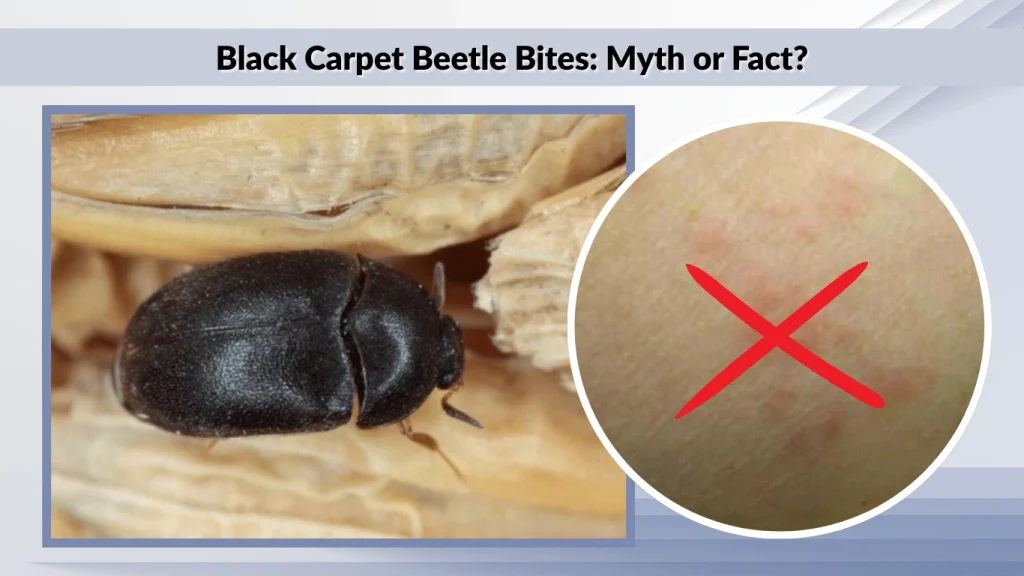
Do Black Carpet Beetles Bite Humans?
A persistent myth is that black carpet beetles bite people at night, much like bed bugs. However, this is not true. Black carpet beetle bites are a misinterpretation of allergic skin reactions caused by the beetle’s larvae.
Why Do People Think They Bite?
- Larval hairs: Tiny bristles from black carpet beetle larvae can irritate skin, leaving red marks.
- Shed skins: As larvae molt, leftover casings may cause itching when they come into contact with skin.
- Allergic sensitivity: In some individuals, exposure can cause welts similar to insect bites.
Therefore, when people report black carpet beetle bites on humans, it’s actually a case of skin irritation, not a true insect bite.
Infestation Signs in Homes
Recognizing an Infestation
Homeowners often spot black carpet beetles in house without realizing the scale of the problem. Signs include:
- Holes in wool, silk, or fur items.
- Concentrations of tiny black bugs near baseboards, under carpets, or in closets.
- Accumulated lint and dust with beetle activity.
Why Do I Have Black Carpet Beetles in My House?
Infestations usually result from:
- Bringing in infested second-hand items.
- Poor cleaning in seldom-used rooms.
- Pollen or plants carried indoors that harbor beetles.
If you notice tiny black bugs signs of carpet beetles, it means larvae are already active, and treatment is necessary.
Extermination & Control Methods
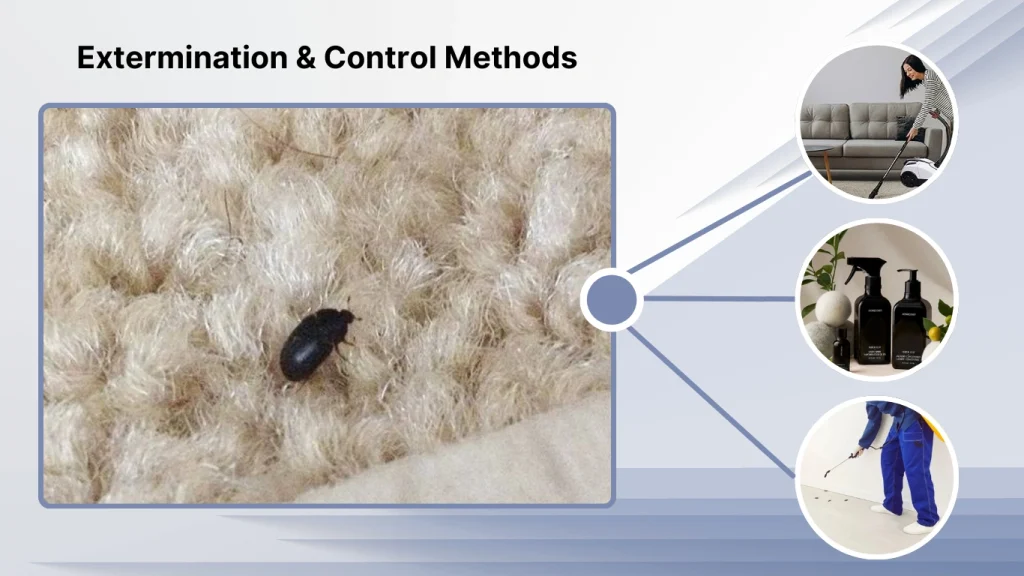
Professional vs DIY Approaches
Black carpet beetle extermination can be handled in different ways depending on the severity.
- DIY control: Works for small infestations. Includes vacuuming, laundering, and applying sprays.
- Professional treatment: Recommended for heavy infestations or recurring problems. Pest control companies use specialized insecticides and techniques for lasting results.
Tools and Treatments
- Insecticides: Target larvae in cracks and fabrics.
- Foggers: Useful for large, open spaces but less effective on hidden larvae.
- Natural remedies: Vinegar cleaning and boric acid dust can help in low-level infestations.
For persistent cases, black carpet beetle control measures must be ongoing, with repeated cleaning and inspections.
How to Get Rid of Black Carpet Beetles
Step-by-Step Removal
- Vacuum thoroughly: Clean carpets, baseboards, upholstery, and air vents.
- Launder fabrics: Wash affected clothes, curtains, and bedding in hot water.
- Use insecticides: Apply sprays labeled for carpet beetles to infested areas.
- Seal entry points: Block cracks, vents, and gaps to reduce reinfestation.
- Dispose of infested items: Severely damaged or infested fabrics should be discarded.
Long-Term Prevention
- Store clothing in airtight containers.
- Keep food sealed in pest-proof jars.
- Regularly clean closets, basements, and attics.
Keywords like how to get rid of black carpet beetle or black carpet beetle how to get rid of them are best addressed with this practical approach.
Black Carpet Beetles vs Other Pests
Carpet Beetle vs Bed Bug
Confusion often arises between black carpet beetle vs bed bug. Both can appear in bedrooms and cause skin irritation.
| Feature | Black Carpet Beetle | Bed Bug |
| Color | Shiny black or dark brown | Reddish-brown |
| Size | 3–5 mm | 5–7 mm |
| Feeding | Fabrics, natural fibers | Blood |
| Health Impact | Allergic reactions | Direct bites |
Bed Bug or Black Carpet Beetle?
A quick check: bed bugs live in mattresses and feed at night, while carpet beetles infest clothing and furniture. Understanding these differences prevents misdiagnosis.
Color Variations of Carpet Beetles
Not Always Solid Black
Although commonly all black, carpet beetles also appear in patterned forms. Keywords like black and white carpet beetle or black and brown carpet beetle describe other related species.
Common Variations
- Carpet beetle black and white / black and white striped carpet beetle: The varied carpet beetle, with speckled scales.
- Black and yellow carpet beetle: Another patterned species, sometimes confused with lady beetles.
- Black and grey carpet beetle: Slight variations in shading among species.
When homeowners say carpet beetles tiny flat round black bug, they often describe these patterned beetles, which are equally destructive.
Black Carpet Beetles in Specific Locations
In Cars
Black carpet beetle in car infestations occur when larvae hide in seat padding or carpeting. Left unchecked, they can cause damage to upholstery and spread into homes.
In Bathrooms & Bedrooms
- Bathrooms: Moisture attracts beetles seeking organic debris like hair.
- Beds: Finding black carpet beetle in bed often sparks confusion with bed bugs, but it usually means larvae are nearby feeding on natural fibers.
Regional Occurrences
- Black carpet beetle Texas: Warmer states have higher infestation rates due to longer breeding seasons.
- Black carpet beetle Florida and Arizona: Hot climates accelerate life cycles.
- Black carpet beetle Colorado: Cooler regions still see infestations, particularly indoors where heating creates ideal conditions.
In all these locations, prevention and regular cleaning are critical.
