
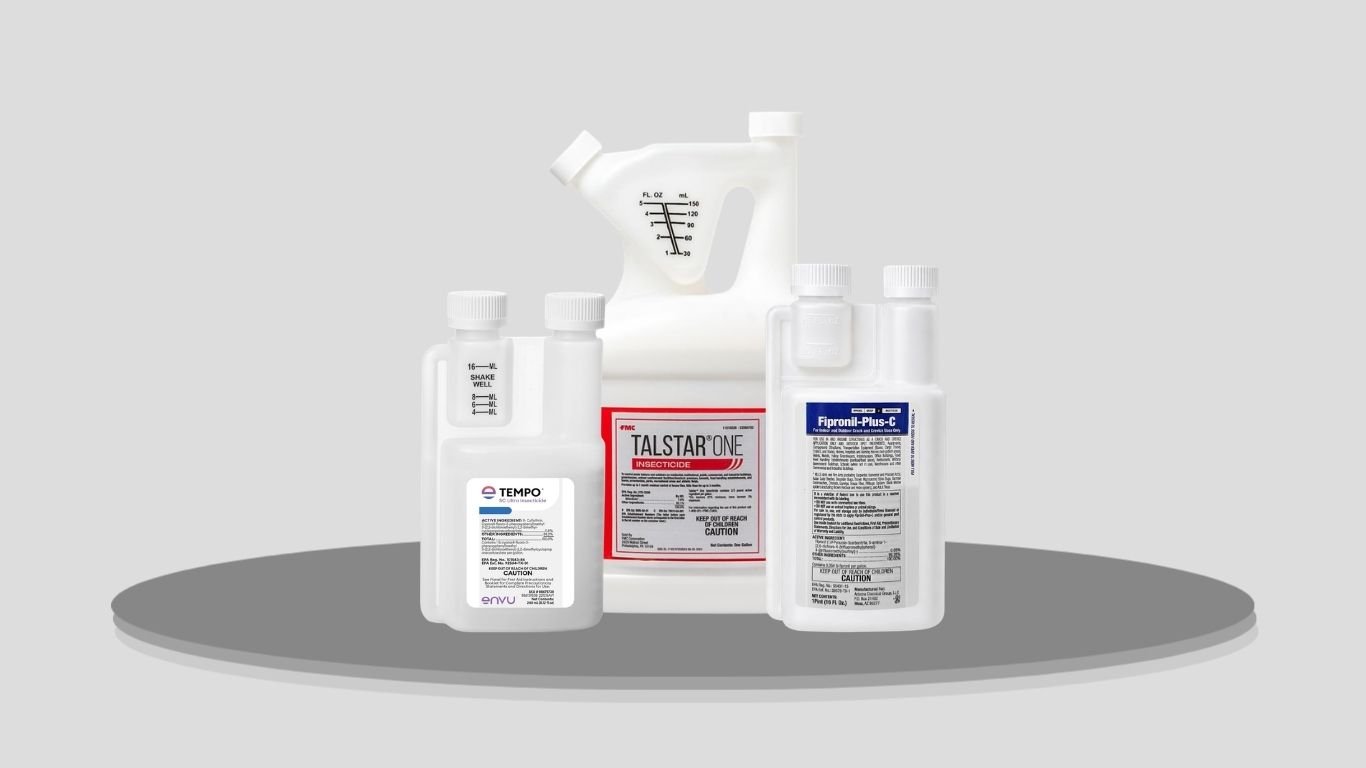
Ant infestations can quickly become difficult to manage when colonies spread around foundations, kitchens, yards, and other high-activity areas. Choosing the best ant insecticide can help provide faster knockdown while maintaining residual protection against returning ants. Concentrated formulas containing active ingredients such as bifenthrin, deltamethrin, or fipronil are commonly used for serious pest-control applications. In this guide, we review five effective ant insecticides based on their formulation, coverage, residual performance, application versatility, and suitability for residential or commercial pest-control needs.
1. Bifenthrin 7.9% Insecticide Concentrate
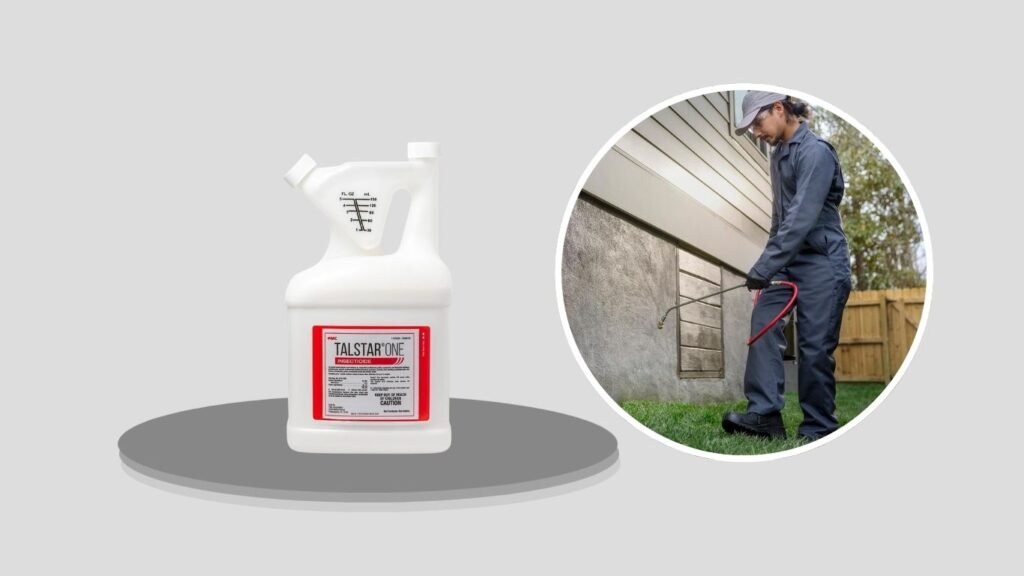
This professional-strength bifenthrin insecticide is a strong option for homeowners who need broad ant control around foundations, lawns, entry points, and other problem areas. The concentrated formula is designed for dilution before application, making it suitable for treating larger spaces rather than relying on small ready-to-use bottles. It also targets numerous other common household and outdoor pests.
Key Features
- Concentrated bifenthrin-based insecticide formula
- Suitable for indoor and outdoor pest-control applications
- Targets ants along with spiders, beetles, flies, ticks, wasps, and other pests
- Useful for perimeter and structural pest-control programs
- Concentrated format provides coverage for larger treatment areas
- Designed to leave residual protection on properly treated surfaces
Why It’s Best For
This insecticide stands out for homeowners dealing with ants in several areas of a property rather than one isolated trail. It is particularly useful for establishing a perimeter treatment around a house, where ants often enter through cracks, foundations, doors, and utility openings.
The concentrated format also provides more flexibility than a basic aerosol ant spray. Users can prepare the amount needed for a particular treatment while following the product label carefully. This makes it practical for routine property maintenance as well as larger ant-control jobs.
Performance & Durability
Bifenthrin is widely used in residual pest-control treatments because it remains on treated surfaces after application. That makes this type of insecticide particularly helpful when the goal is not simply killing visible ants but reducing repeated activity around common entry areas.
Its versatility is another advantage. A single treatment program can address ants while also targeting several other nuisance pests. For properties where multiple insects appear throughout warmer months, this can simplify ongoing pest management.
As with any concentrated pesticide, correct mixing and application are important. More concentrate does not automatically mean better performance, so the label rate should always be followed.
Pros, Cons & Overall Verdict
Pros
Cons
Overall Verdict: The Bifenthrin 7.9% Insecticide Concentrate earns the #1 position for its combination of broad pest coverage, concentrated value, and suitability for large-scale ant treatments. It is particularly appealing for homeowners who want one insecticide for ants and several other recurring pests.
2. Tempo SC Ultra Insecticide Concentrate
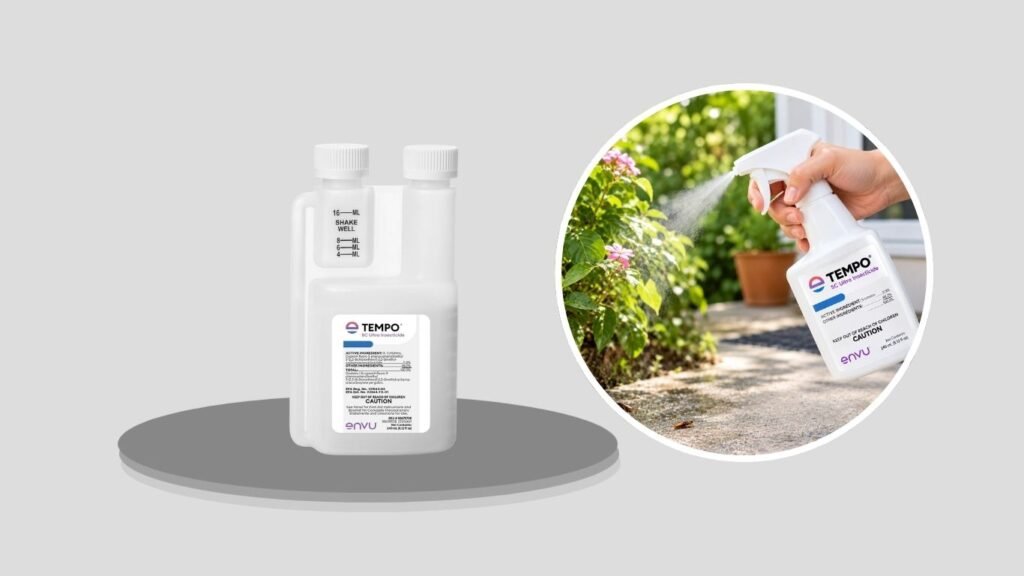
Tempo SC Ultra is a concentrated professional-style insecticide developed for fast control and continued residual protection. The 240 ml liquid concentrate is suitable for targeting ants, spiders, and numerous other crawling insects in indoor and outdoor environments. Its low-odor, non-staining characteristics also make it convenient for treating areas around homes where appearance and odor matter.
Key Features
- 240 ml concentrated liquid formula
- Fast-acting pest-control performance
- Targets ants and other crawling insects
- Suitable for indoor and outdoor applications
- Low-odor formulation
- Designed to avoid staining when properly applied
- Useful around foundations, garages, basements, and entry points
Why It’s Best For
Tempo SC Ultra is especially attractive when quick reduction of ant activity is a priority. Ants frequently establish trails near doors, windows, garages, patios, and foundation edges, and this product can be incorporated into a broader treatment strategy for those areas.
The concentrated formulation is also useful for homeowners who regularly perform preventive pest treatments instead of waiting until infestations become severe. Because it targets more than ants, the same application program may help address spiders and other nuisance insects around the structure.
Performance & Durability
One of Tempo SC Ultra’s strongest qualities is its balance between initial control and residual performance. After a correctly mixed application dries on an approved surface, the treatment can continue working against insects that later cross treated areas.
This makes it more practical for recurring ant pressure than contact-only sprays that primarily affect pests hit during application.
Its concentrated nature also means a relatively small container can provide multiple treatments depending on the labeled mixing rate and treated area. That can make it efficient for property owners maintaining garages, basements, exterior foundations, and similar pest-prone locations.
Pros, Cons & Overall Verdict
Pros
Cons
Overall Verdict: Tempo SC Ultra takes the #2 position because it combines rapid action with practical residual protection. It is well suited to homeowners looking for a concentrated ant treatment that can also become part of a regular whole-property pest-control routine.
3. Envu Suspend SC Insecticide
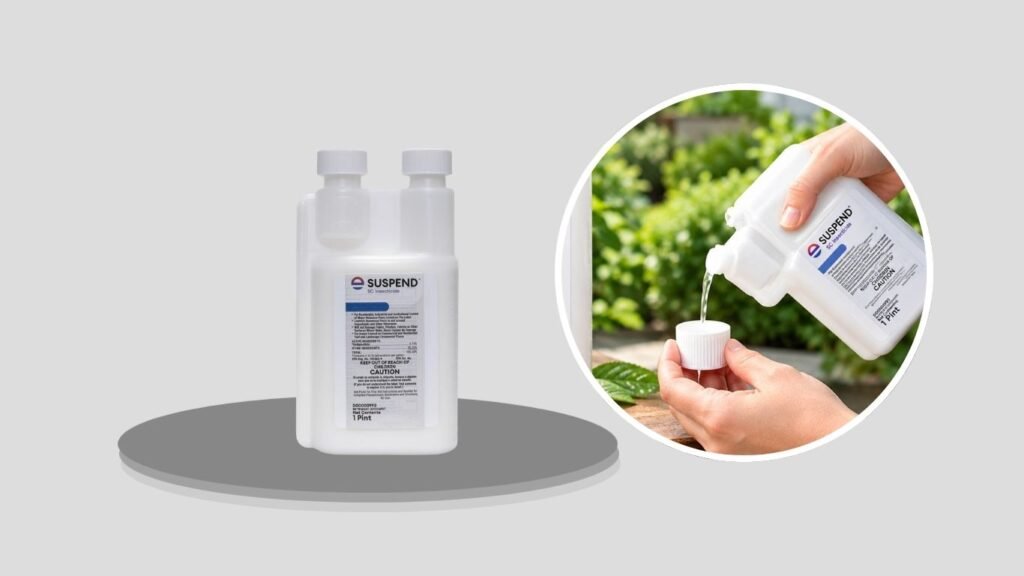
Envu Suspend SC is a concentrated deltamethrin insecticide designed for indoor, outdoor, and perimeter pest treatments. The 16-ounce suspension concentrate targets ants as well as cockroaches, spiders, fleas, ticks, mosquitoes, scorpions, wasps, and several other nuisance insects. Its water-based, relatively low-odor formulation makes it especially versatile for residential pest-management applications.
Key Features
- Deltamethrin active ingredient
- 16-ounce concentrated formulation
- Controls ants and a broad range of other pests
- Suitable for perimeter pest-control applications
- Can be used indoors and outdoors where permitted by the label
- Water-based, low-odor formulation
- Provides residual control on treated surfaces
Why It’s Best For
Suspend SC is an excellent choice for homes experiencing several different pest problems at the same time. While ants may be the primary target, its broad-spectrum formulation means homeowners do not necessarily need separate products for every crawling insect around the property.
It is particularly practical for treating common pest entry points. Foundation areas, doors, windows, garages, crawl spaces, and other approved locations can form part of a structured perimeter-control program.
Its low-odor water-based formulation is another advantage for applications around occupied residential spaces when used according to label directions.
Performance & Durability
Suspend SC is formulated as a suspension concentrate, allowing the active ingredient to remain distributed across properly treated surfaces and provide continued pest control after application.
That residual characteristic makes it useful against ants that repeatedly travel along the same routes. Instead of focusing exclusively on the ants visible during treatment, a properly designed application creates treated zones that additional insects may encounter later.
Durability will depend on the surface, weather exposure, application location, cleaning, and other environmental factors. Exterior treatments exposed to sun and rain generally require different maintenance considerations than protected indoor areas.
Pros, Cons & Overall Verdict
Pros
Cons
Overall Verdict: Envu Suspend SC ranks #3 because of its versatility and broad target-pest list. For homeowners who have ants along with spiders, roaches, mosquitoes, or other nuisance insects, it provides a practical foundation for a more comprehensive pest-control program.
4. Fipronil Plus-C Insecticide Concentrate
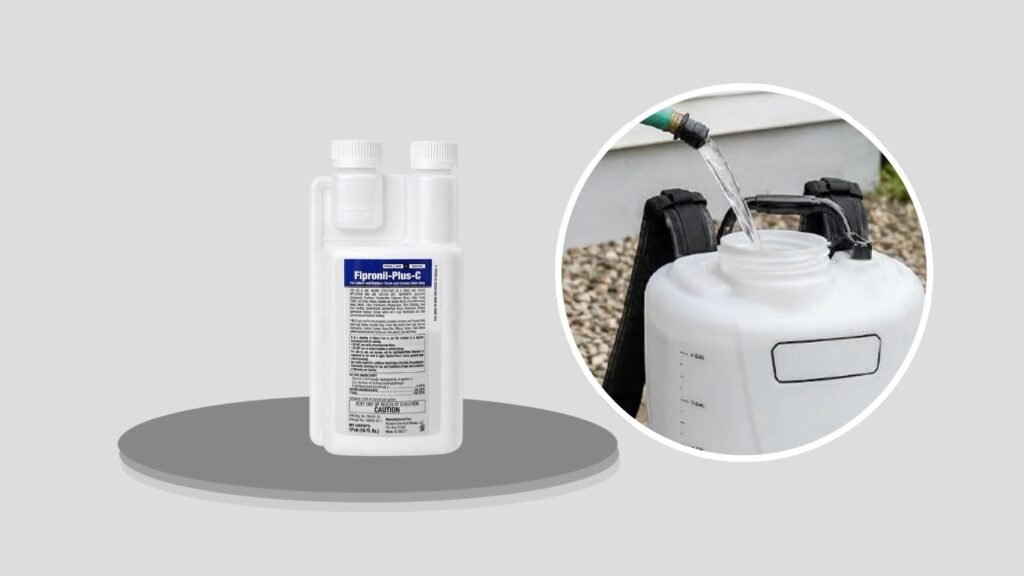
Fipronil Plus-C is a 16-ounce concentrated insecticide formulated around fipronil and designed to control ants, fire ants, cockroaches, spiders, stink bugs, and additional pests. Unlike highly repellent contact products, this type of formula is designed to work more gradually, which can be advantageous when targeting social insects such as ants rather than only the workers visible above ground.
Key Features
- Fipronil-based concentrated insecticide
- 16-ounce container
- Non-repellent pest-control approach
- Targets ants, fire ants, roaches, spiders, and other insects
- Concentrated formula for multiple applications
- Designed for residual pest control
- Suitable for approved residential and structural treatment areas
Why It’s Best For
The main reason Fipronil Plus-C deserves attention is its non-repellent approach. With ant control, immediately killing every worker on contact is not always the only objective. Workers are part of a much larger colony, and products that allow insects to encounter treated areas without immediately detecting them can play a useful role in colony-focused management.
This makes the product particularly interesting for persistent infestations where ants continue returning even after repeated use of basic household sprays.
It can also be useful when several different crawling pests need to be managed with one concentrated product.
Performance & Durability
Fipronil works differently from many conventional repellent insecticides. Its comparatively slower action can allow exposed insects time to continue normal movement after contacting treated zones. For social pests, that characteristic can help extend the effect beyond insects immediately visible during treatment.
Available product information describes the concentrate as capable of making up to approximately 21 gallons depending on the selected labeled dilution rate, which gives it substantial potential coverage for repeated treatments.
Residual performance also makes it appropriate for targeted structural pest-control programs, though treatment intervals and locations should always follow the current product label.
Pros, Cons & Overall Verdict
Pros
Cons
Overall Verdict: Fipronil Plus-C earns the #4 spot and is particularly compelling for difficult ant infestations where colony-level control is the priority. Its non-repellent characteristics distinguish it from conventional perimeter insecticides and make it a useful tool for persistent ant pressure.
5. Bifenthrin Plus-C Insecticide
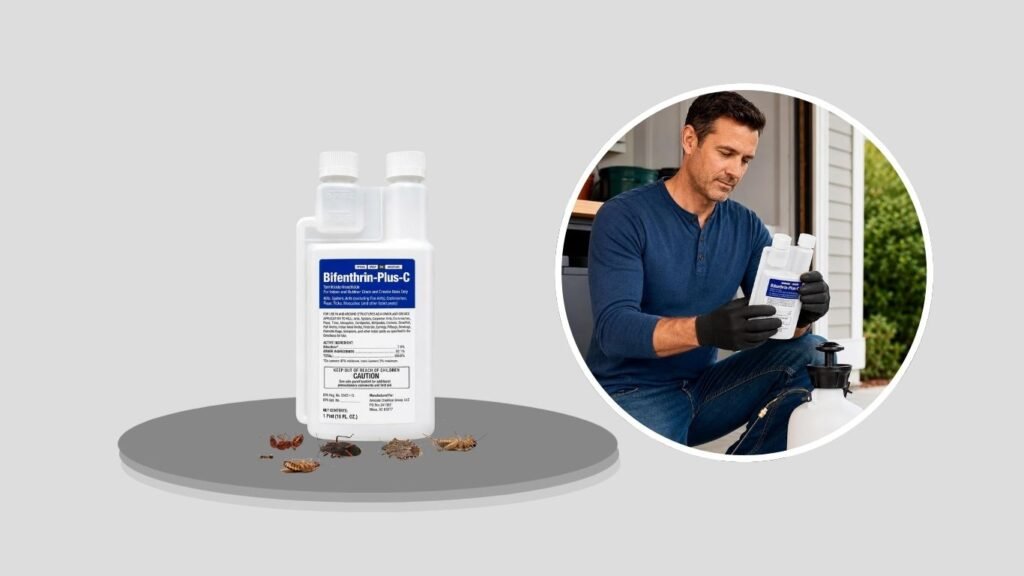
Bifenthrin Plus-C is a 16-ounce pest-control concentrate marketed for ants, roaches, termites, wasps, and other household or structural pests. It is designed for residential, commercial, and industrial pest-control applications, giving it broader versatility than products intended only for small indoor ant trails.
Key Features
- Bifenthrin-based pest-control formulation
- 16-ounce container
- Designed for ant and general insect control
- Suitable for residential and commercial applications
- Useful for structural and perimeter pest management
- Targets several crawling and flying pests
- Residual treatment approach
Why It’s Best For
Bifenthrin Plus-C makes sense for users who want an ant insecticide that can perform several pest-control roles around a property. Ant infestations often occur alongside spiders, cockroaches, wasps, and other insects, so a broad-spectrum concentrate can reduce the need to keep numerous specialized sprays on hand.
It is especially suited to structured perimeter treatments around foundations and other approved exterior areas where insects commonly approach a building.
For larger homes or properties experiencing seasonal pest pressure, the concentrate format can also be more practical than repeatedly replacing small trigger-spray bottles.
Performance & Durability
Bifenthrin is commonly valued for residual performance. When the diluted product is applied according to its label, treated areas can continue affecting insects that cross them after the initial application has dried.
This characteristic is useful for ants because new workers may repeatedly travel along exterior edges, foundation lines, and other established routes even after the ants initially visible have disappeared.
The formula’s broad application potential also gives it value throughout seasonal pest cycles. A treatment originally chosen for ants may help manage other labeled insects appearing later.
Proper application remains important. Surfaces, weather conditions, treatment intervals, and label-approved locations can all affect how long residual control lasts.
Pros, Cons & Overall Verdict
Pros
Cons
Overall Verdict: Bifenthrin Plus-C completes the list at #5 as a versatile option for homeowners dealing with ants plus additional structural pests. Its strongest advantage is the combination of broad insect coverage and residual performance, making it suitable for ongoing property-wide pest management rather than temporary spot treatment alone.
FAQs
1. What is the best insecticide for killing ants?
The best ant insecticide depends on the infestation and treatment area. Bifenthrin-based products are commonly used for perimeter and residual control, while fipronil-based insecticides can be useful for persistent ant colonies because of their non-repellent action. Always choose a product labeled for the ant species and application area you need to treat.
2. How long does ant insecticide last after application?
Residual performance varies by active ingredient, surface type, weather, and application method. Some concentrated insecticides can continue working for several weeks or longer on protected surfaces. Outdoor treatments may break down more quickly due to sunlight, rain, and irrigation, so always follow the product label for recommended retreatment intervals.
3. Is bifenthrin effective against ants?
Yes. Bifenthrin is widely used for controlling ants and many other crawling insects. It works particularly well as a perimeter treatment around foundations, doors, windows, patios, and other entry points. It provides both contact activity and residual protection when applied correctly according to the label.
4. Is fipronil better than bifenthrin for ants?
Both can be effective, but they work differently. Bifenthrin provides strong residual and repellent-style perimeter control, while fipronil is generally considered non-repellent. This means ants may cross treated areas without immediately detecting the insecticide, which can make fipronil particularly useful for persistent colonies. The better choice depends on the infestation and treatment strategy.
5. Can ant insecticides be used indoors and outdoors?
Many professional-style ant insecticides are labeled for both indoor and outdoor use, but approved locations differ by product. Some may be suitable for cracks, crevices, foundations, garages, and exterior perimeter areas rather than broad indoor spraying. Always read and follow the current pesticide label, including dilution rates, application restrictions, and re-entry instructions.
