
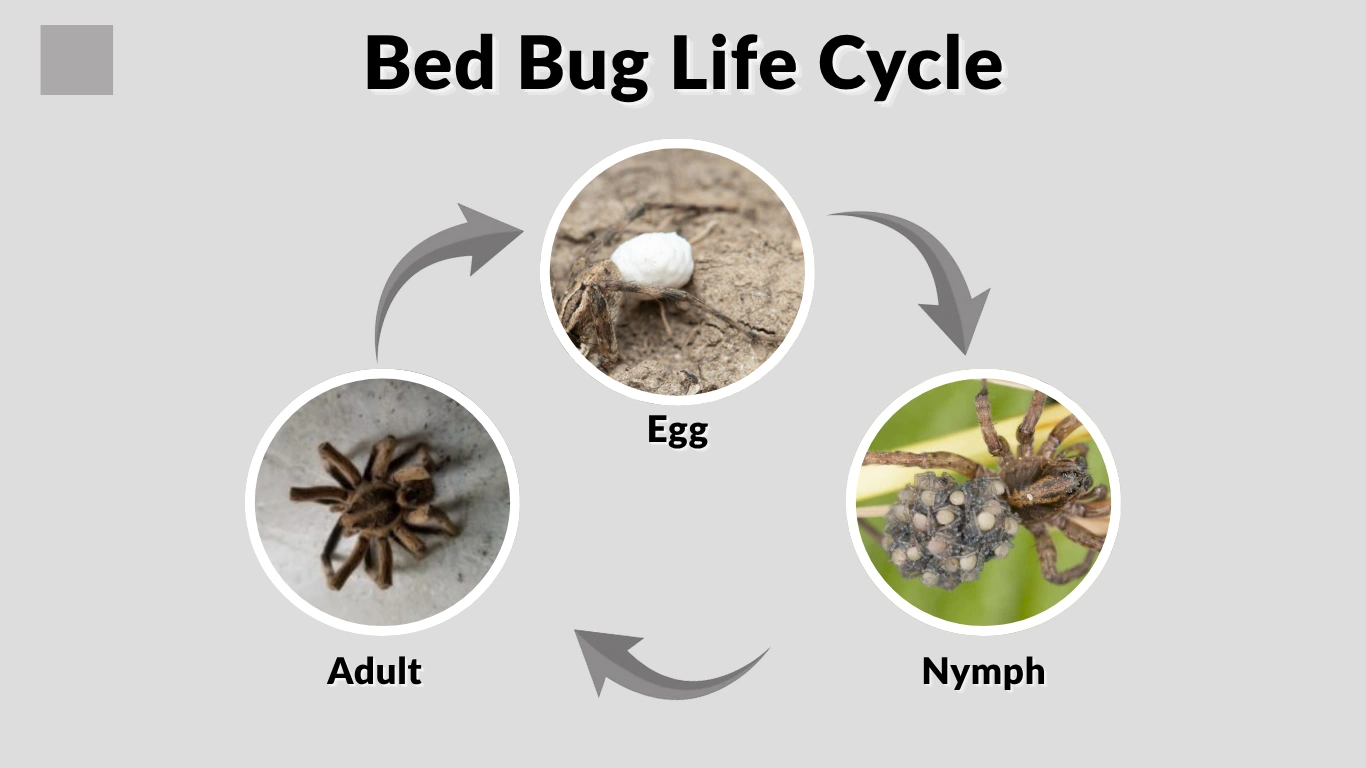
Bed bugs are among the most resilient household pests, capable of surviving for months and reproducing rapidly. Understanding the bed bug life cycle is essential for identifying infestations early, choosing the right treatment methods, and preventing recurring issues. Their development includes several stages—from egg to nymph to adult—each with its own characteristics, vulnerabilities, and duration. Knowing how long each stage lasts helps you track the infestation and determine whether treatments are working effectively.
What Is the Bed Bug Life Cycle?
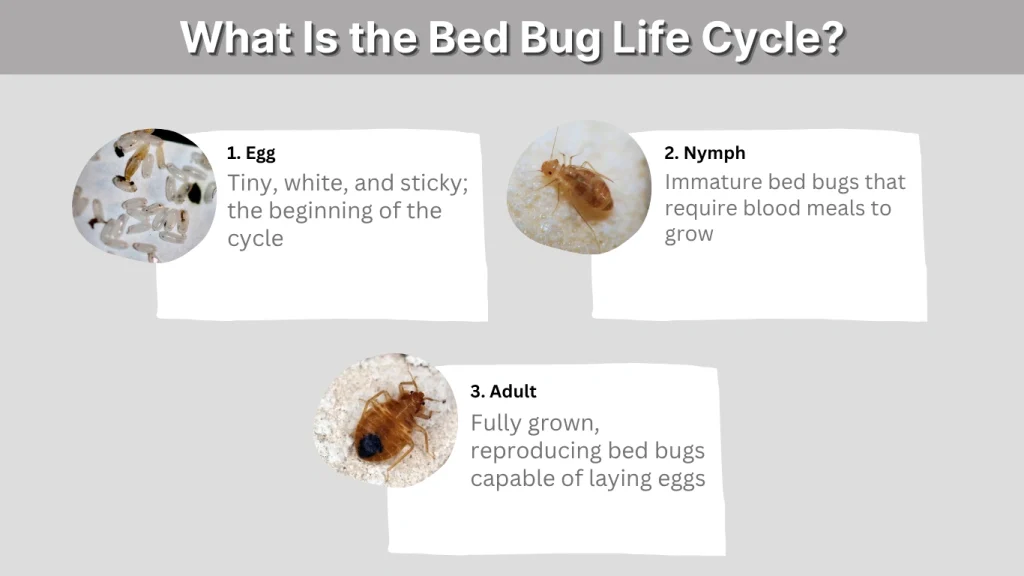
The bed bug life cycle refers to the stages a bed bug passes through from egg to adult reproduction. Unlike many insects that undergo full metamorphosis, bed bugs experience gradual metamorphosis, meaning they look similar at every stage but grow larger as they mature.
Summary of the Three Main Stages
Bed bugs develop through:
- Egg – Tiny, white, and sticky; the beginning of the cycle
- Nymph (5 instars) – Immature bed bugs that require blood meals to grow
- Adult – Fully grown, reproducing bed bugs capable of laying eggs
This simple yet highly efficient cycle enables infestations to spread quickly if left untreated.
Total Duration of the Cycle
Under ideal conditions, the entire bed bug life cycle takes 4–6 weeks. Warm temperatures and frequent blood meals accelerate development, while cold or lack of food slows it significantly. This means a small infestation can become a colony of thousands within a few months.
Stage 1 — Bed Bug Eggs
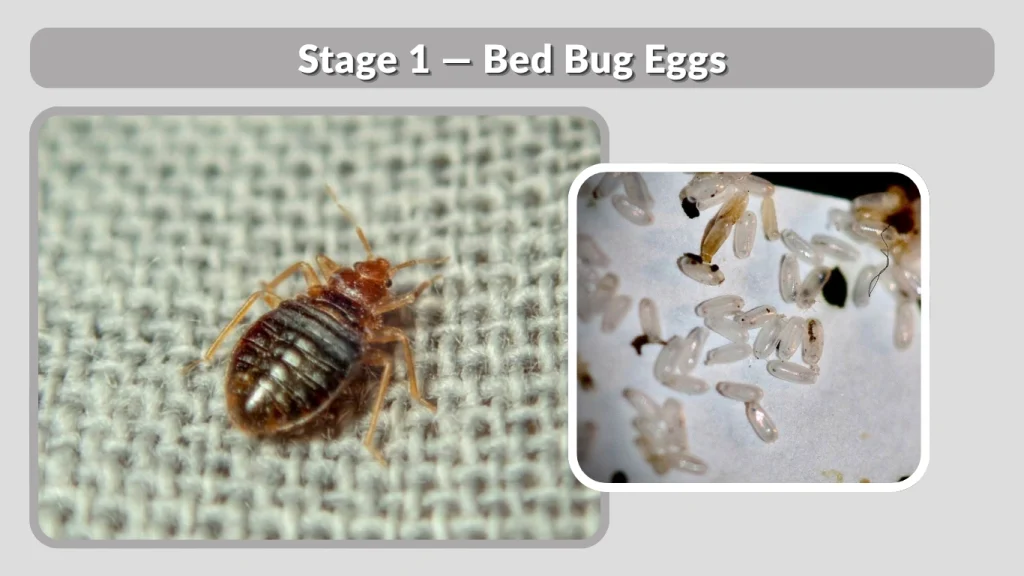
Eggs mark the beginning of the life cycle and are responsible for the rapid population growth of bed bugs.
Appearance and Characteristics
Bed bug eggs are:
- Tiny (about 1 mm)
- Milky white or translucent
- Oval-shaped
- Sticky and attached to surfaces
They are often found in groups and can easily go unnoticed because of their small size and pale color.
Egg Development Timeline
A bed bug egg typically hatches within 6 to 10 days, depending on room temperature. Warmer environments accelerate hatching, while colder conditions slow development. Once hatched, the nymph must immediately feed to progress to the next stage.
Where Bed Bugs Lay Eggs
Female bed bugs prefer tight, hidden spaces such as:
- Mattress seams
- Box spring edges
- Furniture cracks
- Behind baseboards
- Inside electrical outlets
Because eggs are laid in protected locations, treatments often require thorough inspection and sometimes multiple applications.
Stage 2 — Bed Bug Nymph Stages
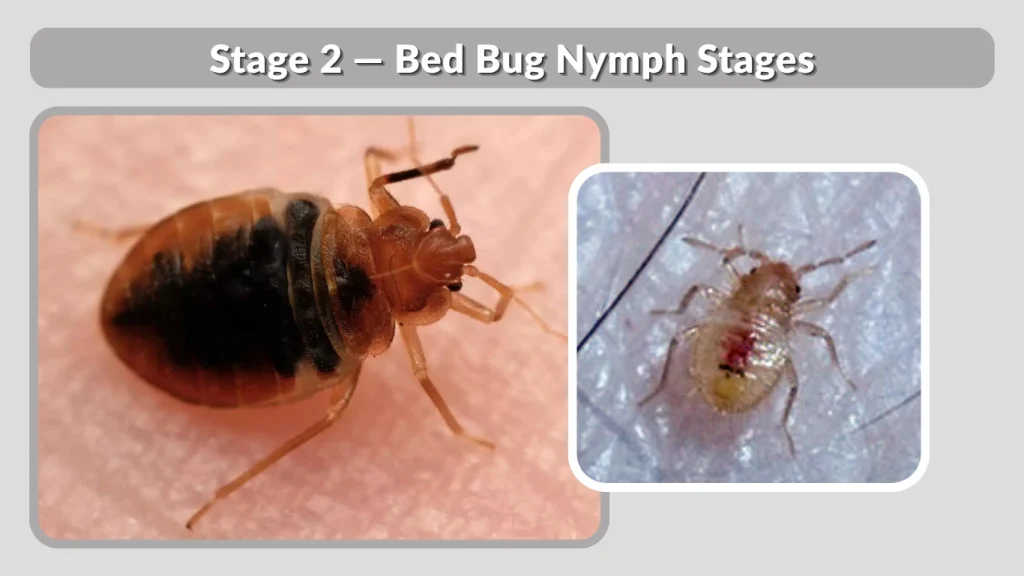
The nymph stage consists of five developmental phases, also known as instars. Each instar looks like a miniature adult but requires a blood meal before progressing to the next.
The Five Nymph Instars
Each nymph stage comes with slight increases in:
- Size
- Darkness of color
- Mobility
- Feeding capacity
Nymphs start very pale—almost translucent—and turn darker after feeding. As they mature, nymphs shed their skin (molt) after each blood meal.
Feeding Requirements for Each Instar
A bed bug cannot progress to the next stage without feeding. This means:
- Instar 1 → needs a blood meal → molts → Instar 2
- Instar 2 → needs a blood meal → molts → Instar 3
…and so on until the 5th instar becomes an adult.
In warm conditions with easy access to hosts, nymphs can move through all five stages in about 3–4 weeks.
Development Time for Nymphs
Under ideal conditions, each instar lasts 5–8 days. However, if food is unavailable, nymphs may survive for weeks, remaining in a suspended stage until they find a host. This adaptability makes bed bugs extremely difficult to eliminate entirely without professional treatment.
Stage 3 — Adult Bed Bugs
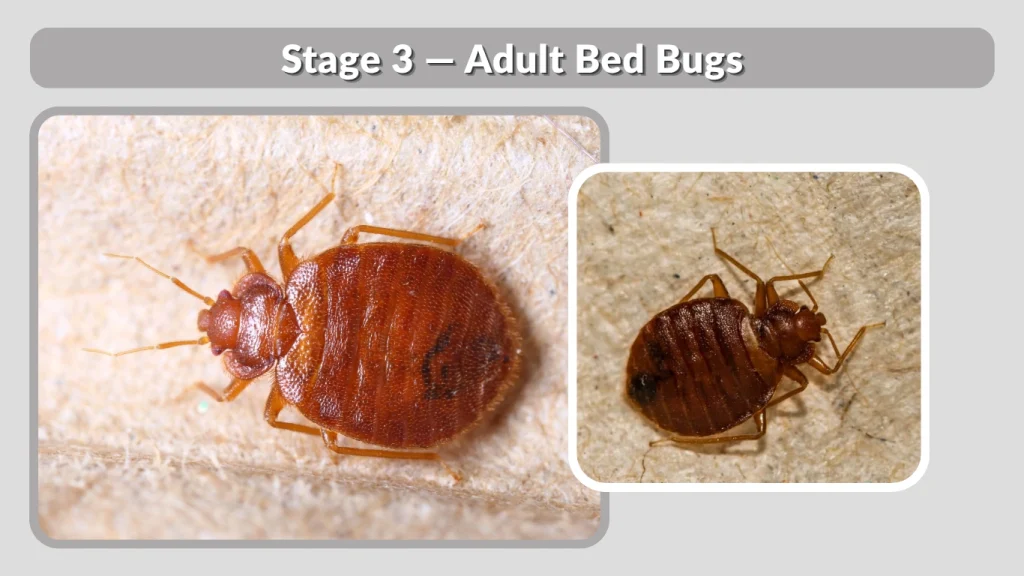
Once nymphs reach the fifth molt, they officially become adults capable of feeding regularly and reproducing.
Adult Size, Shape & Color
Adult bed bugs measure about:
- 4.5–5.5 mm in length
- Flat, oval-shaped bodies
- Reddish-brown color (darker after feeding)
Adult females typically appear larger and rounder than males because they store more blood for egg production.
Feeding Frequency
Adult bed bugs seek a blood meal every 5–10 days, but can survive for months without feeding, especially in cooler environments. This ability allows them to hide for long periods and re-emerge long after treatments.
Reproductive Cycle
After feeding, female bed bugs lay 1–5 eggs per day, producing up to 200–500 eggs in their lifetime. Their reproductive speed is one of the main reasons infestations escalate quickly when left untreated.
Bed Bug Life Cycle Timeline
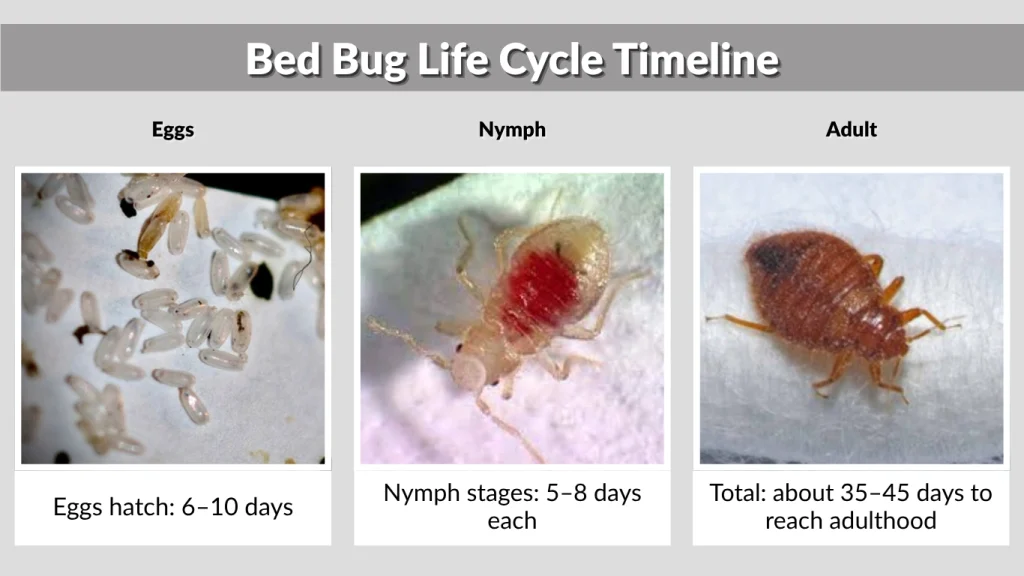
A clear view of the timeline helps you recognize the age of an infestation.
Life Cycle in Days
- Eggs hatch: 6–10 days
- Nymph stages: 5–8 days each
- Total: about 35–45 days to reach adulthood
Life Cycle in Weeks
- Week 1: Eggs develop
- Weeks 2–5: Nymph stages 1–5
- Week 6: Full adult, capable of reproducing
How Long Is a Bed Bug Life Cycle?
Understanding the total length of a bed bug’s development helps determine how quickly an infestation can grow. Under optimal conditions—warm temperatures, dark hiding places, and easy access to hosts—the entire cycle from egg to reproducing adult takes around 4–6 weeks. In cooler environments or when food is scarce, development slows dramatically, extending the life cycle to 8 weeks or more.
Total Duration From Egg to Adult
When conditions are ideal, the timeline looks like this:
- Egg: 6–10 days
- Nymph Instars 1–5: 25–35 days
- Adult: Begins reproducing within 3–10 days of reaching maturity
This rapid development allows a small number of bed bugs to turn into a full infestation in a matter of months.
Conditions That Extend or Shorten the Life Cycle
Bed bugs respond strongly to their environment:
- Heat speeds up the cycle, making nymphs molt faster
- Cold slows development, sometimes doubling the time needed to reach adulthood
- Higher humidity can support faster growth
- Lack of food delays molting and slows progression
Because of this adaptability, infestations can thrive in many environments, including homes, hotels, offices, and even vehicles.
Bed Bug Life Cycle Without Food
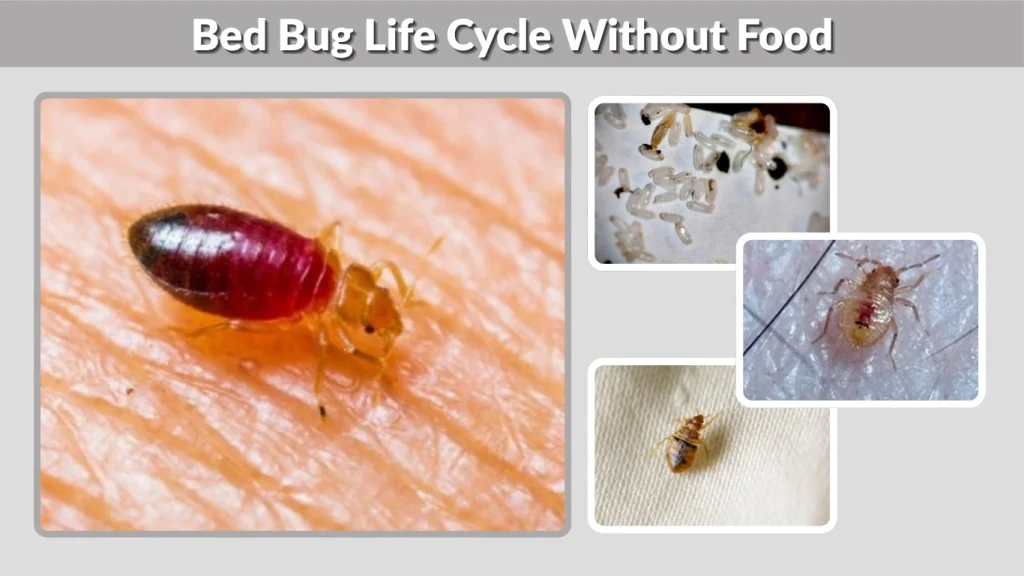
One of the reasons bed bugs are difficult to eliminate is their ability to survive long periods without feeding.
How Long Nymphs Survive Without Feeding
Younger bed bugs (early instars) can survive for several weeks without a blood meal. Although they need a blood meal to molt and grow, they can wait surprisingly long—especially in cooler temperatures.
Adult Survival Without Food
Adult bed bugs are even more resilient. Many can live 4–6 months without feeding, and in colder environments, survival can extend up to a full year. This means:
- Vacating a room is not enough to kill them
- They can remain hidden in furniture, walls, or floors until new hosts return
- Starvation alone is not an effective control method
Impact on Infestation Progression
Even with limited food sources, bed bugs can “pause” their life cycle until conditions improve. This flexibility contributes significantly to their survival and ability to return even after initial treatment if not fully eradicated.
Bed Bug Life Cycle Pictures & Diagrams

Visual identification is critical when diagnosing an infestation. Although this article cannot display images directly, here is what you would typically see in photos or diagrams.
Egg Pictures
Eggs appear as tiny white or clear capsules, often stuck to surfaces in clusters. In images, they may look enlarged, but in reality they are only 1 mm long.
Nymph Pictures
Nymph photos typically show:
- Very small, pale insects
- Visible dark spot in their abdomen after feeding
- Gradual color darkening with each molt
Adult Pictures
Adult bed bugs appear flat and brown, unless recently fed, in which case they look swollen and reddish. They are about the size of an apple seed.
Actual Size vs Enlarged Images
Photos online often enlarge bed bugs significantly, but real-life size is much smaller. Some diagrams may include rulers or comparison objects—a helpful way to view their true dimensions.
Life Cycle Variations by Region
Environmental conditions differ across continents, and these differences can alter bed bug development speed.
Bed Bug Life Cycle in the UK
Cooler temperatures in many UK homes slow bed bug development, often extending the life cycle to 8–10 weeks. Central heating reduces variation but does not completely eliminate slower growth periods.
Bed Bug Life Cycle in the U.S.
In warmer states or heated indoor environments, bed bugs develop faster—often reaching adulthood in 30–40 days. Dense cities such as New York or Los Angeles provide ideal conditions for rapid reproduction.
Canada and New England Variations
Cold northern climates significantly slow growth, especially in winter. Without consistent warmth, bed bugs may take twice as long to complete their life cycle.
Bed Bug Biology Related to the Life Cycle
Understanding biological processes helps explain their persistence and rapid reproduction.
Mating Behavior
Bed bugs mate through traumatic insemination, where the male pierces the female’s abdomen. Despite the harsh method, females often survive and continue producing hundreds of eggs over their lifespan.
How Many Eggs a Female Lays
A healthy female lays between 1–5 eggs per day, eventually producing 200–500 eggs. Even a single pregnant female can cause a major infestation within a few months.
Molting and Growth Patterns
Nymphs shed their exoskeleton after each blood meal. These shed skins—called exuviae—are often found near hiding spots and serve as an important visual clue during inspections.
Bed Bug Life Cycle After Treatment
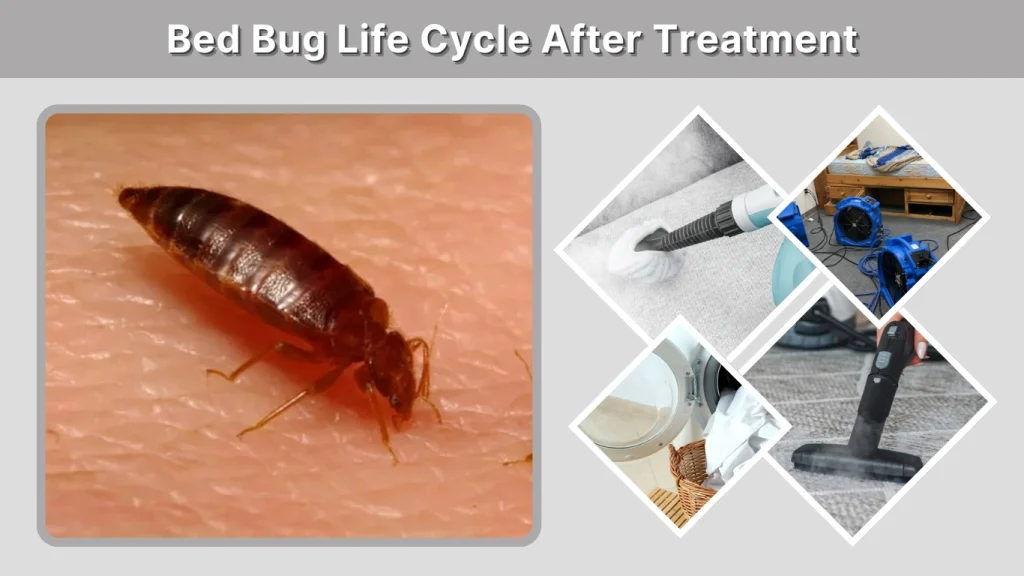
Treatments aim to stop bed bugs at every stage, but some stages are more resistant than others.
What Happens to Eggs After Treatment
Bed bug eggs are one of the hardest stages to eliminate. Some insecticides may not penetrate the egg shell, meaning eggs can still hatch days after treatment. Heat, however, kills eggs instantly at temperatures above 120°F (49°C).
Signs Week-by-Week After Treatment
- Week 1: Fewer bites, but some activity remains
- Week 2: Newly hatched nymphs appear
- Weeks 3–4: Surviving nymphs attempt to feed
- Weeks 4–6: Infestation should collapse if treatment was effective
Preventing Reinfestation During the Life Cycle
To stop bed bugs from restarting their cycle:
- Use mattress encasements
- Reduce clutter
- Vacuum regularly
- Install interceptors under bed legs
- Avoid placing luggage on beds after travel
Breaking the Bed Bug Life Cycle
A successful extermination strategy focuses on disrupting development at every stage.
Heat Treatment
Whole-room heat treatment is highly effective because it kills:
- Eggs
- Nymphs
- Adults
all at once. At temperatures above 120°F, bed bugs die within minutes.
Insecticide Control
Chemical treatments target nymphs and adults. Some products require multiple applications to ensure newly hatched bugs don’t survive.
Long-Term Prevention Strategies
To prevent future infestations:
- Seal cracks and crevices
- Wash bedding regularly
- Avoid second-hand furniture unless inspected
- Use protective bed encasements
FAQs
How long does the full bed bug life cycle take?
The complete bed bug life cycle usually takes 4–6 weeks from egg to reproductive adult. Warmer temperatures and frequent blood meals speed up development, while cooler conditions slow it down. In some environments, the cycle may stretch to 8–10 weeks, especially when food is limited.
How many eggs can a female bed bug lay?
A single female bed bug can lay 1–5 eggs per day and up to 200–500 eggs during her lifetime. Because eggs hatch in about a week, even a small number of females can lead to a rapidly growing infestation if left untreated.
Can bed bugs survive without feeding during their life cycle?
Yes. Nymphs can survive several weeks without feeding, while adults can live 4–6 months without a blood meal. In cooler temperatures, adult bed bugs may survive up to a year, which is why starvation alone is not an effective control method.
Do bed bug treatments kill eggs as well as adults?
Not always. Some chemical treatments may not fully penetrate egg shells, allowing them to hatch later. Heat treatments, however, kill eggs instantly at temperatures above 120°F (49°C). This is why professional treatment often includes multiple methods to target all life stages.
How can I tell what stage of the life cycle a bed bug is in?
You can identify the stage by size and color.
- Eggs: tiny, white, 1 mm
- Nymphs: pale, small, and grow darker with each molt
- Adults: brown, apple-seed sized
Finding shed skins also indicates nymph stages, showing the progression of the life cycle.
