

Bed bug bites can be frustrating, itchy, and sometimes alarming. These tiny blood-feeding pests often strike while you’re asleep, leaving small, red welts on exposed skin. Although bed bugs don’t spread diseases, their bites can cause allergic reactions, discomfort, and anxiety — especially when infestations go unnoticed.
This guide will help you identify what bed bug bites look like, understand their symptoms, and learn how to treat and prevent them effectively. By knowing the signs early, you can protect your skin — and your sleep — from these unwanted nighttime visitors.
What Are Bed Bug Bites?
Bed bugs are small, flat, reddish-brown insects that feed on the blood of humans and animals. They typically bite at night when their host is asleep. Because they inject an anesthetic and anticoagulant, the actual bite doesn’t hurt — you usually notice the marks and itching later.
Each feeding lasts around 5 to 10 minutes, after which the bed bug crawls away to hide. These insects are not a sign of poor hygiene — they thrive anywhere people sleep or rest, including clean homes, hotels, and offices.
Why Bed Bug Bites Happen at Night
Bed bugs are nocturnal, drawn to the carbon dioxide and warmth produced by your body. Their flat shape allows them to squeeze into mattress seams, headboards, or baseboards during the day and emerge at night to feed.
If you wake up with small, red, itchy bumps that weren’t there the night before, bed bugs could be the culprits.
What Do Bed Bug Bites Look Like?
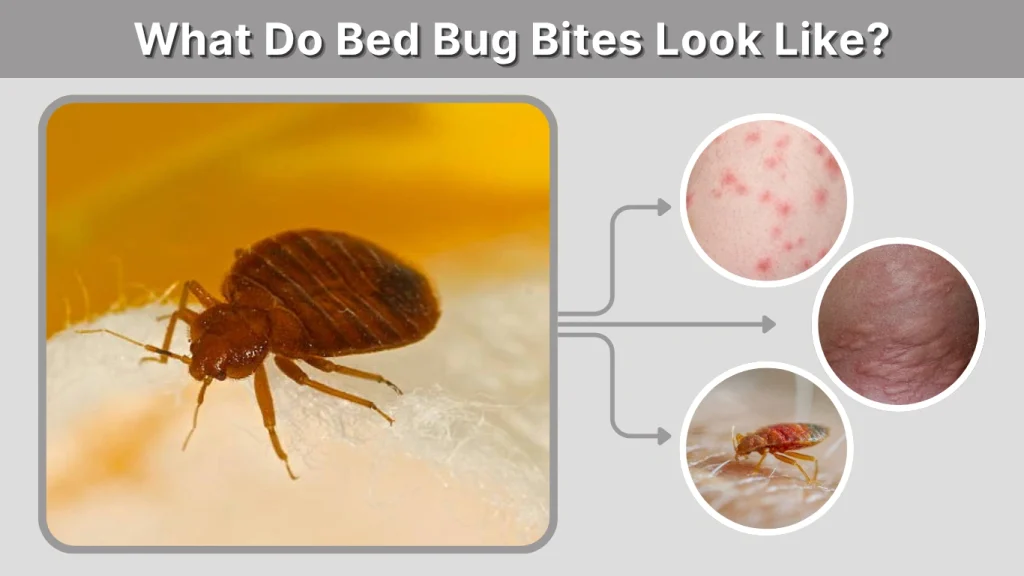
Visual Description
Bed bug bites typically appear as small, red, raised bumps with a darker center. They can look similar to mosquito or flea bites but tend to appear in lines or clusters — often called the “breakfast, lunch, and dinner” pattern.
Other common characteristics:
- Bites are itchy and sometimes painful to touch.
- The skin around the bite may be inflamed or swollen.
- They usually appear in groups of 3–5 on exposed areas.
Common locations include the arms, legs, neck, face, shoulders, and hands — anywhere uncovered during sleep.
Bed Bug Bites on Different Skin Tones
- Light skin: Red or pink bumps with a darker red center; sometimes with small welts.
- Medium skin: Reddish-brown spots that may darken as they heal.
- Dark skin: Small, raised bumps with less visible redness but more noticeable pigmentation changes.
On darker skin, bed bug bites may leave brown or purple marks after healing, especially if scratched.
Close-Up Appearance
A close look at bed bug bites shows round welts, slightly swollen and firm to the touch. They don’t have puncture marks like spider bites, and unlike pimples, they don’t contain pus. In clusters, they may appear like a rash but will follow a pattern — usually along areas in contact with the mattress.
Bed Bug Bite Symptoms and Reactions

Common Symptoms
The most common reaction is itching and mild swelling. Some people may not react at all, while others develop red bumps within a few hours. Typical symptoms include:
- Red, itchy welts on exposed skin.
- Small, raised bumps in rows or clusters.
- Burning or irritation that worsens at night.
- Slight inflammation or rash-like patches around bite areas.
Allergic Reactions
A small percentage of people experience allergic responses to bed bug bites. These reactions can cause:
- Large, swollen welts several centimeters wide.
- Blistering or hives around the bite.
- Severe itching that disrupts sleep.
- Rarely, anaphylaxis (extreme allergic response) — seek medical help if swelling spreads rapidly or breathing becomes difficult.
Bed Bug Bite Rash
Sometimes, multiple bites close together create a rash-like appearance. The skin may feel warm or irritated, and scratching can make it worse. The rash can look similar to eczema or contact dermatitis, leading to confusion with allergic skin conditions.
For sensitive skin — such as in babies or people with allergies — the rash can become more widespread and inflamed. Applying soothing creams or antihistamines can help control discomfort.
How Long Do Bed Bug Bites Last?
Most bed bug bites heal naturally within 1 to 2 weeks.
- Mild reactions: disappear in a few days.
- Moderate swelling: may last up to 10 days.
- Severe allergic reactions: can persist for 2–3 weeks.
Healing time varies depending on skin type and immune response. Scratching can cause secondary infection or scarring, so it’s best to keep the area clean and avoid irritation.
Where Do Bed Bugs Bite?
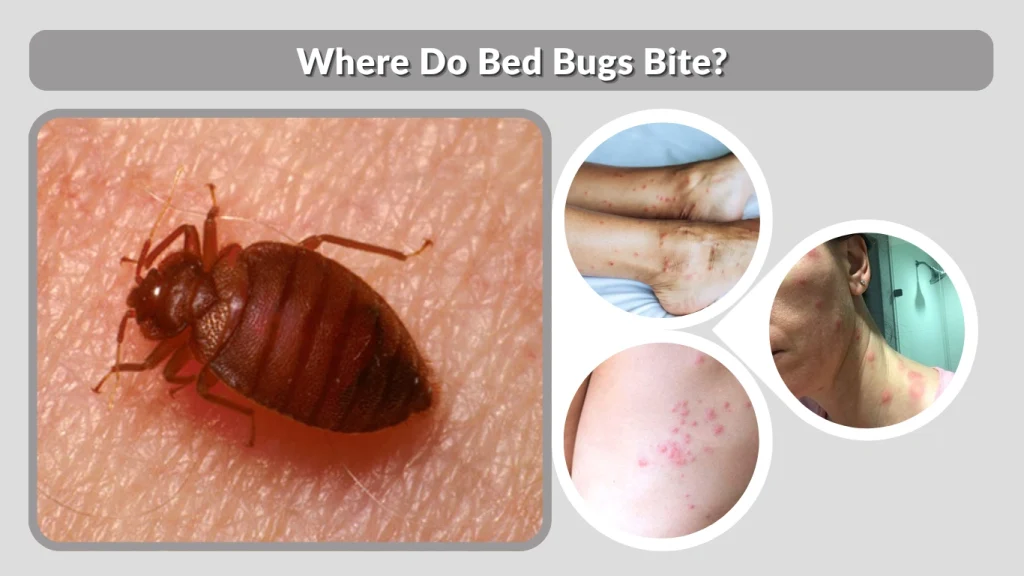
Bed bugs prefer exposed areas of the body, targeting places that are easy to reach during sleep.
Common bite areas include:
- Arms and legs – frequent and easily exposed.
- Neck and face – especially along the jawline or cheeks.
- Back and shoulders – areas in direct contact with the mattress.
- Hands and feet – when uncovered at night.
They rarely bite under clothing or in hair but may crawl across fabric to find bare skin.
Bites on Specific Body Parts
- Face: Small, red clusters often mistaken for acne or allergic reaction.
- Legs and ankles: Linear rows of bites; sometimes confused with flea bites.
- Hands and arms: Itchy welts that appear overnight.
- Back and torso: Multiple small bumps due to prolonged skin contact with bedding.
If you notice new itchy marks in these areas each morning, inspect your sleeping area carefully for signs of infestation.
Bed Bug Bites vs. Other Insect Bites
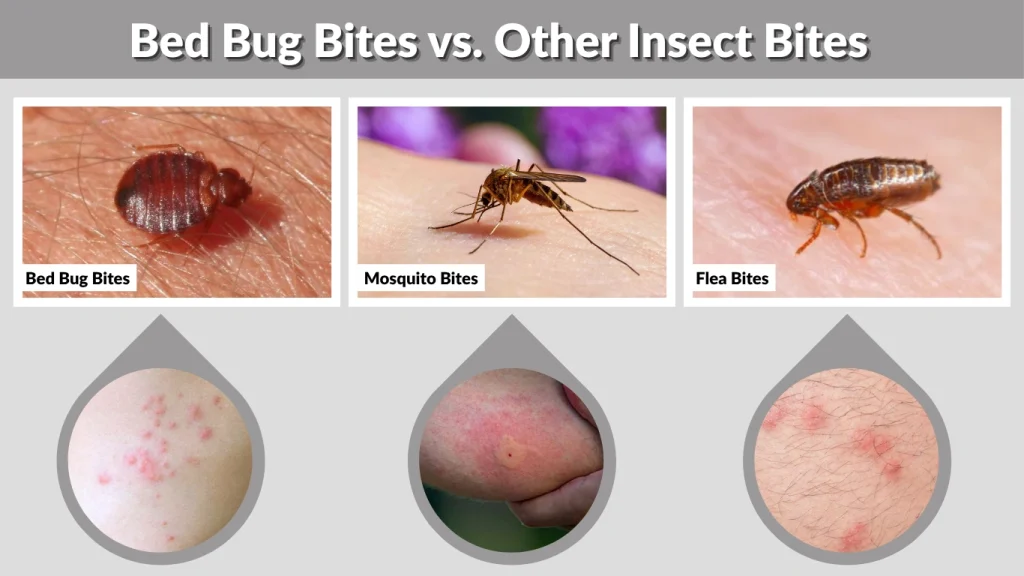
Bed bug bites can easily be confused with mosquito, flea, or spider bites — but there are key differences that help you identify them.
Bed Bug Bites vs. Mosquito Bites
| Feature | Bed Bug Bite | Mosquito Bite |
| Pattern | Rows or clusters | Single or random |
| Color | Red or dark pink | Pink, often with white center |
| Timing | Appears overnight | Anytime (often outdoors) |
| Duration | Lasts 1–2 weeks | Usually heals in 1–3 days |
Mosquito bites are softer, appear immediately, and are often irregular in shape, while bed bug bites are firmer and grouped closely together.
Bed Bug Bites vs. Flea Bites
| Feature | Bed Bug Bite | Flea Bite |
| Pattern | Linear or grouped | Random small dots |
| Location | Upper body, arms, face | Ankles, lower legs |
| Itch Level | Moderate–High | Very intense |
| Appearance | Slight swelling, red bumps | Tiny red dots with center puncture |
Flea bites usually appear around ankles or feet, while bed bug bites occur higher up — around your torso, neck, or arms.
Treatment for Bed Bug Bites
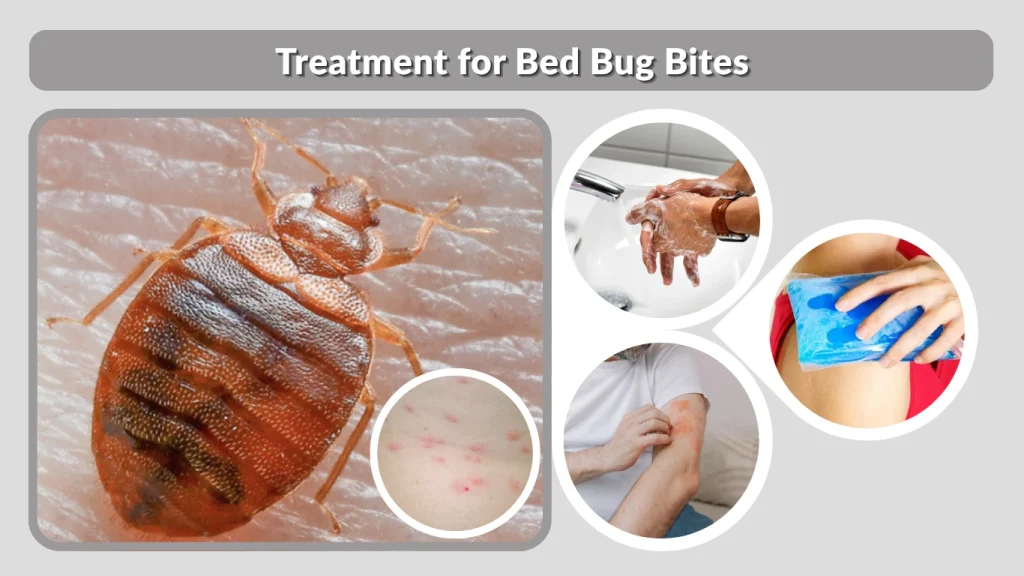
While bed bug bites are rarely dangerous, the itching and irritation can be uncomfortable. The good news is that most bites heal naturally — but proper care can speed up recovery and prevent infection.
Immediate First Aid
If you suspect you’ve been bitten by bed bugs:
- Wash the affected area with mild soap and warm water to remove bacteria.
- Apply a cold compress or ice pack for 10–15 minutes to reduce swelling and soothe itching.
- Avoid scratching — it can break the skin, leading to infection or scarring.
Keeping the area clean and cool is the best way to minimize discomfort during the first few hours after noticing bites.
Over-the-Counter (OTC) Treatments
Several readily available medicines can relieve itching and inflammation:
- Hydrocortisone cream (1%) – reduces redness and swelling. Apply 1–2 times daily.
- Calamine lotion – soothes itching and helps dry rashes or blisters.
- Antihistamine tablets (like Benadryl, Claritin, or Zyrtec) – control allergic itching and swelling.
- Pain relievers (ibuprofen or acetaminophen) – useful for more painful reactions.
For small children or people with sensitive skin, opt for fragrance-free creams or aloe-based gels to avoid irritation.
Home Remedies and Natural Relief
If you prefer natural approaches, there are safe home remedies that can calm bed bug bite irritation:
- Aloe vera gel: Hydrates the skin, eases inflammation, and promotes healing.
- Baking soda paste: Mix with water to form a thick paste and apply for 15–20 minutes to reduce itching.
- Oatmeal bath: A natural anti-inflammatory soak that soothes rashes and redness.
- Witch hazel or tea tree oil (diluted): Has antiseptic properties that help reduce swelling and itching.
- Cold green tea bags or cucumber slices: Cool the skin and minimize puffiness.
These remedies provide short-term comfort while your skin heals naturally.
When to See a Doctor
Most bed bug bites improve within a week, but you should seek medical advice if:
- You notice infection symptoms like pus, pain, or spreading redness.
- You experience severe allergic reactions (hives, dizziness, or difficulty breathing).
- Bites continue to appear even after cleaning — suggesting an active infestation.
- You have secondary skin infections from excessive scratching.
A doctor may prescribe stronger topical corticosteroids or antibiotics for infected bites.
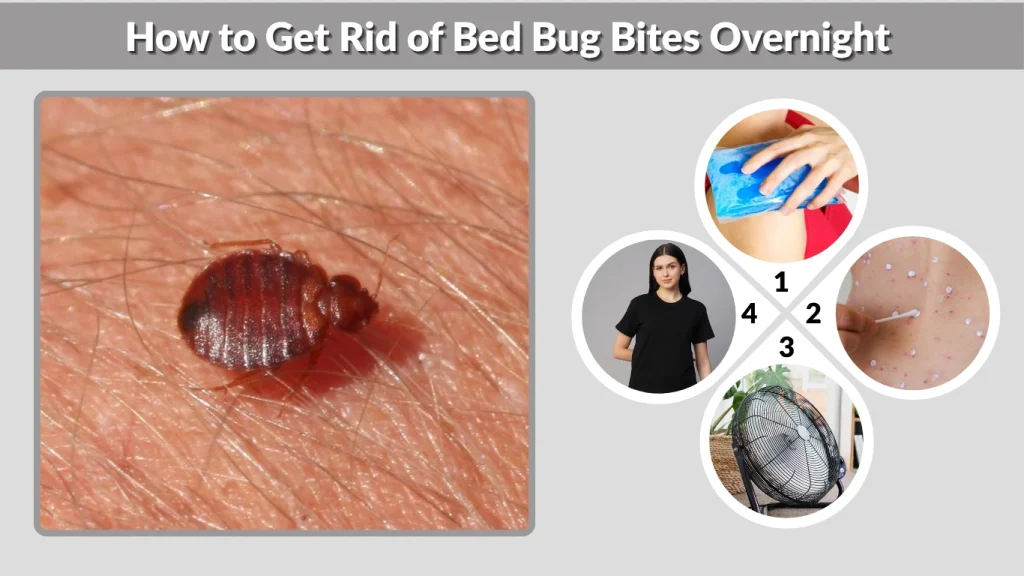
How to Get Rid of Bed Bug Bites Overnight (Realistic Relief Tips)
Quick Soothing Methods
Although complete healing takes a few days, you can significantly reduce discomfort overnight by following these steps:
- Apply cold compresses before bed to numb itching.
- Use hydrocortisone or antihistamine cream right before sleeping.
- Keep the room cool — heat can worsen itching.
- Wear loose, breathable cotton clothing to prevent friction.
- Change into clean sheets and pillowcases to avoid irritation.
Most people notice reduced redness and itching by morning if they follow these steps consistently.
Healing Timeline
- Day 1–2: Bites appear red and itchy. Cooling and creams reduce irritation.
- Day 3–5: Swelling subsides, and bumps flatten.
- Day 7–10: Red marks fade to light brown or skin-toned.
- After 2 weeks: Skin returns to normal; any dark spots (post-inflammatory marks) fade gradually.
Avoid popping or scratching the bites to prevent permanent scars.
No Signs of Bed Bugs but Still Have Bites
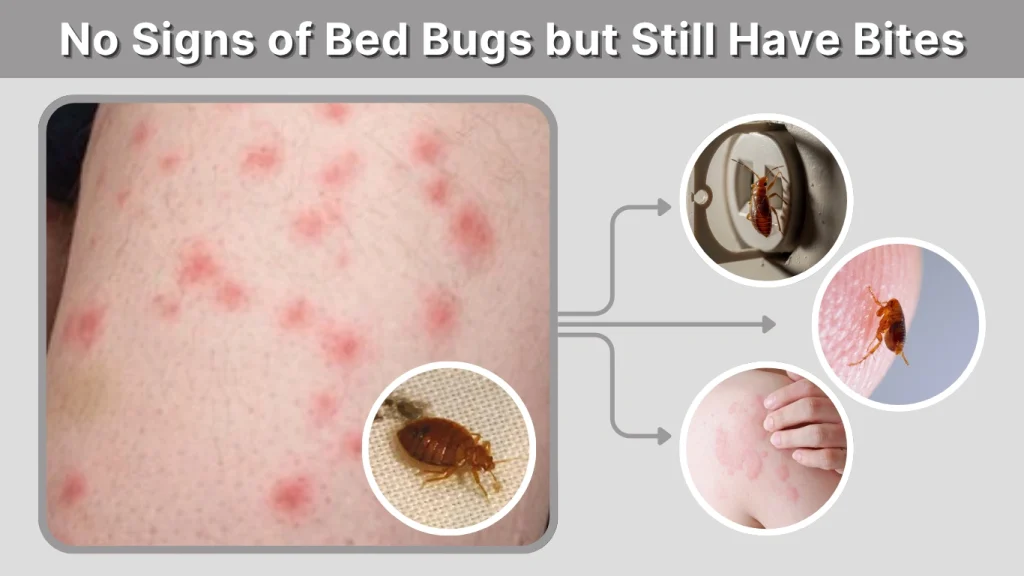
Sometimes, people experience bite-like marks without spotting any bugs. Here’s why that happens:
Possible Explanations
- Hidden infestations: Bed bugs hide deep in cracks, furniture, or electrical outlets.
- Other pests: Fleas, mosquitoes, or mites may be the real cause.
- Allergic reactions: New laundry detergent, fabric softeners, or lotions can cause similar rashes.
- Delayed bite reaction: Some people develop visible marks 12–48 hours after being bitten, leading to confusion about timing.
What to Do
- Inspect bedding and furniture carefully — use a flashlight and magnifying glass.
- Check mattress seams, wall cracks, and behind picture frames.
- Look for telltale signs of bed bugs: dark fecal dots, eggs, or shed skins.
- If uncertain, contact a pest control professional for a thorough inspection.
Even if you don’t see them, one or two bugs can multiply quickly — early action is key.
Prevention and Skin Protection
Preventing Future Bites
To stop bites from returning, focus on eliminating hiding spots and keeping your sleeping area clean:
- Wash bedding, blankets, and clothes on high heat weekly.
- Vacuum mattresses, carpets, and baseboards regularly.
- Seal cracks and crevices where bugs may hide.
- Use bed bug-proof mattress and pillow covers.
- After traveling, inspect luggage and wash clothes immediately.
These steps prevent reinfestation and help you sleep peacefully.
Protecting Sensitive Skin
- Keep skin moisturized with gentle lotion to prevent itching.
- Avoid hot showers or harsh soaps that irritate bites.
- Wear long pajamas to reduce skin exposure at night.
- Avoid scratching — use a clean towel with ice for temporary relief.
FAQs
Do bed bug bites itch?
Yes — itching is the most common symptom, and it may worsen at night.
How long do bed bug bites last?
Usually 1–2 weeks, depending on your skin sensitivity.
Can I treat bed bug bites at home?
Yes — use hydrocortisone cream, antihistamines, or natural remedies like aloe vera and oatmeal.
Do bed bug bites spread diseases?
No. Bed bugs are not known to transmit illnesses, though excessive scratching can cause infections.
What should I do if my bites keep appearing?
Clean your bedding, vacuum furniture, and contact a pest control expert to check for hidden bugs.
