
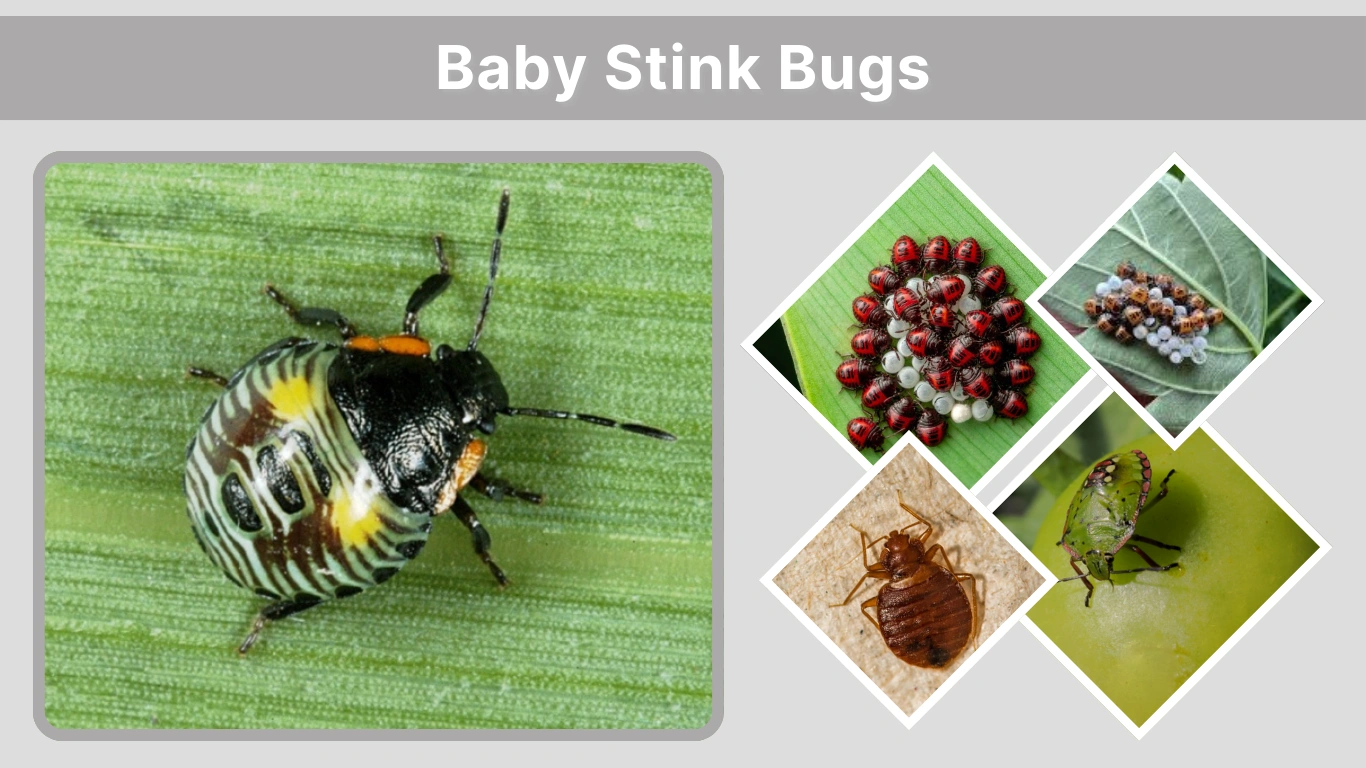
Baby stink bugs, also called nymphs, often surprise homeowners when they suddenly appear in clusters on plants, walls, or windows. Because they look very different from adult stink bugs, many people confuse them with bed bugs or other small insects. This leads to common questions such as what baby stink bugs look like, how many babies stink bugs have, and whether baby stink bugs in the house are dangerous. Understanding their appearance and life cycle makes identification and early control much easier.
What Is a Baby Stink Bug?
A baby stink bug is the immature stage of a stink bug and is known scientifically as a nymph. Stink bugs go through a simple life cycle: egg, nymph, and adult. Unlike butterflies or beetles, they do not have a larval stage. Instead, nymphs hatch from eggs already looking like tiny versions of adults, but without wings and with brighter colors.
Baby stink bugs grow by molting. As they grow, they shed their outer skin several times, each stage called an instar. With every molt, they become larger and more shield-shaped until they finally develop wings and reach adulthood.
What Do Baby Stink Bugs Look Like?
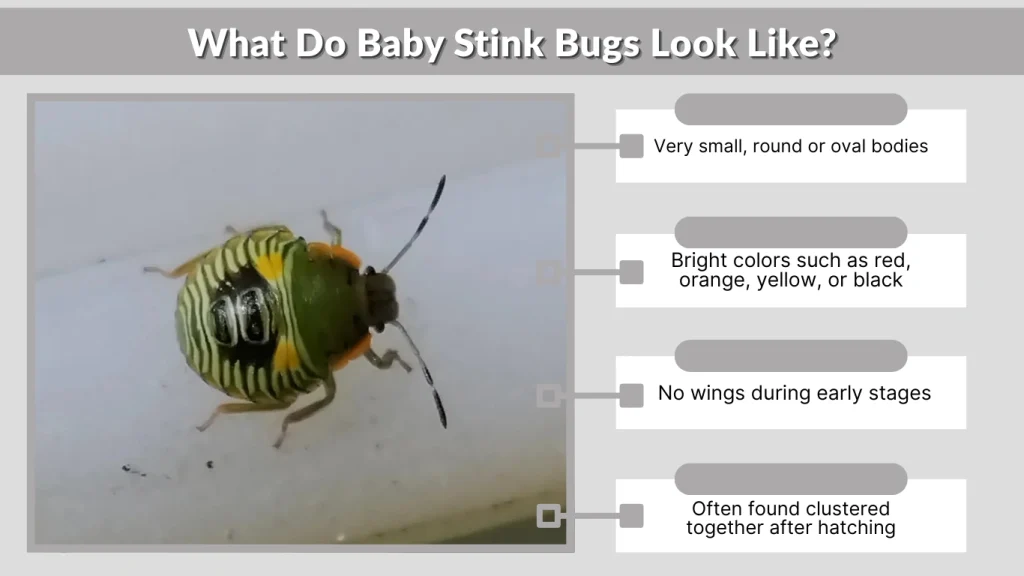
Baby stink bugs are easy to misidentify because they do not yet have the classic shield shape of adults.
- Very small, round or oval bodies
- Bright colors such as red, orange, yellow, or black
- No wings during early stages
- Often found clustered together after hatching
- Gradual change in shape and color as they grow
In the earliest stages, baby stink bugs may look almost like tiny beetles or ladybugs. As they mature, their bodies flatten and widen, and their colors slowly become green, brown, or mottled.
What Does a Baby Stink Bug Look Like Up Close?
Up close, baby stink bugs have smooth, rounded bodies with clearly visible legs and antennae. Their eyes appear dark and bead-like, and their bodies often show bright spots or patterns. Early nymphs are usually no larger than a pinhead, while later stages may reach the size of a grain of rice.
Under magnification, you can see fine texture on their body surface and the beginnings of wing pads forming on older nymphs. These small wing buds are a clear sign that the insect is a developing stink bug rather than a bed bug.
Brown Marmorated Stink Bug Baby: What They Look Like
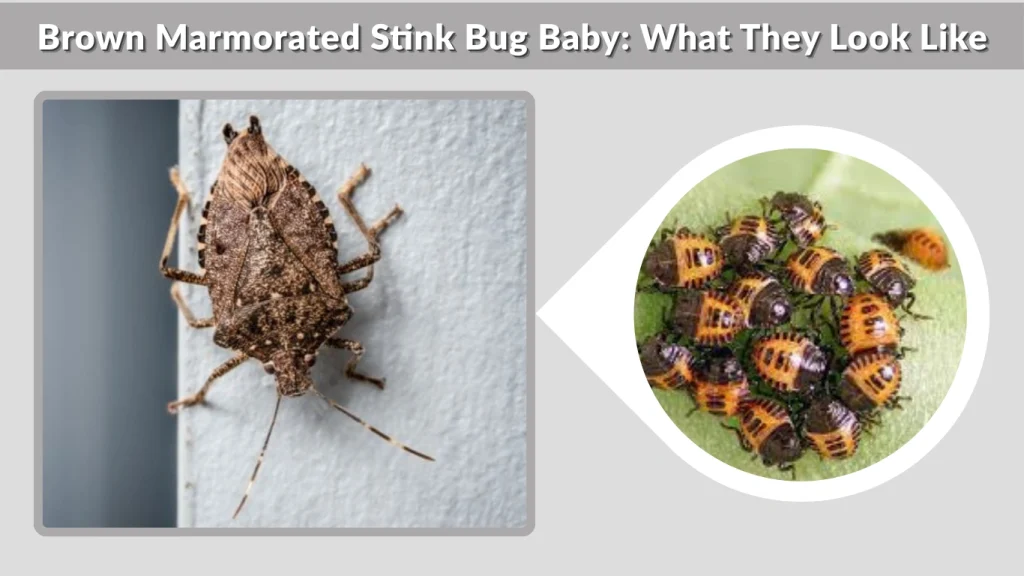
The brown marmorated stink bug is the most common species found in homes, and its babies have a distinctive appearance.
Early Stage Appearance
Newly hatched brown marmorated stink bug nymphs often have round bodies with bright red, orange, and black markings. They stay close to their egg cluster at first and feed together.
How Brown Marmorated Babies Change as They Grow
As they molt, their bright colors fade. The body becomes flatter and more shield-like, and brown, white, and black patterns start to appear. Small wing pads develop on their backs, which later turn into full wings in adulthood.
How Big Are Baby Stink Bugs?
Baby stink bugs start extremely small. Newly hatched nymphs are about 2 millimeters long. With each molt, they grow larger. Middle stages are about the size of a sesame seed, while later stages approach the size of a grain of rice. It usually takes several weeks for baby stink bugs to reach full adult size, depending on temperature and food availability.
How Many Babies Do Stink Bugs Have?
Stink bugs reproduce quickly, which is why infestations can grow fast.
- Eggs per cluster: Usually 20 to 30 eggs
- Lifetime egg production: A single female can lay several hundred eggs
- Reproduction frequency: Eggs are laid multiple times during warm months
- Survival rate: Only a portion of babies reach adulthood
- Seasonal growth: Populations increase rapidly in spring and summer
This high reproduction rate explains why baby stink bugs often appear suddenly in large numbers.
Where Do Baby Stink Bugs Come From?
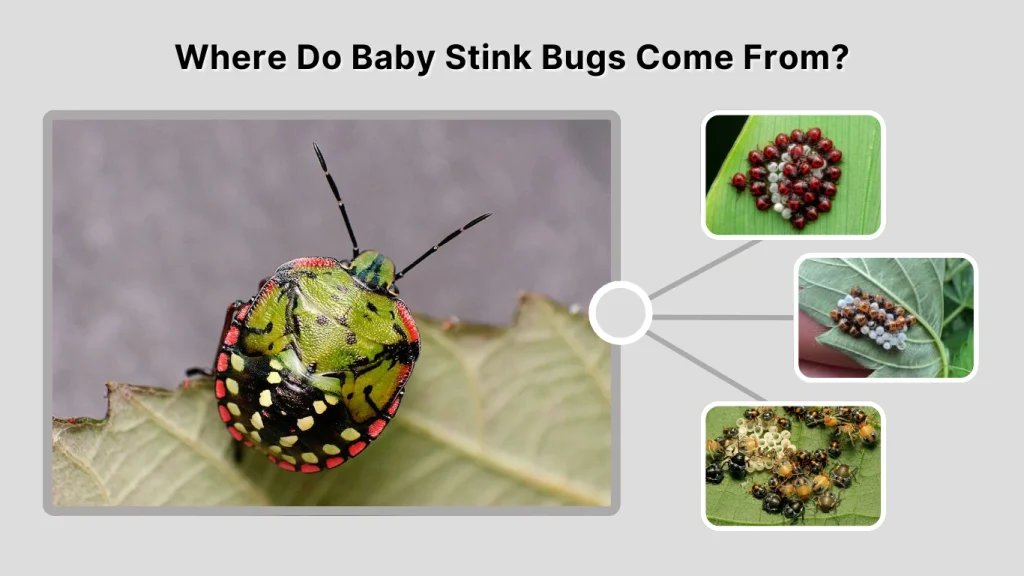
Baby stink bugs come from eggs laid by adult females. These eggs are usually placed in neat clusters on the underside of leaves, plant stems, fruits, and vegetables. After about a week, tiny nymphs hatch and remain grouped together while they begin feeding.
Outdoor Hatching Areas
Outdoors, baby stink bugs are most often found on garden plants, trees, shrubs, and crops. They feed on plant juices and grow rapidly during warm months.
Baby Stink Bugs in the House
Baby stink bugs in the house usually appear when eggs are laid on houseplants, near windows, or when outdoor plants are brought indoors. Occasionally, nymphs may wander inside through open windows, screens, or wall gaps, but large indoor populations usually trace back to nearby plants.
Baby Stink Bug vs Bed Bug
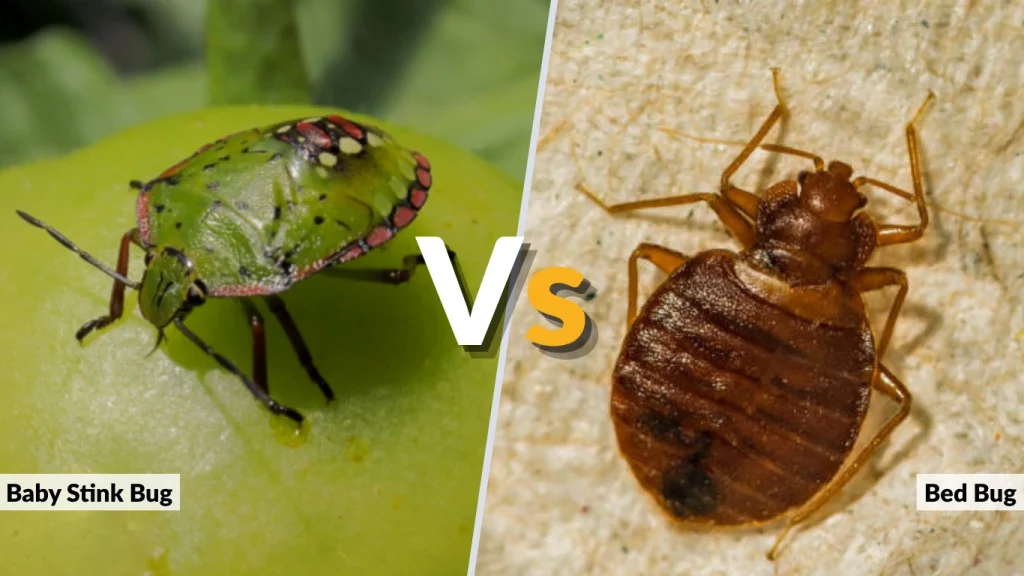
Baby stink bugs are often mistaken for bed bugs because of their small size, but they are very different insects.
Baby stink bugs are rounder, more colorful, and usually found on plants, walls, or windows. Bed bugs are flat, oval, brown, and hide in mattresses, furniture seams, and bed frames. Baby stink bugs do not infest beds and are not nighttime blood feeders like bed bugs.
A key difference is behavior. Baby stink bugs feed on plants and move slowly in groups. Bed bugs hide in cracks and come out at night to bite.
Are Baby Stink Bugs Dangerous?
Baby stink bugs are not dangerous to humans. They do not sting and rarely bite. Even if they bite, it usually causes only mild irritation. They do not carry diseases and are not poisonous.
Their main impact is agricultural, not medical. They damage plants by feeding on fruits, vegetables, and leaves. Indoors, they are mostly a nuisance insect.
My Baby Ate a Stink Bug: Should I Worry?
This is a common concern among parents, especially when stink bugs appear indoors.
Is Eating a Stink Bug Toxic?
Stink bugs are not poisonous. If a baby eats a stink bug, the biggest issues are the unpleasant taste, possible gagging, mild mouth irritation, or temporary upset stomach. The smell can be strong, but it is not toxic.
What to Do If a Baby Eats a Stink Bug
Gently rinse the baby’s mouth with water. Watch for choking, vomiting, or allergic reactions. In most cases, no treatment is needed. If your baby shows unusual symptoms, difficulty breathing, or persistent vomiting, contact a healthcare provider.
Do Baby Stink Bugs Smell Like Adults?
Baby stink bugs can release odor, but it is much weaker than in adults. Their scent glands are not fully developed, so the smell is usually faint. As they grow, their ability to release strong odor increases.
Why Baby Stink Bugs Appear in Large Numbers
Baby stink bugs hatch from egg clusters, so they naturally appear grouped together. Staying in clusters offers protection and makes it easier for them to find food. This synchronized hatching is why homeowners sometimes suddenly see dozens of tiny bugs at once.
How to Get Rid of Baby Stink Bugs
For indoor sightings, gently vacuum baby stink bugs or wipe them up with soapy water. Avoid crushing them, as this may release odor. Remove nearby houseplants where eggs may be present. Outdoors, spraying plants with water, removing egg clusters, and sealing home entry points helps reduce populations.
Why Knowing What Baby Stink Bugs Look Like Matters
Correct identification prevents unnecessary panic and helps homeowners act early. Recognizing baby stink bugs allows quick removal before they mature and spread. It also prevents confusion with bed bugs or other biting insects.
FAQs
What do baby stink bugs look like?
Baby stink bugs are very small, round or oval insects often brightly colored red, orange, yellow, or black. They do not have wings at first and are usually found clustered together. As they grow, they become flatter, duller in color, and more shield-shaped.
How many babies do stink bugs have?
A single female stink bug can lay several hundred eggs in her lifetime. Each egg cluster usually contains about 20 to 30 eggs, which hatch into baby stink bugs within about a week under warm conditions.
Are baby stink bugs the same as bed bugs?
No. Baby stink bugs feed on plants and are often colorful and round. Bed bugs are flat, brown, hide in beds and furniture, and feed on blood. Baby stink bugs do not infest mattresses or bite people regularly.
What should I do if my baby ate a stink bug?
Stink bugs are not poisonous. Rinse your baby’s mouth with water and observe for gagging, vomiting, or allergic reactions. Most cases require no treatment. Contact a doctor if concerning symptoms appear.
Where are baby stink bugs usually found?
Baby stink bugs are usually found on the underside of leaves, garden plants, and crops. Indoors, they may appear on houseplants, near windows, or where outdoor plants are brought inside.
