

Baby bed bugs, or nymphs, are the youngest stage of these blood-sucking pests. Though tiny, they are just as troublesome as adult bed bugs because they feed on human blood to grow. Many people confuse them with baby roaches or ticks due to their small size and pale color. In this guide, you’ll learn how to identify baby bed bugs, what their bites look like, how fast they develop, and the most effective ways to get rid of them before they become a full infestation.
Understanding Baby Bed Bugs

What Are Baby Bed Bugs?
Baby bed bugs are called nymphs, the immature form of adult bed bugs. After hatching from eggs, they begin feeding almost immediately. Each nymph must consume blood before it can shed its exoskeleton and grow to the next stage. This process repeats five times before they reach adulthood.
- Hatch from eggs in 6–10 days.
- Require a blood meal at each stage to mature.
- Can survive several weeks without feeding.
- Look nearly transparent when unfed but turn red after eating.
These tiny pests are just as resilient as adults and can quickly grow into a full colony if not detected early.
Size and Appearance
Keywords: baby bed bug size, what do baby bed bugs look like
Baby bed bugs are extremely small — about 1–2 mm long, roughly the size of a sesame seed. They share the same oval, flat body shape as adult bed bugs but are much lighter in color.
Key features include:
- Color: pale white or translucent when hungry; red-brown after feeding.
- Shape: oval, flat, and wingless.
- Visibility: visible to the naked eye but easily overlooked on light sheets.
- Shedded shells: nymphs leave behind paper-thin exoskeletons after each molt.
If you notice tiny pale bugs or light husks near mattress seams or furniture joints, you may be seeing baby bed bugs.
The Life Cycle of a Bed Bug

From Egg to Adult
Bed bugs have a simple metamorphosis, passing from egg → nymph → adult without a larval stage. The entire cycle takes about 4–6 weeks depending on temperature and food availability.
| Stage | Description | Duration |
| Egg | Tiny, white, sticky, laid in clusters. | 6–10 days |
| Nymph (Baby) | Feeds and molts five times. | 4–5 weeks |
| Adult | Fully grown, reproduces quickly. | Up to a year |
Warmer temperatures and regular feeding speed up growth, allowing infestations to expand rapidly.
How Many Babies Can Bed Bugs Produce?
A single female bed bug can lay 200–500 eggs during her lifetime. Because each baby begins feeding right after hatching, populations multiply exponentially. If left unchecked, a few adults can turn into thousands of nymphs within a few months.
How to Identify Baby Bed Bugs

What Do Baby Bed Bugs Look Like?
Keywords: pictures of baby bed bugs, images of baby bed bugs**
Baby bed bugs are often described as tiny grains of rice with legs. They appear white or cream-colored at first but darken to amber or reddish brown after feeding. When squished, they may leave small red stains on bedding — evidence of fresh blood.
Signs of baby bed bugs include:
- Clusters of tiny white eggs glued to wood or fabric seams.
- Light brown shed skins along mattress edges.
- Tiny reddish stains or black dots (excrement) on sheets.
Because of their color and size, they blend easily into light-colored fabrics, making early detection difficult without close inspection.
Can You See Baby Bed Bugs?
Yes, baby bed bugs are visible to the human eye, though they can be mistaken for lint or dust specks. With a flashlight or magnifying glass, you can easily spot them crawling along mattress seams, bed frames, or window sills.
They are most active at night, typically feeding for 3–10 minutes before retreating to hiding spots near the bed.
Baby Bed Bugs vs Other Insects

Common Look-Alikes
Because baby bed bugs are small and pale, they’re often confused with other insects. Knowing the differences helps ensure correct identification.
| Insect | Color | Movement | Key Difference |
| Baby Bed Bug | Pale or reddish-brown | Crawls quickly | No wings, feeds on blood |
| Baby Cockroach | Dark brown | Runs very fast | Found near food, not beds |
| Tick (Larva) | Gray or brown | Slow | Eight legs instead of six |
| Baby Stink Bug | Green or brown | Medium speed | Larger, emits odor |
If the insect you spot turns red after feeding or leaves behind blood spots on bedding, it’s likely a bed bug nymph rather than a roach or tick.
Do Baby Bed Bugs Bite?

Feeding Habits
Keywords: do baby bed bugs bite, can baby bed bugs bite**
Yes — baby bed bugs bite and feed just like adults. They need blood to grow and molt. Nymphs inject a small amount of saliva containing an anesthetic and anticoagulant, so you rarely feel the bite in real time.
They typically bite exposed skin such as arms, neck, or legs while you sleep. Each nymph feeds every few days, meaning ongoing bites indicate an active infestation.
What Do Baby Bed Bug Bites Look Like?
Keywords: baby bed bug bites pictures, bed bug bites on baby, early stage bed bug bites on baby**
Baby bed bug bites appear as small, red, itchy welts often arranged in lines or clusters. On sensitive skin, such as babies or children, they can swell or form tiny blisters. The bites can last several days and may cause secondary irritation from scratching.
To confirm baby bed bug activity, look for bites that appear overnight and new ones each morning, especially if you see light brown skins or tiny bugs nearby.
How to Get Rid of Baby Bed Bugs
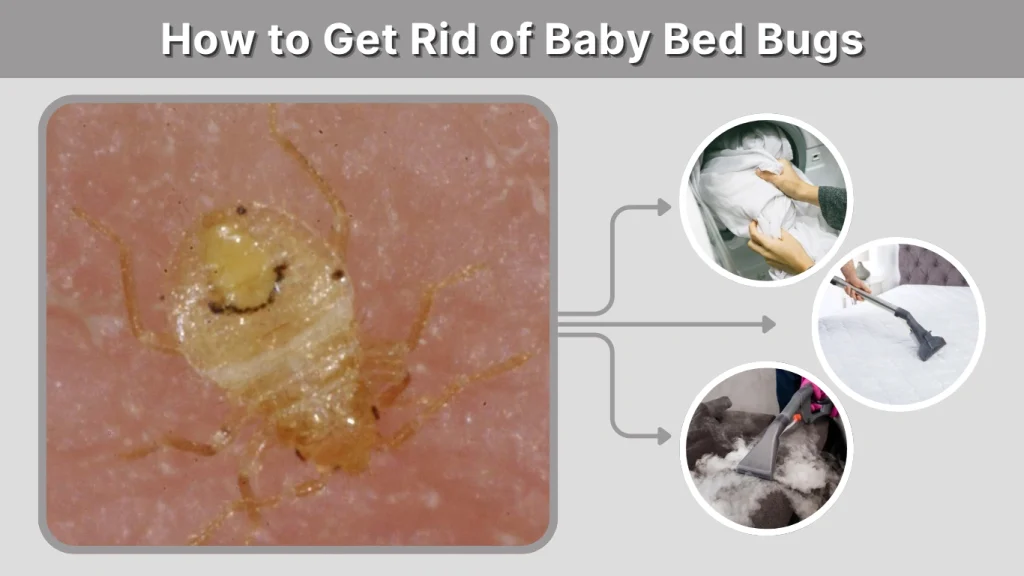
Step-by-Step Removal
Keywords: how to get rid of baby bed bugs, baby bed bugs on window sill**
Because baby bed bugs grow and reproduce quickly, eliminating them early is critical. A few targeted steps can break the cycle before a full infestation develops.
- Wash and Dry Bedding on High Heat
- Heat kills baby bed bugs and their eggs instantly at 120 °F (49 °C) or higher.
- Wash all sheets, pillowcases, curtains, and clothing, then dry for at least 30–45 minutes on high heat.
- Heat kills baby bed bugs and their eggs instantly at 120 °F (49 °C) or higher.
- Vacuum Thoroughly
- Use a hose attachment to reach mattress seams, headboards, and corners.
- Dispose of the vacuum bag immediately in an outdoor trash bin.
- Use a hose attachment to reach mattress seams, headboards, and corners.
- Steam Clean Furniture and Floors
- Steamers reach 212 °F (100 °C), hot enough to kill nymphs hiding deep inside cushions or cracks.
- Move slowly — about 1 inch per second — so the heat penetrates effectively.
- Steamers reach 212 °F (100 °C), hot enough to kill nymphs hiding deep inside cushions or cracks.
- Apply Diatomaceous Earth (DE)
- Sprinkle DE around bed legs, floor edges, and furniture bases.
- The fine powder cuts through the bug’s outer shell, dehydrating it within hours.
- Sprinkle DE around bed legs, floor edges, and furniture bases.
- Seal Cracks and Crevices
- Use caulk to close wall gaps, baseboard joints, or furniture seams.
- This prevents nymphs from hiding or re-infesting the same area.
- Use caulk to close wall gaps, baseboard joints, or furniture seams.
- Inspect Weekly
- Continue monitoring for at least 6–8 weeks, since newly laid eggs may hatch later.
- Continue monitoring for at least 6–8 weeks, since newly laid eggs may hatch later.
Do Baby Powders Work?
Keywords: does baby powder kill bed bugs, baby powder bed bugs, baby powder and bed bugs**
Many people try baby powder as a quick fix, but it does not kill bed bugs effectively. Baby powder (talc or cornstarch) lacks the microscopic sharpness needed to cut through a bed bug’s waxy outer layer.
What It Does:
- May make surfaces slippery, temporarily slowing the insects.
- Can reduce movement near bed legs but won’t eliminate infestations.
Better Alternative:
- Diatomaceous earth or silica powder is far more effective.
- These substances physically damage the bed bug’s exoskeleton, drying them out within 24 hours.
Natural and Chemical Solutions
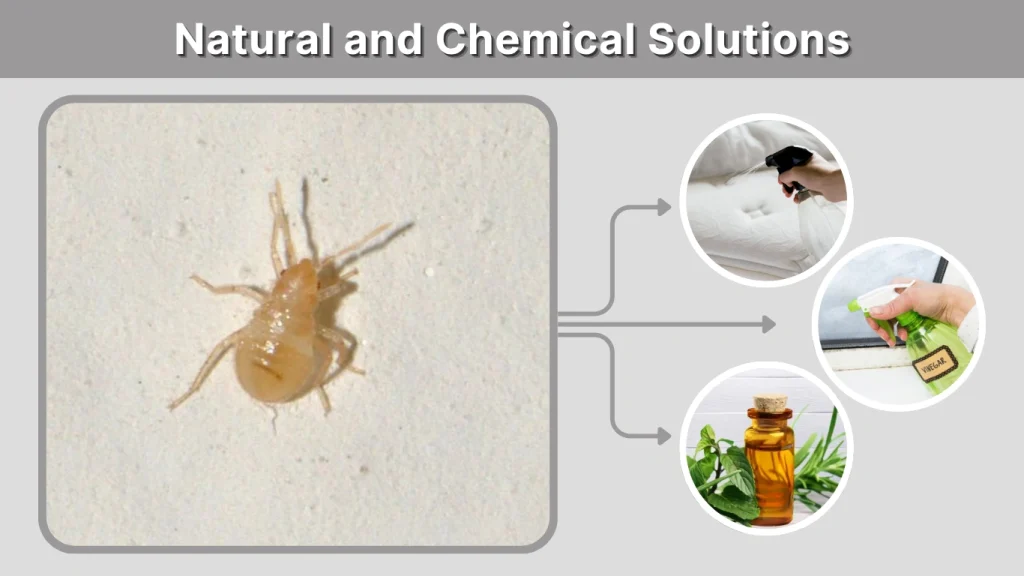
Natural Remedies
- Rubbing Alcohol: Instantly kills baby bed bugs on contact but evaporates quickly, so frequent application is necessary.
- Vinegar: Its high acidity damages the bug’s nervous system; spray directly onto visible insects.
- Essential Oils: Tea tree, peppermint, and lavender oils repel and kill bed bugs naturally when sprayed in seams and corners.
DIY Natural Spray:
Mix 1 cup of water, 1 tablespoon of alcohol, and 15 drops of tea tree or lavender oil. Spray directly on mattress edges, curtains, and window sills daily.
Chemical Treatments
For large infestations or apartment complexes, chemical sprays are more effective.
- Pyrethroid Sprays: Kill baby and adult bed bugs within minutes of contact.
- Neonicotinoids: Attack the nervous system and help control resistant strains.
- Desiccants (Silica, DE): Provide long-term protection by drying out any survivors.
Use these products carefully and follow label instructions, especially around children or pets. For severe infestations, professional pest-control services are the safest option.
Color and Visibility of Baby Bed Bugs
Keywords: what color are baby bed bugs, are baby bed bugs white, are baby bed bugs red, are baby bed bugs visible**
Understanding the color stages helps identify baby bed bugs early.
| Stage | Color | Notes |
| Newly hatched | White or transparent | Hard to see; looks like dust. |
| After first meal | Bright red | Abdomen filled with blood. |
| Later nymph | Tan to brown | Darkens after each molt. |
| Before adulthood | Reddish-brown | Similar to adults in shape. |
Despite their tiny size, baby bed bugs are visible to the naked eye — particularly after feeding, when their red abdomen stands out against light fabric.
Baby Bed Bugs vs Adult Bed Bugs

Keywords: baby bed bug size, baby bed bug vs adult**
| Feature | Baby Bed Bug (Nymph) | Adult Bed Bug |
| Size | 1–2 mm | 4–5 mm |
| Color | White → red → brown | Reddish-brown |
| Feeding | Every few days | Weekly |
| Mobility | Faster | Slower but sturdier |
| Reproduction | None | Lays 200–500 eggs |
| Hardiness | Slightly weaker | More resistant |
Both stages bite humans and hide in the same areas, but adults reproduce — making early detection of babies crucial to preventing rapid population growth.
Prevention and Long-Term Control
How to Stop Baby Bed Bugs from Returning
- Inspect weekly: especially around beds, sofas, and window sills.
- Use mattress encasements: trap any surviving bugs inside.
- Vacuum regularly: clean carpets and floorboards to remove eggs.
- Declutter: fewer hiding spots make detection easier.
- Inspect second-hand furniture: never bring it home without cleaning.
Professional Pest Control
If the infestation persists:
- Hire a licensed exterminator experienced in bed bug heat treatments.
- Professionals use equipment that raises room temperature to 135–140 °F (57–60 °C), killing all life stages instantly.
- Follow up with preventive treatments or inspections every 6 months.
Myths About Baby Bed Bugs
| Myth | Reality |
| Baby bed bugs can’t bite | They bite immediately after hatching. |
| Baby powder kills bed bugs | False — only slows them down. |
| They only infest dirty homes | Bed bugs are attracted to warmth, not cleanliness. |
| They die without food quickly | Nymphs can survive weeks without feeding. |
| You can’t see them | They’re small but visible with the naked eye. |
FAQs
Are Baby Bed Bugs Visible to the Eye?
Yes. Although tiny (about 1–2 mm), baby bed bugs can be seen crawling on sheets or walls, especially after feeding.
Do Baby Bed Bugs Move Fast?
Yes. They’re surprisingly quick and can travel several feet in seconds to reach new hiding spots.
Does Baby Powder Kill Bed Bugs?
No. It does not dehydrate them like diatomaceous earth does. Use DE or silica gel instead.
How Can I Identify Baby Bed Bugs on My Bed?
Look for pale, flat insects with red bodies after feeding, tiny eggs, or light-brown molted skins near mattress seams and bed frames.
How Many Baby Bed Bugs Can Hatch at Once?
Each female lays 5–7 eggs per day, totaling up to 500 eggs over her lifetime — enough to create an infestation within months.
