
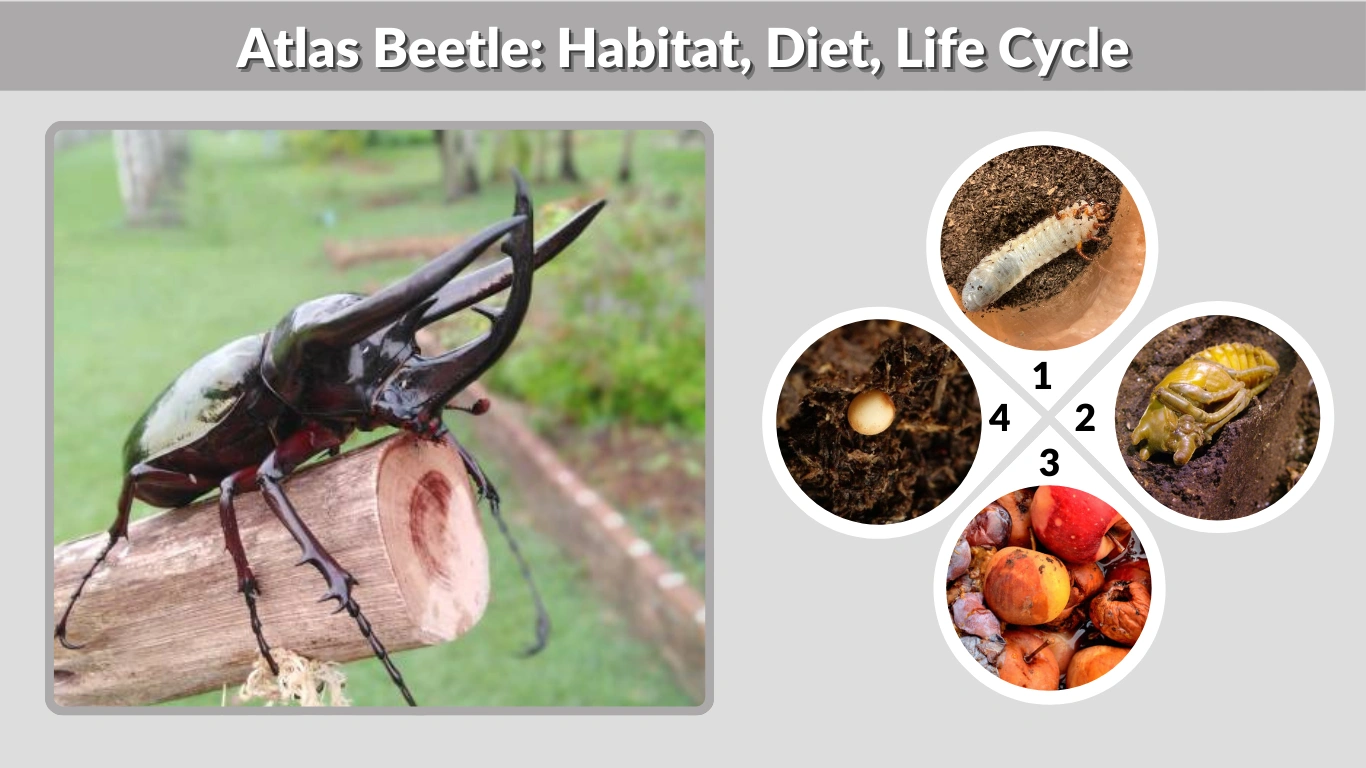
The atlas beetle is one of the largest and most powerful rhinoceros beetles found in Asia. Known for its impressive size and the distinctive three horns of the male, this beetle belongs to the scarab beetle family. Atlas beetles live mainly in tropical forests where warm temperatures and abundant vegetation provide the perfect conditions for survival. From the massive atlas beetle larvae to their unique diet and lifespan, these insects play an important role in forest ecosystems and are fascinating to scientists and insect enthusiasts alike.
What Is an Atlas Beetle?
The atlas beetle, scientifically known as Chalcosoma atlas, is a large species of rhinoceros beetle belonging to the family Scarabaeidae. This beetle is famous for its strong body and the three prominent horns found on males.
Atlas beetles are part of the rhinoceros beetle group, which is known for horned males that use these structures in battles with rivals. These beetles are often admired for their strength and unusual appearance.
The name “Atlas beetle” comes from Atlas in Greek mythology, the powerful titan who was said to carry the heavens on his shoulders. The name reflects the beetle’s strength and massive body compared to many other insects.
Despite their intimidating appearance, atlas beetles are harmless to humans and spend most of their lives feeding, growing, and reproducing in tropical forest environments.
Scientific Classification
The atlas beetle belongs to the following biological classification:
- Kingdom: Animalia
- Phylum: Arthropoda
- Class: Insecta
- Order: Coleoptera
- Family: Scarabaeidae
- Genus: Chalcosoma
Like other beetles, atlas beetles have hardened forewings called elytra, which protect the delicate wings used for flight.
Why It Is Called the Atlas Beetle
The name “Atlas beetle” reflects the insect’s impressive strength and size. In Greek mythology, Atlas was a titan known for holding up the sky, symbolizing great strength.
Male atlas beetles appear especially powerful because of their three large horns, which give them a dramatic and intimidating appearance. These horns are not used for defense against predators but are mainly used during battles with other males when competing for mates.
Atlas Beetle Size and Physical Characteristics
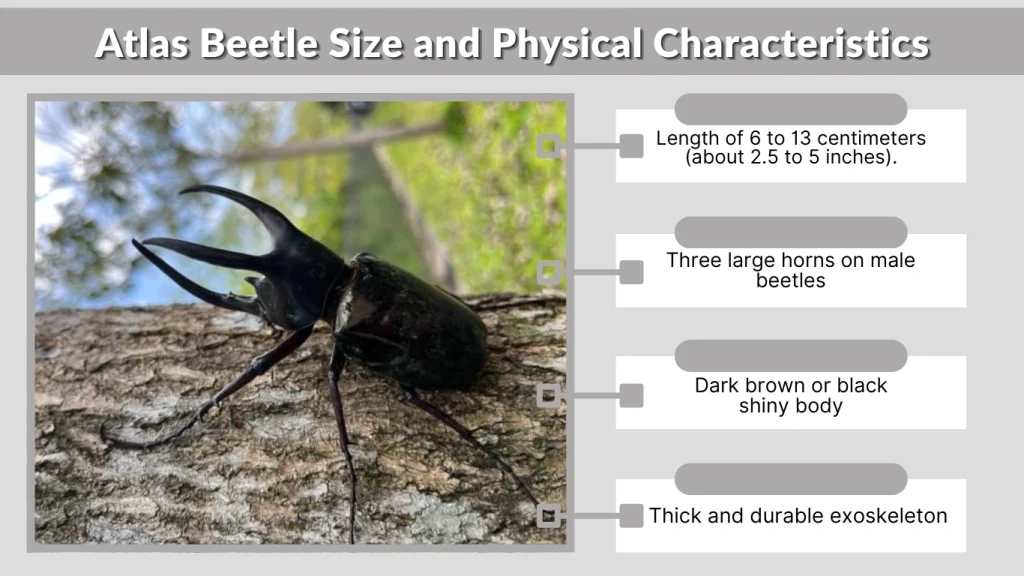
Atlas beetles are among the largest rhinoceros beetles in Asia. Their size and unique horn structure make them one of the most recognizable beetles in tropical forests.
Size and Weight
Adult atlas beetles can grow to a length of 6 to 13 centimeters (about 2.5 to 5 inches). Males are usually larger than females because they have long horns that extend from their head and thorax.
Their bodies are thick and strong, allowing them to climb trees and support their large horns.
Distinctive Features
Several features make atlas beetles easy to identify:
- Three large horns on male beetles
- Dark brown or black shiny body
- Thick and durable exoskeleton
- Strong legs designed for climbing
- Large body size compared with many other beetles
These characteristics help atlas beetles survive in dense forest environments.
Male vs Female Atlas Beetles
Male and female atlas beetles differ significantly in appearance.
Male beetles have three long horns, with one central horn extending forward and two additional horns on the thorax. These horns are used during battles with other males.
Female atlas beetles do not have horns. They are usually smaller and have a smoother body shape. Their main role is reproduction and laying eggs in suitable locations where larvae can develop safely.
Atlas Beetle Habitat
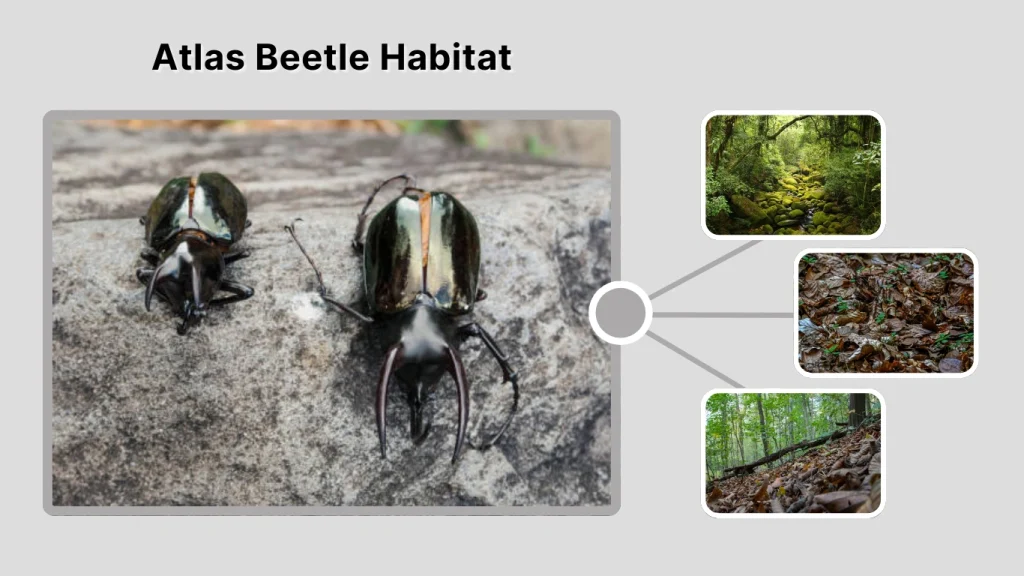
Atlas beetles live primarily in tropical and subtropical forests where the climate is warm and humid.
Where Atlas Beetles Live
These beetles are commonly found in environments such as:
- Tropical rainforests
- Forest floors rich in organic material
- Tree trunks and branches
- Areas with decaying wood
Adult atlas beetles often climb trees to search for food, while larvae develop in soil or rotting wood.
Geographic Distribution
Atlas beetles are native to Southeast Asia. They are commonly found in countries such as:
- Indonesia
- Malaysia
- Thailand
- Philippines
- Southern China
These regions provide the warm climate and rich forest ecosystems necessary for the beetle’s survival.
Environmental Conditions They Prefer
Atlas beetles thrive in environments that provide:
- Warm tropical temperatures
- High humidity levels
- Dense vegetation
- Abundant decaying wood and organic material
These conditions support both adult beetles and developing larvae.
Atlas Beetle Diet
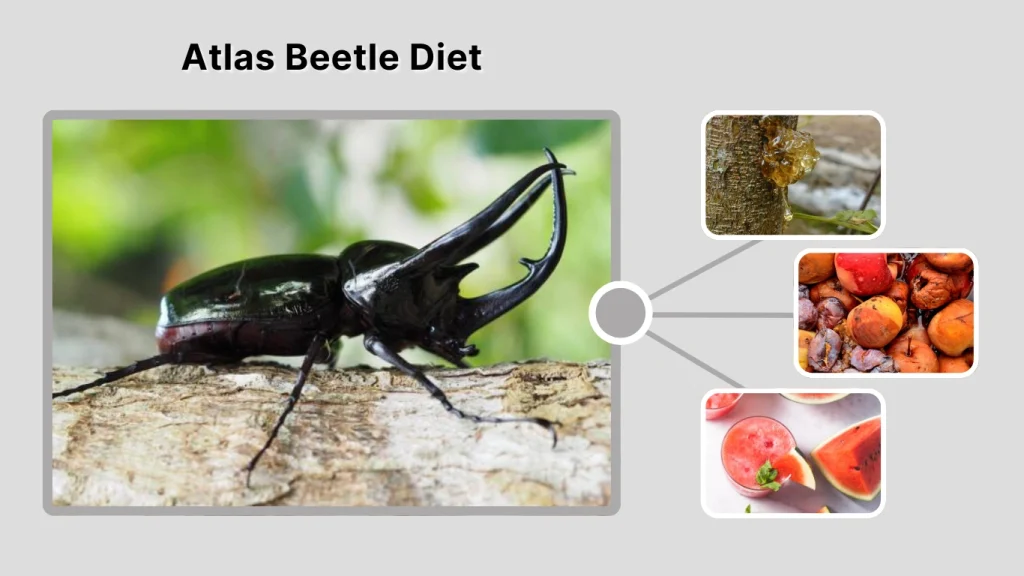
The atlas beetle diet mainly consists of sugary substances found in forest environments.
Adult atlas beetles commonly feed on:
- Tree sap
- Overripe fruits
- Fermented fruit juices
- Plant-based sugary liquids
These foods provide the energy needed for movement, climbing, and reproduction.
Atlas beetles are usually active at night, when they search for food on trees or fallen fruit on the forest floor.
Atlas Beetle Larvae
The atlas beetle larvae stage is a crucial part of the insect’s development. During this phase, the beetle grows rapidly and gathers the nutrients it needs to transform into an adult. Like many scarab beetles, atlas beetle larvae appear as large white grubs that spend most of their time feeding underground or inside decaying wood.
Appearance of Atlas Beetle Larvae
Atlas beetle larvae have the typical appearance of scarab beetle grubs. They usually have:
- A thick, curved C-shaped body
- Cream or pale white coloration
- A large brown head with strong mandibles
- A segmented body structure
The strong mandibles allow the larvae to break down decaying organic material, which forms the main part of their diet.
Size of Atlas Beetle Larvae
Atlas beetle larvae can grow surprisingly large during their development. Because they feed continuously throughout the larval stage, they increase in size quickly.
These larvae are considered among the largest beetle larvae, and their size allows them to store enough energy for the transformation into adult beetles.
Where Atlas Beetle Larvae Live
Atlas beetle larvae usually live in protected environments where food is plentiful. Common locations include:
- Rotten logs
- Decaying tree trunks
- Forest soil rich in organic matter
- Leaf litter on the forest floor
These areas provide both nourishment and shelter from predators.
Diet of Atlas Beetle Larvae
The diet of atlas beetle larvae mainly consists of decomposing organic materials. They typically feed on:
- Decaying wood
- Decomposing plant matter
- Organic materials in forest soil
By feeding on these materials, the larvae help break down dead plant matter and contribute to nutrient recycling in forest ecosystems.
Atlas Beetle Life Cycle
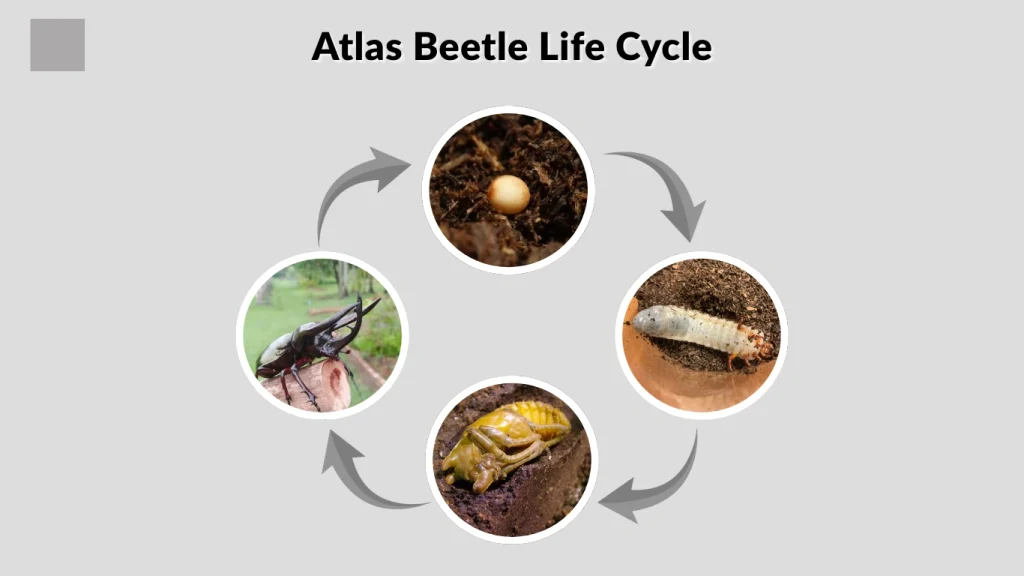
Atlas beetles undergo complete metamorphosis, which means they pass through four distinct life stages: egg, larva, pupa, and adult.
Stage 1 – Egg
The life cycle begins when a female atlas beetle lays eggs in soft soil or decaying wood. These environments provide moisture and food for the developing larvae.
After a few weeks, the eggs hatch and the larvae begin feeding immediately.
Stage 2 – Larva
The larval stage is the longest part of the atlas beetle’s life cycle. During this time, the larvae grow rapidly by consuming large amounts of organic material.
As the larvae grow, they molt several times, shedding their outer skin to allow further growth.
Stage 3 – Pupa
When the larva reaches its full size, it creates a protective chamber made from soil and organic material. Inside this chamber, the insect enters the pupal stage.
During this stage, the larva undergoes a major transformation as its body reorganizes to form adult features such as wings, legs, and horns.
Stage 4 – Adult Beetle
After metamorphosis is complete, the adult atlas beetle emerges from the soil or decaying wood. At this stage, the beetle has fully developed wings and a hardened exoskeleton.
Adult beetles spend their time feeding, flying between trees, and searching for mates to continue the life cycle.
Atlas Beetle Lifespan
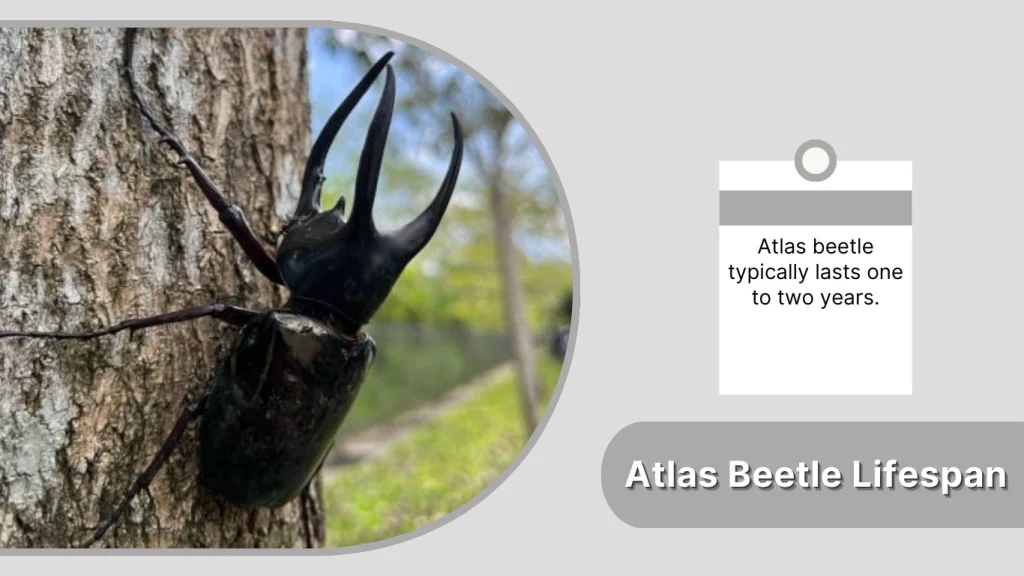
The atlas beetle lifespan varies depending on environmental conditions such as climate, food availability, and habitat quality.
Average Lifespan
The complete life cycle of an atlas beetle typically lasts one to two years. Most of this time is spent in the larval stage, where the beetle grows and develops.
Adult Lifespan
Adult atlas beetles generally live for three to six months. During this time, their main activities include feeding and reproduction.
Factors Affecting Lifespan
Several factors can influence how long atlas beetles live in the wild:
- Climate and humidity levels
- Availability of food sources
- Presence of predators
- Quality of their habitat
Beetles living in stable tropical environments with abundant food often have the best chance of completing their life cycle.
Interesting Atlas Beetle Facts
Atlas beetles are remarkable insects with several unique characteristics.
Some interesting facts include:
- They are among the largest rhinoceros beetles in Asia.
- Male beetles use their horns to compete with other males for mates.
- Their strong bodies allow them to climb trees easily.
- They are capable of lifting objects heavier than their own body weight.
- They are popular among insect collectors and researchers.
Despite their intimidating appearance, atlas beetles are generally harmless to humans.
Predators of Atlas Beetles
Even though atlas beetles are large insects, they still face threats from predators in the wild.
Common predators include:
- Birds
- Reptiles
- Small mammals
- Large insects
Their hard exoskeleton helps protect them from some predators.
Conclusion
The atlas beetle is one of the most impressive insects found in tropical forests of Southeast Asia. Known for its powerful body and distinctive horns, this beetle plays an important role in forest ecosystems. From the large atlas beetle larvae developing in decaying wood to the strong adult beetles climbing trees in search of food, every stage of their life highlights the remarkable diversity of the insect world. Protecting forest habitats helps ensure that these fascinating beetles continue to thrive in nature.
