

Asian lady beetles look like friendly ladybugs, but they behave very differently. Unlike native ladybugs, Asian lady beetles can bite humans and pets when disturbed or seeking moisture. Although their bites aren’t dangerous, they can cause discomfort, mild allergic reactions, and strong odors. This guide explains what an Asian lady beetle bite looks like, why they bite, common symptoms, and how to treat and prevent them effectively.
Do Asian Lady Beetles Bite Humans?
Yes, Asian lady beetles can and do bite people, especially during fall and winter when they invade homes. They don’t have stingers or venom, but they can pinch skin with their mandibles. These bites don’t break the skin deeply; instead, they cause a mild pinching sensation that may lead to temporary redness or irritation.
Bites most often occur on exposed areas like hands, arms, or necks when the beetles are disturbed or land on skin searching for salt and moisture. Though the sensation is mild, some people may experience itching or allergic symptoms afterward.
Why Do Asian Lady Beetles Bite?

Asian lady beetles don’t bite out of aggression — they bite as a defensive response or when seeking nutrients. Here are the main reasons:
- Defensive Behavior: When they feel threatened, they might bite to protect themselves.
- Moisture and Salt: Beetles are attracted to human skin for its moisture and salt content, especially during dry weather.
- Overcrowding Indoors: During seasonal infestations, overcrowded beetles may bite accidentally when crawling over people or pets.
In short, Asian lady beetle bites happen out of irritation or confusion, not because they feed on blood. Their behavior becomes more noticeable during their migration indoors for warmth.
What Does an Asian Lady Beetle Bite Look Like?
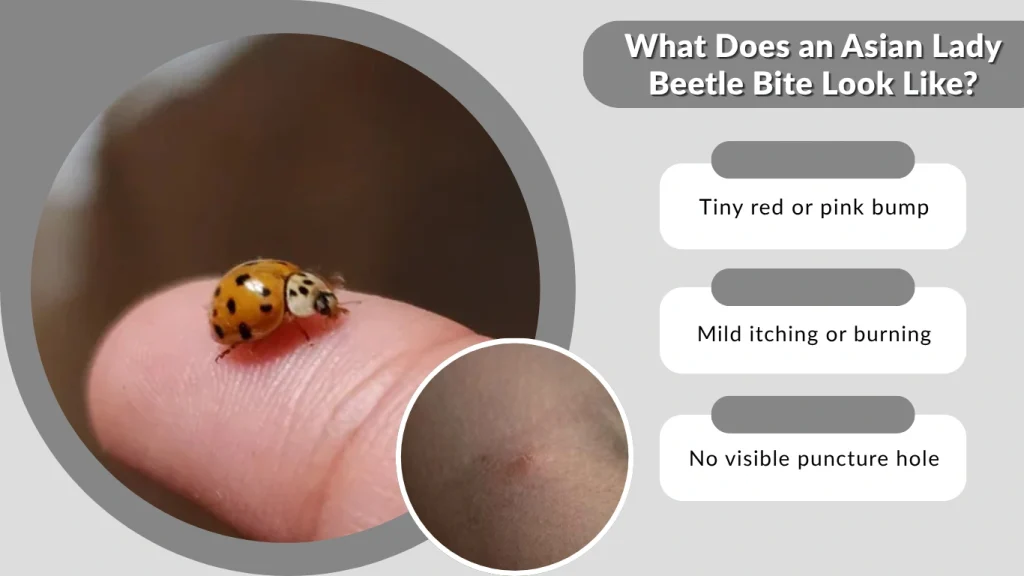
An Asian lady beetle bite looks like a small, red, raised bump — similar to a mosquito or ant bite. The affected area might feel itchy or slightly swollen for a few hours. In some cases, a faint yellowish mark appears, caused by the beetle’s defensive secretion known as reflex bleeding.
Unlike insect stings, these bites do not leave puncture wounds or welts. The irritation typically subsides within 24 to 48 hours without treatment, though sensitive individuals may experience more noticeable redness.
Common Features of a Bite:
- Tiny red or pink bump
- Mild itching or burning
- No visible puncture hole
- Temporary yellow stain if crushed
If you’re bitten indoors during cooler months, it’s almost always an Asian lady beetle, not a harmless native ladybug.
Asian Lady Beetle Bite Symptoms
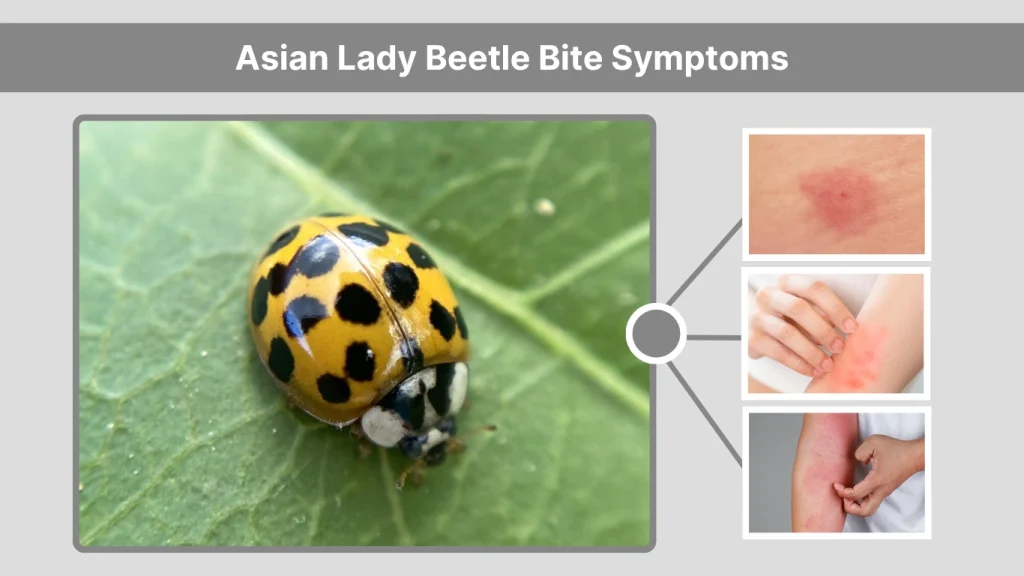
Most Asian lady beetle bites are mild, but symptoms vary depending on skin sensitivity and allergic history. Typical bite reactions include:
- Redness and Swelling: The area around the bite may appear slightly inflamed.
- Itching or Burning: Common for a few hours after contact.
- Dryness or Irritation: Some people notice skin dryness or mild peeling.
- Allergic Reactions: Rarely, bites cause hives, watery eyes, or sneezing due to the beetle’s secretion.
The real cause of discomfort isn’t the bite itself but the chemical fluid the beetle releases from its legs. This fluid smells foul and can irritate skin or eyes if touched. People with sensitive skin should wash immediately after contact to prevent allergic responses.
Allergic Reaction and Health Concerns
While most bites are harmless, Asian lady beetles can cause allergic reactions in certain individuals. The insect’s yellow secretion — known as hemolymph — contains compounds that trigger mild allergic responses in sensitive people.
Common Allergy Symptoms Include:
- Itchy, swollen skin or small rashes
- Redness around eyes and nose
- Sneezing or runny nose
- Mild coughing or wheezing
In rare cases, exposure to a large number of beetles can lead to a condition called Ladybug Allergy Syndrome, where prolonged contact causes respiratory irritation similar to hay fever. Though uncommon, this reaction can occur in homes heavily infested during fall and winter months.
If you experience persistent itching, breathing problems, or a widespread rash, it’s best to consult a doctor or allergist for evaluation.
Asian Lady Beetle Bites on Pets (Dogs and Cats)

Asian lady beetles can also affect pets, particularly dogs. While they rarely bite animals directly, pets may accidentally ingest beetles while grooming or exploring. The beetles release their chemical defense fluid inside the pet’s mouth, causing irritation.
Signs Your Pet May Have Ingested Beetles:
- Drooling or pawing at the mouth
- Refusal to eat or excessive licking
- Yellow stains around the gums or lips
If this happens, inspect your pet’s mouth gently. Sometimes beetles stick to the roof of the mouth or tongue. Use a damp cloth or cotton swab to remove them, but never attempt to scrape. If symptoms persist or your pet seems in pain, consult a veterinarian immediately. Beetle secretions can cause mild ulcers or inflammation if left untreated.
Asian Lady Beetle Bite Treatment

Although Asian lady beetle bites are not dangerous, proper care can reduce irritation and prevent infection. Treatment is simple and can usually be done at home.
Step-by-Step Treatment
- Wash the Area: Gently clean the bite with warm water and mild soap to remove any beetle residue or bacteria.
- Apply a Cold Compress: Use a clean, damp cloth or ice pack to reduce redness and swelling.
- Use Anti-Itch Creams: Apply calamine lotion, aloe vera gel, or over-the-counter hydrocortisone cream to soothe itching and irritation.
- Take an Antihistamine: For those with allergic reactions or persistent itching, an oral antihistamine such as cetirizine or diphenhydramine can help.
- Avoid Scratching: Scratching can worsen irritation and increase the risk of infection. Keep the area clean and dry until healed.
Most bites heal naturally within one to three days. If symptoms worsen or swelling spreads, a doctor should evaluate for possible allergic inflammation or infection.
How to Prevent Asian Lady Beetle Bites
The best way to avoid bites is to stop these beetles from entering your home. Prevention starts before the cool season when beetles seek warmth.
Home Protection Tips
- Seal Entry Points: Use caulk or weatherstripping to seal gaps around windows, vents, and siding.
- Install Mesh Screens: Cover attic vents, chimneys, and exhaust fans to block entry.
- Vacuum Regularly: Remove visible beetles gently using a vacuum and dispose of the bag outside immediately.
- Use Natural Repellents: Peppermint, clove, or citrus essential oils repel beetles effectively. Mix a few drops with water and spray around windows and doors.
- Keep Lights Dim: Asian lady beetles are attracted to bright lights. Use warm-toned or yellow bulbs near entry points to reduce attraction.
By combining these methods, you can significantly reduce the likelihood of beetles entering and biting.
Avoiding Odor and Stains from Beetles
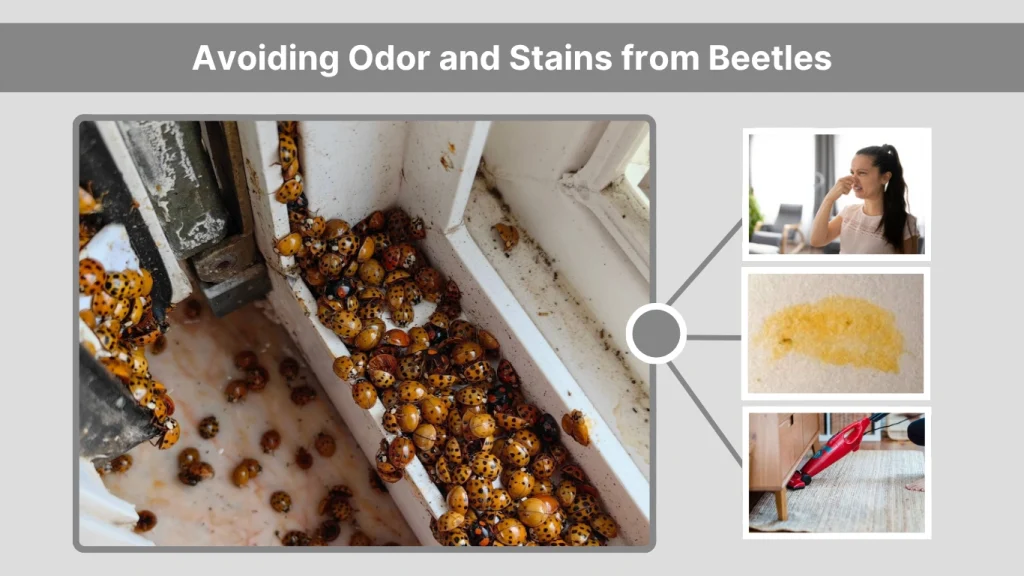
When squished, Asian lady beetles release a yellowish defensive fluid that smells bad and stains walls, fabrics, and skin. To prevent this:
- Use a vacuum cleaner instead of crushing beetles.
- Clean stained areas with a vinegar-and-water solution.
- For fabrics, apply a mixture of baking soda and mild detergent to lift yellow spots.
- Avoid touching your eyes or face after handling beetles, as the fluid can cause irritation.
Taking care during removal prevents stains, odors, and skin reactions from their secretions.
When to See a Doctor
While most bites are harmless, medical attention may be needed if symptoms persist or worsen. Seek professional help if:
- Redness and swelling increase after two days.
- The bite develops pus or severe itching.
- You experience difficulty breathing or swelling around the eyes or lips.
- You suspect your pet’s mouth or gums are injured by beetle secretions.
Doctors may prescribe antihistamines, corticosteroid creams, or antibiotics if secondary infection develops. Allergists can also test for specific beetle-related sensitivities if reactions recur annually.
Asian Lady Beetle Control for Homeowners
If beetles repeatedly invade your home, combining prevention and exclusion with pest management can help.
- Inspect Before Fall: Late summer is the best time to check for cracks or openings in exterior walls.
- Professional Treatment: Pest control experts can apply residual insecticides or repellents around entry points to prevent swarming.
- Long-Term Maintenance: Annual sealing and outdoor spraying ensure beetles don’t overwinter inside.
This proactive approach minimizes both infestations and the chance of being bitten.
FAQs
What happens if an Asian lady beetle bites you?
A bite usually causes a small, red bump with mild itching or burning. It’s harmless and heals within a few days. Washing the bite with soap and applying a soothing lotion or ice pack quickly reduces irritation and redness.
What does an Asian lady beetle bite look like?
The bite resembles a tiny raised pink or red bump, similar to a mosquito bite. In some cases, you might see slight swelling or a yellowish stain from beetle fluid. The mark typically fades within one to two days.
Can Asian lady beetle bites cause allergic reactions?
Yes. Some people develop mild allergic symptoms like redness, itching, watery eyes, or sneezing after contact. Rarely, severe cases involve respiratory irritation. If you experience difficulty breathing or spreading hives, consult a healthcare provider immediately.
Do Asian lady beetle bites hurt or itch?
The bite feels like a soft pinch or light sting and may cause mild itching afterward. The discomfort is brief and usually resolves without treatment. Applying ice or an anti-itch cream can ease symptoms quickly.
How can I stop Asian lady beetles from biting?
Seal entry points, install window screens, and spray natural repellents like peppermint or clove oil around doors and windows. Keep indoor lights dim and vacuum beetles gently without crushing them to prevent both bites and unpleasant odors.
