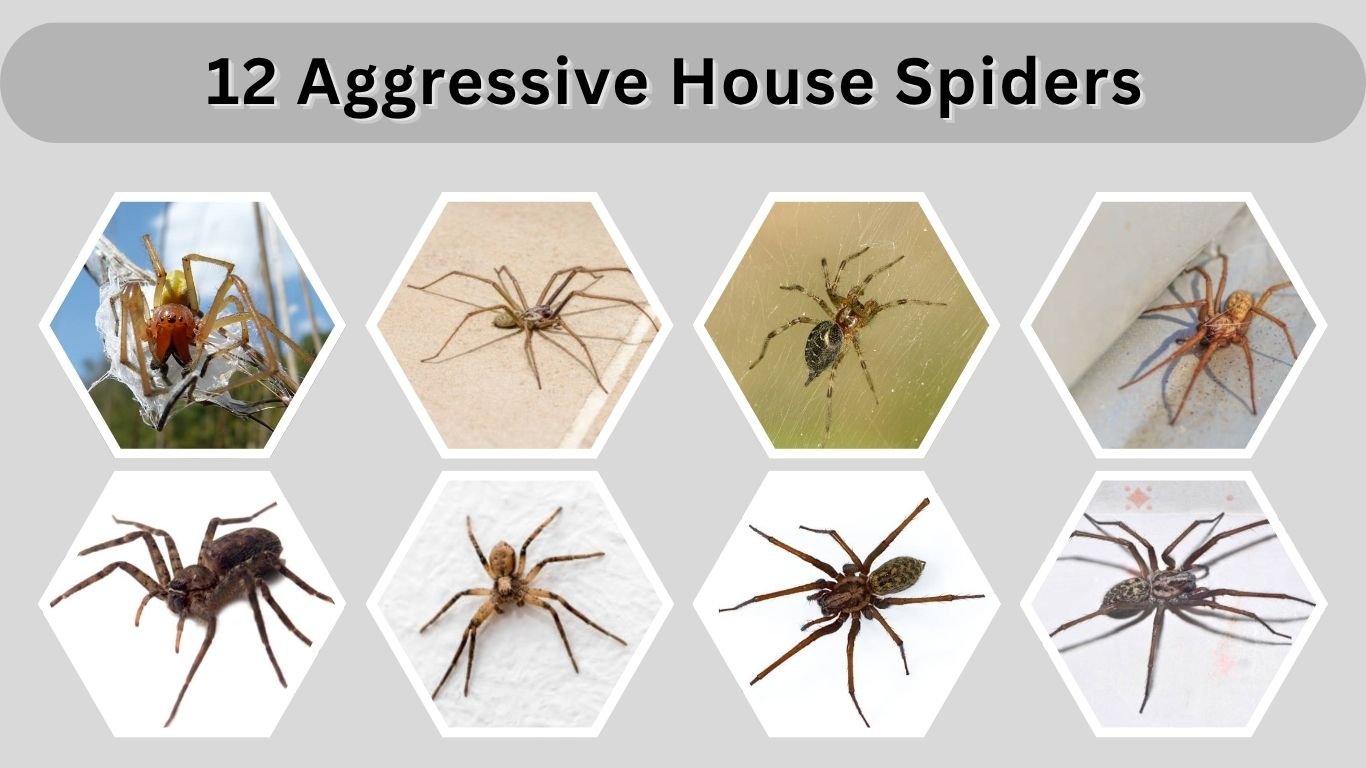
House spiders are a common sight in many homes around the world, especially in dark, quiet, and undisturbed areas. While most of them are harmless, their fast movements and sudden appearances often make them seem aggressive or threatening. In reality, these spiders play an important role in controlling insect populations by feeding on common household pests like flies, ants, and mosquitoes.
This list highlights 12 types of house spiders that are often considered aggressive due to their speed, hunting style, or defensive behavior. Understanding their appearance, habitat, and behavior can help reduce fear and allow you to better identify which species you may encounter in your home.
1. Giant House Spider

The Giant House Spider is one of the largest spiders commonly found inside homes, especially in temperate regions. Its long legs and quick movements often make it seem threatening, but it is not dangerous to humans. This species plays a helpful role by controlling indoor insect populations. It is most active during late summer and autumn, when males wander in search of mates, making encounters more frequent. Despite its size and speed, it prefers to hide and will usually retreat rather than confront anything larger than itself.
Identification
- Large spider with a leg span of up to 10–12 cm
- Brown to dark brown body coloration
- Long, thin legs covered with fine hairs
- Distinct chevron or herringbone markings on the abdomen
- Small body compared to leg length
- Males are slimmer with longer legs; females are bulkier
Habitat
Giant House Spiders prefer indoor environments where they can find shelter and consistent food sources. They are commonly located in basements, garages, attics, and dark corners of rooms. These spiders build funnel-shaped webs in cracks, crevices, and along walls or ceilings, where they can quickly retreat if disturbed. Outdoors, they may live under rocks, logs, or in dense vegetation, but they often migrate indoors when temperatures drop. Their webs are usually flat with a tubular retreat, allowing them to sense vibrations and ambush prey efficiently.
Behaviors
Although they may appear aggressive due to their speed, Giant House Spiders are generally shy and avoid human interaction. When disturbed, they tend to run away quickly rather than attack. Males become more visible during mating season as they roam in search of females, which can lead to sudden sightings inside homes. They rely heavily on vibration detection through their webs to locate prey. These spiders are nocturnal hunters, remaining hidden during the day and becoming active at night when prey is more abundant.
Diet and Lifecycle
Giant House Spiders feed mainly on household insects such as flies, moths, beetles, and other small arthropods. They capture prey using their funnel webs or by quickly ambushing it. After immobilizing prey with venom, they consume it gradually. Their lifecycle begins with eggs laid in silk sacs, which hatch into spiderlings. These young spiders disperse and grow through several molts before reaching adulthood. Females can live for several years, while males typically have shorter lifespans and often die shortly after mating.
2. Hobo Spider
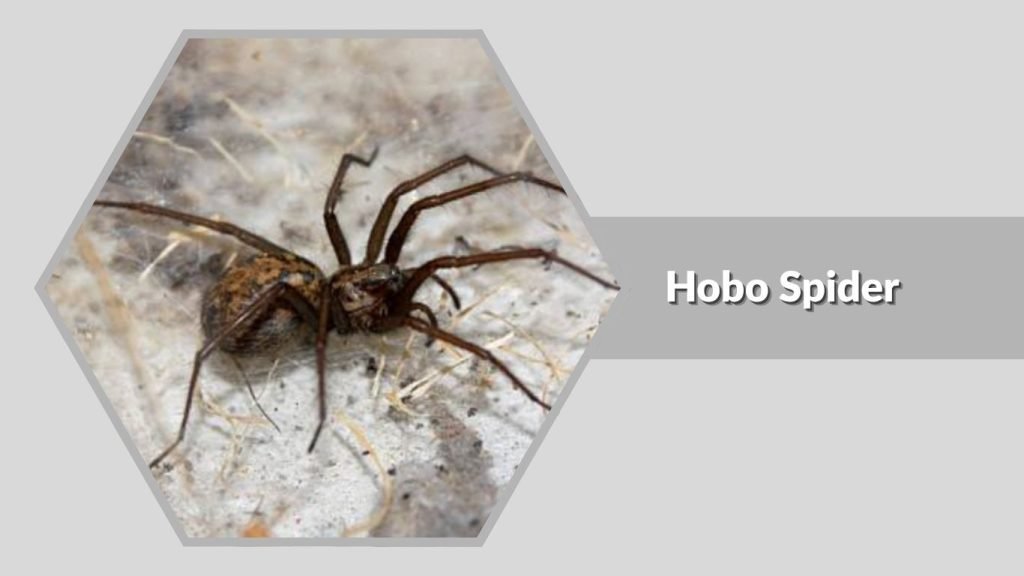
The Hobo Spider is a funnel-weaving spider known for its fast movement and tendency to live in human structures. It is often misunderstood and sometimes considered aggressive due to its quick reactions, though it typically avoids humans. This spider became widely known because of past concerns about its bite, but modern research suggests it is less dangerous than once believed. It is most commonly found in basements and ground-level areas, especially in cooler climates.
Identification
- Medium-sized spider with a leg span of about 5–7 cm
- Brown coloration with a slightly darker abdomen
- Subtle chevron patterns on the abdomen
- Legs are fairly long but less hairy than some similar species
- Lacks distinct banding on legs
- Males are smaller and more mobile than females
Habitat
Hobo Spiders prefer ground-level environments and are commonly found in basements, crawl spaces, and around foundations of homes. They build funnel-shaped webs in cracks, holes, and cluttered areas where insects pass by. Outdoors, they live in woodpiles, rocks, and dense vegetation. These spiders often enter homes seeking shelter, especially during colder months. Their webs are usually low to the ground and connected to a retreat where the spider hides and waits for prey.
Behaviors
Hobo Spiders are fast-moving and may seem aggressive when startled, but they generally avoid confrontation. They rely on their funnel webs to detect vibrations and quickly rush out to capture prey. Males are more frequently seen wandering indoors during mating season, increasing human encounters. They are not climbers and typically stay near the ground. When disturbed, they either retreat into their funnel or attempt to escape rather than attack.
Diet and Lifecycle
Hobo Spiders feed on insects such as ants, beetles, flies, and other small arthropods. They use their webs to sense prey movement and quickly subdue it with venom. Their lifecycle begins with egg sacs containing dozens of eggs, which hatch into spiderlings. These young spiders grow through several molts before becoming adults. Females can live up to a few years, while males usually live for one season and die after mating.
3. Wolf Spider

Wolf Spiders are large, fast-moving hunters known for their excellent eyesight and ground-dwelling behavior. Unlike many house spiders, they do not rely on webs to catch prey but instead actively chase and hunt it. Their quick movements and sudden appearances can make them seem aggressive, but they are generally harmless to humans and prefer to avoid contact. They are commonly found both indoors and outdoors, especially in areas where insects are abundant.
Identification
- Robust, hairy body with a leg span of 5–10 cm
- Brown, gray, or black coloration with stripe or mottled patterns
- Distinct eye arrangement with two large forward-facing eyes
- Strong legs built for running
- Often mistaken for tarantulas (smaller version)
- Females carry egg sacs attached to their abdomen
Habitat
Wolf Spiders are commonly found on the ground in gardens, fields, forests, and sometimes inside homes. Indoors, they tend to stay near floors, under furniture, or in corners. They do not build webs but may create burrows or use natural shelters like rocks, logs, and leaf litter. In homes, they are often seen in basements, garages, and entryways where insects are present. They prefer environments where they can easily hunt prey.
Behaviors
Wolf Spiders are active hunters, mostly at night, using speed and vision rather than webs. They may appear aggressive because they run quickly when disturbed, but they are not naturally hostile toward humans. Females show unique behavior by carrying their egg sacs and later the spiderlings on their backs. When threatened, they either freeze, flee, or raise their front legs defensively. They rely heavily on their eyesight to track and capture prey.
Diet and Lifecycle
Wolf Spiders feed on a wide range of insects, including crickets, ants, beetles, and other spiders. They hunt by stalking and pouncing on prey. After mating, females produce egg sacs that they carry until hatching. The spiderlings then climb onto the mother’s back and stay there for a short period. As they grow, they molt several times before reaching adulthood. Their lifespan typically ranges from one to two years depending on the species.
4. Funnel Weaver Spider
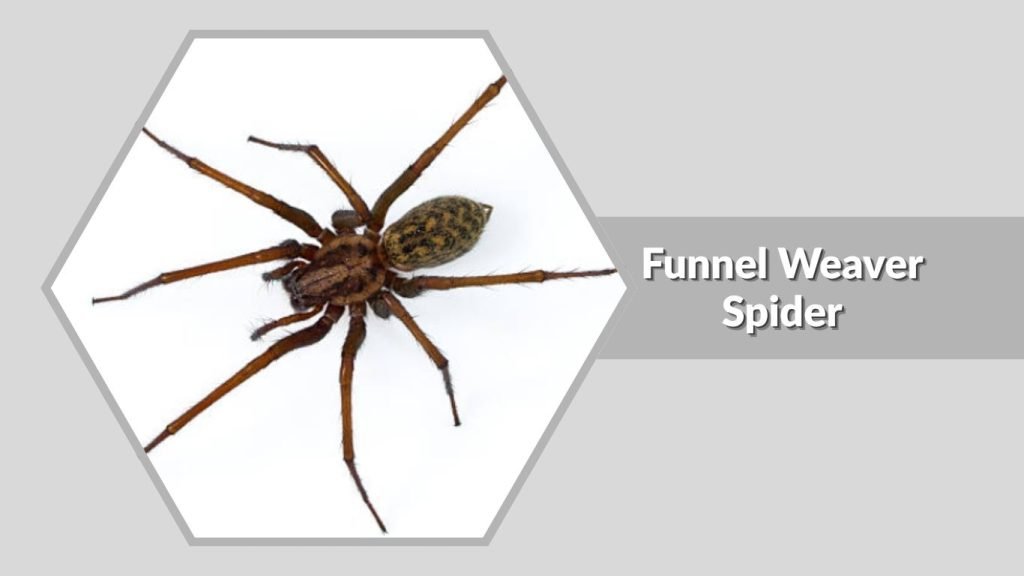
Funnel Weaver Spiders are known for their distinctive funnel-shaped webs and quick movements. They are often found in homes and gardens, where they help control insect populations. Their rapid response to vibrations can make them seem aggressive, but they are generally harmless and prefer to stay hidden. These spiders are most noticeable when they rush out of their funnel to catch prey, giving them a sudden and intimidating appearance.
Identification
- Medium to large size with long legs
- Brown or gray body with subtle patterns
- Elongated abdomen with faint markings
- Legs are slender and adapted for quick movement
- Spinnerets (silk-spinning organs) often visible from behind
- Typically found near a funnel-shaped web
Habitat
Funnel Weaver Spiders thrive in both indoor and outdoor environments. Indoors, they are commonly found in basements, corners, and behind furniture where they can build their webs undisturbed. Outdoors, they live in grass, shrubs, woodpiles, and cracks in walls or rocks. Their webs are flat with a funnel retreat, allowing them to hide while waiting for prey. They prefer areas with minimal disturbance and a steady supply of insects.
Behaviors
These spiders are highly sensitive to vibrations and quickly rush out of their funnel when prey touches the web. Their speed often makes them appear aggressive, but they usually retreat if they feel threatened. They spend most of their time hidden inside the funnel, emerging mainly to feed. Funnel Weavers are not strong climbers and tend to stay close to their webs. They are most active during warmer months and at night.
Diet and Lifecycle
Funnel Weaver Spiders feed on insects such as flies, ants, beetles, and other small arthropods. They detect prey through vibrations in their web and quickly immobilize it with venom. Females lay eggs in silk sacs placed within their web or hidden areas. The spiderlings hatch and disperse, growing through several molts before adulthood. Their lifespan varies by species but typically ranges from one to two years.
5. Tegenaria domestica
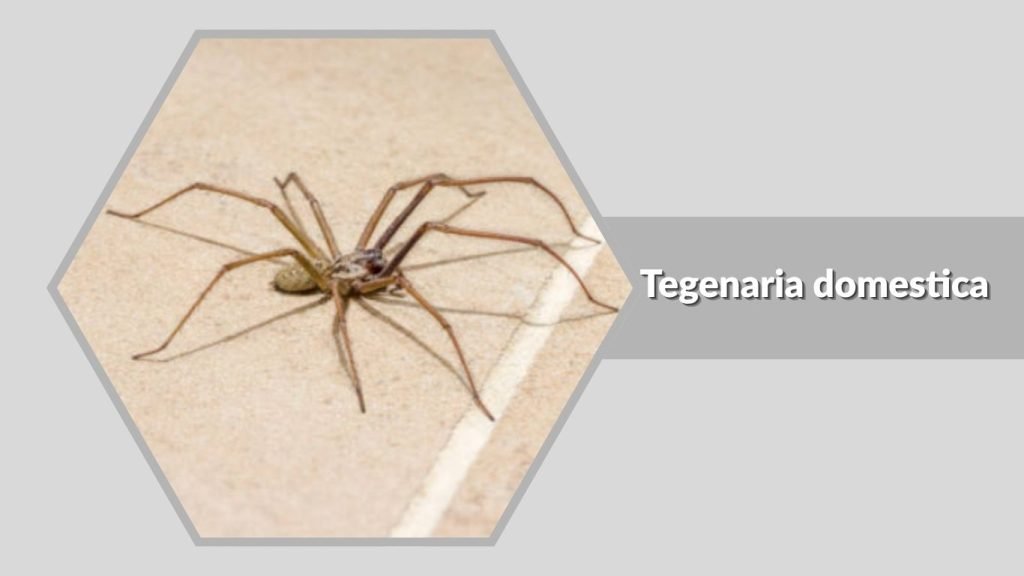
Tegenaria domestica, commonly known as the Domestic House Spider, is a fast-moving funnel weaver often found inside homes. It is smaller than the giant house spider but shares similar habits and web structures. This species is not dangerous to humans and plays a useful role in controlling indoor insect populations. Its quick movements may make it seem aggressive, but it usually avoids contact and stays hidden in its web.
Identification
- Medium-sized spider with a leg span of about 4–6 cm
- Light brown to yellowish-brown coloration
- Oval abdomen with faint patterns
- Long, slender legs with fine hairs
- Less bulky compared to larger house spiders
- Often seen near funnel-shaped webs
Habitat
Tegenaria domestica is commonly found indoors in quiet, undisturbed areas such as basements, attics, and corners of rooms. It builds funnel-shaped webs in cracks, crevices, and along walls or ceilings. Outdoors, it may live under stones, logs, or in dense vegetation, but it prefers indoor environments where conditions are stable. These spiders choose locations where insects are likely to pass by, allowing easy access to food.
Behaviors
This spider is shy and non-aggressive, spending most of its time inside its funnel web. It reacts quickly to vibrations, rushing out to capture prey and retreating just as fast. When disturbed, it usually hides rather than confronts. Males may wander during mating season, which increases sightings indoors. Despite their speed, they rarely bite and pose little threat to humans.
Diet and Lifecycle
Tegenaria domestica feeds on small insects such as flies, ants, and other arthropods. It captures prey using its funnel web and injects venom to immobilize it. Females lay eggs in silk sacs placed within their web. Spiderlings hatch and grow through multiple molts before reaching adulthood. Females tend to live longer, while males typically die shortly after mating.
6. Eratigena duellica
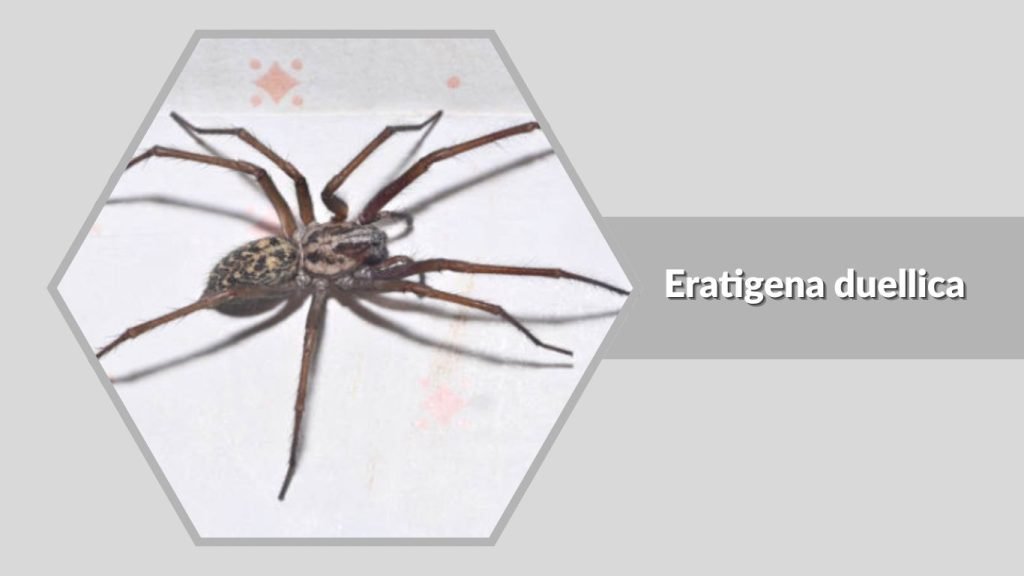
Eratigena duellica, often referred to as part of the Giant House Spider group, is a large and fast-moving species commonly found in homes. It is known for its impressive speed and size, which can make it appear intimidating. Despite this, it is not aggressive toward humans and prefers to stay hidden. This spider is beneficial as it helps reduce indoor insect populations and is most often seen during the mating season when males roam.
Identification
- Large spider with a leg span up to 10–12 cm
- Dark brown body with lighter markings
- Long, slender legs covered in fine hairs
- Elongated abdomen with chevron patterns
- Similar in appearance to other giant house spiders
- Males are slimmer and more mobile than females
Habitat
Eratigena duellica is typically found indoors in basements, garages, attics, and other undisturbed areas. It builds large funnel-shaped webs in corners, cracks, and crevices where insects are likely to pass. Outdoors, it may inhabit woodpiles, rocks, and dense vegetation. As temperatures drop, it often moves indoors for warmth and shelter. Its web includes a flat sheet leading into a funnel retreat where the spider hides.
Behaviors
This species is extremely fast and may seem aggressive due to its sudden movements, but it is actually shy and avoids human interaction. It spends most of its time in its web, waiting for vibrations that signal prey. Males wander in search of females during mating season, which is when they are most commonly seen. When threatened, it usually retreats quickly rather than attacking.
Diet and Lifecycle
Eratigena duellica feeds on insects such as flies, moths, beetles, and other small arthropods. It captures prey using its funnel web and quickly immobilizes it with venom. Females produce egg sacs that are kept within the web until hatching. Spiderlings grow through several molts before reaching maturity. Females can live for several years, while males typically die after mating.
7. Tegenaria agrestis
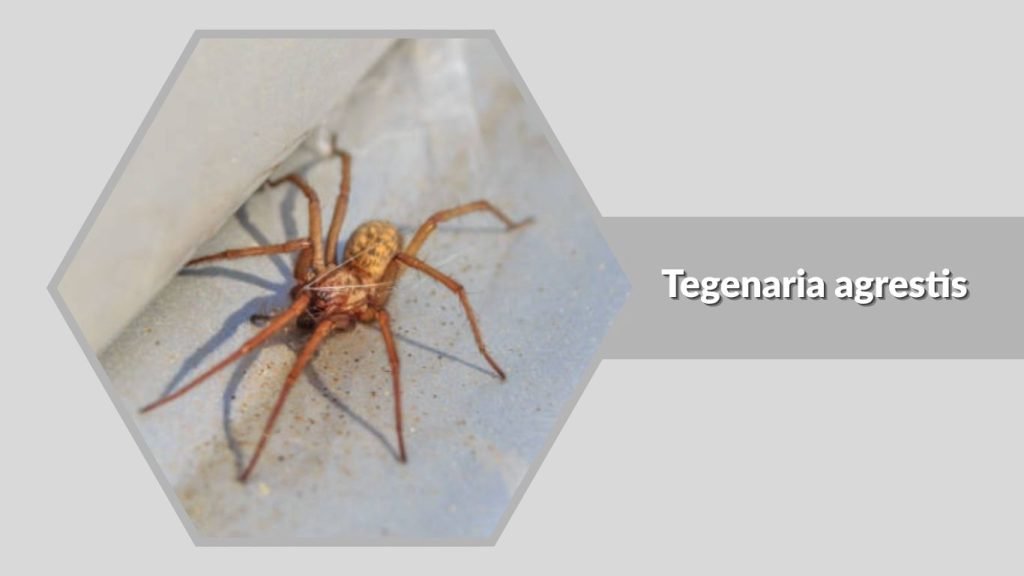
Tegenaria agrestis, commonly known as the Hobo Spider, is a fast-moving funnel weaver often found in and around homes. It gained attention due to past concerns about its bite, but it is generally not considered dangerous. Its quick movements and ground-level activity can make it seem aggressive, though it typically avoids humans. This species is most active during warmer months and is often seen when males wander in search of mates.
Identification
- Medium-sized spider with a leg span of about 5–7 cm
- Brown body with slightly darker abdomen
- Subtle chevron patterns on the abdomen
- Legs are long, smooth, and lack distinct banding
- Less hairy compared to wolf spiders
- Often found near funnel-shaped webs
Habitat
Tegenaria agrestis prefers ground-level environments such as basements, crawl spaces, and building foundations. It builds funnel-shaped webs in cracks, holes, and cluttered areas where insects are active. Outdoors, it can be found in woodpiles, rocks, and dense vegetation. These spiders often enter homes seeking shelter, especially during cooler weather. Their webs are usually placed low and connected to a retreat for hiding.
Behaviors
This spider is fast and reacts quickly to disturbances, which may make it appear aggressive. However, it is not naturally confrontational and usually tries to escape. It relies on its funnel web to detect vibrations and capture prey. Males are more frequently seen roaming indoors during mating season. It is not a strong climber and tends to stay near the ground or within its web.
Diet and Lifecycle
Tegenaria agrestis feeds on insects such as ants, beetles, flies, and other small arthropods. It captures prey using its web and subdues it with venom. Females lay eggs in silk sacs hidden within their web or nearby areas. Spiderlings hatch and grow through multiple molts before becoming adults. Females can live for a few years, while males usually die shortly after mating.
8. Barn Funnel Weaver
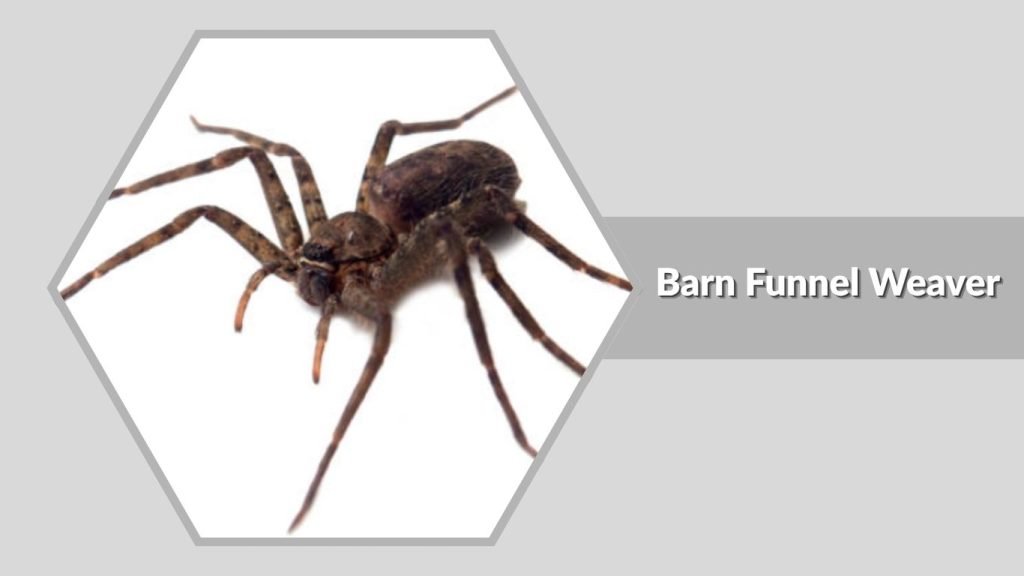
The Barn Funnel Weaver is a common spider found in both rural and residential areas. It is known for its wide, sheet-like web with a funnel retreat where it hides. Its quick reaction to movement can make it seem aggressive, but it is harmless and prefers to stay out of sight. This species plays an important role in controlling flying and crawling insects around homes, barns, and gardens.
Identification
- Medium-sized spider with a leg span of 5–8 cm
- Brown or gray body with darker patterns
- Long, slender legs adapted for fast movement
- Elongated abdomen with subtle markings
- Prominent spinnerets visible from the rear
- Typically associated with flat sheet webs and funnel retreats
Habitat
Barn Funnel Weavers are commonly found in barns, sheds, garages, and around the exterior of homes. They build large, horizontal sheet webs with a funnel-shaped retreat in corners, window frames, and vegetation. Outdoors, they prefer tall grass, shrubs, fences, and woodpiles. Indoors, they stay in quiet, undisturbed areas where insects are plentiful. Their web placement allows them to quickly detect and capture passing prey.
Behaviors
These spiders remain hidden in their funnel retreat most of the time, rushing out when vibrations signal trapped prey. Their sudden speed can make them appear aggressive, but they usually retreat if disturbed. They are most active during warmer months and at night. Barn Funnel Weavers rely heavily on their web rather than wandering, and they rarely leave it unless necessary.
Diet and Lifecycle
Barn Funnel Weavers feed on a variety of insects, including flies, mosquitoes, beetles, and other small arthropods. They capture prey using their sheet web and quickly immobilize it with venom. Females produce egg sacs that are hidden within the web or nearby protected areas. Spiderlings hatch and disperse, growing through several molts before reaching adulthood. Their lifespan typically ranges from one to two years.
9. Lace-Web Spider
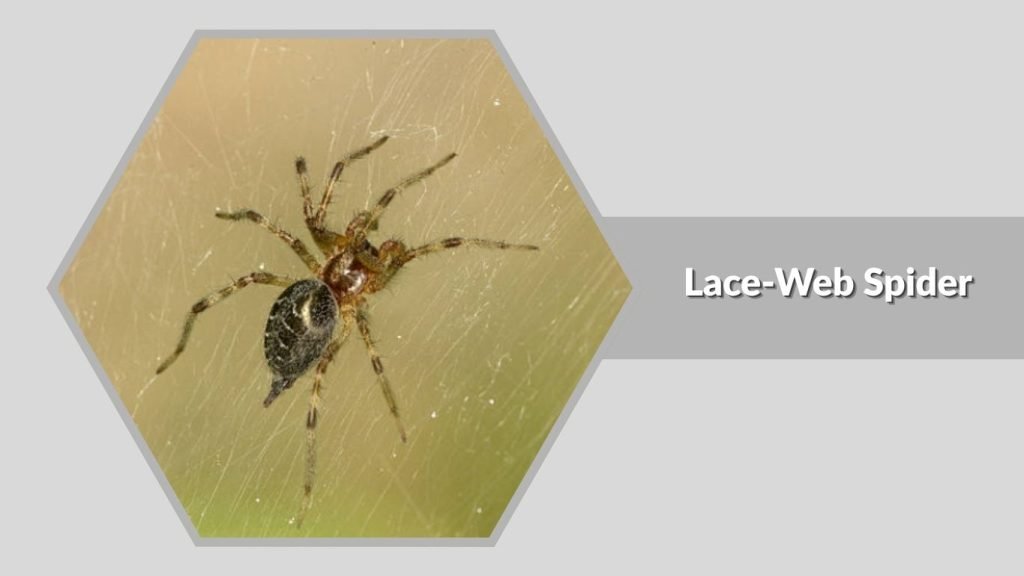
The Lace-Web Spider is a common house-dwelling species known for its messy, lace-like webs and quick movements. It is often found around windows, walls, and outdoor structures. Its speed and defensive posture can make it seem aggressive, but it is generally harmless and avoids human contact. This spider is beneficial as it helps control insects in and around homes.
Identification
- Medium-sized spider with a leg span of 3–5 cm
- Brown to dark brown body with faint patterns
- Slightly glossy appearance
- Stout legs with noticeable spines
- Irregular, lace-like web structure
- Often seen near window frames or walls
Habitat
Lace-Web Spiders are commonly found on exterior walls, fences, window frames, and inside homes near light sources. They prefer areas where insects are attracted, such as around lights and openings. Their webs are irregular and tangled, often built in corners, cracks, and crevices. Outdoors, they inhabit tree bark, rocks, and wooden structures. Indoors, they stay close to windows and ceilings.
Behaviors
These spiders are fast and may raise their front legs when threatened, giving the impression of aggression. However, they usually retreat quickly to their web. They are mostly active at night and remain hidden during the day. Lace-Web Spiders rely on vibrations in their messy webs to detect prey and rarely wander far from their web.
Diet and Lifecycle
Lace-Web Spiders feed on insects such as flies, moths, and small crawling bugs. They trap prey in their tangled webs and inject venom to immobilize it. Females lay eggs in silk sacs hidden within the web or nearby cracks. Spiderlings hatch and disperse, growing through several molts before becoming adults. Their lifespan typically lasts about one to two years.
10. Black House Spider
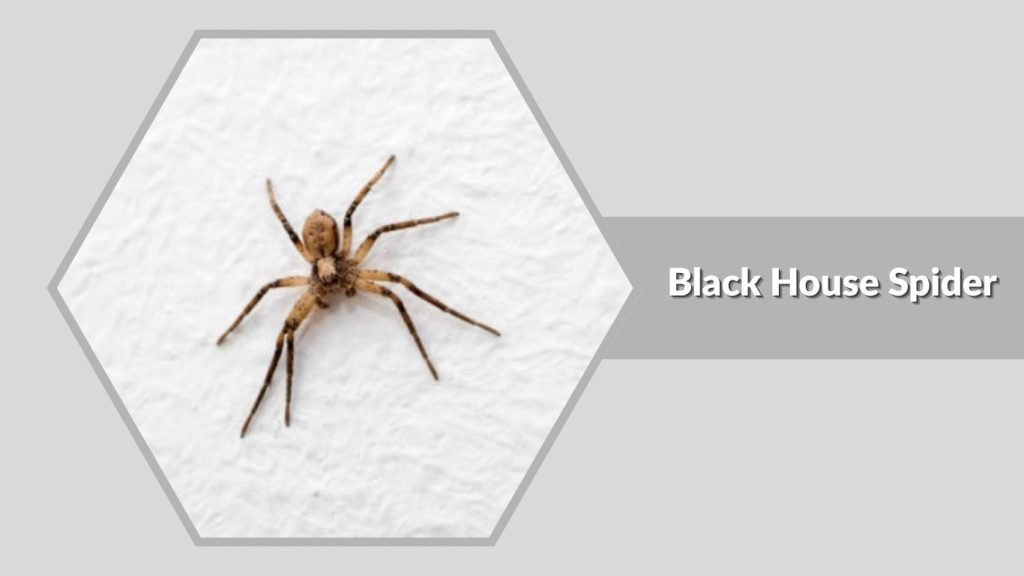
The Black House Spider is a dark-colored species commonly found around homes, especially in cracks, windows, and walls. It is known for its messy, wool-like web and quick defensive movements. While it may appear aggressive when disturbed, it is generally not dangerous and prefers to stay hidden. This spider is beneficial as it helps control insect populations in and around buildings.
Identification
- Medium-sized spider with a leg span of 3–5 cm
- Dark brown to black body coloration
- Velvety or slightly glossy appearance
- Stout legs with visible hairs
- Irregular, messy web structure
- Often seen near cracks, windows, and walls
Habitat
Black House Spiders are commonly found in urban and suburban environments. They build their webs in crevices, window frames, walls, and corners of buildings. Outdoors, they may inhabit tree bark, rocks, and fences. Indoors, they prefer quiet, undisturbed areas with access to insects. Their webs are dense and irregular, often built in sheltered locations where they can remain hidden.
Behaviors
These spiders are usually shy but may act defensively if their web is disturbed, sometimes appearing aggressive. They rarely leave their web and rely on vibrations to detect prey. When threatened, they may raise their front legs or retreat quickly. They are mostly active at night and remain hidden during the day.
Diet and Lifecycle
Black House Spiders feed on insects such as flies, moths, beetles, and other small arthropods. They capture prey in their messy webs and immobilize it with venom. Females produce egg sacs that are kept within the web. Spiderlings hatch and grow through several molts before reaching adulthood. Females can live for several years, while males have shorter lifespans.
11. Yellow Sac Spider
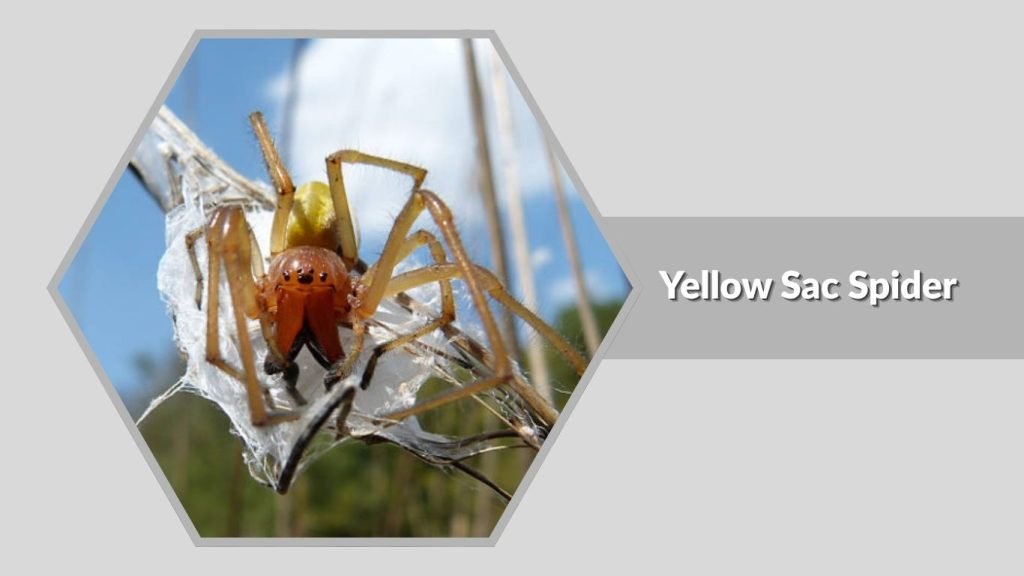
The Yellow Sac Spider is a small but active hunting spider often found inside homes. It is known for its pale color and fast movements, which can make it seem aggressive. Unlike web-building spiders, it actively hunts at night and hides in silk sacs during the day. While it may bite if disturbed, it is generally not dangerous. This species is helpful in reducing indoor insect populations.
Identification
- Small to medium size with a leg span of 2–4 cm
- Pale yellow, cream, or light green coloration
- Slightly darker mouthparts
- Long, slender legs with fine hairs
- Smooth, soft-looking body
- Often found near small silk sacs or corners
Habitat
Yellow Sac Spiders are commonly found indoors on walls, ceilings, and in corners. They create small silk sacs where they rest during the day. Outdoors, they live in gardens, under leaves, and within vegetation. Inside homes, they prefer warm, dry areas and are often seen near ceilings or upper walls. They do not build traditional webs but use their silk sacs as shelter.
Behaviors
These spiders are active hunters, mostly at night, and do not rely on webs to catch prey. Their quick movements can make them appear aggressive, but they usually try to escape. During the day, they remain hidden in their silk sacs. If disturbed, they may bite in self-defense. They are solitary and do not stay in one place for long periods.
Diet and Lifecycle
Yellow Sac Spiders feed on small insects such as flies, ants, and other soft-bodied prey. They hunt by roaming and quickly capturing insects. Females lay eggs inside their silk sacs, guarding them until they hatch. Spiderlings grow through several molts before reaching adulthood. Their lifecycle is relatively short, often lasting about one year.
12. Southern House Spider
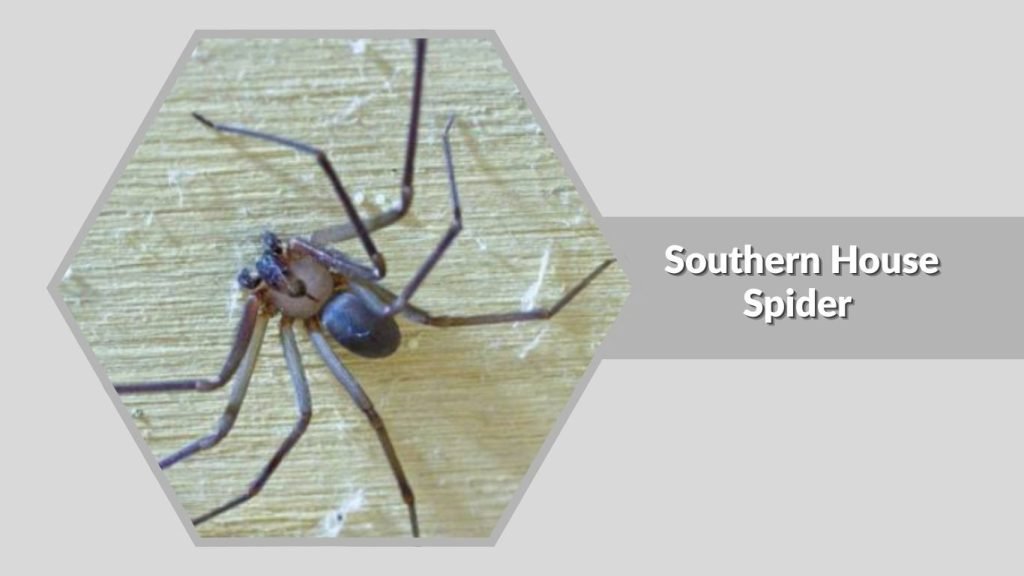
The Southern House Spider is a large, harmless species often mistaken for more dangerous spiders due to its size and appearance. It is commonly found in homes, especially in warmer regions. Despite its intimidating look, it is not aggressive and rarely bites. This spider is beneficial because it helps control indoor insect populations and typically stays hidden in its web.
Identification
- Large spider with a leg span of 5–10 cm
- Gray to dark brown coloration
- Males resemble brown recluse spiders but are harmless
- Females are darker and more robust
- Long legs with fine hairs
- Builds messy, funnel-like webs
Habitat
Southern House Spiders are commonly found indoors in basements, attics, closets, and cracks in walls. They prefer quiet, undisturbed areas where they can build their webs. Outdoors, they live in tree bark, woodpiles, and under rocks. Inside homes, they often stay in dark corners or behind furniture. Their webs are irregular and funnel-shaped, providing a place to hide and wait for prey.
Behaviors
These spiders are shy and non-aggressive, spending most of their time hidden in their web. Males may wander in search of females, leading to occasional indoor sightings. When disturbed, they usually retreat rather than confront. Their slow, cautious movement contrasts with some faster house spiders, making them less likely to startle people.
Diet and Lifecycle
Southern House Spiders feed on insects such as cockroaches, ants, flies, and other small arthropods. They capture prey using their web and subdue it with venom. Females lay eggs in silk sacs and guard them until they hatch. Spiderlings grow through several molts before becoming adults. Females can live for several years, while males typically have shorter lifespans.
FAQs
Are giant house spiders dangerous to humans?
No, giant house spiders are not dangerous. While they may look intimidating due to their size and speed, their venom is harmless to humans, and bites are extremely rare.
Why do house spiders seem aggressive?
They often appear aggressive because of their fast movements. In reality, most house spiders are shy and prefer to run away rather than confront humans.
Where do house spiders usually hide indoors?
House spiders typically hide in dark, quiet areas such as basements, attics, corners, behind furniture, and inside cracks or crevices.
What do house spiders eat?
They feed mainly on insects like flies, mosquitoes, ants, moths, and other small pests, helping to naturally control indoor insect populations.
How can I prevent house spiders from entering my home?
You can reduce their presence by sealing cracks, keeping your home clean, removing clutter, and minimizing insect activity, which is their main food source.