
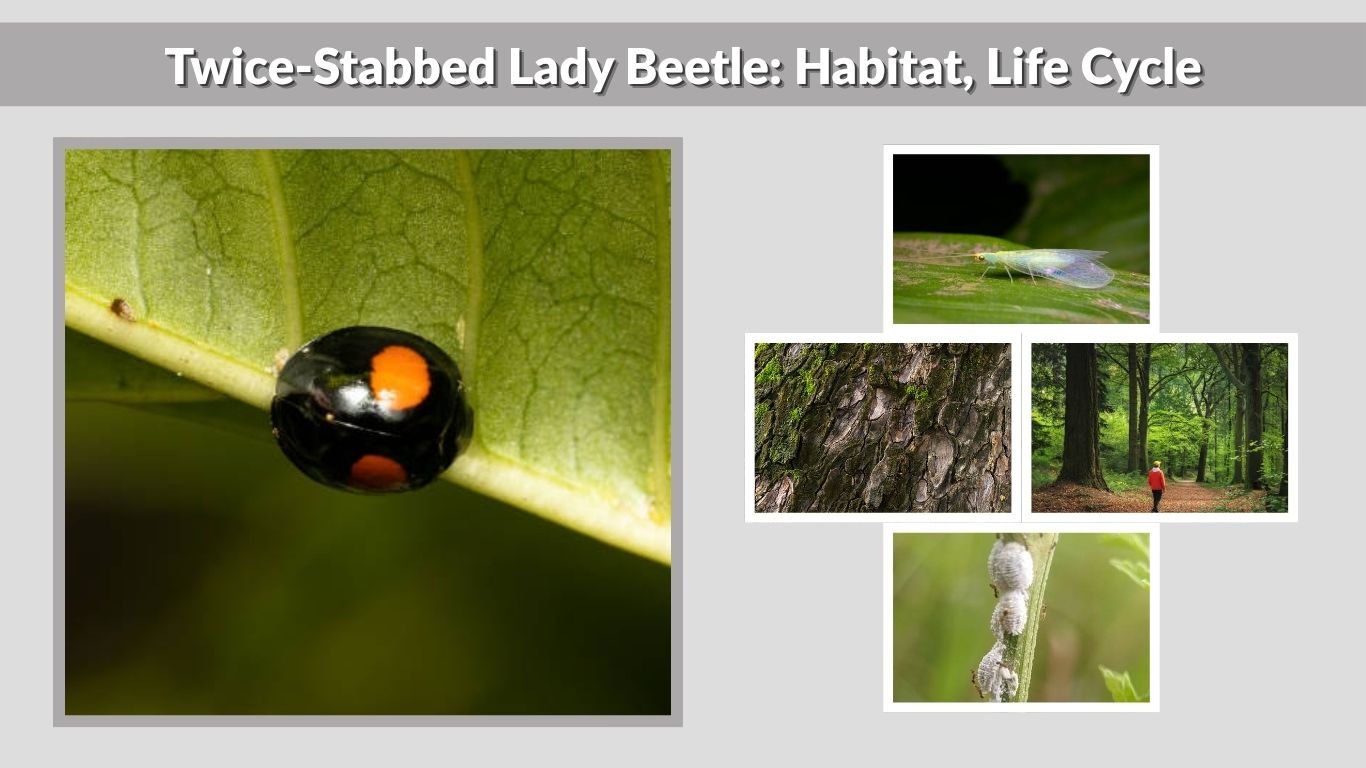
The twice-stabbed lady beetle is a small but striking insect known for its glossy black body and two bright red spots. Despite its bold and somewhat intimidating appearance, this beetle is harmless and plays an important role in controlling pests. It is often found in wooded areas where it helps protect trees by feeding on harmful insects. In this guide, you will learn what the twice-stabbed lady beetle is, how to identify it, where it lives, and whether it poses any risk to humans.
What Is a Twice-Stabbed Lady Beetle?
The twice-stabbed lady beetle, scientifically known as Chilocorus stigma, is a species of lady beetle commonly found in North America. It belongs to a group of beneficial insects that help maintain ecological balance by feeding on plant pests. Unlike the more familiar red ladybugs with multiple spots, this species stands out due to its dark coloration and minimal markings.
Scientific Classification of the Twice-Stabbed Lady Beetle
Understanding its classification helps place this insect within the broader biological system and highlights its relationship with other beetles.
Taxonomy Details
- Kingdom: Animalia
- Phylum: Arthropoda
- Class: Insecta
- Order: Coleoptera
- Family: Coccinellidae
- Genus: Chilocorus
Why Classification Matters
Classification is essential for identifying species accurately and understanding their ecological roles. It allows scientists to distinguish the twice-stabbed lady beetle from other similar insects and study its behavior, habitat, and contribution to pest control more effectively.
Twice-Stabbed Lady Beetle Physical Characteristics and Identification
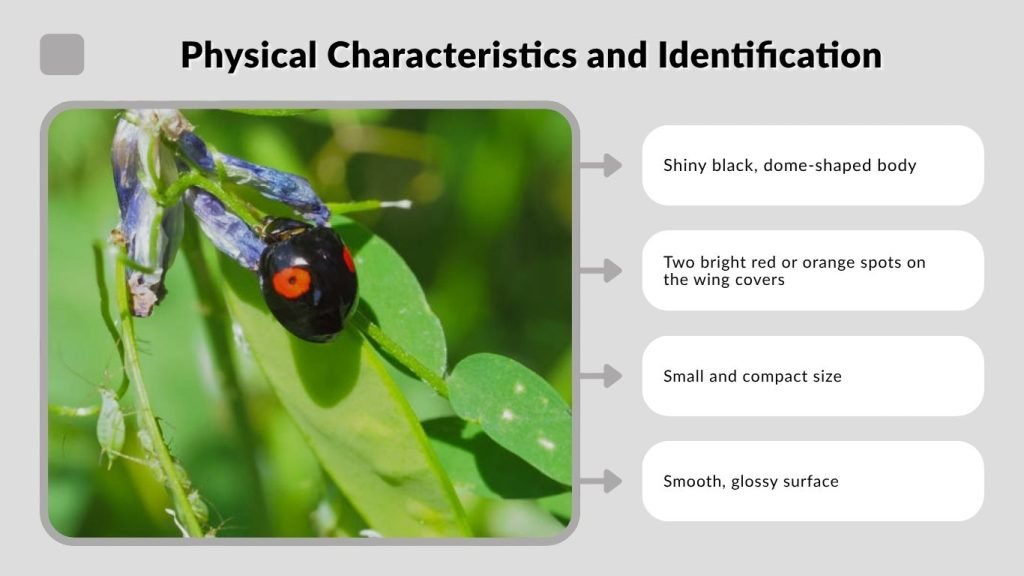
The twice-stabbed lady beetle is easy to recognize once you know what to look for. Its distinct color pattern makes it stand out among other insects.
Key Features
- Shiny black, dome-shaped body
- Two bright red or orange spots on the wing covers
- Small and compact size
- Smooth, glossy surface
Appearance Details
- The red spots are located symmetrically on each wing cover
- The body is slightly rounded, giving it a dome-like shape
- Its dark coloration helps it blend into tree bark
Twice-Stabbed Lady Beetle Habitat and Range
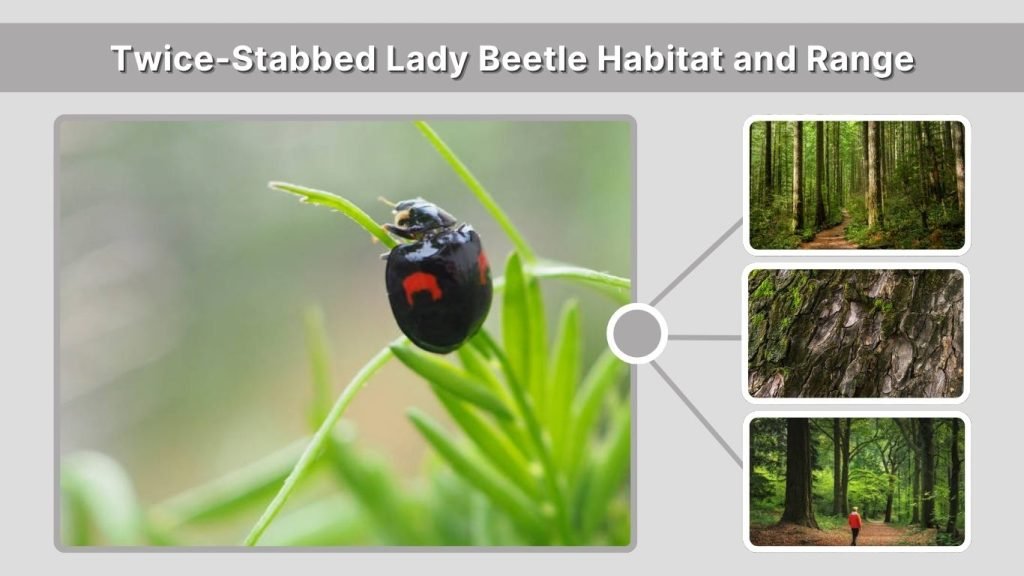
The twice-stabbed lady beetle prefers environments where its primary food sources are abundant. It is most commonly found in natural settings rather than inside homes.
Natural Habitat
- Forests and wooded areas
- Tree bark and branches
- Areas with scale insect populations
Geographic Range
- Native to North America
- Common in the eastern United States
- Found in regions with temperate climates
Life Cycle of the Twice-Stabbed Lady Beetle
Like other beetles, the twice-stabbed lady beetle undergoes complete metamorphosis. Each stage of its life cycle plays a key role in its development and survival.
Stages of Development
- Egg stage: Eggs are laid on tree bark near food sources
- Larval stage: Larvae feed actively on pests
- Pupal stage: Transformation into adult form
- Adult stage: Fully developed beetle emerges
Growth Process
After hatching, the larvae begin feeding immediately, helping control pest populations. The pupal stage allows the insect to transform into its adult form. Once matured, the beetle continues feeding and reproducing, completing the life cycle.
Diet and Behavior of the Twice-Stabbed Lady Beetle
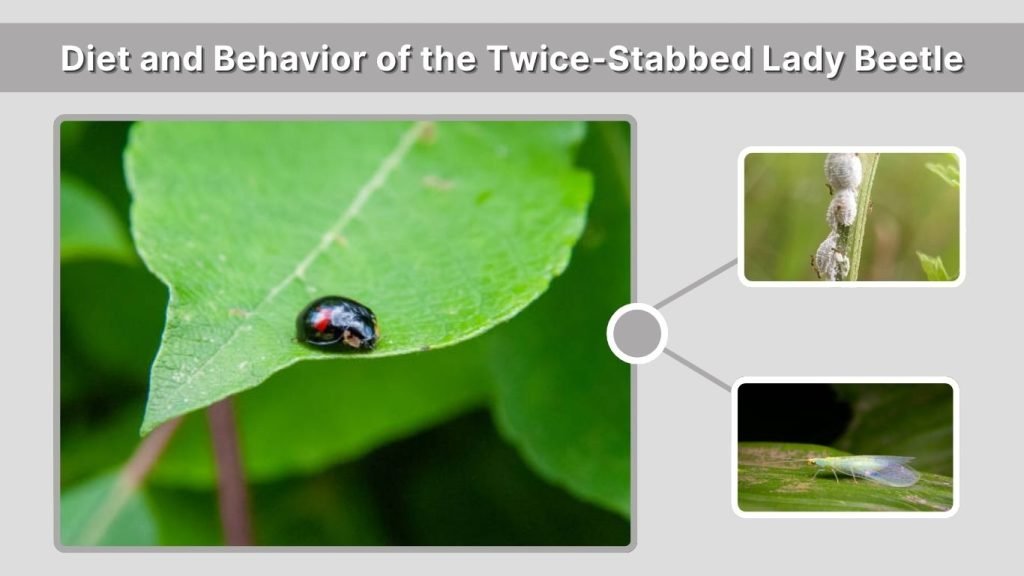
The twice-stabbed lady beetle is an active predator that plays an essential role in protecting trees and plants. Its feeding habits make it highly beneficial in natural ecosystems, especially in forested areas.
Feeding Habits
- Primarily feeds on scale insects
- Also consumes small soft-bodied pests
- Helps control insect populations on trees
Behavioral Traits
- Often found crawling on tree bark
- Active during warm seasons
- Moves slowly compared to other beetles
Are Twice-Stabbed Lady Beetles Dangerous or Poisonous?
Many people are concerned about the bold appearance of this beetle, but it is completely harmless. The twice-stabbed lady beetle does not pose any threat to humans or pets.
Safety Facts
- Not poisonous or toxic
- Does not transmit diseases
- Rarely bites and is non-aggressive
- Safe to handle if necessary
Are Twice-Stabbed Lady Beetles Rare?
The twice-stabbed lady beetle is not considered rare, but it is not commonly noticed by most people. Its small size and preference for wooded habitats make it less visible than other lady beetle species.
Although it is widely distributed across parts of North America, especially in forested regions, it often goes unnoticed because it blends well with tree bark. Its population is stable, and it continues to thrive in suitable environments where food sources are available.
Twice-Stabbed Lady Beetle vs Asian Lady Beetle
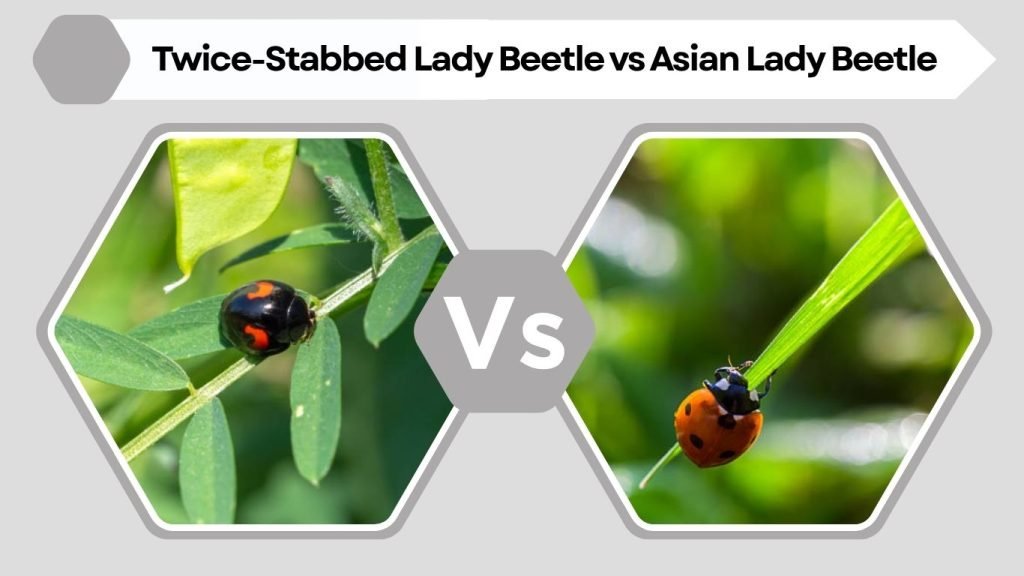
These two beetles are often confused due to their shared name and general body shape, but they differ in appearance and behavior.
Key Differences
- Twice-stabbed beetle: black body with two red spots
- Asian lady beetle: orange or red with multiple black spots
- Asian lady beetles may bite; twice-stabbed beetles rarely do
- Asian species often enter homes; twice-stabbed stays outdoors
Spiritual Meaning of the Twice-Stabbed Lady Beetle
In some interpretations, the twice-stabbed lady beetle carries symbolic meaning related to protection and transformation. Its bold contrast of colors is sometimes associated with balance and resilience.
While not as commonly referenced as traditional ladybugs, it may still be viewed as a sign of positive change or natural harmony. These interpretations are based on cultural beliefs rather than scientific evidence.
Importance in Ecosystems
The twice-stabbed lady beetle is an important part of natural ecosystems. By feeding on harmful pests like scale insects, it helps protect trees and supports overall plant health.
Its presence indicates a balanced environment where natural pest control is functioning effectively. This reduces the need for chemical treatments and contributes to healthier forests and landscapes.
FAQs
Are twice-stabbed lady beetles poisonous?
No, twice-stabbed lady beetles are not poisonous. They do not produce toxins that are harmful to humans or animals, making them completely safe to encounter in nature.
Do twice-stabbed lady beetles bite?
They rarely bite, and even if they do, it is not harmful. Most interactions with humans are harmless and do not result in any discomfort.
What do twice-stabbed lady beetles eat?
They mainly feed on scale insects and other small pests found on trees. This diet makes them beneficial for maintaining plant health and controlling insect populations.
Where are twice-stabbed lady beetles found?
They are commonly found in North America, especially in forests and wooded areas. They prefer habitats where their primary food sources are available.
Are twice-stabbed lady beetles rare?
They are not rare, but they are less commonly seen due to their small size and natural habitat. Many people simply overlook them in the wild.
