
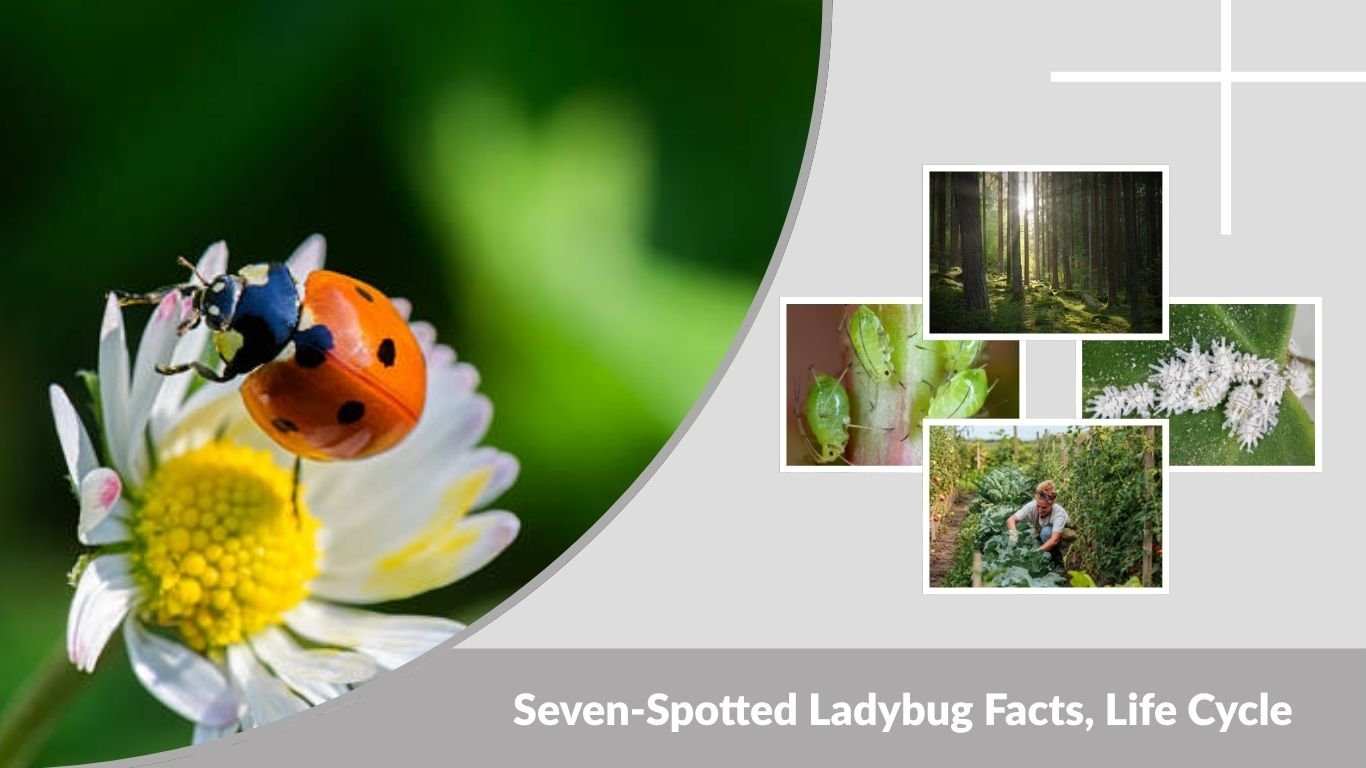
The seven-spotted ladybug is one of the most recognizable and beneficial insects found in nature. Known for its bright red body and distinct black spots, this small beetle plays an important role in maintaining ecological balance. It is widely appreciated by gardeners and farmers for its ability to control harmful pests naturally. In this article, you will explore essential facts, physical traits, classification, and habitat details of this fascinating insect.
What Is a Seven-Spotted Ladybug?
The seven-spotted ladybug, also called the seven-spot ladybird or lady beetle, is a common insect species known for its striking appearance and ecological benefits. It belongs to a group of beetles that are widely distributed across different regions of the world. These insects are especially valued for their role in reducing pest populations, making them an important part of agricultural ecosystems.
Scientific Classification of the Seven-Spotted Ladybug
Understanding the classification helps identify where this insect fits in the biological world and how it relates to other species.
Taxonomy Breakdown
- Scientific name: Coccinella septempunctata
- Kingdom: Animalia
- Phylum: Arthropoda
- Class: Insecta
- Order: Coleoptera
- Family: Coccinellidae
- Genus: Coccinella
Importance of Classification
Classification is important because it helps scientists study the species more effectively. It also distinguishes the seven-spotted ladybug from other similar-looking beetles, ensuring accurate identification in research and environmental studies.
Seven-Spotted Ladybugs Physical Characteristics and Identification
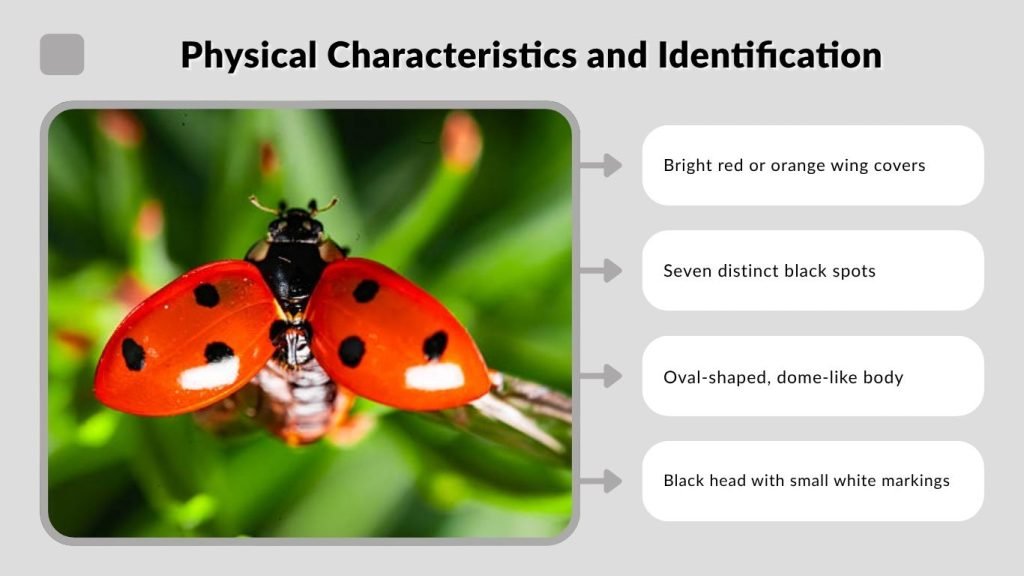
The seven-spotted ladybug is easily identifiable due to its unique appearance. Its bright coloration not only makes it attractive but also serves as a warning to predators.
Key Features
- Bright red or orange wing covers
- Seven distinct black spots
- Oval-shaped, dome-like body
- Black head with small white markings
Wings and Flight
- Hard outer wings (elytra) protect delicate inner wings
- Inner wings are used for flying
- Capable of short but effective flights to escape danger
Seven-Spotted Ladybugs Habitat and Distribution
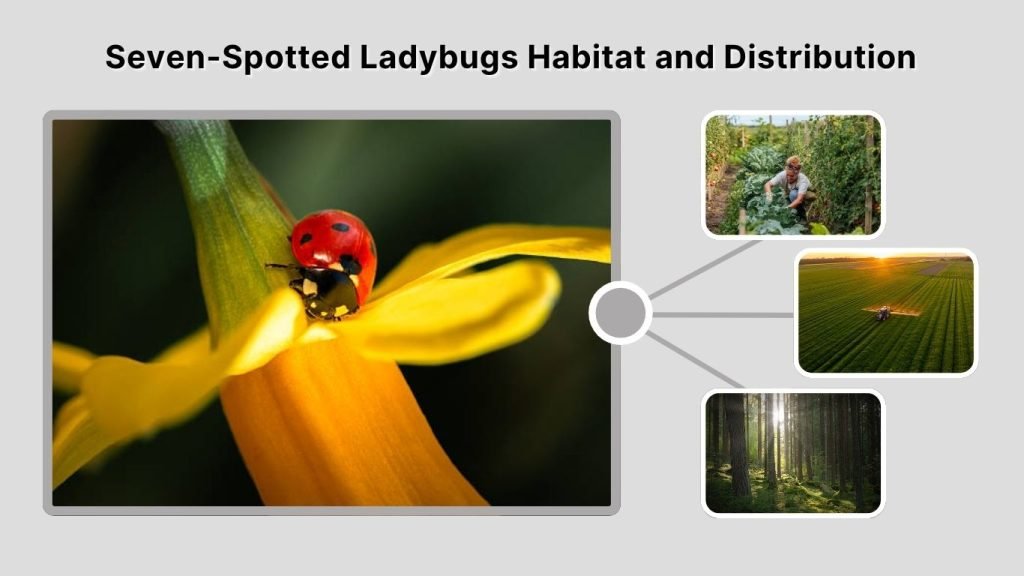
The seven-spotted ladybug is highly adaptable and can thrive in a wide range of environments. Its presence is often linked to areas where food sources are abundant.
Natural Habitat
These ladybugs are commonly found in gardens, agricultural fields, grasslands, and forests. They prefer locations where aphids and other small insects are plentiful, as these serve as their primary food source.
Global Distribution
Native to Europe and Asia, the seven-spotted ladybug has been introduced to North America for pest control purposes. Today, it is widely established in many regions and can be found in places such as Ontario and Utah, as well as similar temperate environments.
Life Cycle of the Seven-Spotted Ladybug
The life cycle of the seven-spotted ladybug is a fascinating process that involves complete metamorphosis. Each stage plays a crucial role in its development and survival.
Stages of Development
- Egg stage: Females lay clusters of yellow eggs on leaves
- Larval stage: Larvae hatch and begin feeding on aphids immediately
- Pupal stage: The insect undergoes transformation inside a pupa
- Adult stage: Fully developed ladybugs emerge ready to reproduce
Growth and Development
After hatching, larvae grow rapidly by consuming large numbers of pests. The pupal stage is a resting phase where transformation occurs. Once adulthood is reached, the ladybug becomes active, feeding and reproducing to continue the cycle.
Diet: What Do Seven-Spotted Ladybugs Eat?
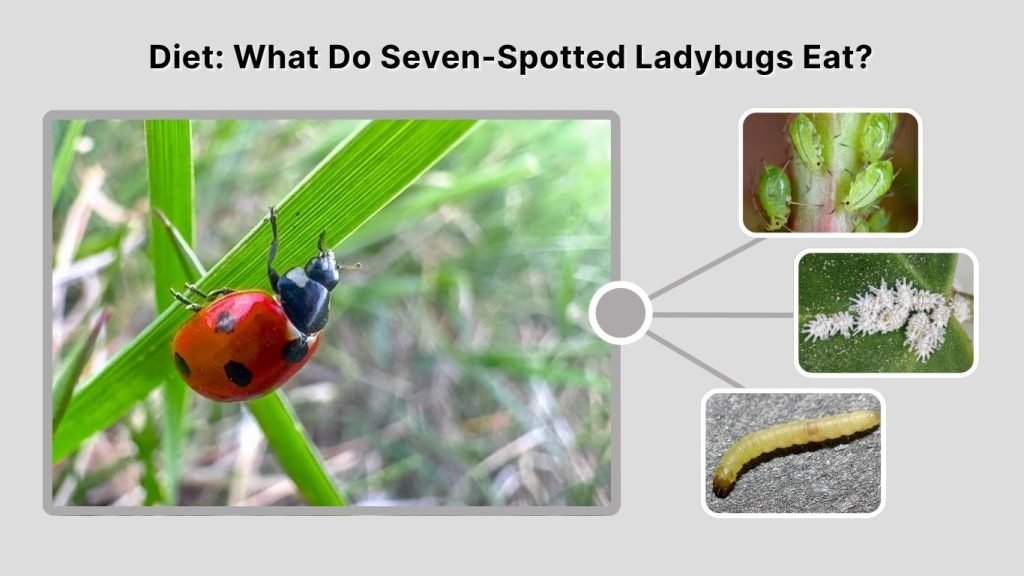
The seven-spotted ladybug is a natural predator that plays a vital role in controlling pest populations. Its feeding habits make it especially beneficial in gardens and agricultural fields.
Primary Food Sources
- Aphids (main food source and most preferred prey)
- Small soft-bodied insects
- Mites and insect larvae
Additional Food Sources
- Pollen during food shortages
- Nectar from flowering plants
- Insect eggs
Adaptations and Survival Traits
The seven-spotted ladybug has developed several adaptations that help it survive in different environments. These traits protect it from predators and harsh conditions while improving its chances of reproduction and survival.
Key Survival Adaptations
- Bright red coloration warns predators of toxicity
- Ability to release a foul-smelling defensive fluid
- Strong wings allow quick escape
- Seasonal dormancy during cold weather
Are Seven-Spotted Ladybugs Invasive?
The seven-spotted ladybug has a complex ecological status depending on the region. Originally native to Europe and Asia, it was intentionally introduced to North America to control aphid populations.
In many areas, it has successfully established itself and contributes positively to agriculture by reducing pests. However, in some cases, it may compete with native ladybug species for food and habitat. Despite this, it is generally considered more beneficial than harmful due to its strong pest-control abilities.
Seven-Spotted Ladybugs Lifespan and Behavior
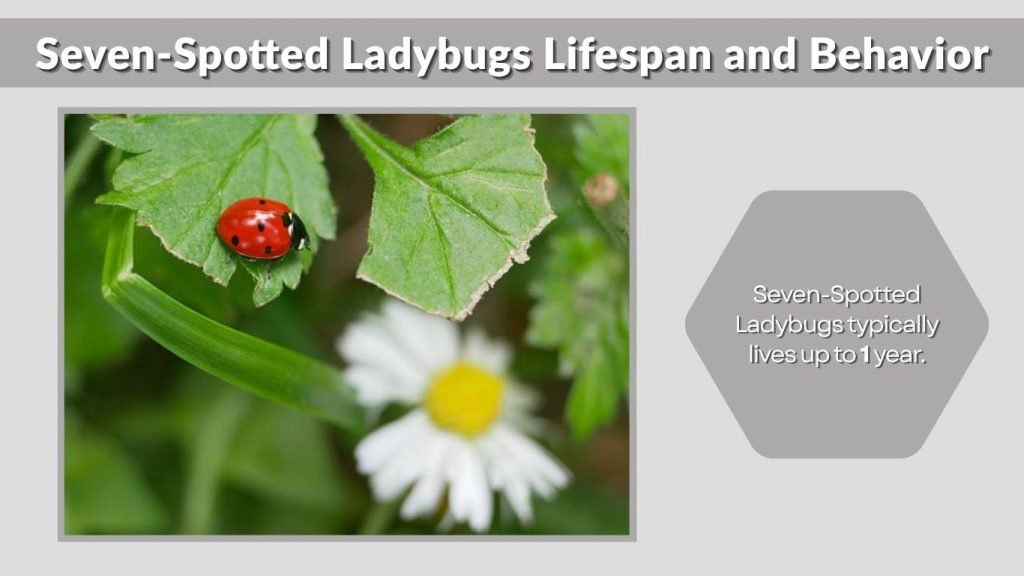
The lifespan and behavior of the seven-spotted ladybug are influenced by environmental conditions such as temperature and food availability. These insects display interesting seasonal habits and survival strategies.
Lifespan
- Typically lives up to one year
- Duration varies depending on climate and resources
- Adults survive winter through dormancy
Behavior Patterns
- Active during warmer months
- Often found near plants with aphids
- Gather in groups during winter for protection
Importance in Agriculture and Ecosystems
The seven-spotted ladybug is highly valued for its contribution to maintaining ecological balance. It acts as a natural pest controller, helping reduce the need for chemical pesticides.
By feeding on aphids and other harmful insects, it protects crops and supports sustainable farming practices. Its presence in gardens and farms is often seen as a sign of a healthy ecosystem, making it an important species for both agriculture and biodiversity.
FAQs
Do all ladybugs have seven spots?
No, not all ladybugs have seven spots. Different species have varying numbers of spots, and some may even have none. The seven-spotted ladybug is just one specific species recognized by its distinct pattern of seven black spots on its red wing covers.
What does the seven-spotted ladybug eat?
Seven-spotted ladybugs mainly eat aphids, which are small insects that damage plants. They may also consume mites, insect eggs, and larvae. Occasionally, they feed on pollen and nectar, especially when their primary food sources are scarce.
Where do seven-spotted ladybugs live?
They live in gardens, farms, grasslands, and forests where food is readily available. These ladybugs are commonly found in Europe, Asia, and North America, thriving in environments that provide plenty of aphids and suitable shelter.
What is the scientific name of the seven-spotted ladybug?
The scientific name of the seven-spotted ladybug is Coccinella septempunctata. It belongs to the family Coccinellidae and the order Coleoptera, which includes beetles known for their ecological importance and pest control abilities.
How long do seven-spotted ladybugs live?
Seven-spotted ladybugs usually live for about one year. Their life cycle includes egg, larval, pupal, and adult stages. Factors like temperature, food availability, and environmental conditions can influence their overall lifespan.
