
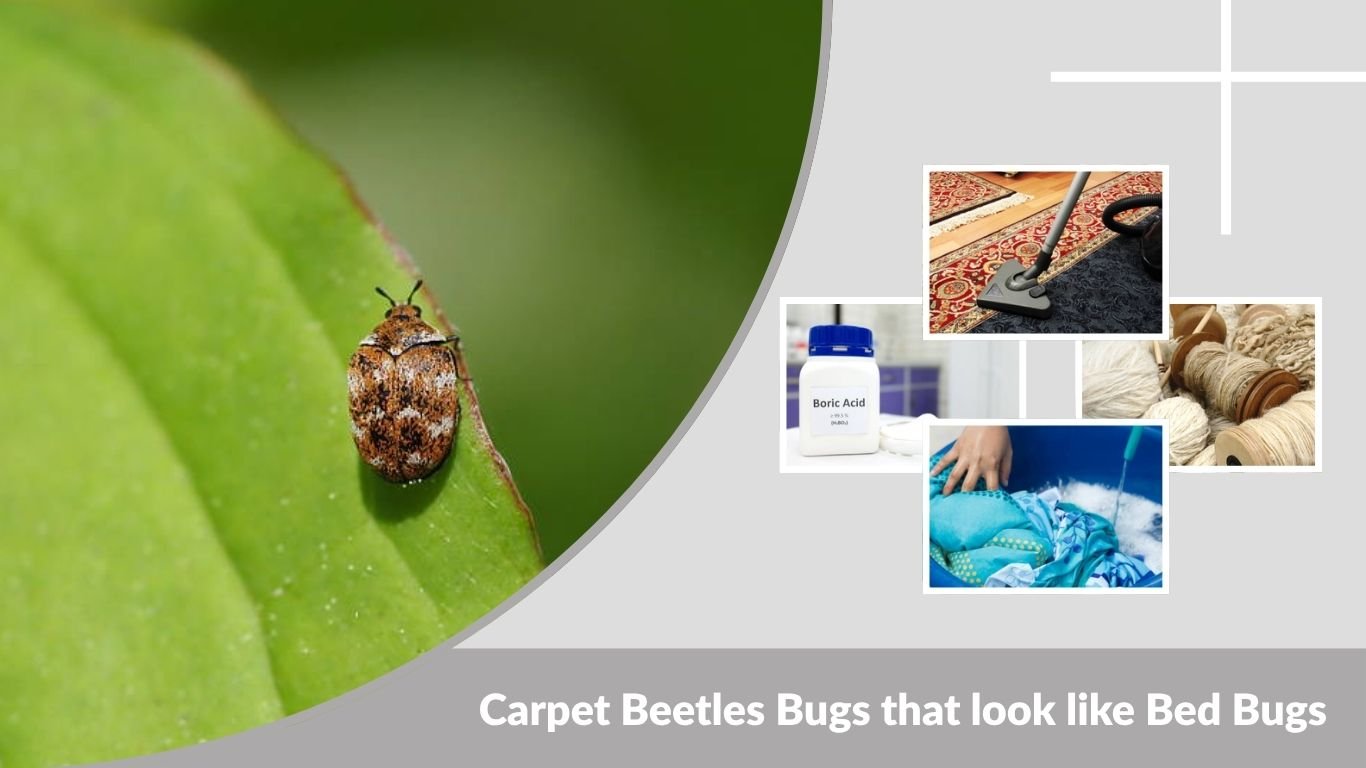
Finding tiny bugs in your bed can be alarming—especially with the widespread fear of bed bugs. But not every small insect in your home is a blood-sucking pest. In fact, carpet beetles are one of the most common bugs that look like bed bugs but behave very differently.
Misidentifying these insects can lead to unnecessary worry and even expensive pest control treatments. This guide will walk you through how to distinguish carpet beetles from bed bugs and identify other bugs that look similar.
What Are Carpet Beetles?
Carpet beetles are small household pests that primarily feed on natural fibers and organic materials rather than human blood.
Carpet beetles belong to the Dermestidae family and are commonly found in homes worldwide. They exist in two main forms: adult beetles and larvae, which look quite different from each other.
Key Characteristics
- Size: 2–4 mm (very small)
- Shape: Oval and slightly rounded
- Color: Varied (black, brown, white patterns)
- Movement: Slow crawlers, often found near light sources
Larvae Appearance
- Worm-like and fuzzy
- Brown or tan with bristly hairs
- Often mistaken for tiny caterpillars
Where They Are Found
- Carpets and rugs
- Bedding and mattresses
- Closets with wool or cotton clothes
- Upholstered furniture
Unlike bed bugs, carpet beetles are attracted to natural fibers, pet hair, and dead insects, not humans.
What Do Bed Bugs Look Like?
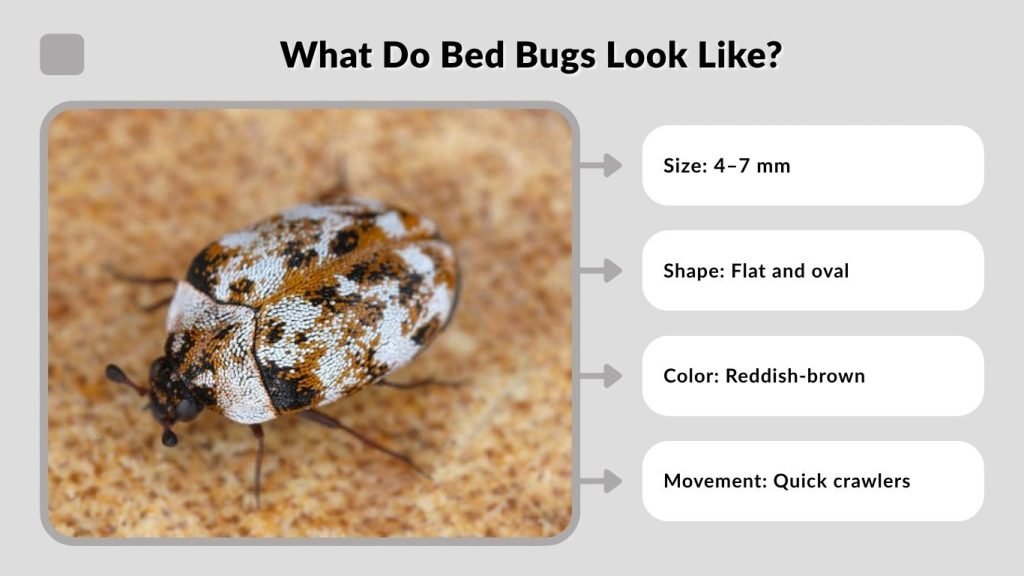
Bed bugs are parasitic insects that feed exclusively on human blood, making them a serious household pest.
Bed bugs (Cimex lectularius) are reddish-brown insects that hide in cracks and crevices during the day and come out at night to feed.
Key Characteristics
- Size: 4–7 mm (larger than carpet beetles)
- Shape: Flat and oval (becomes swollen after feeding)
- Color: Reddish-brown
- Movement: Quick crawlers
Common Hiding Spots
- Mattress seams
- Bed frames
- Headboards
- Cracks in walls and furniture
Signs of Infestation
- Small blood stains on sheets
- Black fecal spots
- Bite marks in clusters or lines
Bed bugs rely on human hosts, which is the biggest difference from carpet beetles.
Key Differences Between Carpet Beetles and Bed Bugs

Overview:
Although they may look similar at first glance, carpet beetles and bed bugs differ significantly in behavior, appearance, and impact.
Appearance
- Carpet beetles: Rounded, patterned, sometimes colorful
- Bed bugs: Flat, oval, reddish-brown
Behavior
- Carpet beetles: Feed on fabrics and organic debris
- Bed bugs: Feed on human blood
Human Interaction
- Carpet beetles: Do not bite
- Bed bugs: Bite and leave visible marks
Habitat
- Carpet beetles: Found in carpets, closets, and fabrics
- Bed bugs: Stay close to sleeping areas
Other Bugs That Look Like Bed Bugs
Carpet beetles aren’t the only insects confused with bed bugs. Several other small bugs can also cause misidentification.
Common Look-Alikes
- Spider beetles: Round bodies, similar size
- Fleas: Small and jumpy, often found on pets
- Booklice: Tiny and pale, found in humid areas
- Ticks: Attach to skin and feed on blood
- Bat bugs: Nearly identical to bed bugs but live near bats
Correct identification is crucial before taking any pest control action.
Why Carpet Beetles Are Found in Beds
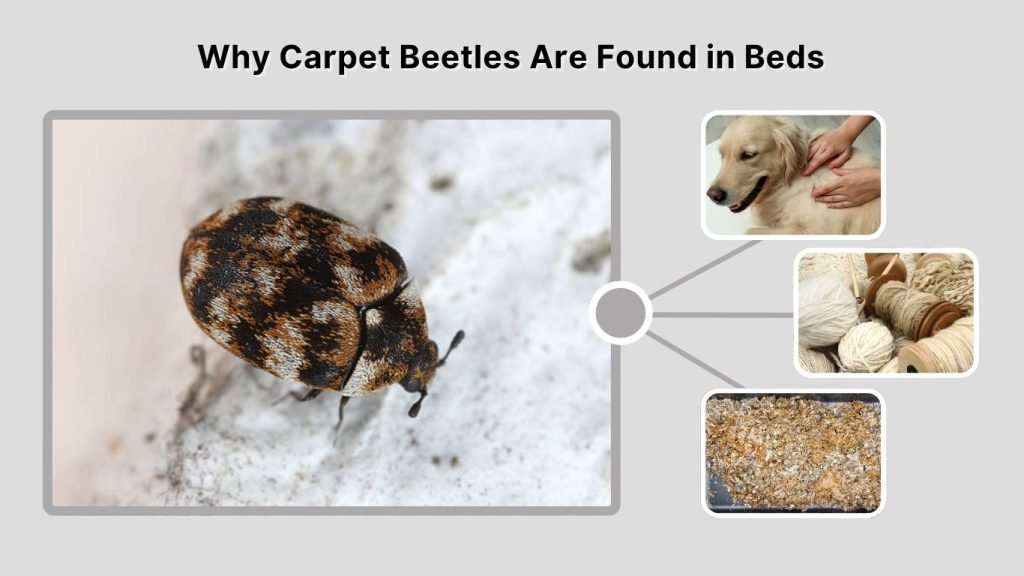
Finding carpet beetles in your bed doesn’t mean they are targeting you—it’s usually about the materials around you.
Carpet beetles are attracted to:
- Natural fabrics like wool, cotton, and silk
- Hair (human or pet)
- Dead skin flakes and organic debris
Beds often contain these materials, making them a convenient feeding ground. This is why people frequently mistake them for bed bugs.
Do Carpet Beetles Bite Humans?
One of the biggest misconceptions is that carpet beetles bite—but this is not true.
Carpet beetles do not bite humans. However, their larvae have tiny hairs that can cause skin irritation in some individuals.
What People Mistake for Bites
- Allergic rash from larval hairs
- Red, itchy skin patches
- Random irritation (not in patterns like bed bug bites)
This confusion often leads people to believe they have bed bugs when they actually don’t.
Signs You Have Carpet Beetles (Not Bed Bugs)
Identifying the correct pest depends on recognizing specific signs.
Carpet Beetle Indicators
- Shed larval skins
- Small holes in fabrics or clothing
- Presence of fuzzy larvae
- No blood stains on bedding
Unlike bed bugs, carpet beetles leave fabric damage, not bite evidence.
Signs You Actually Have Bed Bugs
Overview:
Accurately identifying bed bugs is critical because their treatment is more urgent and complex than carpet beetles.
Key Bed Bug Indicators
- Bite patterns: Often appear in lines or clusters on exposed skin
- Blood stains: Small reddish spots on sheets or pillowcases
- Fecal spots: Tiny black dots (digested blood) on mattresses or walls
- Live bugs: Found in mattress seams, bed frames, and cracks
Bed bugs are highly dependent on human hosts, so their presence is usually concentrated around sleeping areas.
How to Get Rid of Carpet Beetles

Carpet beetles are easier to eliminate than bed bugs, especially when addressed early.
Step-by-Step Removal
1. Deep Cleaning
- Vacuum carpets, rugs, and furniture thoroughly
- Focus on corners, edges, and under furniture
- Dispose of vacuum bags immediately
2. Wash Infested Items
- Use hot water for bedding, clothing, and fabrics
- Dry on high heat to kill larvae and eggs
3. Remove Food Sources
- Eliminate lint, pet hair, and organic debris
- Store clothes in sealed containers
4. Use Natural or Chemical Treatments
- Boric acid (light application on carpets)
- Insecticides (if infestation is severe)
Consistency is key—regular cleaning prevents re-infestation.
How to Get Rid of Bed Bugs
Bed bugs are much harder to eliminate and often require professional intervention.
Effective Treatment Methods
1. Professional Pest Control
- Most reliable solution
- Includes chemical or heat treatments
2. Heat Treatment
- Bed bugs die at high temperatures (above 50°C / 122°F)
- Wash and dry all fabrics on high heat
3. Mattress Encasements
- Trap bugs inside and prevent new infestations
- Use certified bed bug-proof covers
4. Declutter and Inspect
- Reduce hiding spots
- Inspect furniture, walls, and cracks
Bed bug infestations can spread quickly, so early action is crucial.
Prevention Tips
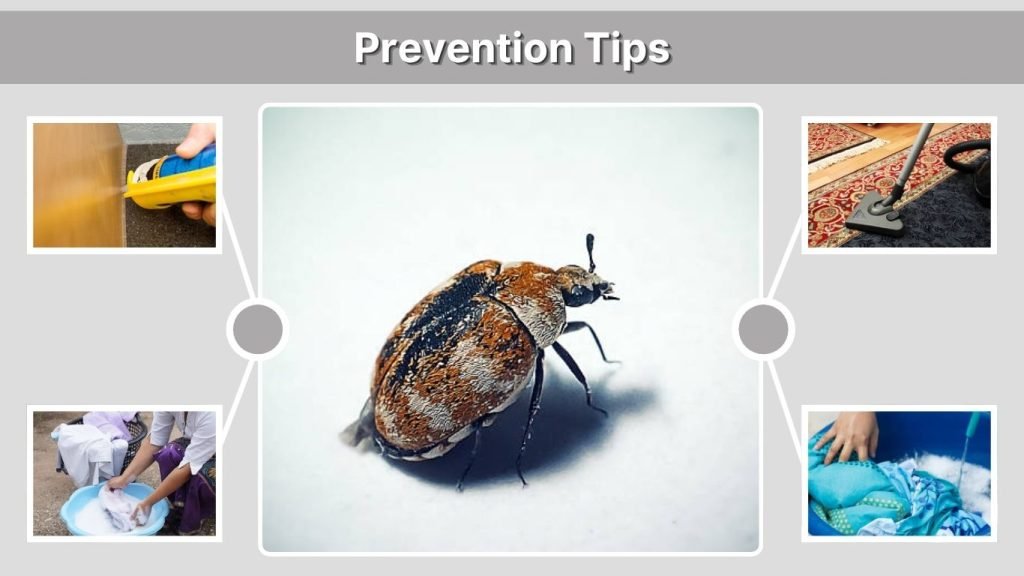
Preventing both carpet beetles and bed bugs starts with maintaining a clean and well-inspected home.
General Prevention Strategies
- Vacuum regularly (especially carpets and upholstery)
- Wash bedding frequently in hot water
- Seal cracks and gaps in walls and furniture
- Avoid bringing second-hand furniture without inspection
Travel Precautions (For Bed Bugs)
- Check hotel mattresses and headboards
- Keep luggage elevated and away from beds
- Wash clothes immediately after returning home
Prevention reduces the risk of both infestation and misidentification.
Visual Comparison Guide (Suggested)
A side-by-side comparison can help quickly distinguish between these pests.
Carpet Beetles vs Bed Bugs
- Shape: Rounded vs flat
- Color: Patterned vs reddish-brown
- Diet: Fabrics vs blood
- Movement: Slow vs quick
- Evidence: Fabric damage vs bite marks
Adding a visual chart or images can significantly improve user understanding.
Conclusion
Carpet beetles and bed bugs are often confused, but they are very different in behavior and impact. While carpet beetles are mostly harmless fabric pests, bed bugs are blood-feeding insects that require immediate attention.
Correct identification saves time, money, and stress. If you notice bugs in your bed, carefully examine their appearance, behavior, and signs before taking action.
FAQs
Can carpet beetles spread from one room to another?
Yes, carpet beetles can spread throughout your home, especially if there are multiple food sources like fabrics, pet hair, or lint. Their larvae crawl between rooms, and adults can fly, making it easier for them to infest different areas over time.
Do carpet beetles come out at night like bed bugs?
No, carpet beetles do not follow the same nighttime feeding behavior as bed bugs. Bed bugs are nocturnal and actively seek human hosts at night, while carpet beetles are more active during the day and are often attracted to light.
What smells or conditions attract carpet beetles?
Carpet beetles are attracted to natural fibers, accumulated dust, pet hair, and organic debris. They are also drawn to dark, undisturbed areas like closets, under furniture, and stored clothing where cleaning is infrequent.
Can I have both carpet beetles and bed bugs at the same time?
Although rare, it is possible to have both infestations simultaneously. Each pest is attracted to different conditions—bed bugs to human hosts and carpet beetles to organic materials—so a poorly maintained environment could support both.
How long does it take to completely eliminate carpet beetles?
With consistent cleaning and proper treatment, carpet beetles can usually be eliminated within a few weeks. However, severe infestations may take longer, especially if hidden larvae or eggs are not fully removed from carpets, fabrics, or furniture.
