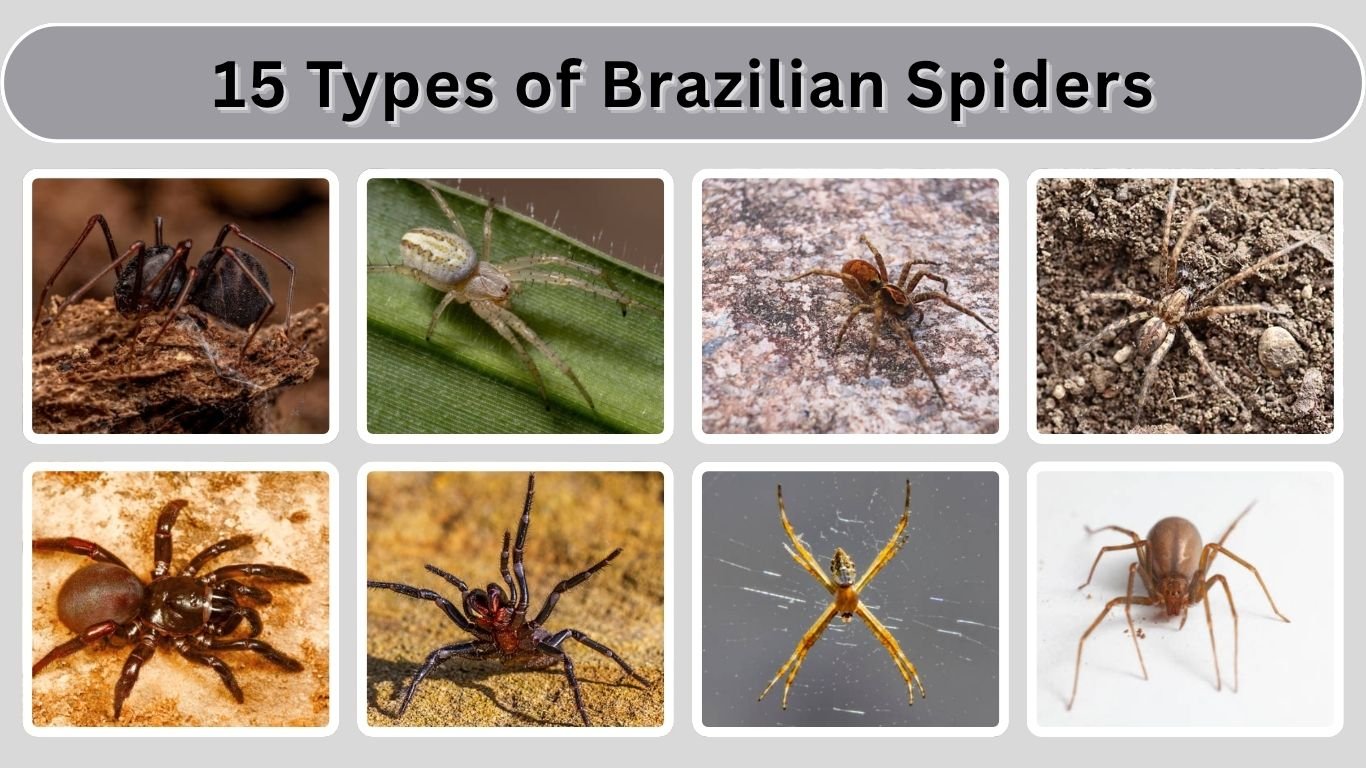
Brazil is home to a remarkable diversity of spiders, ranging from tiny jumping species to large, powerful hunters. These spiders inhabit a wide variety of environments, including rainforests, grasslands, and even human dwellings. While a few species are known for their potent venom, most are harmless and play a vital role in controlling insect populations. Understanding their identification, habitat, diet, and behavior helps reduce fear and highlights their importance in maintaining ecological balance.
1. Brazilian Wandering Spider (Phoneutria fera)
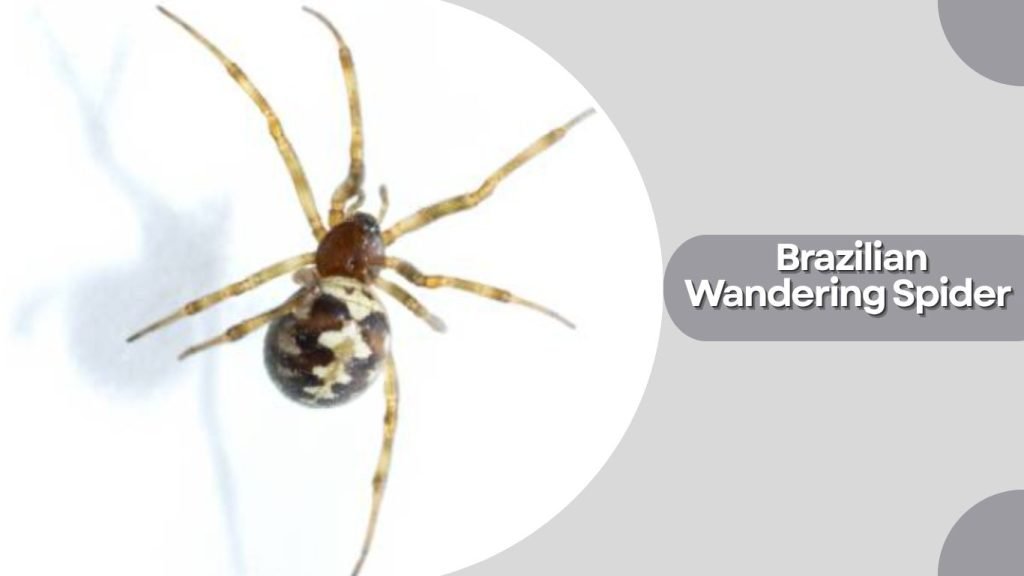
The Brazilian Wandering Spider is one of the most well-known and feared spiders in Brazil due to its potent venom and aggressive defensive behavior. Native to the Amazon rainforest, this species is part of the Phoneutria genus, often referred to as “armed spiders.” Unlike web-building spiders, it actively hunts for prey, which is why it is called a “wandering” spider. Despite its dangerous reputation, encounters with humans are relatively uncommon.
Identification
- Large, robust spider with long legs
- Brown to dark brown coloration with subtle banding
- Hairy body and legs
- Distinctive red hairs near the mouthparts (chelicerae)
- Can reach up to 15 cm (6 inches) in leg span
Habitat
The Brazilian Wandering Spider primarily inhabits tropical rainforests, especially the Amazon basin. It prefers ground-level environments such as leaf litter, fallen logs, and dense vegetation. However, it may occasionally wander into human dwellings, banana plantations, or storage areas, especially at night.
Diet
This species is a skilled nocturnal hunter. Its diet includes insects, small reptiles, amphibians, and even small mammals. It does not rely on webs but instead actively searches for prey and subdues it quickly using its powerful venom.
Behavior
The Brazilian Wandering Spider is known for its defensive posture, where it raises its front legs when threatened. It is more aggressive than many other spiders and will not hesitate to defend itself if provoked. It is primarily nocturnal and spends the daytime hiding in dark, secure places. Although its venom is medically significant, bites are rare and typically occur only when the spider is disturbed.
2. Brazilian Salmon Pink Bird-Eater (Lasiodora parahybana)
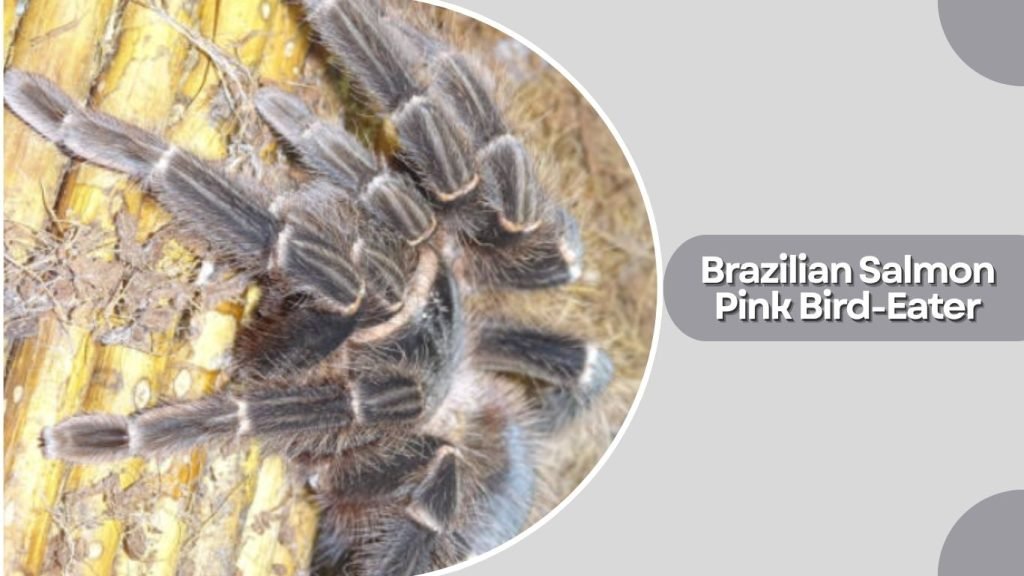
The Brazilian Salmon Pink Bird-Eater is one of the largest tarantulas in the world and is native to northeastern Brazil. Known for its impressive size and striking coloration, this spider is a favorite among arachnid enthusiasts. Despite its intimidating appearance, it is generally docile and poses little threat to humans.
Identification
- Very large, heavy-bodied tarantula
- Pinkish hairs covering a dark brown to black body
- Thick, sturdy legs with noticeable hair
- Leg span can reach up to 25 cm (10 inches)
- Prominent fangs typical of tarantulas
Habitat
This species is commonly found in tropical forests, where it lives in burrows or natural ground shelters. It prefers humid environments with loose soil that allows easy digging. It may also take shelter under logs or rocks.
Diet
The Brazilian Salmon Pink Bird-Eater feeds on insects, small rodents, amphibians, and occasionally small birds. It is an ambush predator, waiting near its burrow to capture passing prey using its speed and strength.
Behavior
This tarantula is mostly calm but can become defensive if threatened. It may flick irritating hairs from its abdomen as a defense mechanism. It is nocturnal and spends most of the day hidden in its burrow, emerging at night to hunt.
3. Brazilian Black Tarantula (Grammostola pulchra)
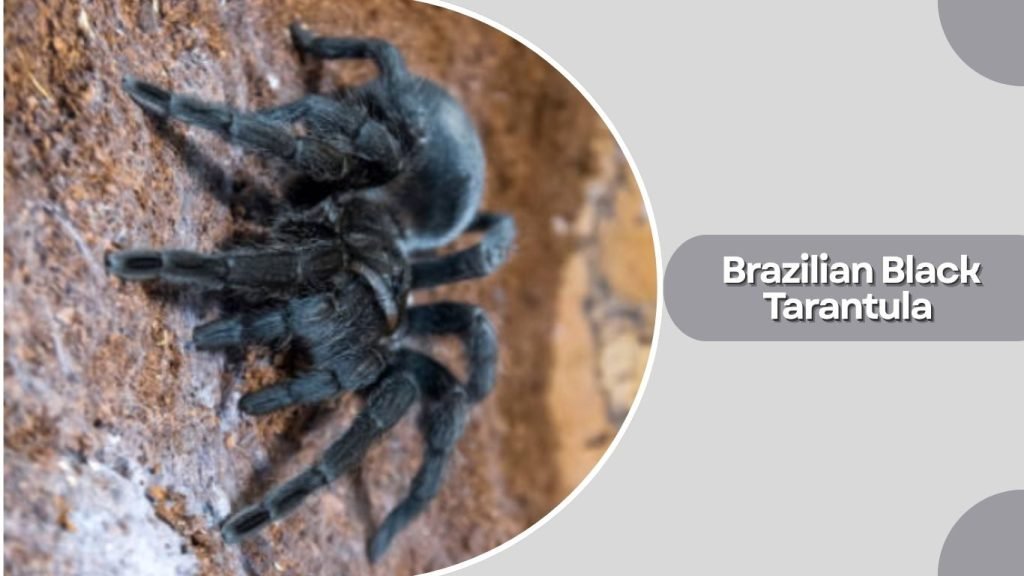
The Brazilian Black Tarantula is one of the most admired tarantulas due to its deep, velvety black coloration and calm temperament. Native to Brazil and parts of Uruguay, it is especially popular among spider enthusiasts and hobbyists. Unlike more aggressive species, this tarantula is known for being docile and slow-moving, making it less intimidating despite its size. It is also long-lived, with females capable of surviving for decades under the right conditions.
Identification
- Large tarantula with a uniform jet-black body
- Thick, velvety appearance due to dense fine hairs
- Sturdy legs with a smooth, glossy finish
- Medium to large size with a leg span of up to 20 cm (8 inches)
- Females are bulkier and longer-lived than males
Habitat
The Brazilian Black Tarantula typically inhabits grasslands and forest edges rather than deep rainforests. It prefers burrowing into soft soil or occupying natural shelters such as under rocks or logs. These spiders thrive in warm, moderately humid environments and are well adapted to both natural and semi-arid conditions.
Diet
This species feeds mainly on insects such as crickets, beetles, and grasshoppers. Occasionally, it may also prey on small vertebrates like lizards or frogs. It is an ambush predator, waiting patiently near its burrow before quickly capturing prey with its powerful fangs.
Behavior
The Brazilian Black Tarantula is known for its calm and gentle nature. It rarely shows aggression and is more likely to retreat than attack. When threatened, it may raise its front legs or flick urticating hairs as a defense. It is primarily nocturnal, remaining hidden during the day and becoming active at night.
4. Brazilian Whiteknee Tarantula (Acanthoscurria geniculata)

The Brazilian Whiteknee Tarantula is a striking and easily recognizable species known for its bold black-and-white coloration. Native to the rainforests of northern Brazil, this tarantula is popular among arachnid enthusiasts due to its impressive size and active nature. Although it may appear intimidating, it is generally not dangerous to humans and plays an important role in maintaining ecological balance.
Identification
- Large tarantula with a robust body
- Jet-black coloration with bright white bands on the legs
- Thick, hairy legs giving a bold contrast pattern
- Leg span can reach up to 20–22 cm (8–9 inches)
- Strong, prominent fangs typical of large tarantulas
Habitat
This species is primarily found in tropical rainforest regions, where it prefers humid and warm environments. It typically lives in burrows dug into soft soil or takes shelter under logs and rocks. The Brazilian Whiteknee Tarantula is a ground-dwelling species that requires a stable, moist habitat to thrive.
Diet
The Brazilian Whiteknee Tarantula is a voracious feeder. It consumes a wide range of prey, including insects, small rodents, amphibians, and occasionally other spiders. It relies on ambush tactics, waiting near its burrow before quickly overpowering prey with its strong fangs and venom.
Behavior
This tarantula is known for being more defensive compared to some other species. When threatened, it may display a defensive posture by raising its front legs or flicking irritating hairs from its abdomen. It is primarily nocturnal and spends most of the day hidden in its burrow, emerging at night to hunt actively.
5. Brazilian Jewel Spider (Parawixia bistriata)
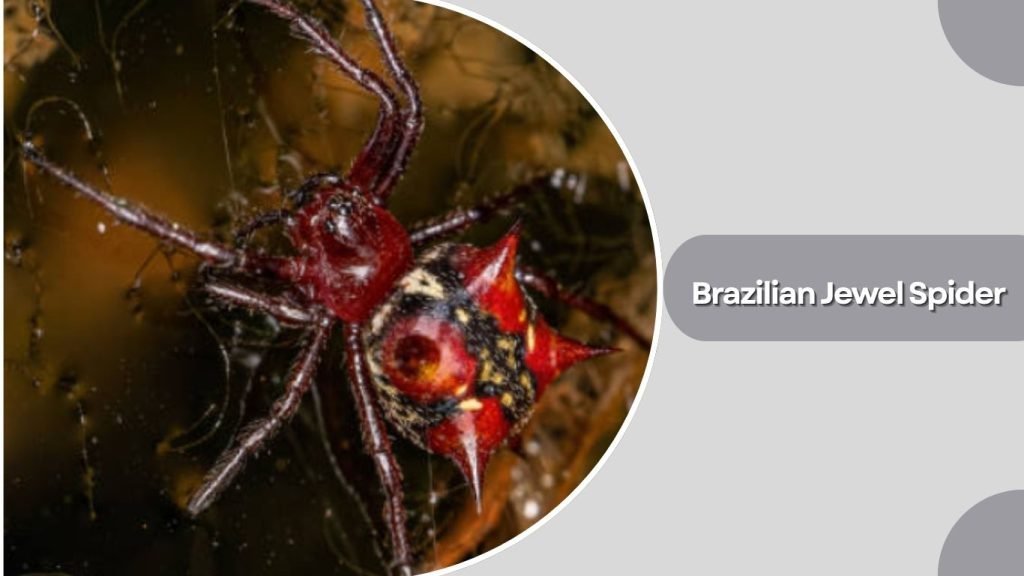
The Brazilian Jewel Spider is a fascinating orb-weaving species known for its shimmering appearance and unique social behavior. Native to South America, including Brazil, this spider is often found in large groups, especially during certain seasons. Unlike solitary spiders, it can form communal webs, creating an impressive sight in natural habitats. Despite its intricate web-building skills, it is harmless to humans and plays an important role in controlling insect populations.
Identification
- Medium-sized spider with a rounded abdomen
- Silvery or golden sheen on the body
- Brownish legs with darker joints
- Fine hairs covering the body
- Females are larger and more brightly colored than males
Habitat
The Brazilian Jewel Spider is commonly found in forests, grasslands, and agricultural areas. It prefers open spaces where it can build large orb-shaped webs between trees, shrubs, or tall grasses. During certain times of the year, these spiders may gather in large numbers, creating communal web structures.
Diet
This species feeds mainly on flying insects such as flies, mosquitoes, and moths. Its orb web is highly effective at trapping prey, and the spider quickly immobilizes captured insects with silk before consuming them. This makes it beneficial for reducing pest populations.
Behavior
The Brazilian Jewel Spider is unique for its semi-social behavior. It often lives in groups and builds interconnected webs, especially during migration or breeding periods. It is non-aggressive and rarely leaves its web unless disturbed. When threatened, it typically drops from its web or remains motionless to avoid detection.
6. Brazilian Giant Crab Spider (Heteropoda venatoria)
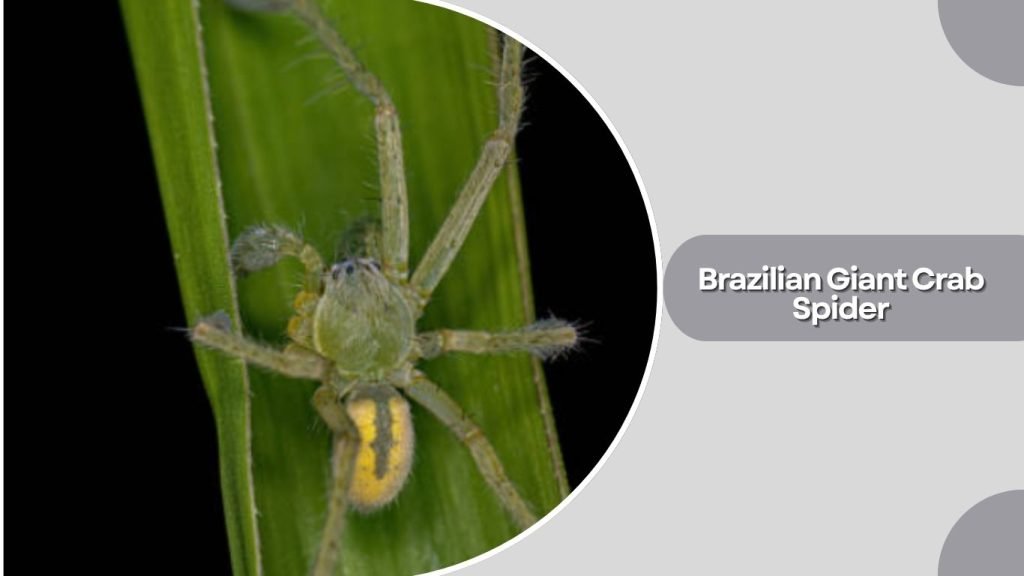
The Brazilian Giant Crab Spider, also known as the Huntsman Spider, is a fast-moving and widely distributed species found in tropical regions, including Brazil. It is known for its crab-like stance and impressive speed rather than web-building behavior. Despite its large size and intimidating appearance, it is not considered dangerous to humans and is actually beneficial due to its role in controlling pests.
Identification
- Large, flat-bodied spider with long, laterally extended legs
- Light brown to gray coloration with darker markings
- Crab-like appearance due to sideways leg positioning
- Leg span can reach up to 15 cm (6 inches)
- Smooth body with minimal hair compared to tarantulas
Habitat
This spider prefers warm, tropical environments and is often found in forests, plantations, and human dwellings. It commonly hides under bark, inside crevices, or behind walls and furniture. It adapts well to both natural and urban environments, especially in areas with abundant insects.
Diet
The Brazilian Giant Crab Spider is an active hunter that does not rely on webs. It feeds on insects such as cockroaches, flies, and moths. Its speed and agility allow it to chase down prey effectively, making it a natural pest controller in homes and outdoor settings.
Behavior
This species is known for its speed and agility. It is nocturnal and spends the day hiding in dark places. Although it may appear aggressive due to its quick movements, it generally avoids humans. When threatened, it prefers to flee rather than bite. Bites are rare and typically cause only mild symptoms.
7. Brazilian Wolf Spider (Lycosa erythrognatha)
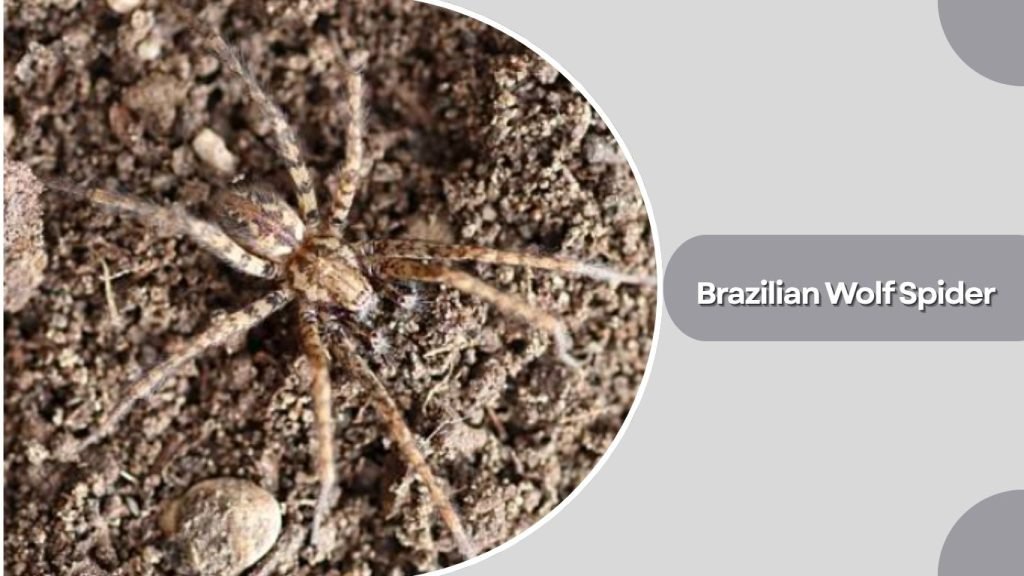
The Brazilian Wolf Spider is a ground-dwelling hunter known for its speed, sharp eyesight, and active lifestyle. Unlike web-building spiders, it roams freely in search of prey, making it a highly efficient predator. This species is commonly found across Brazil in both natural and semi-urban environments. Although it may look intimidating, it is not considered dangerous and plays an important role in controlling insect populations.
Identification
- Medium to large-sized spider with a robust body
- Brown to gray coloration with darker stripes or patterns
- Hairy body and legs
- Strong legs adapted for running
- Distinctive eye arrangement with large forward-facing eyes
Habitat
The Brazilian Wolf Spider prefers open, ground-level habitats such as grasslands, forests, gardens, and agricultural fields. It may also be found near human dwellings, especially in yards or under debris. It does not build webs but instead lives in burrows or hides under rocks and leaf litter.
Diet
This spider is an active hunter that feeds on a variety of insects, including beetles, ants, and crickets. It relies on speed and keen vision to locate and capture prey rather than using webs. Occasionally, it may consume other small arthropods.
Behavior
The Brazilian Wolf Spider is solitary and highly mobile. It is mostly nocturnal, hunting at night and resting during the day. When threatened, it may display defensive behavior but usually chooses to escape quickly. Females are known for carrying their egg sacs attached to their spinnerets and later transporting spiderlings on their backs, which is a unique and fascinating behavior.
8. Brazilian Jumping Spider (Salticidae family)
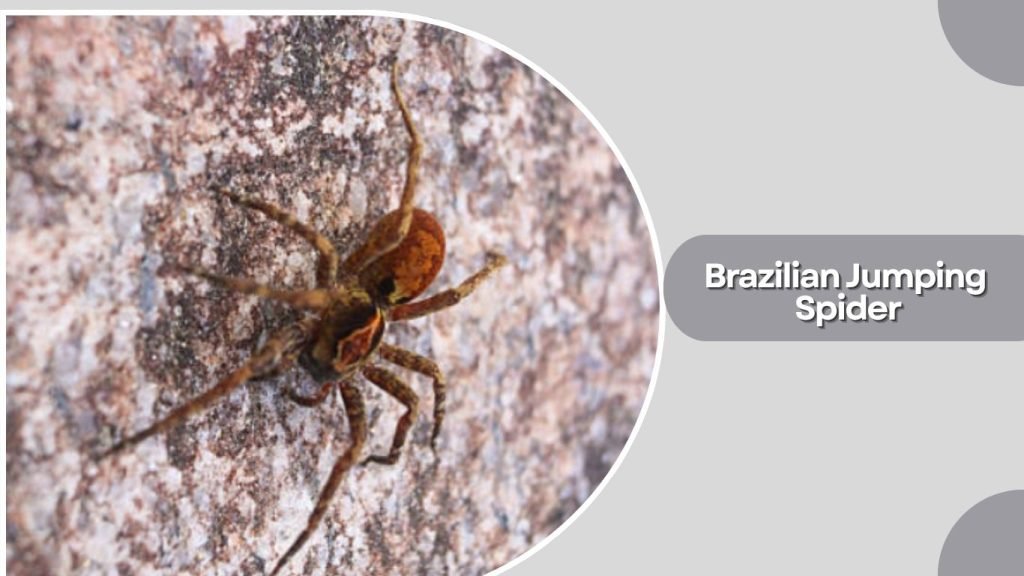
The Brazilian Jumping Spider represents a diverse group of small, highly intelligent spiders found throughout Brazil. Known for their excellent vision and curious behavior, these spiders are active hunters rather than web builders. They are often seen during the day, moving in quick, jerky motions. Despite their small size, they are fascinating creatures and completely harmless to humans.
Identification
- Small-sized spider with a compact body
- Usually brown, black, or gray with possible bright markings
- Large, forward-facing eyes (very distinctive)
- Short, strong legs adapted for jumping
- Fuzzy or hairy appearance
Habitat
Brazilian Jumping Spiders are highly adaptable and can be found in a variety of environments, including forests, gardens, walls, and even inside homes. They prefer sunny areas where they can actively hunt and observe their surroundings.
Diet
These spiders are active predators that feed on small insects such as flies, mosquitoes, and ants. They do not rely on webs but instead stalk their prey and use precise jumping to capture it. Their excellent eyesight helps them judge distance accurately before attacking.
Behavior
Jumping spiders are known for their curious and alert nature. They often turn to observe movement, including humans. They are diurnal, meaning they are active during the day. Rather than being aggressive, they rely on agility and quick reflexes to escape danger. They also use silk as a safety line when jumping.
9. Brazilian Orb-Weaver Spider (Nephila clavipes)
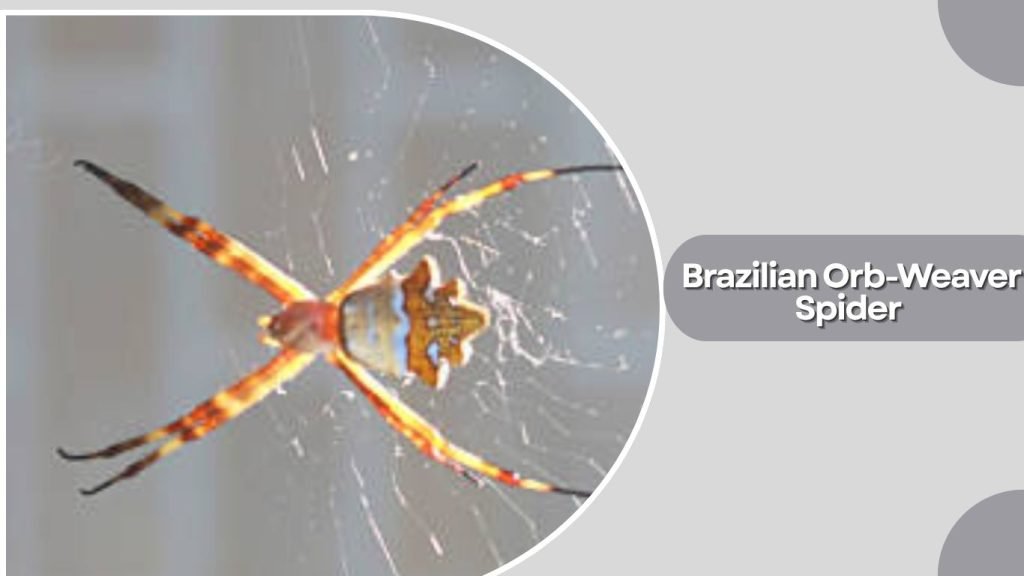
The Brazilian Orb-Weaver Spider, often called the Golden Silk Orb-Weaver, is famous for its large, beautifully structured webs and striking appearance. Found throughout Brazil’s forests and gardens, this spider plays a key role in controlling flying insect populations. Its golden-colored silk can shimmer in sunlight, making its web both functional and visually impressive. Despite its size, it is harmless to humans.
Identification
- Large spider with a long, slender body
- Yellow, black, and sometimes orange coloration
- Very long legs with dark bands
- Females significantly larger than males
- Produces distinctive golden-colored silk
Habitat
This spider is commonly found in forests, gardens, and open areas where it can build large orb-shaped webs. It prefers warm, humid environments and often constructs webs between trees, shrubs, or structures where flying insects are abundant.
Diet
The Brazilian Orb-Weaver feeds mainly on flying insects such as flies, mosquitoes, butterflies, and even small dragonflies. Its strong, sticky web is highly effective at trapping prey. Once caught, the spider quickly immobilizes and wraps its prey in silk before feeding.
Behavior
This species is non-aggressive and spends most of its time in the center of its web. It is active during the day and relies on its web rather than hunting. When disturbed, it may vibrate the web or retreat to a nearby hiding spot. It rarely leaves its web unless necessary, making it easy to observe in nature.
10. Brazilian Brown Recluse (Loxosceles intermedia)
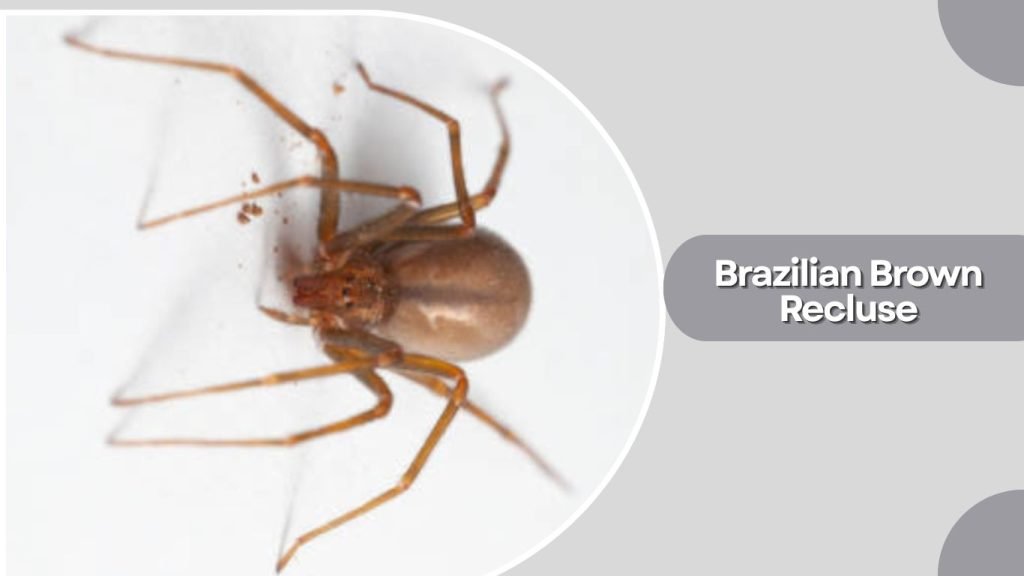
The Brazilian Brown Recluse is one of the medically significant spiders found in Brazil. Belonging to the Loxosceles genus, it is known for its venom, which can cause skin irritation and, in rare cases, more serious reactions. Despite its reputation, this spider is shy and prefers to avoid human contact. It is most often encountered accidentally in indoor environments.
Identification
- Small to medium-sized spider with a flat body
- Light to dark brown coloration
- Distinct violin-shaped marking on the cephalothorax
- Long, thin legs without noticeable spines
- Six eyes arranged in pairs (unlike most spiders with eight eyes)
Habitat
The Brazilian Brown Recluse prefers dry, dark, and undisturbed areas. It is commonly found inside homes, especially in closets, attics, behind furniture, and in storage boxes. Outdoors, it may live under rocks, logs, or debris. It thrives in places where it can remain hidden during the day.
Diet
This spider feeds on small insects such as ants, cockroaches, and other arthropods. It does not rely on webs to catch prey but instead hunts at night, using its venom to immobilize and digest its food.
Behavior
The Brazilian Brown Recluse is nocturnal and highly reclusive. It avoids light and human activity, staying hidden during the day. It is not aggressive and bites usually occur only when the spider is accidentally pressed against the skin. While its venom can cause tissue damage, serious cases are uncommon with proper care.
11. Brazilian Garden Spider (Argiope argentata)
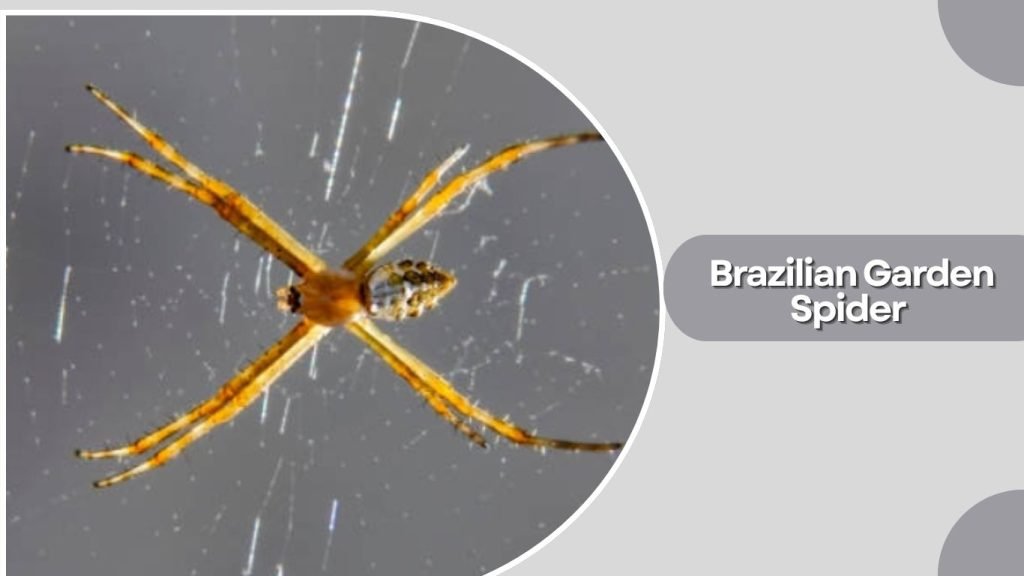
The Brazilian Garden Spider is a visually striking orb-weaver commonly found in gardens, fields, and forest edges across Brazil. Known for its bright coloration and intricate web designs, this spider is both beneficial and harmless to humans. It plays an important ecological role by controlling populations of flying insects. Its large, circular webs are often decorated with a zigzag silk pattern called a stabilimentum.
Identification
- Medium to large spider with a rounded abdomen
- Silver, white, and black coloration
- Long legs with dark and light banding
- Females much larger and more colorful than males
- Often seen sitting in the center of a web with a zigzag pattern
Habitat
The Brazilian Garden Spider prefers open, sunny environments such as gardens, fields, and forest edges. It builds large orb webs between plants, branches, or structures where flying insects are common. It thrives in warm climates with plenty of vegetation.
Diet
This spider feeds mainly on flying insects like flies, grasshoppers, and beetles. Its web is highly effective at trapping prey. Once an insect is caught, the spider quickly wraps it in silk and injects venom to immobilize it before feeding.
Behavior
The Brazilian Garden Spider is non-aggressive and remains in its web most of the time. It is active during the day and relies entirely on its web to capture prey. When threatened, it may vibrate its web rapidly or drop to the ground to escape danger.
12. Brazilian Funnel-Web Spider (Trechona species)
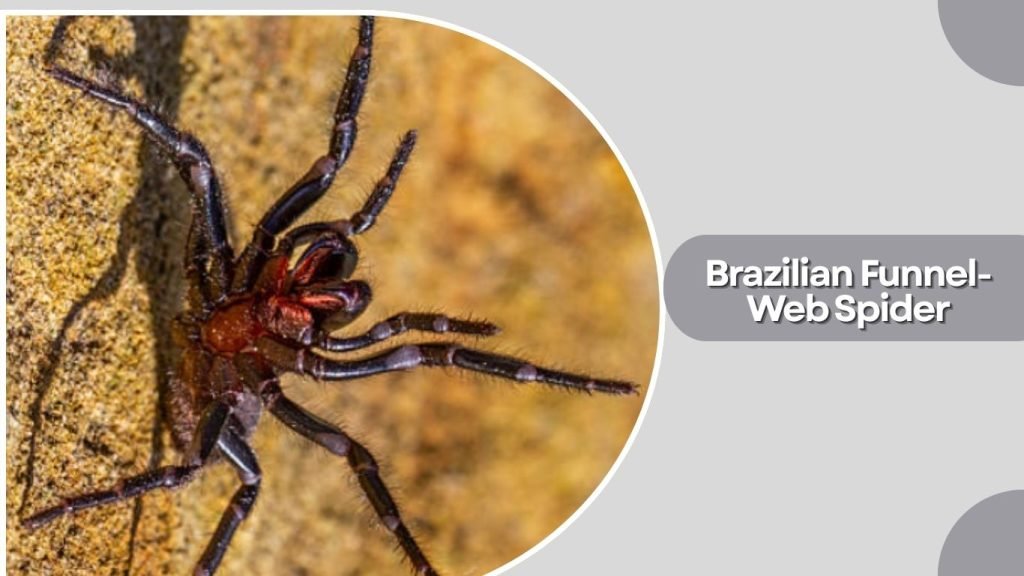
The Brazilian Funnel-Web Spider is a lesser-known but fascinating group of spiders found in Brazil’s forests. These spiders are named for their distinctive funnel-shaped webs, which they use to trap prey. While not as dangerous as some other species, they are still considered medically important and should be handled with caution. They are mostly hidden and rarely encountered by humans.
Identification
- Medium to large spider with a robust body
- Dark brown to black coloration
- Slightly hairy legs and body
- Strong fangs adapted for subduing prey
- Builds a noticeable funnel-shaped web
Habitat
This species prefers moist, forested environments where it can build its funnel web in soil, between roots, or under logs and rocks. It thrives in shaded, humid areas and is rarely found in open or dry locations. Occasionally, it may wander into nearby structures.
Diet
The Brazilian Funnel-Web Spider feeds on insects and other small arthropods. It waits inside its funnel-shaped retreat and quickly rushes out when it detects vibrations from trapped prey. Its web acts as both a shelter and a hunting tool.
Behavior
This spider is reclusive and spends most of its time inside its funnel web. It is primarily nocturnal and avoids human interaction. When threatened, it may become defensive, but it usually prefers to retreat into its web. Bites are uncommon and typically occur only when the spider is disturbed.
13. Brazilian Trapdoor Spider (Actinopus species)
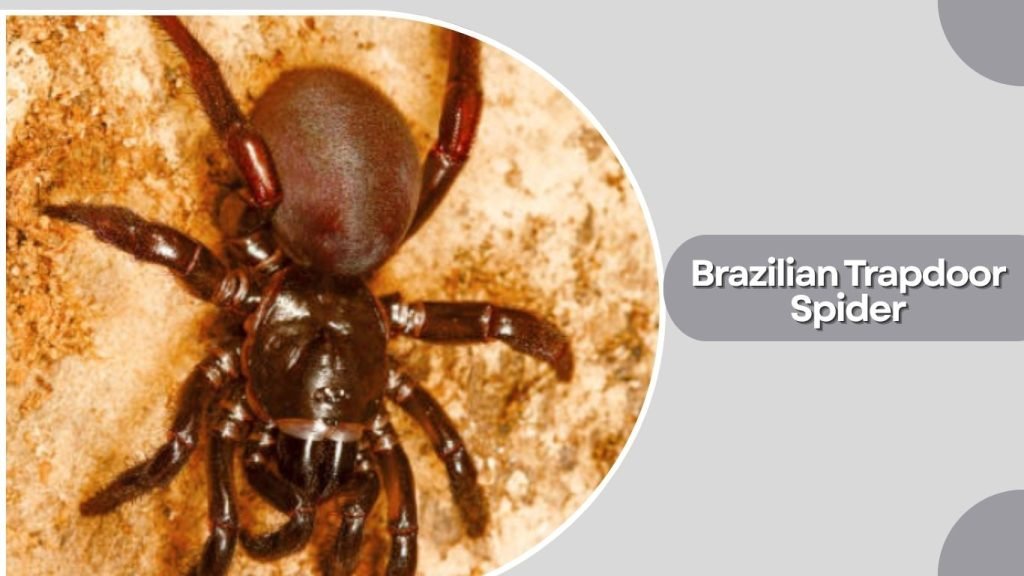
The Brazilian Trapdoor Spider is a secretive and fascinating ground-dwelling spider known for its unique burrow with a hidden “trapdoor.” Native to various parts of Brazil, this spider spends most of its life underground, making it rarely seen. It is not dangerous to humans and is more notable for its ambush hunting technique than for aggression.
Identification
- Medium-sized spider with a thick, sturdy body
- Dark brown to black coloration
- Short, strong legs adapted for digging
- Large fangs for capturing prey
- Often associated with a silk-lined burrow entrance
Habitat
This spider prefers soil-rich environments such as forests, grasslands, and gardens. It digs burrows in the ground and creates a camouflaged trapdoor made of silk and soil. These burrows are usually located in shaded, undisturbed areas where moisture levels are stable.
Diet
The Brazilian Trapdoor Spider is an ambush predator. It waits just inside its burrow and senses vibrations from passing insects. When prey comes close, it quickly opens the trapdoor, grabs the victim, and pulls it inside to feed. Its diet mainly consists of insects and small arthropods.
Behavior
This spider is extremely reclusive and spends most of its life inside its burrow. It is nocturnal and rarely ventures far from its hiding place. When threatened, it retreats quickly and seals its burrow. It is not aggressive and bites are very rare.
14. Brazilian Nursery Web Spider (Trechalea species)
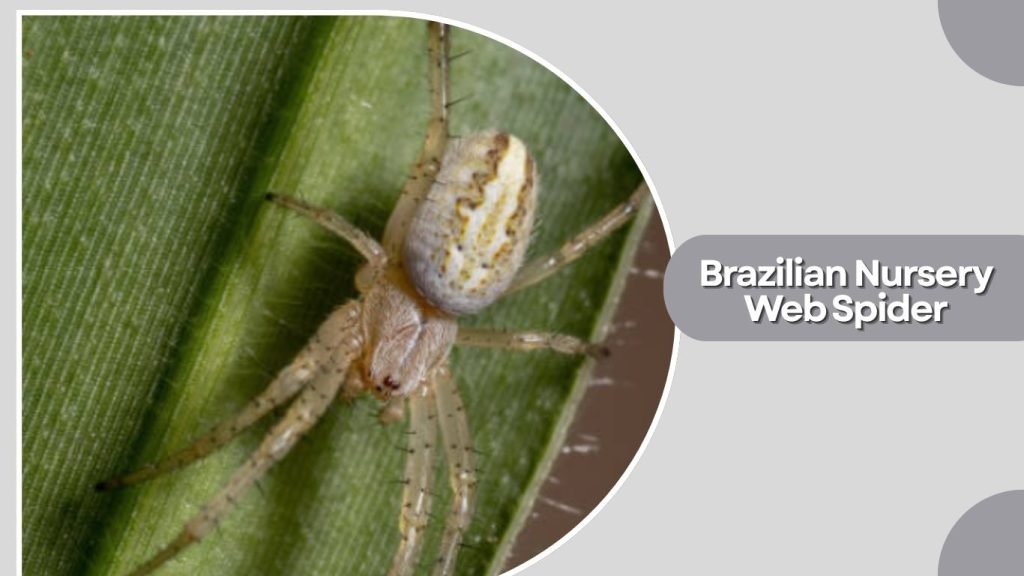
The Brazilian Nursery Web Spider is a semi-aquatic species often found near water bodies. It is known for its maternal care, where females create protective silk “nurseries” for their eggs. This spider is active and agile, playing an important role in controlling insect populations near aquatic environments.
Identification
- Medium to large spider with long legs
- Brown or gray coloration with subtle patterns
- Slender body adapted for movement near water
- Long legs that allow quick movement
- Often seen near water surfaces
Habitat
This species is commonly found near rivers, streams, ponds, and wetlands. It prefers humid environments and often rests on vegetation close to water. It may also be seen walking on the water surface.
Diet
The Brazilian Nursery Web Spider feeds on insects and small aquatic creatures. It hunts actively rather than using webs, relying on speed and precision to catch prey near or on the water.
Behavior
This spider is active and alert, especially at night. Females show strong maternal instincts, guarding egg sacs and building protective silk structures. It is non-aggressive and usually avoids human contact.
15. Brazilian Spitting Spider (Scytodes species)
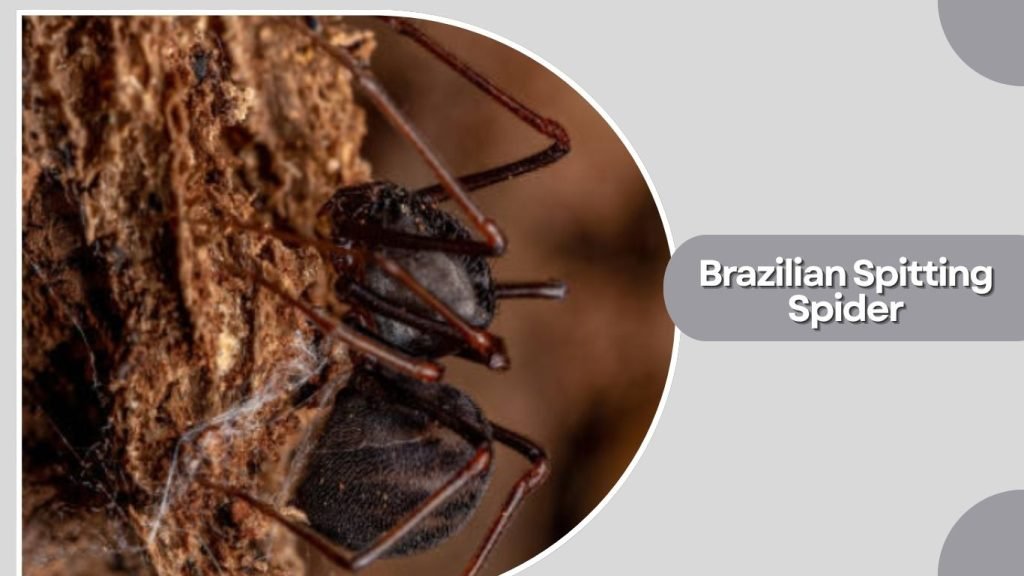
The Brazilian Spitting Spider is a unique species known for its unusual hunting method. Instead of relying on webs or speed alone, it “spits” a sticky, venomous silk onto its prey to immobilize it. This spider is small, harmless, and often found inside homes.
Identification
- Small spider with a slightly elongated abdomen
- Yellowish to light brown coloration with dark spots
- Long, thin legs
- Distinct dome-shaped head (cephalothorax)
- Slow-moving compared to other hunting spiders
Habitat
This spider prefers indoor environments such as walls, ceilings, and corners of homes. Outdoors, it can be found under rocks, bark, or debris. It thrives in warm, sheltered areas.
Diet
The Brazilian Spitting Spider feeds on small insects and other spiders. It captures prey by ejecting a sticky silk mixed with venom, which quickly immobilizes the target before feeding.
Behavior
This species is slow-moving and non-aggressive. It hunts at night and avoids confrontation. Its unique spitting behavior makes it one of the most interesting spiders to observe. It poses no threat to humans, and bites are extremely rare.
FAQs About Brazilian Spiders
1. Are Brazilian spiders dangerous to humans?
Some Brazilian spiders, like the Brazilian Wandering Spider and Brown Recluse, have medically significant venom. However, most species are harmless and rarely bite humans unless disturbed.
2. Where are Brazilian spiders commonly found?
They are found in a variety of habitats including rainforests, grasslands, gardens, and even inside homes. Many species prefer warm, humid environments.
3. What do Brazilian spiders eat?
Brazilian spiders mainly feed on insects such as flies, ants, and beetles. Larger species may also consume small animals like frogs or rodents.
4. Do Brazilian spiders attack humans?
No, most spiders are non-aggressive and avoid humans. Bites usually occur only when the spider is accidentally touched or threatened.
5. How can I avoid spider encounters?
Keep living areas clean, reduce clutter, seal cracks, and be cautious in dark or undisturbed places. Wearing gloves when handling stored items can also help prevent accidental contact.