
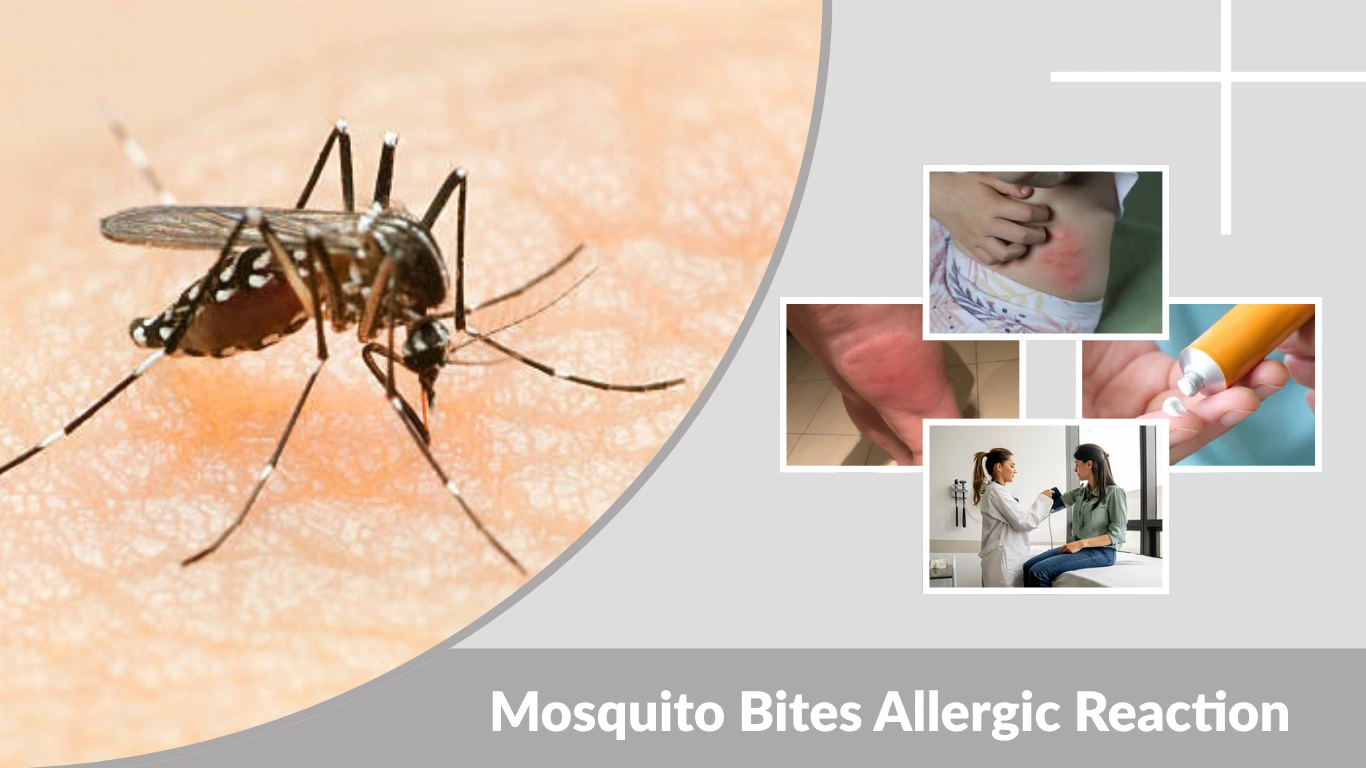
Most mosquito bites are harmless and cause only mild itching or irritation. However, for some people, these bites can trigger an allergic reaction that leads to significant swelling, redness, and discomfort. In certain cases, the reaction can be severe and require medical attention. Understanding mosquito bites’ allergic reaction is important so you can recognize the symptoms early, treat them properly, and avoid complications. This guide explains everything you need to know, from causes to treatment options.
What Is a Mosquito Bite Allergic Reaction?
What Is a Mosquito Bite Allergic Reaction?
A mosquito bite allergic reaction occurs when your immune system overreacts to proteins found in mosquito saliva. When a mosquito bites, it injects saliva into your skin to prevent blood clotting. Your body identifies these proteins as harmful and releases histamine and other chemicals to fight them.
This immune response causes inflammation, leading to symptoms like swelling, redness, and itching. While everyone reacts to mosquito bites to some extent, an allergic reaction is more intense and lasts longer than a typical response.
Normal Reaction vs Allergic Reaction
It’s important to understand the difference between a normal mosquito bite and an allergic reaction:
- Normal reaction: Small red bump, mild itching, disappears within a few hours to a couple of days
- Allergic reaction: Larger swelling, intense itching, redness spreading beyond the bite, may last several days
In allergic reactions, the symptoms are more noticeable and can interfere with daily activities.
Symptoms of Mosquito Bite Allergic Reaction
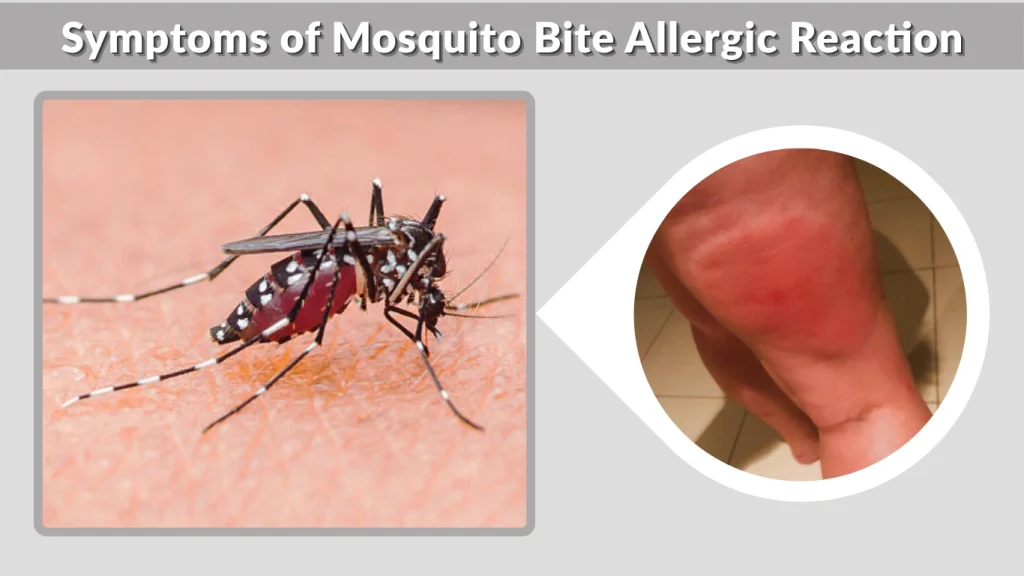
Symptoms of Mosquito Bite Allergic Reaction
Recognizing the symptoms early can help you take the right steps for treatment and prevent the condition from worsening.
Mild to Moderate Symptoms
- Large, raised swelling at the bite site
- Redness that spreads beyond the immediate area
- Intense itching that lasts longer than usual
- Warm or slightly painful skin
- Occasional blister formation
These symptoms are more severe than a normal bite but usually remain localized to the affected area.
Severe Symptoms (Emergency Warning Signs)
In rare cases, mosquito bites can cause a serious allergic reaction that requires immediate medical attention.
- Extreme swelling around the bite or nearby areas
- Fever or feeling unwell
- Hives or widespread skin rash
- Difficulty breathing
- Swelling of the face, lips, or throat
These signs may indicate a severe allergic reaction and should not be ignored. Immediate medical care is necessary in such situations.
What Is Skeeter Syndrome?
What Is Skeeter Syndrome?
Skeeter syndrome is a term used to describe a severe localized allergic reaction to mosquito bites. It is more common in children and individuals who are particularly sensitive to mosquito saliva.
People with Skeeter syndrome may experience very large, swollen areas that can resemble infections. The affected skin may appear red, warm, and painful, which often leads to confusion with bacterial skin conditions.
Despite its dramatic appearance, Skeeter syndrome is not an infection but an allergic response. Symptoms usually develop within hours of the bite and may last for several days. In most cases, the condition improves with proper care and does not lead to long-term complications.
Causes of Mosquito Bite Allergic Reactions
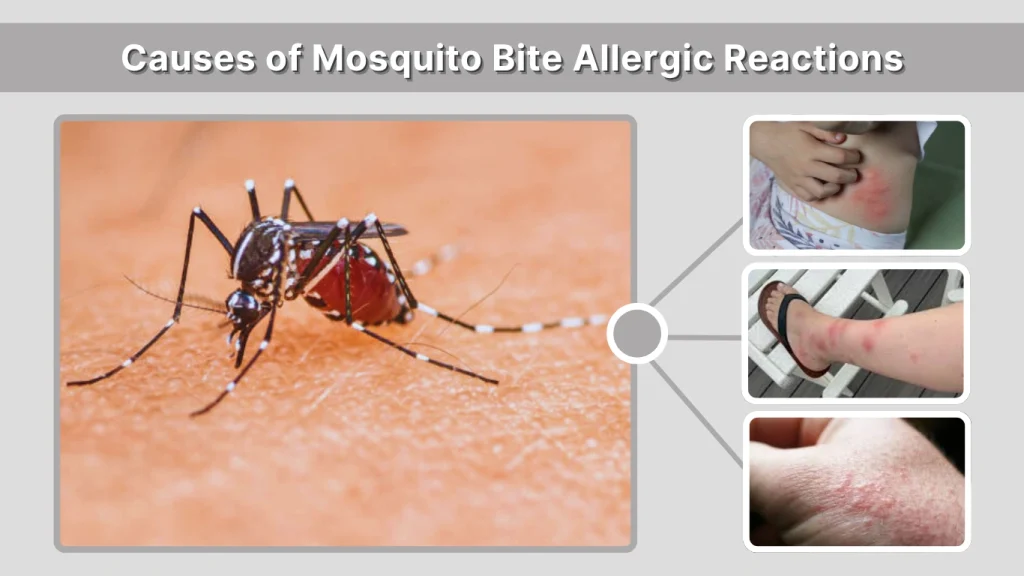
Causes of Mosquito Bite Allergic Reactions
Understanding why some people experience stronger reactions can help you manage and prevent future discomfort.
Why Some People React More Strongly
- Immune system sensitivity: Some individuals naturally produce a stronger immune response to mosquito saliva
- Genetics: Family history can influence how your body reacts
- Lack of exposure: People who are not frequently exposed to mosquito bites may react more intensely
Who Is Most at Risk
- Children: Their immune systems are still developing, making reactions more noticeable
- People with allergies: Those prone to allergic conditions may react more strongly
- Individuals with weaker immunity: They may experience prolonged or unusual reactions
Treatment for Mosquito Bite Allergic Reaction
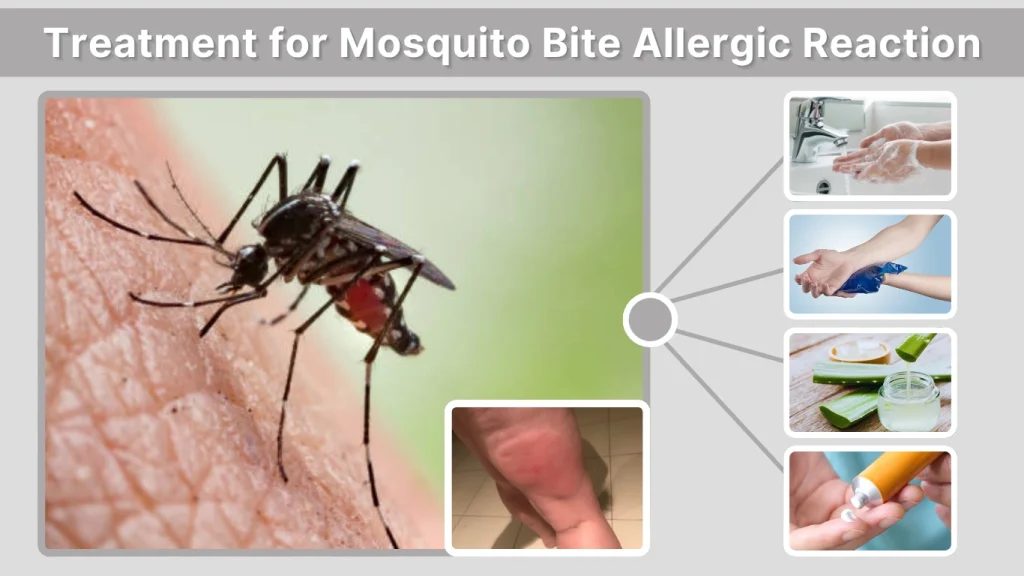
Treatment for Mosquito Bite Allergic Reaction
Treating a mosquito bite allergic reaction early can help reduce symptoms and prevent complications.
Immediate First Aid
- Wash the area: Clean the bite with soap and water to reduce irritation and prevent infection
- Apply a cold compress: This helps reduce swelling and numbs the itching sensation
- Avoid scratching: Scratching can worsen inflammation and damage the skin
Medical Treatments
- Antihistamines: These help reduce the allergic response and control itching
- Hydrocortisone cream: Reduces inflammation and redness
- Calamine lotion: Provides a soothing, cooling effect
For more severe reactions, a doctor may prescribe stronger medications to manage symptoms effectively.
Home Remedies for Mild Allergic Reactions
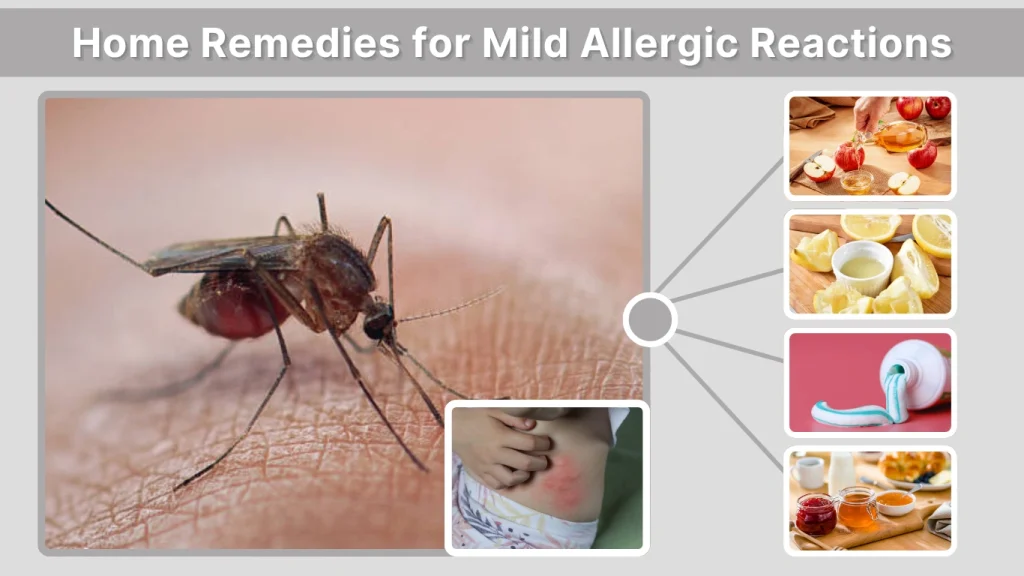
While medical treatments are effective, mild allergic reactions to mosquito bites can often be managed at home using simple remedies.
Home Remedies for Relief
- Aloe Vera: Aloe vera has soothing and anti-inflammatory properties that help reduce redness and swelling. Apply fresh gel directly to the bite.
- Oatmeal Paste: Oatmeal is known for calming irritated skin. Mix ground oatmeal with water and apply it to the affected area for relief.
- Baking Soda Paste: A paste made from baking soda and water can help neutralize itching and reduce inflammation.
- Honey: Honey has antibacterial and anti-inflammatory benefits, which can help soothe the skin and prevent infection.
These remedies are most effective when applied early and can provide gentle relief without the need for medication.
Mistakes to Avoid
Certain actions can make an allergic reaction worse or delay healing. Avoiding these mistakes is essential for proper recovery.
- Scratching the bite: This can break the skin and increase the risk of infection
- Applying harsh substances: Strong chemicals can irritate sensitive skin further
- Using heat: Heat increases blood flow and inflammation, worsening symptoms
- Ignoring symptoms: If the reaction worsens, it should not be overlooked
Being careful with how you treat the bite can make a significant difference in how quickly it heals.
When to Seek Medical Help
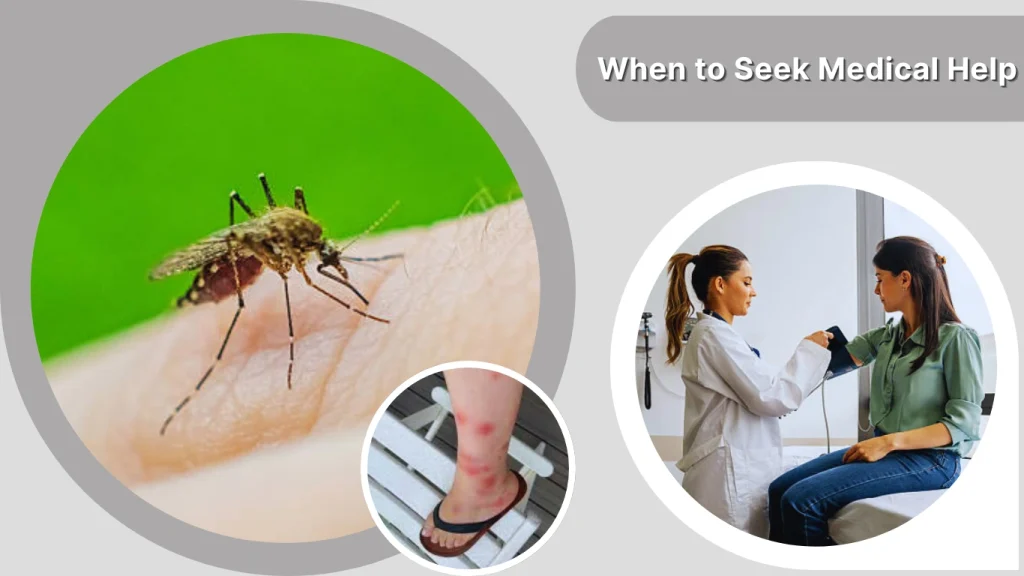
Although most allergic reactions to mosquito bites are manageable, some situations require professional medical care.
Warning Signs
- Rapid or excessive swelling that spreads beyond the bite area
- Signs of infection such as pus, increased redness, or severe pain
- Fever or general illness after a bite
- Difficulty breathing or swelling of the face, lips, or throat
These symptoms may indicate a serious allergic reaction or infection and should be treated as a medical emergency.
How to Prevent Mosquito Bite Allergic Reactions
Preventing mosquito bites is the most effective way to avoid allergic reactions altogether. A few simple steps can greatly reduce your risk.
Reduce Mosquito Exposure
- Use insect repellents: Choose products containing DEET, picaridin, or natural alternatives
- Wear protective clothing: Long sleeves and pants help minimize exposed skin
- Use mosquito nets: Especially useful while sleeping
- Eliminate standing water: Mosquitoes breed in stagnant water, so remove it from your surroundings
Extra Protection for Sensitive Individuals
- Avoid outdoor activity during peak mosquito hours (early morning and evening)
- Keep antihistamines available if you are prone to allergic reactions
- Use mosquito repellent regularly, especially in high-risk areas
Taking preventive measures is especially important if you have experienced allergic reactions in the past.
FAQs
Why do I have an allergic reaction to mosquito bites?
An allergic reaction occurs when your immune system is overly sensitive to proteins in mosquito saliva. Some people naturally react more strongly than others.
Are mosquito bite allergies dangerous?
Most reactions are mild and manageable, but severe reactions—such as difficulty breathing or extreme swelling—can be dangerous and require immediate medical attention.
How long does a mosquito bite allergic reaction last?
Mild reactions usually last a few days, while more severe reactions may take up to a week or longer to fully heal.
Can mosquito bite allergies go away over time?
In some cases, repeated exposure to mosquito bites can reduce sensitivity, but this varies from person to person.
Conclusion
Mosquito bite allergic reactions can range from mild discomfort to more serious symptoms that require attention. Recognizing the signs early and using the right treatments—whether home remedies or medical options—can help you manage symptoms effectively. Most importantly, prevention plays a key role in avoiding future reactions. By protecting yourself from mosquito bites and responding quickly when they occur, you can keep your skin healthy and reduce the risk of complications.
