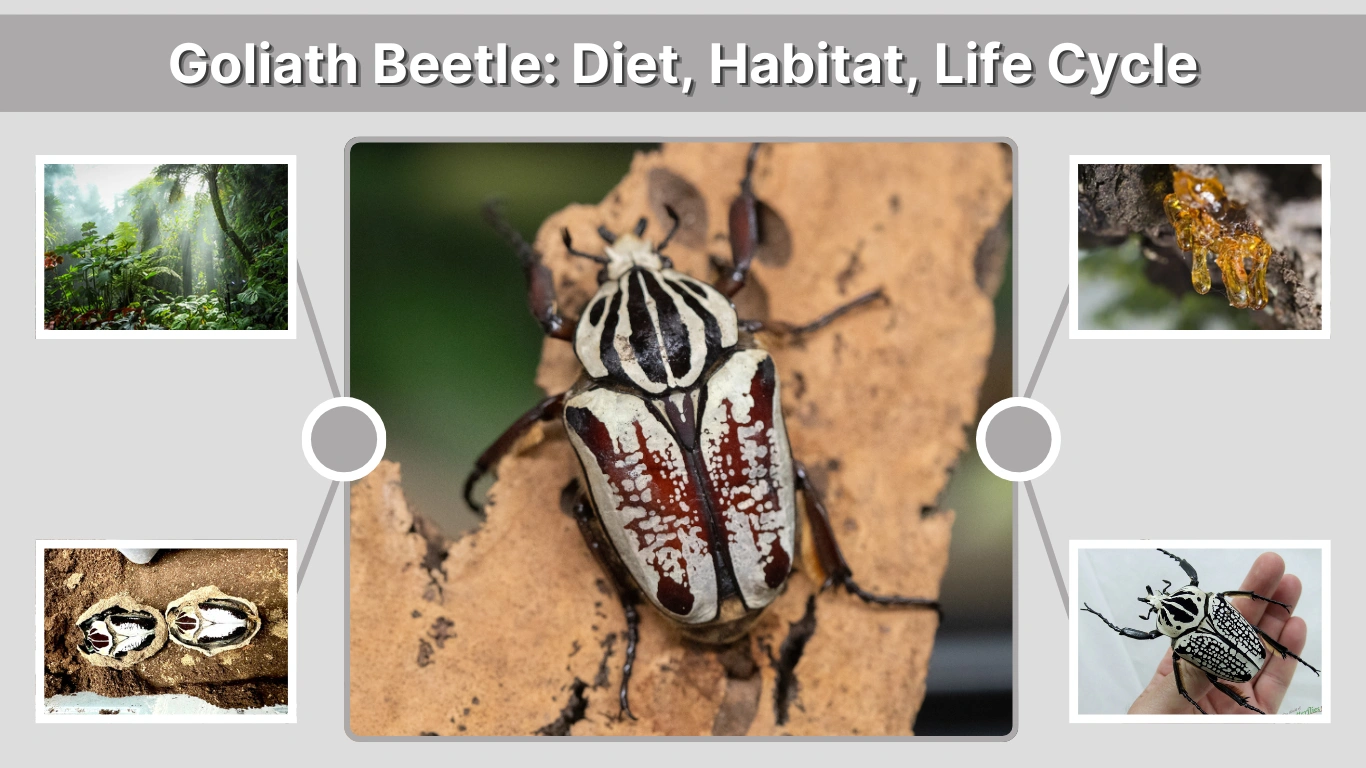
The Goliath beetle is one of the largest and most impressive insects on Earth. Belonging to the scarab beetle family, these massive beetles are known for their striking black-and-white patterns, powerful bodies, and remarkable size. Native to the tropical forests of Africa, Goliath beetles have fascinated scientists, collectors, and insect enthusiasts for years. From their enormous larvae to their unique diet and life cycle, these beetles offer a fascinating look into the diversity of the insect world.
What Is a Goliath Beetle?
The Goliath beetle refers to several species within the genus Goliathus, a group of large scarab beetles found primarily in African tropical forests. These insects belong to the family Scarabaeidae, which includes other well-known beetles such as dung beetles and rhinoceros beetles.
Goliath beetles are famous for their size and weight. Some species rank among the heaviest insects in the world during their larval stage. Their bodies are covered with a tough exoskeleton, and they often display bold patterns of black, brown, and white that help them blend into their forest environment.
Another defining feature of many Goliath beetles is the presence of horns in males. These horns are used during battles with other males, usually in competition for mates or territory.
Main Goliath Beetle Species
There are several recognized species in the Goliathus genus. Some of the most well-known include:
- Goliathus goliatus
- Goliathus regius
- Goliathus orientalis
- Goliathus albosignatus
- Goliathus cacicus
Each species has slightly different color patterns, sizes, and distribution across African regions, but all share the characteristic large body and striking appearance.
Goliath Beetle Size and Physical Characteristics
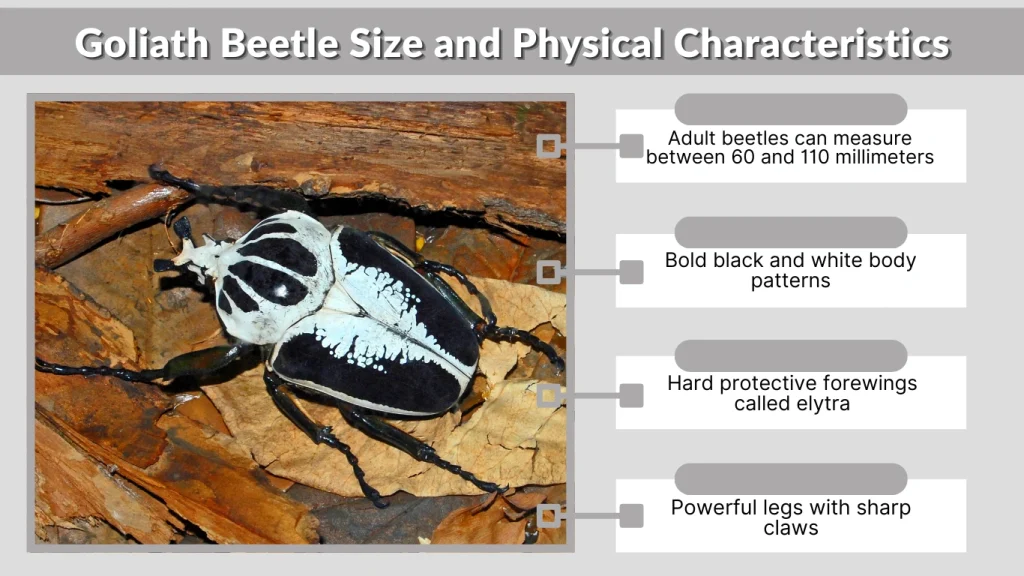
Goliath beetles are widely recognized as some of the largest beetles in the world. Adult beetles can measure between 60 and 110 millimeters (about 2.4 to 4.3 inches) in length. Their weight varies depending on the species, but their larvae can reach astonishing weights of up to 80–100 grams.
Their large size makes them a standout among insects, and their body structure is designed to support their weight and activity.
Distinctive Features
Several physical traits make Goliath beetles easy to identify:
- Bold black and white body patterns
- Hard protective forewings called elytra
- Powerful legs with sharp claws
- Strong mandibles for feeding
- Large body mass compared to most beetles
These features help the beetle survive in dense forest environments and allow it to climb trees and feed on natural food sources.
Differences Between Male and Female
Male and female Goliath beetles can be distinguished by several physical characteristics.
Male beetles usually have a distinctive Y-shaped horn on their heads. This horn is used during fights with other males when competing for mates. These battles involve pushing or lifting rivals using the horn.
Females, on the other hand, do not have horns. Instead, they tend to have a broader and more robust head, which helps them dig into soil when laying eggs.
Goliath Beetle Habitat
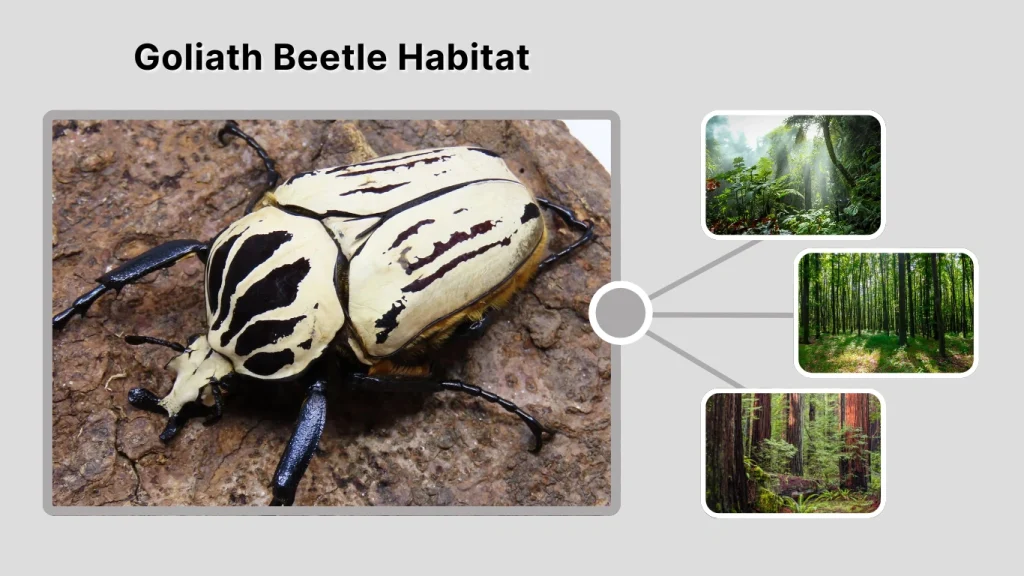
Goliath beetles are native to tropical Africa, where they thrive in warm, humid environments with abundant vegetation.
Where Do Goliath Beetles Live?
These beetles are typically found in:
- Tropical rainforests
- Dense woodlands
- Forest canopies
- Areas rich in decaying organic material
Adult beetles often spend much of their time in trees, where they search for food such as tree sap and fruit. The forest canopy provides protection from predators and access to their preferred diet.
Countries Where They Are Found
Goliath beetles live in several African countries, particularly those with tropical climates. Their distribution includes regions such as:
- Cameroon
- Ghana
- Nigeria
- Uganda
- Ivory Coast
- Democratic Republic of Congo
These environments provide the humidity, warmth, and organic materials necessary for their survival and reproduction.
Preferred Environmental Conditions
Goliath beetles require specific environmental conditions to thrive. These include:
- High humidity levels
- Warm temperatures typical of tropical climates
- Access to tree sap and fruit for adults
- Soil rich in organic matter for larvae
The combination of these factors makes tropical forests the ideal habitat for these giant beetles.
Goliath Beetle Diet
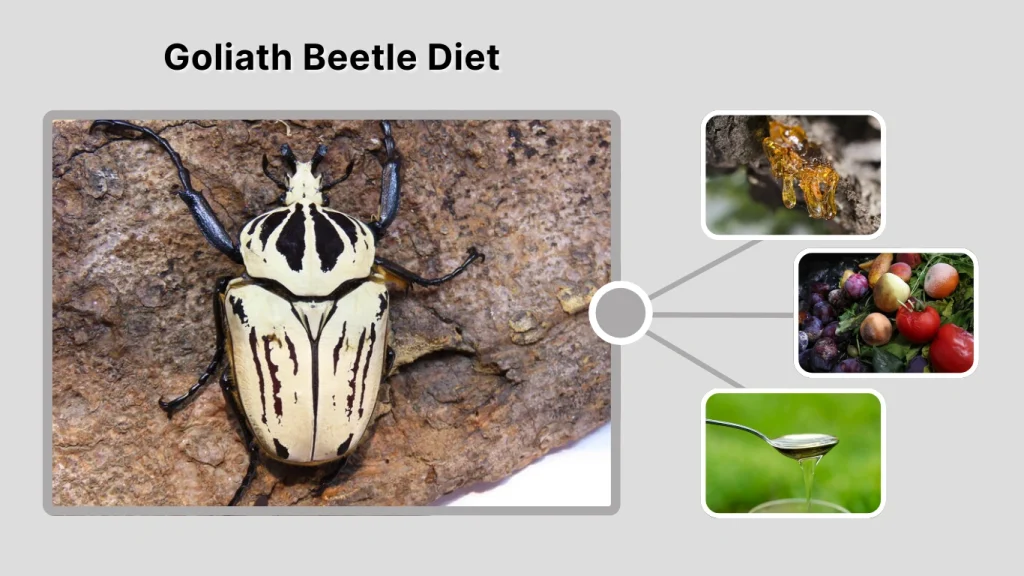
The Goliath beetle diet varies depending on its stage of life. Adults and larvae feed on different types of food to support their growth and survival.
What Do Adult Goliath Beetles Eat?
Adult Goliath beetles primarily feed on sugary and plant-based substances. Their diet commonly includes:
- Tree sap
- Overripe fruits
- Plant material
- Other sugary liquids found in nature
These foods provide the energy necessary for flight, movement, and reproduction.
Adults are often seen feeding on damaged trees where sap is exposed or on fallen fruit in forest areas.
Goliath Beetle Larvae Diet
The diet of Goliath beetle larvae is quite different from that of adults. Larvae require a high-protein diet to support their rapid growth and large body size.
They typically feed on:
- Decaying wood
- Organic matter in soil
- Leaf litter
- Nutrient-rich compost-like material
In captivity, larvae are sometimes provided with additional protein sources to ensure proper development.
The large appetite of Goliath beetle larvae helps them grow into some of the heaviest insect larvae known.
Goliath Beetle Larvae
The Goliath beetle larvae stage is one of the most remarkable parts of the insect’s development. During this phase, the beetle grows rapidly and consumes large amounts of food to prepare for adulthood. In fact, the larvae of some species can become heavier than many adult insects.
Size and Appearance
Goliath beetle larvae have the typical appearance of scarab beetle grubs. They are usually:
- Cream or pale white in color
- Curved into a C-shaped body
- Equipped with a large head and strong mandibles
- Covered with small segments along the body
One of the most impressive aspects of these larvae is their size. Fully grown larvae can reach weights of 80 to 100 grams, making them among the heaviest insect larvae known.
Growth and Development
The larval stage is focused almost entirely on growth. During this time, the larvae feed continuously and store nutrients needed for metamorphosis.
Because of their large size, Goliath beetle larvae often require more protein than many other beetle larvae. This additional nutrition helps them develop the energy reserves needed for their transformation into adult beetles.
Larval Habitat
Goliath beetle larvae usually live underground in environments rich in organic material. Common locations include:
- Soil layers in forest floors
- Decaying wood
- Rotten tree trunks
- Leaf litter and compost-like organic material
These environments provide both food and protection from predators.
Goliath Beetle Life Cycle
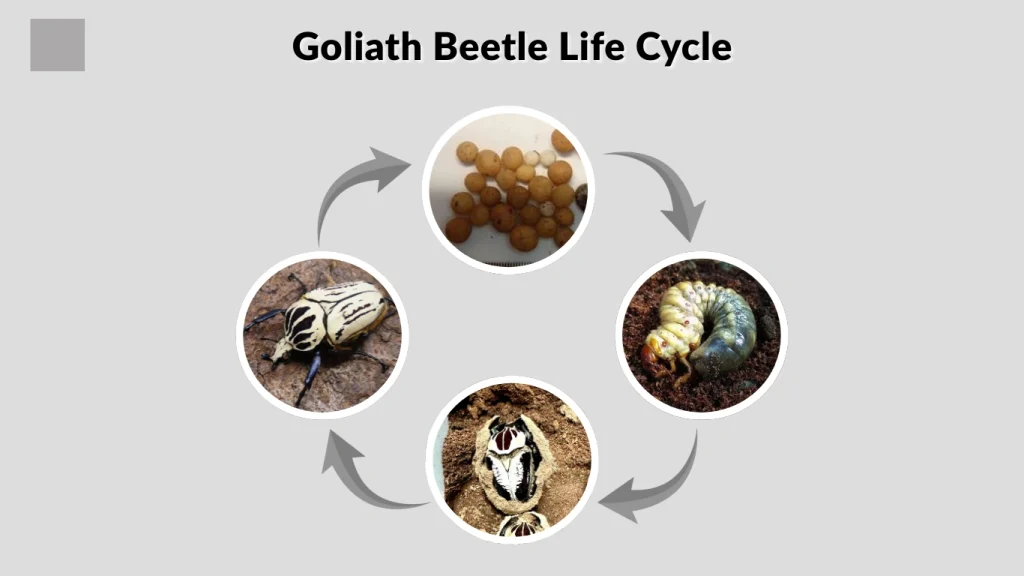
Like all beetles, Goliath beetles undergo complete metamorphosis, which means their life cycle includes four distinct stages: egg, larva, pupa, and adult.
Stage 1 – Egg
The life cycle begins when the female beetle lays eggs in soft soil or decomposing organic material. These locations provide the necessary nutrients and moisture for developing larvae.
After a few weeks, the eggs hatch and the larval stage begins.
Stage 2 – Larva
This is the longest stage of the Goliath beetle life cycle. During this time, the larvae focus on feeding and growing. They may go through several molts as they increase in size.
Because the larvae grow rapidly, they require large amounts of food and nutrient-rich environments.
Stage 3 – Pupa
Once the larva reaches its full size, it forms a protective cocoon made from soil and organic material. Inside this structure, the larva enters the pupal stage.
During this stage, the insect undergoes a complete transformation. Its body reorganizes internally to form wings, legs, and other adult structures.
Stage 4 – Adult Beetle
After metamorphosis is complete, the adult beetle emerges from the soil. At this point, it has fully developed wings and a hardened exoskeleton.
Adult beetles spend their time searching for food, flying between trees, and eventually reproducing to continue the life cycle.
Goliath Beetle Lifespan
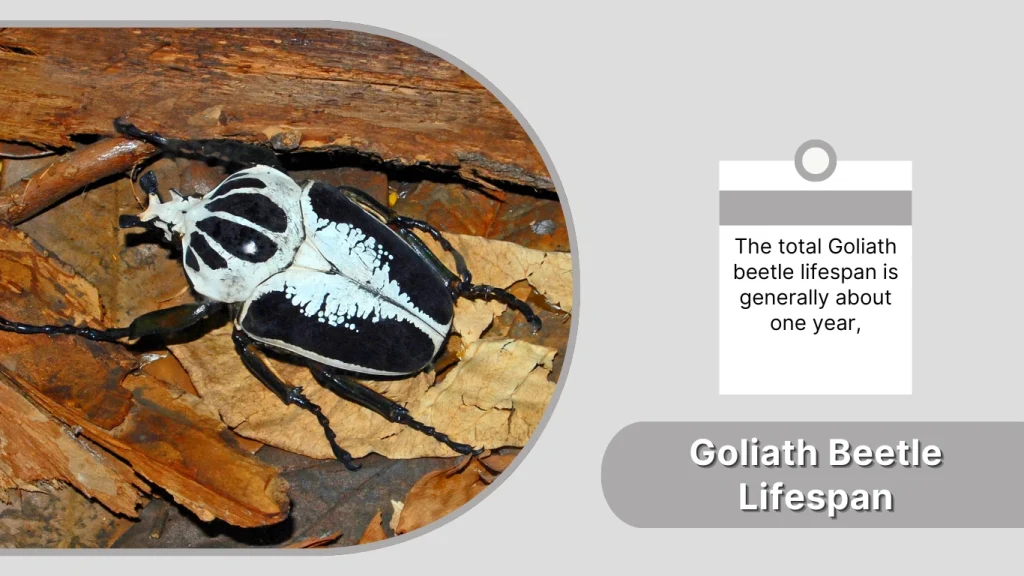
The total Goliath beetle lifespan is generally about one year, although this can vary depending on environmental conditions.
Most of this time is spent in the larval stage, where the insect grows and develops before becoming an adult.
Typical Lifespan Breakdown
- Egg stage: several weeks
- Larval stage: several months
- Pupal stage: a few weeks
- Adult stage: about 3 to 6 months
Factors Affecting Lifespan
Several factors can influence how long a Goliath beetle lives. These include:
- Availability of food
- Environmental conditions such as temperature and humidity
- Presence of predators
- Habitat quality
Beetles living in stable tropical environments often have the best chances of completing their full life cycle.
Goliath Beetle Facts
Goliath beetles are fascinating insects with several unique characteristics. Here are some interesting facts about them:
- They are among the heaviest insects in the world.
- Their larvae can weigh more than many adult insects.
- Male beetles use their horns to fight other males.
- Their bold patterns help them blend into forest environments.
- They are popular among insect collectors and researchers.
Despite their intimidating appearance, Goliath beetles are generally harmless and spend most of their time feeding or resting in trees.
Do Goliath Beetles Bite?
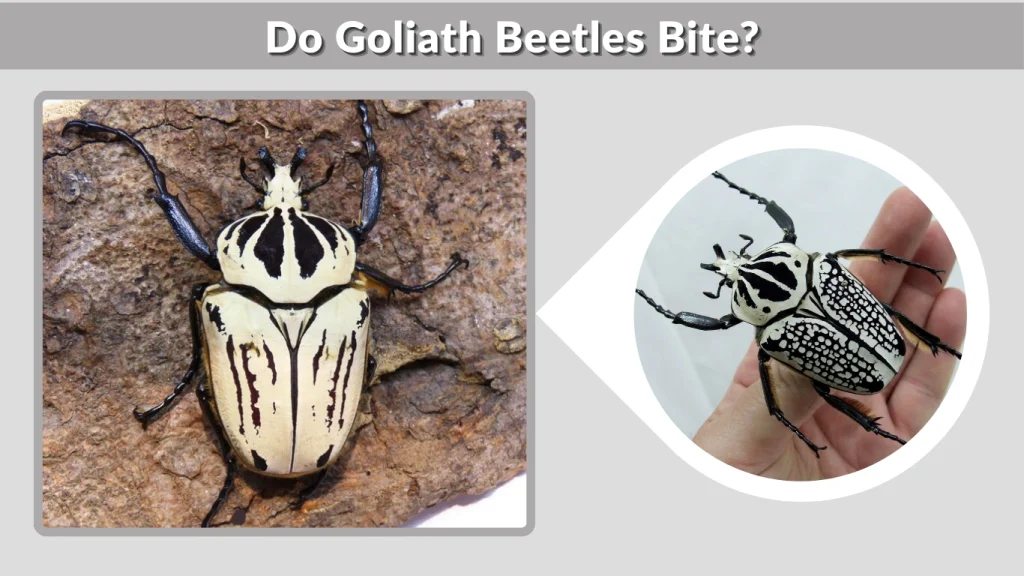
Many people wonder whether these large insects are dangerous to humans.
Can Goliath Beetles Bite Humans?
Technically, Goliath beetles can bite using their mandibles. However, bites are extremely rare because these beetles are not aggressive toward humans.
Most encounters occur when someone handles the beetle.
Is a Goliath Beetle Bite Dangerous?
A Goliath beetle bite is usually not dangerous. At most, it may feel like a small pinch because their mandibles are designed for feeding rather than attacking.
Defensive Behavior
Instead of biting, Goliath beetles usually rely on other methods to avoid danger, such as:
- Flying away quickly
- Remaining still to avoid detection
- Hiding in vegetation or tree bark
These behaviors help them survive in their natural forest habitats.
Predators of Goliath Beetles
Even though they are large insects, Goliath beetles still face threats from predators in the wild. Common predators include:
- Birds
- Reptiles
- Small mammals
- Larger insects
Their hard exoskeleton and camouflage patterns help protect them from some predators.
Are Goliath Beetles Endangered?
Currently, most Goliath beetle species are not classified as endangered. However, habitat loss due to deforestation can threaten their populations in some areas.
In addition, these beetles are sometimes collected for the insect trade, which may affect local populations if not managed responsibly.
Conclusion
The Goliath beetle is one of the most extraordinary insects in the world. Known for its impressive size, striking patterns, and fascinating life cycle, it stands out among beetles and other insects. From the massive larvae that grow underground to the powerful adults that live in tropical forests, every stage of the Goliath beetle’s life reveals something remarkable about nature. Protecting tropical habitats is essential to ensure that these incredible insects continue to thrive in the wild.