
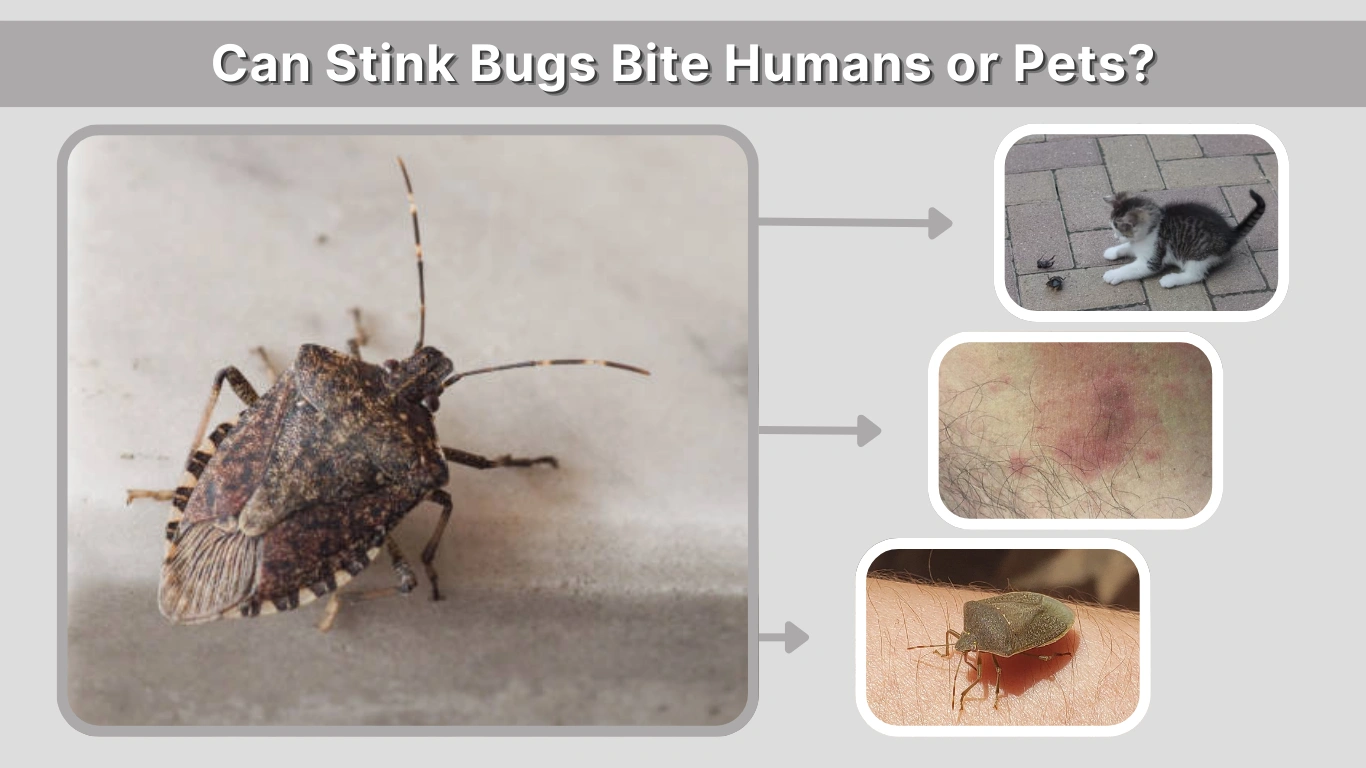
Stink bugs are best known for the unpleasant odor they release when disturbed, but many people worry about something more serious—being bitten or stung. These insects often invade homes in large numbers, crawl on walls, and sometimes land on skin, which leads to understandable concern. Questions about whether stink bugs bite humans, hurt pets, or cause illness are extremely common. This article explains the truth about stink bug bites, how they happen, and whether they pose any real danger.
Identification
- Brown marmorated stink bug
- Green stink bug
- Dusky brown stink bug
- Japanese stink bug
- Shield-shaped body
- Typically ½–¾ inch long
- Piercing-sucking mouthpart (proboscis)
- Emits a strong odor when threatened or crushed
Can Stink Bugs Bite Humans?
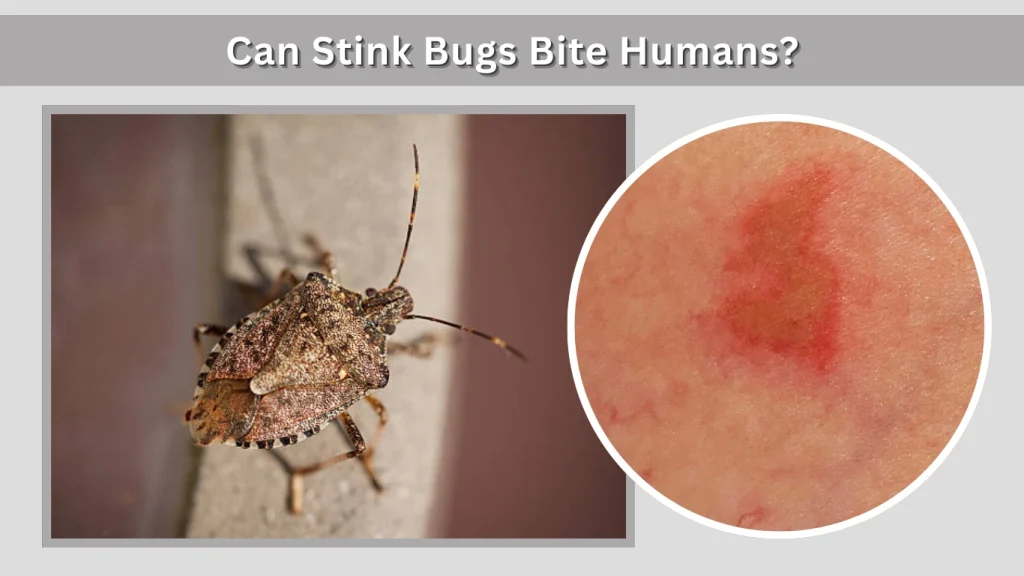
Yes, stink bugs can technically bite humans, but it happens very rarely. These insects are not aggressive and do not view people as food sources. In almost all cases, a stink bug bite occurs only when the insect feels trapped or threatened, such as when it is pressed against bare skin or caught inside clothing.
Stink bugs feed on plants, fruits, and crops, not animals or humans. They have no natural reason to bite people, and most encounters end without any bite at all. When compared to insects like mosquitoes or bed bugs, stink bugs are among the least likely household pests to bite humans.
Can Stink Bugs Bite or Sting?
Stink bugs do not sting. They do not have stingers, venom, or the ability to inject toxins into the skin. The confusion comes from the irritation some people feel after contact with a stink bug, which is often mistaken for a sting.
Do Stink Bugs Have Stingers?
No stink bug species has a stinger. Unlike bees or wasps, stink bugs lack the anatomy required to sting. What they do have is a proboscis—a needle-like mouthpart used to pierce plant tissue and suck out juices.
Why People Confuse Odor Reactions With Stings
When threatened, stink bugs release a chemical odor as a defense mechanism. This liquid can cause mild burning, redness, or irritation if it contacts sensitive skin or eyes. These reactions often feel similar to a sting, even though no sting or bite occurred.
How a Stink Bug Bite Happens (Proboscis Explained)
A stink bug’s proboscis is designed to penetrate soft plant material, not human skin. It lacks the strength and structure to easily pierce skin, which is why bites are so uncommon. If a bite does occur, it is usually because the bug is being squeezed or pressed firmly against the body.
Even then, the proboscis does not inject venom or saliva that causes damage. The bite is purely mechanical and defensive, not a feeding action. This is another reason stink bug bites are mild and short-lived.
What Does a Stink Bug Bite Look Like?
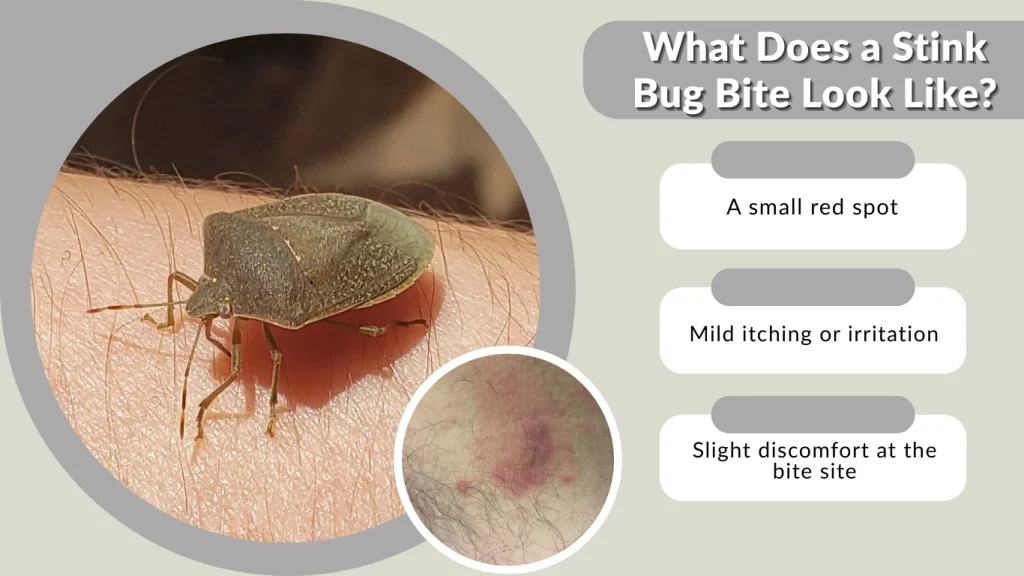
In the rare event that a stink bug bites, the symptoms are typically minor and may include:
- A small red spot
- Mild itching or irritation
- Slight discomfort at the bite site
There is usually no swelling, blistering, or spreading rash. Stink bug bites do not resemble spider bites or bed bug bites and do not worsen over time. Most people recover quickly without treatment.
Can a Stink Bug Bite Make You Sick?
Stink bugs do not transmit diseases to humans. Their bites are not poisonous, toxic, or infectious. There is no evidence linking stink bug bites to illness, fever, or long-term health problems.
In very rare cases, some individuals may experience a mild allergic reaction, but this is more often caused by exposure to the defensive odor rather than a bite itself. These reactions are usually limited to skin irritation or respiratory discomfort and resolve on their own.
Can a Stink Bug Bite Hurt or Kill You?
Stink bug bites are not dangerous. They are not painful, do not cause tissue damage, and cannot kill humans. Despite alarming online searches, there is no scenario in which a stink bug bite becomes life-threatening.
The fear surrounding stink bug bites often comes from misunderstanding their behavior and defensive odor. In reality, they pose far less risk than many other common insects found in homes.
Do Different Types of Stink Bugs Bite?
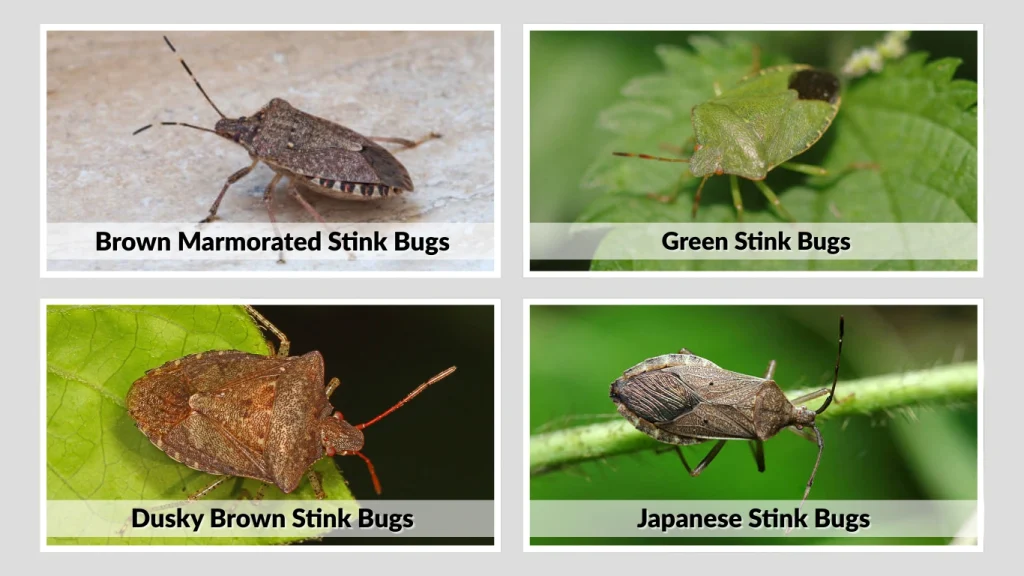
Brown Marmorated Stink Bugs
Brown marmorated stink bugs are the most common species found indoors. While they are capable of biting under extreme circumstances, they almost always choose to release their odor instead.
Green Stink Bugs
Green stink bugs behave similarly and are no more likely to bite humans than other species.
Dusky Brown and Japanese Stink Bugs
These species share the same defensive traits and present no additional risk to people.
Can Stink Bugs Bite Pets?
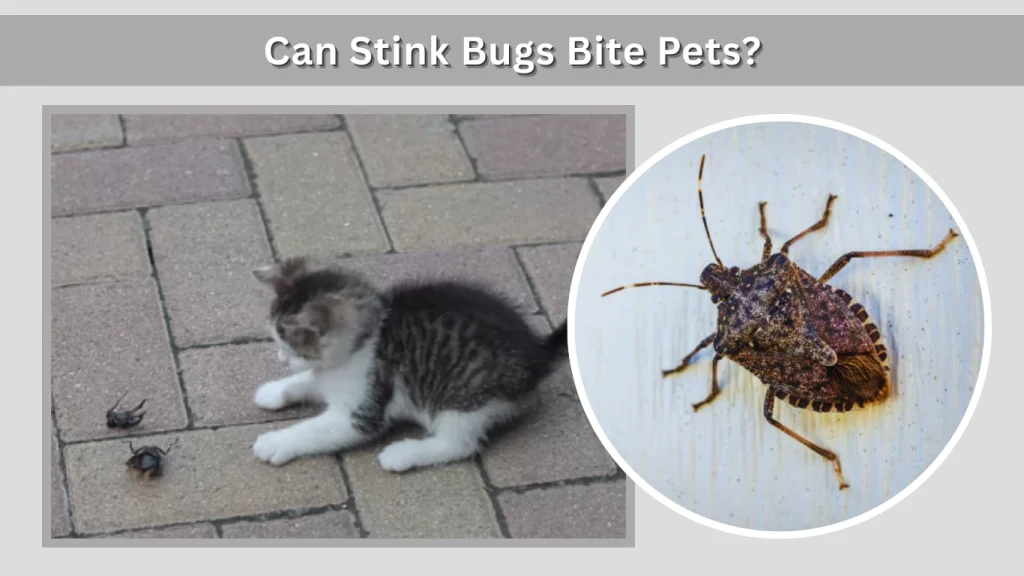
Stink bugs do not bite pets in the way fleas or ticks do. Cats and dogs are not targets for feeding, and stink bugs have no interest in biting animals. However, pets may still have unpleasant encounters with them, especially if they try to sniff, paw at, or eat the bug.
The most common issue pets experience is not a bite, but irritation caused by the stink bug’s defensive chemicals.
Can Stink Bugs Bite Cats?
Stink bugs do not bite cats. When cats interact with stink bugs, the problem usually happens when the cat tries to eat or chew one. The chemical odor released by the bug can cause:
- Drooling or foaming at the mouth
- Pawing at the face
- Mild oral irritation
These symptoms look alarming but are not dangerous and typically resolve within a short time.
Can Stink Bugs Bite Dogs?
Dogs experience similar reactions to cats. If a dog mouths or eats a stink bug, it may drool excessively, shake its head, or act uncomfortable for a few minutes. Stink bugs do not inject venom, and dogs are not at risk of being bitten or poisoned.
Can a Cat Die From a Stink Bug Bite?
No. Stink bugs cannot kill cats or dogs. There is no venom, no toxic bite, and no lethal exposure involved. While the odor can be unpleasant and cause temporary discomfort, it is not life-threatening.
Why People Think Stink Bugs Bite
Many people are convinced they have been bitten by a stink bug, even when no bite occurred. This misunderstanding usually happens for several reasons:
- The bug releases its odor on the skin
- The bug is crushed while crawling on the body
- Mild skin irritation appears afterward
- Another insect bite is misidentified as a stink bug bite
- Pets drool or react suddenly after contact
Because stink bugs often appear indoors, they are easy to blame when unexplained skin irritation occurs.
What to Do If You Think a Stink Bug Bit You
In the rare case you believe a stink bug bit you, treatment is simple and minimal.
- Wash the area with soap and water
- Avoid scratching the skin
- Apply a soothing lotion or mild antihistamine cream if itchy
Medical treatment is not required, and symptoms should fade quickly. If irritation persists or worsens, another cause should be considered.
How to Prevent Stink Bug Encounters Indoors
Preventing stink bugs from entering your home is the best way to avoid contact altogether.
- Seal cracks around windows and doors
- Repair damaged screens
- Reduce outdoor lighting near entry points
- Avoid crushing stink bugs indoors
- Gently remove bugs using a container or vacuum
Stink bugs are most active during seasonal changes, especially in fall, when they seek shelter indoors.
FAQs
Can stink bugs bite you while sleeping?
Stink bugs are not nighttime feeders and do not seek humans for blood. While one may accidentally crawl onto bedding, bites during sleep are extremely unlikely. Unexplained nighttime bites are almost always caused by other insects.
Can you get a bug bite from a stink bug?
It is very unlikely. Most suspected stink bug bites are actually caused by mosquitoes, mites, fleas, or bed bugs. Stink bugs rarely bite and do not leave patterns or clusters of bites.
Do stink bugs bite more than once?
No. Stink bugs do not feed on humans and do not repeatedly bite. If multiple marks appear, another insect is almost certainly responsible.
Are stink bug bites dangerous for babies?
Stink bug bites are not dangerous for infants. Even in the rare event of a bite, it would cause only mild irritation. Stink bugs do not transmit disease or venom.
Should I worry if my pet ate a stink bug?
Mild drooling or mouth irritation is normal if a pet eats a stink bug. These symptoms usually resolve quickly. Contact a veterinarian only if symptoms last longer than a few hours or worsen.
