
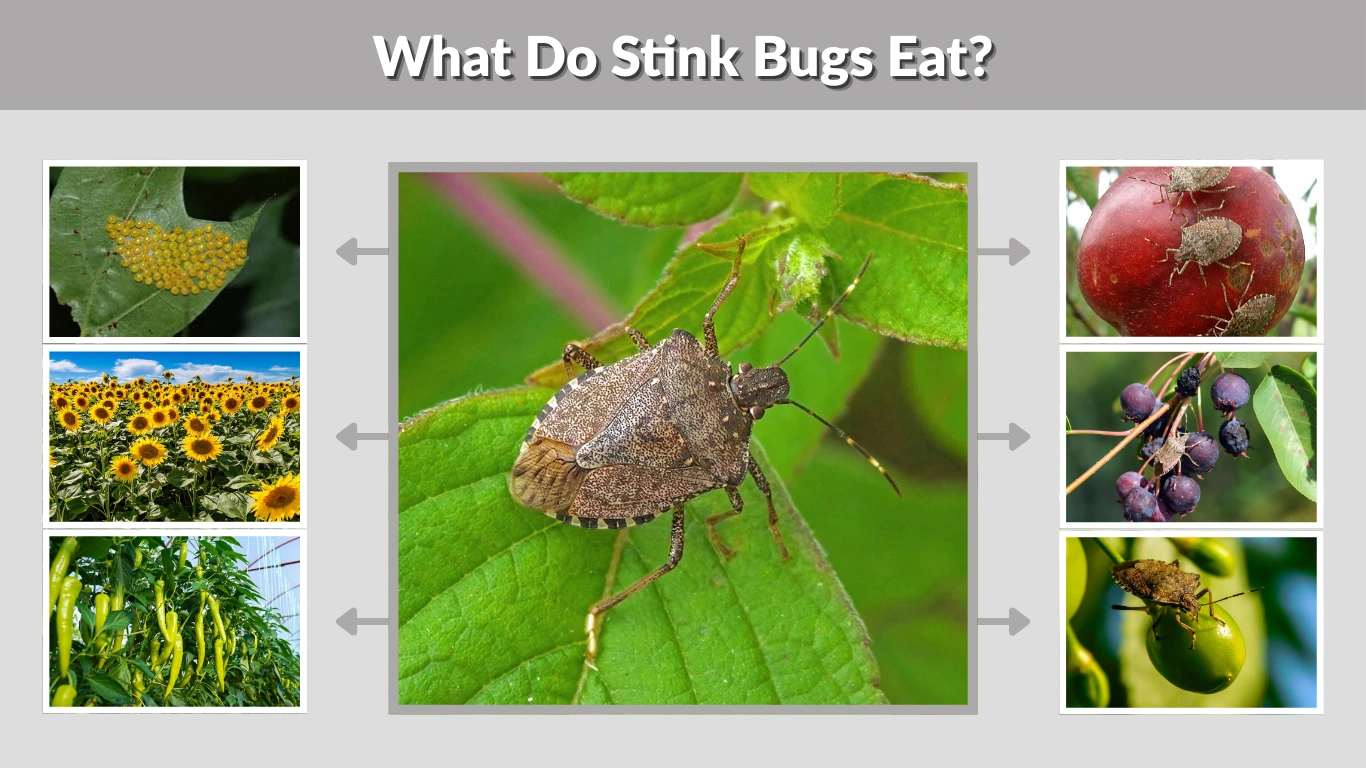
Stink bugs are common household and garden pests known for their strong odor and wide feeding habits. While most stink bugs feed on plants, fruits, and vegetables, some species are predators that hunt insects. Their diet varies based on the species, location, and season. Brown marmorated stink bugs, green stink bugs, and southern green stink bugs are the most widespread and damaging because they consume hundreds of plant types. Indoors, their diet changes significantly, and during winter they often stop feeding altogether.
General Diet: What Stink Bugs Eat
Most stink bugs are plant-feeding insects (phytophagous). They use piercing-sucking mouthparts to extract sap, juices, and nutrients from plants. When feeding, they inject saliva that damages plant tissue, leading to spots, deformities, and fruit blemishes. Their broad appetite makes them destructive pests in gardens, farms, and orchards.
Common foods include:
- Fruits (apples, peaches, pears, grapes, berries)
- Vegetables (tomatoes, peppers, beans, corn, squash)
- Seeds and young shoots
- Leaves of many shrubs and trees
- Garden plants and ornamental foliage
Their ability to feed on over 100 plant species allows them to thrive in many environments.
What Brown Marmorated Stink Bugs Eat
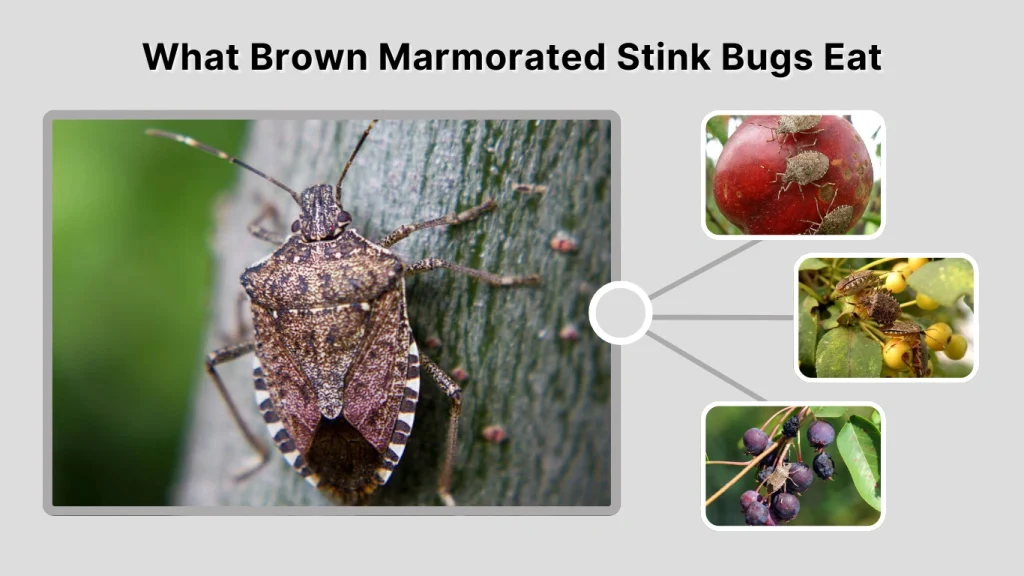
The brown marmorated stink bug (Halyomorpha halys) is the most aggressive and invasive species. Its diet is extremely wide, and it feeds on more than 300 plant varieties.
Primary food sources include:
- Apples, peaches, cherries, pears
- Grapes and berries
- Sweet corn, green beans
- Tomatoes and peppers
- Soybeans and other field crops
- Ornamentals such as maples, butterfly bush, and viburnum
These bugs cause dimpling, corking, internal fruit damage, and discoloration. Their feeding makes fruit unmarketable and destroys large portions of vegetable crops.
What Green & Southern Green Stink Bugs Eat
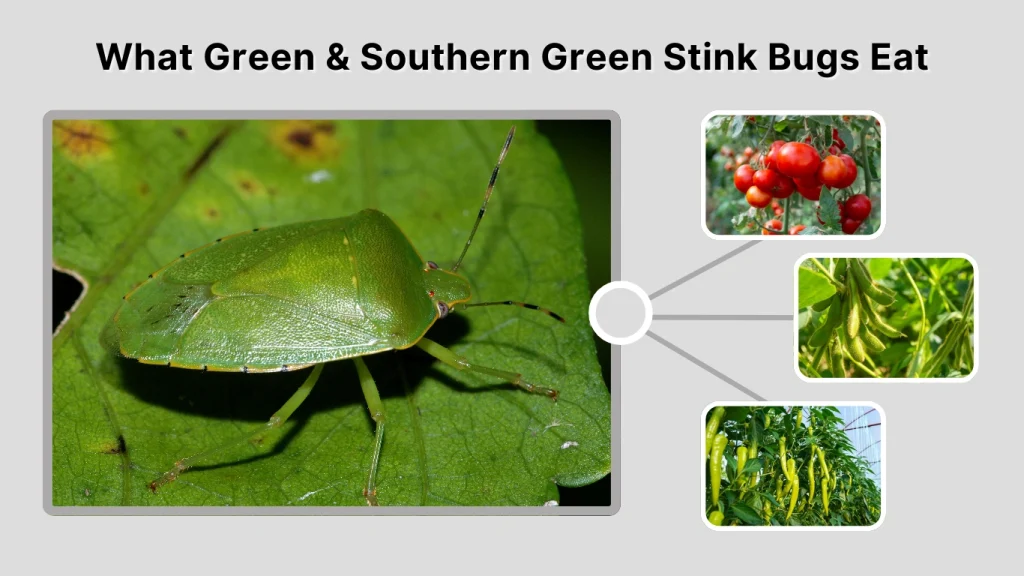
Green stink bugs and southern green stink bugs feed heavily on:
- Tomatoes
- Beans and legumes
- Peppers
- Corn
- Cotton
- Berries
- Citrus (southern and tropical climates)
Southern green stink bugs are especially destructive to crops in warm regions such as the southern United States, Australia, and Asia.
What Asian & Other Regional Stink Bugs Eat
Asian stink bugs—including large, brown, or blue varieties—feed on a mix of fruit and agricultural crops. In Asia, they are known to feed on:
- Rice
- Citrus
- Figs
- Peaches
- Grapes
- Persimmons
Arizona stink bugs, Australian stink bugs, New Jersey stink bugs, and southern U.S. stink bugs tend to feed on region-specific fruit trees, tomatoes, and field crops.
Predatory Stink Bugs: What They Eat
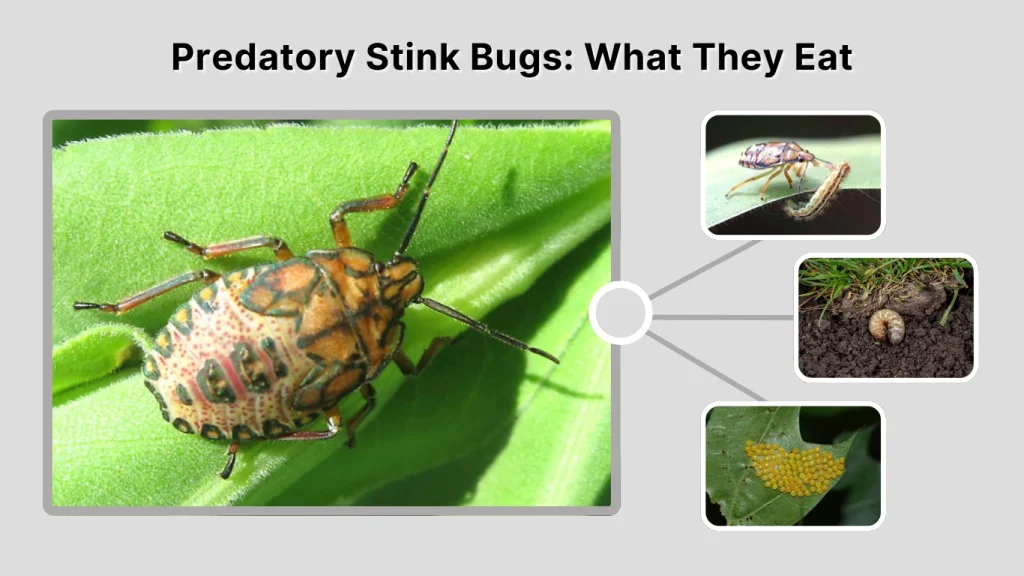
A few species are beneficial predators rather than plant pests. These include the Florida predatory stink bug and the two-spotted stink bug.
Predatory stink bugs eat:
- Caterpillars
- Beetle larvae
- Moth eggs
- Aphids
- Soft-bodied garden insects
- Leaf-feeding pests
- Occasionally cockroaches (rare, but possible)
These species pierce and consume other insects, making them beneficial in gardens and farms.
What Baby Stink Bugs (Nymphs) Eat
Nymphs feed on softer plant materials because their mouthparts are less rigid than adult stink bugs. They consume:
- Tender leaves
- Soft stems
- Developing fruits
- Young seeds
- Plant sap from new growth
As they molt through their five instars, their diet broadens to match adult feeding habits.
What Stink Bugs Eat Indoors
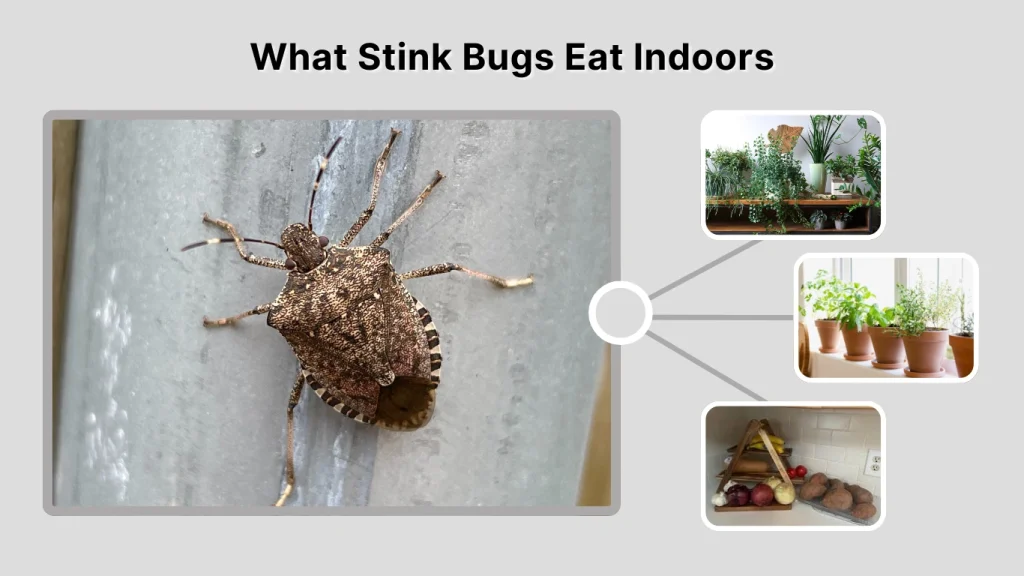
Inside your home, stink bugs rarely feed actively because indoor environments lack their preferred plants. When they do eat, they may consume:
- Potted plants and houseplants
- Herbs grown indoors
- Fruit left out on counters
- Sugary spills
- Moist plant soil
- Condensation or water droplets
However, most stink bugs survive indoors without eating, relying on body fat reserves accumulated during summer.
What Stink Bugs Eat in Winter
During winter, stink bugs enter a dormant state called diapause, where their metabolism slows dramatically. Outdoors, they hide in tree bark, leaf litter, or sheltered natural spaces. Indoors, they hide in attics, walls, basements, and warm crevices. In this state, stink bugs do not eat at all. Instead, they rely on fat reserves they built during the growing season. If they become active on warm indoor days, they may sip small amounts of water or moisture from condensation but will not consume solid foods.
What Stink Bugs Eat in the House (Extended)
Most indoor infestations consist of stink bugs simply looking for shelter rather than food. However, when food sources are available, they may feed lightly on:
- Houseplants and potted foliage
- Fresh fruit bowls
- Tomato or pepper seedlings started indoors
- Moist kitchen scraps
- Fruit juices or sugary spills
- Tender leaves of indoor herbs (basil, cilantro, mint)
Indoor feeding is minimal compared to outdoor behavior, and stink bugs cannot breed or complete their life cycle inside a home.
What Stink Bugs Eat in the Garden
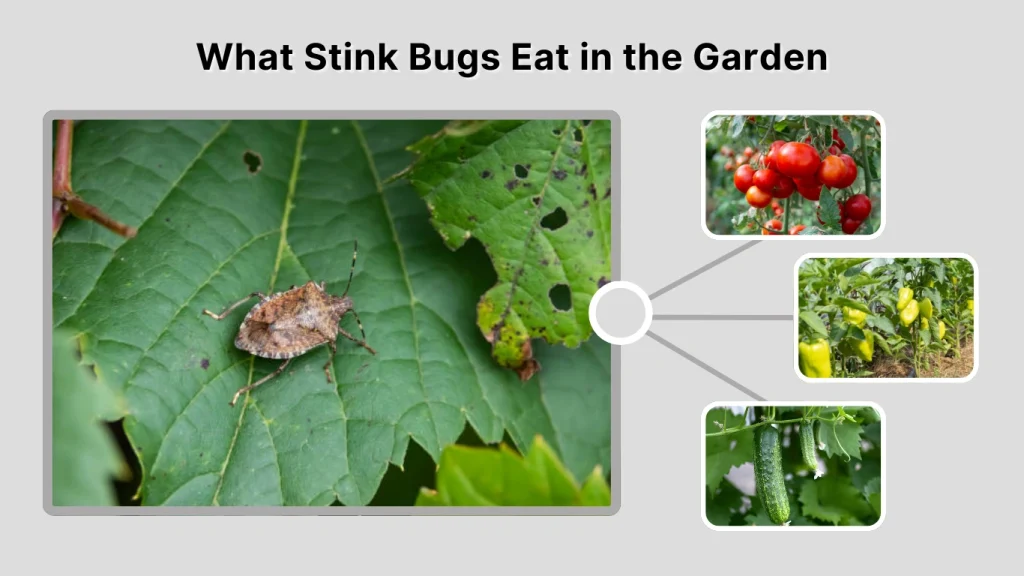
In gardens, stink bugs become far more active and consume a variety of plants. They pierce fruits and vegetables, causing spotting, shriveling, and distorted growth. Heavy infestations can devastate summer crops.
Common garden targets include:
- Tomatoes
- Peppers
- Green beans
- Cucumbers
- Zucchini and squash
- Berries (strawberries, blackberries, raspberries)
- Grapes
- Tree fruit (apples, peaches, plums, pears)
- Lettuce and leafy greens
Signs of stink bug feeding include yellow or white puncture marks, pitted surfaces, and internal “corking.”
What Stink Bugs Eat on Tomato Plants
Tomatoes are one of their favorite crops. Stink bug feeding causes:
- Pale yellow sunken spots
- Hard, corky internal texture
- Misshapen growth
- Early ripening or uneven coloration
They also target tomato stems and blossoms, leading to flower drop and reduced yields. Nymphs often gather beneath the fruit where they are harder to spot.
What Plants Stink Bugs Eat

Stink bugs eat a wide range of leafy plants. Their feeding preferences include:
- Maple leaves
- Bean plants
- Sunflowers
- Fruit tree leaves
- Shrubs such as viburnum and butterfly bush
- Soybean leaves
- Weeds such as pigweed and thistle
Their adaptability makes them one of the most destructive garden pests worldwide.
What Crops Stink Bugs Eat
Stink bugs are major agricultural pests. In field crops they feed on:
- Soybeans
- Corn
- Cotton
- Peanuts
- Sorghum
- Rice (Asian species)
- Hemp (in some regions)
Feeding leads to low seed quality, pod deformity, and large-scale crop loss.
What Stink Bugs Drink
Stink bugs drink primarily from:
- Plant sap
- Dew and leaf moisture
- Rain droplets
- Soil moisture
- Indoor condensation on windows or sinks
They do not drink from open water dishes like pets or mammals.
Do Stink Bugs Eat Other Bugs?
Most stink bugs do not eat insects. They are strictly plant-feeding. The exceptions are predatory species like the Florida predatory stink bug and the two-spotted stink bug.
Predatory stink bugs eat:
- Caterpillars
- Beetle larvae
- Moth eggs
- Aphids
- Young roaches (rare)
- Leaf-feeding insect pests
These species are helpful for natural pest control.
Regional Diet Differences
Arizona Stink Bugs
Feed on citrus, tomatoes, cotton, and desert fruiting plants.
Australian Stink Bugs
Commonly consume citrus, peaches, and soft-fleshed fruit crops.
New Jersey & Northeast Stink Bugs
Prefer apples, peaches, grapes, tomatoes, and soybeans.
Pet Safety: What to Do If Your Dog or Cat Eats a Stink Bug
Stink bugs are not poisonous to pets, but they may cause:
- Drooling
- Vomiting
- Excessive licking
- Mouth irritation
If your dog or cat eats a stink bug:
- Offer fresh water
- Wipe their mouth with a damp cloth
- Allow them to clear the taste naturally
- Call a vet if symptoms last more than a few hours
The odor and taste, not toxicity, cause the reaction.
Human Safety: What If You Eat a Stink Bug?
Accidentally swallowing a stink bug is unpleasant but not harmful. You may experience:
- Bad taste
- Mild nausea
- Minor throat irritation
Drink water, rinse your mouth, and avoid crushing the insect during removal to prevent scent release.
FAQ
Do stink bugs eat insects?
Most species eat plants, but predatory stink bugs consume caterpillars, beetle larvae, and other soft-bodied insects.
Do stink bugs eat inside houses?
Rarely. They may nibble houseplants or fruit, but most survive without eating indoors.
What do stink bugs eat in winter?
Nothing. They enter dormancy and rely on stored fat reserves.
What plants do stink bugs love most?
Tomatoes, peppers, apples, peaches, beans, grapes, and soybeans are top favorites.
Do stink bugs eat tomatoes?
Yes, heavily. Their feeding causes spots, corking, and internal fruit damage.
