The reddish-brown stag beetle (Lucanus capreolus) is a glossy, chestnut-colored beetle admired for its iconic mandibles and calm nature. Found across eastern North America, it plays a valuable role in forest ecosystems by aiding decomposition. This guide explores identification, behavior, diet, safety myths, and pet care, helping nature lovers and beetle keepers understand this remarkable species. From male vs female traits to habitat needs, here’s everything you need to know.
Identification & Key Characteristics
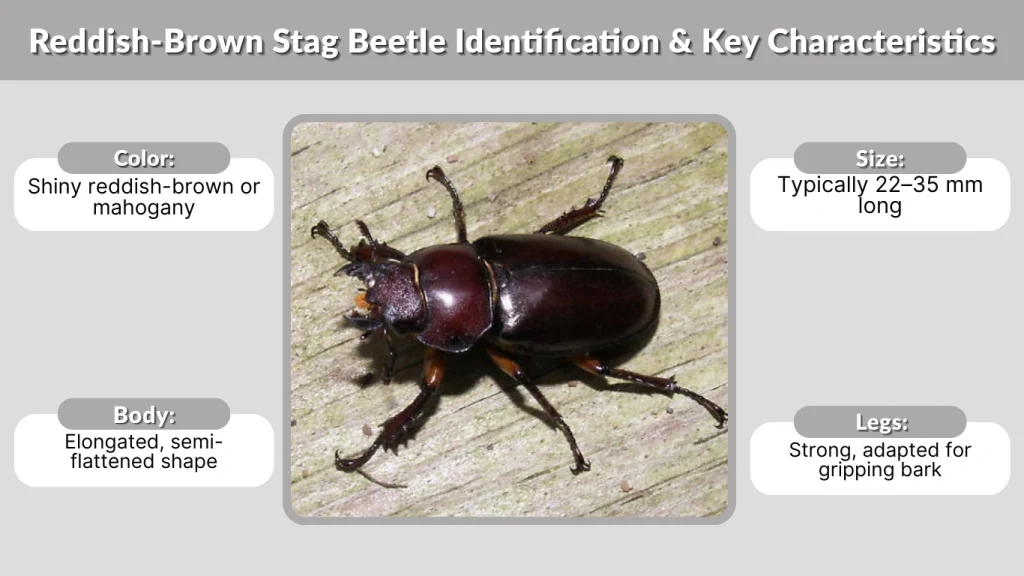
General Appearance (List Format)
- Color: Shiny reddish-brown or mahogany
- Size: Typically 22–35 mm long
- Body: Elongated, semi-flattened shape
- Legs: Strong, adapted for gripping bark
- Mandibles: Large in males, small in females
- Exoskeleton: Smooth, polished finish
- Abdomen: Females appear rounder, broader
Male vs Female Differences (List Format)
- Mandibles:
- Males: Long, antler-like jaws for wrestling
- Females: Short, practical cutting jaws
- Males: Long, antler-like jaws for wrestling
- Body Shape:
- Males: Longer and slender
- Females: Compact and oval
- Males: Longer and slender
- Coloration:
- Both similar, though females can appear darker
- Both similar, though females can appear darker
- Behavior:
- Males display territorial pushing
- Females focus on egg-laying
- Males display territorial pushing
Behavior & Temperament (List Format)
- Primarily nocturnal
- Gentle and slow-moving
- Attracted to lights at night
- Flight produces a loud buzzing sound
- Rarely pinches unless mishandled
- Often remains still when threatened
Habitat & Geographic Range
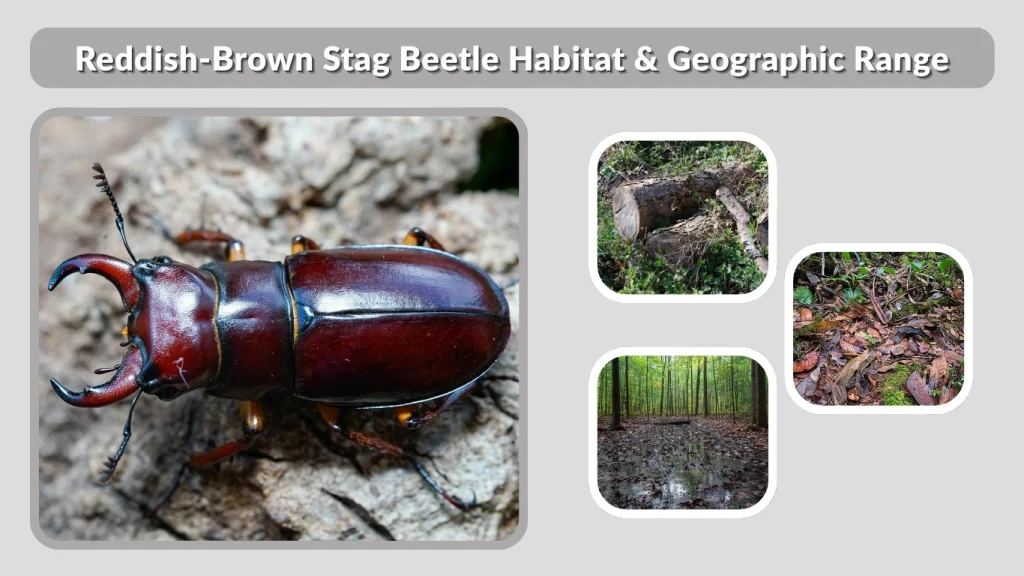
Natural Habitat
The reddish-brown stag beetle thrives in deciduous woodlands rich with rotting logs, leaf litter, and moist forest floors. Their larvae depend heavily on decayed hardwood, making these habitats essential for their development. Adults shelter under bark, in soft soil, or near tree bases during the day.
Where They Are Found
This species is widespread across eastern North America, including the U.S. and southern Canada. States like Ohio, Pennsylvania, New York, and Virginia report frequent sightings due to dense forest cover and abundant hardwood debris.
Diet & Feeding Overview

What Adult Beetles Eat
- Tree sap
- Fermenting fruit
- Beetle jelly (in captivity)
- Sweet liquid-based foods
Adults mainly consume sugary fluids—not solid foods. Their mandibles are not designed for biting or chewing.
What Larvae (Grubs) Eat
- Decayed hardwood fiber
- Moist, rotted logs
- Leaf-rich organic substrate
Larvae do almost all of the species’ “eating,” fueling years of growth before pupation.
Life Cycle & Development
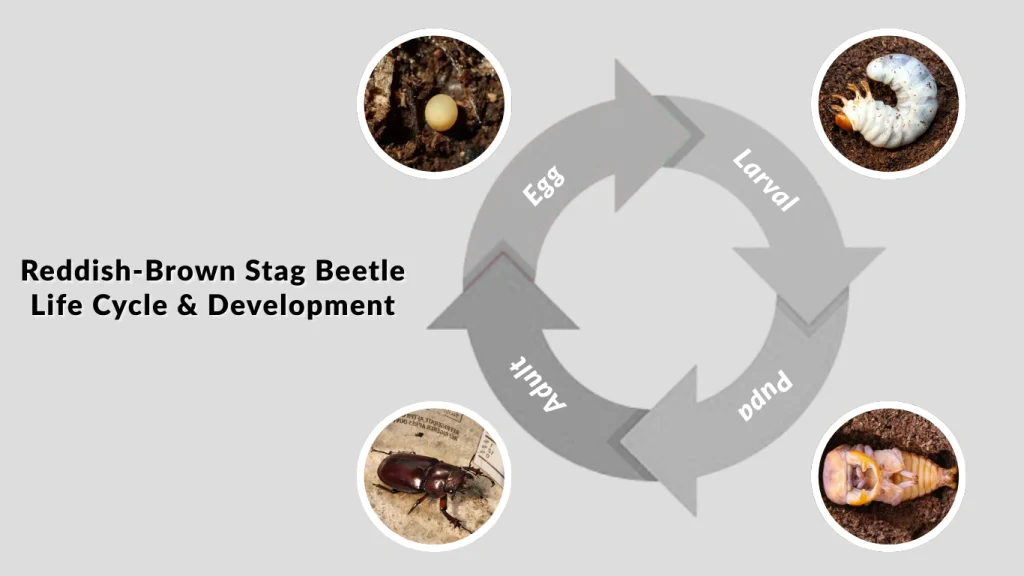
Egg Stage
Females lay small, white eggs in moist, decomposing hardwood. These hatch in several weeks depending on humidity and temperature.
Larval (Grub) Stage
This phase lasts 1–3 years, during which the C-shaped grubs feed continuously on rotted wood. They undergo multiple molts and are crucial to forest nutrient cycling.
Pupation Period
Inside a self-made chamber, the grub transforms into its adult form over several weeks. The pupa develops wings, legs, antennae, and mandibles.
Adult Lifespan
Adults typically live a few months, focusing on mating and reproduction before dying at the end of summer.
Are Reddish-Brown Stag Beetles Dangerous?

Do They Bite?
Males can pinch lightly if forced, but they rarely do so. Females have small jaws and pose almost no risk. Bites are harmless and do not break skin.
Are They Bad for Homes?
No—stag beetles cannot damage houses, furniture, or dry wood. Their larvae survive only in moist, rotted logs outdoors.
Rarity & Conservation Status
Are They Rare?
Not endangered, but visibility is low outside summer months. Habitat destruction—especially removal of deadwood—reduces local populations.
Human Impacts
Land clearing, over-sanitized landscaping, and loss of decaying logs threaten breeding sites. Preserving natural forest debris helps sustain their numbers.
Caring for Reddish-Brown Stag Beetles
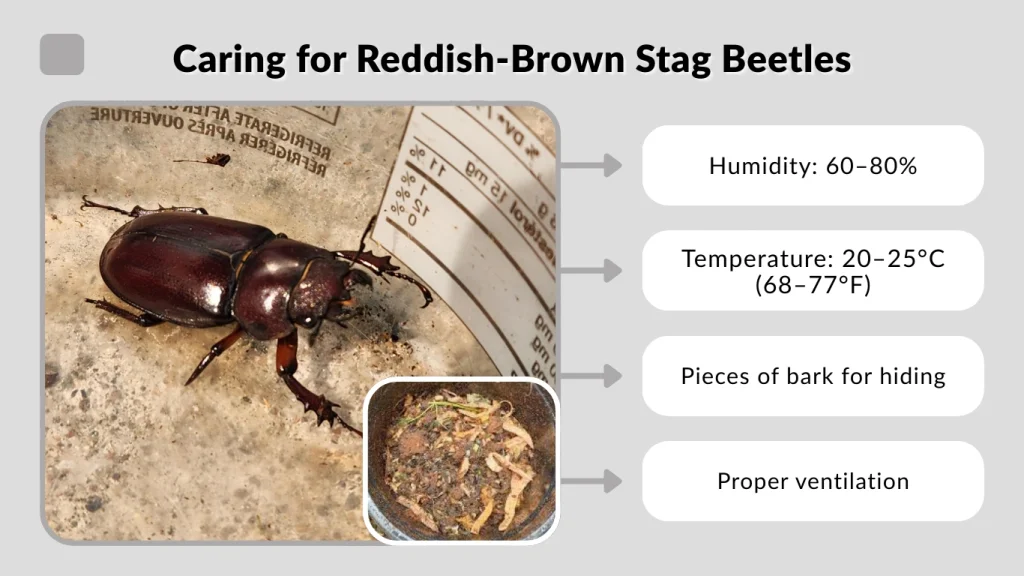
Enclosure Requirements
- Deep substrate of decayed hardwood & leaf litter
- Humidity: 60–80%
- Temperature: 20–25°C (68–77°F)
- Pieces of bark for hiding
- Proper ventilation
Feeding in Captivity
- Fruit jelly
- Overripe fruit
- Sap-based beetle diets
Breeding & Raising Larvae
Females seek soft rotted wood to lay eggs. Larvae must remain undisturbed inside nutrient-rich logs, sometimes for years.
Market Value & Availability
Typical Price Range
| Beetle Type | Approx. Price |
| Male (large mandibles) | Moderate–High |
| Female | Lower |
| Larvae (grubs) | Low–Moderate |
Where They Are Sold
Expos, hobbyist breeders, insect marketplaces, and entomology groups (ethical sourcing recommended).
Interesting Facts
- Their mandibles function like antlers, not biting tools.
- Adults create a loud buzzing flight sound.
- Larvae spend years underground; adults live only months.
- Important contributors to forest decomposition.
- Often mistaken for dangerous insects despite being harmless.
FAQs
Why do male reddish-brown stag beetles have such large mandibles?
Male stag beetles use their oversized mandibles to wrestle other males during mating competitions. These antler-like jaws help them win access to females but are not used for feeding or attacking humans.
What should I feed a pet reddish-brown stag beetle?
Adult stag beetles thrive on beetle jelly, tree sap substitutes, and soft, sweet fruits. Avoid hard foods, as their mouthparts are meant for lapping liquids rather than chewing.
How long does a reddish-brown stag beetle live?
Adults typically live only a few months, but the entire life cycle—including the larval stage—can span 1 to 3 years, depending on temperature and nutrition.
Are reddish-brown stag beetles attracted to lights?
Yes. Like many nocturnal beetles, they frequently fly toward porch lights or street lamps during summer evenings, making them easier to spot.
Can reddish-brown stag beetles be kept with other beetles?
It’s best to house them individually. Males may fight, and mixed-species setups can create competition for space, food, and humidity conditions.