

Stag beetles have one of the most misunderstood diets in the insect world. While their intimidating mandibles suggest they might hunt or chew, most adults actually consume soft foods or liquids. Their larvae, however, rely on decomposing wood to grow. This guide explains exactly what adult and larval stag beetles eat, how they feed, what different species prefer, and which animals prey on them in the wild.
What Adult Stag Beetles Eat
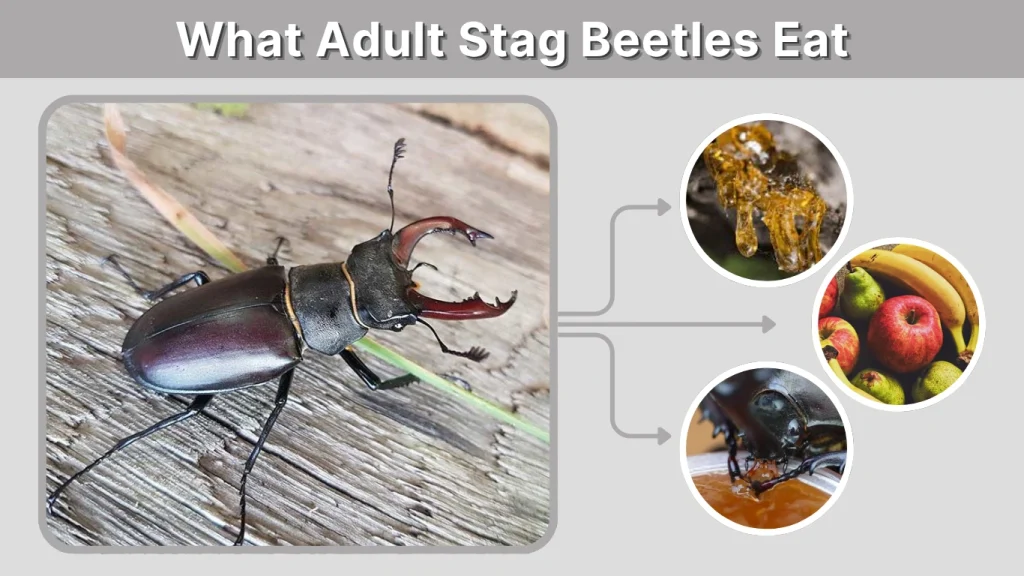
Adult stag beetles have simple dietary needs. Their primary food sources come from sweet liquids, tree sap, and soft fruit. Unlike many insects, adults do not chew solid foods. Their jaws are designed for gripping and mating displays rather than eating, so they rely on foods that are easy to lap up.
Some species—such as the rainbow, British, reddish-brown, and giant stag beetle—have similar preferences, though available food varies by region. Captive stag beetles do especially well on beetle jelly, which provides balanced nutrition and hydration.
Common Foods for Adult Stag Beetles
- Tree sap from oak, maple, and fruit trees
- Beetle jelly (best captive food)
- Overripe fruit like banana, apple, and mango
- Fruit juices and natural sugary liquids
Fruits They Commonly Enjoy
- Banana
- Apple
- Mango
- Peach
- Pear
Stag beetles do not eat meat, insects, grass, plants, or slugs. These foods cannot be processed by their mouthparts and may even be harmful.
How Stag Beetles Eat
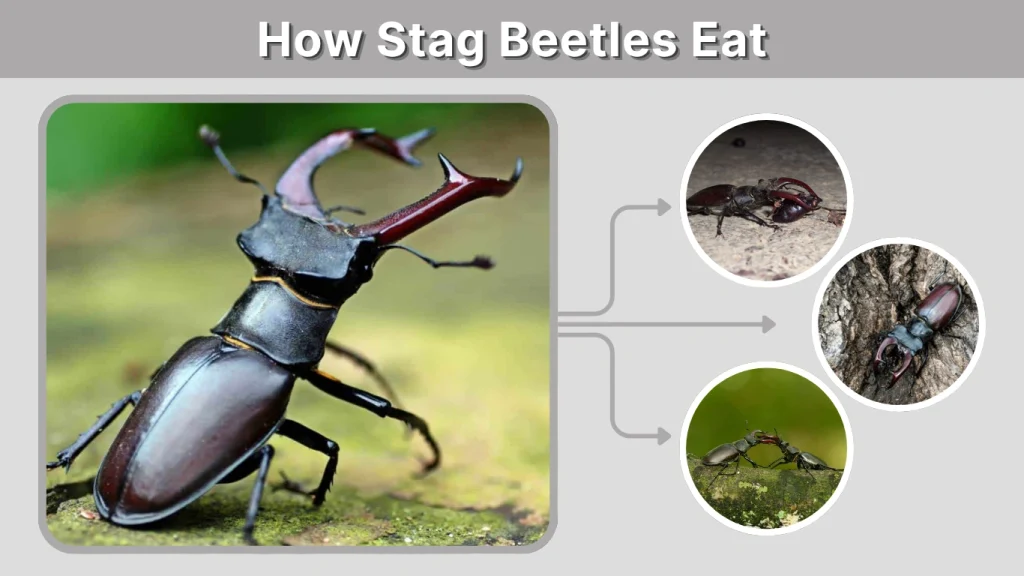
Stag beetles feed using specialized mouthparts designed for licking rather than chewing. Their mandibles, especially in males, play little role in feeding. Instead, the beetle extends a tongue-like structure to lap up sap and fruit juices. This means they prefer foods that are soft, fermented, or naturally liquid.
Adult beetles are most active at dusk, when sap flows more readily and predators are less active. They cling to tree bark using their strong legs and feed slowly. Males may fight for feeding spots, while females focus on sustained feeding for energy and egg production.
Feeding Behaviors
- Lapping and drinking, not chewing
- Feeding near tree wounds or sap runs
- More active feeding during summer evenings
- Staying near fallen fruit at night
Their feeding method makes them dependent on natural forest cycles, which explains why stag beetles appear most often during warm, humid months when sap is abundant.
What Stag Beetle Larvae Eat

Larvae have a completely different diet from adults. Baby stag beetles feed almost exclusively on decomposing hardwood. They rely on the nutrients released by fungal breakdown rather than fresh or living wood. This diet fuels their rapid growth over months or even years, depending on species.
Larvae burrow through softened timber, digesting it with the help of symbiotic microbes. They require deep, moist, rotting wood to thrive—fresh logs or bark will not support them. Species like the giant stag beetle, rainbow stag beetle, reddish-brown stag beetle, and lesser stag beetle all share this larval preference, though wood types may vary by region.
Larval Food Sources
- Decayed hardwood logs
- Rotting tree roots
- Nutrient-rich flake soil
- Naturally decomposed wood mixed with soil
Because larvae grow large and strong, their wood diet is essential. Improper substrate can stunt development or cause deformities during pupation.
Species-Specific Diets
Different stag beetle species share similar feeding habits, but some have unique preferences influenced by habitat. Rainbow stag beetles, for example, prefer soft fruits and beetle jelly, while British stag beetles rely heavily on tree sap during warm summer evenings. Giant and lesser stag beetles follow similar patterns but may favor different hardwoods depending on their region and climate.
Diet by Species
- Rainbow Stag Beetle: fruits, sap, beetle jelly
- Giant Stag Beetle: soft fruits, high-moisture jellies
- Lesser Stag Beetle: primarily sap and fruit juices
- Golden Stag Beetle: tropical fruits and sap in humid environments
- Reddish-Brown Stag Beetle: tree sap and rotting fruit
These feeding patterns ensure survival across continents and climates.
What Animals Eat Stag Beetles (Predators)

Stag beetles face many natural predators in the wild. Birds are their biggest threat, catching adults during flight season or pulling larvae from rotting wood. Small mammals and reptiles may also prey on them. In some regions, larger amphibians such as frogs will attempt to swallow adult beetles despite their large mandibles.
Common Predators
- Birds (main predator)
- Bats
- Frogs and toads
- Spiders
- Small mammals like hedgehogs and raccoons
Unusual Predators
- Cats: may play with or eat them
- Dogs: may try, but can choke
- Monkeys: opportunistic and may eat beetles in the wild
- Other insects: rarely successful due to the beetle’s strength
This predator-prey balance helps maintain healthy forest ecosystems.
What Stag Beetles Drink

Stag beetles obtain much of their hydration from the food they eat. Tree sap and fruits provide natural moisture, while beetle jelly contains water, minerals, and sugars. They do not drink from water bowls, but they may sip dew or moisture droplets found on leaves and bark.
Sources of Moisture
- Tree sap
- Fruit juices
- Beetle jelly
- Moisture on plants or wood
Proper hydration is essential for flight, mating, and egg-laying.
Feeding Stag Beetles in Captivity
Captive stag beetles thrive on simple, clean feeding routines. Beetle jelly is the best option because it lasts long, doesn’t mold quickly, and provides balanced nutrients. Soft fruits should be replaced daily to prevent fermentation, which can attract mites. Position the food on a stable surface so the beetle can stand comfortably while feeding.
Larvae require high-quality decayed hardwood or flake soil. Their substrate must remain moist but never wet, and fresh wood should be avoided since larvae cannot digest it.
Captive Feeding Checklist
- Offer beetle jelly at all times
- Provide soft fruit 2–3 times weekly
- Keep feeding areas clean
- Maintain moist, decomposed wood for larvae
- Avoid pesticides, chemicals, and fresh logs
Healthy feeding prevents stress and supports long life in captivity.
FAQs
What do adult stag beetles eat?
Adult stag beetles eat soft, sugary foods such as tree sap, beetle jelly, and overripe fruit. They cannot chew solid foods because their mandibles are not designed for eating. Instead, they lap up liquid nutrition to stay hydrated and energized during their short adult lifespan.
What do stag beetle larvae eat?
Larvae eat decaying hardwood, rotting tree roots, and nutrient-rich wood-based substrate. They rely on decomposed wood rather than fresh timber because their digestive system uses microbial help to break down softened fibers. Without proper decayed wood, larvae cannot grow, molt, or pupate correctly.
Do stag beetles eat other insects or meat?
No. Stag beetles do not eat insects, meat, or other animals. Their mouths are not built for chewing or hunting. Adults feed on liquids, while larvae feed strictly on rotting wood. Although they look fierce, especially males, they are harmless and do not prey on other creatures.
Do animals like birds, dogs, or frogs eat stag beetles?
Yes. Birds are the primary predators of stag beetles and often catch them during flight. Frogs, spiders, and small mammals also attempt to eat them. Dogs and cats may bite or play with them, though this is risky for the insect and can cause choking hazards for pets.
Can stag beetles eat fruit like apples or bananas?
Absolutely. Stag beetles enjoy soft fruits such as banana, apple, peach, and mango. The fruit should be ripe or slightly overripe so the beetle can easily drink the juices. In captivity, fruit should be replaced daily to prevent mold and fermentation.
