
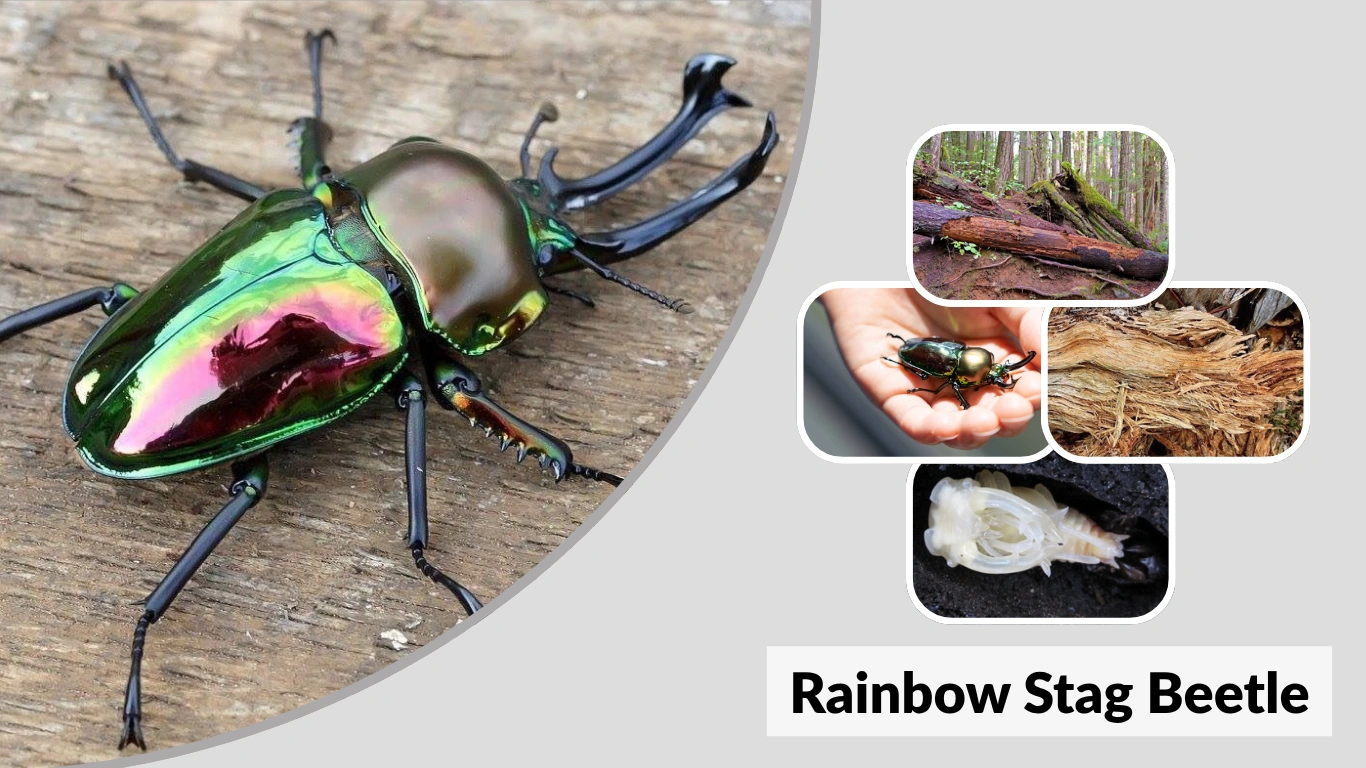
The rainbow stag beetle is one of the most stunning insects in the exotic pet world, admired for its metallic colors, gentle temperament, and surprisingly simple care needs. Found across parts of Australia and Southeast Asia, this beetle has become popular among collectors, breeders, and beginners looking for a unique pet. This guide explores its appearance, habitat, care, lifespan, and everything you need to know before owning one.
What Is a Rainbow Stag Beetle?
The rainbow stag beetle (Phalacrognathus muelleri) is a brilliantly colored species known for its mirror-like metallic hues, ranging from emerald green to deep blue and vibrant red. It is often called the “jewel beetle” of the stag beetle family due to its glossy body and impressive mandibles. Males display larger mandibles, while females are smaller and more rounded, though equally vibrant. This species is prized for both its appearance and ease of handling.
Physical Characteristics of Rainbow Stag Beetles

Rainbow stag beetles exhibit dramatic coloration that can shift depending on light, humidity, and genetics.
Key Features
- Color Variants: emerald, blue, red, and mixed rainbow tones
- Size Range: adults typically reach 40–70 mm
- Wings: fully functional, though they rarely fly in captivity
- Mandibles: much larger in males and used for competition
Additional Traits
- Smooth, metallic body surface
- Compact, strong legs ideal for gripping wood
- Sexual dimorphism that is easy for beginners to identify
These characteristics make the beetle highly desirable among collectors and breeders worldwide.
Natural Habitat of the Rainbow Stag Beetle
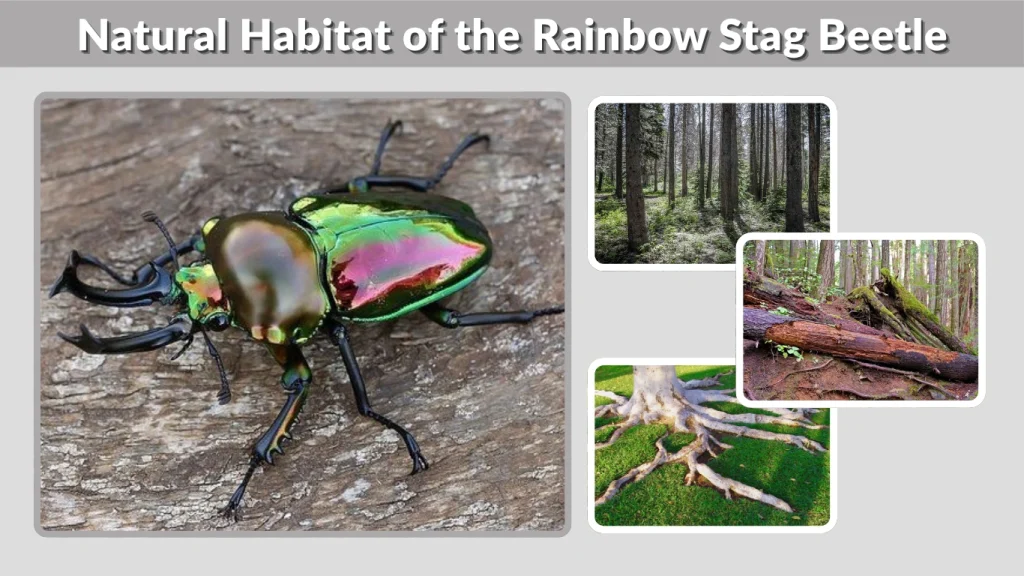
Rainbow stag beetles live primarily in the rainforests of northeastern Australia and surrounding regions. Their environment is warm, humid, shaded, and filled with decaying wood—essential for both larvae and adults.
Typical Habitat Conditions
- Dense forest floors
- Fallen logs and rotting bark
- High humidity (70–85%)
- Shaded, moisture-rich microhabitats
Geographic Distribution
These beetles are naturally found in:
- Queensland, Australia
- New Guinea
- Select rainforest regions of Indonesia
Their reliance on moist, decaying timber means they thrive in environments where organic material accumulates. Maps showing their distribution typically highlight coastal rainforest corridors, where temperature and humidity remain stable.
Life Cycle and Development
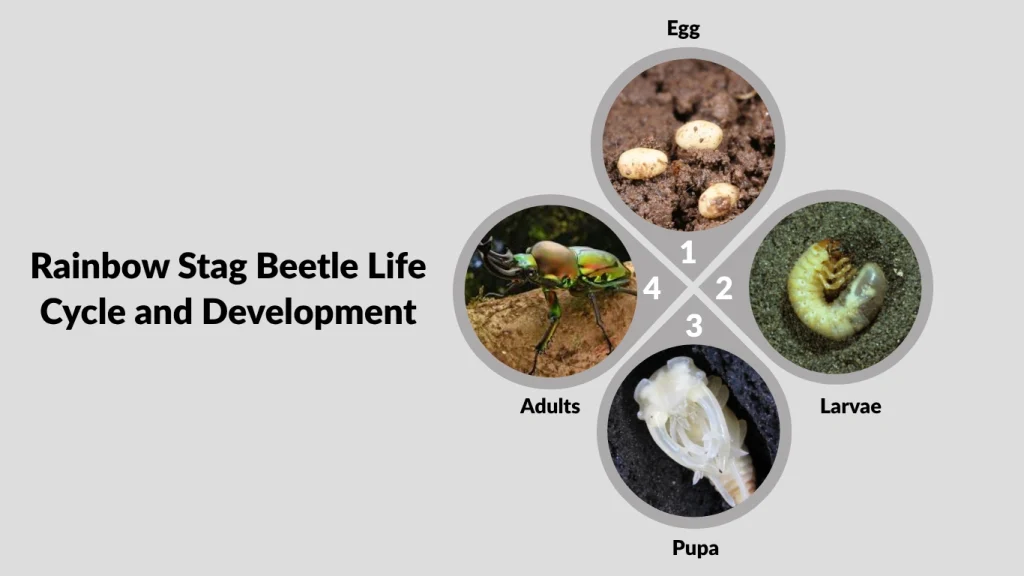
The rainbow stag beetle undergoes a complete metamorphosis, progressing through egg, larval, pupal, and adult stages. Each stage has unique requirements and plays a vital role in the beetle’s overall lifespan.
Stages of Development
- Egg Stage: laid deep within decaying logs
- Larva Stage: lasts several months; larvae are cream-colored and heavily dependent on nutrient-rich wood
- Pupa Stage: a protective cocoon forms as the beetle transforms
- Adult Stage: emerges fully colored and ready for mating
Lifespan Overview
In captivity, adults typically live 12–18 months, though larvae may spend an additional 6–12 months developing underground. This means a full life cycle can span 1.5–2.5 years depending on diet, substrate, and temperature.
Behavior and Communication
Rainbow stag beetles communicate through subtle vibrations, body postures, and occasional clicking sounds. Males often use their mandibles to display dominance, especially during mating attempts. Despite their intimidating appearance, they are generally peaceful and rarely aggressive unless overcrowded.
Common Behaviors
- Slow, deliberate movements
- Frequent burrowing
- Gentle climbing and gripping
- Mild territorial displays from males
These behaviors make them manageable pets suitable even for beginners.
Caring for a Pet Rainbow Stag Beetle
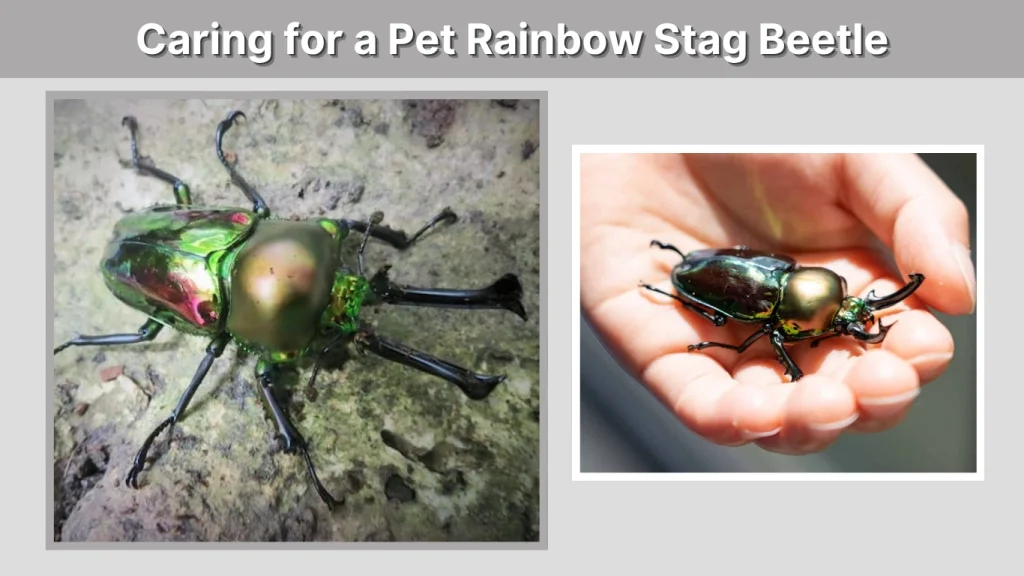
Keeping a rainbow stag beetle as a pet is surprisingly simple, especially when their enclosure mimics rainforest conditions. A medium-sized plastic or glass terrarium works well, provided it has good airflow and a secure lid. The substrate should be deep enough for the beetle to burrow—typically a mix of flake soil, decayed wood, and leaf litter. This helps maintain humidity while supporting natural behaviors.
Humidity between 70–85% is ideal, which can be achieved using periodic misting and moisture-retaining substrates such as cypress moss. This moss is generally safe for rainbow stag beetles as long as it is clean and chemical-free. Temperature should remain between 22–26°C (72–79°F). Avoid direct sunlight, drafts, or extremely dry environments.
Feeding Your Beetle
- Beetle jelly (most common and recommended)
- Fresh fruits such as banana, mango, and apple
- Occasional honey water for energy
Handling Tips
- Move slowly and gently
- Support the beetle from underneath
- Avoid grabbing the legs or mandibles
Rainbow stag beetles are calm and rarely attempt to bite, making them excellent display pets.
Larvae Care and Breeding
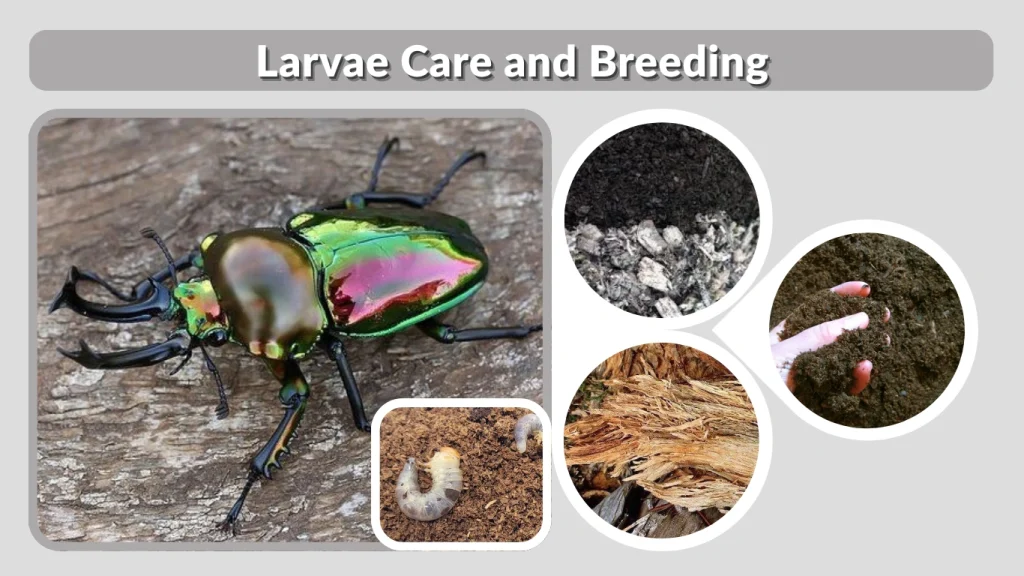
Breeding rainbow stag beetles requires patience but is manageable for beginners. A well-prepared breeding container filled with decayed, nutrient-rich wood is essential. Females lay eggs deep within the substrate or inside soft logs.
Larvae Care Essentials
- Use flake soil enriched with rotting hardwood
- Keep substrate 10–15 cm deep
- Maintain stable moisture, not waterlogged
- Provide fresh decayed wood for feeding
Larvae grow for several months before pupating. Each larva should be separated into its own container once large enough to avoid competition. Larvae sold by breeders are often vigorous and easier to ship safely.
Buying Rainbow Stag Beetles
Rainbow stag beetles are widely sold in the exotic pet trade, though availability varies by country. Prices depend on age, size, sex, and color variation. Adult males are typically more expensive due to demand.
Where to Buy
- Reputable online breeders
- Insect expos and specialty pet shops
- U.S. and Australian exotic insect sellers
- Larvae sellers offering live shipments
Price Ranges
- Larvae: affordable and easy to ship
- Adult Females: mid-range
- Adult Males: highest price due to mandible size and color
Always ensure the species is legal in your region, especially for buyers in the USA and Australia, where wildlife transport rules may apply.
Rainbow Stag Beetle in Animal Crossing (ACNH)
The rainbow stag beetle appears as a rare and valuable catch in Animal Crossing: New Horizons and New Leaf. Known for its high selling price and nighttime spawn window, it often becomes a sought-after insect for collectors completing their museum or earning Bells.
In-Game Facts
- Active during summer months
- Found on trees at night
- High resale value
- Categorized as a rare stag beetle
This pop-culture exposure has greatly increased interest in the real-life species.
Interesting Facts About Rainbow Stag Beetles
- Their colors are structural, not pigmented, meaning the hue shifts under different angles of light.
- They are gentle despite having large mandibles.
- The species is popular with both insect hobbyists and beginners.
- They coexist well with other peaceful invertebrates but not aggressive species like orchid mantises.
FAQs
How long do rainbow stag beetles live?
Rainbow stag beetles live approximately 12–18 months as adults, though their total life cycle—including the larval stage—can extend to 1.5–2.5 years. Larvae often grow for several months before pupating, making the developmental stage longer than adulthood.
What do rainbow stag beetles eat?
They feed primarily on beetle jelly, rotting fruits, and occasionally sap or honey water. In captivity, beetle jelly is ideal because it provides balanced nutrition, keeps the enclosure clean, and reduces mold that fruits can cause.
Is cypress moss safe for rainbow stag beetles?
Yes, cypress moss is safe as long as it is natural, untreated, and clean. It helps retain humidity and creates a natural forest-floor environment, though it should not replace a nutrient-rich substrate.
How big do rainbow stag beetles get?
Adults typically reach 40–70 mm depending on genetics, nutrition, and sex. Males often appear larger due to prominent mandibles, while females have more compact bodies.
Can rainbow stag beetles be kept as pets?
Absolutely. They are docile, colorful, low-maintenance, and suitable for beginners. With proper humidity, food, and substrate, they thrive in small enclosures and can be handled gently.
