
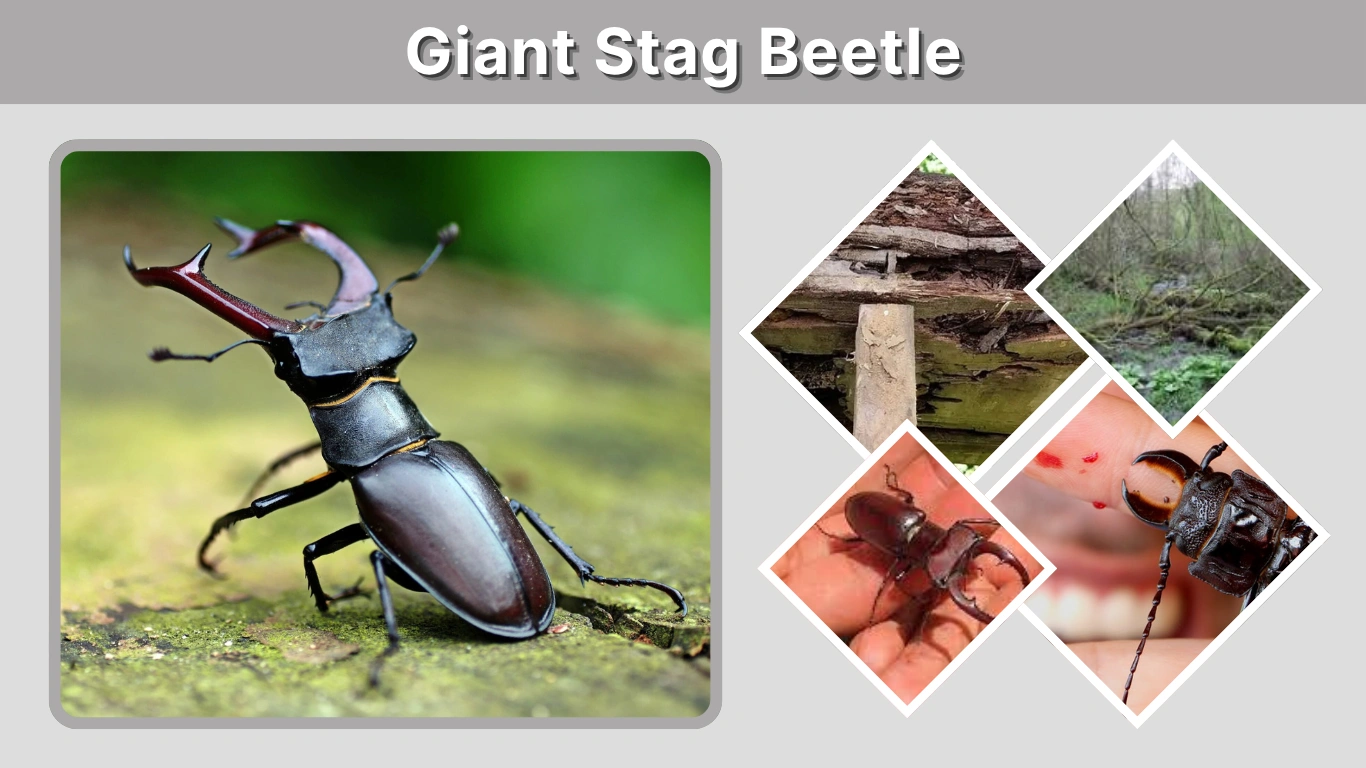
The giant stag beetle is one of the most striking and powerful beetles found in North America and Asia. Known for its massive mandibles, glossy armor, and surprisingly gentle nature, this insect has become a favorite among collectors, hobbyists, and nature enthusiasts. Its large size and distinct appearance also make it a popular figure in games and fantasy art. This guide explores its anatomy, habitat, diet, development, and behaviors while offering insights into its care and conservation.
What Is a Giant Stag Beetle?
Scientific Classification
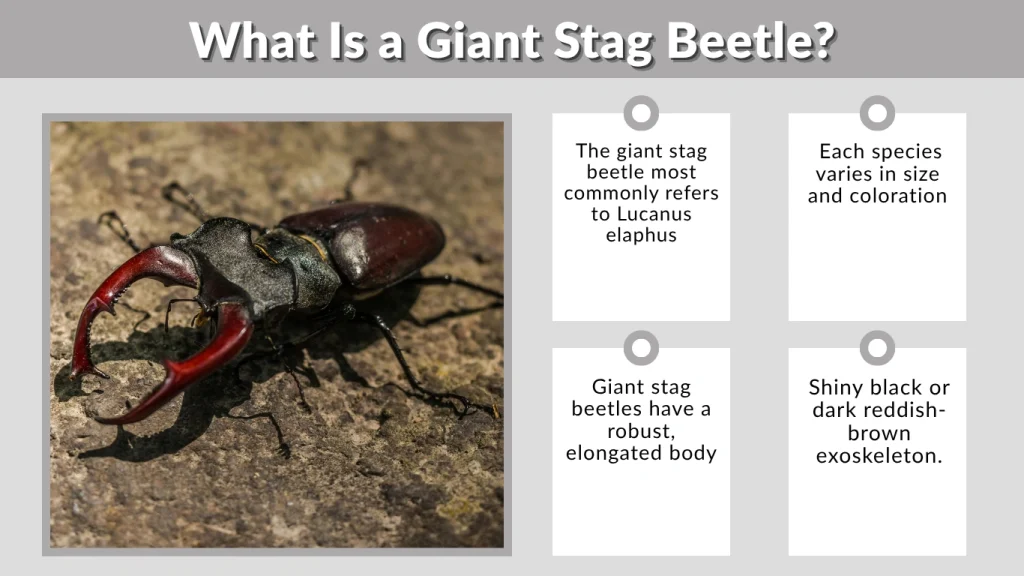
The giant stag beetle most commonly refers to Lucanus elaphus, the largest stag beetle species in North America. It belongs to the family Lucanidae, a group known for dramatic mandibles and heavy exoskeletons. Related species include the Japanese giant stag beetle (Dorcus titanus) and the Formosan giant stag beetle (Lucanus formosanus). Each species varies in size and coloration, but all share the iconic stag-beetle jaw structure.
Key Physical Features
Giant stag beetles have a robust, elongated body with a shiny black or dark reddish-brown exoskeleton. Males possess long, antler-like mandibles used for pushing rivals, while females have shorter but stronger jaws. Despite their heavy appearance, they are capable flyers with fully functional wings hidden beneath their protective elytra. Their thick legs and hooked claws allow them to grip bark and climb vertical surfaces with ease.
Male vs Female Giant Stag Beetles
Male giant stag beetles are instantly recognizable by their massive mandibles, which can be nearly half the length of their body. These jaws are used for dominance displays, wrestling, and territory control. Females are smaller, more compact, and have short, sturdy mandibles adapted for chewing and digging. Males tend to be more active, often climbing and exploring, while females prefer staying close to substrate and wood. Understanding these visual differences is essential for identification and breeding.
Size, Anatomy & Appearance
Maximum Size
Adult males typically measure 40–80 mm, with some exceptionally large individuals reaching even greater lengths. Females are noticeably smaller, usually ranging from 30–50 mm. Japanese and Formosan giant stag beetles can grow larger than North American ones, sometimes exceeding 90 mm. The size of the adult is heavily influenced by larval diet and environmental conditions.
Body Parts Overview
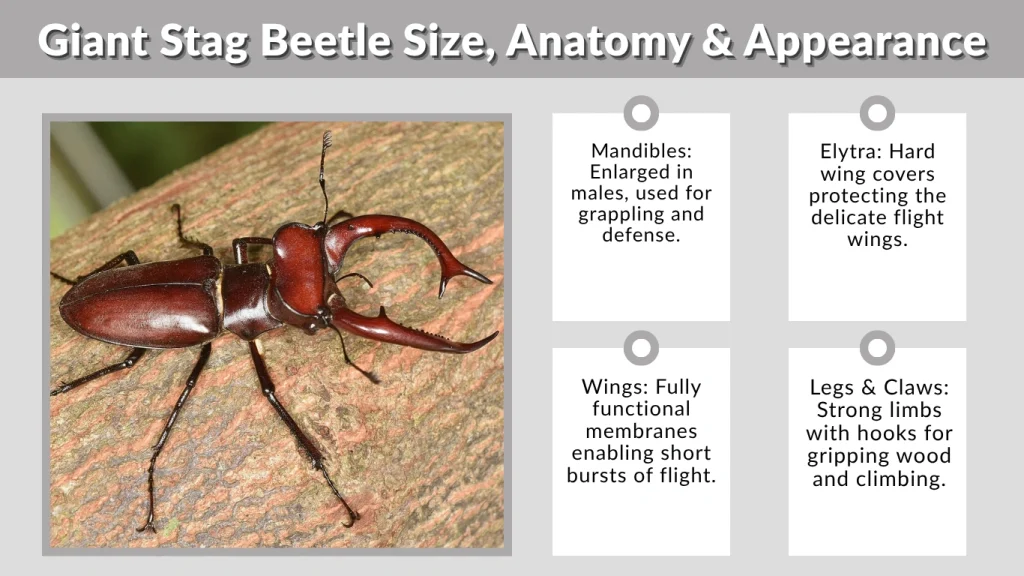
Giant stag beetles possess several distinctive anatomical features:
- Mandibles: Enlarged in males, used for grappling and defense.
- Elytra: Hard wing covers protecting the delicate flight wings.
- Thorax: Central body region providing muscle support for flight.
- Wings: Fully functional membranes enabling short bursts of flight.
- Legs & Claws: Strong limbs with hooks for gripping wood and climbing.
Habitat & Distribution
Natural Habitat
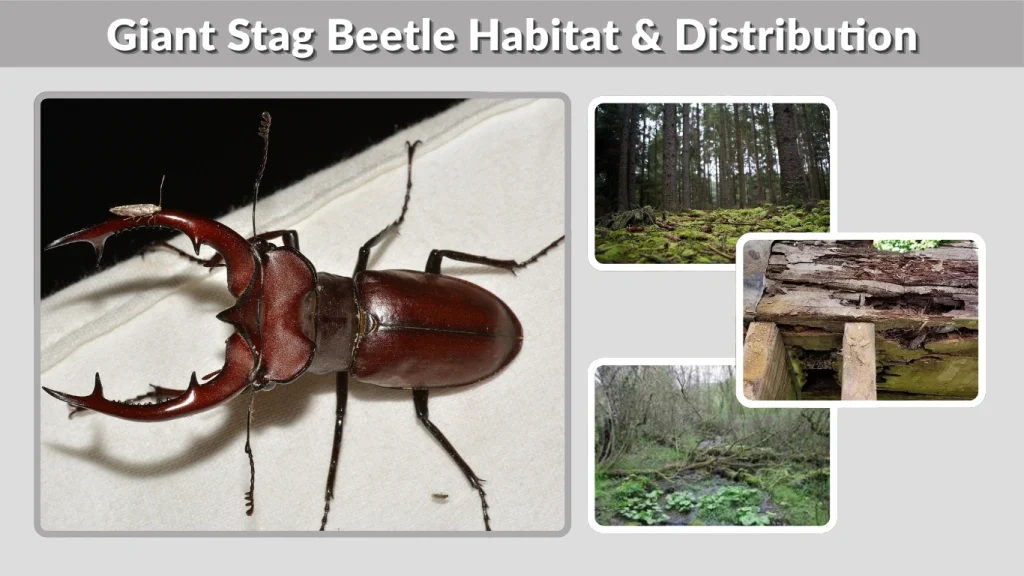
Giant stag beetles inhabit deciduous forests, preferring areas with abundant rotting wood. They rely on decayed logs for both food and shelter. Moist woodland environments—especially oak, hickory, or beech forests—provide ideal conditions. Adults are typically active during summer nights, when they fly in search of mates or sap sources.
U.S. Range
Lucanus elaphus is widespread across many U.S. states. Populations can be found in:
- Pennsylvania
- Virginia
- Georgia
- Tennessee
- North Carolina
- Ohio, Indiana, Illinois
- Michigan, Wisconsin, Minnesota
- Massachusetts, Alabama, New Hampshire
Their distribution follows forested regions with moderately warm climates and ample deadwood.
Diet of the Giant Stag Beetle
Adult Diet
Adults feed primarily on tree sap, which they find on wounded or oozing sections of bark. They also consume rotting fruits such as bananas and apples, which provide sugar and moisture. In captivity, keepers often use beetle jelly, a nutrient-balanced gel that supports adult health and longevity. Compared to other large beetles, giant stags are moderate feeders and prefer softer, sugary foods.
Larval Diet
Larvae feed on decayed hardwood, breaking down rotting logs into compacted soil. They thrive in nutrient-rich flake soil or fermented wood substrate. Because larval nutrition directly affects adult size and mandible development, providing high-quality substrate is essential. Larvae grow slowly over one to two years, consuming large amounts of wood fibers as they develop through multiple instars.
Life Cycle & Development
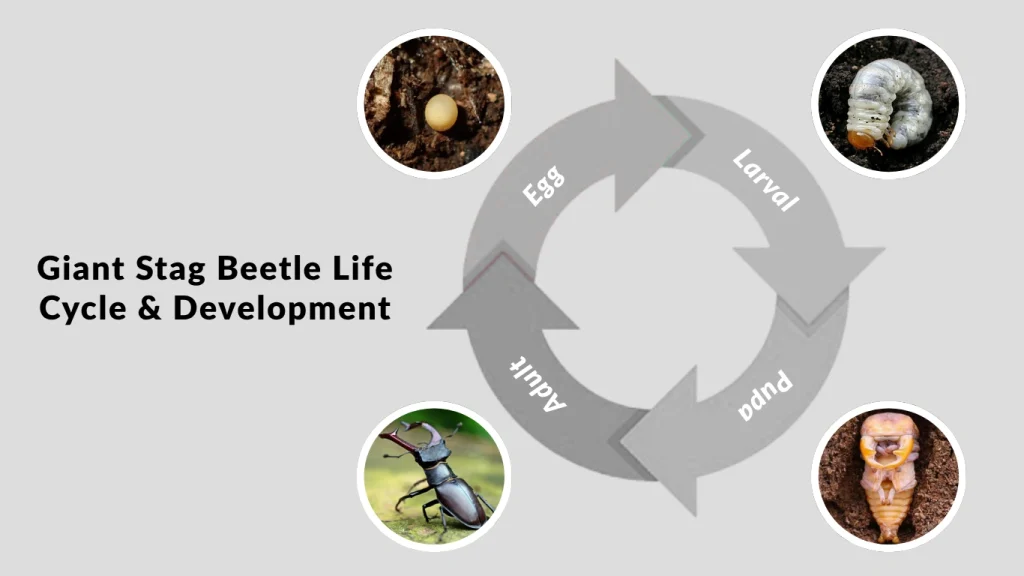
Egg Stage
Females lay eggs inside soft, decomposing wood. These eggs are small, round, and hatch within several weeks. The survival rate increases significantly when moisture and temperature levels remain stable.
Larval Stage
Larvae live inside wood or substrate for 12–24 months. They are C-shaped grubs with strong jaws designed to chew decayed wood. The larval stage is the longest and most important for growth, determining the eventual size of the adult beetle.
Pupal Stage
When the larva reaches its final instar, it prepares for pupation by forming a solid chamber inside compacted substrate or decayed wood. Unlike moths, giant stag beetles do not spin cocoons; instead, they rely on their chamber for protection. Inside, the larva slowly transforms into a pale, soft pupa. Over several weeks, the adult beetle’s legs, wings, and mandibles develop, gradually hardening into recognizable shapes. Disturbing this stage can cause deformities, making stillness crucial.
Adult Stage
After completing metamorphosis, the adult beetle emerges from its pupal chamber in a fragile state known as the teneral phase. Its exoskeleton appears pale yellow or light brown until it fully hardens and darkens over several days. Once mature, adults focus primarily on feeding, climbing, and reproducing. Males frequently engage in pushing contests with rivals, using their mandibles to lift or dislodge competitors. Adults live several months, depending on environment and food supply.
Behavior & Safety
Do They Bite?
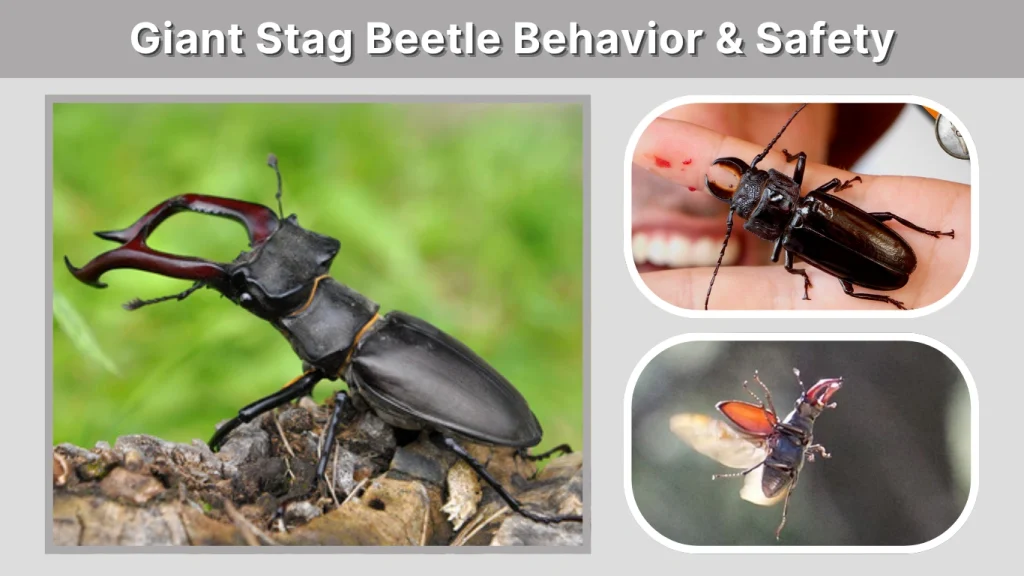
Giant stag beetles can pinch with their mandibles, especially males with their oversized jaws. While the pinch can be surprising, it is not dangerous and rarely breaks skin. Females have smaller but stronger jaws capable of delivering a sharper nip. These beetles prefer retreat over aggression and are safe to handle gently.
Can They Fly?
Despite their size, giant stag beetles are capable fliers. They open their hardened elytra to reveal large, flexible wings underneath and usually take flight at dusk. Their flight is loud and slow but effective for traveling between trees in search of sap or mates. Warm temperatures and humidity increase flight activity.
Are They Dangerous?
Giant stag beetles are not poisonous, venomous, or harmful to humans or pets. They do not damage homes, crops, or wood structures. The large mandibles often cause fear, but in reality, these insects are harmless forest recyclers that play an important ecological role.
Conservation Status
Are They Endangered?
In most regions, giant stag beetles are not officially endangered, but their populations are declining due to habitat loss, removal of deadwood, and over-collection. Their survival depends heavily on access to decaying logs where larvae develop for years. Some countries and states monitor their numbers closely, and certain regions have protective laws in place.
State Laws & Protection
Regulations vary by state. For example, some areas in Georgia and the Southeast restrict collecting or transporting certain native beetle species. While Lucanus elaphus is generally legal to keep, it’s important for enthusiasts to follow ethical collecting practices and respect protected habitats.
Giant Stag Beetle as a Pet
Enclosure Requirements
Captive beetles thrive in deep substrate made of flake soil or decayed hardwood fibers. Adults need hiding spots like cork bark and small branches. Maintaining moderate humidity and gentle airflow prevents dehydration and mold. Because males can stress females, housing them separately is often recommended.
Price & Availability
Prices vary by size and species. Captive-bred adults are more ethical and often cost more than wild-caught individuals. Rare color variations or large mandible specimens sell at higher prices. Availability peaks during warm months when adults naturally emerge.
Handling & Care Tips
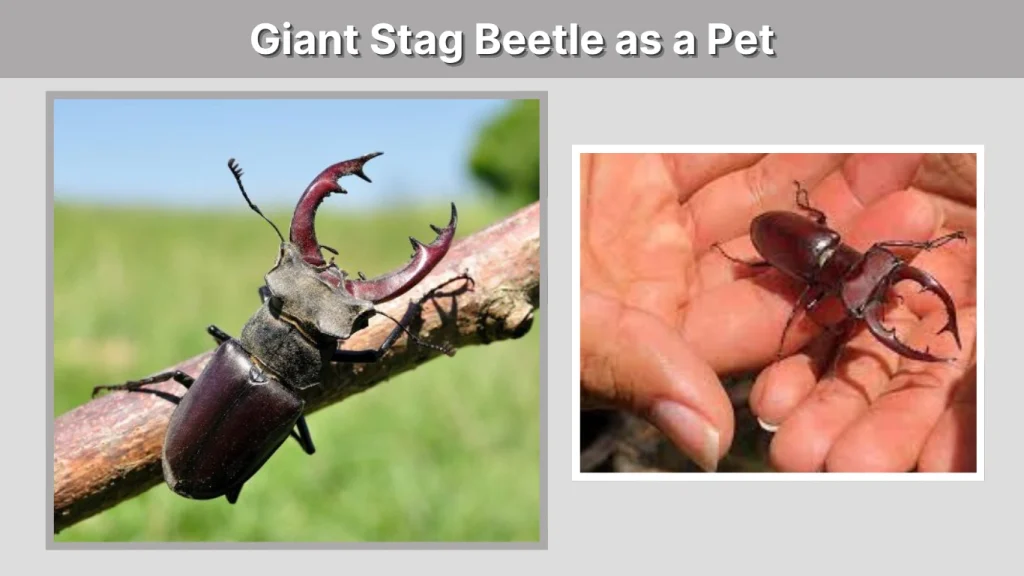
Handle beetles gently by letting them crawl onto your hand rather than grabbing them. Adults enjoy beetle jelly, fruit, or sap substitutes. Avoid loud vibrations or sudden movements during pupation. Clean enclosures regularly but avoid disturbing larvae too often, as stress affects development.
Pop Culture & Fantasy Appearances
Animal Crossing (ACNH/ACNL)
The giant stag beetle appears in multiple Animal Crossing games as a valuable collectible insect. Its in-game representation closely mimics real-world size and coloration, contributing to its popularity among players.
D&D / Pathfinder Variants
Various editions of Dungeons & Dragons feature a “giant stag beetle” creature or celestial beetle variant. These versions emphasize exaggerated mandibles, armored exoskeletons, and mythical abilities, making them iconic monsters in fantasy campaigns.
Fantasy Art & Variants
Artists often depict giant stag beetles as golden, celestial, robotic, or magically enhanced forms. Their dramatic mandibles and armor-like bodies lend themselves well to fantasy illustration and collectible designs.
FAQs
Do giant stag beetles bite?
Giant stag beetles can pinch using their mandibles, especially males, but their bites are not harmful. The pinch may feel sharp, but it rarely breaks skin and poses no danger to humans.
Are giant stag beetles dangerous?
No. They are neither poisonous nor aggressive. These beetles do not damage property or harm people and are considered safe and harmless forest insects.
What do giant stag beetles eat?
Adults feed on tree sap, rotting fruits, and beetle jelly in captivity. Larvae consume decayed hardwood and nutrient-rich flake soil, which supports their long developmental stage.
How big do giant stag beetles get?
Males typically reach 40–80 mm, while females are smaller at 30–50 mm. Some Asian species can exceed 90 mm. Size depends largely on larval diet and growth conditions.
Are giant stag beetles endangered?
They are not globally endangered, but regional populations are declining due to habitat loss and wood removal. Conservation efforts focus on protecting forests and decaying logs vital to their life cycle.
