
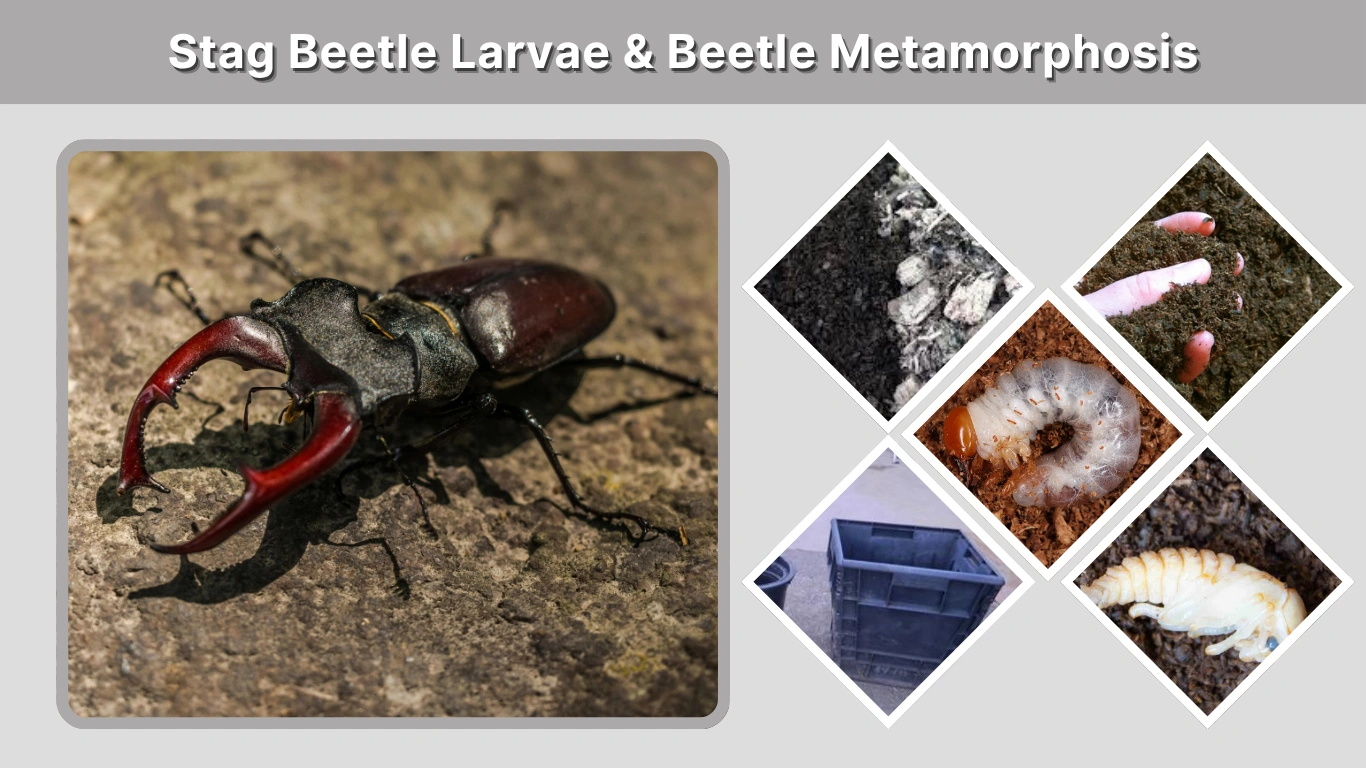
Beetles are among the most diverse insects on Earth, and nearly all of them go through complete metamorphosis, passing through four distinct life stages: egg, larva, pupa, and adult. Stag beetles, rhinoceros beetles, and Hercules beetles are especially interesting because their larvae grow large, feed for long periods, and dramatically transform into powerful adults. Understanding their larval development is essential for hobbyists, breeders, and anyone fascinated by insect biology. This guide explains stag beetle larval traits, beetle life cycles, and comparisons with other large beetle species.
The Four Stages of a Beetle
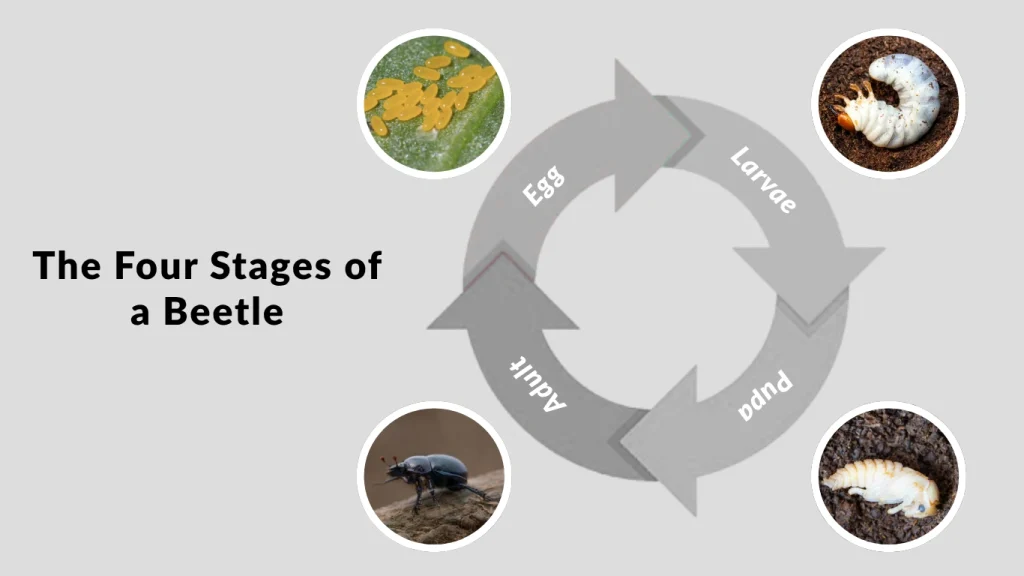
All beetles undergo holometabolous development—meaning they experience a complete change in form. These four stages include:
1. Egg
Female beetles lay eggs in protected, food-rich environments. Stag beetles lay eggs in decayed hardwood so the larvae have immediate access to food once they hatch.
2. Larva (Grub)
This is the primary feeding and growth stage. The larva can molt two to three times, creating instars. Most large beetles—such as stag beetles and Hercules beetles—spend months to years as larvae.
3. Pupa
During pupation, the beetle does not spin a cocoon like moths do. Instead, species like stag beetles and rhinoceros beetles create a pupal chamber from compacted soil or wood fibers. Inside, the insect transforms into its adult form.
4. Adult
Once the adult fully forms and hardens, it emerges from the chamber. Adults focus on feeding, mating, and dispersal.
Do All Beetles Have a Larva Stage?
Yes—all beetles have a larval stage. Beetles belong to the order Coleoptera, which undergoes complete metamorphosis. There are no beetle species that skip the larval stage.
Some people mistakenly think certain beetles have “no larva stage” because the larvae are hidden underground or inside wood and rarely seen. But biologically, larvae are always present in the beetle life cycle.
Stag Beetle Larvae: Appearance & Behavior
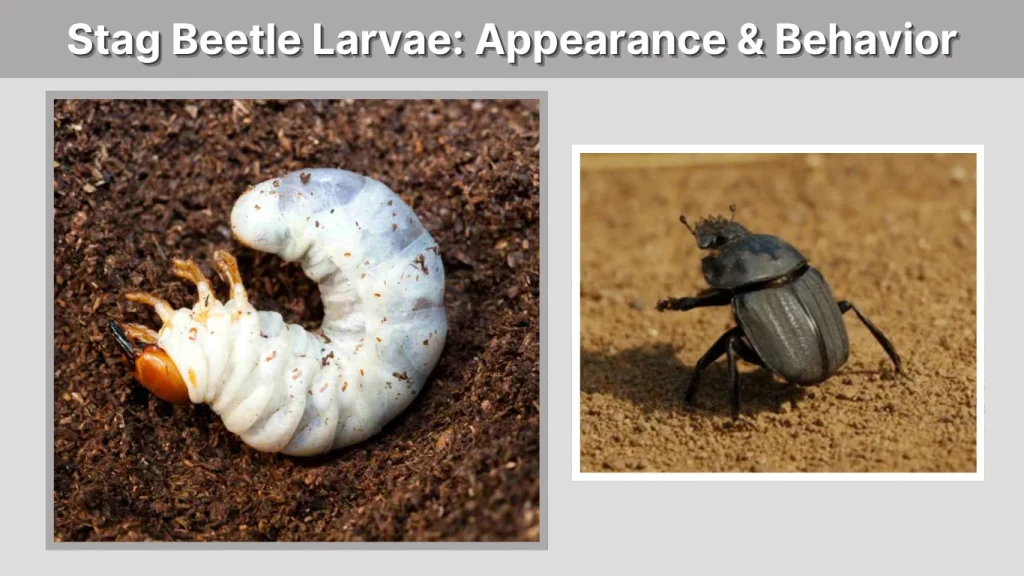
Stag beetle larvae are soft, cream-colored grubs that live inside rotting wood. They have:
- A C-shaped body
- A brown, well-developed head
- Strong mandibles for wood consumption
- Slow, steady movement
- A preference for moist, decayed hardwood
Stag beetle larvae feed on decomposed wood fibers, not fresh wood. Their growth speed depends heavily on temperature, wood quality, and humidity.
Stag Beetle Larval Development
Stag beetle larvae pass through three instars (L1, L2, L3), growing larger after each molt.
- L1 (First Instar): small, white, fragile; stays near the egg site
- L2 (Second Instar): active eater; moves deeper into substrate
- L3 (Third Instar): largest growth stage; can reach several centimeters depending on species
Large species (such as Dorcus titanus or Lucanus species) may remain in the larval stage for 12–24 months, while smaller stag beetles develop more quickly.
The larval stage determines the adult beetle’s size. Well-fed grubs produce bigger, stronger adults with larger mandibles.
Species-Specific Larval Comparisons
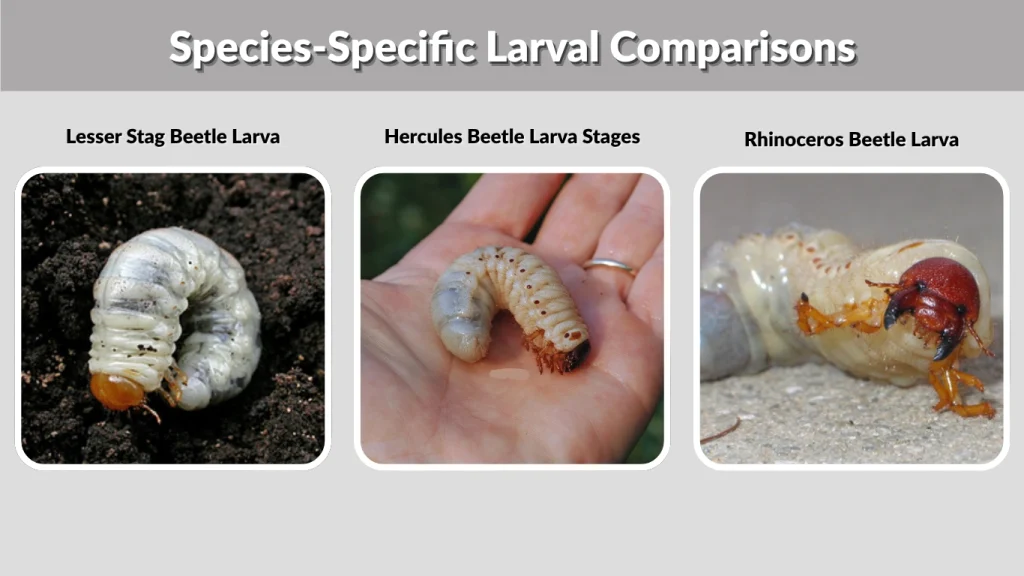
Lesser Stag Beetle Larva
The lesser stag beetle grows faster than larger species, often completing its larval stage in 1 year or less. It feeds on soft, decaying wood and rarely reaches the large sizes seen in rhinoceros or Hercules beetles.
Hercules Beetle Larva Stages
Hercules beetle larvae (genus Dynastes) are some of the largest beetle larvae on Earth.
They can reach:
- 11–14 cm in length
- Over 100 grams in weight
Their larval stage lasts 12–24 months, and they require nutrient-rich, well-fermented wood substrate.
Rhinoceros Beetle Larva Stages
Rhinoceros beetles (Trypoxylus and Xylotrupes species) have thick, muscular larvae.
Characteristics include:
- Faster growth compared to Hercules beetles
- Strong head capsule for compacting soil
- A typical larval duration of 8–18 months
Their larvae are often kept as pets in Japan due to ease of care.
Do Beetles Cocoon Between Larva and Adult?
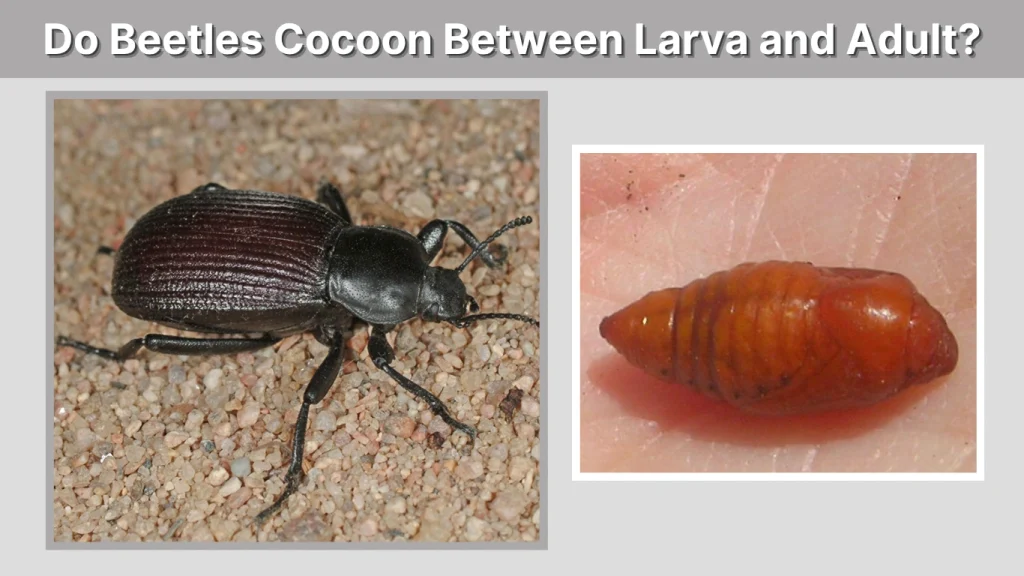
Beetles do not spin silk cocoons like moths. Instead, they form a pupal chamber, a hollow space created by compressing soil or wood particles. Inside this chamber, the larva transforms into a pupa, then into an adult.
Some beetle species may glue soil particles together using bodily fluids, but they never produce silk cocoons.
Stag Beetle Pupa Stage
Once a stag beetle larva reaches the end of its third instar (L3), it prepares for pupation. This is one of the most vulnerable and fascinating parts of the beetle life cycle.
Formation of the Pupal Chamber
The larva creates a smooth, oval chamber by compressing surrounding substrate or wood. This chamber protects it from predators, moisture changes, and physical disturbance. In captivity, sudden vibrations or container openings during this stage can deform the developing beetle.
Inside the Pupa Stage
During pupation:
- Larval tissues break down and reorganize
- Adult structures (wings, mandibles, legs) form
- The pupa remains immobile for weeks or months
Depending on species and temperature, this stage can last three to eight weeks, though some large beetles may take longer.
The Adult Stage
When pupation finishes, the beetle enters the teneral adult stage—a soft, pale version of its final form. Over several days, the exoskeleton hardens and darkens.
Emergence
The adult beetle breaks open the pupal chamber and climbs to the surface. Fresh adults appear light brown or reddish before their exoskeleton fully hardens.
Adult Behavior
Adult beetles:
- Feed on sap, fruit, or beetle jelly
- Are most active at night
- Use mandibles for defense and competition
- Have a shorter lifespan than larvae, often 3–12 months
The adult stage focuses on reproduction rather than growth.
Do Florida Beetles Have a Larva Stage?
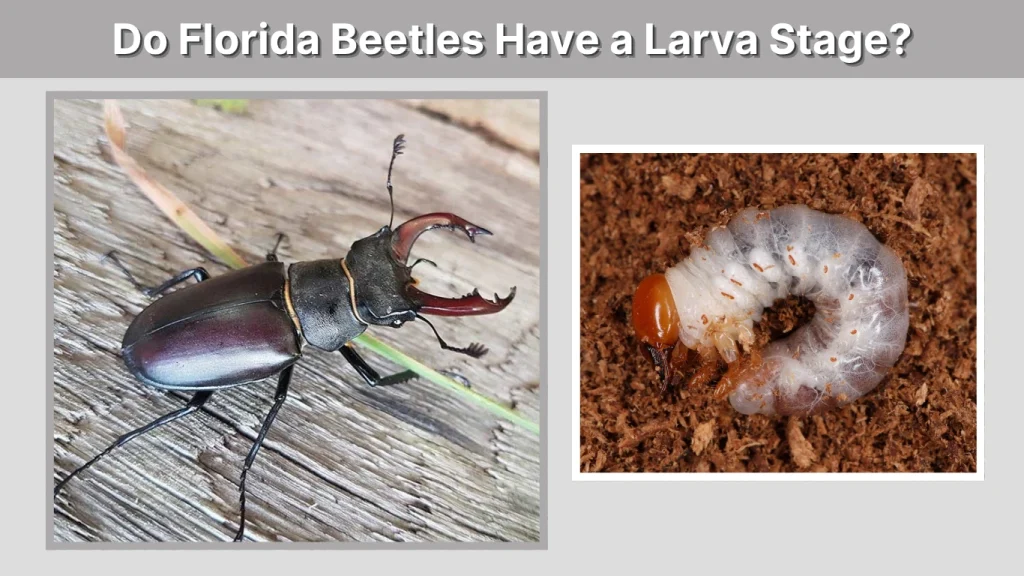
Yes. All beetles in Florida—and everywhere else—have a larval stage.
Common Florida beetles with notable larvae include:
- Stag beetles (Lucanidae)
- Rhinoceros beetles (Scarabaeidae)
- Carpet beetles (Dermestidae)
- Longhorn beetles (Cerambycidae)
Any claim that “Florida beetles have no larval stage” is incorrect; beetles cannot skip this phase due to their biological structure.
Stag Beetle Larvae Care Guide
Substrate Requirements
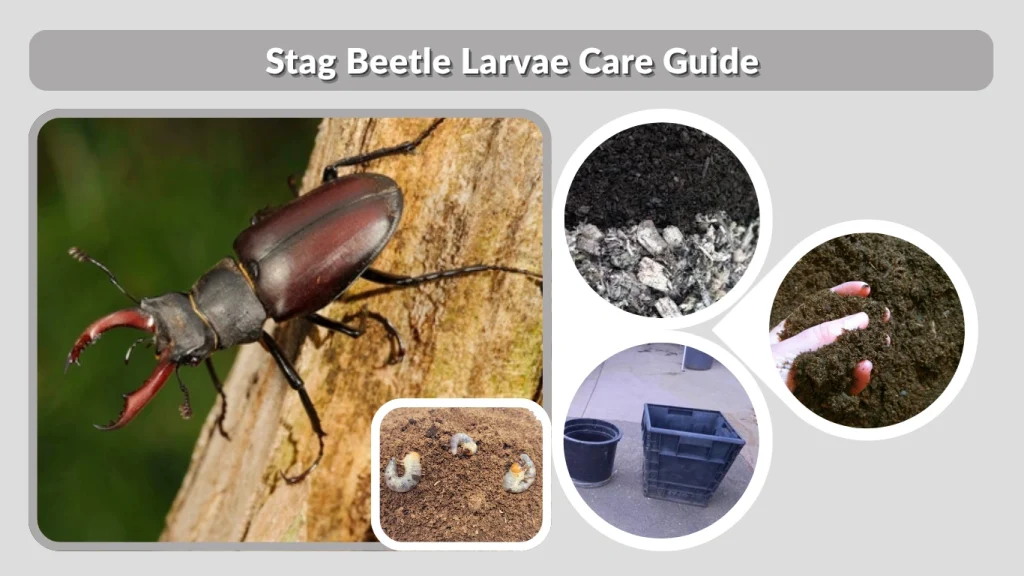
Stag beetle larvae need:
- Flake soil or decayed hardwood substrate
- Moderate moisture, never wet
- Deep containers (10–25 cm depending on species)
Good substrate equals bigger, healthier adults.
Container Setup
A proper larval setup includes:
- Ventilated container with a lid
- At least 3–4 inches of substrate for small species
- 6–8 inches (or more) for large species
- Minimal disturbance
Larvae should be kept individually to prevent injuries or competition.
Feeding & Monitoring
Larvae naturally feed on the substrate itself. Replace or add substrate every few months to maintain nutrition. Watch for:
- Rapid growth (a sign of healthy feeding)
- Yellowing or shrinking (a sign of illness or inadequate food)
- Hardened areas in the substrate (possible pupal chambers)
Large species like Hercules beetles require more consistent substrate refreshing due to their rapid consumption.
Common Problems & Solutions
1. Mold in Substrate
Light mold is normal, but heavy mold means the substrate is too wet. Reduce moisture or mix in fresh substrate.
2. Larvae Not Eating
Often caused by:
- Poor substrate quality
- Too much disturbance
- Low temperature
Replacing substrate or warming slightly (within safe limits) usually solves the problem.
3. Premature Pupation
If a larva runs out of food or space, it may pupate early—resulting in a smaller adult. Provide deeper substrate and high-quality wood to prevent this.
4. Deformed Pupae or Adults
This happens when the chamber is disturbed. Avoid touching containers once the larva begins to form a pupal cell.
FAQs
How long do stag beetle larvae live?
Most stag beetle larvae live 10–24 months, depending on species, diet, and temperature. Larger species like Dorcus titanus may remain larvae for nearly two years, while smaller species grow much faster.
Do beetles cocoon between the larva and adult stage?
Beetles do not produce silk cocoons. Instead, they form a pupal chamber by compressing soil or wood fibers. Inside this chamber, they pupate and eventually transform into adults.
What do stag beetle larvae eat?
They eat decayed hardwood, flake soil, and fermented wood substrate. The nutritional quality of this substrate affects the final adult size.
How big are Hercules beetle larvae?
Hercules beetle larvae are among the world’s largest, reaching 11–14 cm and weighing over 100 grams before pupation.
Do all beetles have larvae?
Yes. Every beetle species—whether in Japan, Florida, or anywhere else—goes through the larval stage. It is an essential part of complete metamorphosis.
