
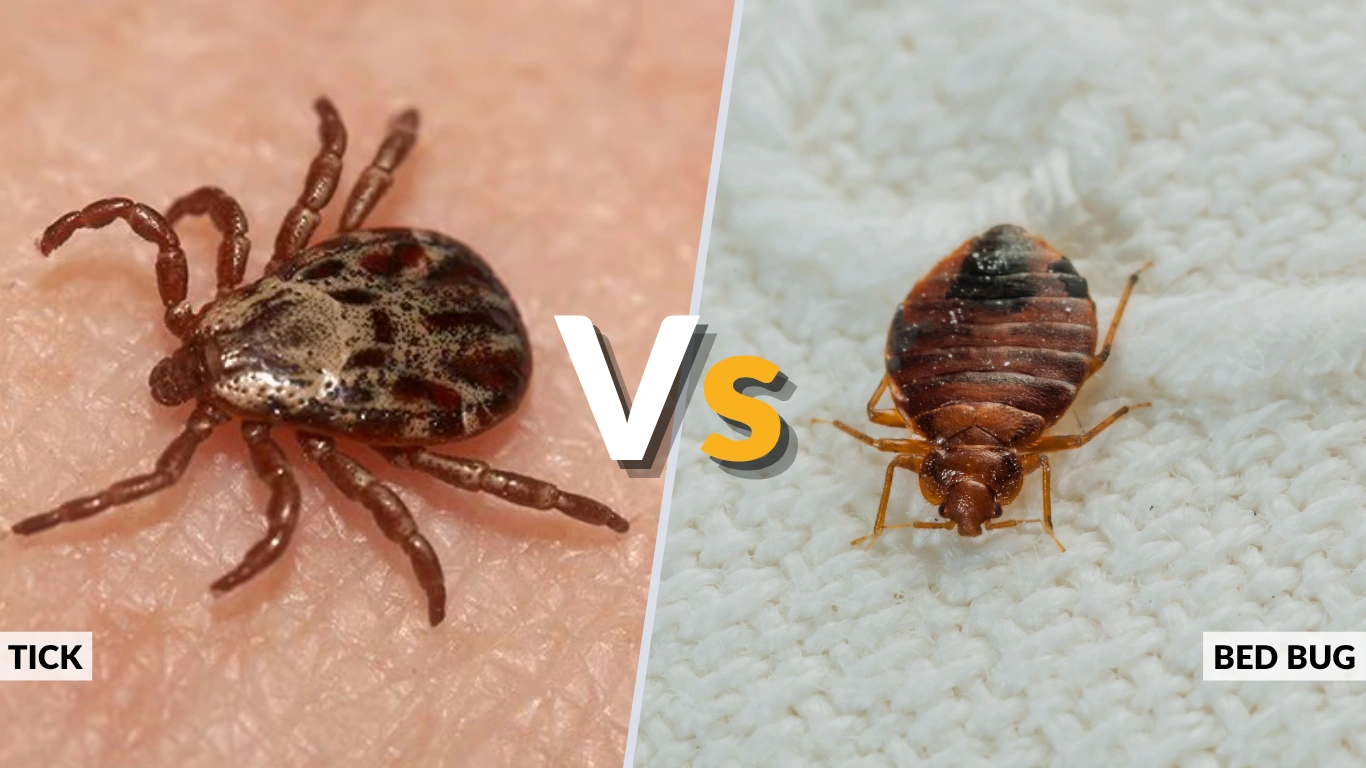
Distinguishing between ticks and bed bugs is essential for protecting your home and health. Although they are both small, blood-feeding pests, they behave very differently and pose very different risks. Many people confuse one for the other because their bites can look similar, and both tend to hide well. This guide explains how to identify each pest, how their bites differ, where they live, and how to tell which one you’re dealing with.
Understanding the Basics – Tick vs Bed Bug

What Are Bed Bugs?
Bed bugs are small, flat, oval-shaped insects that feed exclusively on human or animal blood. They are nocturnal pests that hide in mattresses, furniture, cracks, and seams. Bed bugs do not fly or jump; they crawl. Their bodies are reddish-brown, and after feeding, they become swollen and more vibrant in color. Bed bugs are indoor pests and can quickly infest bedrooms, couches, and other resting areas.
What Are Ticks?
Ticks are arachnids, meaning they are more closely related to spiders than insects. They have eight legs, a hard outer shell, and a rounder body shape. Ticks live outdoors in grassy or wooded areas and attach themselves to passing humans or animals. Once they latch on, they embed their mouthparts into the skin and feed for several hours or even days. Some ticks carry dangerous diseases, making proper identification extremely important.
Physical Differences Between Ticks and Bed Bugs
Shape, Color, and Body Structure
The most noticeable difference between the two is their body shape:
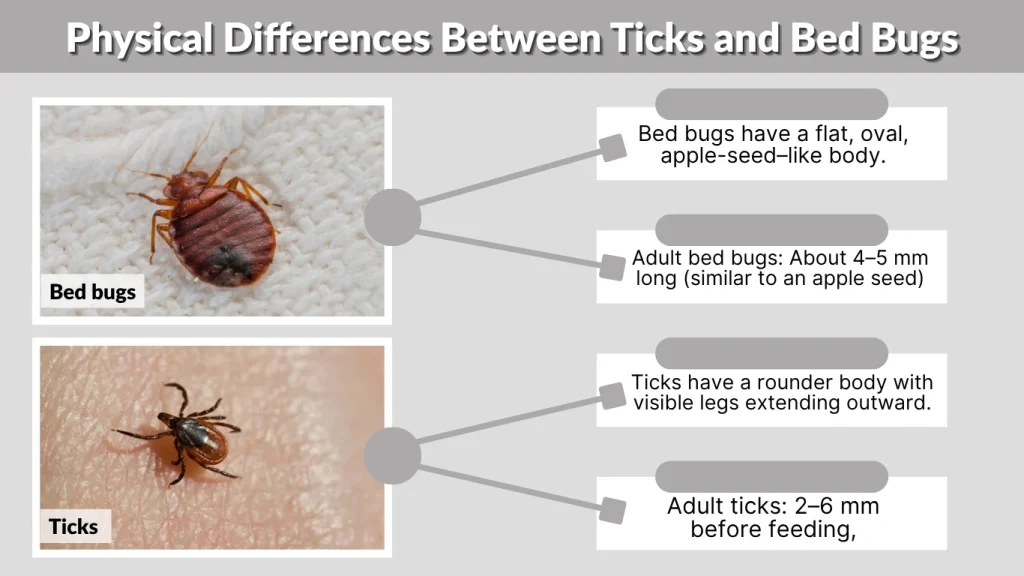
- Bed bugs have a flat, oval, apple-seed–like body. They appear wider and flatter before feeding.
- Ticks have a rounder body with visible legs extending outward. They have a harder shell and become significantly larger when engorged.
Their coloring also differs. Bed bugs are reddish-brown, while ticks vary by species—some are dark brown, some reddish, and others tan with distinctive markings.
Tick vs Bed Bug Size Comparison
Size varies between species and life stages, but general ranges include:
- Adult bed bugs: About 4–5 mm long (similar to an apple seed)
- Adult ticks: 2–6 mm before feeding, but expand dramatically after feeding
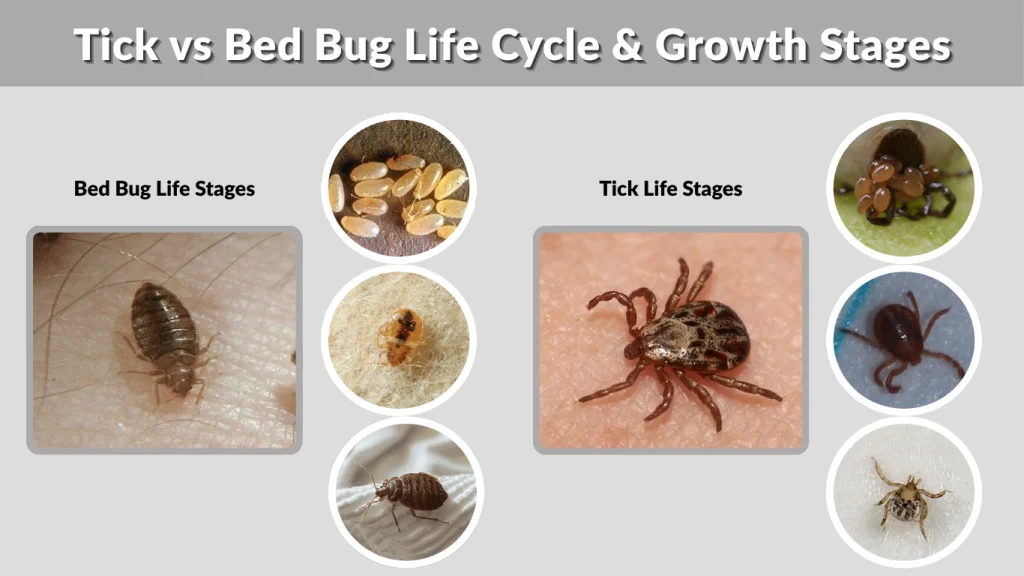
- Baby bed bugs (nymphs): 1–3 mm, pale or translucent
- Baby ticks (larvae or “seed ticks”): pinhead-sized and can be mistaken for specks of dust
Ticks have several species, such as deer ticks, dog ticks, lone star ticks, and brown ticks, each with slightly different appearances. Bed bugs have one main species that infests homes, making them easier to identify visually.
Movement and Behavior
Bed bugs move slower and crawl deliberately. They hide during the day and come out at night to feed.
Ticks are more stationary until they latch onto a host; when they move, it’s slower but purposeful. Ticks do not hide in beds—they wait outdoors on tall grass, leaves, or bushes and climb onto passing hosts.
Life Cycle & Growth Stages
Bed Bug Life Stages
Bed bugs go through a simple life cycle: egg → nymph (five stages) → adult. They require a blood meal to molt into each stage. Nymphs are smaller and lighter in color, making them harder to see. Bed bugs can live for months without feeding, allowing infestations to persist unnoticed.
Tick Life Stages
Ticks have four distinct life stages: egg → larva → nymph → adult. Each stage requires a blood meal from a host. Ticks prefer animal hosts but can feed on humans if contact occurs. Their life cycle can last up to three years depending on species, environment, and food availability.
Tick vs Bed Bug Development Differences
- Bed bugs live entirely indoors and complete their entire life cycle inside your home.
- Ticks develop outdoors and only come indoors accidentally—usually on pets or clothing.
- Ticks feed for longer periods (hours or days), while bed bugs feed for only about 3–10 minutes.
Bite Identification – Tick Bites vs Bed Bug Bites
What Bed Bug Bites Look Like
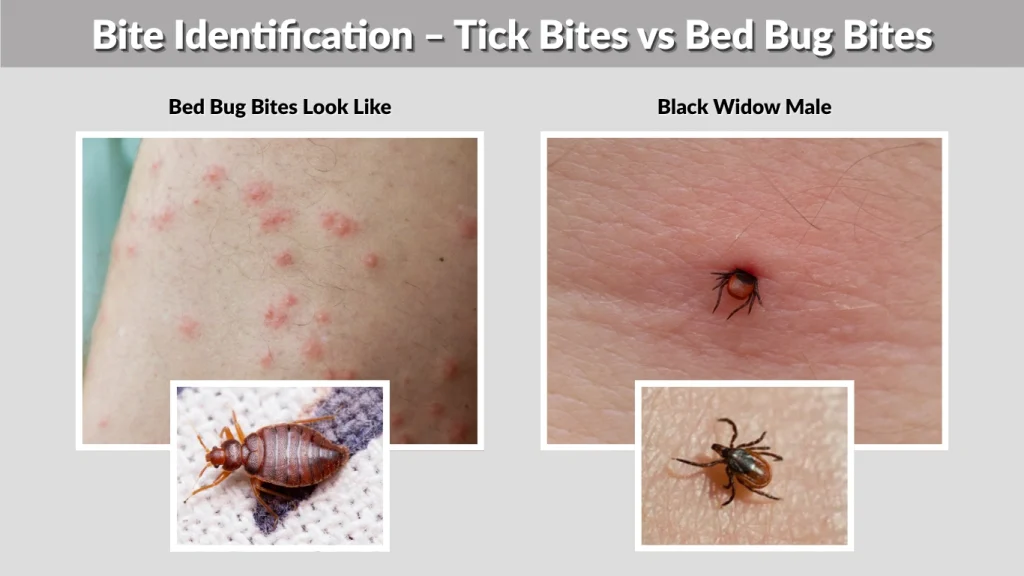
Bed bug bites typically appear in small clusters or lines. They are red, itchy, and often found on exposed skin areas such as arms, neck, hands, and legs. Bed bug bites are painless at first but become itchy after several hours. They rarely spread disease, but scratching can cause infection.
What Tick Bites Look Like
Tick bites usually appear as a single mark where the tick attached itself. A tick may remain embedded in the skin for hours or days. Some people develop swelling or redness around the bite. In some cases, a bullseye rash may form, which is an early sign of Lyme disease and requires immediate medical attention.
Bed Bug Bites vs Tick Bites (Side-by-Side)
- Bed bugs: clusters, lines, intense itching
- Ticks: single bite, attached tick present, potential rash
- Bed bugs: painless initially
- Ticks: sometimes painful after removal
- Ticks: can transmit serious diseases
- Bed bugs: cause itching and irritation but no diseases
Habitat & Where You’ll Find Them
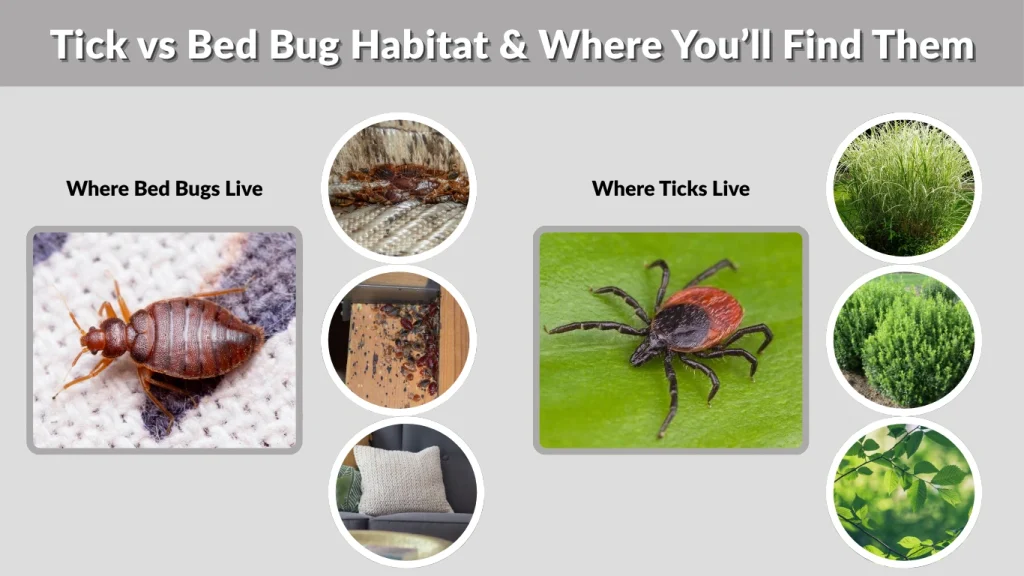
Where Bed Bugs Live
Bed bugs live exclusively indoors. Their survival depends on close proximity to human hosts, so they hide near beds, couches, chairs, and resting areas. Common hiding places include:
- Mattress seams and tags
- Bed frames and headboards
- Couch cushions and fabric folds
- Baseboards, cracks, and wall crevices
- Behind picture frames and outlet covers
Because they hide so well, infestations often go unnoticed until bites become frequent.
Where Ticks Live
Ticks are outdoor pests. They do not infest homes in the same way bed bugs do. Instead, they wait on:
- Tall grasses
- Bushes
- Leaves
- Wooded areas
- Fields and parks
Ticks attach to pets, wildlife, or humans passing by. Once indoors, they may crawl off a host, but they do not reproduce or colonize inside homes.
Signs You’re Dealing With Ticks vs Bed Bugs
You may be dealing with bed bugs if:
- You find black fecal stains on bedding
- You observe shed skins
- You wake up with clusters of bites
- You spot small reddish-brown bugs near furniture
You may be dealing with ticks if:
- You recently spent time outdoors
- You find a tick attached to skin or a pet
- You notice a single irritated bite
- You find ticks crawling on clothing or hair
Behavior and Feeding Patterns

How Bed Bugs Feed
Bed bugs feed at night while you sleep. They insert a long beak-like mouthpart into the skin and feed for 5–10 minutes. Their saliva contains an anesthetic that numbs the bite area, preventing the victim from feeling it immediately. They hide after feeding and typically bite multiple times in one session.
How Ticks Feed
Ticks embed their mouthparts into the host’s skin and can remain attached for hours or days. They become engorged as they feed, sometimes doubling in size. Removing a tick requires care to avoid leaving the head embedded in the skin. Ticks transmit a variety of diseases through this extended feeding process.
Why People Get Confused: Similarities Explained
Both pests:
- Feed on blood
- Cause red bite marks
- Are small and hard to spot
- Can appear after traveling or outdoor trips
However, their behavior, danger level, and habitats are very different.
Pictures: Tick vs Bed Bug (Visual Guide)
(Description for when adding images to your article)
Side-by-Side Body Comparison
Show a flat, oval bed bug next to a round, hard-shelled tick. Emphasize leg count, shell texture, and color differences.
Side-by-Side Bite Comparison
Include clustered bed bug bites vs. a single irritated tick bite.
Adult vs Nymph Stages
Show how baby ticks (seed ticks) differ from bed bug nymphs.
Species Comparisons
Images of deer ticks, dog ticks, lone star ticks next to bed bugs offer additional clarity.
Health Risks – Which Is More Dangerous?
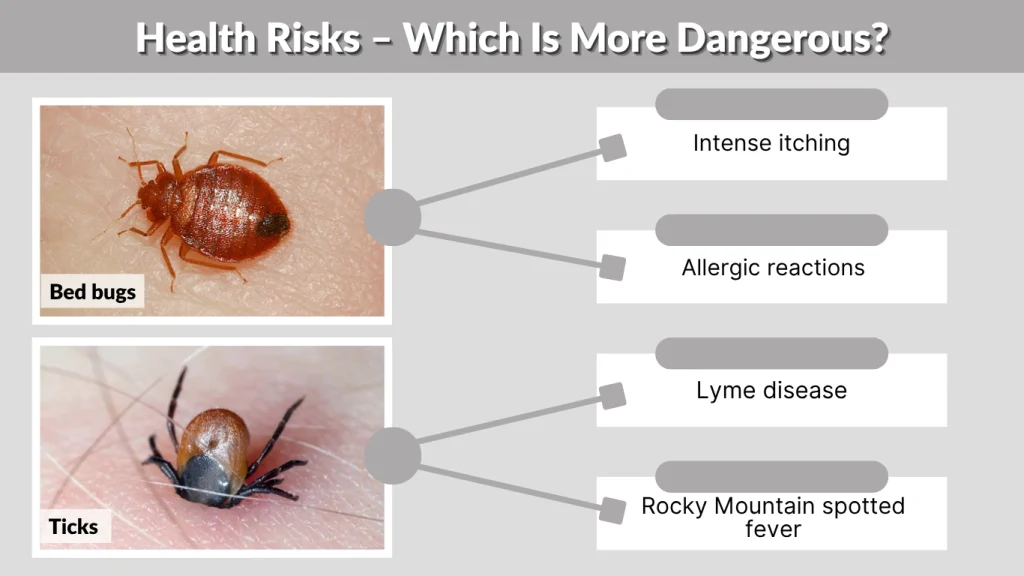
Tick Disease Risks
Ticks can transmit serious diseases including:
- Lyme disease
- Rocky Mountain spotted fever
- Anaplasmosis
- Babesiosis
- Ehrlichiosis
Symptoms may include fever, rash, fatigue, and muscle aches. Lyme disease can become chronic if not treated early.
Bed Bug Health Effects
Bed bugs do not transmit diseases. However, they can cause:
- Intense itching
- Allergic reactions
- Skin infections from scratching
- Anxiety, insomnia, and stress
While bed bugs are unpleasant and disruptive, they are not dangerous in the same way ticks are.
Overall Danger Comparison
Ticks pose a much greater medical threat due to disease transmission. Bed bugs are a nuisance and can cause emotional distress, but they do not spread infectious diseases.
How to Tell If You Have Ticks or Bed Bugs
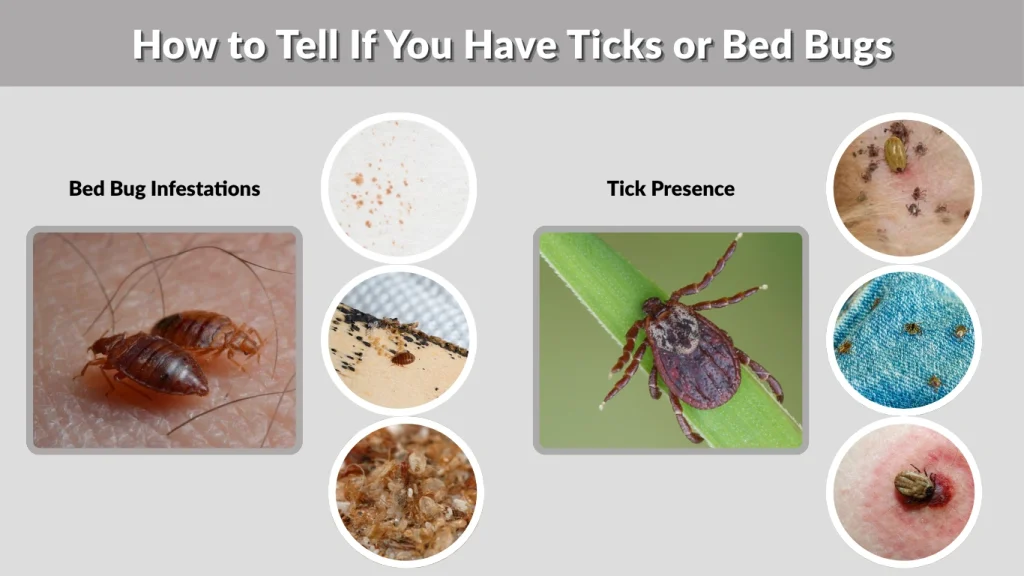
Identifying Bed Bug Infestations
Common signs include:
- Rust-colored stains on sheets
- Tiny black droppings
- Molted skins
- Musty odor in severe cases
- Bugs hiding in seams and cracks
Identifying Tick Presence
Ticks often appear:
- On pets’ fur
- On clothing after outdoor exposure
- Attached to skin
- Crawling on floors or walls after dropping off pets
Ticks are usually found individually, not in clusters like bed bugs.
Practical At-Home Identification Tips
- Count the legs: ticks have 8, bed bugs have 6
- Examine the body shape: ticks are rounder and harder
- Check the location: outdoors vs. beds and couches
- Note the bite pattern: single vs. clusters
How to Get Rid of Ticks vs Bed Bugs
Removing Ticks Safely
To remove a tick:
- Use fine-tipped tweezers
- Pull upward slowly and steadily
- Clean the bite area with alcohol or soap
- Monitor for signs of infection or rash
- Save the tick in a container for possible lab testing
Avoid crushing, burning, or twisting the tick.
Eliminating Bed Bugs
Bed bug removal requires a more detailed approach:
- Wash bedding and clothes on high heat
- Vacuum mattresses, carpets, and cracks frequently
- Use steam cleaners to kill bugs and eggs
- Apply bed bug encasements to mattresses
- Treat furniture seams and bed frames
- Consider professional heat treatment for large infestations
DIY methods work for small infestations, but severe ones require professionals.
Preventing Future Infestations
To prevent ticks:
- Use tick repellent
- Wear long sleeves in wooded areas
- Check pets regularly
- Keep grass trimmed
To prevent bed bugs:
- Inspect hotel beds when traveling
- Avoid used furniture unless carefully checked
- Reduce clutter around sleeping areas
- Use mattress and box spring protectors
Final Comparison Chart
| Feature | Bed Bug | Tick |
| Body Type | Flat, oval | Round, hard shell |
| Legs | 6 | 8 |
| Color | Reddish-brown | Varies by species |
| Habitat | Indoors (beds, furniture) | Outdoors (grass, woods) |
| Bite Pattern | Clusters or lines | Single bite with attached tick |
| Disease Risk | Low | High |
| Feeding Time | 5–10 minutes | Hours to days |
| Movement | Slow crawl | Latches onto hosts |
| Infestation | Common in homes | Rare indoors |
FAQs
How can I quickly tell the difference between a tick and a bed bug?
The fastest way is to check the number of legs and body shape. Bed bugs have six legs and a flat, oval body, while ticks have eight legs and a round, hard shell. Bed bugs are indoor pests, whereas ticks are usually picked up outdoors from grass, bushes, or pets.
Do tick bites look different from bed bug bites?
Yes. Bed bug bites appear in clusters or lines and are very itchy. Tick bites are usually single bites with the tick still attached or a small raised bump afterward. Some tick bites produce a bullseye rash, which may indicate Lyme disease and requires immediate medical attention.
Are bed bugs or ticks more dangerous?
Ticks pose a far greater health risk. They can transmit Lyme disease, Rocky Mountain spotted fever, and several other illnesses. Bed bugs do not spread diseases but cause itching, stress, and discomfort. While both are problems, ticks require more urgent medical concern.
Can ticks infest a home the same way bed bugs do?
No. Bed bugs can infest an entire home, hiding in furniture, mattresses, and cracks. Ticks cannot reproduce or establish colonies indoors. If a tick is found inside, it usually arrived on a pet, clothing, or a person after outdoor exposure and doesn’t multiply indoors.
Should I call a professional for ticks or bed bugs?
For ticks, professional help is only necessary if they are spreading through your yard or appearing frequently on pets. For bed bugs, professional extermination is often recommended because infestations spread quickly and are difficult to eliminate using DIY methods alone.
