
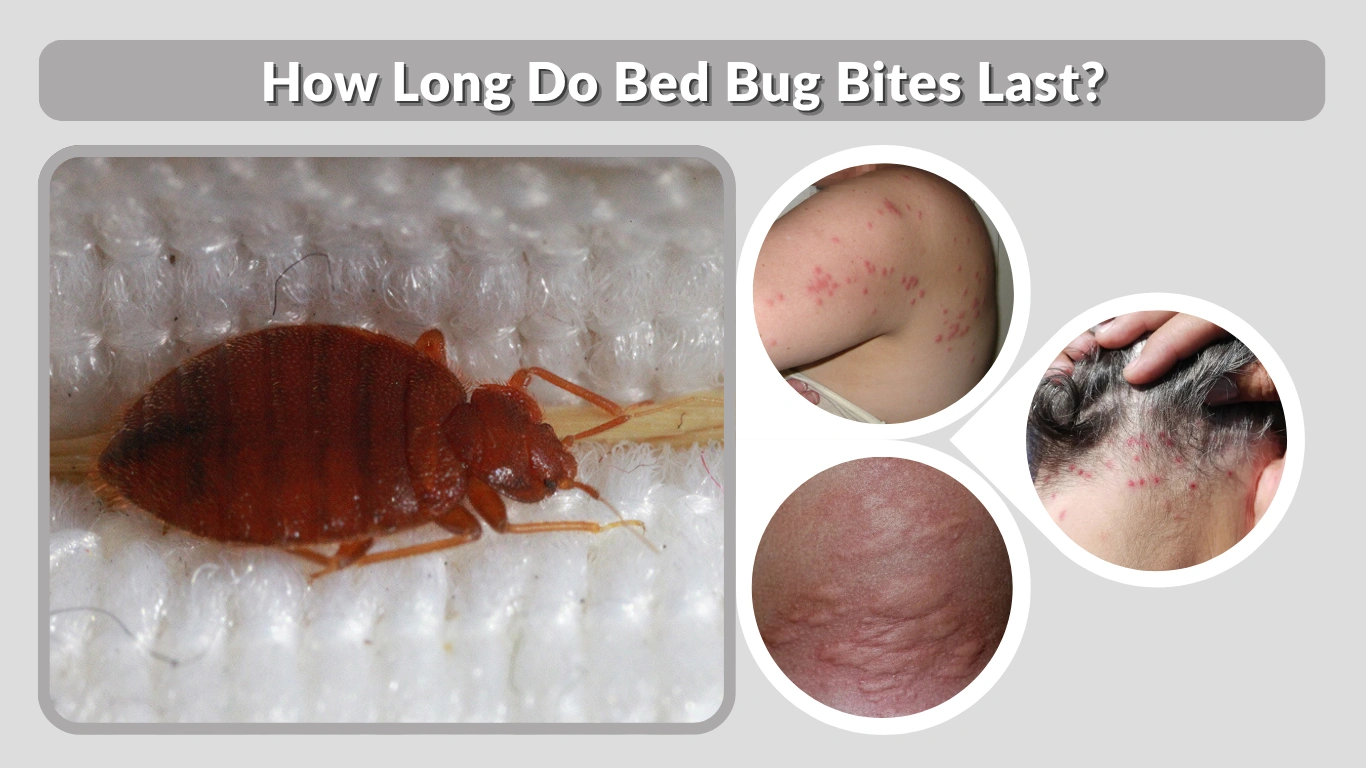
Bed bug bites are one of the most frustrating and lingering effects of a bed bug infestation. For some people, the bites disappear within a few days, while others experience itching, redness, and marks that last for weeks. Understanding how long bed bug bites last, why they persist, and what affects the healing time can help you manage the symptoms more effectively. This first half of the article explains the biology behind the bites, how long they typically remain on the skin, and what symptoms you can expect.
Understanding Bed Bug Bites
Bed bug bites start with the feeding process. Bed bugs use a long, beak-like mouthpart to pierce the skin and inject a small amount of saliva. This saliva prevents blood clotting and numbs the skin, which is why most people do not feel the bite when it happens. The body reacts to this saliva differently depending on sensitivity, and that reaction determines how long the bite remains.
What Causes a Bed Bug Bite
During feeding, bed bugs inject anticoagulants and anesthetics into the skin. These substances allow them to feed unnoticed but also trigger an immune response in many people. The red bumps, itching, and swelling are your body’s reaction—not the bite itself. Some people show immediate symptoms, while others develop delayed reactions that appear hours or even days later.
Symptoms of Bed Bug Bites
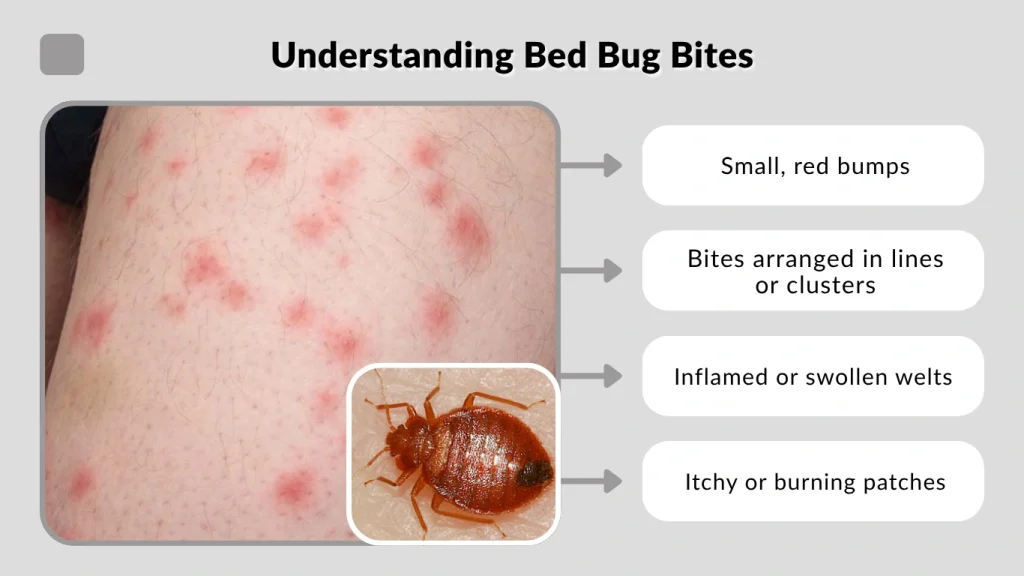
Bed bug bites often appear as:
- Small, red bumps
- Bites arranged in lines or clusters
- Inflamed or swollen welts
- Itchy or burning patches
- Raised marks that may resemble mosquito bites
Because everyone reacts differently, bite duration varies widely from person to person.
How Long Do Bed Bug Bites Usually Last?
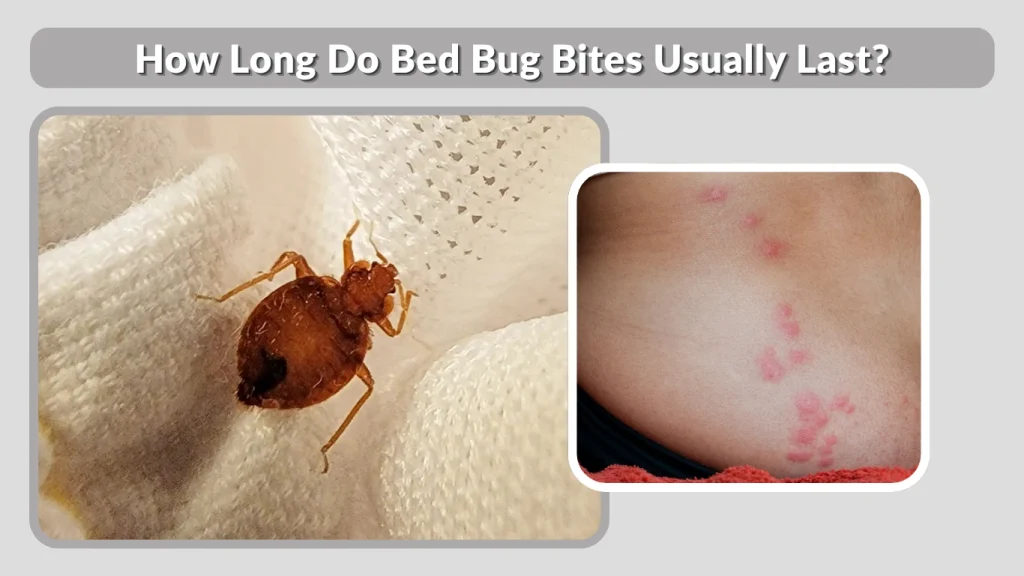
The duration of bed bug bites depends largely on the individual’s immune response. For most people, bites last between 3 and 14 days, but the exact duration can vary.
Typical Duration for Most People
On average:
- Mild reactions last 3–5 days
- Moderate reactions last around 7–10 days
- Strong reactions may last 2 weeks or longer
Some individuals may barely show marks at all, while others experience intense itching and welts that linger.
Factors That Influence Healing Time
Several key factors determine how long bites remain visible:
- Skin sensitivity: Sensitive skin may stay red or swollen longer.
- Immune response: Allergic individuals often experience prolonged swelling and itching.
- Number of bites: Multiple bites can cause widespread irritation that lasts longer.
- Repeated exposure: People bitten frequently may develop stronger reactions over time.
- Scratching habits: Scratching increases inflammation and delays healing.
The more inflamed the bite becomes, the longer it will remain.
How Long Bed Bug Bites Last on Different Parts of the Body
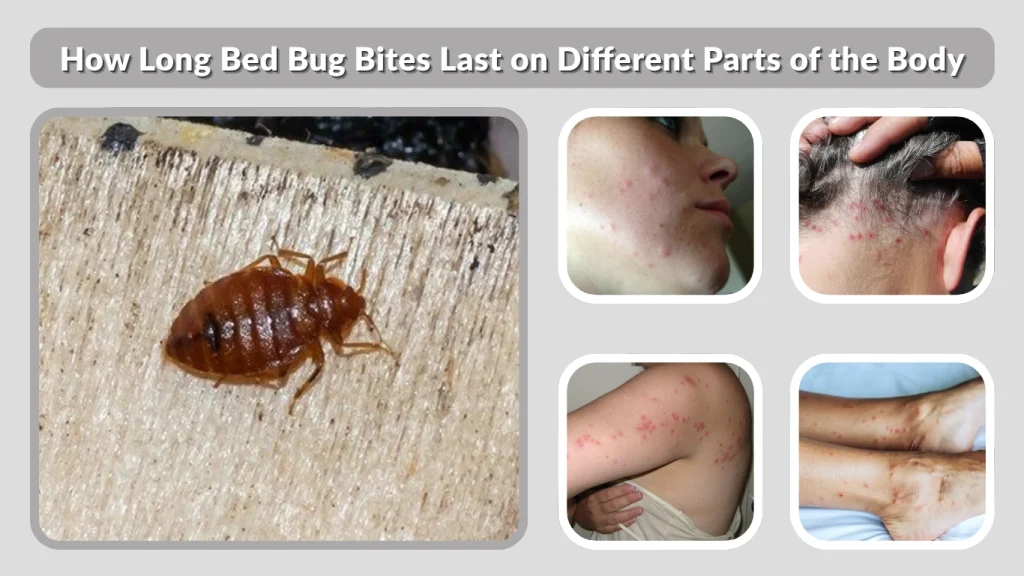
Bed bug bites can appear anywhere, but the healing time differs depending on the body part affected.
Bites on Arms, Legs, and Torso
These areas often heal the fastest because the skin is thicker and less delicate. Typical duration is:
- 3–7 days for mild reactions
- Up to 10 days for stronger reactions
These areas are also less likely to scar unless scratching breaks the skin.
Bites on the Face and Neck
Facial and neck skin is thinner and more exposed, which means:
- Bites tend to swell more
- Redness is more noticeable
- Healing may take 7–14 days
Because these areas are harder to avoid touching, they are more likely to become irritated and take longer to fade.
Why Location Changes Duration
Different parts of the body react differently due to:
- Skin thickness
- Blood flow levels
- Sun exposure (which can darken marks)
- Friction from clothing
- Sweating and skin oils
Locations that experience more friction—like the waistline or areas under tight clothing—often stay irritated longer.
How Long Bed Bug Bite Symptoms Last
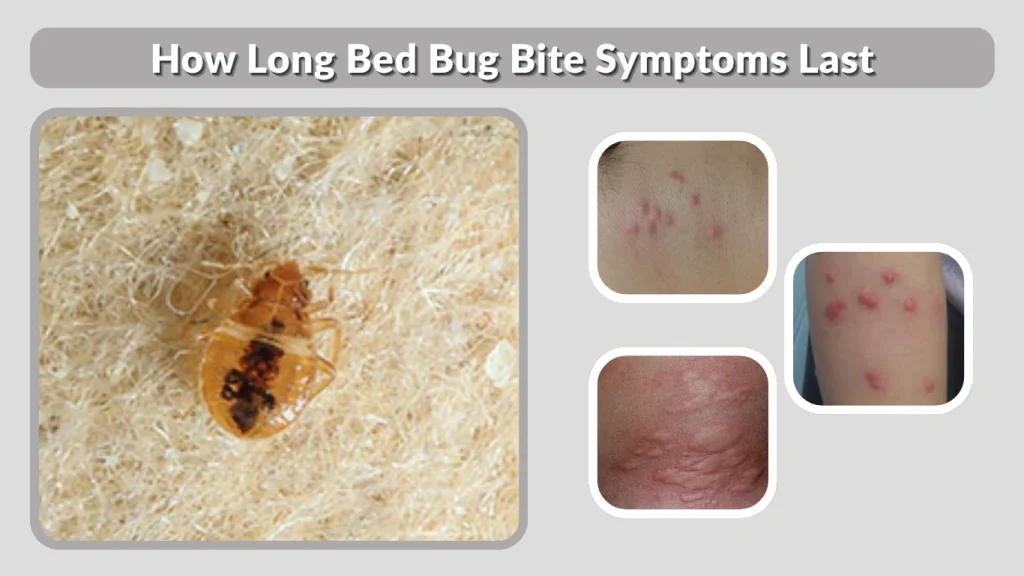
Bed bug bite symptoms often last longer than the visible marks. Even when bumps fade, itching and irritation can continue.
Itching Duration
Bed bug bites commonly itch for:
- 2–4 days in mild cases
- Up to a week in moderate cases
- Up to 2 weeks for allergic reactions
Histamine release in the skin is the main cause of prolonged itching. People with sensitive immune systems may notice itching long after the bump has shrunk.
Redness, Swelling, and Welts
Welts and swelling tend to:
- Peak within the first 24 hours
- Reduce significantly after 48–72 hours
- Fade slowly over several days
Some people develop large, raised welts that linger much longer. These reactions are more common in those with mild skin allergies.
How Long Bite Marks, Welts & Scars Last
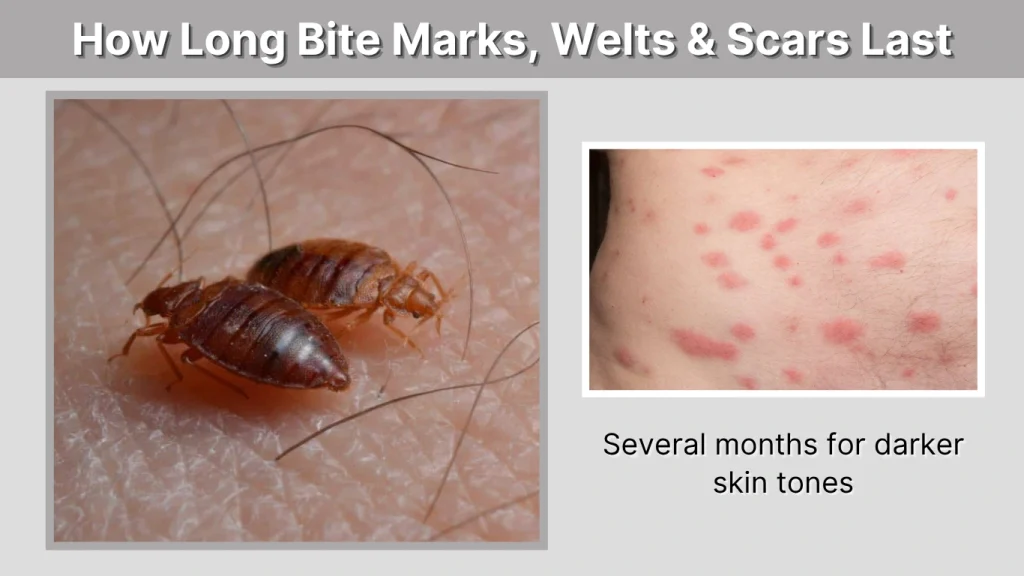
For many people, the visual marks last longer than the bite discomfort.
Red Marks
Small red bumps typically fade within 3–10 days. In some individuals, however, red spots remain longer due to inflammation or repeated scratching.
Bite Scars
Some people develop post-inflammatory hyperpigmentation, which appears as dark spots after the bite heals. These marks can last:
- 2–8 weeks for mild discoloration
- Several months for darker skin tones
- Longer if the bite became infected
When Bite Marks Last Longer Than Normal
Prolonged marks may indicate:
- Skin infection
- Excessive scratching
- A strong allergic reaction
- Delayed healing due to sensitive skin
If a bite remains red, swollen, or painful for more than two weeks, medical advice may be needed.
How Long Bed Bug Bites Last With Treatment
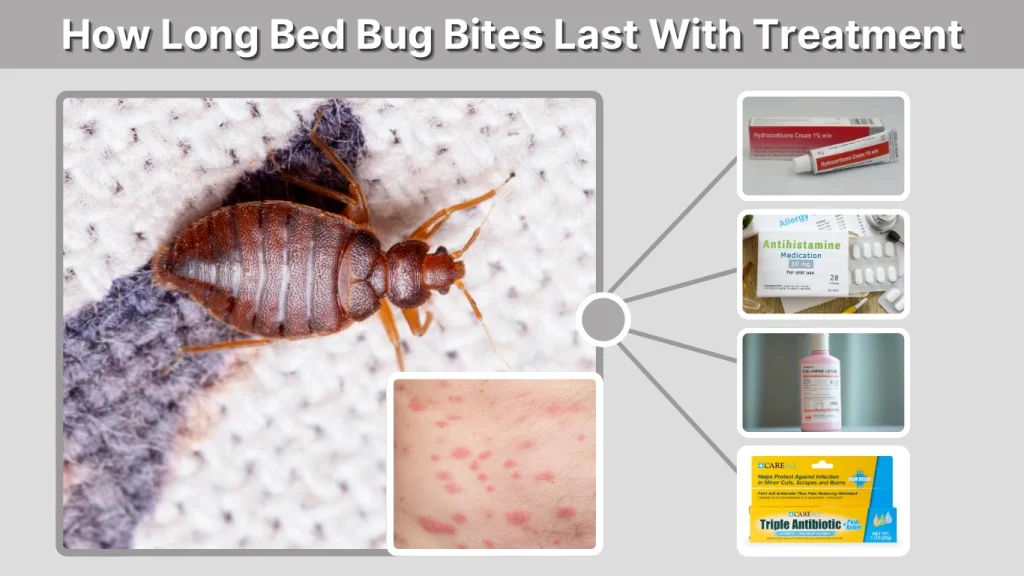
Although bed bug bites often go away on their own, treatment can significantly speed up healing. Most remedies focus on reducing inflammation, easing itching, and preventing infection.
Over-the-Counter Treatments
Several OTC treatments can shorten the duration of bed bug bite symptoms:
- Hydrocortisone cream: Reduces swelling, itching, and redness.
- Oral antihistamines: Limit allergic reactions and decrease itching.
- Calamine lotion: Soothes irritated skin and helps dry welts.
- Antibiotic ointments: Prevent infection if the skin is broken.
- Cold compresses: Reduce inflammation almost immediately.
When used consistently, these treatments help bites fade faster and minimize visible marks.
Home Remedies That Reduce Duration
Natural remedies can also help calm irritation and shorten healing time:
- Aloe vera: Moisturizes and reduces inflammation.
- Oatmeal paste or baths: Calms itching and redness.
- Witch hazel: Acts as a natural anti-inflammatory.
- Coconut oil: Helps reduce itching and prevents bacterial growth.
These remedies support healing while keeping the skin hydrated, which reduces scarring and discoloration.
How Treatment Affects Healing Time
With proper treatment, many people experience:
- Reduced itching within 24–48 hours
- Decreased redness within 2–4 days
- Faster fading of marks within 5–7 days
Without treatment, symptoms commonly last significantly longer.
When Bed Bug Bites Last Longer Than Expected
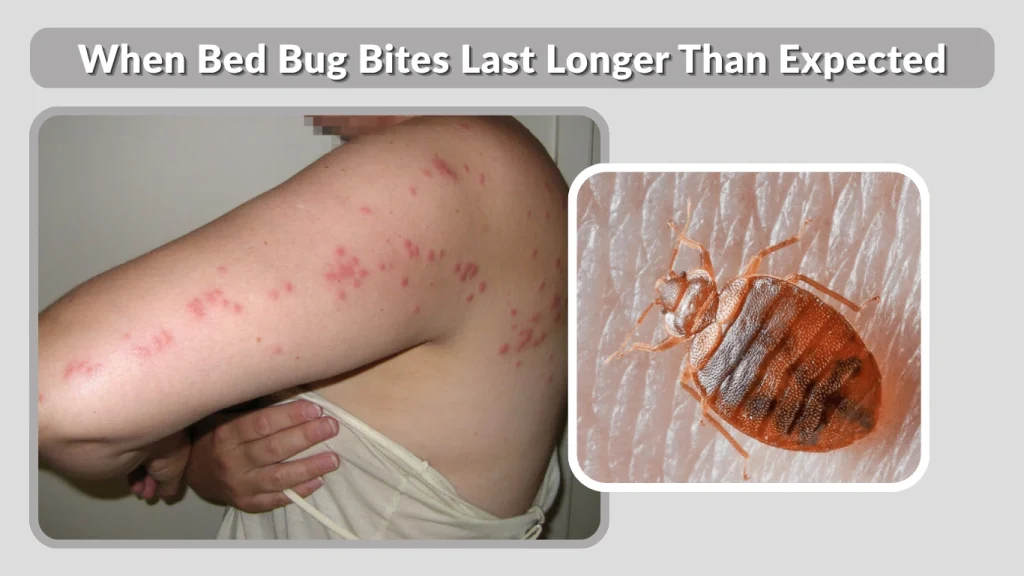
While most bites heal within a week or two, some may linger due to complications or delayed responses.
Signs of Infection
Bed bug bites can become infected if scratched excessively. Signs include:
- Pus or yellow crust
- Spreading redness
- Warmth at the bite site
- Increased pain
- Swelling that does not subside
Infections can make bites last several weeks and may require antibiotics.
Allergic Reactions
Some people experience stronger reactions that prolong healing:
- Large, raised welts
- Intense itching
- Blister-like bumps
- Widespread redness
Severe reactions can last 2–4 weeks and may require prescription medication.
Why Bite Symptoms Keep Appearing
One of the most confusing aspects of bed bug bites is that symptoms sometimes appear even when no new bites occur.
New Bites vs Delayed Reactions
Many people have delayed immune responses, meaning bite marks appear:
- Hours later
- Overnight
- Several days after the actual bite
This delay makes it seem as if new bites keep happening.
Hidden or Growing Infestations
Bites may also continue because:
- Bed bugs are still present but hiding.
- Eggs are hatching into hungry nymphs.
- Bugs are feeding in different areas of the body at night.
If symptoms persist for more than a week, it’s possible the infestation is larger than expected.
Preventing Future Bed Bug Bites
Stopping bites is not only about treating the skin—it also requires eliminating the source.
Steps to Stop Bites Immediately
These quick interventions can reduce the number of bites:
- Wash bedding in hot water
- Dry items at high heat for 30–60 minutes
- Vacuum mattress seams, edges, and floor areas
- Use mattress and box spring encasements
- Place clutter in sealed bags to isolate bugs
These actions won’t eliminate an infestation but help control bites temporarily.
Long-Term Prevention
Permanent prevention requires ending the infestation through:
- Professional heat treatment
- Residual insecticide treatment by pest control
- Sealing cracks and crevices in furniture and walls
- Monitoring traps or interceptors under bed legs
- Regular inspections of bedding, headboards, and furniture
Without eliminating bed bugs completely, bite symptoms will continue appearing.
When to See a Doctor
Although bed bug bites are typically harmless, certain situations require medical attention.
Medical Symptoms That Need Professional Care
You should seek help if you experience:
- Bites that last longer than 2–3 weeks
- Severe or persistent swelling
- Intense itching that interferes with sleep
- Signs of infection
- Fever or flu-like symptoms
- Large, blistering allergic reactions
These symptoms indicate a stronger immune response or secondary infection.
What Doctors Can Prescribe
A doctor may recommend:
- Stronger topical steroids
- Prescription antihistamines
- Antibiotics for infected bites
- Steroid injections for severe swelling
These treatments accelerate healing and reduce long-term marks or scarring.
FAQs
How long do bed bug bites typically last on the skin?
Most bed bug bites last 3–14 days, depending on your skin type, sensitivity, and immune response. Mild reactions fade within a few days, while more sensitive skin can remain irritated longer.
How long does bed bug bite itching last?
Itching usually lasts 2–7 days, but allergic reactions can cause itching for up to two weeks. Proper treatment can reduce itching significantly within 24–48 hours.
Do bed bug bite scars last a long time?
Scars or dark spots from bites, known as post-inflammatory hyperpigmentation, can last weeks to months. People with darker skin tones or those who scratch excessively are more likely to develop lasting marks.
Why do my bed bug bites keep appearing?
New bites may appear due to delayed allergic reactions or because the infestation is ongoing. Bed bugs can remain hidden in furniture, walls, and bedding, causing recurring symptoms.
Do bed bug bites last longer with allergies or sensitive skin?
Yes. People with allergies, eczema, or sensitive skin often experience longer-lasting redness, swelling, and itching, sometimes up to 2–4 weeks.
