

Bed bugs may be tiny, but their presence is anything but unnoticed. Understanding their size is crucial for early detection and control. From eggs to adults, these pests go through several growth stages, each with distinct characteristics. Their size also affects how easily they can hide, how visible they are to the human eye, and even the signs they leave behind.
Bed Bug Size Overview

Adult Bed Bug Size
Adult bed bugs typically measure between 4 to 7 millimeters in length, which is about 3/16 to 1/4 inch. Their flat, oval-shaped bodies allow them to squeeze into tight crevices like mattress seams, furniture cracks, or wall gaps. After feeding, their bodies swell and elongate slightly, appearing darker and more reddish in color.
Comparison to Common Objects
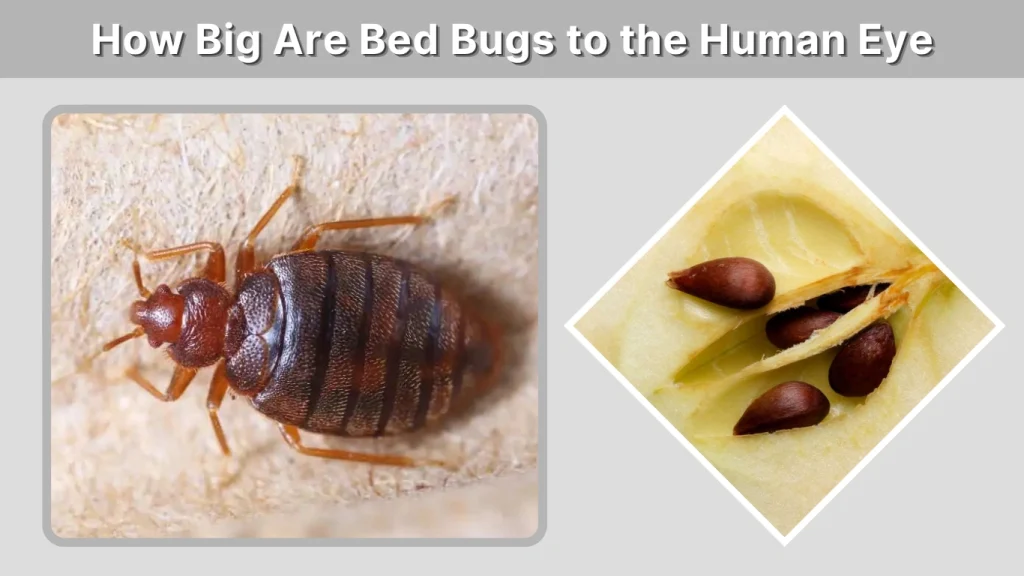
To visualize their size, adult bed bugs are often compared to apple seeds — similar in length and shape, though flatter. When unfed, they appear light brown, but once engorged with blood, they become plumper and deep red. This change in appearance can help you identify them during inspections.
Bed Bug Size by Life Stage
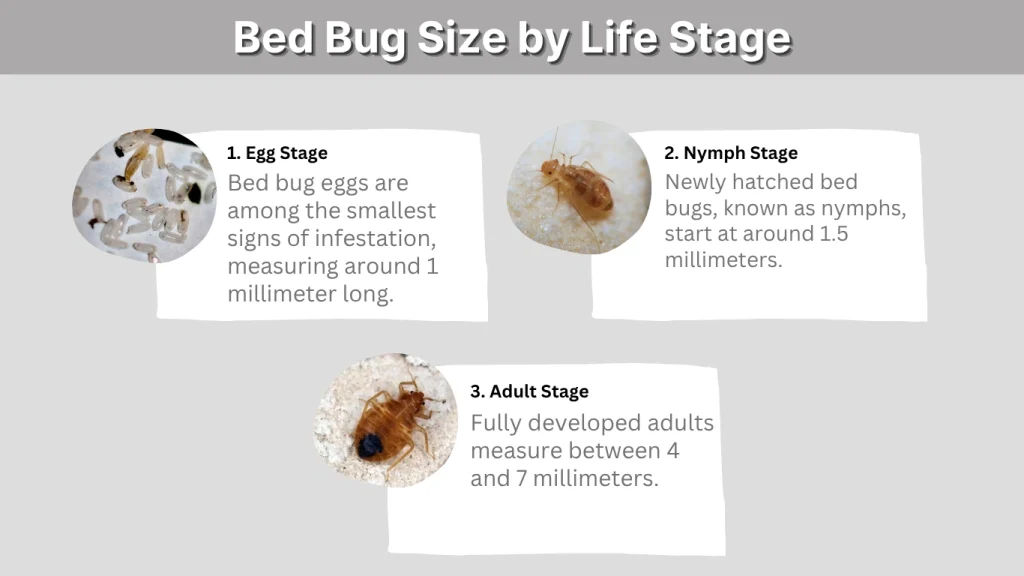
Egg Stage
Bed bug eggs are among the smallest signs of infestation, measuring around 1 millimeter long — about the size of a grain of salt. They are pearly white and have a shiny, sticky coating that helps them adhere to rough surfaces. Female bed bugs lay eggs in clusters, often tucked away in mattress seams, behind baseboards, or under furniture.
Nymph (Baby Bed Bug) Size
Newly hatched bed bugs, known as nymphs, start at around 1.5 millimeters and grow up to 4.5 millimeters before becoming adults. They pass through five molting stages, known as instars. Nymphs are almost transparent until they feed, after which they turn reddish-brown. Because of their tiny size and pale color, spotting them early requires a keen eye and good lighting.
Adult Bed Bug
Fully developed adults measure between 4 and 7 millimeters. Females tend to be slightly larger than males. Their bodies are oval and flattened when hungry, expanding noticeably after feeding. Despite their small size, adults are visible to the naked eye and often the most easily identified stage in an infestation.
Bed Bug Size Compared to Other Insects

| Insect | Average Size | Color | Notable Difference |
| Bed Bug | 4–7 mm | Reddish Brown | Flat, oval body |
| Flea | 1–3 mm | Dark Brown | Narrow body, can jump |
| Tick | 3–8 mm | Brown-Gray | Rounded body, slower movement |
| Cockroach Nymph | 6–12 mm | Tan | Long antennae, fast |
Bed Bugs vs. Fleas
Bed bugs are roughly twice the size of fleas. Fleas are more slender and capable of jumping, while bed bugs crawl. Both feed on blood, but bed bugs bite exposed skin during the night, leaving red, itchy welts in linear or clustered patterns.
Bed Bugs vs. Ticks
Ticks and bed bugs may be similar in size, but ticks attach themselves to animals or humans outdoors, while bed bugs prefer indoor hiding spots. Bed bugs have flat, oval bodies, while ticks are rounder and expand dramatically after feeding.
How Big Are Bed Bug Bites

Appearance and Size on Humans
Bed bug bites are typically 2 to 5 millimeters in diameter — small, red, and often raised. They may appear similar to mosquito bites but tend to last longer and itch more intensely. The bites are often found on exposed areas like the arms, legs, neck, and face.
Patterns of Bites
Unlike other insects, bed bugs tend to bite multiple times in a line or cluster, commonly called “breakfast, lunch, and dinner” patterns. These bite marks are a clear sign of infestation when paired with other evidence such as blood stains or fecal spots.
Other Physical Signs and Their Sizes
Bed Bug Eggs and Casings
Eggs measure around 1 millimeter, while hatched shells, known as casings or exoskeletons, are slightly larger, translucent, and tan-colored. These are often found near hiding spots, indicating an active or recent infestation.
Bed Bug Droppings and Stains
Bed bug droppings look like tiny black dots, about 1 millimeter in diameter — similar to ground pepper or ink dots. Blood stains, often left behind after a crushed bug or feeding, appear as small reddish smears (1–5 millimeters) on sheets, mattresses, or walls. Their clustered presence near sleeping areas can confirm activity.
How Big Are Bed Bugs to the Human Eye
Naked-Eye Detection
Adult bed bugs are large enough to be seen without magnification. At 4–7 millimeters long, they’re similar in size to an apple seed. However, their ability to hide in small cracks and crevices makes them difficult to spot. Their flat shape allows them to slip into mattress seams, furniture joints, and behind wall plates — areas where they remain hidden during the day.
Nymphs and eggs, on the other hand, are much smaller and lighter in color. This makes them nearly invisible against pale surfaces like sheets or wood frames. Early detection requires careful inspection under bright lighting or using a magnifying tool.
Using Tools for Better Detection
A magnifying glass or phone camera zoom can make it easier to identify smaller life stages. Shine a flashlight along mattress seams, behind headboards, and around electrical outlets. Tiny black specks (fecal stains) or shed skins can often confirm bed bug presence even before live bugs are visible.
Regional and Environmental Variations
Bed Bugs in the UK and Australia
Bed bugs are globally consistent in size, with minimal variation. In both the UK and Australia, adult bed bugs average 5–6 millimeters in length. However, environmental conditions affect their growth rate. Warmer climates allow bed bugs to develop faster, reaching adulthood in under five weeks, while cooler temperatures slow their progression.
Common Hiding and Reproduction Habits
Regardless of region, bed bugs favor warm, dark environments near human resting spots. They commonly inhabit hotel rooms, dormitories, and apartments. Understanding their small size helps travelers inspect luggage, bedding, and furniture before bringing them home.
How Big Are Bed Bugs When Feeding
Swelling After a Blood Meal
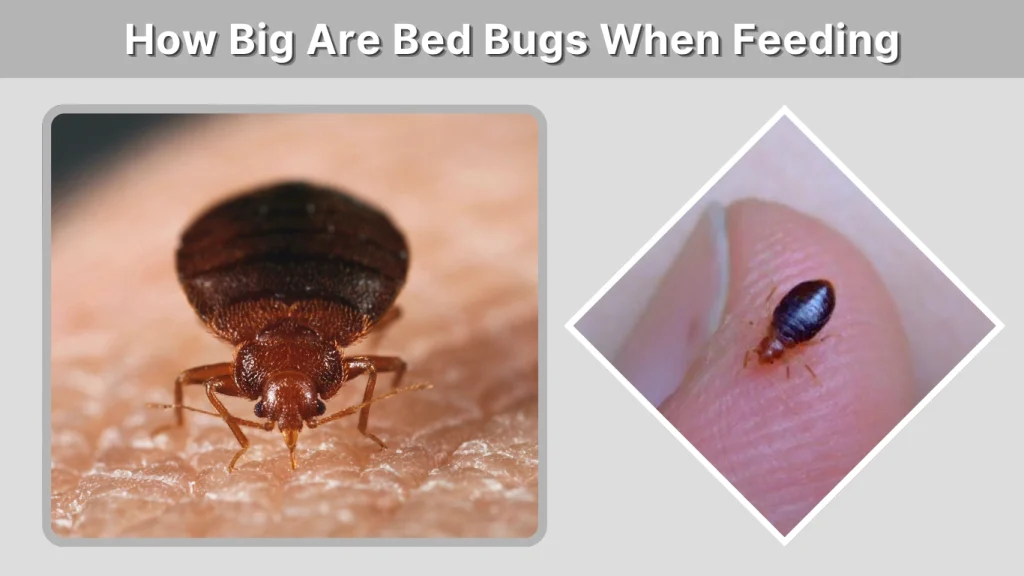
When bed bugs feed, they expand dramatically. An unfed adult appears flat and oval, but after feeding, its body swells by up to 50% in length and width, turning dark red or brown. The abdomen stretches to accommodate blood, making the insect more cylindrical and easier to spot.
After feeding, they retreat to their hiding places to digest the meal over several days. During this time, they become less mobile and appear sluggish.
Feeding Duration and Visibility
A typical feeding session lasts 5 to 10 minutes, depending on the host’s movement. Because they are nocturnal, bites often go unnoticed until itching begins. Observing the swollen form of a recently fed bed bug can help confirm infestation severity.
FAQs
How big are bed bug eggs?
Bed bug eggs are 1 millimeter long — roughly the size of a pinhead. They’re white, oval-shaped, and have a sticky coating that helps them cling to rough surfaces. You’ll often find them hidden in mattress seams, behind baseboards, or within cracks in furniture.
Can you see bed bugs with the human eye?
Yes, adult bed bugs are clearly visible to the human eye. They measure around 4–7 millimeters, similar to an apple seed. However, baby bed bugs (nymphs) and eggs are much smaller and harder to see, requiring close inspection or magnification for proper identification.
How big are bed bug bites compared to mosquito bites?
Bed bug bites are generally 2–5 millimeters wide, making them slightly smaller but often redder and more clustered than mosquito bites. They tend to appear in straight lines or groups, while mosquito bites are more scattered. Bed bug bites also cause prolonged itching and irritation.
How big are bed bug droppings and stains?
Bed bug droppings resemble tiny black ink dots about 1 millimeter in size, often appearing in groups. Blood stains from crushed bugs are larger, typically 2–5 millimeters, and appear as reddish or brown smears on sheets, mattresses, or clothing near sleeping areas.
How big are baby bed bugs when they hatch?
Newly hatched bed bugs, or nymphs, are 1.5 millimeters long and almost transparent. After their first blood meal, they turn reddish-brown and grow steadily through five molting stages before reaching adulthood. Their small, translucent bodies make early detection extremely challenging.
