

Bed bug bites can look different depending on a person’s skin tone, sensitivity, and the stage of healing. These tiny insects feed on human blood while you sleep, often leaving clusters of itchy red marks. Because their bites resemble those of mosquitoes or fleas, viewing real images and knowing the subtle differences helps in proper identification and timely treatment.
What Bed Bug Bites Look Like
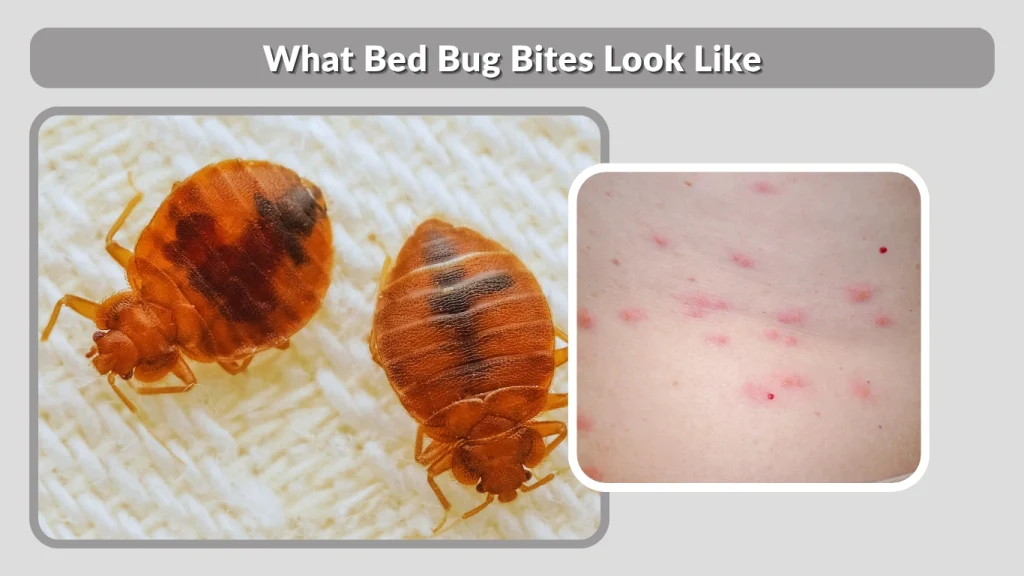
Typical Appearance
Bed bug bites usually appear as small, red, raised welts with a darker center. They tend to form in clusters or straight lines, often referred to as the “breakfast, lunch, and dinner” pattern. The skin may feel warm or slightly swollen, and itching often intensifies overnight. In mild reactions, the redness fades within a few days, while stronger allergic responses can linger for weeks.
Close-Up Image Description
In close-up photos, you’ll see grouped welts, sometimes surrounded by pink or reddish halos. Early-stage bites appear flat and pale pink, but as inflammation builds, they darken in color. High-quality images often reveal the uniform spacing of the bites—one of the strongest clues of a bed bug attack compared to random mosquito bites.
Bed Bug Bites on Different Body Areas
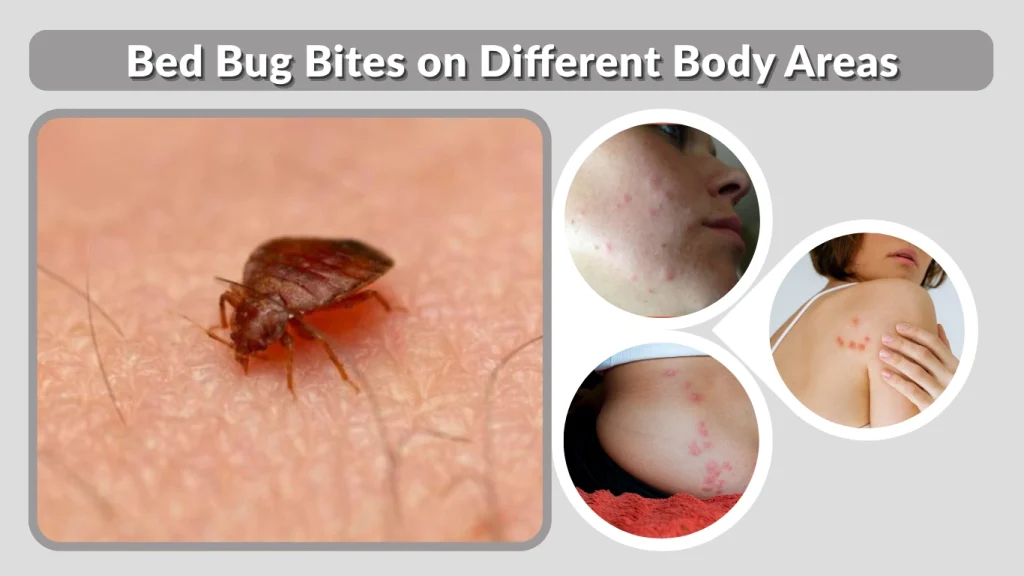
Arms, Legs, and Back
The arms and legs are common targets because they’re exposed while sleeping. Images of bed bug bites on the arms show small, raised red dots arranged in lines or patches. On the legs, bites may be larger due to thicker skin and delayed healing. Bites on the back often appear scattered or grouped along pressure points where your body touches the bed.
Face, Neck, and Scalp
Bites on the face and neck are especially noticeable and can cause more irritation. On sensitive areas like the scalp or forehead, bed bug bites may cause small pustules or scabs as the skin reacts strongly. In images, these bites appear more swollen than those on limbs, sometimes giving the appearance of a mild rash.
Hands, Feet, and Stomach
Bed bug bites on hands and feet often show up as circular, red welts with a clear center. Because these areas have thinner skin, they may itch more. Photos of stomach bites usually reveal tight clusters following clothing or bedding lines, highlighting how bed bugs often feed in rows.
Bed Bug Bites on Different Skin Tones
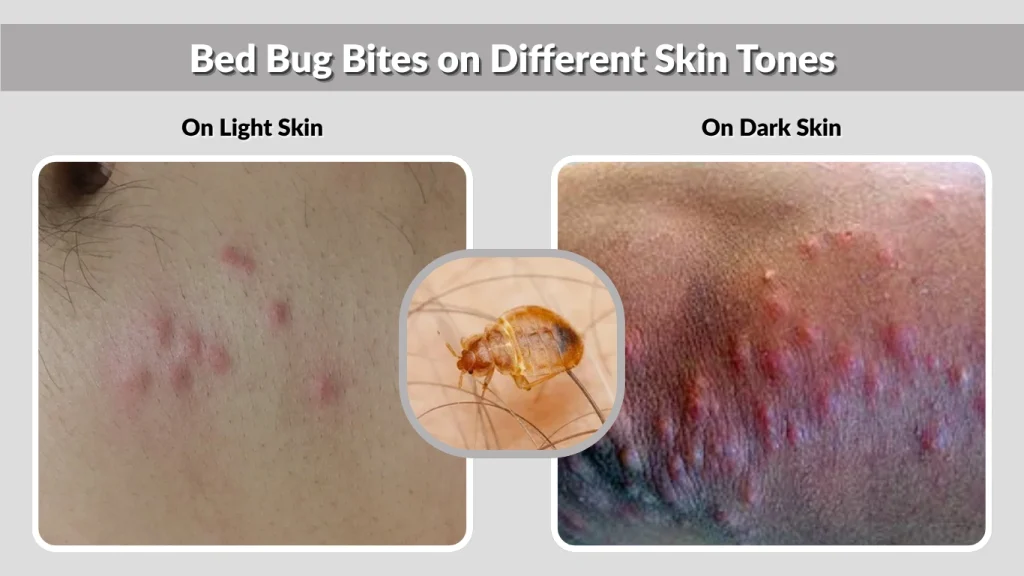
On Light Skin
Images of bed bug bites on lighter skin show bright red or pink marks with slightly raised edges. In some people, a pale ring surrounds the bite center, similar to a small hive. Swelling and redness are easy to spot, and the healing phase often includes dry patches or scabbing.
On Dark Skin
On darker complexions, bed bug bites can look brown, purple, or even grayish instead of bright red. The surrounding area may show less visible swelling, but itching and post-inflammatory pigmentation last longer. In images, darker skin tones often show bite marks that remain visible for several weeks, sometimes appearing as faint dark spots after healing.
Visual Comparison
Side-by-side images show a clear contrast: red, inflamed welts on light skin versus deeper-toned or purplish marks on dark skin. Recognizing this difference prevents confusion with acne or allergic rashes, which can appear similar but heal more quickly.
Bed Bug Bites on Children and Pets
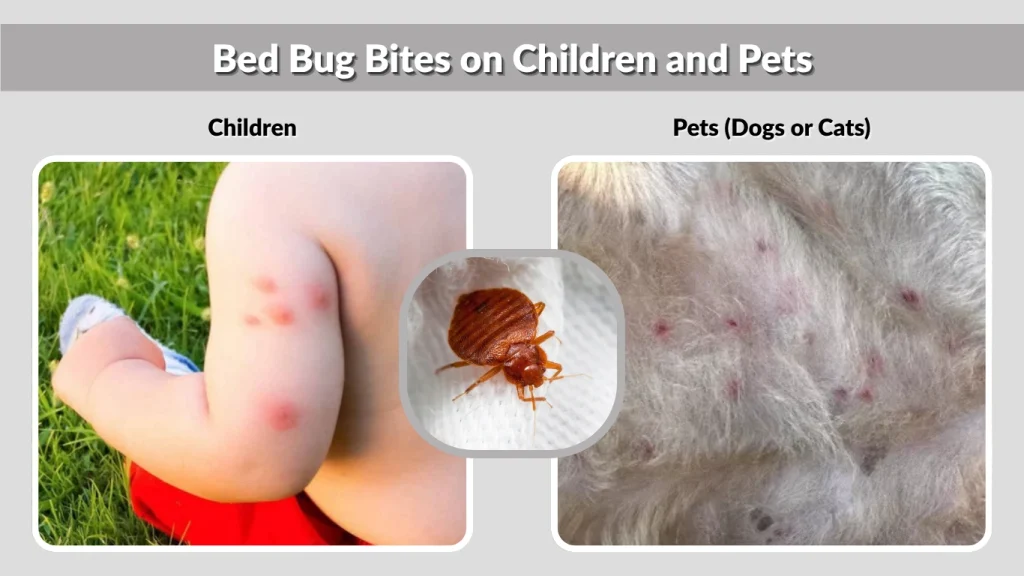
Children
Children’s skin is thinner and more sensitive, making them prone to stronger reactions. In images of bed bug bites on children, you’ll often notice larger welts, swelling, and redness spreading beyond the bite area. Kids may scratch excessively, causing small scabs or secondary infections. Parents should look for grouped bites on arms, neck, and face.
Pets (Dogs or Cats)
While bed bugs prefer humans, they occasionally bite pets. Bed bug bites on dogs appear as small red bumps beneath the fur, especially around the belly, legs, or armpits. Images show dogs scratching or licking these areas, which can lead to fur loss or skin irritation. Regular pet bedding inspection helps detect early infestations.
Infected and Severe Bed Bug Bite Images
Mild vs. Severe Reaction
In mild cases, images display small red welts that fade within a few days. Severe reactions show large swollen areas or blister-like lesions. People allergic to bed bug saliva may experience exaggerated redness and tenderness, sometimes mistaken for hives. Bites may merge into larger patches, giving the impression of a rash.
Allergic Reactions
Photos of allergic responses often show inflamed skin with pronounced swelling. In extreme cases, large red plaques or fluid-filled blisters appear. These reactions occur because of heightened sensitivity to the proteins in bed bug saliva. Medical treatment, such as antihistamines or corticosteroid creams, can reduce these symptoms quickly.
Infected Bites
When bed bug bites are scratched repeatedly, they can become infected. Infected bite images reveal yellowish crusts, oozing pus, and surrounding redness. The area may feel warm and painful to touch. Left untreated, such infections can cause scarring or pigmentation changes. Clean bites gently with mild soap and apply antibiotic cream if infection develops.
Stages of Bed Bug Bites (With Image Progression)
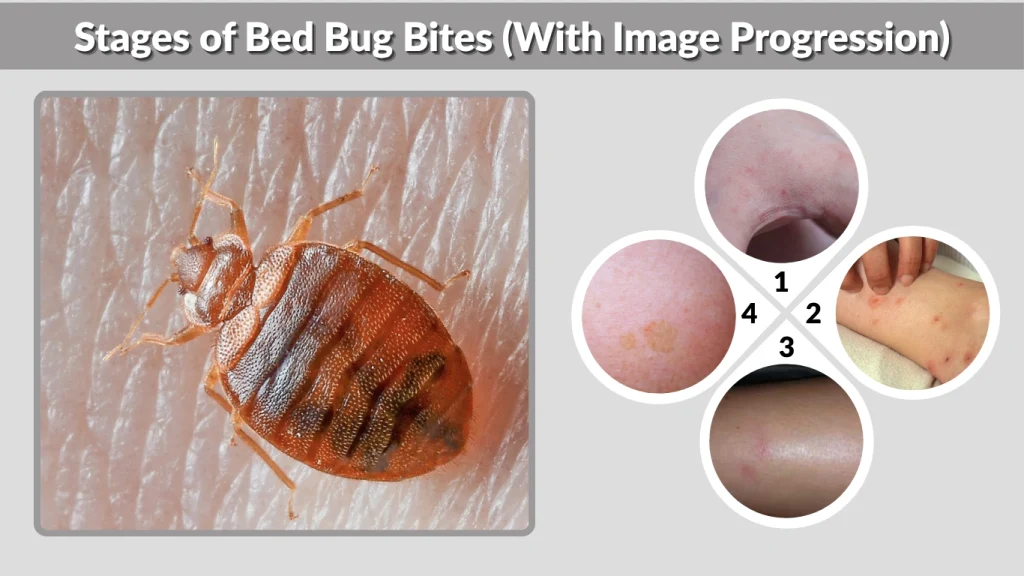
Stage 1: Fresh Bite
Fresh bed bug bites usually appear within hours after feeding. In the earliest images, they show as tiny red dots or pink spots with minimal swelling. Most people don’t feel them immediately because bed bug saliva contains anesthetics that numb the skin. At this stage, the marks are small and easily missed.
Stage 2: Swelling and Itch
After 24 to 48 hours, itching begins as the immune system reacts to the saliva proteins. The bites become raised, warm, and more noticeable in images—especially in clusters or straight lines. This is when most people start scratching, which can lead to irritation or even infection if left untreated.
Stage 3: Healing
Over the next few days, the redness fades as the inflammation decreases. In photos, healing bites may look darker than the surrounding skin or form small scabs. Keeping the area clean and using topical treatments can speed up recovery.
Stage 4: Post-Healing Marks
Even after itching stops, faint pigmentation marks may remain. On lighter skin, these appear as pale pink spots, while on darker skin, they often turn brown or purplish. These marks can linger for weeks, especially if the skin was scratched or infected earlier.
Bed Bug Bites vs Other Insect Bites
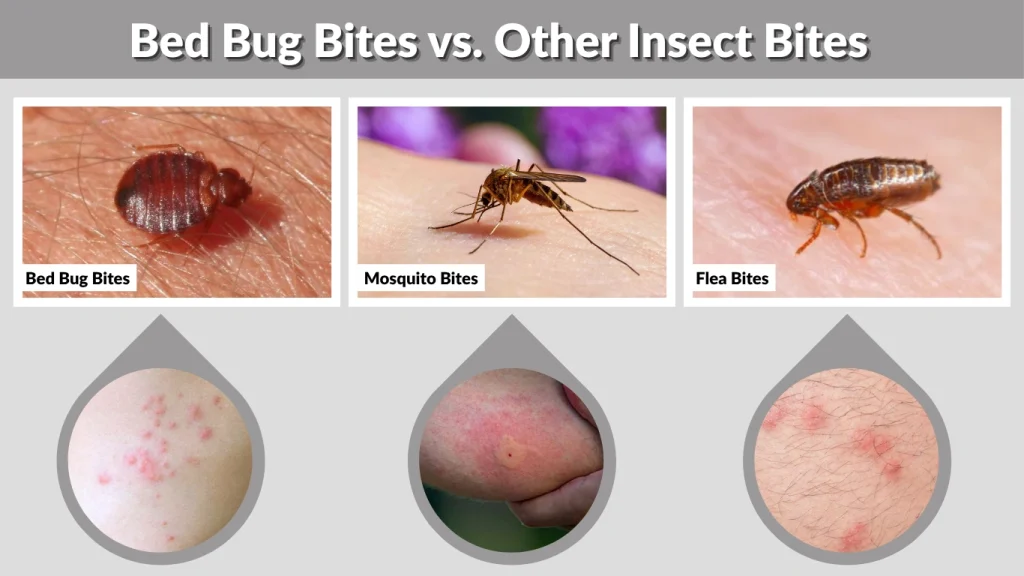
Bed Bug vs Mosquito Bites
| Feature | Bed Bug Bites | Mosquito Bites |
| Pattern | Clustered or linear | Random, isolated |
| Onset | Delayed itching (hours later) | Immediate itching |
| Duration | 3–7 days or longer | 1–2 days |
| Appearance | Small red welts with a darker center | Soft pink bumps that fade quickly |
Mosquito bites are usually isolated and appear randomly across the body. In comparison, bed bug bites often form a clear pattern. Images of both side-by-side show that bed bug marks tend to be flatter and more persistent.
Bed Bug vs Flea Bites
| Feature | Bed Bug | Flea |
| Location | Upper body, arms, neck | Lower legs, ankles |
| Itch Timing | Hours after bite | Instant itching |
| Pattern | Linear or grouped | Random dots |
| Reaction | Moderate swelling | Sharp, burning itch |
Flea bites usually have a red halo around each mark and occur lower on the body. Bed bug bite photos show more uniform welts with delayed irritation.
Bed Bug vs Spider Bites
Spider bites differ significantly—they are usually single, larger, and can blister. Bed bug bites, on the other hand, are multiple and evenly spaced. In comparison images, spider bites show a central puncture mark, while bed bug bites have no visible center.
Bed Bug Bites on Different Demographics
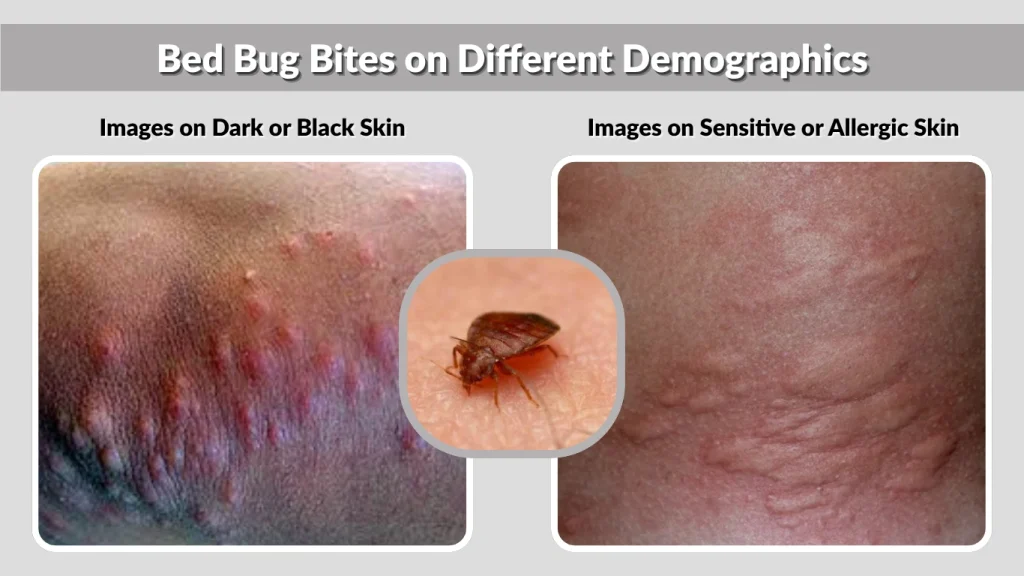
Images on Dark or Black Skin
On dark skin tones, images show bite marks as darker brown or purplish areas instead of bright red. Sometimes, they resemble bruises or dark patches rather than bumps. These marks can take longer to fade, and hyperpigmentation may remain after healing. Including such images helps show the range of appearances across skin types.
Images on Sensitive or Allergic Skin
People with sensitive skin often experience stronger reactions, including swelling, blistering, or widespread redness. In visual examples, these reactions may mimic allergic rashes or eczema. Identifying such differences is important to avoid confusion with other dermatological issues.
Real and Reference Image Sources
Trusted Medical and Government References
- Centers for Disease Control and Prevention (CDC): Offers verified photos of bed bug bites and infestations.
- National Health Service (NHS): Provides clinical examples showing mild and severe bite reactions.
- Environmental Protection Agency (EPA): Includes educational images of bed bugs, eggs, and bite marks.
- Mayo Clinic: Displays medical-grade visuals that highlight allergic and infected bite stages.
Online Visual Platforms
While platforms like Google Images, Reddit, and pest control blogs contain thousands of real-life examples, not all are accurate. Always rely on verified sources for correct diagnosis. Amateur photos can be useful for recognizing bite patterns but should not replace professional evaluation.
Treatment and Healing Examples
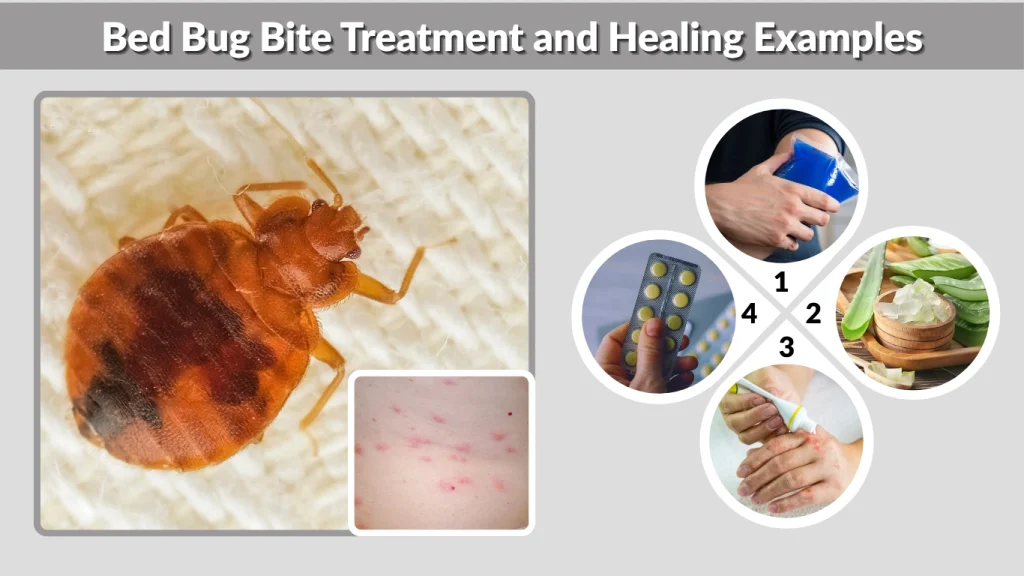
Visuals of Treated vs Untreated Skin
Images comparing treated and untreated bites often show clear improvement after consistent care. Treated skin appears less inflamed, with reduced redness and swelling within two to three days. Untreated bites may scab or darken, especially if scratched frequently. Before-and-after photos can help track healing progress.
Topical and Home Remedies
- Cold Compress: Reduces swelling and numbs itching.
- Aloe Vera Gel: Soothes irritation and speeds skin repair.
- Hydrocortisone Cream: Eases inflammation when applied twice daily.
- Antihistamines: Help manage allergic itching and promote restful sleep.
- Oatmeal Baths: Calm widespread irritation and moisturize the skin.
When to Seek Medical Care
If images resemble infected bites—showing pus, open sores, or excessive swelling—it’s best to see a doctor. Medical professionals may prescribe stronger steroid creams, oral antihistamines, or antibiotics. Persistent itching that lasts longer than two weeks should also be evaluated to rule out secondary conditions.
FAQs
What do bed bug bites look like on human skin?
They usually appear as small, red, itchy welts often grouped in lines or clusters. Images show that the marks may vary in size and color depending on skin tone but are typically uniform and symmetrical.
How do bed bug bites differ by skin tone?
On lighter skin, the bites look pink or red, while on darker skin they appear brownish or purplish. Hyperpigmentation may last longer on darker complexions even after the irritation subsides.
Can bed bug bites get infected?
Yes. Scratching can introduce bacteria into the skin, causing infection. Images of infected bites show yellow crusts or pus. Clean the area, apply antibiotic cream, and consult a doctor if swelling spreads.
What’s the difference between flea and bed bug bites?
Flea bites target the ankles and itch instantly, while bed bug bites appear higher on the body and itch hours later. Comparison photos show flea bites as smaller and more scattered.
How can I tell if my bites are from bed bugs or mosquitoes?
Bed bug bites appear in groups and last longer, while mosquito bites are random and heal faster. Viewing close-up images side-by-side makes these distinctions easy to recognize.
